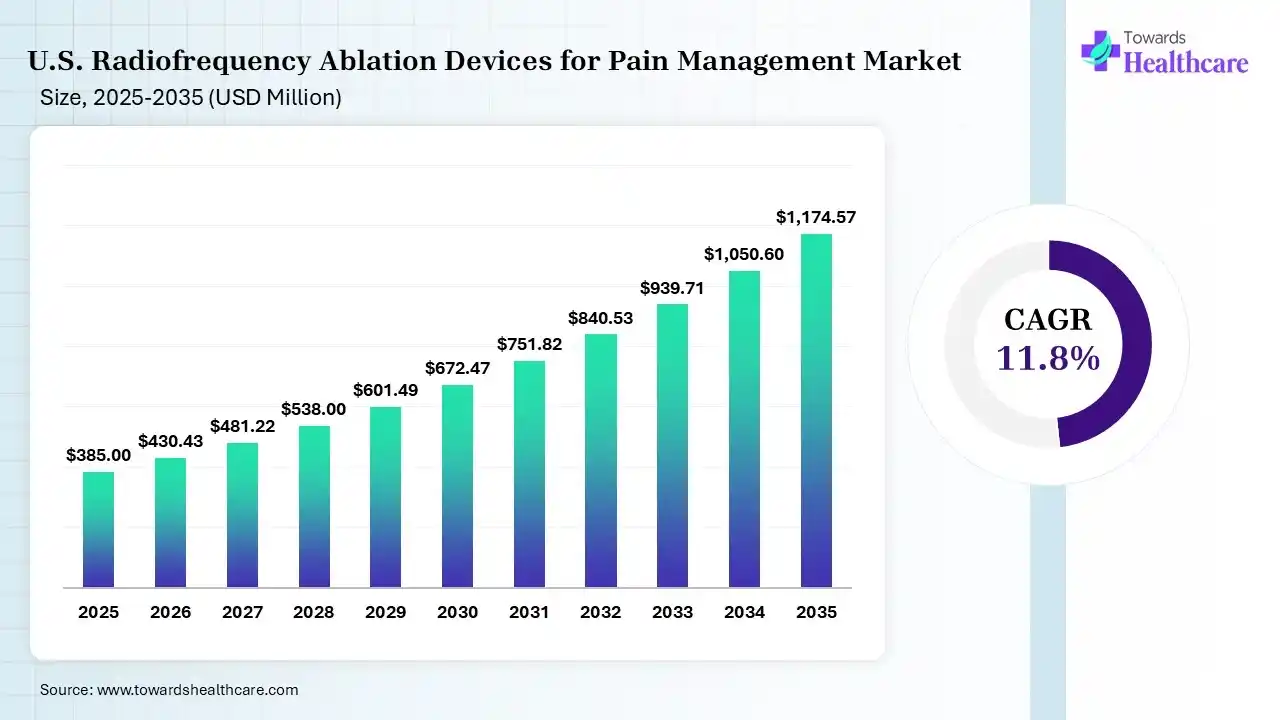
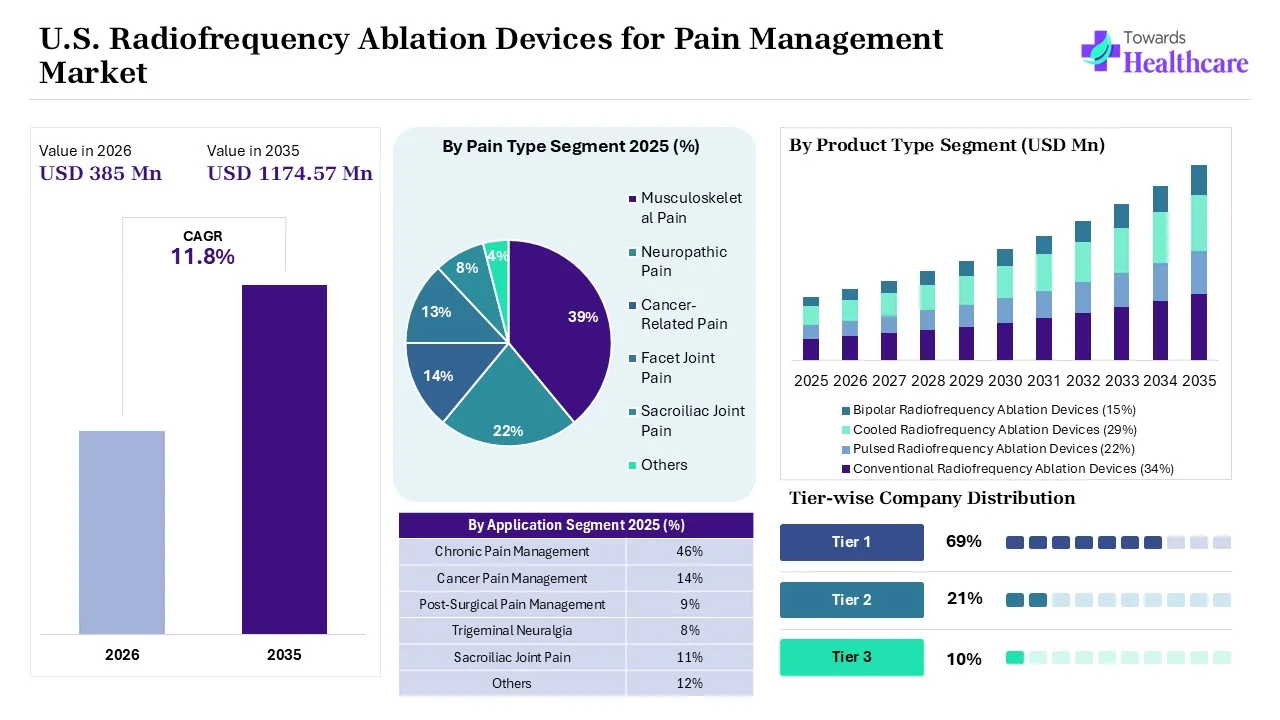
The U.S. radiofrequency ablation devices for pain management market size was estimated at USD 385 million in 2025 and is predicted to increase from USD 430.43 billion in 2026 to approximately USD 1174.57 million by 2035, expanding at a CAGR of 11.8% from 2026 to 2035. The U.S. radiofrequency ablation devices for pain management market is growing as RFA has a rapid onset of effect and provides benefits, such as minimally invasive technology, inexpensive cost, precise localization, less damage, and multiple repeatable processes.
Radiofrequency ablation devices are applied to lessen pain and enhance the quality of life for patients suffering from long-term disease conditions. It is a minimally invasive technology that shrinks the size of cancer, nodules, or various growths in the body. RFA is used to manage a wide range of conditions, involving benign and malignant cancer, chronic venous insufficiency in the legs, and chronic back and neck pain. As compared with traditional surgery and conservative technology, RFA has a rapid onset of effect and benefits, such as minimally invasive technology, low cost, specific localization, less damage, and multiple repeatable operations. RFA delivers longer-lasting relief and helps patients regain function without surgery. RFA offers meaningful relief and enhances functional activity, often without the requirement for major surgery. RFA is characteristically performed under fluoroscopy or ultrasound supervision for accuracy and safety.
AI technologies are increasingly incorporated into various stages of the thermal ablation process, from selecting patients to evaluating outcomes after treatment. Including AI in multidisciplinary decision-making can improve the choice between surgical, ablative, or systemic approaches, especially in borderline or high-risk cases. An AI-assisted microwave ablation planning system enables less experienced doctors to achieve treatment effects comparable to those of seasoned specialists. Additionally, an AI-powered clinical decision support system helps accurately determine ablation parameters such as catheter selection, targeted regions, RF payload, temperature, and applied force during RF energy delivery thus enhancing the overall effectiveness of the ablation.
Hybrid Therapies: Hybrid ablation integrates the benefits of percutaneous endocardial and epicardial catheter-based measures and those of arrhythmia surgery.
Enhanced Visualization: Ablation tools improved visualization of cardiac anatomy and enhanced precision in identifying arrhythmia sources. Lowered radiation exposure for patients and operators. Better long-term results because of more precise ablation.
| Table | Scope |
| Market Size in 2026 | USD 430.43 Million |
| Projected Market Size in 2035 | USD 1174.57 Million |
| CAGR (2026 - 2035) | 11.8% |
| Measurable Values | USD Millions/Units/Volume |
| Market Segmentation | By Product Type, By Therapeutic Application, By Pain Type, By End User, By Technology, By End User |
| Top Key Players | Medtronic, Boston Scientific, Abbott Laboratories, Avanos Medical, Stryker Corporation |
| Segment | Share 2025 (%) |
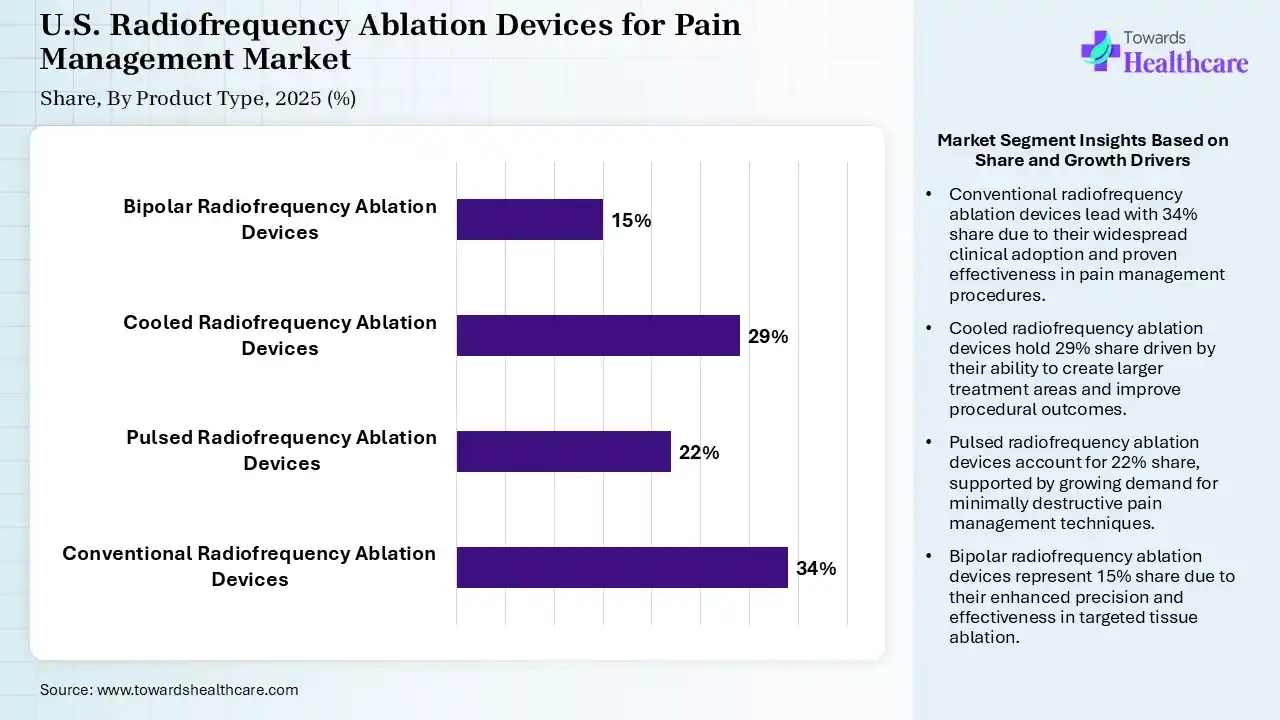
| Conventional Radiofrequency Ablation Devices | 34% |
| Pulsed Radiofrequency Ablation Devices | 22% |
| Cooled Radiofrequency Ablation Devices | 29% |
| Bipolar Radiofrequency Ablation Devices | 15% |
The Conventional Radiofrequency Ablation Devices Segment Led the Market in 2025
The conventional radiofrequency ablation devices segment contributed the largest U.S. radiofrequency ablation devices for pain management market share of 34% in 2025, as these tools deliver longer-lasting relief and support patients in regaining function without surgery. Lowers recovery times, lowers risk, and lessens the pain of problems compared to outdated surgery. Lower challenges of complications than old-style surgical technology, such as bleeding or infection.
The cooled radiofrequency ablation devices segment held a significant share of 29% in the market and is expected to grow at the fastest CAGR during the forecast period, as cooled radiofrequency ablation provides superior long-term advantages in pain relief and functional enhancement as compared to conventional. It releases chronic pain in the spine, knee, neck, shoulder, and hip.
The pulsed radiofrequency ablation devices segment held a significant share of 22% in the U.S. radiofrequency ablation devices for pain management market, as the pulsed radiofrequency of the spinal nerve root lowers the aseptic inflammatory response without damaging the patient's intervertebral disc structure and potentially becomes one of the ideal treatment choices for intervertebral discogenic pain.
The bipolar radiofrequency ablation devices segment held a significant share of 15% in the market, as bipolar ablation is efficient in the treatment of clinical arrhythmias after failed unipolar ablation. Bipolar RFA provides lowered ablation times as compared with the published monopolar RFA experience, demonstrates consistent ablation zones, and includes negligible convective heat loss from adjacent high-velocity blood flows.
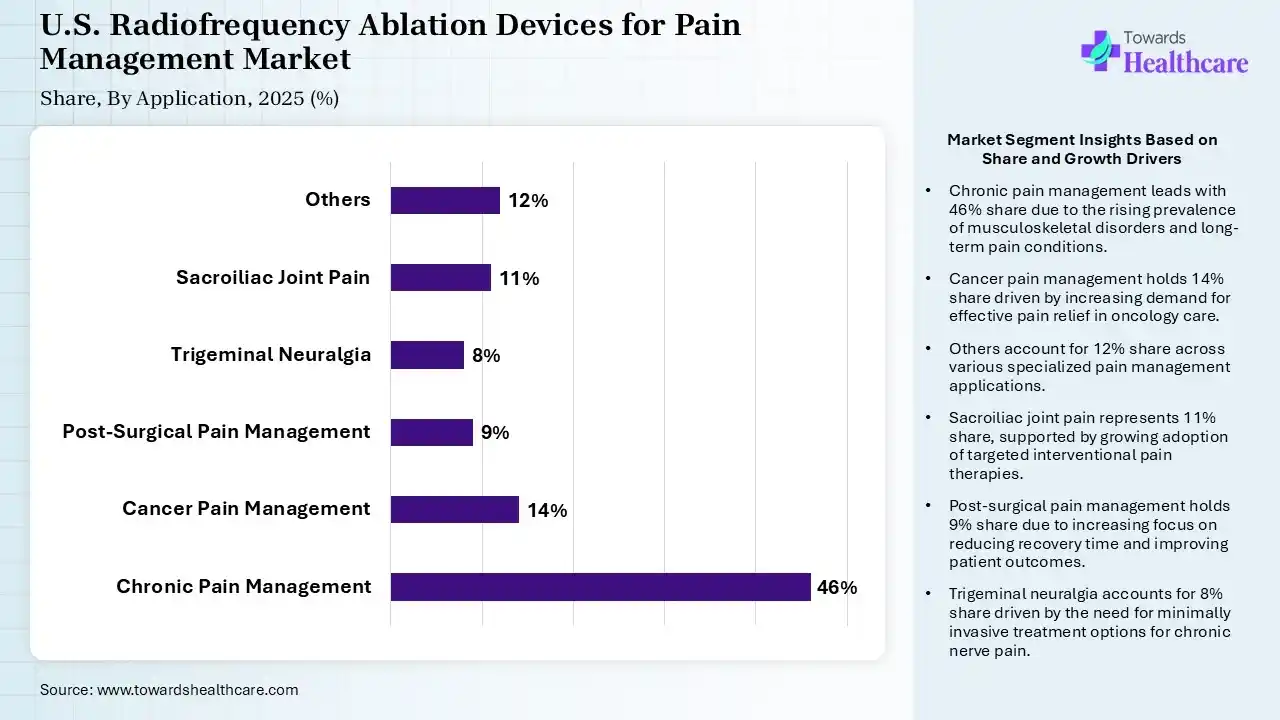
| Segment | Share 2025 (%) |
| Chronic Pain Management | 46% |
| Cancer Pain Management | 14% |
| Post-Surgical Pain Management | 9% |
| Trigeminal Neuralgia | 8% |
| Sacroiliac Joint Pain | 11% |
| Others | 12% |
Chronic Pain Management Segment Led the Market in 2025
The chronic pain management segment contributed the largest U.S. radiofrequency ablation devices for pain management market share of 46%, as radiofrequency ablation reduces or eliminates the requirement for long-term use of opioid pain medication, providing supportive, safer pain management approaches. It is tailored to manage pain in various areas such as the spine, hips, knees, and sacroiliac joints, and is safe and recurrent as nerves regenerate over time.
The cancer pain management segment held a significant share of 14% of the market, as radiofrequency ablation is a safe, highly effective, and minimally invasive choice for managing chronic pain caused by nerve or joint challenges. With long-lasting output and reduced recovery time, RFA has transformed pain management approaches for patients struggling with persistent discomfort.
The sacroiliac joint pain segment held a significant share of 11% of the U.S. radiofrequency ablation devices for pain management market and is expected to grow at the fastest CAGR during the forecast period, as sacroiliac joint reduction, enhanced joint alignment, and pain relief allow patients to take longer strides and walk at a faster pace, thereby enhancing overall walking effectiveness. Sacroiliac joint fusion involves a significant reduction in pain and improved mobility for numerous patients.
The post-surgical pain management segment held a significant share of 9% of the market, as thermal RFA is a safe and efficient adjunct for serious post-operative pain management in orthopaedic trauma, lowering opioid dependence, increasing rehabilitation, and improving patient results. Minimally invasive measures provide relief with rare challenges and limited recovery times as compared to traditional operations.
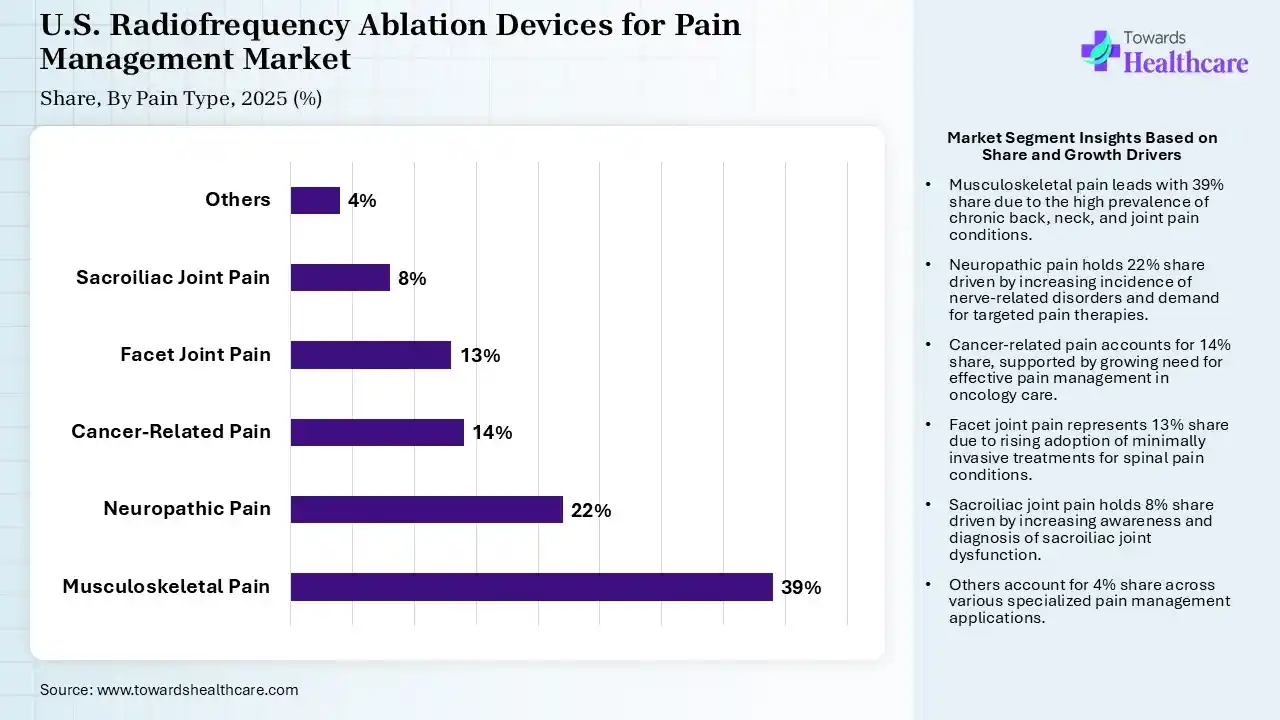
| Segment | Share 2025 (%) |
| Musculoskeletal Pain | 39% |
| Neuropathic Pain | 22% |
| Cancer-Related Pain | 14% |
| Facet Joint Pain | 13% |
| Sacroiliac Joint Pain | 8% |
| Others | 4% |
The Musculoskeletal Pain Segment led the Market in 2025
The musculoskeletal pain segment held a significant share of 39% in the U.S. radiofrequency ablation devices for pain management market. RFA is a great service for a broad range of degenerative musculoskeletal and neuropathic challenges that cause continuing pain. RFA exactly targets the nerves causing pain, confirming which relief is both efficient and focused. The treatment offers substantial pain reduction, which typically lasts from 6 months to over 2 years, as it takes time for nerve fibres to regenerate.
The neuropathic pain segment contributed to a market share of 22% and is expected to grow at the fastest CAGR during the forecast period. The nerve ablation causes iatrogenic neural deterioration, with the goal of only sensory or sympathetic denervation, without motor deficits. Radiofrequency nerve ablation offers longer-lasting nerve pain relief than conventional treatments. Nerve ablations enhance mobility and lower the requirement for assistive tools.
The cancer-related pain segment held a significant 14% share of the U.S. radiofrequency ablation devices for pain management market, as radiofrequency ablation is used to lessen cancer-associated pain by targeting the nerves involved. This technology offers a non-surgical strategy for managing pain and enhancing the patient’s quality of life. Radiofrequency ablation is employed as a treatment modality for tumours.
The facet joint pain segment held a significant share of 13% in the market, as facet nerve ablation is a minimally invasive technology intended to lessen chronic back pain caused by facet joint degeneration or injury. It includes using a laser to target and destroy the nerve tissue that is transmitting pain signals from the facet joints to the brain.
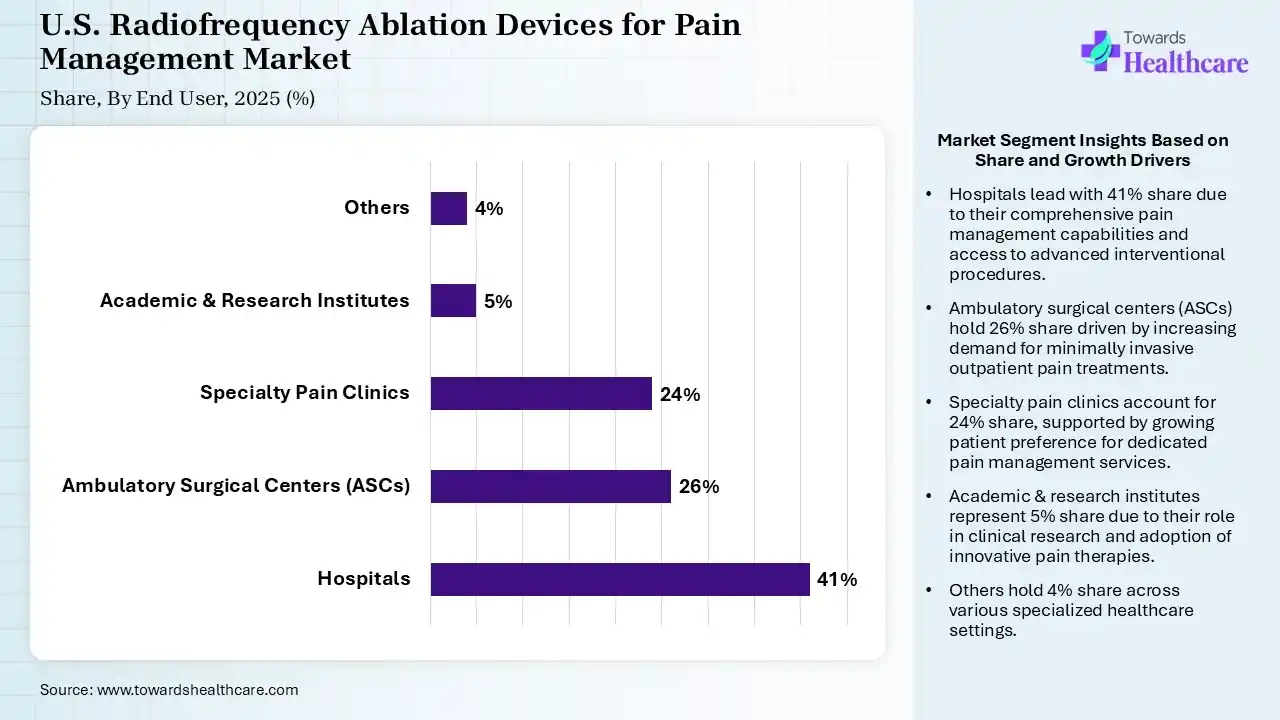
| Segment | Share 2025 (%) |
| Hospitals | 41% |
| Ambulatory Surgical Centers (ASCs) | 26% |
| Specialty Pain Clinics | 24% |
| Academic & Research Institutes | 5% |
| Others | 4% |
The Hospitals Segment led the Market in 2025
The hospitals segment contributed the largest U.S. radiofrequency ablation devices for pain management market share of 41%, as radiofrequency ablation devices cure dangerous arrhythmias and restore quality of life. Ablation technology is authorizing medical care providers to improve results. Ablation technologies need shorter hospital stays and less downtime. Minimally invasive strategies lower the challenges of major surgical problems.
The ambulatory surgical centers (ASCs) segment held a significant share of 26% in the market and is expected to grow at the fastest CAGR during the forecast period as ASC-based ablation increases access, reduces exposure to hospital-driven infections, and lowers system-wide expenses. ASCs deliver intracardiac ablation efficiently and safely when teams follow defined healthcare, operational, and quality values.
The specialty pain clinics segment held a significant share of 24% in the U.S. radiofrequency ablation devices for pain management market, as radiofrequency ablation is a safe, highly effective, and minimally invasive option for managing long-term pain caused by nerve or joint challenges. Radiofrequency ablation reduces or eliminates the requirement for long-term use of opioid pain medication, a safer pain management approach.
The academic & research institutes segment held a significant share of 5% in the market, as ablation tools are significantly used in healthcare, biological, and materials research, which provides academic and research institutes with precise, localized tissue destruction or material removal. Radiofrequency ablation (RFA) has become a significant tool in managing cardiac arrhythmias, providing a minimally invasive strategy for managing conditions.
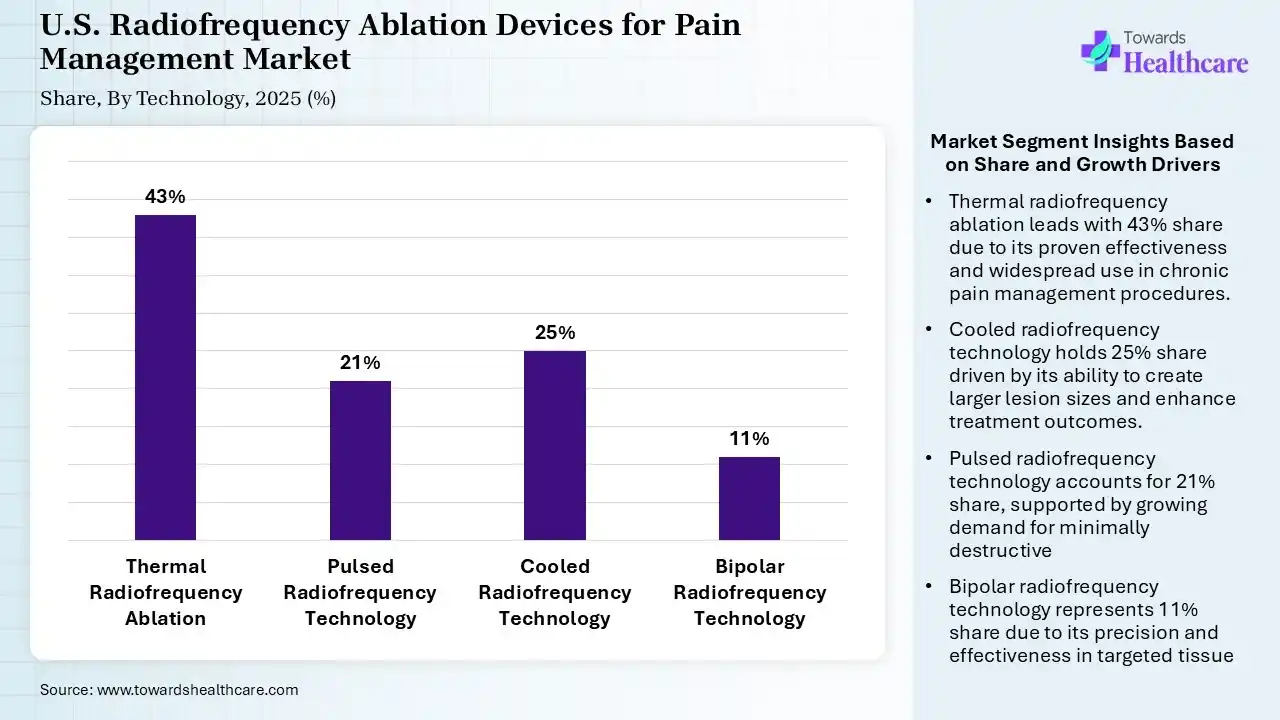
| Segment | Share 2025 (%) |
| Thermal Radiofrequency Ablation | 43% |
| Pulsed Radiofrequency Technology | 21% |
| Cooled Radiofrequency Technology | 25% |
| Bipolar Radiofrequency Technology | 11% |
The Thermal Radiofrequency Ablation Segment led the Market in 2025
The thermal radiofrequency ablation segment contributed the largest U.S. radiofrequency ablation devices for pain management market share of 43%, as thermal ablation significantly cuts patient pain, recovery time, and scarring. Radiofrequency ablation is a minimally invasive technology that leverages the power of radio waves to create a current that easily heats up a small area of the nerve.
The cooled radiofrequency technology segment held a significant share of 25% in the market and is expected to grow at the fastest CAGR during the forecast period, due to the fact that cooled radiofrequency technology aims to lessen the pain signals being transmitted by the nerves to the brain. Cooled radiofrequency action is an excellent choice for patients who have had a knee or hip replacement but have not had long-lasting pain.
The pulsed radiofrequency technology segment held a significant share of 21% in the U.S. radiofrequency ablation devices for pain management market, as pulsed radiofrequency is a minimally invasive management choice for chronic pain that provides long-term relief without the use of surgery. Pulsed radiofrequency (PRF) applies electrical currents to relieve pain.
The bipolar radiofrequency technology segment held a significant share of 11% in the market, as this radiofrequency uses controlled thermal energy to stimulate collagen production, encourage tissue remodelling, and enhance overall tissue and skin health. Bipolar radiofrequency (RF) cosmetology technology has the benefits of safety and painlessness, long duration, high patient tolerance, and simple operation.
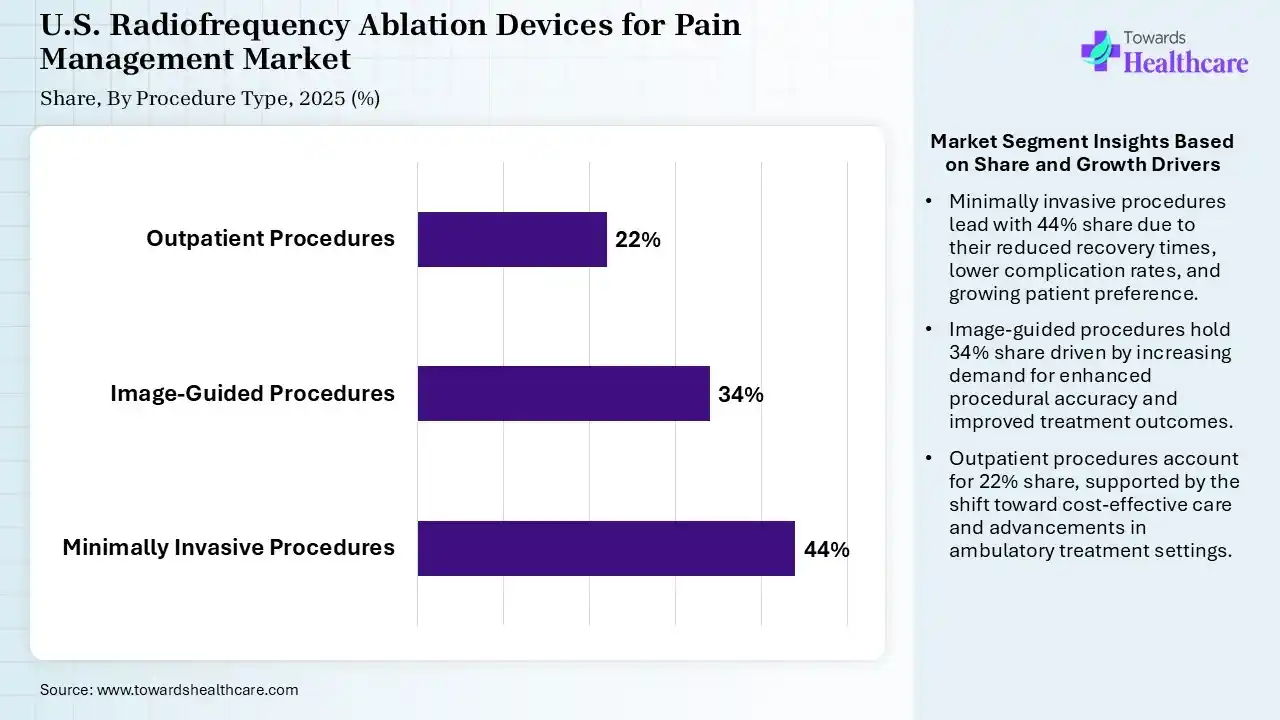
| Segment | Share 2025 (%) |
| Minimally Invasive Procedures | 44% |
| Image-Guided Procedures | 34% |
| Outpatient Procedures | 22% |
The Minimally Invasive Procedures Segment led the Market in 2025
The minimally invasive procedures segment contributed the largest U.S. radiofrequency ablation devices for pain management market share of 44%, as minimally invasive surgery for patients includes less postoperative pain and reduces operative and postoperative significant complications. Minimally invasive surgery permits efficient treatment with fewer physical impacts. Advanced minimally invasive surgeries take longer to perform because of the complexity of tools and navigation, but the long-term advantages are often significant.
The image-guided procedures segment contributed the largest market share of 34% in 2025 and is estimated to be the fastest-growing during the forecast period, as image-driven interventional technology in patients with MSK cancer is minimally invasive, efficient, usually well tolerated, and safe. Image-driven therapy enables smaller incisions, lowering the risk of complications, scarring, and pain.
The outpatient procedures segment accounted for the largest U.S. radiofrequency ablation devices for pain management market share at 22%, as outpatient surgery centers can be 45-60% less expensive than hospitals, advantageous for patients, taxpayers, and insurers equally. Outpatient clinics provide convenient access to medical treatment. These clinics do not require hospital admission or overnight care. Major outpatient clinics have medical staff and doctors who do not travel to hospitals.
The U.S. radiofrequency ablation devices for pain management market is growing steadily because of the rising number of patients with chronic pain, arthritis, and spinal disorders. Hospitals and pain management centers are increasingly adopting minimally invasive procedures that provide faster recovery and longer-lasting pain relief. Continuous technological advancements are improving treatment precision, safety, and patient outcomes. Companies are introducing advanced navigation systems, temperature-controlled devices, and expanded clinical applications. Strategic collaborations, product launches, and investments in research continue to strengthen competition and encourage innovation across the U.S. market.
Northeast U.S. Market Trends
The Northeast is experiencing strong market growth because of its advanced healthcare infrastructure, leading academic medical centers, and high adoption of innovative pain management technologies. Hospitals and specialty clinics continue expanding access to minimally invasive procedures for chronic pain treatment. Growing research collaborations between healthcare providers and medical device companies support clinical innovation. The region also benefits from skilled pain specialists and increasing patient awareness of non-opioid pain management options. These factors continue attracting manufacturers and strengthening the competitive landscape across the Northeast.
West Coast U.S. Market Trends
The West Coast is emerging as an important growth region due to rapid healthcare innovation, strong medical technology ecosystems, and increasing investments in advanced treatment solutions. Healthcare providers are adopting next-generation radiofrequency ablation systems to improve procedural accuracy and patient comfort. Growing outpatient care facilities and ambulatory surgery centers are supporting wider treatment availability. Medical device manufacturers continue expanding partnerships with hospitals and research organizations to develop innovative products. Rising demand for personalized pain management solutions is further strengthening competition and driving regional market expansion.
California Market Trends
California has a major role in the growth of the market through its advanced healthcare infrastructure, high concentration of medical research institutions, and dense network of specialized pain clinics. Major academic medical centers and health systems pioneer clinical protocols, image-guided techniques, and minimally invasive pain interventions, helping to fuel the growth of the market. The market is also driven by a strong push toward non-opioid and regenerative therapies; California providers heavily favor RFA as a long-term, tissue-sparing alternative to major spine surgery or chronic opioid dependency. As a primary center for medical technology innovation and clinical trials, the state accelerates the rollout of next-generation RFA systems, including cooled, pulsed, and real-time temperature-controlled ablation devices, fueling the growth of the market.
Texas Market Trends
Texas also has a notable contribution to the growth of the market through high clinical demand, major medical device footprints, and rapid expansion of specialized healthcare infrastructure. Factors such as the growing prevalence of chronic health conditions such as diabetes and cardiovascular issues also propel the growth of the market. Labor-intensive employment sectors across the state contribute to high rates of long-term musculoskeletal and spinal pain, further fueling the market’s growth. Rising awareness of opioid addiction risks has accelerated physician and patient adoption of non-opioid, minimally invasive interventional solutions like RFA, further fueling the growth of the market.
New York Market Trends
New York also has a vital contribution to the market’s growth through its advanced hospital networks, specialized pain management and neurological clinics, strong health insurance coverage, and adoption of non-opioid, minimally invasive therapies. New York is home to premier academic medical centers, tertiary care hospitals, and specialized spine and pain institutes that routinely integrate image-guided and capital RFA equipment into clinical workflows, fueling the growth of the market. High rates of commercial and public health insurance coverage in New York facilitate patient access to interventional pain management procedures, supporting steady repeat usage of consumable RFA electrodes and probes, which helps the growth of the market.
| Company | Headquarters | Latest Update |
| Medtronic | United States | In March 2026, Medtronic and Merit Medical Systems agreed to offer the novel, FDA-cleared ViaVerte system, a basivertebral nerve ablation management for chronic vertebrogenic lower-back pain. |
| Boston Scientific | United States | Boston Scientific's Watchman left atrial appendage closure device is experiencing weak demand and declining use in stand-alone procedures. |
| Abbott Laboratories | United States | In January 2026, Abbott received CE mark approval for its TactiFlex Duo Ablation Catheter, Sensor Enabled, for the treatment of atrial fibrillation (AFib). |
| Avanos Medical | United States | In January 2026, Avanos Medical, Inc. and Siemens Healthineers announced a strategic co-marketing agreement to advance outpatient and interventional pain care via a combined ecosystem of imaging and radiofrequency ablation (RFA) technologies. |
| Stryker Corporation | United States | In May 2026, Stryker, a worldwide leader in healthcare technologies, announced that its OptaBlate basivertebral nerve ablation system received 510 clearance from the U.S. Food and Drug Administration. |
In March 2026, “Stratus Medical has remained committed to product development and expanding our patent portfolio since day one,” said Bret Boudousquie, CEO of Stratus Medical. “It is gratifying to work with the best doctors and hospitals to develop technologies that improve patient care, increase efficiency, and lower cost. Our work hits very close to home as many employees, friends, family, and customers have been successfully treated with NIMBUS.”
By Product Type
By Therapeutic Application
By Pain Type
By End User
By Technology
By Procedure User











Principal Consultant
Shivani Zoting is a dedicated research analyst specializing in the healthcare industry. With a strong academic foundation, a B.Sc. in Biotechnology and an MBA in Pharmabiotechnology, she brings a unique blend of scientific understanding and strategy.
Learn more about Shivani Zoting
Reviewed By
Aditi Shivarkar is a seasoned professional with over 14 years of experience in healthcare market research. As a content reviewer, Aditi ensures the quality and accuracy of all market insights and data presented by the research team.
Learn more about Aditi Shivarkar