The global activated clotting time testing market size accounted for USD 520 million in 2025 and is predicted to increase from USD 561.08 million in 2026 to approximately USD 1112.29 billion by 2035, expanding at a CAGR of 7.9% from 2026 to 2035. Growing incidences of cardiovascular and kidney diseases, increasing volume of complex surgical procedures, expanding healthcare, and technological advancements are promoting the market growth.
The Clot Control: Understanding the ACT Testing Revolution
The activated clotting time testing are the diagnostic test utilized for the measurement of blood clotting time. They help in monitoring high-dose heparin therapy, ensure safe anticoagulation, prevent clotting during dialysis, as well as prevents bleeding and other clotting complications. This drives their use during cardiovascular surgeries, hemodialysis, and organ transplants.
Next-Gen Diagnostics: Unwrapping the ACT Market Trends
- Growing healthcare awareness is increasing the demand for point-of-care testing, which is driving the adoption of activated clotting time testing solutions.
- Growing dialysis and extracorporeal membrane oxygenation (ECMO) applications are also increasing their use.
- Expanding minimally invasive procedures are also increasing the adoption of these solutions.
- Growing ACT devices integration with digital health systems is also increasing their applications.
- Increasing demand for personalized medicine is also increasing its adoption rates.
- A rise in the outpatient services is also promoting their adoption.
- Technological advancements are driving the development of new automated and pre-calibrated ACT devices.
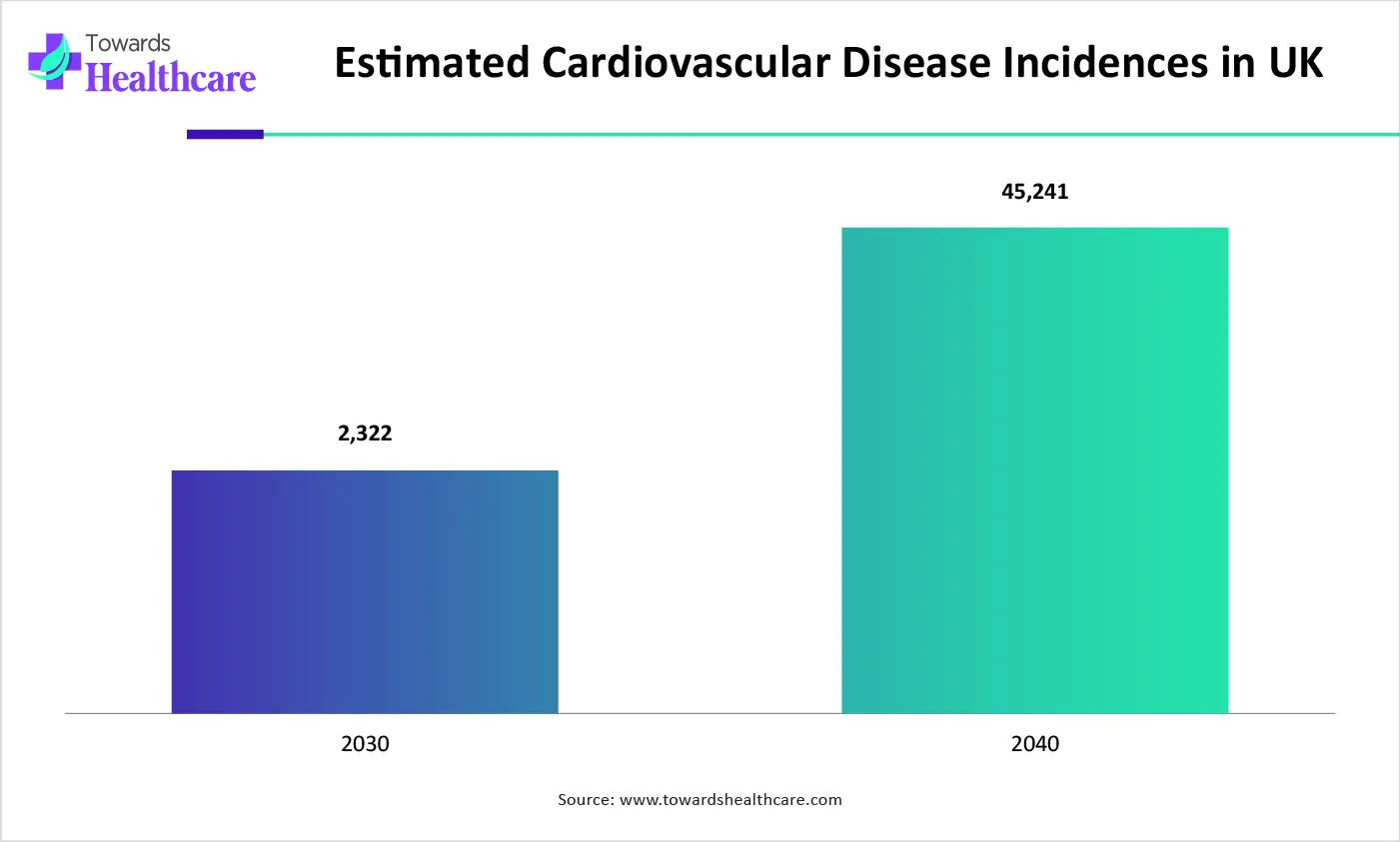
The graph represents estimated rates of cardiovascular disease in the UK for the years 2030 and 2040. It indicates that there will be a rise in cardiovascular disease burden, which will drive the demand for their early, accurate diagnostic and effective treatment options. This, in turn, will increase the adoption of activated clotting time testing devices for the effective management and treatment of cardiovascular disease, which will ultimately promote the market growth.
Market Segmentation Overview
- By product type, the consumables segment accounted for the highest revenue share of approximate 88% of the activated clotting time testing market in 2025 and is expected to expand rapidly with the fastest CAGR during the upcoming years, due to their single-use nature, where each ACT test utilizes various consumables. This increased their repeated demand, as they were the essential component of the test. High safety standards also increased their use.
- By test type, the high-range ACT tests segment held a major revenue share of approximate 68% of the market in 2025 and is expected to expand rapidly with the fastest CAGR during the upcoming years, due to their increased use in high-dose heparin therapies. Growth in cardiac surgeries has also increased their use for monitoring high anticoagulation levels. They were also used for preventing excessive bleeding or clotting complications.
- By application type, the hemodialysis segment contributed the biggest revenue share of approximate 48% of the activated clotting time testing market in 2025 and is expected to grow at the fastest CAGR during the predicted time, due to high patient volume. This increased the use of activated clotting time testing for regular heparin dosing. Their real-time monitoring and point-of-care approaches also increased their adoption rates.
- By end user, the hospitals segment led the activated clotting time testing market with an approximate 75% share in 2025 and is expected to grow at the fastest CAGR during the predicted time, driven by high patient volume and growth in cardiovascular surgeries. This increased the use of ACT tests for anticoagulation monitoring. Additionally, the availability of trained personnel and point-of-care solutions also attracted the patients.
Regional Analysis
North America registered its dominance over the global activated clotting time testing market with approximate 39% in 2025, due to the presence of robust healthcare infrastructure, companies, and regulatory framework. High healthcare investments and growth in cardiovascular diseases also increased the demand for activated clotting time testing solutions. High surgical volumes and patient awareness also increased their use, which enhanced the market growth.
Asia Pacific held approximately 22% share of the market in 2025 and is expected to grow at the fastest CAGR during the forecast period, due to expanding healthcare infrastructure, government initiatives, point-of-care testing, and healthcare expenditure. The rising cardiovascular disease burden and health awareness are also increasing the use of activated clotting time testing. Expanding medical tourisms are also promoting the market growth.
The Market Movers: Top Players Dominating ACT Innovations
The market was dominated by Abbott Laboratories with its i-STAT platform, where Werfen acted as its closest competitor with the launch of Hemochron and GEM Hemochron 100 system. Medtronic plc also maintained its position by providing a specific ACT solution, where Roche Diagnostics also actively participated in the market growth with its POC portfolio.
Segments Covered in the Report
By Product
- Consumables
- ACT Analyzers
By Test Type
- High-Range ACT Tests
- Low-Range ACT Tests
By Application
- Hemodialysis
- Cardiovascular Surgery
- Interventional Cardiology
By End-Use
- Hospitals
- Diagnostic Laboratories
- Ambulatory Surgical Centers
By Region
- North America
- U.S.
- Canada
- Mexico
- Rest of North America
- Latin America
- Brazil
- Argentina
- Rest of Latin America
- Europe
- Western Europe
- Germany
- Italy
- France
- Netherlands
- Spain
- Portugal
- Belgium
- Ireland
- UK
- Iceland
- Switzerland
- Poland
- Rest of Western Europe
- Eastern Europe
- Austria
- Russia & Belarus
- Türkiye
- Albania
- Rest of Eastern Europe
- Asia Pacific
- China
- Taiwan
- India
- Japan
- Australia and New Zealand
- ASEAN Countries (Singapore, Malaysia)
- South Korea
- Rest of APAC
- MEA
- GCC Countries
- Saudi Arabia
- United Arab Emirates (UAE)
- Qatar
- Kuwait
- Oman
- Bahrain
- South Africa
- Egypt
- Rest of MEA




