


The Asia Pacific cell therapy market size accounted for USD 0.99 billion in 2025 and is predicted to increase from USD 1.22 billion in 2026 to approximately USD 7.63 billion by 2035, expanding at a CAGR of 22.63% from 2026 to 2035. Growing cancer incidences, a shift towards localized biomanufacturing hubs, increasing clinical trials, expanding R&D activities, and growing investments are promoting the market growth.
The Asia Pacific cell therapy encompasses the R&D, manufacturing, and launch of cell therapies across the Asia Pacific region. These therapies are used for the treatment of cancer, rheumatoid arthritis, diabetes, Parkinson’s disease, and cartilage repair. They are also used for the treatment of cardiovascular diseases, genetic disorders, wound healing, and skin regeneration.
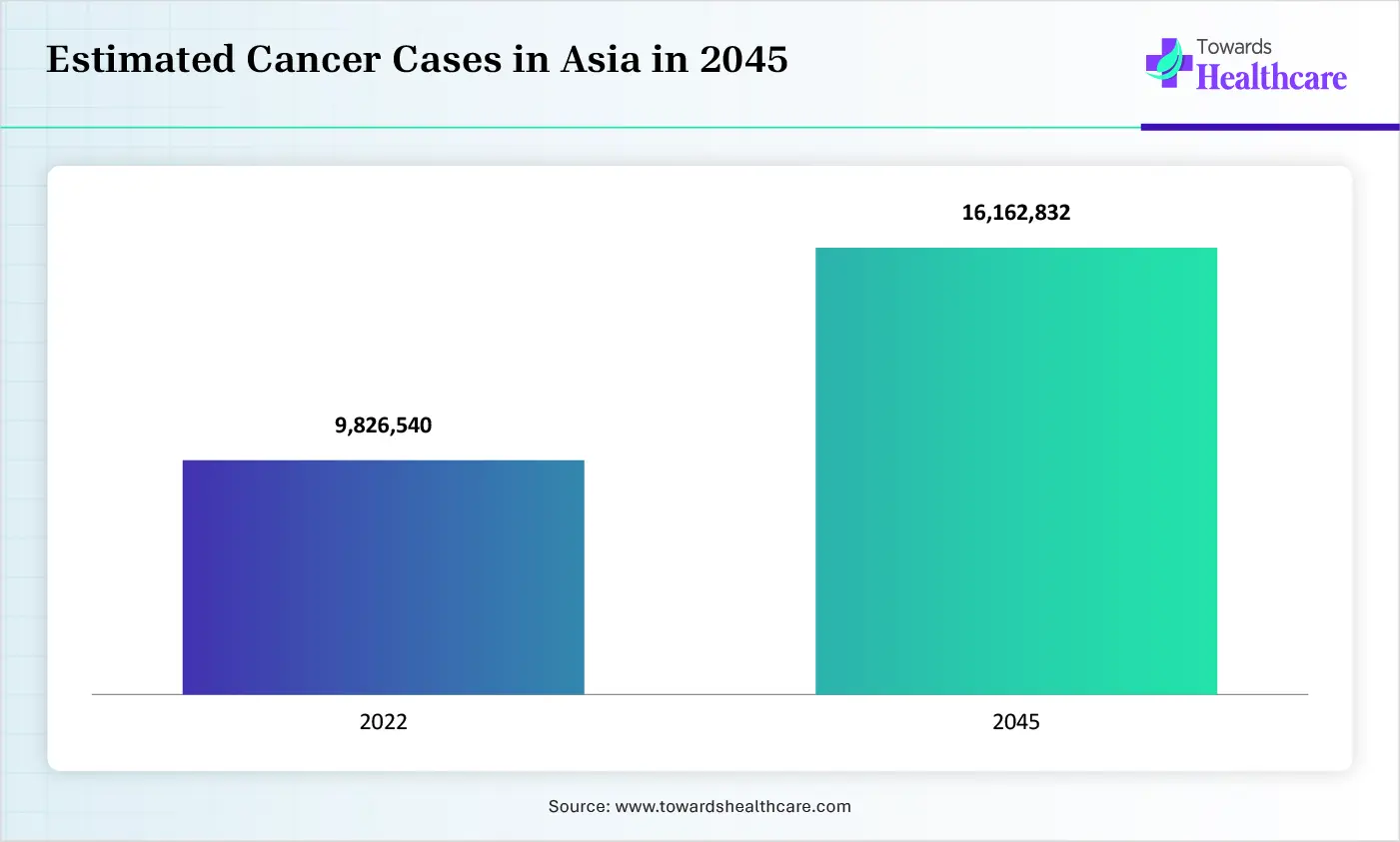
The graph represents a comparison between the Asian cancer cases for the years 2022 and 2045. It indicates that there will be a growth in the cancer burden in Asia, which will increase the demand for effective treatment options. This, in turn, will drive the adoption of cell therapies for the treatment of multiple cancer types, which will ultimately promote market growth.
By therapy type, the autologous cell therapy segment accounted for the highest revenue share of 62% of the Asia Pacific cell therapy market in 2025, due to high treatment compatibility and immune rejection. Growth in the demand for personalized therapies also increased their use. The adoption of advanced cell processing and storage technologies also accelerated the therapy efficiency.
By cell type, the stem cells segment held a major revenue share of 41% of the Asia Pacific cell therapy market in 2025, driven by their strong regenerative capabilities. Growth in government support also increased their advancements. Their wide range of applications across various disease treatments also increased their adoption rates.
By end user, the hospitals segment contributed the biggest revenue share of 38% of the Asia Pacific cell therapy market in 2025, as they are the primary centers for cell therapy administration. The availability of skilled professionals and advanced infrastructure has also increased their adoption. High patient volumes also contributed to their growth.
By application type, the regenerative medicine segment held the largest revenue share of 34% of the Asia Pacific cell therapy market in 2025, driven by growth in the geriatric population, injuries, and degenerative disease. Growth in health awareness also increased their use for long-term healing purposes. Expansion of the government support also accelerated their clinical trials.
The Asia Pacific cell therapy market held a considerable share in 2025, due to growth in cancer, genetic disorders, and chronic diseases. Strong government support, affordable manufacturing services, and a rise in health awareness also promoted their adoption and innovations. Expanding industries and investments also enhanced the R&D and clinical trials, which contributed to the market growth.
Novartis registered its dominance over the market with its Kymriah therapy, where Gilead Sciences was its closest contender, which offered Yescarta and Tecartus products. Bristol Myers Squibb also maintained its position by providing Abecma and Breyanzi, where Legend Biotech also contributed to the market growth with its Carvykti product.
By Therapy Type
By Cell Type
By Therapeutic Area
By Technology
By Source
By End User
By Application
By Region


