


The India continuous glucose monitoring devices market size stood at US$ 165 million in 2025, grew to US$ 189.42 million in 2026, and is forecast to reach US$ 656 million by 2035, expanding at a CAGR of 14.8% from 2026 to 2035. A massive diabetic population, increasing interest in metabolic fitness, rising demand for smartphone-integrated glucose tracking solutions, digital health platforms, and technological advancements are promoting the market growth.
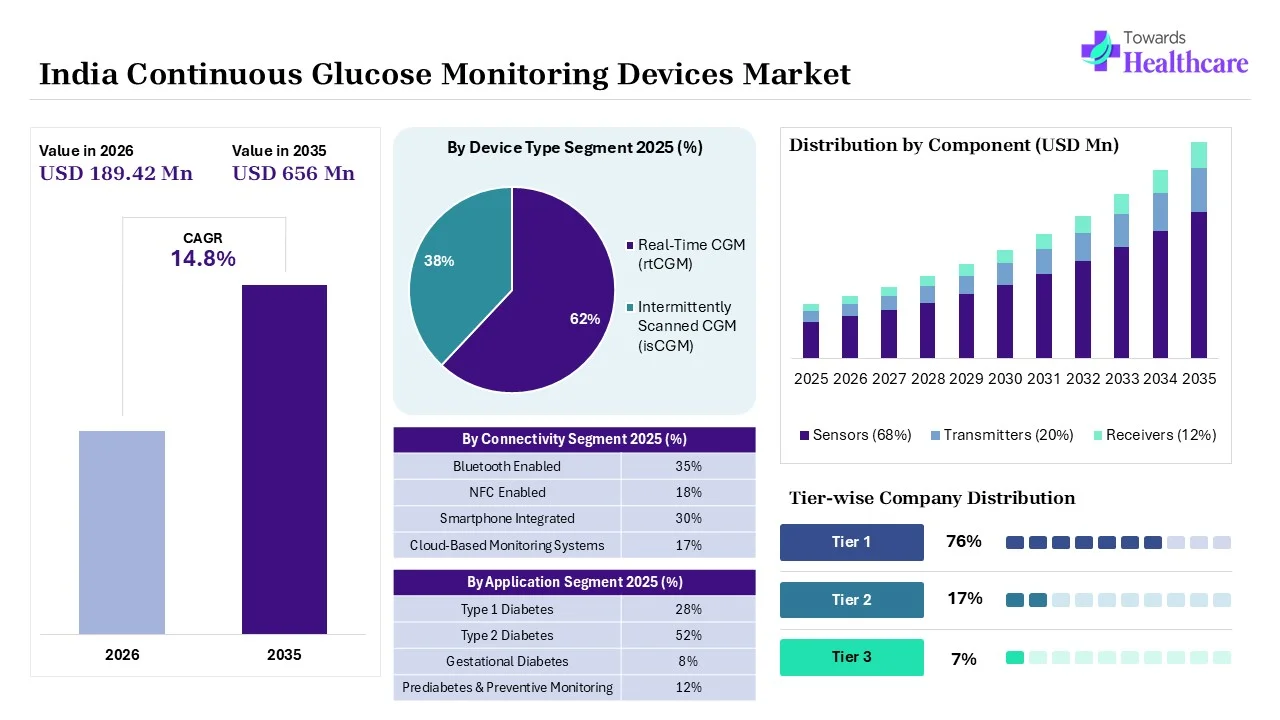
India continuous glucose monitoring devices refer to the medical devices used for the management of diabetes in India, offering continuous tracking and monitoring of glucose levels throughout the day and night. They help in detecting blood glucose fluctuation, promoting diabetes management, treatment optimization, insulin therapy adjustments, and remote patient monitoring. This is also driving their use for pediatric and geriatric diabetes care, gestational diabetes monitoring, fitness monitoring, and preventive healthcare.
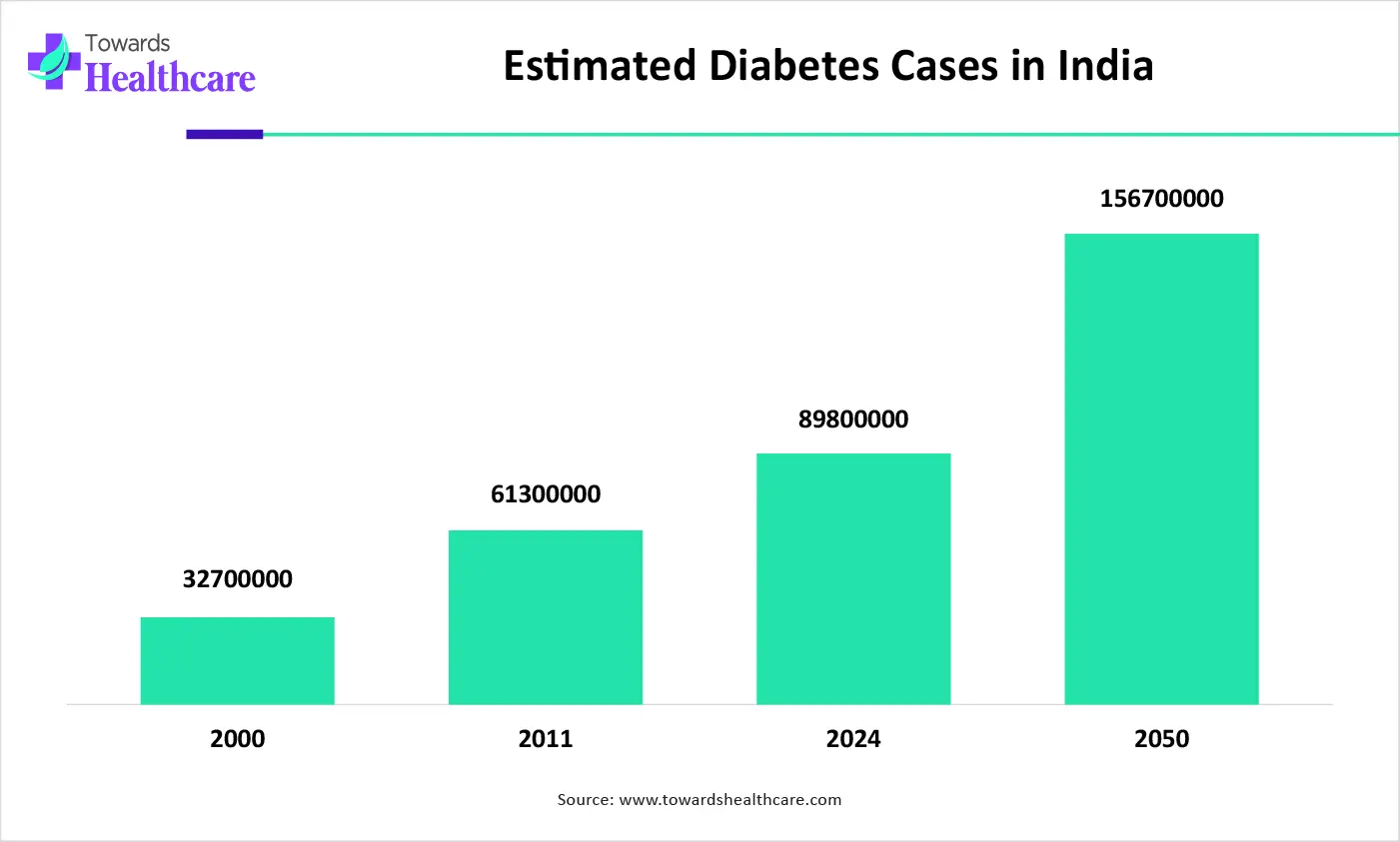
The graph represents a comparison between the diabetes cases in India for the years 2025 and 2050. It indicates that there will be a rise in diabetes burden, which will drive the demand for its accurate diagnosis, monitoring, and effective treatment devices. This, in turn, will increase the adoption of various continuous glucose monitoring devices for the effective management and treatment of diabetes, which will ultimately promote market growth.
By component type, the sensors segment accounted for the highest revenue share of 68% of the India continuous glucose monitoring devices market in 2025, and is expected to witness the fastest growth with a CAGR during the forecast period, as they were the core component for glucose level monitoring. Their limited lifespan also increased their regular replacement demands. Their minimally invasive monitoring approach also increased their adoption rates.
By device type, the real-time CGM (rtCGM) segment held a major revenue share of 62% of the India continuous glucose monitoring devices market in 2025, driven by its continuous and real-time glucose monitoring. Their instant alerts and smartphone integration also increased their use for remote patient monitoring. They also supported personalized diabetes care and helped reduce the chances of further complications.
By connectivity type, the Bluetooth-enabled segment contributed the biggest revenue share of 35% of the India continuous glucose monitoring devices market in 2025, due to the real-time wireless transmission. Lower power consumption and seamless synchronization have also increased their use. Their affordability and enhanced smartphone integration also increased their adoption rates.
By application type, the type 2 diabetes segment held the largest revenue share of 52% of the India continuous glucose monitoring devices market in 2025 and is expected to gain the highest share with a CAGR during the forecast period, driven by rapid growth in the patient population. Unhealthy dietary habits and lifestyle changes also increased their prevalence. This fueled the demand for CGM devices.
By end user, the home care settings segment led the India continuous glucose monitoring devices market with a 34% share in 2025 and is expected to grow with the fastest CAGR during the forecast period, due to growth in the demand for continuous glucose monitoring at home. The rise in diabetes self-management and remote monitoring trends has also increased the use of CGM devices in home care settings. Growth in the development of user-friendly devices also encourages their adoption.
India continuous glucose monitoring devices market held a significant share in 2025 and is expected to show notable growth during the predicted time, due to the increasing incidence of diabetes. Growing health awareness and demand for real-time glucose monitoring are also increasing the adoption of continuous glucose monitoring devices. Expanding telemedicine platforms and smartphone penetration are also enhancing the market growth.
Abbott Laboratories dominated the market with its FreeStyle Libre 2 Plus Sensor, while Medtronic plc was its closest competitor, which provided Guardian Connect CGM Systems. Dexcom, Inc. also maintained its position by offering Dexcom G7, where Ultrahuman Healthcare Pvt. Ltd. also contributed to the market growth with its Ultrahuman M1/M1 Live.
By Component
By Device Type
By Connectivity
By Application
By End User
By Age Group
By Distribution Channel


