


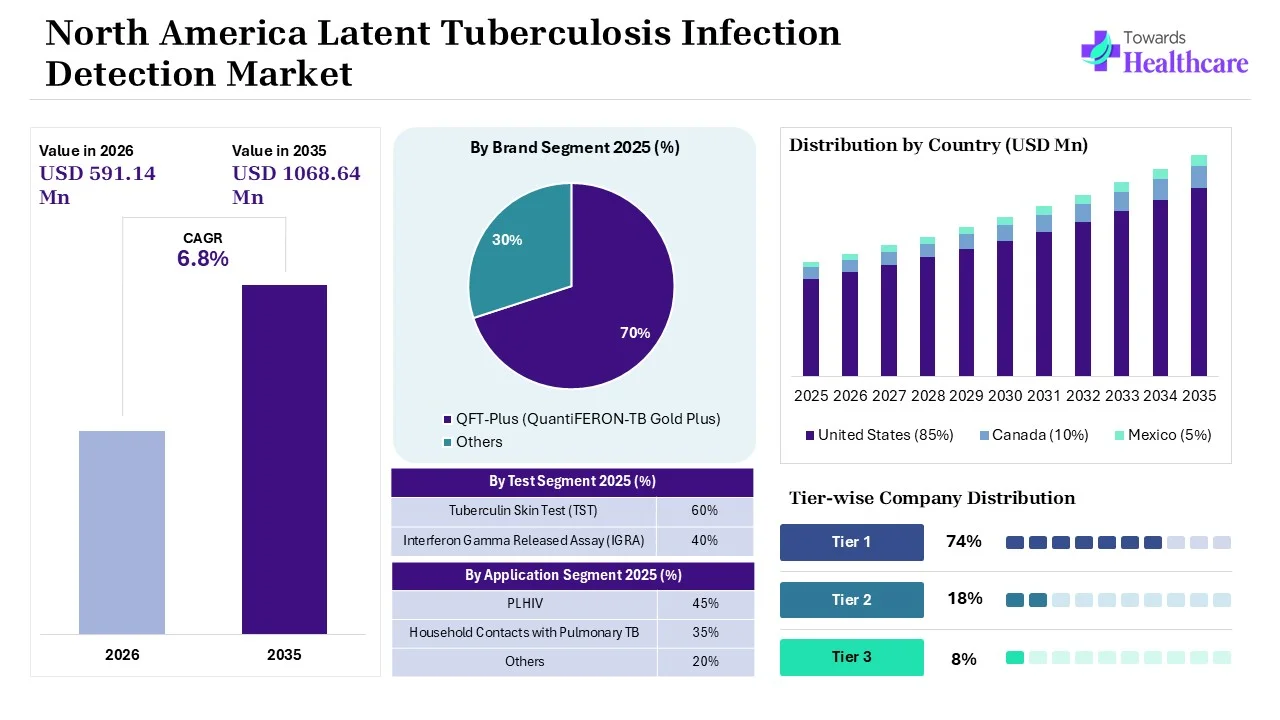
The North America latent tuberculosis infection detection market size was estimated at USD 553.5 million in 2025 and is predicted to increase from USD 591.14 million in 2026 to approximately USD 1068.64 million by 2035, expanding at a CAGR of 6.8% from 2026 to 2035. Growing mandatory health screening, strict clinical guidelines, increasing immigration from TB-endemic regions, growing health awareness, rising demand for point-of-care testing, expanding preventive healthcare, and increasing collaborations are also promoting the market growth.
The North America latent tuberculosis infection detection refers to the development, production, and distribution of diagnostic tests, kits, reagents, and services across North America for the detection of individuals infected with latent tuberculosis infection. They are used for the identification of patients infected with Mycobacterium tuberculosis but not having active TB symptoms. They also help in offering early intervention, preventive treatments, and reducing the risk of TB development and transmission.
The graph represents a comparison between the TB cases in the U.S. for the years 2020 and 2025. It indicates that there will be a rise in latent TB cases, which will drive the demand for accurate and fast detection tools. This, in turn, will increase the adoption of various latent tuberculosis infection detection products for the accurate detection and effective management of latent TB, which will ultimately promote market growth.
By brand type, the QFT-Plus (QuantiFERON-TB Gold Plus) segment accounted for the highest revenue share of 70% of the North America latent tuberculosis infection detection market in 2025 and is expected to witness the fastest growth with a CAGR of 7.50% during the forecast period, driven by its high sensitivity and specificity. Standardized results with reduced risk of false-positive results also increased their use. They were widely adopted across the healthcare sector for the detection of high-risk populations.
By test type, the tuberculin skin test (TST) segment held a major revenue share of 60% of the North America latent tuberculosis infection detection market in 2025, due to its simple procedure and affordability. Their widespread availability also increased their adoption across hospitals, clinics, and public health programs. Furthermore, they were widely recommended during TB screening programs, which increased the demand.
By application type, the PLHIV segment contributed the biggest revenue share of 45% of the North America latent tuberculosis infection detection market in 2025, driven by their high risk of developing active tuberculosis. A weakened immune system also made them susceptible to latent TB. Additionally, growth in regulatory screening initiatives also increased the use of various latent tuberculosis infection detection products.
By end use, the diagnostic laboratories segment held the largest revenue share of 50% of the North America latent tuberculosis infection detection market in 2025, due to the large volume of LTBI screening. Their accurate and standardised test results also increased their preference. The presence of advanced latent tuberculosis infection detection products also increased their use.
The North America latent tuberculosis infection detection market held a notable share in 2025 and is expected to show lucrative growth during the predicted time, due to the presence of advanced healthcare and R&D infrastructure. Growing government initiatives on health awareness are also driving the innovations of latent tuberculosis infection detection solutions. Increasing focus on infection controls and investments is also enhancing the market.
QIAGEN N.V. dominated the market with its QuantiFERON-TB Gold Plus (QFT-Plus), where Revvity was its closest contender, which offered T-SPOT.TB Test. Danaher Corporation also provided Xpert MTB/RIF Ultra, where Sanofi S.A. also contributed to the market growth with its Tubersol.
By Brand
By Test
By Application
By End Use
By Region


