


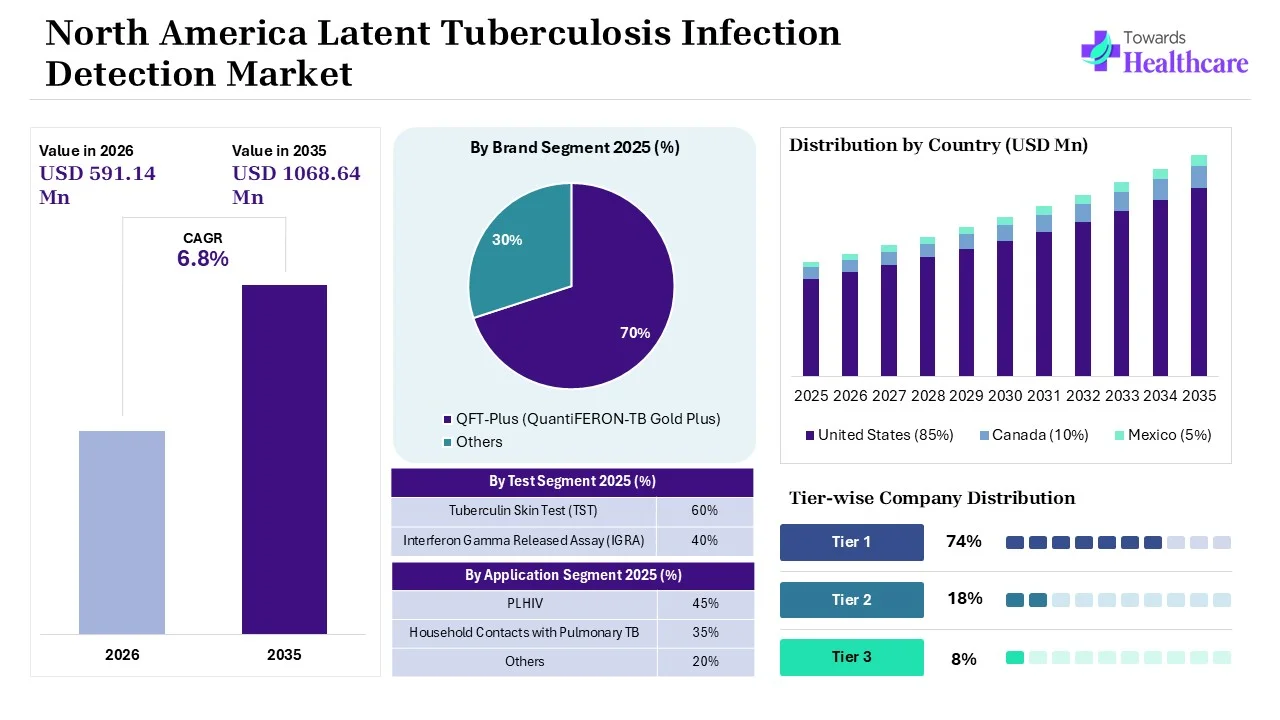
The North America latent tuberculosis infection detection market size stood at US$ 553.5 million in 2025, grew to US$ 591.14 million in 2026, and is forecast to reach US$ 1068.64 million by 2035, expanding at a CAGR of 6.8% from 2026 to 2035. The stringent TB screening programs across North America are driving the demand for latent tuberculosis infection detection solutions. Growing health awareness, expanding preventive healthcare, rising demand for point-of-care testing, increasing collaborations, and new platform launches are also enhancing the market growth.
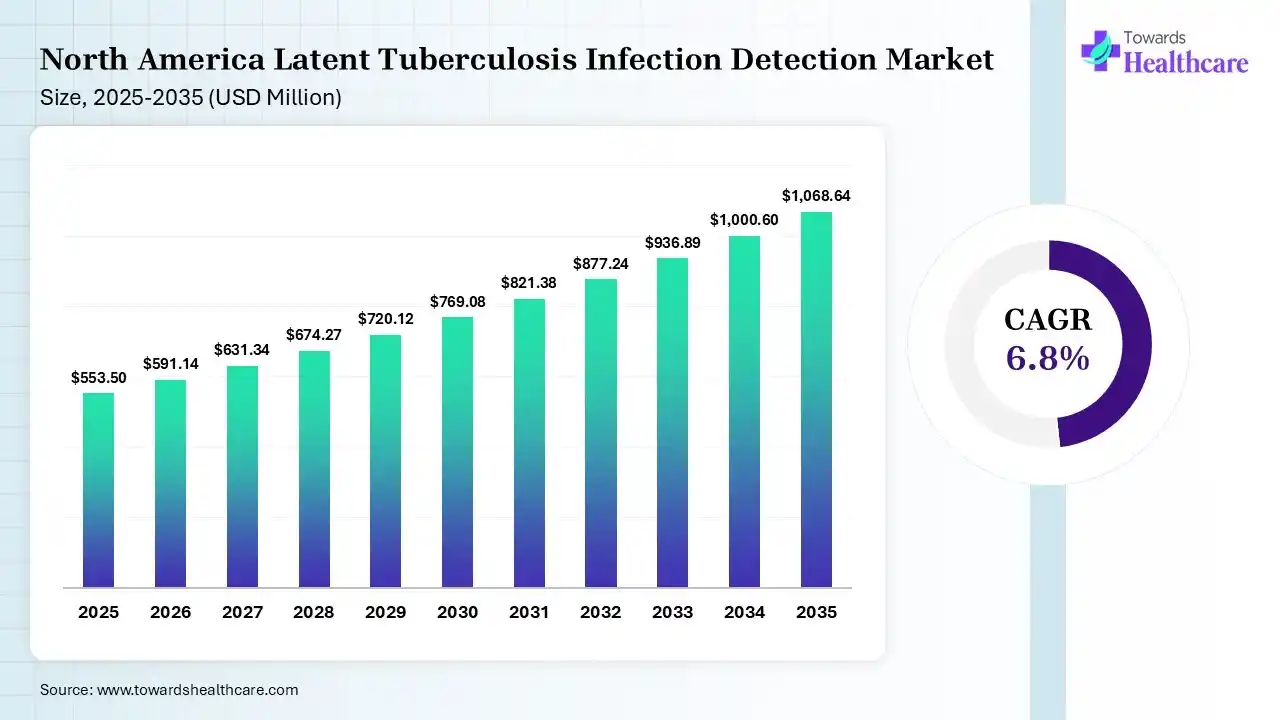
The North America latent tuberculosis infection detection market is driven by mandatory health screening, strict clinical guidelines, and immigration from TB-endemic regions. The North America latent tuberculosis infection detection encompasses diagnostic tests, kits, reagents, and services across North America to identify individuals infected with Mycobacterium tuberculosis. Latent tuberculosis infection refers to the condition where a person infected with Mycobacterium tuberculosis does not show any symptoms or transmission, as the bacteria remain inactive in the body. This infection may progress into active TB and weaken the immune system, which drives the need for its early detection and effective preventive treatment options.
Therefore, the growing incidence of latent tuberculosis infection throughout North America is increasing the demand for its detection solutions. This, in turn, is driving the adoption of various diagnostics test and tools such as the tuberculin skin test, interferon-gamma release assays, and other laboratory testing services. These solutions help in early detection of individuals with latent tuberculosis infection, and enable them to receive preventive treatment options to reduce the chances of TB progression and transmission. At the same time, growing screening programs, government support, disease surveillance programs, and advanced technologies are also driving their innovation as well as propelling the market expansion.
The use of AI in the North America latent tuberculosis infection detection market is growing as it helps in improving testing efficiency and accuracy. It also helps in enhancing image interpretation, assists large population screening, and offers predictive analytics, which help in disease surveillance, outbreak monitoring, and identification of high-risk individuals. AI also helps in workflow automation, clinical decision support, and accelerated personalized treatment planning.
Expanding Preventive Healthcare
The expanding healthcare sector and growing tuberculosis elimination programs across North America are promoting the growth of preventive healthcare to reduce and eliminate tuberculosis. At the same time, growing health awareness is also increasing a shift towards TB prevention interventions, which in turn help in reducing the risk of disease transmission, improving patient outcomes, and reducing overall healthcare costs. Additionally, government support is also fulfilling preventive healthcare expansion by actively screening immunocompromised patients, healthcare workers, and immigrants.
Rising Demand for Point-of-Care Testing
Growing health awareness and home healthcare digitalization are driving the demand for point-of-care and decentralized latent tuberculosis infection testing solutions. Therefore, to meet these rising demands, the companies are propelling the development of more portable, user-friendly, rapid, and accessible point-of-care testing technologies. Furthermore, their growing adoption is expected to enhance screening capacity as well as latent tuberculosis infection detection services across community health centres and decentralized settings, as well as home care settings.
Escalating Innovations
A rise in investment and collaborations among the industries and institutions is driving the development of new latent tuberculosis infection detection products across North America. This, in turn, is driving the development of next-generation molecular diagnostics and biomarker diagnostics, where they are also focusing on the development of advanced diagnostic methods. These advancements are focused on enhancing the diagnostic accuracy, sensitivity, reliability, and convenience in order to support early TB detection, improved risk stratification, and personalized TB prevention approaches.
| Table | Scope |
| Market Size in 2026 | USD 1068.64 Million |
| Projected Market Size in 2035 | USD 1068.64 Million |
| CAGR (2026 - 2035) | 6.8% |
| Historical Data | 2020 - 2023 |
| Base Year | 2025 |
| Forecast Period | 2026 - 2035 |
| Measurable Values | USD Millions/Units/Volume |
| Market Segmentation | By Brand, By Test, By Application, By End Use, By Region |
| Top Key Players | QIAGEN N.V., ARUP Laboratories, Revvity, Mayo Clinic Laboratories, Danaher Corporation, Laboratory Corporation of America, Sanofi S.A. |
| Segment | Share 2025 (%) |
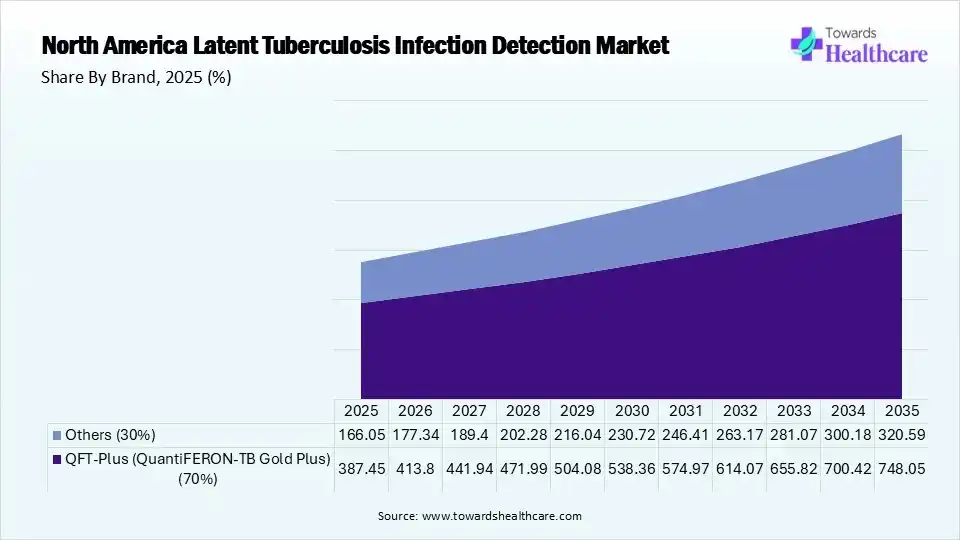
| QFT-Plus (QuantiFERON-TB Gold Plus) | 70% |
| Others | 30% |
The QFT-Plus (QuantiFERON-TB Gold Plus) Segment Dominated the Market With 70% in 2025
The QFT-Plus (QuantiFERON-TB Gold Plus) segment held the largest revenue share of 70% of the North America latent tuberculosis infection detection market in 2025 and is expected to witness the fastest growth with a CAGR of 7.50% during the forecast period, driven by its expanded adoption due to superior specificity and single-visit testing. Benefits from the guidelines also increased their preference in high-risk populations. The hospital and laboratory networks also showed their increased utilization.
The others segment held the second-largest share of 30% of the market in 2025, as it supports niche diagnostic requirements and alternative testing workflows. Additionally, they are gaining demand from budget-sensitive healthcare facilities. The product innovation and regional distribution are also expanding their availability. Increasing TB screening initiatives are also increasing their use.
| Segment | Share 2025 (%) |
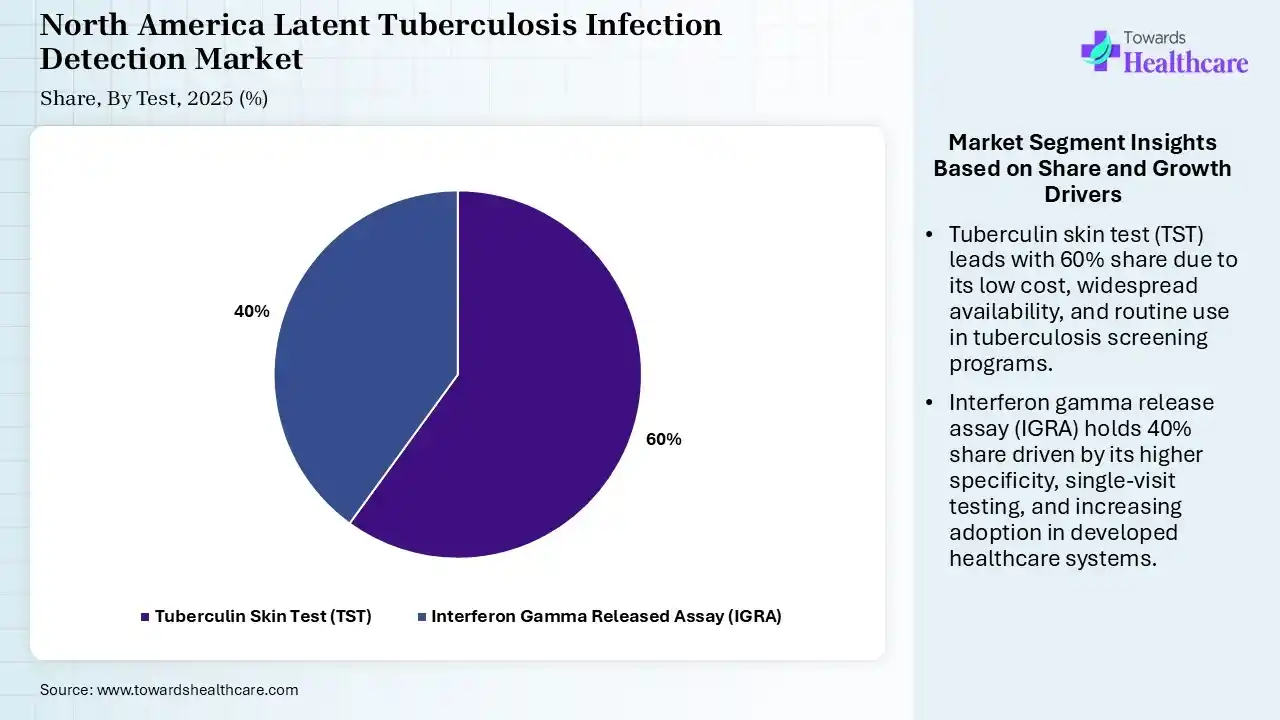
| Tuberculin Skin Test (TST) | 60% |
| Interferon Gamma Released Assay (IGRA) | 40% |
The Tuberculin Skin Test (TST) Segment Dominated the Market With 60% in 2025
The tuberculin skin test (TST) segment accounted for the highest revenue share of 60% of the North America latent tuberculosis infection detection market in 2025, due to its low cost and established protocols, which maintained their widespread usage. Additionally, they were commonly used in public health screening programs. They also supported large-scale testing initiatives across healthcare systems.
The interferon gamma released assay (IGRA) segment held the second-largest share of 40% of the market in 2025 and is expected to show the highest growth with a CAGR of 8.20% during the forecast period, driven by accelerated adoption through higher diagnostic accuracy and convenience. They also help in reducing false-positive results associated with BCG vaccination. Benefits from increasing laboratory automation and reimbursement support also drive their expansion.
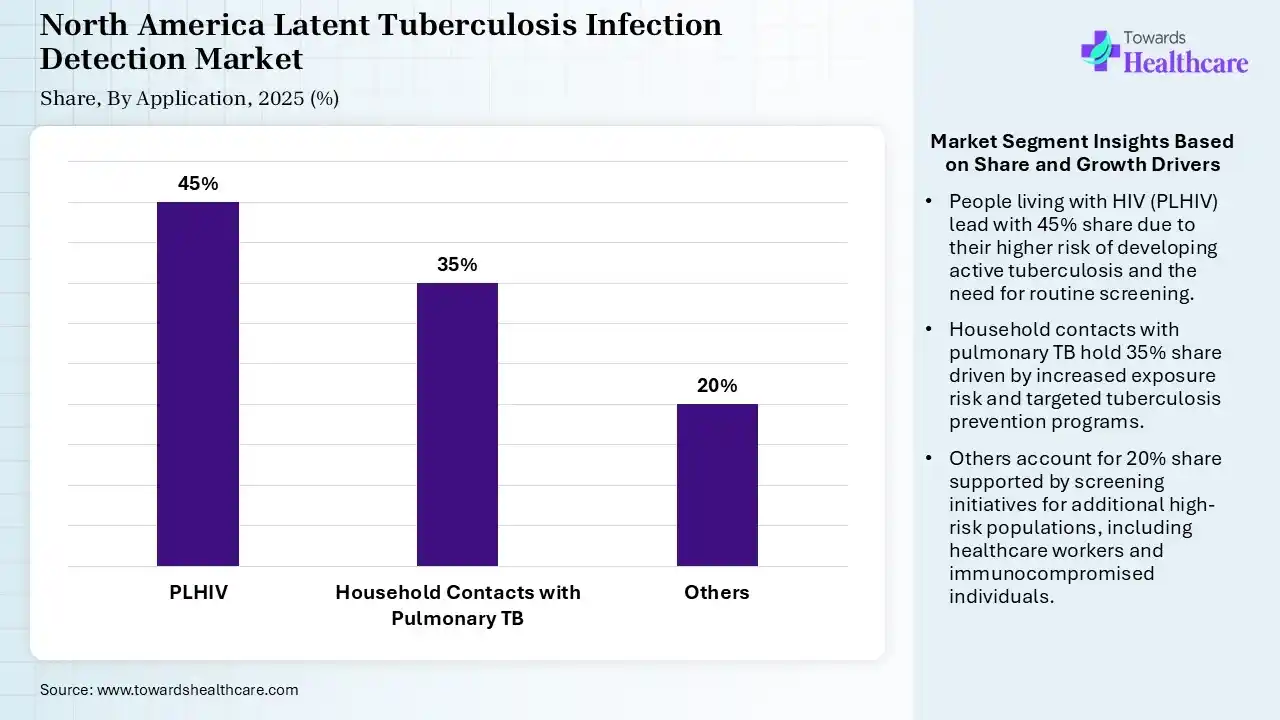
| Segment | Share 2025 (%) |
| PLHIV | 45% |
| Household Contacts with Pulmonary TB | 35% |
| Others | 20% |
The PLHIV Segment Dominated the Market With 45% in 2025
The PLHIV segment held a major revenue share of 45% of the North America latent tuberculosis infection detection market in 2025, driven by growth in the testing demand due to elevated LTBI progression risk. It also supported preventive treatment initiatives among immunocompromised patients. Benefits from routine screening recommendations also increased the adoption of latent tuberculosis infection detection products.
The household contacts with pulmonary TB segment held the second-largest share of 35% of the market in 2025 and is expected to expand rapidly with a CAGR of 8.10% during the forecast period, due to its rapid expansion through contact-tracing programs and public health surveillance. Increases detection among high-risk exposed individuals. Benefits from targeted screening campaigns are also increasing the use of latent tuberculosis infection detection products.
The others segment held 20% of the North America latent tuberculosis infection detection market share in 2025, driven by their high support for screening of healthcare workers, migrants, and vulnerable populations. Benefits from occupational health regulations are also increasing the demand for latent tuberculosis infection detection products. They are also expanding through preventive care initiatives.
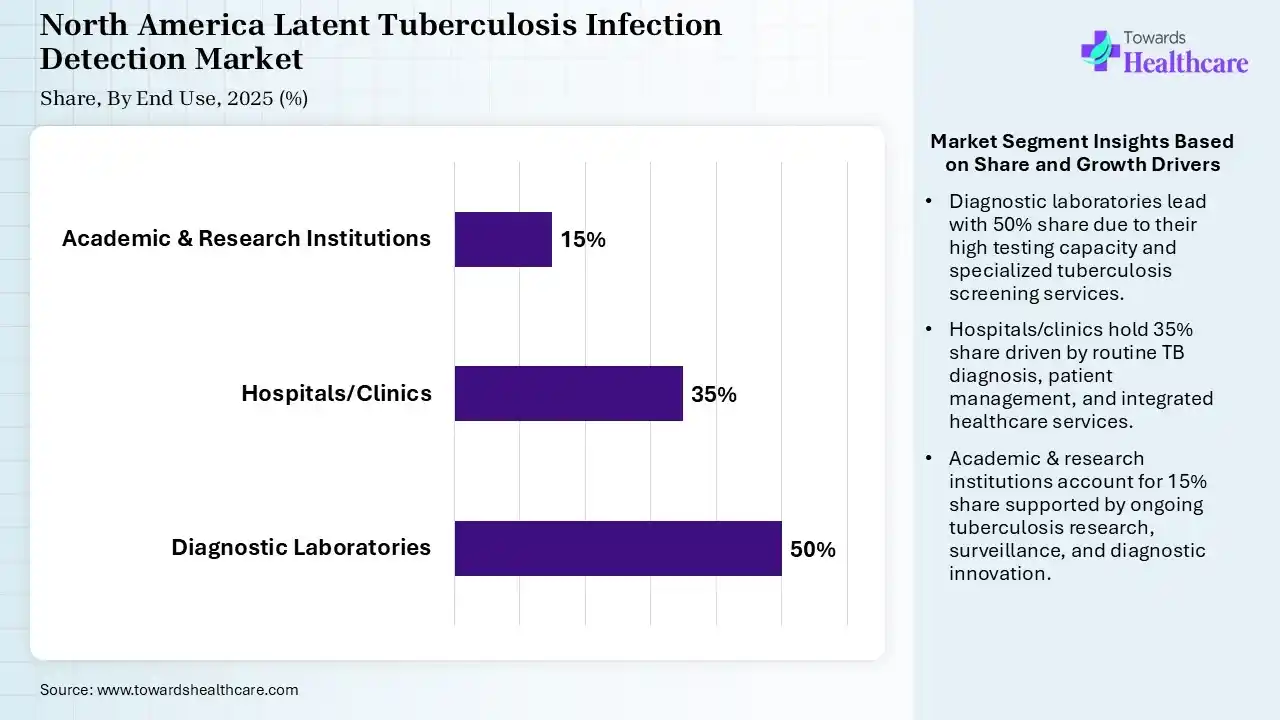
| Segment | Share 2025 (%) |
| Diagnostic Laboratories | 50% |
| Hospitals/Clinics | 35% |
| Academic & Research Institutions | 15% |
The Diagnostic Laboratories Segment Dominated the Market With 50% in 2025
The diagnostic laboratories segment contributed the biggest revenue share of 50% of the North America latent tuberculosis infection detection market in 2025, due to large testing volumes with advanced diagnostic infrastructure. Benefits from centralized laboratory services also attract the patients. Rapid expansion of capacity through automation and workflow optimization also increased their use.
The hospitals/clinics segment held the second-largest share of 35% of the market in 2025 and is expected to gain the highest share with a CAGR of 7.80% during the forecast period, driven by increasing testing integration into routine patient management. Benefits from rising screening programs in high-risk groups are also driving their demand. Growing point-of-care diagnostic adoption also drives their expansion.
The academic & research institutions segment held 15% of the North America latent tuberculosis infection detection market share in 2025, due to supporting epidemiological studies and diagnostic innovation. Benefits from government and institutional funding are also expanding their use. Advancements in biomarker and assay development activities are also increasing their use.
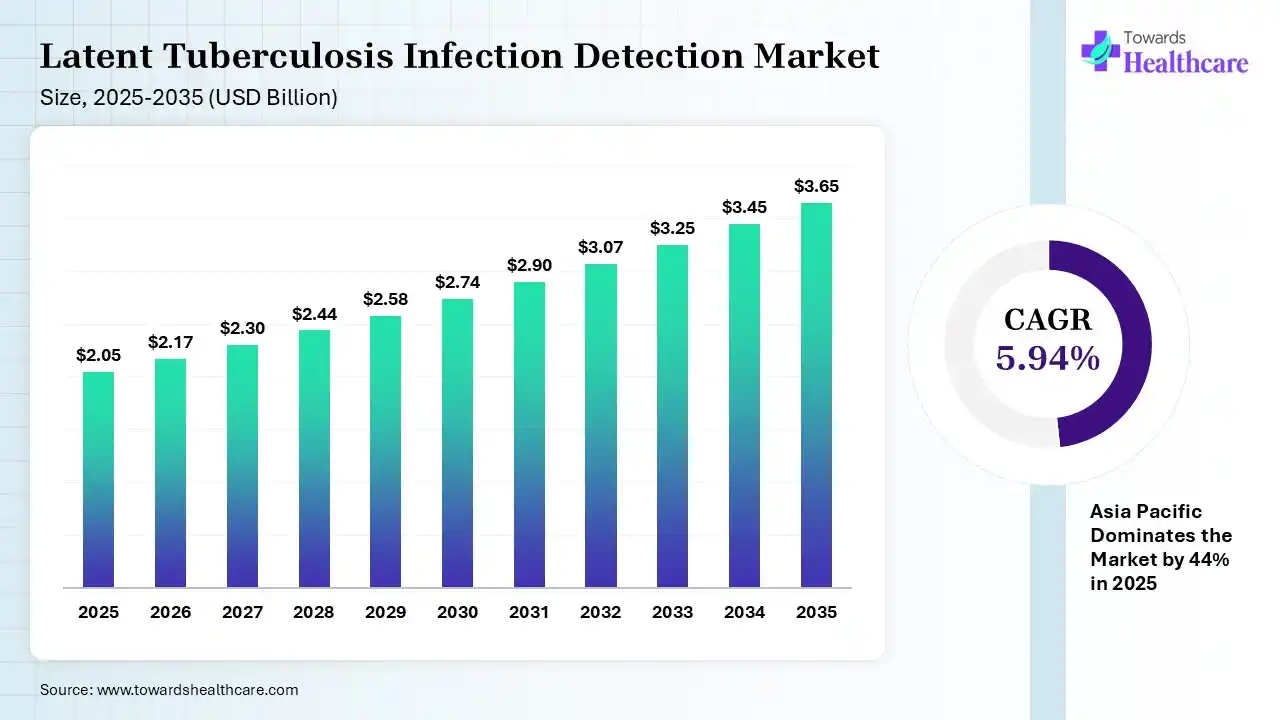
The global latent tuberculosis infection detection market size was estimated at USD 2.05 billion in 2025 and is predicted to increase from USD 2.17 billion in 2026 to approximately USD 3.65 billion by 2035, expanding at a CAGR of 5.94% from 2026 to 2035.
The North America latent tuberculosis infection detection market held a considerable share in 2025 and is expected to show significant growth during the forecast period, due to the presence of advanced healthcare infrastructure. The growth in the government initiatives and screening programs also increased the use of latent tuberculosis infection detection products. A rise in health awareness and healthcare expenditure also increased their use, where the advanced diagnostic manufacturers also contributed to the rise in innovation, promoting the market growth.
U.S. Market Trends
The US latent tuberculosis infection detection market size was reported at US$ 470.48 million in 2025 and is expected to rise to US$ 502.47 million in 2026. According to forecasts, it will grow at a CAGR of 6.90% to reach US$ 908.34 million by 2035. The U.S. dominated the North America latent tuberculosis infection detection market with a share of 85% in 2025, as it leads the adoption of IGRA testing and advanced diagnostics. Benefits from strong reimbursement systems also contributed to their growth. Expansion of screening among immigrant and high-risk populations, along with significant government support, also promoted the use and adoption of various latent tuberculosis infection detection solutions.
Canada Market Trends
The Canada latent tuberculosis infection detection market size marked US$ 55.35 million in 2025 and is forecast to experience consistent growth, reaching US$ 502.47 million in 2026 and US$ 106.86 million by 2035 at a CAGR of 6.20%. Canada held a share of 10% of the North America latent tuberculosis infection detection market in 2025, due to growth in the support for preventive screening in indigenous and immigrant populations. A rise in the benefits from public healthcare coverage also encouraged the adoption of advanced latent TB diagnostic technologies. Expansion of targeted surveillance programs to eliminate TB also increased the use of these diagnostic products.
Mexico Market Trends
The Mexico latent tuberculosis infection detection market size was valued at US$ 27.68 million in 2025 and is projected to grow to 29.56 million in 2026. Forecasts suggest it will reach approximately US$ 53.43 million by 2035, registering a CAGR of 7.30% during the period. Mexico held a share of 5% of the North America latent tuberculosis infection detection market in 2025 and is expected to grow with the fastest CAGR of 7.30% during the forecast period, due to increasing investment in tuberculosis screening and diagnostics. Benefits from public health initiatives and expanding laboratory testing infrastructure are also driving their adoption rates. Growing focus on latent TB infection control is also increasing its demand.
R&D
Clinical Trials and Regulatory Approvals
Patient Support and Services
| Companies | Headquarters | North America Latent Tuberculosis Infection Detection Solutions |
| QIAGEN N.V. | Venlo, Netherlands | QuantiFERON-TB Gold Plus (QFT-Plus) |
| ARUP Laboratories | Salt Lake City, U.S. | Interferon Gamma Release Assay (IGRA) Panels |
| Revvity | Waltham, U.S. | T-SPOT.TB Test |
| Mayo Clinic Laboratories | Rochester, U.S. | Mayo ID: QFT4 (QuantiFERON-TB Gold Plus) |
| Danaher Corporation | Washington, D.C., U.S. | Xpert MTB/RIF Ultra |
| Laboratory Corporation of America | Burlington, U.S. | T-SPOT.TB Blood Screening Service |
| Sanofi S.A. | Paris, France | Tubersol |
In May 2026, after the launch of the National Infectious Disease Test Positivity Trends Dashboard developed by a U.S. reference laboratory, ARUP medical director of the Institute for Research and Innovation in Infectious Disease Genomic Technologies, High Consequence Pathogen Response, Virology, and Molecular Infectious Diseases, Ben Bradley, MD, PhD, stated that “As a national reference laboratory, ARUP sees enough testing volume to identify meaningful trends for certain pathogens. This dashboard was designed to give our clients, laboratories, and clinicians information they can use to make better decisions for their patients.”
By Brand
By Test
By Application
By End Use
By Region










Principal Consultant
Shivani Zoting is a dedicated research analyst specializing in the healthcare industry. With a strong academic foundation, a B.Sc. in Biotechnology and an MBA in Pharmabiotechnology, she brings a unique blend of scientific understanding and strategy.
Learn more about Shivani Zoting
Reviewed By
Aditi Shivarkar is a seasoned professional with over 14 years of experience in healthcare market research. As a content reviewer, Aditi ensures the quality and accuracy of all market insights and data presented by the research team.
Learn more about Aditi Shivarkar









