


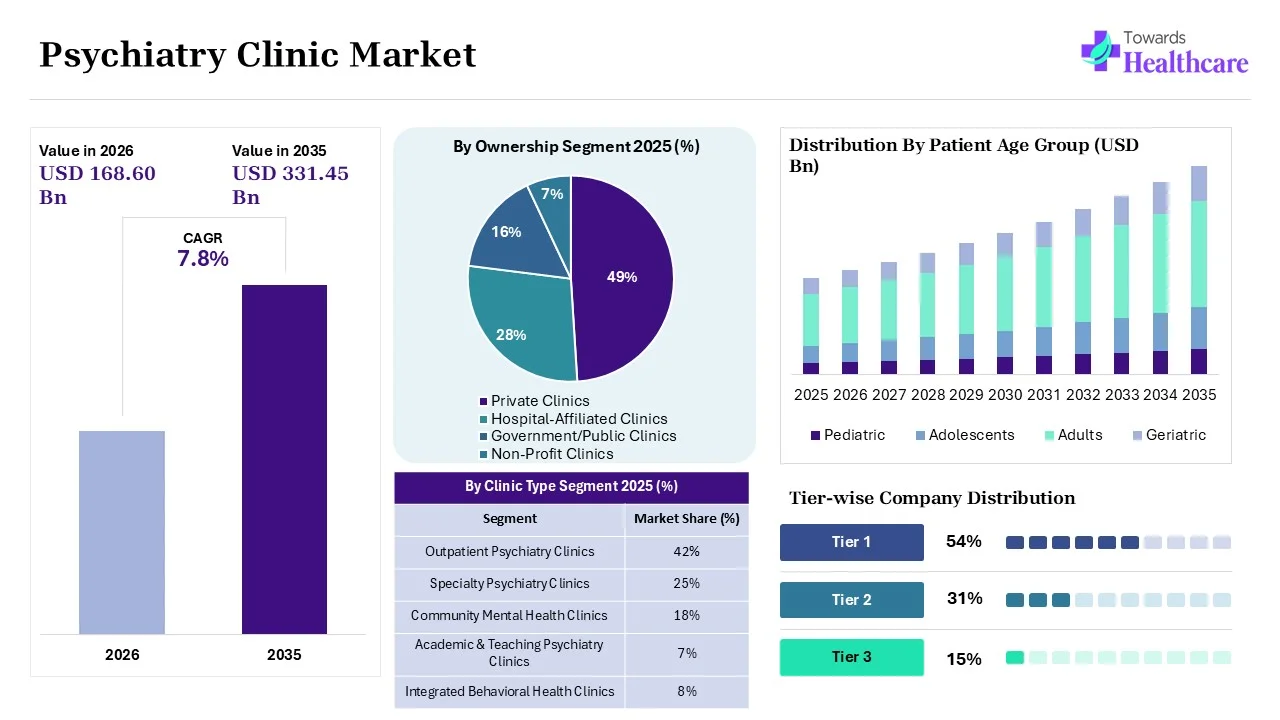
The psychiatry clinic market size accounted at USD 156.4 billion in 2025 and is predicted to increase from USD 168.6 billion in 2026 to approximately USD 331.45 billion by 2035, expanding at a CAGR of 7.8% from 2026 to 2035. A surge in mental health disorders, reduced social stigma, adoption of digital health platforms, growing demand for precision medicine, expanding psychiatry services, expanding investments, increasing workplace mental health programs, and rising remote monitoring care are also contributing to the market growth.
The psychiatry clinic refers to the specialized healthcare facilities providing diagnosis, management, counselling, and treatment of mental health disorders. They offer psychiatric evaluation, therapeutic services, and medication management to improve patients' mental health and quality of life. They are preferred for the treatment of depression, bipolar disorder, anxiety, schizophrenia, OCD, PTSD, ADHD, and substance abuse disorders.
The graph represents the total number of mental illness cases in Canada. It indicates that there will be a growth in mental health disorders in Canada, which will increase the demand for their diagnosis, management, counseling, and treatment options. This, in turn, will drive the adoption of various psychiatry services, which will ultimately promote market growth.
By clinic type, the outpatient psychiatry clinics segment accounted for the highest revenue share of 42% of the psychiatry clinic market in 2025, due to their affordable treatment and flexible appointments. Demand for early disease diagnostics and convenient access also increased their use. Additionally, shorter waiting times are also increasing their use.
By service type, the medication management segment held a major revenue share of 26% of the psychiatry clinic market in 2025, as they were essential for the treatment of various psychiatric disorders. Growth in chronic mental health conditions also increased their use. They were also preferred for personalized treatment planning.
By mental health condition type, the anxiety disorders segment contributed the biggest revenue share of 22% of the psychiatry clinic market in 2025, due to growth in their incidence rates. A rise in health awareness and effective treatment options also increased their diagnostic rates. This, in turn, increased the use of psychiatry clinics for a wide range of services.
By mode of consultation type, the in-person consultation segment held the largest revenue share of 58% of the psychiatry clinic market in 2025, driven by enhanced patient assessment. They also offered suitable therapies and immediate interventions. Additionally, they were preferred for complex case management.
By end user, the individual patients segment led the psychiatry clinic market with a 72% share in 2025, due to growth in mental health conditions. Growth in awareness and outpatient services also increased their use. A rise in the demand for personalized treatment plans also increased their use.
North America dominated the psychiatry clinic market with 40% in 2025, due to growth in mental health disorders, where the presence of well-developed mental healthcare infrastructure also increased the use of psychiatry clinics. Strong insurance coverage and high healthcare expenditures also increased the use of these services. Growth in health awareness and government mental health programs also increased their use, which enhanced the market growth.
Johnson & Johnson dominated the market with its Invega, Risperdal, and Spravato, while Bristol Myers Squibb was its closest competitor, which offered Cobenfy and Abilify. AbbVie maintained its position by providing Vraylar and Viibryd, while Takeda Pharmaceutical Company also contributed to the market growth with its Vyvanse and Trintellix products.
By Clinic Type
By Service Type
By Mental Health Condition
By Mode of Consultation
By End User
By Patient Age Group
By Ownership
By Payment Type
By Region


