


The global psychiatry clinic market size is calculated at USD 156.4 billion in 2025, driven by growth in the incidence of mental health disorders globally. The market continues to grow USD 168.6 billion in 2026 due to the rising demand for mental health services, expanding digital health platforms, and declining social stigma. It is expected to reach USD 331.45 billion by 2035, expanding at a CAGR of 7.8% from 2026 to 2035. As increasing AI integration, growing mental health programs, demand for precision medicine, and increasing investments accelerate market expansion. North America accounted for 40% of the market in 2025 due to its robust reimbursement systems, high mental healthcare spending, and a large specialist workforce.
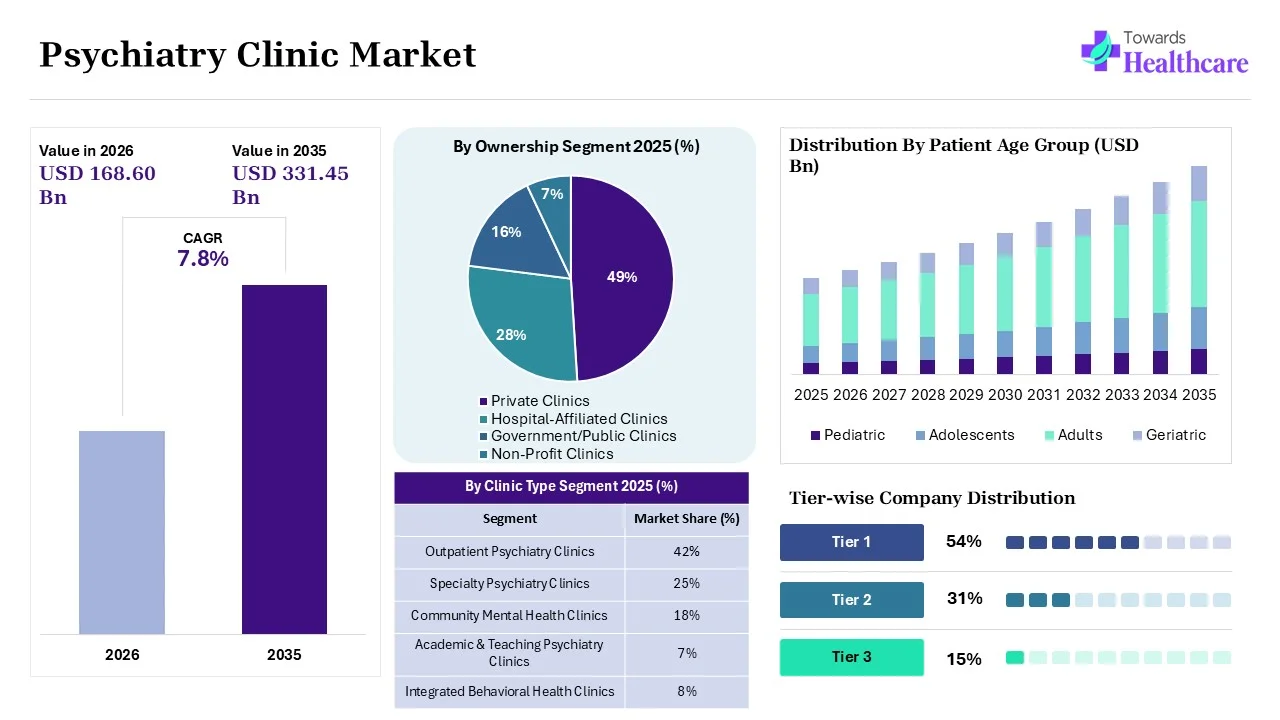
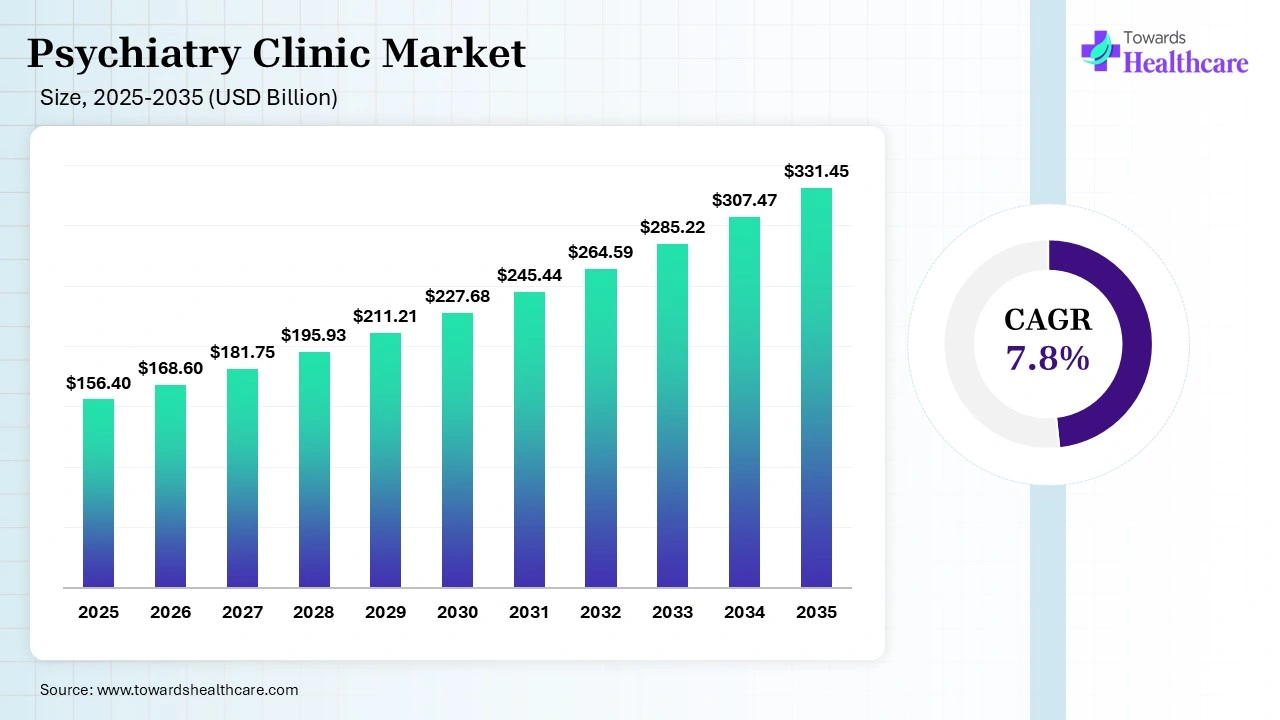
The psychiatry clinic market is driven by a surge in mental health disorders, reducing social stigma, and adoption of digital health platforms. The psychiatry clinic encompasses a healthcare facility specialized in diagnosis, management, and treatment of mental health disorders. The aim of these clinics is to improve patients’ emotional well-being, mental health, and overall quality of life by offering appropriate counseling, diagnosis, and treatment support. The presence of healthcare professionals such as psychiatrists, psychologists, counsellors, therapists, and psychiatric nurses also increases their preference for the management of mental health and behavioral disorders.
At the same time, the growing prevalence of depression, substance abuse disorders, anxiety, bipolar disorder, schizophrenia, OCD, ADHD, and PTSD is driving the demand for psychiatry clinics globally. They offer a wide range of services such as psychiatric evaluations, mental health assessments, medication management, follow-up care, counselling, psychotherapy, group therapy, and various treatment options. They are also preferred for eating disorder management, stress management, sleep disorder treatment, and suicide prevention services. Moreover, growing demand for precision medicine, expanding psychiatry services, growing workplace mental health programs, rising remote monitoring care, and expanding investments are also contributing to the market growth.
AI is used in psychiatry clinics for mental health screening and utilizes predictive analysis for the identification of disease replacements. They are also used for personalized treatment planning, remote patient monitoring, identifying speech and behavioral patterns, and offering data-driven insights, where it also offers chatbots for patient support. AI is also being used for clinical documentation, appointment scheduling, and enhancing clinic efficiency.
Mental Health Services on the Rise
The growing incidence of anxiety, depression, substance abuse, PTSD, and stress-related disorders is increasing the demand for mental health services. At the same time, the growing mental health education and campaigns are also increasing their use for professional care. Additionally, the rise in insurance coverage and government support is also encouraging their use for improving overall health and quality of life.
Expanding Telepsychiatry
Expanding healthcare digitalization is increasing the development and adoption of telepsychiatry platforms, which offer enhanced flexibility and convenience. They also help in providing secure communication, remote follow-up consultation, reducing travel times, and enhancing operational efficiency. They also help to address psychiatrist shortages and provide access to specialists across rural or underserved regions, where the growing hybrid care models are also increasing their use.
Escalating Personalized Psychiatry
Growing health awareness and focus on personalized treatment plans are drveing the development of patient-specific psychiatry products. This in turn is driving the development of tailored therapeutic interventions, where the advancements in genetics and biomarker discoveries are also supporting their expansion. Furthermore, to offer enhanced treatment effectiveness, customized care experiences, and personalized management of complex mental conditions are also fueling their adoption.
| Table | Scope |
| Market Size in 2026 | USD 168.6 Billion |
| Projected Market Size in 2035 | USD 331.45 Billion |
| CAGR (2026 - 2035) | 7.8% |
| Historical Data | 2020 - 2023 |
| Base Year | 2025 |
| Forecast Period | 2026 - 2035 |
| Measurable Values | USD Millions/Units/Volume |
| Market Segmentation | By Clinic Type, By Service Type, By Mental Health Condition, By Mode of Consultation, By End User, By Patient Age Group, By Ownership, By Payment Type, By Region |
| Top Key Players | Johnson & Johnson, Takeda Pharmaceutical Company, Bristol Myers Squibb, AstraZeneca PLC, AbbVie |
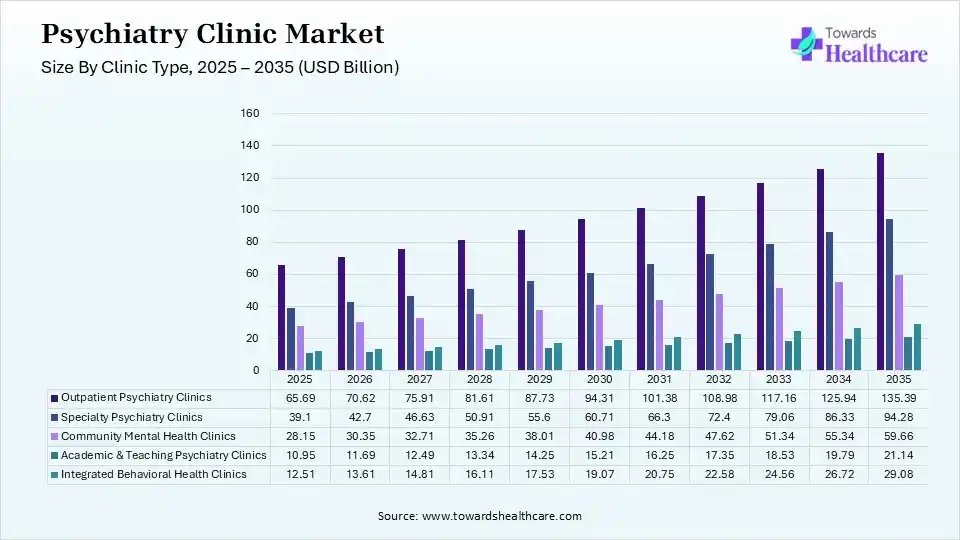
| Segment | Share 2025 (%) |
| Outpatient Psychiatry Clinics | 42% |
| Specialty Psychiatry Clinics | 25% |
| Community Mental Health Clinics | 18% |
| Academic & Teaching Psychiatry Clinics | 7% |
| Integrated Behavioral Health Clinics | 8% |
The Outpatient Psychiatry Clinics Segment Dominated the Market With 42% in 2025
The outpatient psychiatry clinics segment led the psychiatry clinic market with a 42% share in 2025, due to the largest patient volume. Expansion of insurance reimbursement, where growth in the demand for routine psychiatric care also increased their use. At the same time, affordable treatment options and shorter waiting times also increased their acceptance rates.
The specialty psychiatry clinics segment held the second-largest share of 25% of the market in 2025 and is expected to witness the fastest growth with a CAGR of 9.2% during the forecast period, driven by the rising prevalence of complex disorders. Specialized treatment programs expand, which supports their use. Precision mental healthcare adoption also increases their use.
The community mental health clinics segment held 18% of the psychiatry clinic market share in 2025, driven by government funding, which improves access. Expansion of community outreach programs is also encouraging their use. Focus on underserved populations is growing, which is increasing their use.
The integrated behavioral health clinics segment held 8% of the market share in 2025, due to a rise in primary care integration. Collaborative care models improve outcomes, which is increasing their use. At the same time, increasing healthcare systems' investments are also driving the adoption of various models and are enhancing their accessibility.
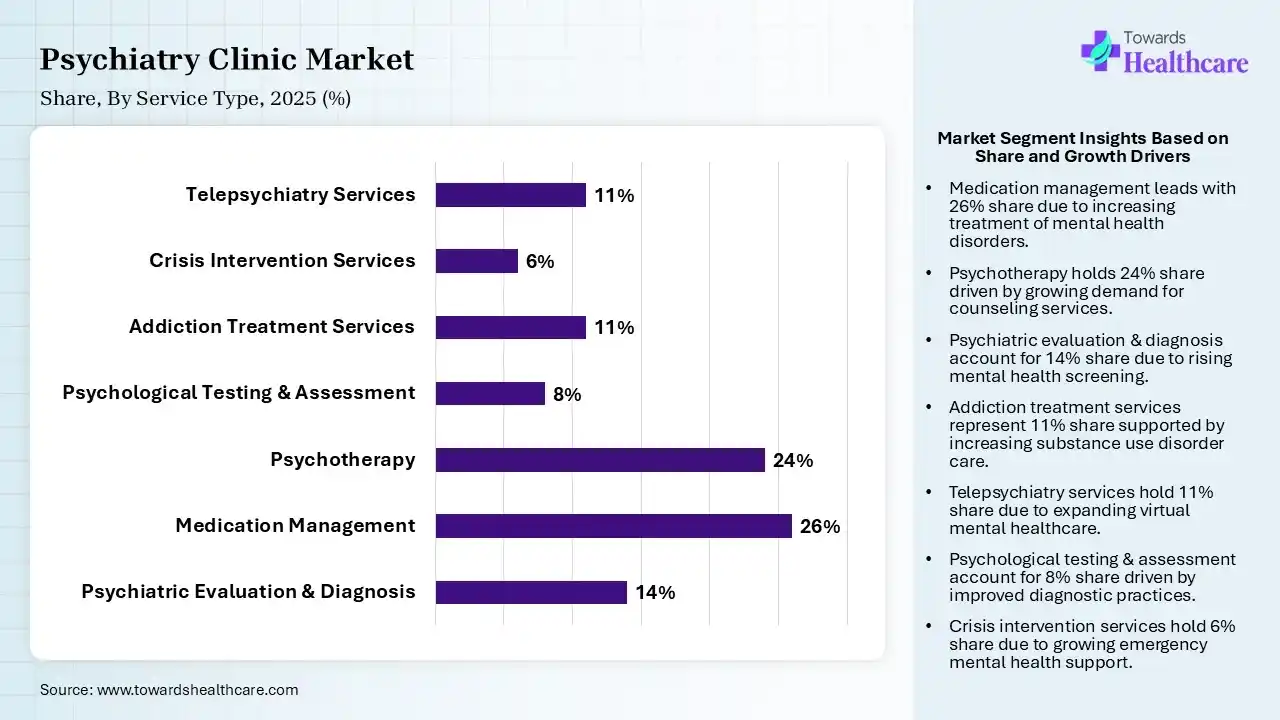
| Segment | Share 2025 (%) |
| Psychiatric Evaluation & Diagnosis | 14% |
| Medication Management | 26% |
| Psychotherapy | 24% |
| Psychological Testing & Assessment | 8% |
| Addiction Treatment Services | 11% |
| Crisis Intervention Services | 6% |
| Telepsychiatry Services | 11% |
The Medication Management Segment Dominated the Market With 26% in 2025
The medication management segment accounted for the highest revenue share of 26% of the psychiatry clinic market in 2025, driven by growth in chronic psychiatric disease management. Follow-up visits remain frequent, which increases the use of these services. Medication adherence programs expand, driving the demand for medication management.
The psychotherapy segment held the second-largest share of 24% of the market in 2025, due to rising preference for non-pharmacological care. Evidence-based therapies expansion also increases their use. Mental wellness awareness increases, driving their demand. Growing demand for personalized care is also increasing their use.
The psychiatric evaluation & diagnosis segment held 14% of the market share in 2025, due to early diagnosis initiatives expansion. Standardized assessments improve accuracy, increasing their acceptance rates. Referral demand is also increasing steadily, promoting their use.
The addiction treatment services segment held 11% of the psychiatry clinic market share in 2025 and is expected to show the highest growth with a CAGR of 9.4% during the forecast period, due to a rise in substance abuse prevalence. Integrated addiction treatment expansion also increases their acceptability. Government support is also strengthening these services.
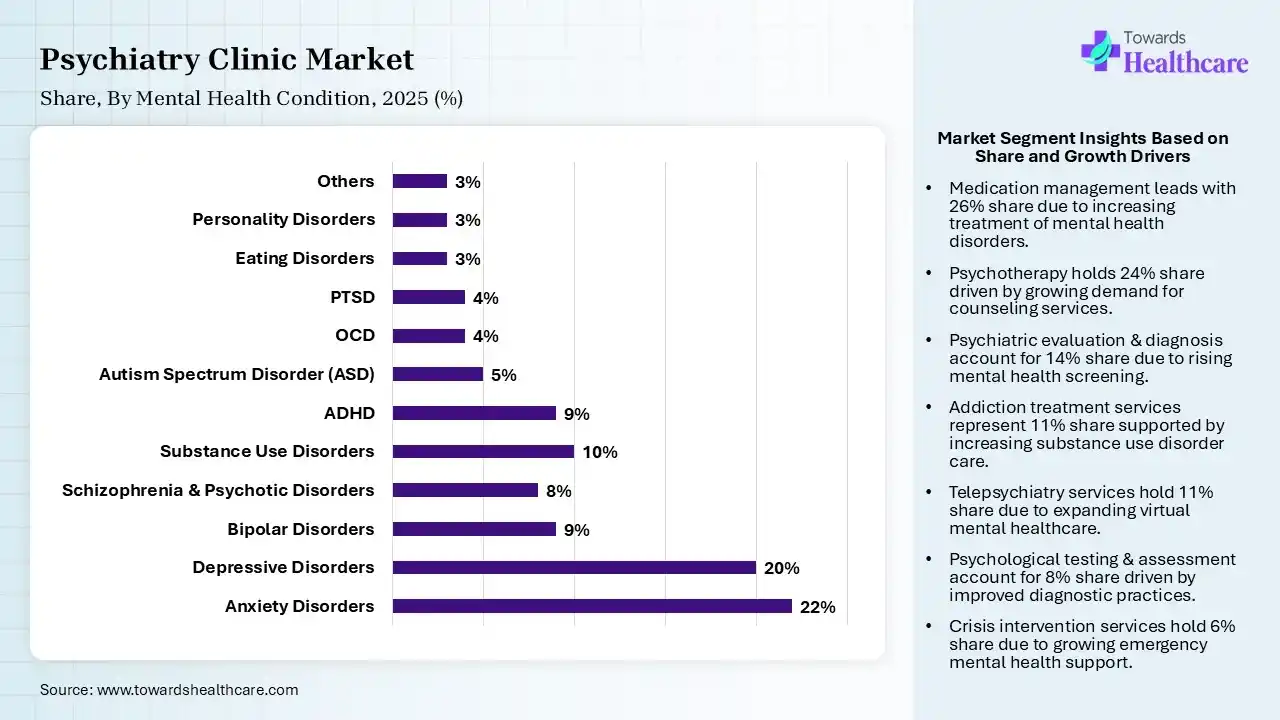
| Segment | Share 2025 (%) |
| Anxiety Disorders | 22% |
| Depressive Disorders | 20% |
| Bipolar Disorders | 9% |
| Schizophrenia & Psychotic Disorders | 8% |
| Substance Use Disorders | 10% |
| ADHD | 9% |
| Autism Spectrum Disorder (ASD) | 5% |
| OCD | 4% |
| PTSD | 4% |
| Eating Disorders | 3% |
| Personality Disorders | 3% |
| Others | 3% |
The Anxiety Disorders Segment Dominated the Market With 22% in 2025
The anxiety disorders segment held a major revenue share of 22% of the psychiatry clinic market in 2025, due to an increase in stress-related disorders. A continued rise in diagnosis rates also increased the use of various psychiatry solutions. Expansion of early intervention also increased the demand for psychiatry clinics.
The depressive disorders segment held the second-largest share of 20% of the market in 2025, driven by increasing depression awareness. At the same time, expanding screening programs are also increasing the availability of psychiatry services. Treatment accessibility increases, driving their adoption.
The substance use disorders segment held 10% of the psychiatry clinic market share in 2025 and is expected to expand rapidly with a CAGR of 9.5% during the forecast period, driven by rising addiction prevalence. Integrated behavioral care expansion is also fueling the demand for various psychiatry services. Expanding policy support also strengthens treatment.
The ADHD segment held 9% of the market share in 2025, due to a rise in adult diagnoses. Growing ADHD awareness globally is also increasing early diagnosis and demand for effective treatment options. Specialized clinics' expansion is also increasing their adoption rates.
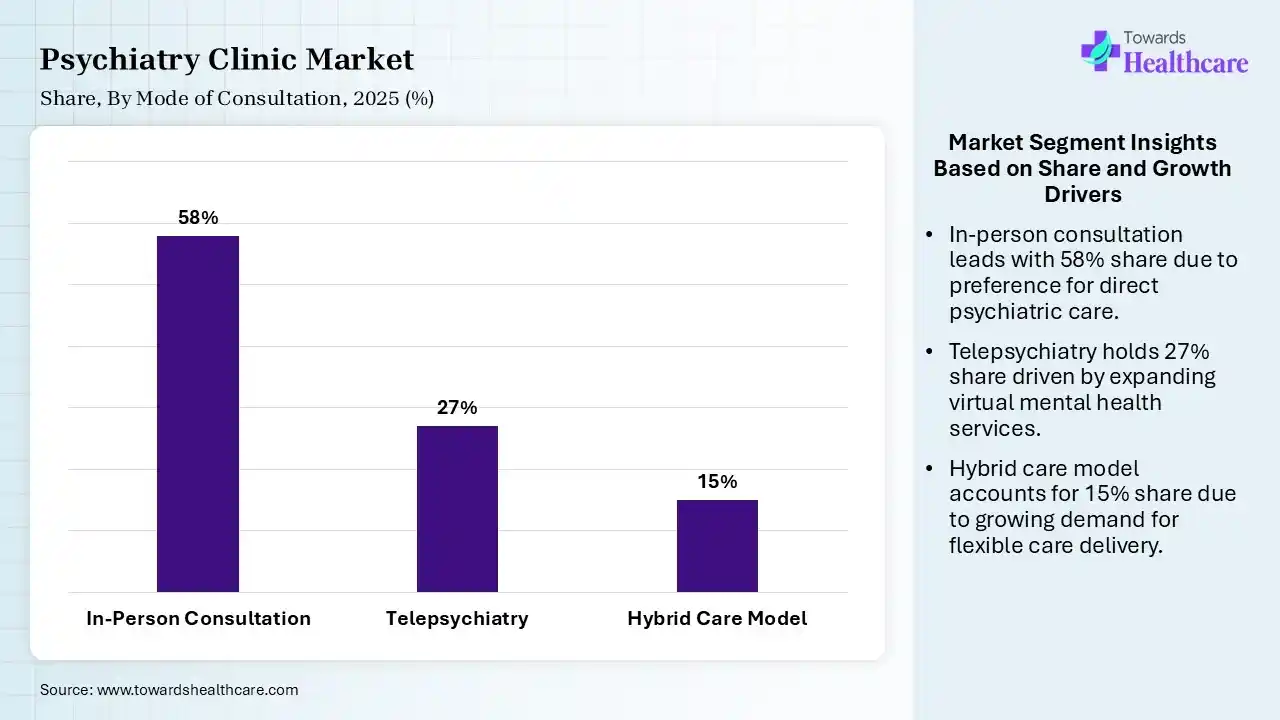
| Segment | Share 2025 (%) |
| In-Person Consultation | 58% |
| Telepsychiatry | 27% |
| Hybrid Care Model | 15% |
The In-Person Consultation Segment Dominated the Market With 58% in 2025
The in-person consultation segment contributed the biggest revenue share of 58% of the psychiatry clinic market in 2025, driven by complex evaluations, which required physical visits. They were also preferred by patients for management of severe mental health conditions. presence of specialized procedures also continued their expansion.
The telepsychiatry segment held the second-largest share of 27% of the market in 2025 and is expected to gain the highest share with a CAGR of 10.2% during the forecast period, due to accelerated adoption of digital healthcare. Remote accessibility improves, promoting their use. Technology platforms expand rapidly, driving their demand.
The hybrid care model segment held 15% of the psychiatry clinic market share in 2025, driven by flexible treatment improving engagement. Continuity of care strengthens, which supports their adoption rates. Providers optimize efficiency, which increases their acceptance rates.
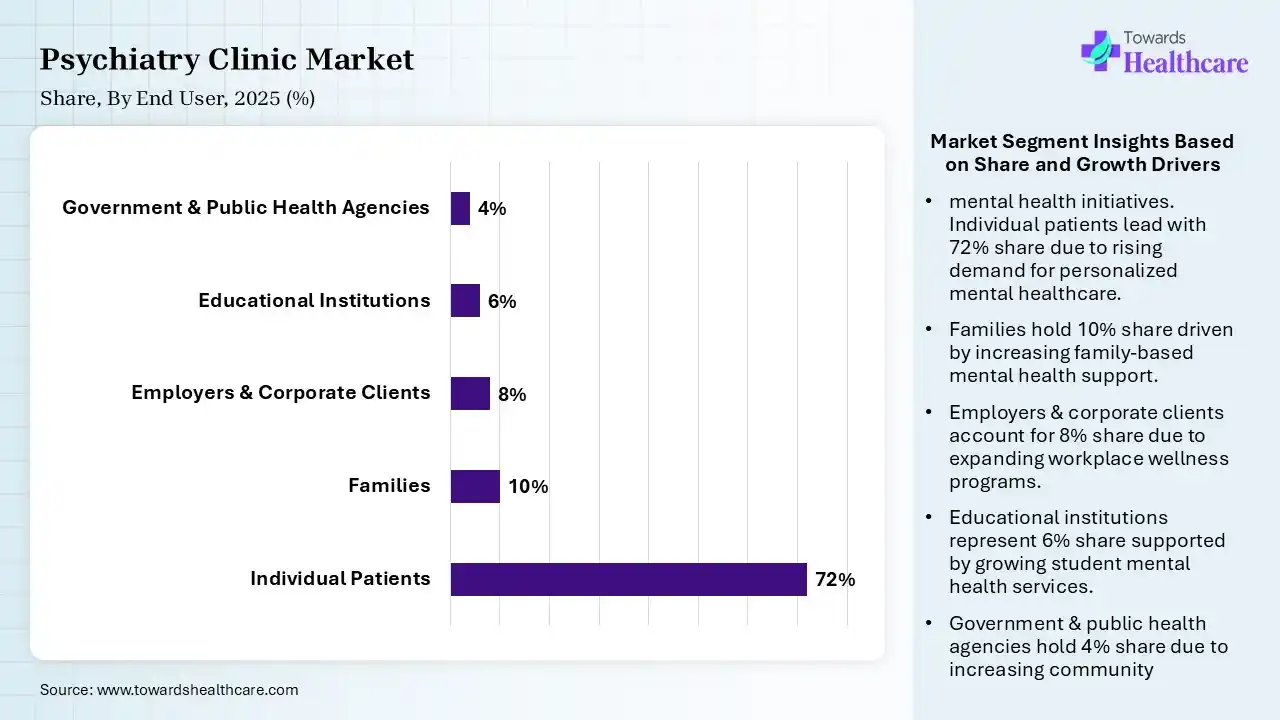
| Segment | Share 2025 (%) |
| Individual Patients | 72% |
| Families | 10% |
| Employers & Corporate Clients | 8% |
| Educational Institutions | 6% |
| Government & Public Health Agencies | 4% |
The Individual Patients Segment Dominated the Market With 72% in 2025
The individual patients segment held the largest revenue share of 72% of the psychiatry clinic market in 2025, due to growth in the demand for direct care. A rise in awareness also increased the use of psychiatry clinics globally. Improved insurance access and growth in personalized care also increased their use.
The families segment held the second-largest share of 10% of the market in 2025, driven by family counseling expansion. Caregiver involvement increases, which also drives the demand for psychiatry services. Rising adoption of holistic treatment also increases their use.
The employers & corporate clients segment held 8% of the psychiatry clinic market share in 2025 and is expected to grow with the fastest CAGR of 9.3% during the forecast period, driven by a rise in workplace mental health investments. Productivity initiatives expand, promoting their use. Employee wellness programs grow, leading to a rise in psychiatry clinics.
The educational institutions segment held 6% of the market share in 2025, due to rising student mental health demand. Expansion of campus counseling is also increasing the use of psychiatry clinics by students. Early intervention programs are increasing, driving their use.
North America dominated the psychiatry clinic market with 40% in 2025, due to strong reimbursement systems. High mental healthcare spending and a large specialist workforce also increased the use of psychiatry clinics. Growth in mental health disorders and a rise in health awareness also increased the demand for psychiatric services, while growth in government initiatives and funding also increased accessibility to their services. A rise in the demand for personalized services and adoption of digital mental health technologies also contributed to the market growth.
US Market Growth
The U.S. held a share of 82% of the psychiatry clinic market in 2025, due to the presence of a large patient population. The presence of advanced mental healthcare infrastructure and strong insurance coverage also increased the adoption of psychiatry clinics, where high healthcare spending also increased accessibility to various mental health services. Growth in government support and a rise in health awareness also increased the use of psychiatry services. Expansion of specialized psychiatry services and personalized psychiatry also enhanced their usage.
Mexico Market Growth
Mexico held a share of 6% of the psychiatry clinic market in 2025, and is expected to grow at the fastest CAGR of 8.20% during the forecast period, due to increasing mental health awareness. Rising incidences of anxiety and depression are also increasing the demand for psychiatry clinics, where growing healthcare investments are also driving the development of private clinics and telepsychiatry services. At the same time, growing government support and insurance coverage are also increasing the accessibility and acceptance rate of these services.
Asia Pacific held a 22% share of the psychiatry clinic market in 2025 and is expected to grow at the fastest CAGR of 9.6% during the forecast period, due to rising mental health awareness. Expanding healthcare infrastructure and telepsychiatry adoption are also accelerating the use of psychiatry clinics. Increasing prevalence of anxiety, stress, and depression are also increasing the patient population, leading to a rise in the use of various psychiatry services. Additionally, declining stigma, government support, and expansion of specialized psychiatry clinics are also enhancing the market growth.
China Market Growth
China held a share of 30% of the psychiatry clinic market in 2025, due to increased cases of mental health disorders. Growth in health awareness, government initiatives, and public education also increased the use of psychiatry clinics, where expansion of psychiatric hospitals and services also increased their accessibility. Rapid urbanization and government support also accelerated the development and adoption of telepsychiatry platforms, remote monitoring technologies, and specialized psychiatry services.
India Market Growth
India held a share of 18% of the psychiatry clinic market in 2025 and is expected to grow at the fastest CAGR of 11% during the forecast period, due to a growing patient population, where the rise in mental health awareness is also increasing the demand for psychiatry clinics. Increasing government programs and expanding healthcare infrastructure are also promoting the use of their services. Increasing workplace awareness and reducing stigma are also increasing the use of these clinics. A rise in the adoption of new mental health tools is also creating new opportunities.
R&D
Clinical Trials and Regulatory Approvals
Patient Support and Services
| Psychiatry Clinics | Headquarters | Their Services |
| LifeStance Health | Scottsdale, U.S. | Adult Psychiatry & Medication Management, Child & adolescent behavioral therapy |
| Talkspace | New York City, U.S. | Virtual psychiatry, teen online therapy, and couples therapy program |
| Cadabam’s Hospitals | Bengaluru, India | Psycho-oncology, geriatric psychiatry, substance abuse rehab |
| Asha Hospital | Hyderabad, India | Asha Bipolar & OCD Clinic, Asha Jyothi Rehabilitation Centre, and Asha Women’s Mental Health Service |
| VIMHANS | New Delhi, India | Acute psychiatric inpatient care, stroke rehabilitation, and neuropsychiatry |
| Companies | Headquarters | Psychiatry Products |
| Johnson & Johnson | New Brunswick, U.S. | Invega, Risperdal, and Spravato |
| Takeda Pharmaceutical Company | Tokyo, Japan | Vyvanse and Trintellix |
| Bristol Myers Squibb | Princeton, U.S. | Cobenfy and Abilify |
| AstraZeneca PLC | Cambridge, UK | Seroquel |
| AbbVie | North Chicago, U.S. | Vraylar and Viibryd |
In December 2025, after the inauguration of Adayu, a 36-bed hospital dedicated to mental healthcare in India, Fortis Healthcare Managing Director and CEO Ashutosh Raghuvanshi highlighted that “Adayu represents a transformative milestone in India’s mental healthcare journey by addressing long-standing gaps in infrastructure, investment and systemic integration within the healthcare framework.”
By Clinic Type
By Service Type
By Mental Health Condition
By Mode of Consultation
By End User
By Patient Age Group
By Ownership
By Payment Type
By Region








Principal Consultant
Rohan Patil is a seasoned market research professional with over 5+ years of focused experience in the healthcare sector, bringing deep domain expertise, strategic foresight, and analytical precision to every project he undertakes.
Learn more about Rohan Patil

Reviewed By
Aditi Shivarkar is a seasoned professional with over 14 years of experience in healthcare market research. As a content reviewer, Aditi ensures the quality and accuracy of all market insights and data presented by the research team.
Learn more about Aditi Shivarkar









