

Pipeline Programs

CGT Companies Tracked

Manufacturing Facilities


The global mental health market size is expected to be worth around USD 682.51 Billion by 2035, from USD 490.91 billion in 2025, growing at a CAGR of 3.35% during the forecast period from 2026 to 2035.
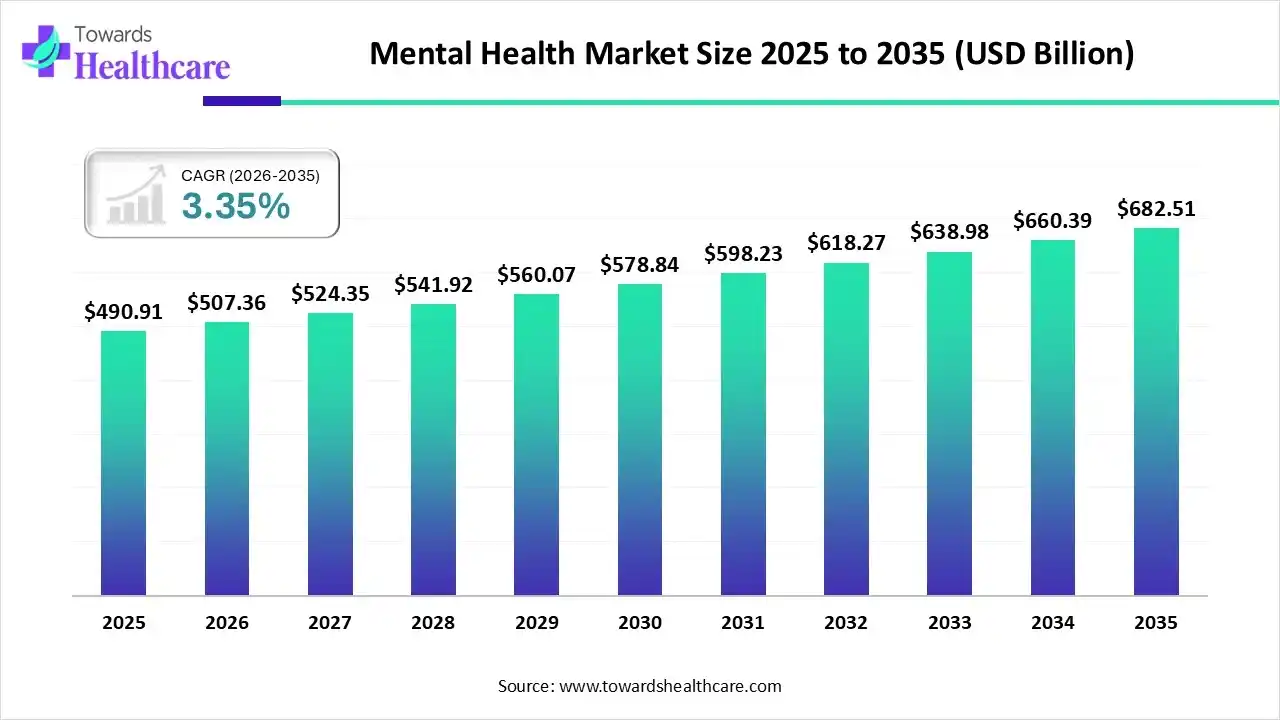
The mental health market is experiencing robust growth, driven by growing awareness of mental health conditions and their early diagnosis and treatment. Government bodies play a crucial role in raising awareness of mental health through several programs. The market is booming in emerging countries of the Asia-Pacific, Europe, and South America. The increasing use of telemedicine and other digital solutions presents future opportunities for market growth.
The mental health market refers to developing diagnostics and therapeutics, as well as providing preventive, diagnostic, therapeutic, and rehabilitative measures for patients suffering from anxiety, depression, substance use disorder, and other mental health conditions. The World Health Organization (WHO) states that over a billion people live with a mental health condition globally. Mental health is a state of mental well-being that enables people to cope with the stresses of life, realize their abilities, learn well, and work well.
Mental health refers to an individual’s emotional, psychological, and social well-being, influencing how people think, feel, manage stress, build relationships, and make decisions throughout life. The mental health market is expanding due to the rising prevalence of anxiety, depression, and other psychiatric disorders, growing awareness of mental wellness, and increasing demand for accessible care. Key trends include the adoption of telepsychiatry, mental health apps, and virtual therapy platforms that improve patient engagement. Technological advancements such as artificial intelligence, digital therapeutics, wearable health devices, and predictive analytics are enabling personalized treatment and continuous monitoring. Future opportunities are emerging through the integration of mental healthcare into primary care, expansion of employer-sponsored wellness into primary care, expansion of employer-sponsored wellness programmes, increased investments in behavioral health technologies, and broader access to remote mental health services across underserved populations.
Artificial intelligence (AI) and machine learning (ML) offer the potential to revolutionize mental healthcare by providing insights and solutions. They provide advanced detection capabilities, tailored therapies, and virtual therapeutic platforms. AI-based tools enable remote patient monitoring, eliminating the need for patients to visit healthcare organizations. Wearable sensors can continuously monitor patients' vital signs, providing real-time data to healthcare professionals. This enables doctors to make effective clinical decisions. Thus, integrating AI into mental health is reshaping the landscape of mental healthcare.
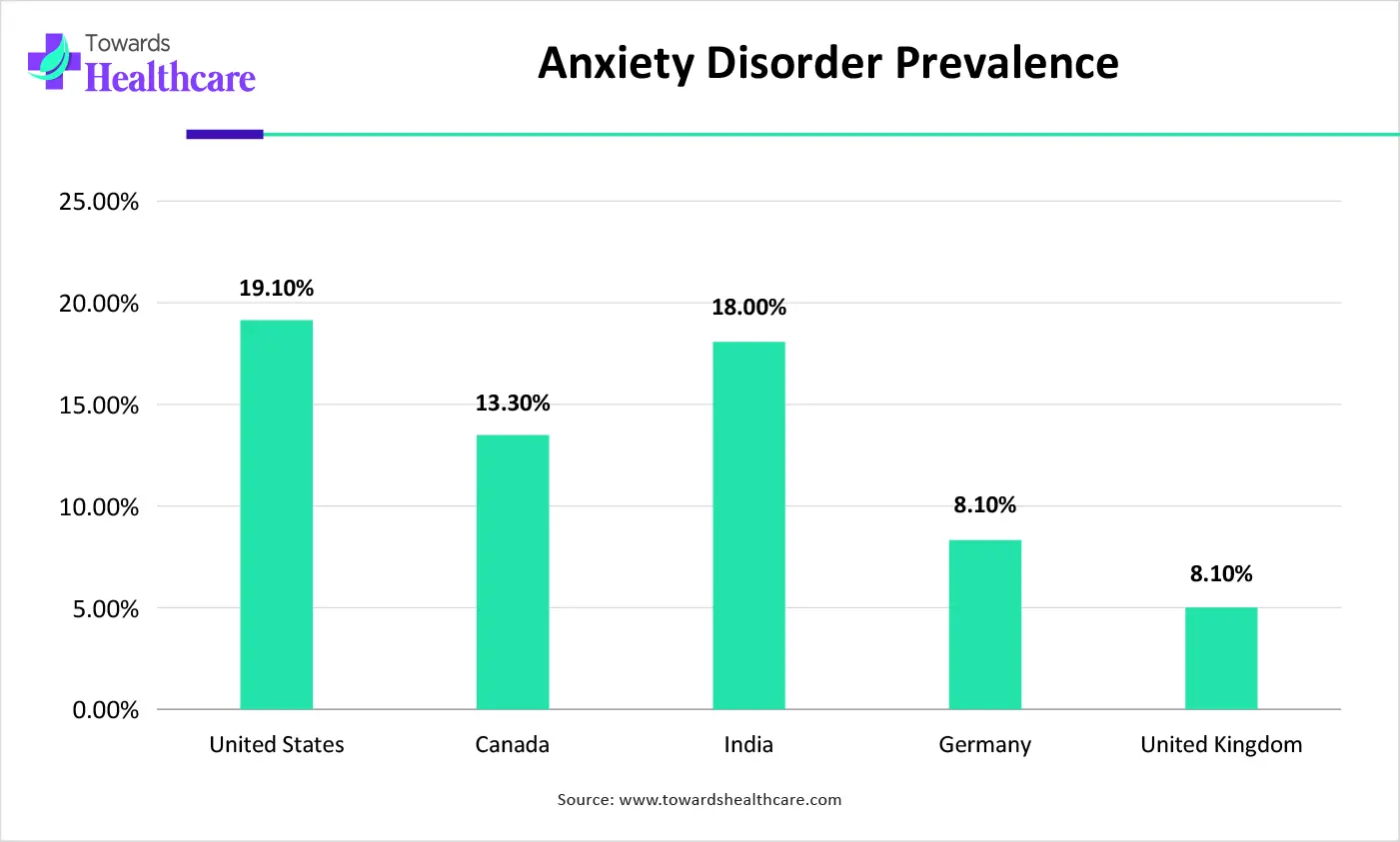
| Countries | Prevalence Rate of Anxiety Disorders |
| United States | 19.10% |
| Canada | 13.30% |
| India | 18.00% |
| Germany | 8.10% |
| United Kingdom | 5.00% |
| Key Elements | Scope |
| Market Size in 2026 | USD 507.36 Billion |
| Projected Market Size in 2035 | USD 682.51 Billion |
| CAGR (2026 - 2035) | 3.35% |
| Leading Region | North America by 40% |
| Historical Data | 2020 - 2023 |
| Base Year | 2025 |
| Forecast Period | 2026 - 2035 |
| Measurable Values | USD Millions/Units/Volume |
| Market Segmentation | By Services, By Disorder, By Platform, By Age Group, By End-User, By Region |
| Top Key Players | Boehringer Ingelheim, Alkermes plc, Compass Pathways, Relmada Therapeutics, Inc., Eli Lilly and Company, Alto Neuroscience, Lyra Health, Wysa, Acadia Healthcare |
| Segments | Shares % |
| Outpatient Counselling | 34% |
| Inpatient Hospital Treatment Services | 24% |
| Home-based Treatment Services | 16% |
| Emergency Mental Health Services | 14% |
| Other Services | 12% |
The outpatient counselling segment held a dominant position in the market share by 34% in 2025, due to the need for personalized and physical care. Outpatient counselling eliminates the need for patients to stay overnight in healthcare organizations, saving extra costs. Doctors offer compassionate and holistic mental wellness services through therapy, counseling, and mindful healing. They can observe minute behavioral changes in their patients and provide appropriate treatment.
Emergency Mental Health Services
The emergency mental health services segment is expected to grow at the fastest CAGR in the market during the forecast period. Emergency mental health services provide immediate support for crises like suicidal thoughts or severe distress. These services are available 24/7 and have skilled professionals to act immediately. They prevent delayed support, resulting in immediate care. Care coordination becomes easier, and providers can collaborate to continue the healing journey.
| Segments | Shares % |
| Depression | 26% |
| Anxiety | 20% |
| Substance Abuse Disorder | 14% |
| Alcohol Use Disorders | 10% |
| Bipolar Disorder | 8% |
| Schizophrenia | 7% |
| Post-traumatic Stress Disorder | 6% |
| Eating Disorder | 5% |
| Other Disorders | 4% |
Why Did the Depression Segment Dominate the Mental Health Market?
The depression segment held the largest revenue share of 26% of the market in 2025, due to the rising incidences of clinical depression and the growing need for immediate care. The WHO reported that approximately 5.7% of global adults suffer from depression. Also, depression is about 1.5 times more common among women than men. It is a persistent feeling of sadness and changes in how patients think, act, or sleep. Common treatment regimens for depression include psychotherapy, medication, and brain stimulation therapy.
Anxiety
The anxiety segment is expected to grow with the highest CAGR in the market during the studied years. Anxiety disorders are the most common mental illness around the world, affecting over 360 million people. They cause fear, dread, and other physical symptoms, such as a pounding heart and sweating. Anxiety is treated using medications, such as antidepressants, benzodiazepines, and beta-blockers, as well as psychotherapy, such as cognitive behavioral therapy (CBT) and exposure therapy.
| Segments | Shares % |
| Online Therapy Platforms | 36% |
| Mental Health Mobile Apps | 24% |
| AI-Powered Mental Health Tools | 18% |
| Wearables & Biofeedback Devices | 12% |
| Others | 10% |
How the Online Therapy Platforms Segment Dominated the Mental Health Market?
The online therapy platforms segment contributed the biggest revenue share of 36% of the market in 2025, due to the growing demand for telemedicine and remote monitoring. Online therapy platforms connect patients with expert healthcare professionals from diverse geographical locations, eliminating the need to travel. They enable confidential counselling through video, audio, or chat modes. BetterLYF, TalktoAngel, and Talkspace are commonly used online therapy platforms.
AI-Powered Mental Health Tools
The AI-powered mental health tools segment is expected to expand rapidly in the market in the coming years. AI-powered mental health tools become a patient assistance in detecting and evaluating common symptoms of mental health disorders. They provide customized solutions and certain measures to prevent severe conditions. AI-driven virtual therapists and chatbots offer scalable solutions to the growing demand for mental health support.
| Segments | Shares % |
| Adult | 62% |
| Pediatric | 23% |
| Geriatric | 15% |
What Made the Adult Segment the Dominant Segment in the Mental Health Market?
The adult segment accounted for the highest revenue share of 62% of the market in 2025, due to the growing awareness among adults and sedentary lifestyles. The adult population suffers from high stress levels due to work-life balance and family issues. Young adults, from 18 to 29 years, are still experiencing cognitive development, leading to mental illness. Moreover, adults are comparatively more aware of treating mental illnesses than other age groups through social media or government awareness programs.
| Segments | Shares % |
| Hospitals & Clinics | 46% |
| Homecare Settings | 30% |
| Rehabilitation Centers | 24% |
Which End-User Segment Led the Market?
The hospitals & clinics segment led the market by 46% share in 2025, due to the presence of skilled professionals and favorable infrastructure. Hospitals have experts from various departments, providing multidisciplinary expertise to patients. Hospitals & clinics have sufficient capital investment to adopt specialized equipment for mental health diagnosis and treatment. They provide personalized care to patients and have provisions for both inpatient and outpatient services.
Homecare Settings
The homecare settings segment is expected to witness the fastest growth in the mental health market over the forecast period. Patients demand home-based care and treatment from the comfort of their homes, reducing the risk of social anxiety. The increasing adoption of smartphones and tablets has enhanced access to digital therapeutics or teletherapy. The use of digital therapeutics accelerated during the post-COVID era.
North America dominated the global market by 40% share in 2025. The presence of key players, favorable regulatory support, and the rising adoption of digital tools for mental health are major factors that drive market growth in North America. Countries like the U.S. and Canada witness a surge in mental health startups and venture capital investments, propelling market growth. Government agencies raise public awareness for mental health disorders through initiatives and action plans.
US Market Trends
It is estimated that approximately 23.4% of U.S. adults had mental illnesses in 2024, accounting for 61.5 million people. The digital mental health startups in the U.S. raised $682 million collectively in H1 2024. Of which, Talkiatry and Grow Therapy raised the highest amounts, accounting for $130 million and $88 million, respectively. Such an investment trend has amplified market growth in the U.S.
Canada Strengthens Its Mental Health Market
Canada is witnessing significant growth in the mental health market due to increasing awareness of mental well-being, strong government support for mental health services, and rising adoption of digital mental healthcare solutions. Expanding access to telepsychiatry, growing investments in behavioral health programmes, and increasing demand for early intervention and personalized care are further driving market growth.
Asia-Pacific is expected to grow at the fastest CAGR in the market by 22% share in 2025 during the forecast period. The rising prevalence of mental health disorders and growing awareness augments the market. More than 60% of the burden of mental health disorders in APAC is known to be due to depressive disorders, migraine, anxiety disorders, and schizophrenia. Thus, regulatory bodies implement strong promotion and prevention strategies and strengthen accessible and wide-ranging services for diverse mental health conditions.
China Market Trends
The WHO estimated that around 54 million Chinese suffer from depression and 41 million suffer from anxiety. The burgeoning healthcare sector and several government measures propel the market. The National Health Commission (NHC) of China designated 2025 to 2027 as the “Years of Pediatric and Mental Health Services” to expand the professional workforce, enhance capabilities, and improve standards.
India emerges as a High-Growth Mental Health Market
India is witnessing notable growth in the mental health market due to increasing awareness of mental well-being, rising prevalence of mental health disorders, expanding access to mental healthcare services, and supported government initiatives. Growing adoption of telemedicine, digital mental health platforms, and increased investment in behavioral healthcare infrastructure are further accelerating market growth.
Europe is expected to grow by 26% share in 2025 at a notable CAGR in the foreseeable future. Mental health disorders are on the rise across Europe, affecting over 1 in 6 people. The increasing healthcare expenditure, technological advancements, and favorable government support foster the market. The rising collaborations among key players and public-private partnerships lead to the development of innovative solutions for mental health. The growing research activities and the increasing number of clinical trials also contribute to market growth.
UK Market Trends
Mental health affects 1 in 4 people in England and costs approximately £300 billion annually to the UK economy. The UK government invested £50 million in groundbreaking research to deliver more effective treatments. Additionally, the “Mental Health Goals programme” will attract industry partnerships and commercial clinical trials across the UK. As of 10th December 2025, 297 clinical trials are registered in the UK related to mental health.
Germany Strengthens its Mental Health Market
Germany is witnessing significant growth in the mental health market due to its well-established healthcare systems, increasing awareness of mental health disorders, and strong government support for mental healthcare services. Rising adoption of digital therapeutics, expansion of telepsychiatry, growing investments in behavioral healthcare, and increasing demand for early diagnosis and personalized treatment are further driving market growth.
South America is now a key player in mental health, driven by socio-political issues, rising anxiety and depression rates, and a shift towards accessible, community-focused care. The region faces a significant increase in mental health problems, with anxiety levels surpassing those in many developed nations, highlighting the urgent need for effective solutions. Buenos Aires, Argentina, boasts a strong therapeutic culture, with one of the highest psychologist-to-population ratios globally, normalizing mental health services and increasing demand for specialized methods like psychoanalysis. Since the 1990 Caracas Declaration, many South American countries have transitioned from hospital-based care to community-oriented models, backed by new national policies and mental health laws.
Brazil Market Trends
Brazil leads in mental health, especially telehealth, due to high rates of anxiety and depression, necessitating rapid tech-driven growth to address unmet demand. The market is fueled by prevalent mental health issues, a young population, increased digital adoption post-pandemic, and a focus on corporate mental health programs. Brazil has the highest anxiety rates in Latin America and significant depression rates, with mental health disorders comprising about one-third of chronic noncommunicable diseases. In response, the government has enforced regulations requiring businesses to implement mental health management strategies and combat burnout, promoting corporate investment in mental health services. Major cities like São Paulo, Rio de Janeiro, and Brasília, with strong internet connectivity, serve as tech hubs for mental health platforms.
The mental health sector in the Middle East and Africa is growing by 5% share due to investments in healthcare, better government initiatives, and increased demand from regional conflicts and high mental health disorder rates. Digital solutions like telemedicine are improving access, with countries like the UAE, Saudi Arabia, and Qatar leading in facility and service investments. Ongoing instability in Syria, Lebanon, and Palestine has heightened trauma-related issues, prompting governments to create national mental health strategies to reduce stigma and integrate mental health into primary care, further increasing the need for professional services.
Qatar Market Trends
The Qatar region has become a leader in the mental health market due to significant government funding, a shift towards community-based care, and quick digital integration. The Qatari government prioritizes mental health, implementing the National Mental Health Strategy (2013–2018) and the National Health Strategy 2018–2022, with over QAR 100 million invested to enhance infrastructure and services. It has moved away from traditional hospital-based care to a model that emphasizes community involvement. This change includes integrating mental health services into primary care facilities managed by the Primary Health Care Corporation (PHCC). With a smartphone penetration and the rapid adoption of telepsychiatry during the COVID-19 pandemic, the growth of digital mental health applications has greatly accelerated.
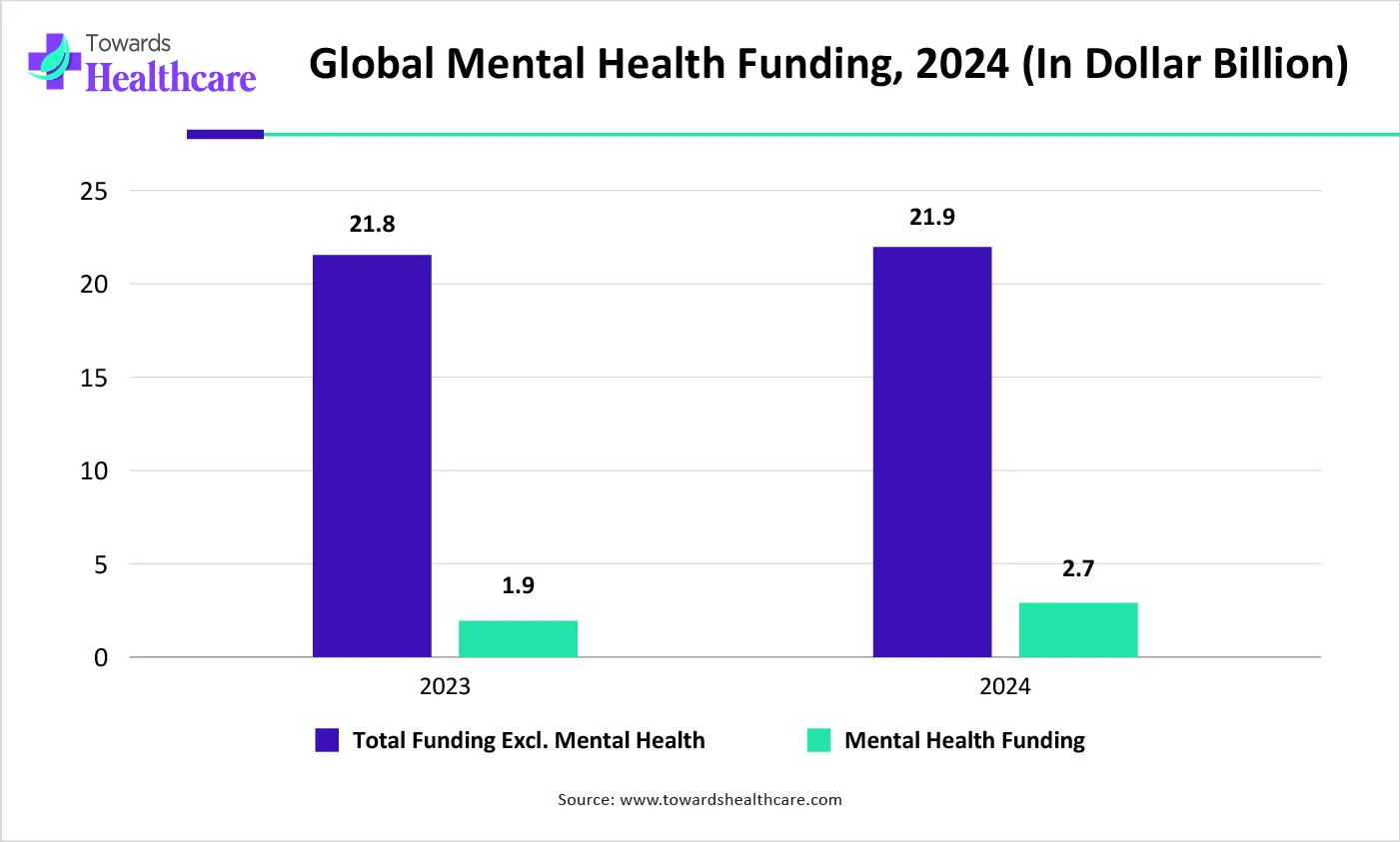
| Years | Total Funding excl. Mental Health | Mental Health Funding |
| 2023 | $21.8 billion | $1.9 billion |
| 2024 | $21.9 billion | $2.7 billion |
| Companies | Headquarters | Offerings | Revenue (2024) |
| Boehringer Ingelheim | Rhein, Germany | The company provides mental health treatment approaches and has 4 Phase 1 trials, 1 Phase 2 trial, and 1 Phase 3 trial. | EUR 26,796 million |
| Alkermes plc | Dublin, Ireland | It specializes in neuroscience to develop medicines designed to help people living with complex and difficult-to-treat psychiatric and neurological disorders. | $1.56 billion |
| Compass Pathways | United Kingdom | The biotech company is dedicated to accelerating patient access to evidence-based innovation in mental health. | - |
| Relmada Therapeutics, Inc. | Florida, United States | It focuses on R&D of transformative medicines for those living with debilitating disorders. It offers REL-1017, an NMDA receptor antagonist, for treating depression. | - |
| Eli Lilly and Company | Indiana, United States | The company offers anti-depressive and anti-psychotic medications and helps patients deal with complex disorders. | $45.042 billion |
| Alto Neuroscience | California, United States | It advances a suite of precision psychiatric medicines. ALTO-101 and ALTO-207 are under clinical development. | $169 million (cash position) |
| Lyra Health | California, United States | It offers a digital mental health platform that combines technology with human therapists and coaches. | $235 million |
| Wysa | Bengaluru, India | It provides a mental well-being AI app that keeps track of patients’ mood with friendly chats and helps fight stress and anxiety. | Rs 40 crore |
| Acadia Healthcare | Tennessee, United States | The company’s behavioral health treatment facilities specialize in helping children, adolescents, adults, and seniors suffering from mental health issues. | $3.15 billion |
In July 2026, “The combination of PsychPlus’s rapidly growing technology-enabled clinical network and Koa Health’s digital-first care delivery model creates a new global blueprint for mental health care,” said Faisal Tai, MD, CEO of PsychPlus.
Strength
Weakness
Opportunity
Threats
By Services
By Disorder
By Platform
By Age Group
By End-User
By Region





Principal Consultant
Payal Rabde is a Healthcare Market Research Analyst at Towards Healthcare Research & Consulting with 4+ years of experience in pharmaceuticals, biotechnology, medical devices, and life sciences.
Learn more about Payal Rabde

Reviewed By
Aditi Shivarkar is a seasoned professional with over 14 years of experience in healthcare market research. As a content reviewer, Aditi ensures the quality and accuracy of all market insights and data presented by the research team.
Learn more about Aditi Shivarkar










