


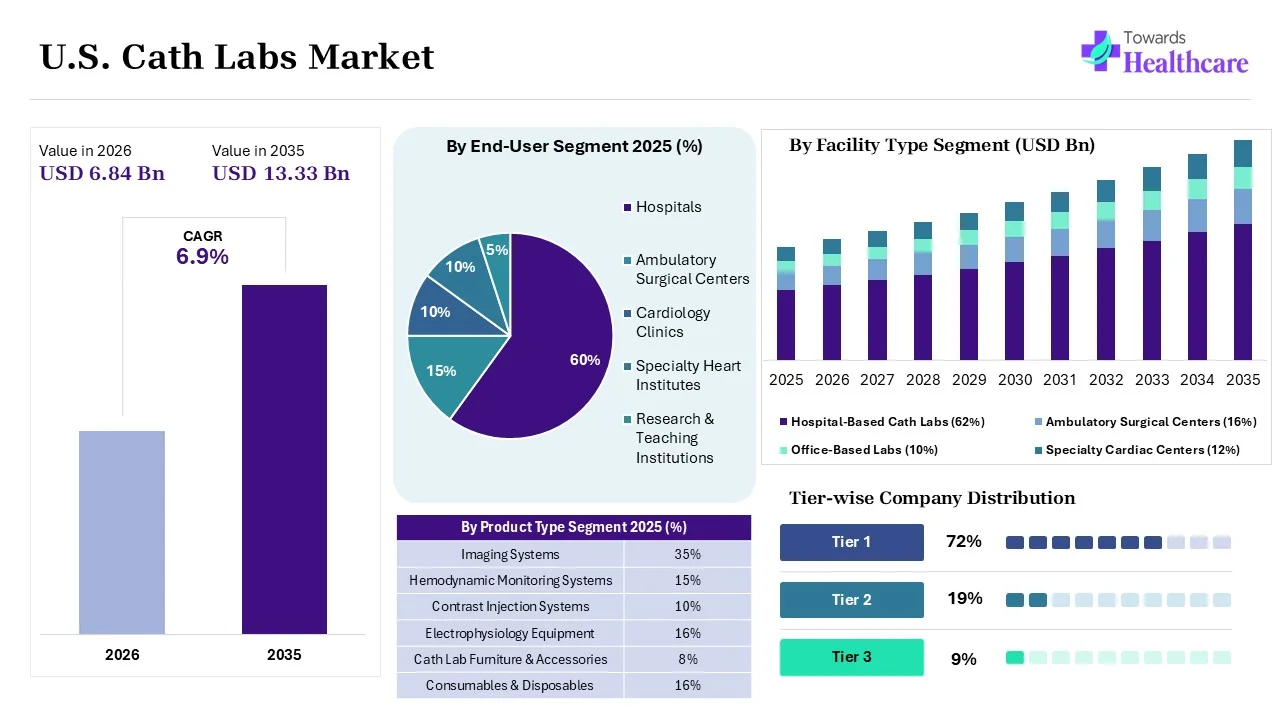
The U.S. cath labs market size was estimated at USD 6.84 billion in 2025 and is predicted to increase from USD 7.31 billion in 2026 to approximately USD 13.33 billion by 2035, expanding at a CAGR of 6.9% from 2026 to 2035. A growing geriatric population, a shift towards minimally invasive procedures, increasing cardiovascular disease burden, expanding outpatient services, growing AI innovations, and increasing health awareness are promoting the market growth.
The U.S. cath labs (catheterization laboratories) refer to the specialized medical facilities in hospitals or clinics offering advanced catheter-based technologies for the diagnosis and treatment of cardiovascular diseases across the U.S. They provide coronary angiography, percutaneous coronary intervention, structural heart interventions, hemodynamic assessment, and peripheral vascular interventions. They also help in electrophysiology procedures, cardiac device implantation, and treatment of a wide range of CVDs.
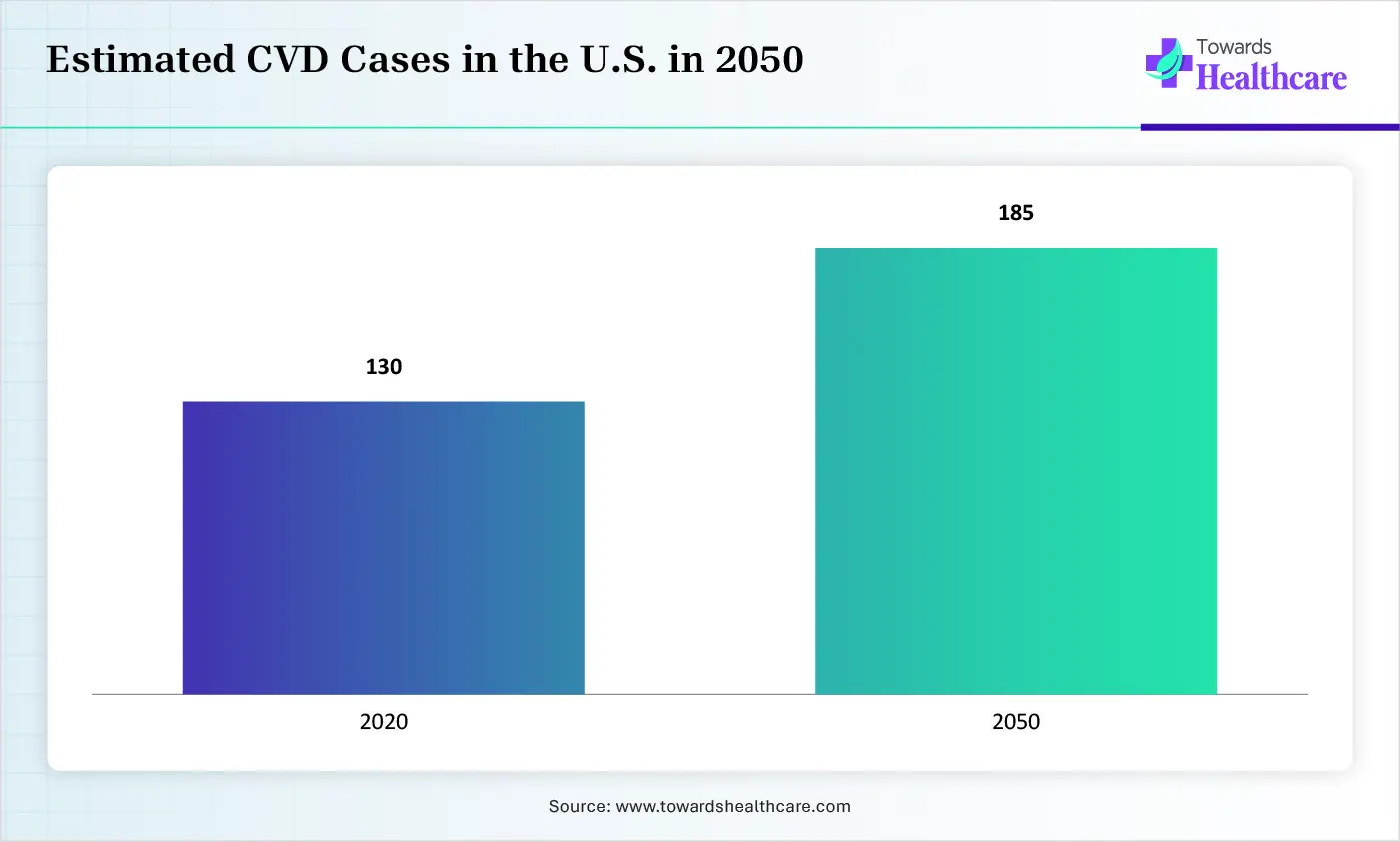
The graph represents a comparison between the cardiovascular disease cases in the U.S. for the years 2020 and 2050. It indicates that there will be a rise in CVD cases, which will drive the demand for advanced diagnostic and treatment options. This, in turn, will increase the shift towards the U.S. cath labs for the effective management and treatment of cardiovascular diseases, which will ultimately promote the market growth.
By product type, the imaging systems segment accounted for the highest revenue share of 35% of the U.S. cath labs market in 2025, as they were essential for all catheter-based procedures. They enhance safety, procedural precision, and clinical outcomes, which has increased their use. Their accurate guidance and reduced complications also increased their use in a wide range of cath lab procedures.
By procedure type, the coronary angiography segment held a major revenue share of 28% of the U.S. cath labs market in 2025, driven by a rise in coronary artery diseases. Their real-time visualization also increased their use in heart attack patients. Their rapid diagnosis and treatment decision also increased their success during emergency situations.
By application type, the coronary artery disease segment contributed the biggest revenue share of 42% of the U.S. cath labs market in 2025, due to growth in the CAD burden driven by obesity, hypertension, and diabetes. This increased the use of cath labs for early diagnosis and interventional cardiac procedures. Growth in screening programs and the geriatric population has also increased their use.
By end user, the hospitals segment held the largest revenue share of 60% of the U.S. cath labs market in 2025, due to growth in patient volume. They also contributed to the highest volume of cardiovascular diagnostic and interventional procedures. The presence of specialized cardiologists and reimbursement policies also increased their preference.
By technology type, the digital cath labs segment led the U.S. cath labs market with a 38% share in 2025, driven by their high resolution and real-time imaging. Their enhanced procedural precision and seamless integration also increased their use. They also offered faster 3D visualization, which enhanced the clinical outcomes.
The U.S. cath labs market held a significant share and is expected to expand rapidly during the predicted time due to the growing cardiovascular disease burden and the geriatric population. The presence of advanced healthcare infrastructure and reimbursement policies is also increasing the use of cath labs. Increasing investments, health awareness, and technological advancements are also enhancing the market growth.
GE HealthCare dominated the market with its Innova IGS series and Allia IGS interventional imaging suites, where Koninklijke Philips N.V. was its closest competitor, which provided the Azurion series and Allura FD image-guided systems. Siemens Healthineers AG also maintained its position by providing Artis icono and Artis zee angiography C-arm systems, where Abbott Laboratories also contributed to the market growth with its XIENCE and TriClip/MitraClip structural heart transcatheter systems.
By Product Type
By Procedure Type
By Application
By End User
By Technology
By Facility Type
By Ownership Model


