


Increasing cell-driven therapies (CAR-T), regenerative medicine, and targeted oncology treatments. Increasing chronic diseases and an aging population require well-developed, automated devices for high-purity cell separation and analysis, which drives the growth of the market.
Cell isolation products support the separation and recovery of intended cell types from an assumed sample, like tissue, blood, or culture. Recent advancements in single-cell isolation and analysis involve technologies, analyses, and significant applications. These important products allow the isolation of particular cell types from a heterogeneous combination. These products include kits, instruments, reagents, and software. Recent advancement of CAR-T cell therapies, stem cell transplants, and tissue engineering require highly advanced isolation technology to ensure the safety and efficacy of the patient. A surge in oncology, neurological disorders, and infectious diseases, particularly among an aging population, drives increasing research spending.
The global cell isolation and analysis products market size was estimated at USD 18.7 billion in 2025 and is predicted to increase from USD 20.91 billion in 2026 to approximately USD 57.05 billion by 2035, expanding at a CAGR of 11.8% from 2026 to 2035. The cell isolation and analysis products market is growing because of increasing technical innovation, rising demand for targeted medicine, and government support for cell-driven therapies.
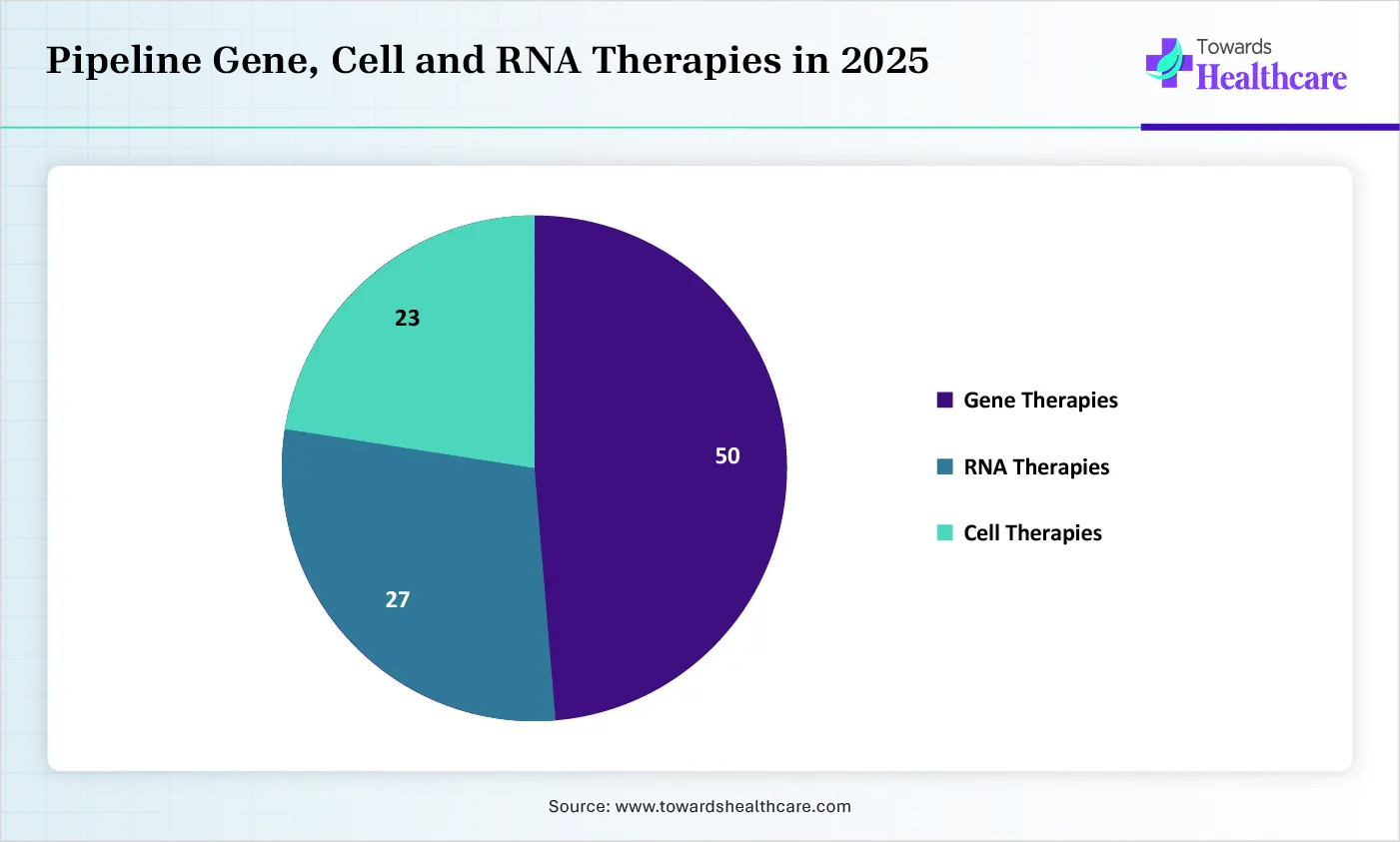
| Type of Therapy | Percentage |
| Gene Therapies | 49 |
| RNA Therapies | 29 |
| Cell Therapies | 22 |
Recent advances in combined biophysical and biochemical microfluidic processes for CTCs detection and separation. Available current CTCs separation based on biochemical and biophysical processes. Microfluidic platforms significantly advanced CTC identification by integrating a diversity of advanced techniques, enabling the most sensitive. Advances in micro-/nanostructure selection integrated microfluidic tools for CTC separation, involving microrods, nanowires, and 3D micro-nanostructures. The mechanisms through which these structures contribute to enhanced capture efficiency are discussed. Circulating tumor cells (CTCs) combine biophysical properties such as size, deformability, density, and biochemical properties like antibody affinity, functionalized surfaces techniques to enhance purity, isolation, and downstream analysis.
The top five companies in this group dominate the U.S. cell isolation and analysis products market. Meanwhile, Thermo Fisher Scientific has significantly expanded its spectral cell categorisation capabilities. BD worldwide leader in isolating and characterizing single cells using flow cytometry for both research and clinical diagnostics. Miltenyi Biotec, it maintains an enormous footprint in the U.S. with its MACS technology, which is considered the standard for magnetic cell separation. Agilent Technologies, its NovoCyte flow cytometer platform, and widespread focus on integrated omics kits. 10x Genomics is the leader in single-cell analysis, which uses exclusive microfluidic platforms.
By Product Type
By Cell Type
By Technique
By Application
By End User


