


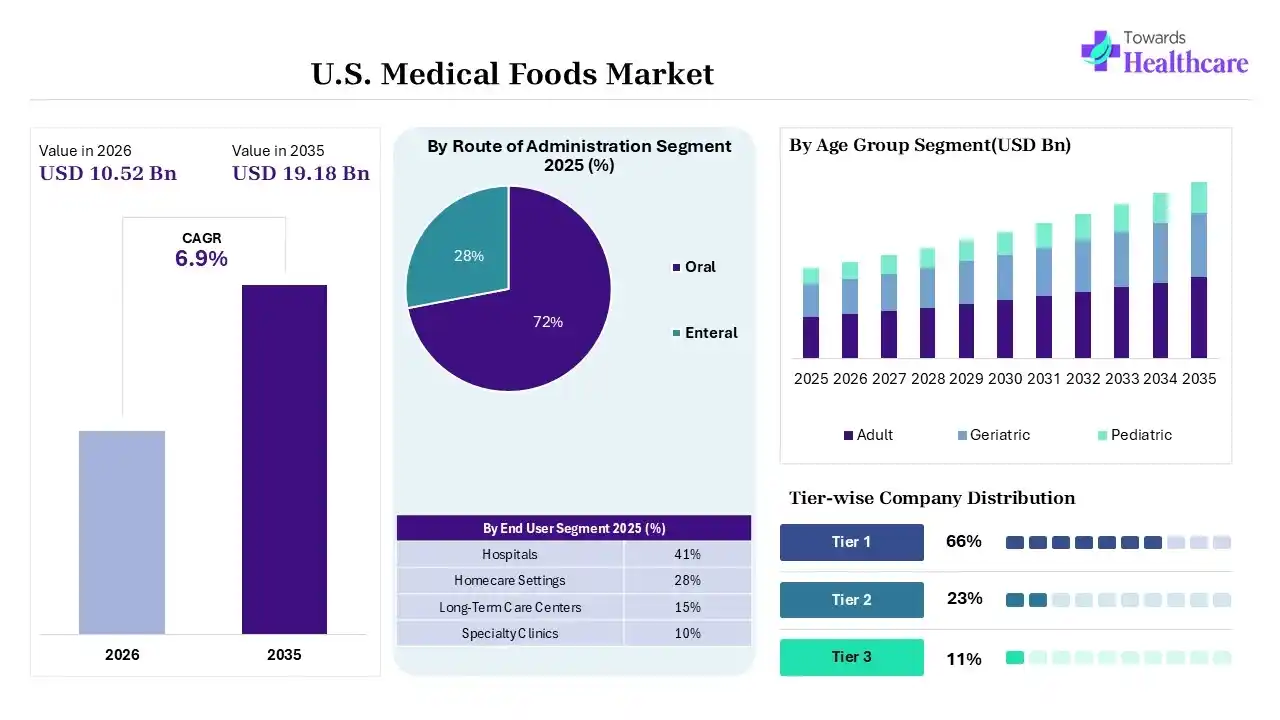
The U.S. medical foods market size was estimated at USD 9.84 billion in 2025 and is predicted to increase from USD 10.52 billion in 2026 to approximately USD 19.18 billion by 2035, expanding at a CAGR of 6.9% from 2026 to 2035. Rising demand for medical food due to its offer of specific, bioavailable nutrition which cannot be attained through a usual diet alone, and is used under stringent medical management, drives the growth of the market.
Medical foods are foods that are particularly designed and processed as opposed to a naturally occurring food used in a natural state for a patient who needs to use the product as a significant constituent of a disease or illness’s particular dietary management. Medical foods are notable from the wider category of foods for superior dietary use by the need that medical foods be intended to meet distinctive nutritional needs of a disease or condition, used under medicinal supervision, and planned for the particular dietary management of a disease or condition.
Recent advancements in medically tailored meals (MTMs) are entirely prepared meals intended by registered dietitians and nutritionists to address a patient’s medical diagnosis, symptoms, allergies, and medication adverse effects. Medically tailored meal interventions (MTMs) applied food-driven interventions to help prevent, manage, and treat diet-sensitive long-term diseases. MTM consumers are referred by medical care providers, assessed via an eligibility process, and obtain care from a registered dietitian nutritionist. A meal and care plan are tailor-made for the medical circumstances of the consumer, and meals are prepared and offered to the consumer by the specific organization.
By product type, the powder formulations segment contributed the largest market share of 38% in 2025, as nutrition powder supports weight management aims by supporting control of hunger, preserving lean muscle mass throughout calorie restriction, and offering convenient, portion-controlled nutrition. Though they work best when incorporated with a balanced diet and steady workout.
By therapeutic application, the diabetes management segment contributed the largest U.S. medical foods market share of 22%. Medical nutrition therapy (MNT), offered by medical practitioners or dietitians, is a nutrition-driven treatment for illnesses and injuries. Substitutes like herbal plants, medicinal foods, food supplements, and nutraceuticals that have negligible or no adverse effects are being measured in diabetes management.
By distribution channel, the hospital pharmacies segment held the dominant share of 32% in the market due to increased communication with prescribers and other health specialists. This pharmacy solution presents hospitals with an opening to improve their operations, raise patient care, and drive the company’s success. Hospital pharmacies are equipped to prepare challenging and sterile therapeutics.
By end user, the hospitals segment contributed the largest U.S. medical foods market share of 41%, as medical foods provide particular services intended to address the unique dietary requirements that standard foods and supplements cannot meet. Medical foods are intended for particular medical conditions that cannot be treated via diet modification alone. Medical foods are available in different forms, involving powders, liquids, nutrition bars, and particular low protein foods such as pasta and bread.
By ingredient type, the proteins & peptides segment contributed the largest market share of 26%, as protein supports repair and builds the body's tissues. It drives metabolic reactions, keeps fluid balance and pH, and keeps the immune system strong. Peptides are presently vigorous components in nutrition with physiological benefits beyond a basic diet. Peptides are derived from different sources, involving fish, milk, and plants, and show different bioactive properties.
The four organizations in this market dominate the U.S. medical foods market. Meanwhile, Abbott Laboratories develops novel and science-driven nutrition products that offer nutritional help for patient growth, sustainability, and recovery. Nestlé Health Science introduced an innovative complete nutritional service for kids with particular medical nutrition requirements. Danone North America, a leading food and beverage organization, currently operates in over 120 countries and has significant business lines. Fresenius Kabi, it provides amino acids and carbohydrates as single components.
By Product Type
By Therapeutic Application
By Route of Administration
By Age Group
By Distribution Channel
By End User
By Ingredient Type


