Pipeline Programs

CGT Companies Tracked

Manufacturing Facilities


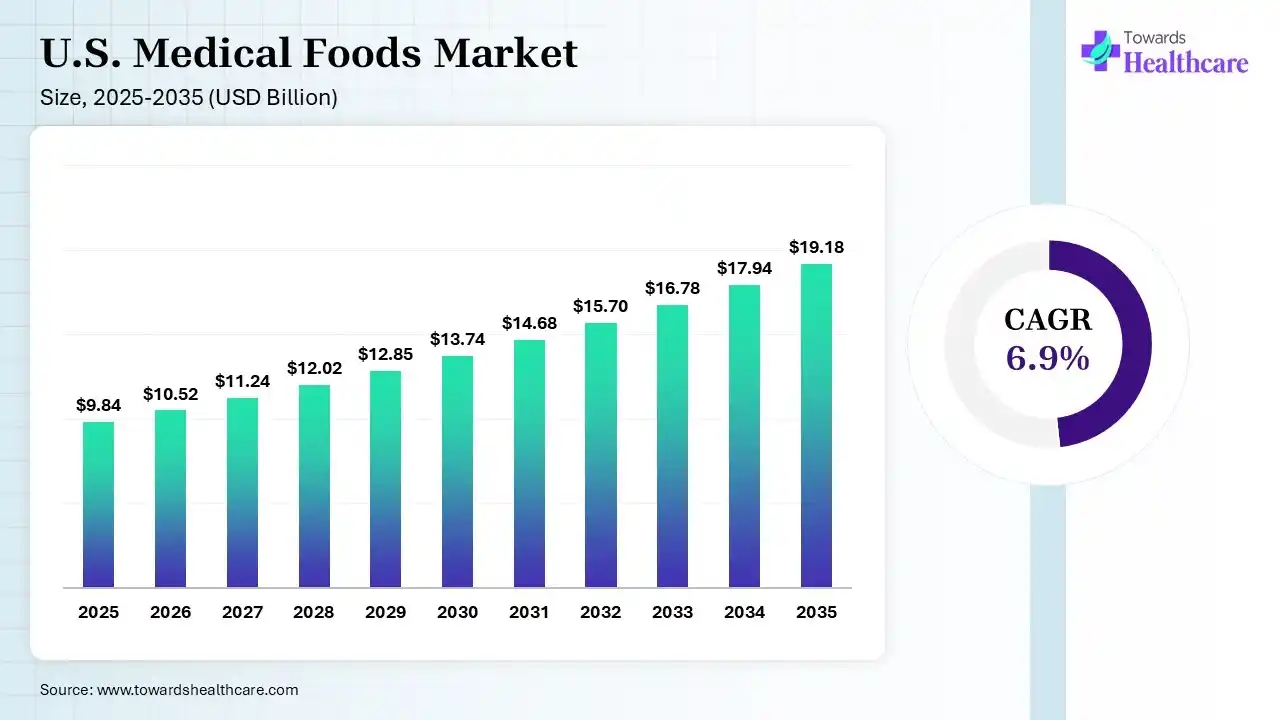
The U.S. medical foods market size was estimated at USD 9.84 billion in 2025 and is predicted to increase from USD 10.52 billion in 2026 to approximately USD 19.18 billion by 2035, expanding at a CAGR of 6.9% from 2026 to 2035. The U.S. medical foods market is this foods offer specialized services designed to address the particular dietary needs that standard foods and supplements cannot meet.
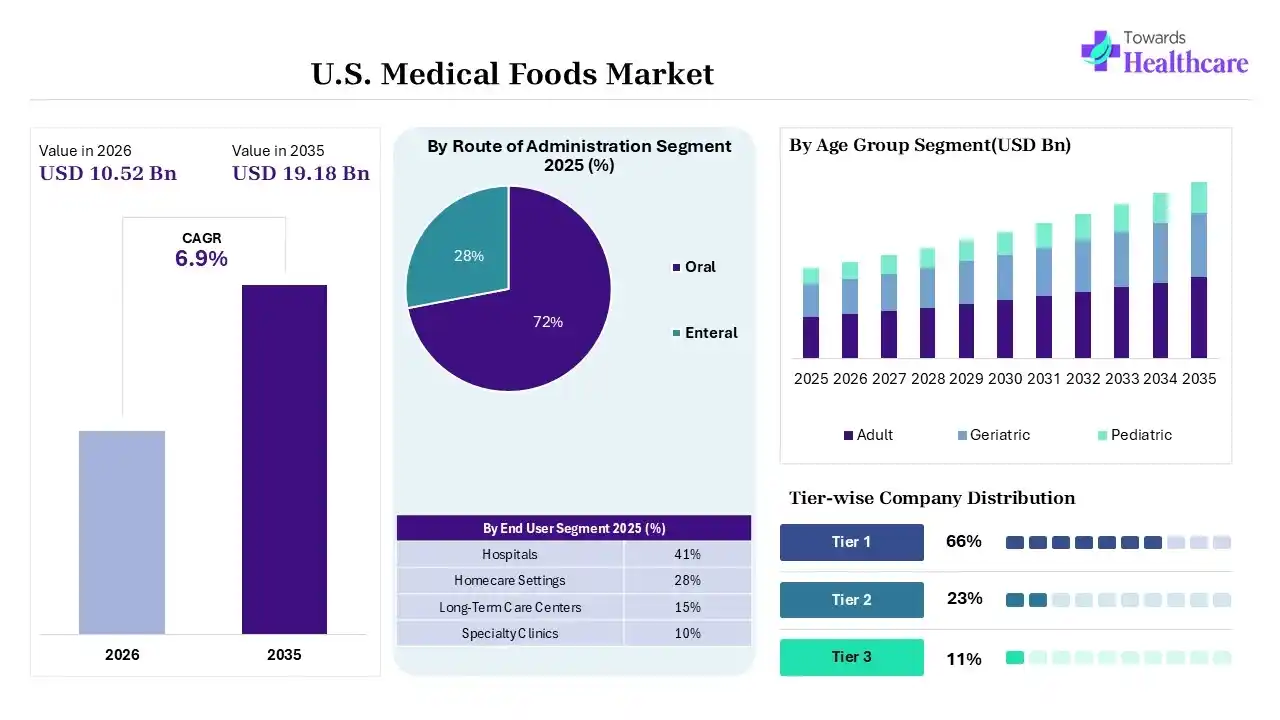
Medical food is food that is particularly formulated and designed for the dietary management of a disease that has distinctive nutritional requirements. This type of food comes in different forms, involving liquids, powders, nutrition bars, and specialized low-protein foods such as pasta and bread. Every product contains significant nutrient outlines, ingredients, and characteristics tailored to meet specific patient requirements as part of inclusive health nutrition therapy. Medical foods show a significant bridge between standard nutrition and medicinal involvement for patients with challenging metabolic and gastrointestinal conditions. By providing exactly formulated nutrition under healthcare supervision, these products allow patients to manage their conditions efficiently while maintaining quality of life. Medical foods are envisioned for the dietary management of a patient with a specific disease or condition that results in distinctive nutritional needs.
U.S. medical foods are specially formulated nutritional products designed to meet the dietary requirements associated with specific medical conditions under medical supervision. The market is growing due to rising chronic diseases, increasing nutritional deficiencies, and growing awareness of condition-specific nutrition. Key trends include personalized nutrition, plant-based formulations, functional ingredients, and convenient ready-to-use products. Technological advancements in biotechnology, nutrigenomics, microbiome research, and AI-supported nutrition assessment are enabling more targeted formulations. An aging population, increasing healthcare expenditure, demand for specialized dietary solutions, and greater focus on preventive and supportive care. Future opportunities are emerging in rare-disease nutrition, pediatric care, elderly nutrition, precision nutrition, and home-based healthcare. Manufacturers are also focusing on improved taste, innovative delivery formats, and customized formulations to enhance patient acceptance and broaden the application of medical foods.
Internal factors include product innovation, formulation quality, ingredient selection, manufacturing capabilities, pricing strategies, research and development, brand reputation, and distribution strength. External factors include rising chronic diseases, an aging population, increasing healthcare awareness, regulatory requirements, healthcare spending, technological advancements, economic conditions, and changing consumer preferences. Growing interest in personalized nutrition and home-based healthcare creates new opportunities, while regulatory complexity, limited reimbursement, supply-chain disruption, increasing costs, and competition from dietary supplements can challenge market expansion and influence the strategies adopted by medical food manufacturers.
The integration of AI with nutrigenomics and multi-omics techniques has sped up the development of personalized nutrition strategies, offering more precise and customized insights into dietary needs and health outcomes. These AI-enabled approaches combine nutrigenomics, wearable biosensors, and hybrid recommender systems to provide adaptive interventions, while safeguards like federated learning, blockchain, and privacy-preserving analytics protect sensitive health information. AI enhances quality control, predictive maintenance, supply chain traceability, and waste reduction, all while ensuring compliance with regulations. It also improves dietary assessments and meal planning tailored to individual requirements. Applications include AI-powered dietary analysis, machine learning for meal planning, management of chronic diseases, virtual coaching, and public health nutrition support, all aimed at optimizing health outcomes.
| Table | Scope |
| Market Size in 2026 | USD 10.52 Billion |
| Projected Market Size in 2035 | USD 19.18 Billion |
| CAGR (2026 - 2035) | 6.9% |
| Historical Data | 2020 - 2023 |
| Base Year | 2025 |
| Forecast Period | 2026 - 2035 |
| Measurable Values | USD Millions/Units/Volume |
| Market Segmentation | By Product Type, By Therapeutic Application, By Route of Administration, By Age Group, By Distribution Channel, By End User, By Ingredient Type |
| Top Key Players | Abbott Laboratories, Nestlé Health Science, Danone, Fresenius Kabi, Metagenics |
| Segment | Share 2025 (%) |
| Powder Formulations | 38% |
| Liquid Formulations | 34% |
| Pill & Capsule Formulations | 16% |
| Semi-Solid Formulations | 12% |
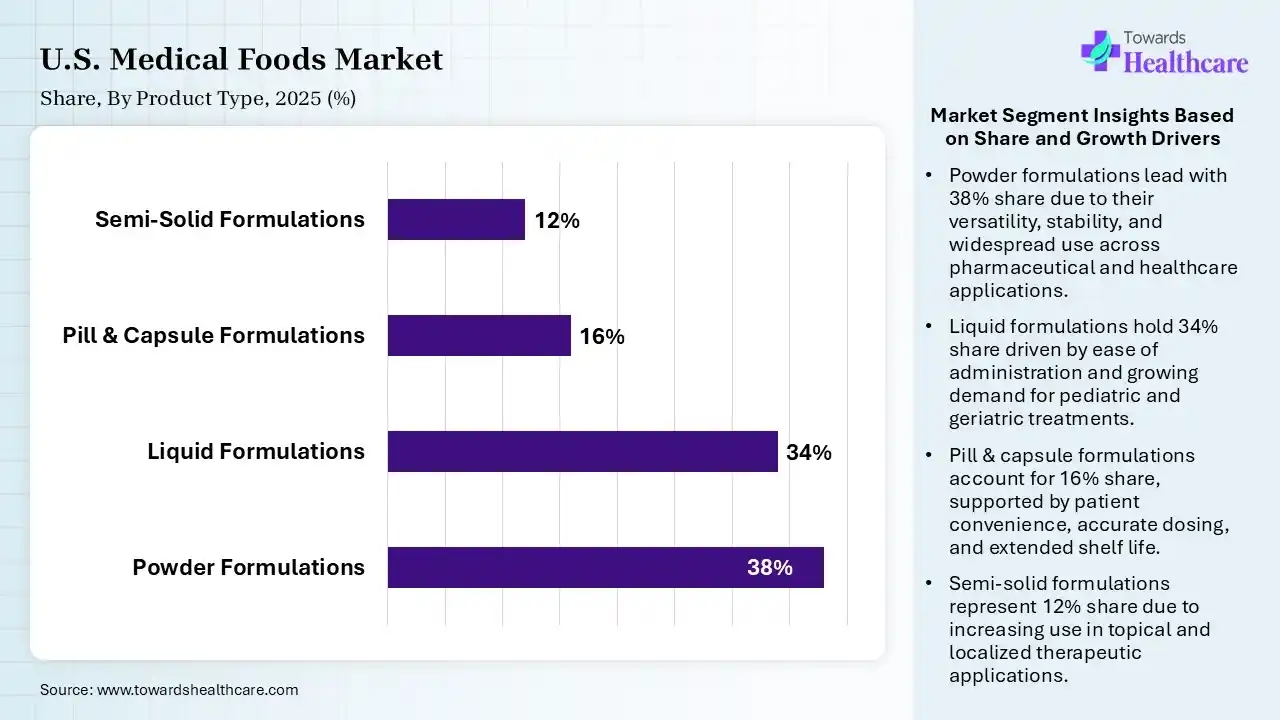
The Powder Formulations Segment Led the U.S. Medical Foods Market in 2025
The powder formulations segment contributed the largest market share of 38% in 2025, as powdered food refers to food products that have been dehydrated and administered in a powder form, needing rehydration for earlier use. It significantly more efficient treatment for children suffering from serious acute malnutrition.
The liquid formulations segment held a significant share of 34% in the market and is expected to grow at the fastest CAGR of 7.8% during the forecast period, as it helps in hydration during illness, offers vital calories and protein for wound healing, and lessens the load on the digestive tract. A full-liquid diet involves liquid foods that are more nutritious than easily available tea or broth.
The pill & capsule formulations segment held a significant share of 16% in the market, as these pills and capsules are significantly convenient tools for linking dietary gaps, paying for malabsorption challenges, and targeting particular health requirements such as immune support or improving bone health.
The semi-solid formulations segment held a significant share of 12% in the market, as semi-solid diets work by adapting texture without eliminating important nutrients. Cooking processes like steaming, slow simmering, and gentle blending make foods that are simple to swallow while keeping protein, iron, calcium, and fiber in their nutrition.
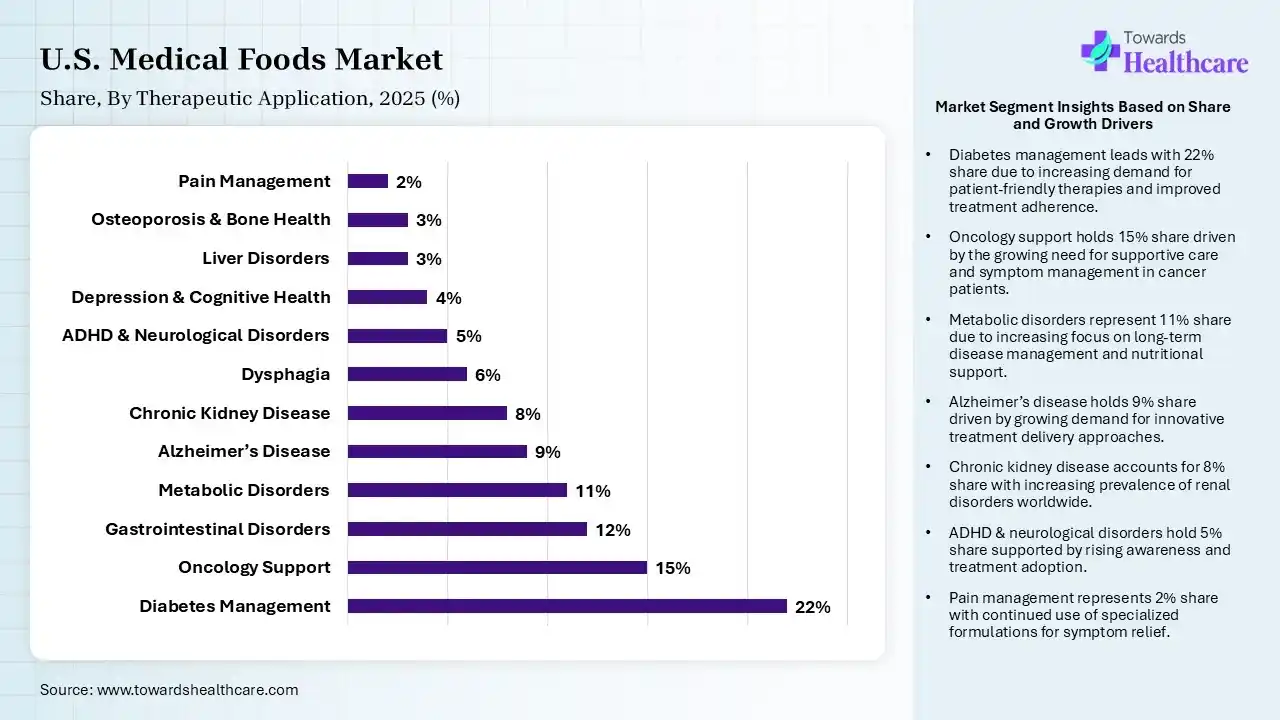
| Segment | Share 2025 (%) |
| Diabetes Management | 22% |
| Oncology Support | 15% |
| Gastrointestinal Disorders | 12% |
| Metabolic Disorders | 11% |
| Alzheimer’s Disease | 9% |
| Chronic Kidney Disease | 8% |
| Dysphagia | 6% |
| ADHD & Neurological Disorders | 5% |
| Depression & Cognitive Health | 4% |
| Liver Disorders | 3% |
| Osteoporosis & Bone Health | 3% |
| Pain Management | 2% |
Diabetes Management Segment Led the U.S. Medical Foods Market in 2025
The diabetes management segment contributed the largest market share of 22%, as it is significant to mix medical nutrition therapy (MNT) offered by a registered dietitian (RD) into the primary care of type 2 diabetes mellitus (T2DM). High-fiber nutrients aid in digestion and intestinal health, but also help stabilize blood sugar. Medical nutrition therapy is a significant component of diabetes management and of diabetes self-management awareness.
The oncology support segment held a significant share of 15% of the market and is expected to grow at the fastest CAGR of 8.4% during the forecast period, as providing good nutrition during cancer treatment supports strength, immunity, and rapid recovery. The healthy foods to eat during chemotherapy or other cancer treatments are plant-based proteins. They provide significant levels of vitamins and minerals.
The gastrointestinal disorders segment held a significant share of 12% of the U.S. medical foods market, as diet and nutrition management play significant roles in various chronic gastrointestinal diseases, concerning both pathogenesis and therapeutic potentials. Medical foods are harmless and must have proven efficient in supporting the management of a variety of gastrointestinal conditions and diseases.
The metabolic disorders segment held a significant share of 11% of the market. Metabolic diseases are progressively common in modern lifestyles; they are not unavoidable and can be efficiently controlled. Appropriate nutrition significantly supports strong metabolic processes, enhances clinical results, and prevents long-term complications. Dedicated healthcare nutrition is standard-of-care therapy for these patients and is important to prevent debilitating, expensive, and significantly fatal results.
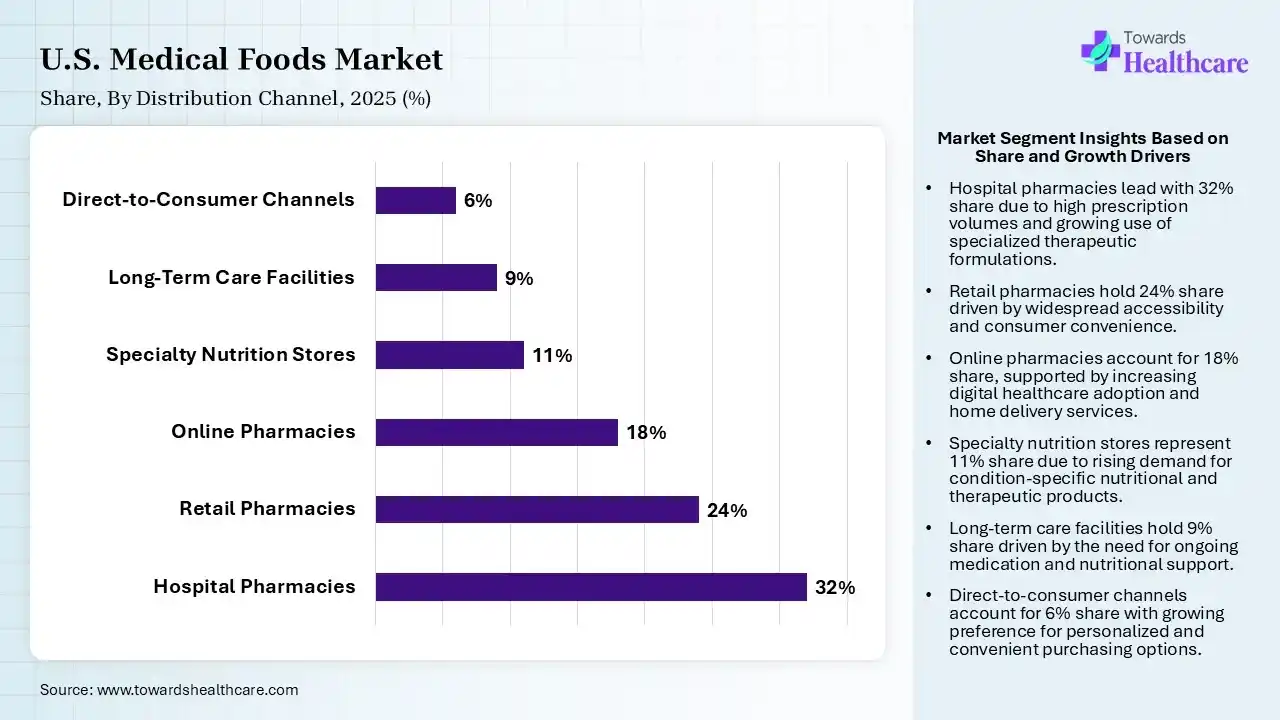
| Segment | Share 2025 (%) |
| Hospital Pharmacies | 32% |
| Retail Pharmacies | 24% |
| Online Pharmacies | 18% |
| Specialty Nutrition Stores | 11% |
| Long-Term Care Facilities | 9% |
| Direct-to-Consumer Channels | 6% |
The Hospital Pharmacies Segment led the U.S. Medical Foods Market in 2025
The hospital pharmacies segment held a dominant share of 32% in the market. This pharmacy service provides hospitals with an opportunity to improve their operations, raise patient care, and drive organizational achievement. It lowers medication mistakes, maintains the quality of medicine, and ensures safe dispensing solutions. It also allows seamless partnership with dietitians and physicians to modify nutritional plans.
The retail pharmacies segment contributed a significant market share of 24%. Retail pharmacies renovate in the health hubs, improving access to care, targeted services, and addressing systemic issues. These pharmacies help promote healthier eating habits and lead to better health results by offering education and leveraging health information.
The online pharmacies segment held a significant 18% share of the U.S. medical foods market and is expected to grow at the fastest CAGR of 9.1% during the forecast period, as online platforms enable consumers to browse and purchase medications inconspicuously from the ease of their own homes, without the requirement for face-to-face communication. An online pharmacy is a simple way to buy medicines. It is specifically advantageous for patients who live far away from drug stores.
The specialty nutrition stores segment held a significant share of 11% in the market, as this store provides specialty nutraceuticals, which are dietary products which will helps in specific bodily structures or functions. They do not replace therapeutics or traditional healthcare treatments; rather, they are a part of integrative medicine, which safely and efficiently helps immune health and various conditions.
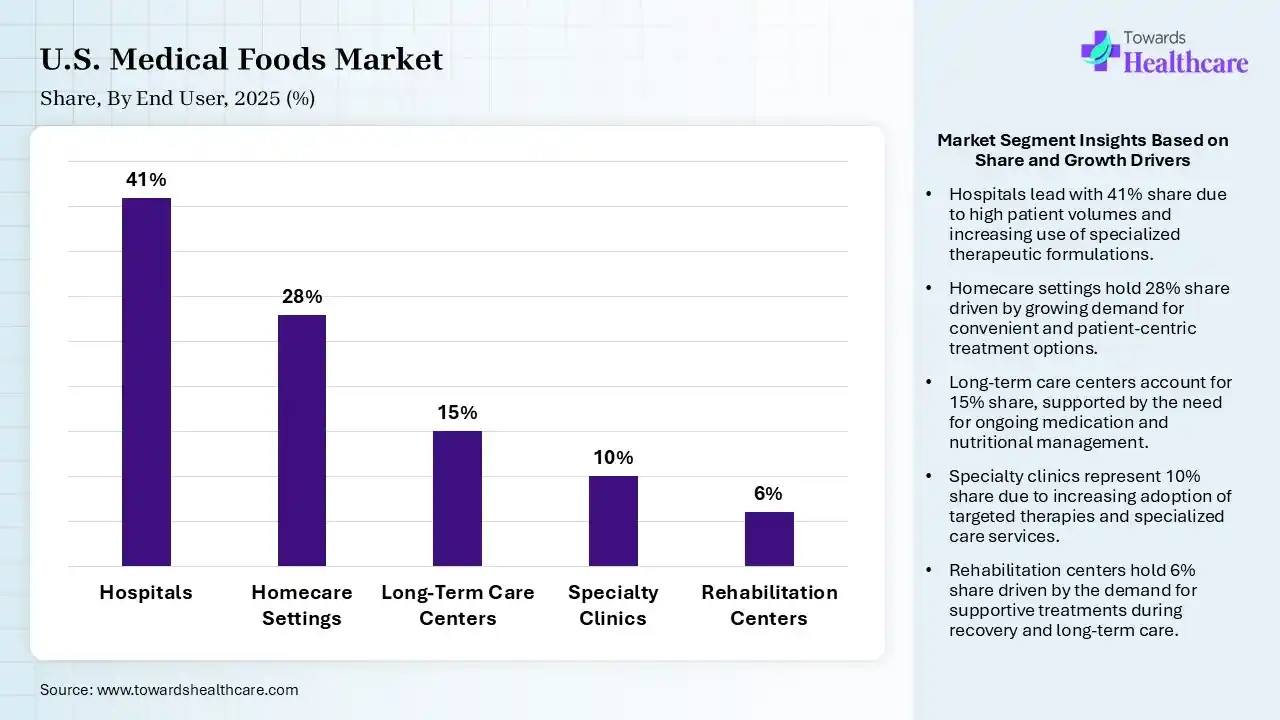
| Segment | Share 2025 (%) |
| Hospitals | 41% |
| Homecare Settings | 28% |
| Long-Term Care Centers | 15% |
| Specialty Clinics | 10% |
| Rehabilitation Centers | 6% |
The Hospitals Screening Segment led the U.S. Medical Foods Market in 2025
The hospitals segment contributed the largest market share of 41%, as hospitals providing medically-tailored food potentially increase dietary adherence above 90% and enable patients to realize significantly better long-term disease control. It also provides a lessening in stress for both the patient and the family by enabling family members to feel less detached and out of control regarding a family member's care.
The homecare settings segment held a significant share of 28% in the market, and is expected to grow at the fastest CAGR 0f 8.2% during the forecast period as lalanced nutrition supports to keep energy levels active, helps healthy digestion and metabolism, increases immunity to ward off illnesses such as colds and flu, supports cognitive function and regulate the mood, and offers significant nutrients required for long-term health.
The long-term care centers segment held a significant share of 15% in the U.S. medical foods market, as caregivers with strong nutritional knowledge have a significant impact on the health results of aging adults. They play an important role in offering proper nutrition, which improves quality of life and lowers healthcare expenses by preventing diet-related diseases. Eating properly is super important for older people, particularly in places where they live for a long time, such as nursing homes.
The specialty clinics segment held a significant share of 10% in the market, as medical foods provide specialized services intended to address the particular dietary needs that standard foods and supplements cannot meet. Medical foods are particularly formulated and designed for the dietary treatment of diseases with distinctive nutritional requirements.
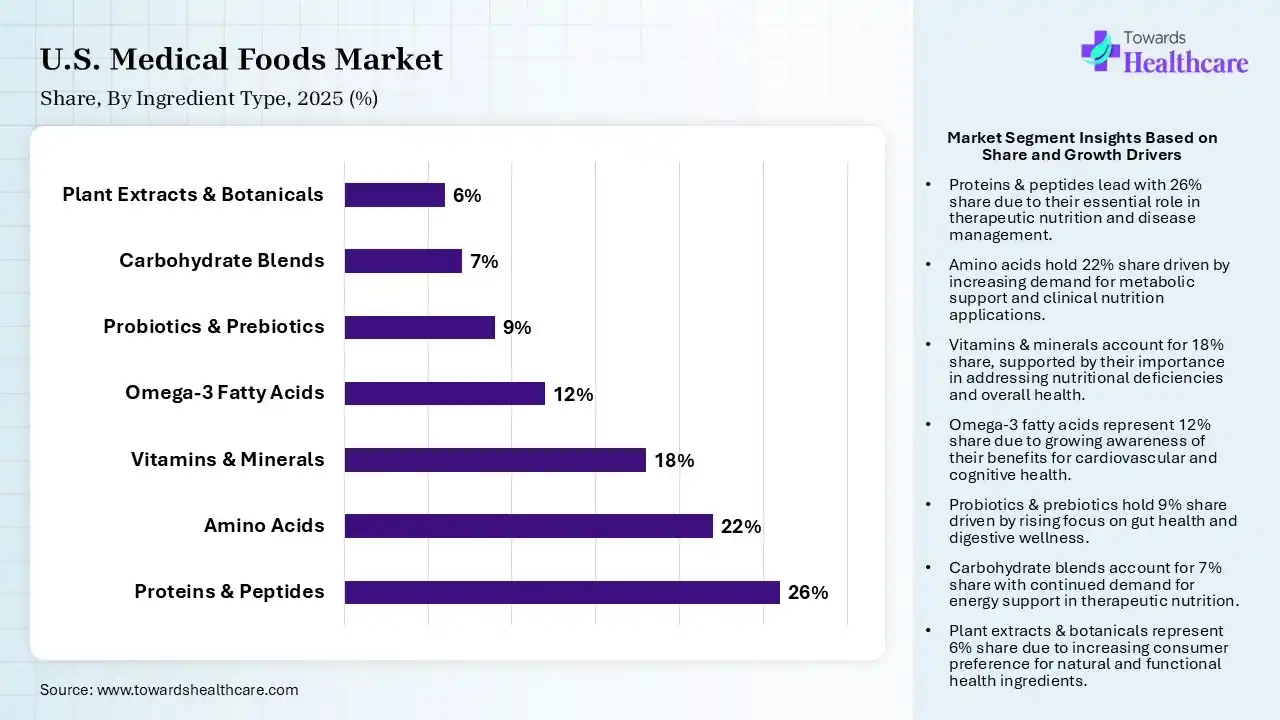
| Segment | Share 2025 (%) |
| Proteins & Peptides | 26% |
| Amino Acids | 22% |
| Vitamins & Minerals | 18% |
| Omega-3 Fatty Acids | 12% |
| Probiotics & Prebiotics | 9% |
| Carbohydrate Blends | 7% |
| Plant Extracts & Botanicals | 6% |
The Proteins & Peptides Segment led the U.S. Medical Foods Market in 2025
The proteins & peptides segment contributed the largest market share of 26%, which improves intestinal barrier integrity, moderates local immunity, and lessens dysbiosis-related inflammation. It avoids aging and enhances the health of skin, nails, and hair. Protein is a significant source of branched-chain amino acids, which are specifically valuable for athletes and sarcopenic situations.
The amino acids segment held a significant share of 22% in the market, due to the fact that amino acids are significant molecules used by all living things to make proteins. The human body needs twenty different amino acids to function appropriately. The amino acids link together with peptide bonds and form proteins. Then, the forces of other amino acids and their effects.
The vitamins & minerals segment held a significant share of 18% in the U.S. medical foods market, as vitamins and minerals are significant for physical functions like supporting the fight against infection, wound healing, creating strong and modifiable bones, and modulating hormones. They are micronutrients needed by the body to carry out a wide range of normal functions. Micronutrients play an important role in mental and physical body function, which helps maintain overall health.
The omega-3 fatty acids segment held a significant share of 12% in the market and is expected to grow at the fastest CAGR of 7.8% during the forecast period, as omega-3 fatty acids help manage and prevent various autoimmune diseases, involving type 1 diabetes, ulcerative colitis, rheumatoid arthritis, Crohn’s disease, and psoriasis. It supports preventing age-related mental decline and Alzheimer’s disease.
The U.S. medical foods market is leading due to strong demand for specialized nutrition, a high prevalence of chronic and metabolic conditions, and increasing awareness of disease-specific dietary management. Advanced healthcare infrastructure and substantial investment in nutrition research are supporting product innovation. Growing adoption of personalized nutrition, convenient nutritional formulations, and home-based care is further strengthening demand. The presence of established manufacturers, expanding clinical application, and continuous development of targeted formulations also support the country’s leadership.
R&D
Clinical Trials and Regulatory Approvals
Patient Support and Services
| Company | Headquarters | Latest Update |
| Abbott Laboratories | United States | Abbott's health food portfolio is for patients managing conditions such as cancer, diabetes, and critical care malnutrition. |
| Nestlé Health Science | United States | Nestlé provides a broad array of specialized nutrition for long-term diseases, inherited metabolic disorders, and GI conditions. |
| Danone | United States | Danone specializes in specialized medical foods for metabolic disorders, pediatric care, and severe neurological diseases like Alzheimer's. |
| Fresenius Kabi | United States | Specializes primarily in clinical nutrition, including enteral formulas and parenteral nutrition, specializing in hospital and critically ill patients. |
| Metagenics | United States | It progresses systematically, backed by medical foods and nutraceuticals focused on cardiometabolic health and gastrointestinal challenges. |
In July 2026, “Congress has delegated authority to FDA to routinely inspect manufacturing facilities, assess the safety of new dietary ingredients, and review serious adverse event reports, which could trigger FDA actions to protect the public, including mandatory recalls, seizures of products, injunctions and criminal prosecutions. ACP’s proposals would eviscerate the regulatory distinctions between pharmaceuticals and dietary supplements, undermining congressional intent in DSHEA and depriving American consumers of unfettered access to safe, beneficial nutritional products.”, said Daniel Fabricant, Ph.D., President and CEO of NPA.
Strengths
Weakness
Opportunities
Threat
By Product Type
By Therapeutic Application
By Route of Administration
By Age Group
By Distribution Channel
By End User
By Ingredient Type









Principal Consultant
Payal Rabde is a Healthcare Market Research Analyst at Towards Healthcare Research & Consulting with 4+ years of experience in pharmaceuticals, biotechnology, medical devices, and life sciences.
Learn more about Payal Rabde

Reviewed By
Aditi Shivarkar is a seasoned professional with over 14 years of experience in healthcare market research. As a content reviewer, Aditi ensures the quality and accuracy of all market insights and data presented by the research team.
Learn more about Aditi Shivarkar