Growing incidence rates of metastatic breast tumour, enhanced early identification leading to increasing prevalence, and longer survival times due to advances in targeted therapies drive the growth of the market.
Metastatic breast cancer (MBC) is stage 4 breast cancer that has spread from the original location in the breast to different areas of the body. Metastasis is the process by which an original primary tumor grows into a distal secondary tumor. Metastatic breast cancer cells frequently vary from the preceding primary breast cancer in characteristics like receptor status. Treatment of metastatic breast cancer is based on the location of the metastatic tumors and involves surgery, chemotherapy, radiation, biological therapy, and hormonal therapy. Metastatic breast cancer to the brain causes persistent, increasingly worsening headache, seizures, visual changes, nausea or vomiting, vertigo, behavioural and personality changes, and increased intracranial pressure.
Global Market Growth
The global metastatic breast cancer market size was estimated at USD 22.8 billion in 2025 and is predicted to increase from USD 24.99 billion in 2026 to approximately USD 57.02 billion by 2035, expanding at a CAGR of 9.6% from 2026 to 2035.
Recent Advancements in AI-Driven Technology:
Recent advancements in different strategies like AI-driven imaging, digital pathology, and liquid biopsies are presenting potential in identifying breast tumors earlier and more precisely. AI-driven algorithms analyze mammograms and MRI scans to recognise subtle patterns that are missed by the human eye, while digital pathology uses well-developed image analysis to improve tissue-driven diagnosis. An AI-based platform that predicts a woman’s challenges of evolving breast cancer in the next five years using only a standard mammogram. AI-driven technology has evolved into a transformative tool in breast cancer management, improving early detection, diagnosis, treatment, and prognosis.
Breast Cancer Cases Worldwide
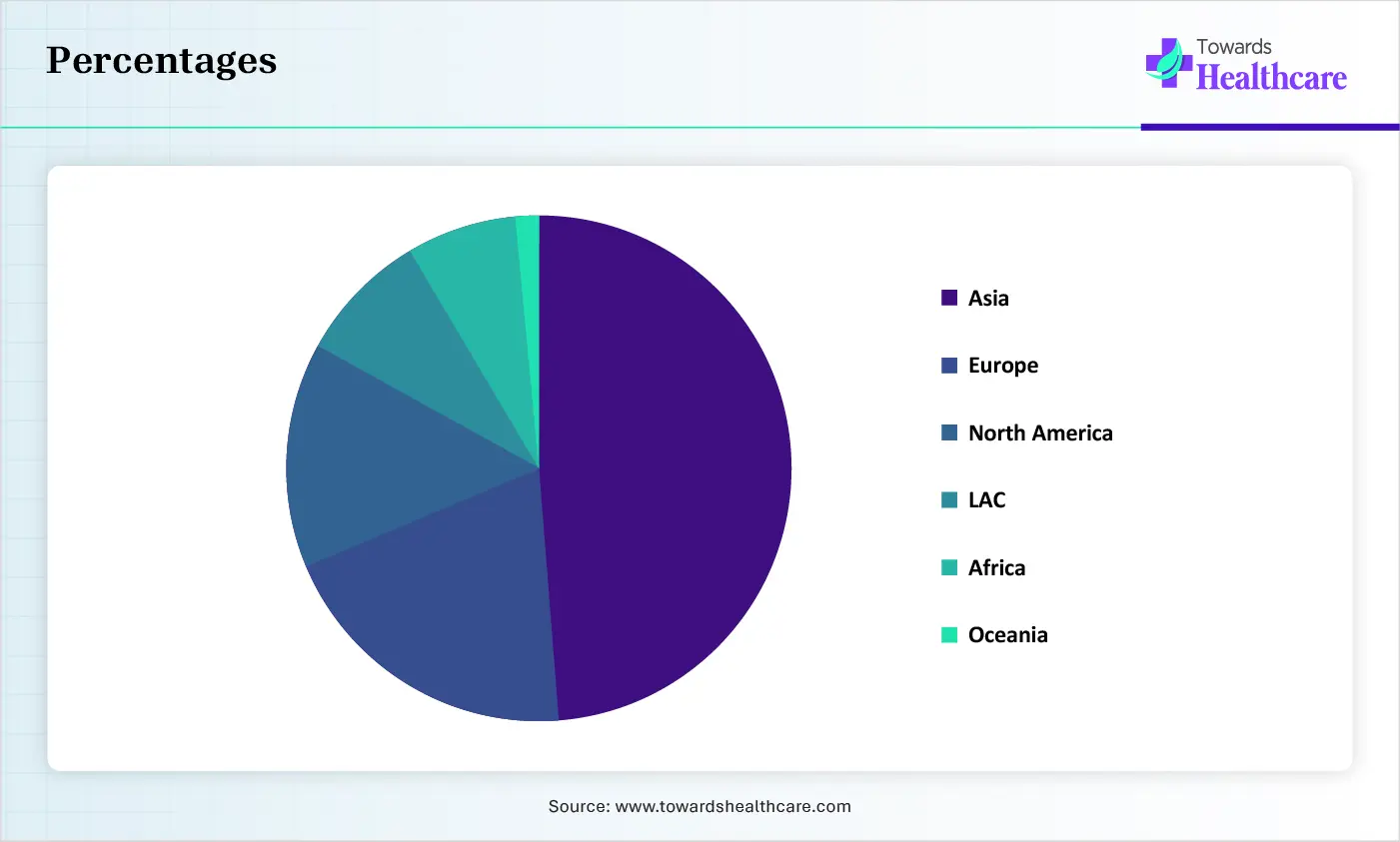
| Region |
Percentages |
| Asia |
49% |
| Europe |
21.9% |
| North America |
12.8% |
| LAC |
8.1% |
| Africa |
7% |
| Oceania |
1.3% |
Market Segmentation Overview
- By therapy type, the targeted therapy segment contributed the largest U.S. metastatic breast cancer market share of 42.0% in 2025, as targeted drug therapy uses medicines that are directed at specific proteins on breast tumor cells, which support them to grow, spread, and live longer. Targeted therapy allows patients to have a better quality of life compared to standard chemotherapy. It causes fewer serious adverse effects. Targeted cancer medicine functions by targeting the differences in cancer cells that support them to survive and grow.
- By cancer subtype, the HR+ / HER2- segment contributed the largest market share of 55%, as treatment approaches for HR+/HER2-breast cancer include endocrine therapy, targeted therapy, genomic immunotherapy, and supplementing traditional technology such as surgical resection and radiotherapy. HR+/HER2- metastatic breast cancer (MBC) is normally related with a advance prognosis, slower progression, and growing response rates to targeted endocrine therapies as compared to various subtypes.
- By route of administration, the injectable segment contributed the largest U.S. metastatic breast cancer market share of 52%, as intravenous injection is the most common parental route of drug administration, and it bypasses the liver's first-pass metabolism. Injectable preparations are generally sterile solutions or suspensions of a drug in water or other suitable physiologically acceptable vehicles. Injects medicine into the fatty layer under the skin, often applied for medications requiring slow absorption.
- By distribution channel, the hospital pharmacies segment contributed the largest market share of 60% in 2025, as hospital pharmacists are proficient in storing, purchasing, handling, pricing, and dispensing drugs. Growing interaction with prescribers and various health professionals. Superior input in prescribing decisions related to drugs and administration. Advance access to the healthcare records of patients.
The top five organizations in this market dominate the U.S. metastatic breast cancer market. Meanwhile, BioNTech is a leader in mRNA technology with targeted oncology vaccines. Moderna, evolving personalized mRNA cancer vaccines. RNAimmune, dedicated to mRNA-based therapies for cancer vaccines. Strand Therapeutics is primarily focused on creating mRNA therapies that target specific tumor microenvironments. Arcturus Therapeutics is active in RNA therapeutics and mRNA-based vaccine development.
Segments Covered in the Report
By Therapy Type
- Chemotherapy
- Anthracyclines
- Taxanes
- Antimetabolites
- Hormonal Therapy
- Aromatase Inhibitors
- Selective Estrogen Receptor Modulators (SERMs)
- Selective Estrogen Receptor Degraders (SERDs)
- Targeted Therapy
- HER2-targeted Therapy
- Monoclonal Antibodies
- Tyrosine Kinase Inhibitors (TKIs)
- CDK4/6 Inhibitors
- PI3K Inhibitors
- PARP Inhibitors
- Immunotherapy
- Immune Checkpoint Inhibitors
- Cancer Vaccines
By Cancer Subtype
- Hormone Receptor Positive (HR+) / HER2 Negative
- HER2 Positive
- Triple-Negative Breast Cancer (TNBC)
By Route of Administration
By Distribution Channel
- Hospital Pharmacies
- Retail Pharmacies
- Online Pharmacies
By End User
- Hospitals
- Specialty Cancer Centers
- Homecare Settings




