

Pipeline Programs

CGT Companies Tracked

Manufacturing Facilities


The global metastatic breast cancer market size was estimated at USD 22.8 billion in 2025 and is predicted to increase from USD 24.99 billion in 2026 to approximately USD 57.02 billion by 2035, expanding at a CAGR of 9.6% from 2026 to 2035. The metastatic breast cancer market is growing because metastatic breast cancer is a recurrent cancer, meaning it’s a cancer that came back after treatment and is affecting tissue and organs located far from the original breast cancer.
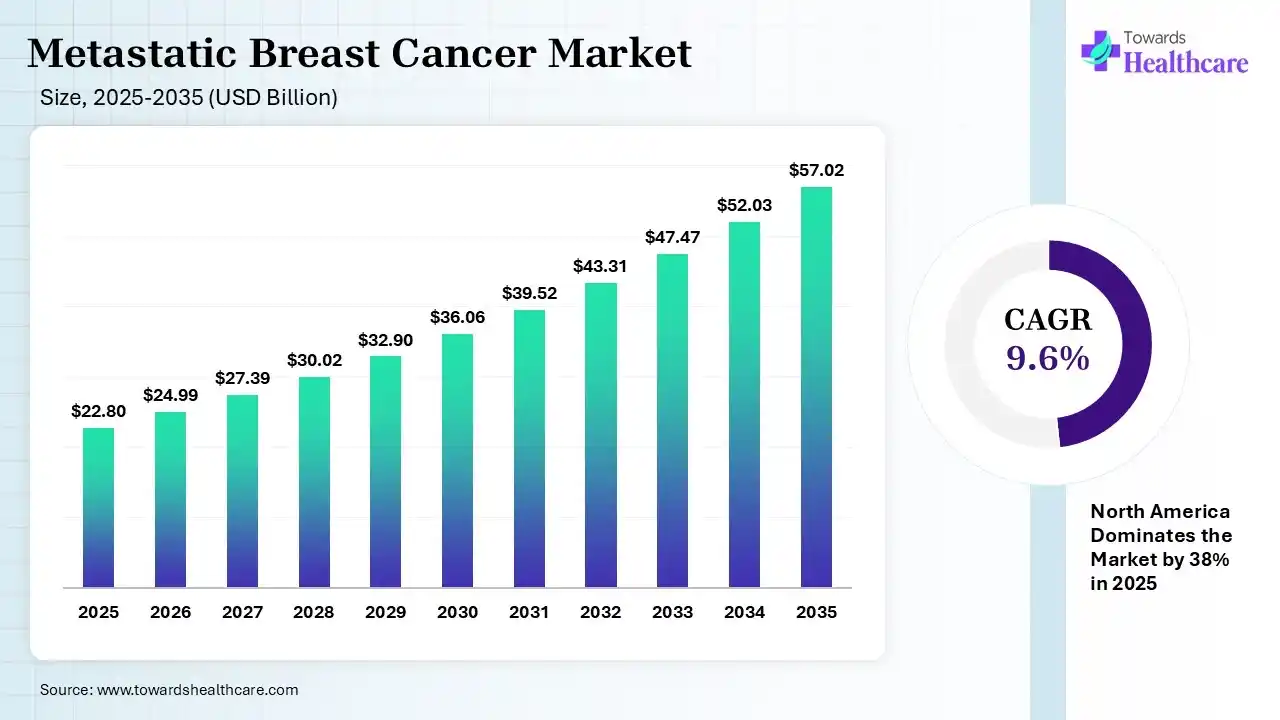
Metastatic breast cancer is cancer which spread from the breast to various parts of the body. Metastatic breast cancer is the advanced breast cancer or stage IV breast cancer. Healthcare providers can not cure metastatic breast cancer, but they can provide treatments that improve quality of life and support to live as long as possible. The 5-year relative survival rate for distant metastatic breast cancer is about 29%–33%, meaning that one-third of patients live at least five years post-diagnosis. Metastatic breast cancer (MBC) cases are increasing mainly because of an aging population, lifestyle factors, and the increased uncovering of dormant disease.
Metastatic breast cancer is an advanced stage of breast cancer in which cancer cells spread beyond the breast and nearby lymph nodes to distant organs such as the bones, liver, lungs, or brain. The metastatic breast cancer market is expanding due to the rising global incidence of breast cancer, increasing demand for precision oncology, and growing availability of targeted therapies. Technological advancements, including next-generation sequencing, liquid biopsy, AI-assisted biomarker analysis, antibody-drug conjugates (ADCs), and novel immunotherapies, are improving treatment selection and patient outcomes. A key market trend is the development of personalized combination therapies tailored to specific molecular profiles. Future opportunities lie in gene-targeted treatments, innovative cell-based therapies, advanced companion diagnostics, and digital oncology platforms for continuous disease monitoring. Increasing clinical research investments and a robust oncology pipeline continue to accelerate innovation and long-term market growth.
AI-driven technology encompasses diagnosis, screening, staging, biomarker evaluation, prognostication, and therapeutic response prediction. AI is renovating breast cancer management via different machine learning applications. Artificial intelligence supports precision medicine by enhancing detection, diagnosis, prognosis, and treatment response forecasting. AI-based development in the entire continuum of breast cancer management, spanning detection, diagnosis, prognosis, treatment, and recovery. AI-based technology integration in metastatic imaging drives earlier detection, standardized reporting, and more precise monitoring of disease progression, eventually contributing to modified management approaches in breast cancer care. Machine learning can precisely predict the type of local breast cancer reappearance after early treatment and assess the probability of distant metastases.
| Table | Scope |
| Market Size in 2026 | USD 24.99 Billion |
| Projected Market Size in 2035 | USD 57.02 Billion |
| CAGR (2026 - 2035) | 9.6% |
| Leading Region | North America by 38% |
| Key Applications | HR+/HER2- MBC, HER2+ MBC, Triple-Negative Breast Cancer (TNBC), disease monitoring, precision oncology |
| Primary End Users | Hospitals, Cancer Centers, Oncology Clinics, Specialty Pharmacies, Research Institutions |
| Key Challenges | Drug resistance, high treatment costs, reimbursement barriers, clinical trial complexity, metastatic disease recurrence |
| Measurable Values | USD Millions/Units/Volume |
| Market Segmentation | By Therapy Type, By Cancer Subtype, By Route of Administration, By Distribution Channel, By End User, By Region |
| Top Key Players | Roche Holding AG, Pfizer Inc., Eli Lilly and Company, AstraZeneca, Novartis AG |
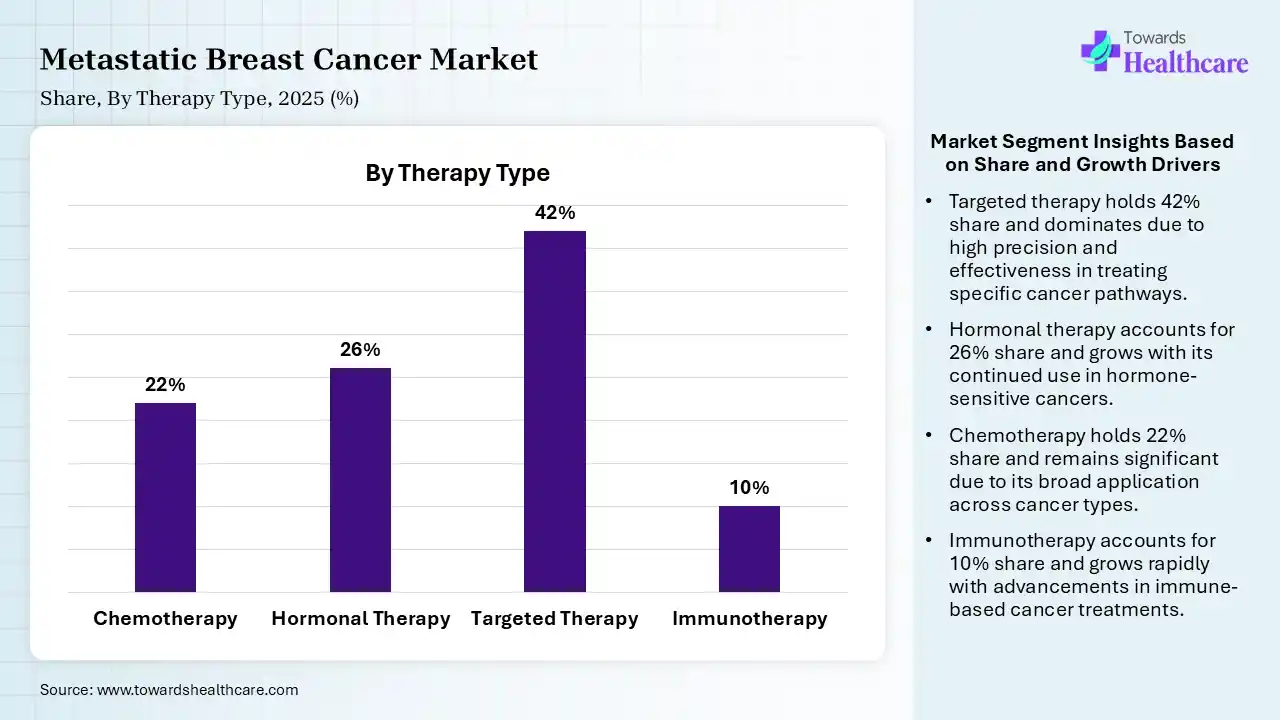
| Segment | Share 2025 (%) |
| Chemotherapy | 22% |
| Hormonal Therapy | 26% |
| Targeted Therapy | 42% |
| Immunotherapy | 10% |
The Targeted Therapy Segment Led the Metastatic Breast Cancer Market in 2025
The targeted therapy segment contributed the largest market share of 42.0% in 2025, and is expected to grow at the fastest rate of 11.2 CAGR during the forecast period, as targeted drug therapy uses medicines that are directed at proteins on breast cancer cells, which help them grow, spread, and live longer. Targeted drugs work to destroy cancer cells or slow down their development. Targeted therapy drugs, like monoclonal antibodies, work in more than one way to control cancer cells and are also considered immunotherapy because they increase the immune system.
The hormonal therapy segment held a significant share of 26% in the market, as it significantly lowers the challenges of metastatic breast cancer growth and progression in individuals with hormone-sensitive cancers. Hormone therapy has been shown to offer long-term treatment advantages over several years. Hormone therapy drugs work by preventing hormone receptor-positive cancer cells from getting the estrogen they require to grow.
The chemotherapy segment held a significant share of 22% in the market, as chemotherapy eases their symptoms and supports them to live longer. Chemotherapy for breast cancer applies drugs to target and destroy breast cancer cells. These drugs are generally injected directly into the vein via a needle or taken by mouth as pills.
The immunotherapy segment held a significant share of 10% in the market, as immunotherapy has been shown to extend the survival time of patients with a variety of solid tumours and is a hopeful treatment option for metastatic breast cancer. Immunotherapy trains your immune system so it can do more to find and kill cancer cells.
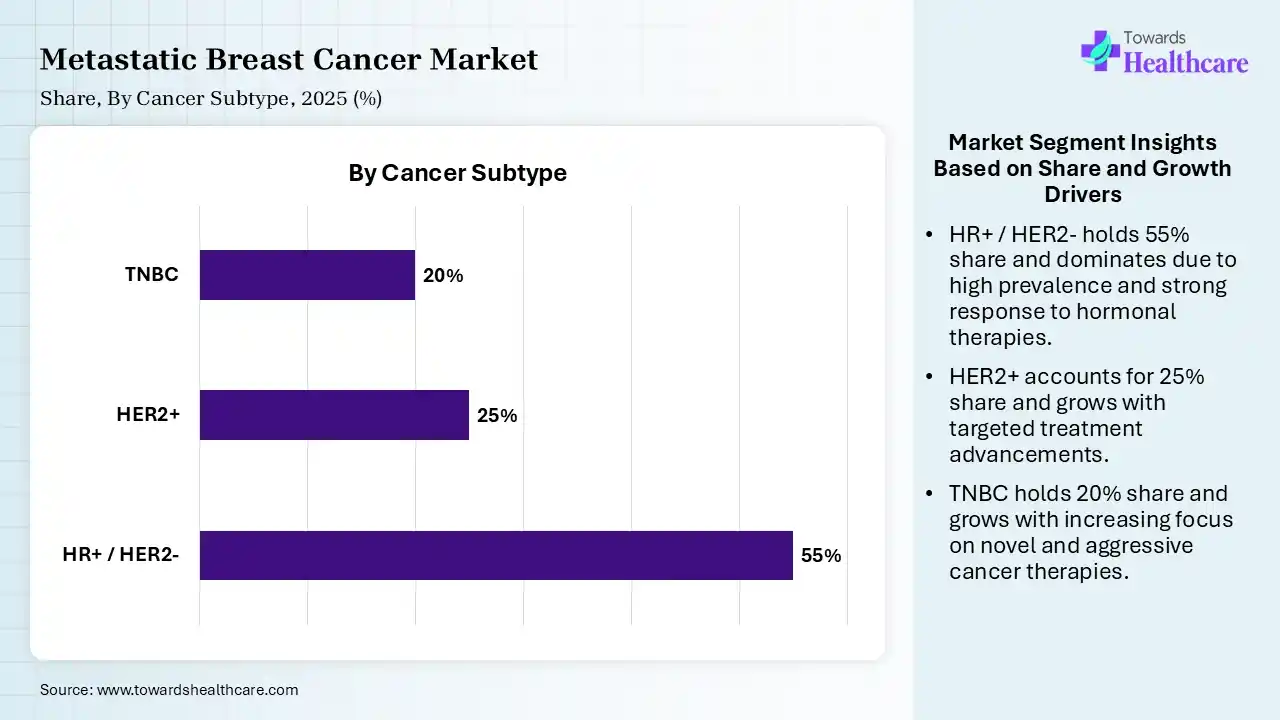
| Segment | Share 2025 (%) |
| HR+ / HER2- | 55% |
| HER2+ | 25% |
| TNBC | 20% |
HR+ / HER2- Segment Led the Metastatic Breast Cancer Market in 2025
The HR+ / HER2- segment contributed the largest market share of 55%, as HR+/HER2-breast cancer includes targeted therapy, genomic immunotherapy, endocrine therapy, and supplementing traditional technology such as surgical resection and radiotherapy. HR+/HER2-breast cancer involves the classification of HR+/HER2-breast cancer and the treatment technology usually used.
The HER2+ segment held a significant share of 25% the market. HER2-positive (HER2+) breast cancer affects many patients who have invasive breast cancer. This is a fast-growing cancer that rapidly spreads from the breast to other areas of the body. It is overexpressed in approximately 15% of breast cancers, and its activation is related to increased cell growth, survival, and possibly angiogenesis.
The TNBC segment held a significant share of 20% the market in 2025, and is expected to grow at the fastest CAGR of 11.5% during the forecast period. Metastatic triple-negative breast cancer (TNBC) has a destructive phenotype with a predilection for the brain and visceral organs. Early TNBC results improved because of the intensification of therapies, involving advancement in polychemotherapy and the addition of immunotherapy.
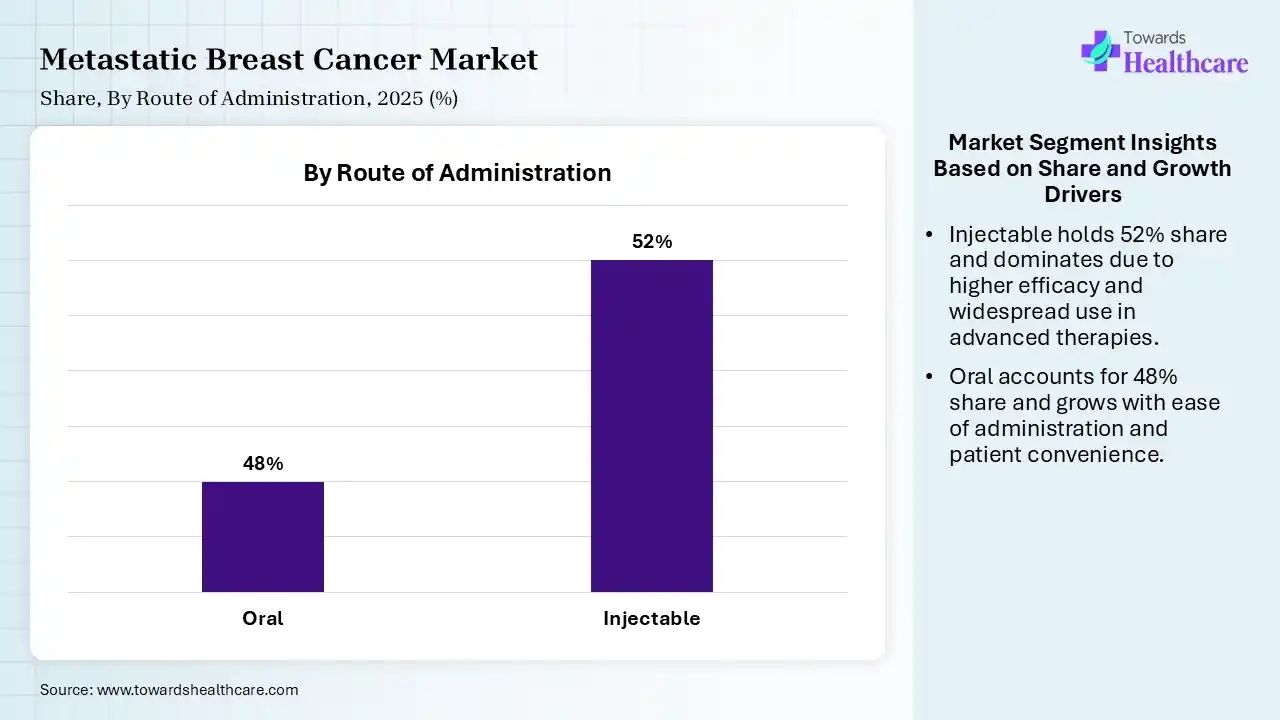
| Segment | Share 2025 (%) |
| Oral | 48% |
| Injectable | 52% |
Injectable Segment Led the Metastatic Breast Cancer Market in 2025
The injectable segment contributed the largest market share of 52%, as intravenous injection is the most common parental route of medication administration, and it bypasses the liver's first-pass metabolism. Injectable medications enter the body by injection via the tissue and circulatory system. These medications are absorbed more rapidly.
The oral segment held a significant share of 48% in the market, as expected to grow at the fastest CAGR of 12.1% during the forecast period. Oral administration of medicines is an affordable, convenient, and most commonly used medication administration route. It is the easiest, most suitable, and safest means of drug administration. It is appropriate for repeated and continued use.
| Segment | Share 2025 (%) |
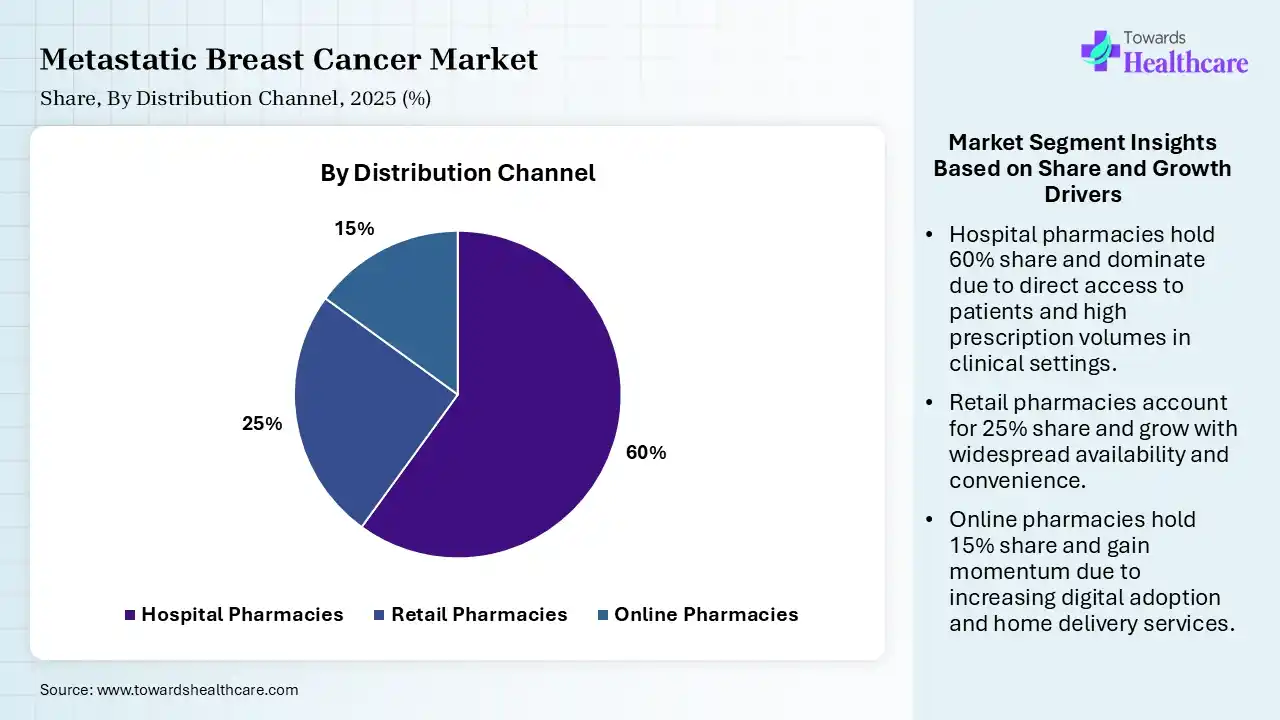
| Hospital Pharmacies | 60% |
| Retail Pharmacies | 25% |
| Online Pharmacies | 15% |
Hospital Pharmacies Segment Led the Metastatic Breast Cancer Market in 2025
The hospital pharmacies segment contributed the largest market share of 60% in 2025, as these pharmacists work directly with doctors and nurses, enabling real-time medication adjustments and monitoring of side effects. Seamless incorporation with electronic medical records (EMR) ensures precise medication management and lowers discrepancies.
The retail pharmacies segment held a significant share of 25% in the market, as retail pharmacies are a significant part of health systems and, in various countries, are responsible for dispensing a large proportion of health products and associated solutions. Retail pharmacies remain standard for personal care and instant requirements. Retail pharmacies are suitably located and easily accessible to the overall population.
The online pharmacies segment held a significant share of 15% in the market, and is expected to grow at the fastest rate of 12.1% CAGR during the forecast period, as online pharmacies provide competitive pricing, discounts, and generic substitutes, leading to potential expense savings for patients. Online pharmacies offer exciting discounts and deals. Online pharmacies contribute to enhancing healthcare results and lowering disparities in access to vital treatments.
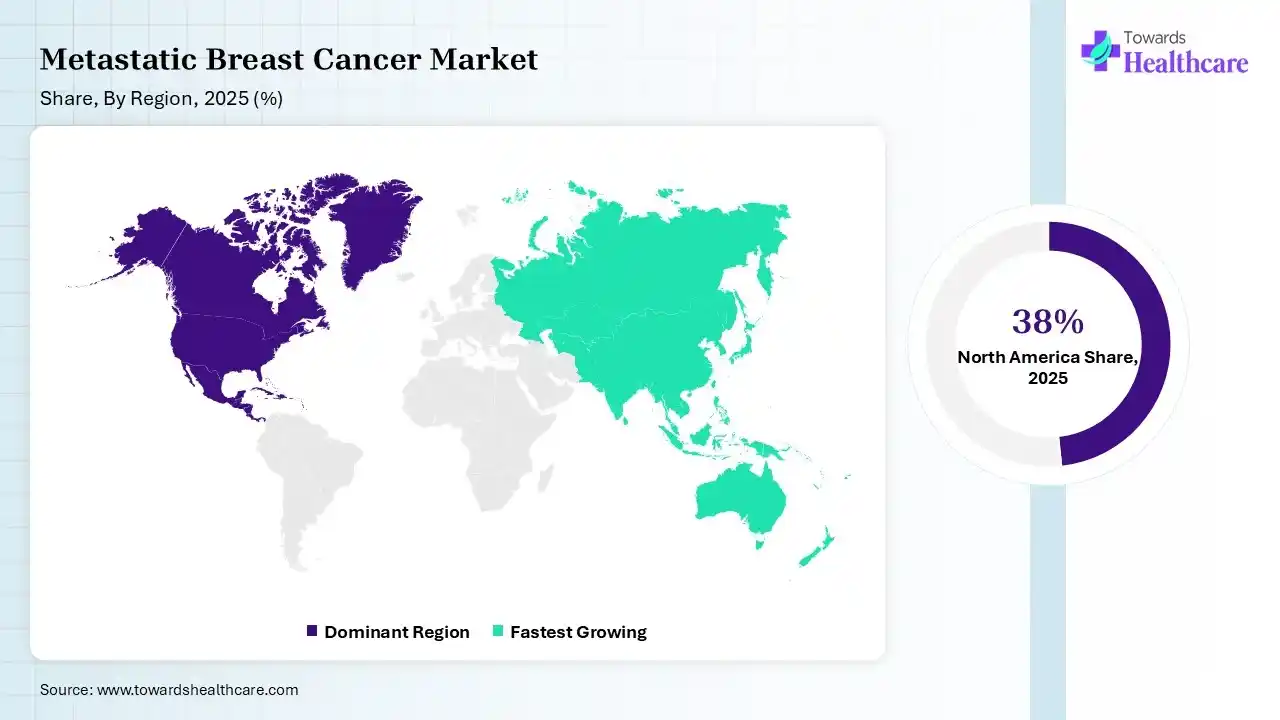
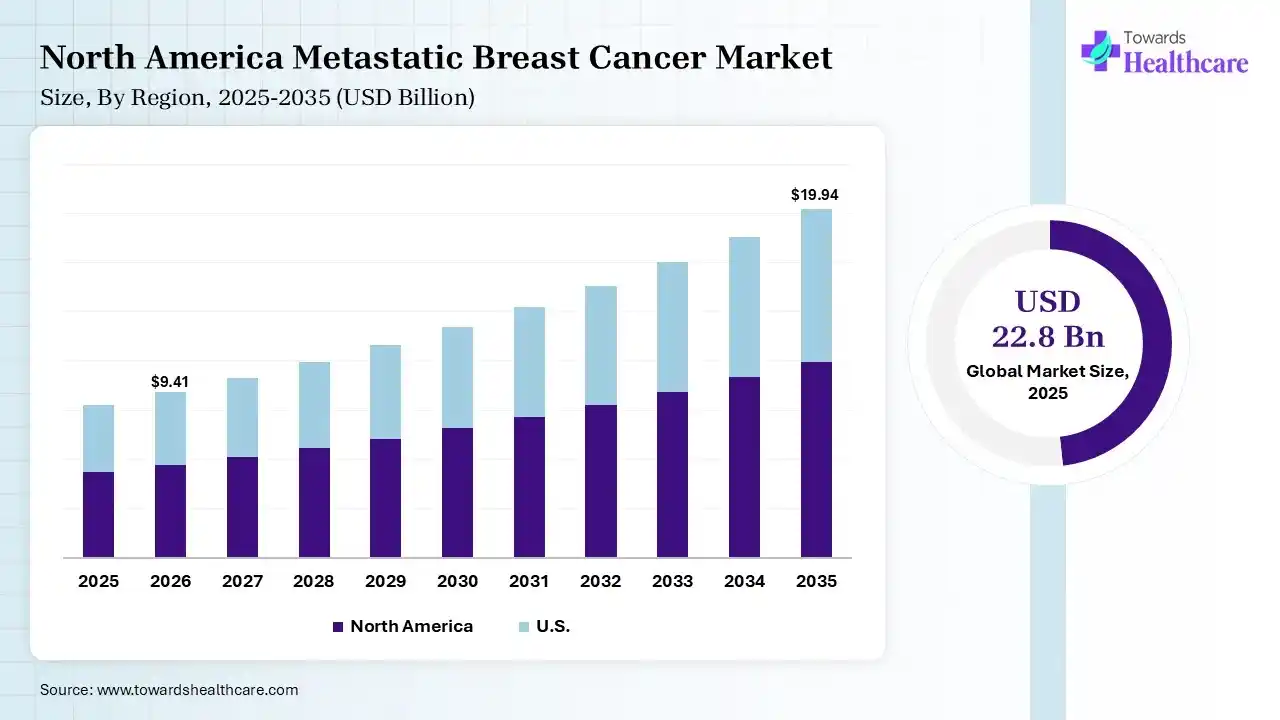
In 2025, North America dominated the metastatic breast cancer market with a share of 30% in 2025, due to increasing-income economies with noteworthy spending in healthcare, allowing for the widespread adoption of exclusive, targeted, and novel therapies. Recent advancements in besieged therapies, personalized medicine, and immuno-oncology. Increasing rates of obesity, alcohol consumption, and sedentary lifestyles lead to a higher incidence of breast cancer, driving the demand for treatments, which contributes to the growth of the market.
For Instance,
U.S. Market Trends
In the U.S., about 170,000 women in the United States are living with metastatic breast cancer. The U.S. National Cancer Institute (NCI) estimates 297,000 women and 2,800 men received a breast cancer diagnosis in 2023, which increases the demand for metastatic breast cancer treatment.
Canada Accelerates Innovation in Metastatic Breast Cancer Care
Canada's metastatic breast cancer market is witnessing significant growth due to increasing investments in oncology research, expanding access to precision medicine, and rising adoption of targeted therapies and immunotherapies. Strong clinical trial activity, advanced cancer care infrastructure, and growing use of biomarker-based diagnostics are driving innovation. Additionally, supportive healthcare policies and collaborations between research institutions and biopharmaceutical companies are strengthening Canada's leadership in advanced cancer treatment.
Asia Pacific held 23% share of the market in 2025, and is expected to have the fastest CAGR of 11.3% during the forecast period, due to rising industrialization, aging populations, shifting lifestyles, and distinct biological and clinical characteristics. Cancer fatalism and social stigma cause delays in seeking healthcare attention until the disease is progressive. Rapid industrialization, increasing aging populations, shifting lifestyles, and various biological and clinical characteristics.
India Market Trends
In India, breast cancer is the most common cancer in Indian women, with a significant increase in incidence in young women. Low awareness of symptoms, combined with social stigma, often leads women to delay seeking healthcare attention. Reduced incidence of metastasis at diagnosis has been observed in private/NGO hospitals as compared to government hospitals.
China Powers Rapid Progress in Metastatic Breast Cancer Treatment
China's metastatic breast cancer market is expanding significantly due to increasing cancer incidence, growing investments in oncology research, and rapid adoption of targeted therapies and precision medicine. Expanding pharmaceutical manufacturing, rising clinical trial activity, and improved access to advanced diagnostic technologies are accelerating market growth. Additionally, supportive government initiatives and continuous innovation in cancer therapeutics are strengthening China's oncology ecosystem and treatment capabilities.
| Ecosystem Segment | Key Participants | Role in Market |
| Technology Providers | Roche, AstraZeneca, Pfizer, Novartis, Eli Lilly | Development of targeted therapies, diagnostics, biomarkers, ADCs |
| Product Manufacturers | Gilead Sciences, Daiichi Sankyo, Merck & Co., Genentech, Menarini Group | Commercial production of oncology drugs and biologics |
| Service Providers | McKesson Specialty Health, AmerisourceBergen (Cencora), Cardinal Health | Oncology distribution and patient support programs |
| Platform Providers | Guardant Health, Exact Sciences, Foundation Medicine | Companion diagnostics and molecular profiling |
| CROs/CDMOs | IQVIA, ICON plc, Syneos Health, Charles River Laboratories | Clinical trials and oncology development support |
| Software Vendors | Tempus AI, Flatiron Health, Ontada | Oncology data analytics and precision medicine platforms |
| Research Institutions | National Cancer Institute, MD Anderson Cancer Center, Memorial Sloan Kettering Cancer Center | Clinical research and translational oncology |
| End-User Industries | Hospitals, Specialty Cancer Centers, Academic Research Centers | Diagnosis, treatment, monitoring, and clinical trials |
R&D:
Manufacturing Processes:
Patient Services:
| Tier 1 | Tier 2 | Tier 3 | |
| Typical Market Influence | 68% | 24% | 8% |
| Tier 1 | ||||
| Company Name | Headquarters | Country | Why Relevant to This Market | Key Products/Services |
| Roche Holding AG | Basel | Switzerland | Global leader in breast cancer therapeutics and companion diagnostics | Perjeta, Kadcyla, Phesgo, HER2 diagnostics |
| AstraZeneca PLC | Cambridge, England | United Kingdom | Major HER2 and HR+ metastatic breast cancer franchise | Enhertu, Truqap |
| Pfizer Inc. | New York, New York | United States | Strong CDK4/6 inhibitor leadership | Ibrance |
| Tier 2 | ||||
| Company Name | Headquarters | Country | Why Relevant to This Market | Key Products/Services |
| Eli Lilly and Company | Indianapolis, Indiana | United States | Expanding oncology pipeline and metastatic breast cancer programs | Oncology pipeline assets |
| Merck & Co., Inc. | Rahway, New Jersey | United States | Immunotherapy presence in TNBC | Keytruda |
| Daiichi Sankyo Co., Ltd. | Tokyo | Japan | Co-developer of Enhertu ADC platform | Enhertu |
| Tier 3 | ||||
| Company Name | Headquarters | Country | Why Relevant to This Market | Key Products/Services |
| Mabwell Bioscience | Shanghai | China | Developing Nectin-4 ADCs for TNBC and metastatic disease | ADC pipeline |
| MacroGenics Inc. | Rockville, Maryland | United States | Specialized antibody-based oncology therapeutics | Margetuximab |
| Olema Pharmaceuticals | San Francisco, California | United States | ER-targeted therapies for HR+ metastatic breast cancer | Palazestrant |
In July 2026, “The PI3K/AKT/mTOR, or PAM, pathway is one of the most important targets in cancer, but comprehensively inhibiting it has stymied researchers and drug developers for nearly two decades,” REVTORPYK addressed this 20-year challenge by becoming the first pan-PI3K, mTORC1/2 inhibitor approved by the FDA. We are thankful for the opportunity to make this important new therapy available to patients with HR+/HER2- locally advanced or metastatic breast cancer,” said Brian Sullivan, CEO and co-founder of Celcuity. “
Strengths
Weakness
Opportunities
Threat
By Therapy Type
By Cancer Subtype
By Route of Administration
By Distribution Channel
By End User
By Region









Principal Consultant
Payal Rabde is a Healthcare Market Research Analyst at Towards Healthcare Research & Consulting with 4+ years of experience in pharmaceuticals, biotechnology, medical devices, and life sciences.
Learn more about Payal Rabde

Reviewed By
Aditi Shivarkar is a seasoned professional with over 14 years of experience in healthcare market research. As a content reviewer, Aditi ensures the quality and accuracy of all market insights and data presented by the research team.
Learn more about Aditi Shivarkar










