


The U.S. patient positioning and support aids market size was estimated at USD 1.34 billion in 2025 and is predicted to increase from USD 1.43 billion in 2026 to approximately USD 2.61 billion by 2035, expanding at a CAGR of 6.9% from 2026 to 2035. The market is growing steadily due to increasing surgical procedures, a rising geriatric population, and the growing burden of chronic diseases. Demand is further supported by the need to enhance patient safety, comfort, and pressure injury prevention across healthcare settings.
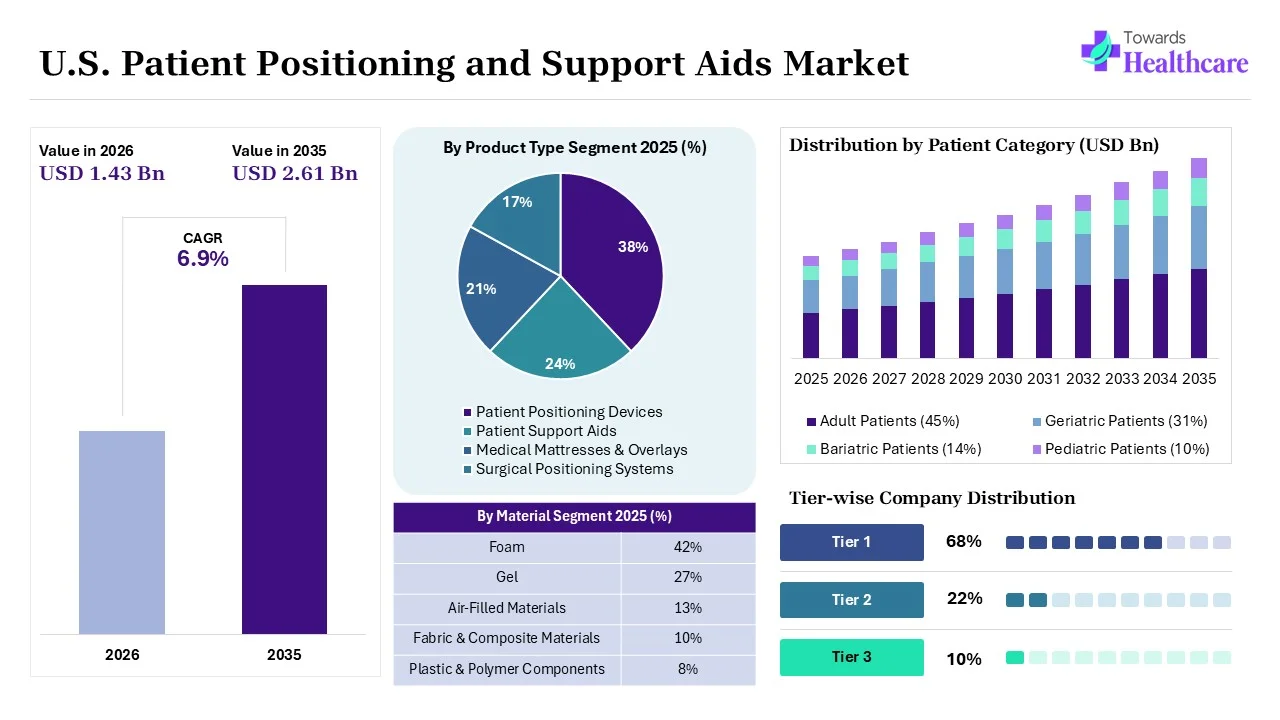
Patient positioning and support aids are medical devices designed to safely position, stabilize, and support patients during surgical, diagnostic, and therapeutic procedures while enhancing comfort and reducing the risk os presence injuries. The U.S. patient positioning and support aids market is expanding due to the increasing number of surgical procedures, the growing elderly population, and higher interventions. Healthcare providers are increasingly adopting advanced positioning and support solutions to improve patient comfort, enhance procedural efficiency, and reduce the risk of pressure injuries and musculoskeletal complications, supporting sustained market growth.
The U.S. patient poisoning and support aids market is expected to benefit from increasing adoption of smart positioning technologies, pressure injury prevention solutions, and ergonomic support systems. Growing investments in ambulatory surgical centers and patient-centered healthcare, along with rising demand f for improved clinical outcomes and caregivers’ safety, are expected to create significant opportunities for innovation and market expansion.
| Indicator | Value |
| Total U.S. Population | 341.8 Million |
| Population Aged 65 years and above | 18.0% of the total population |
| Population growth (2020-2025) | 3.1% |
| Housing Units | 148.3 Million |
| Median age of the U.S. population | 39.4 Years |
| Ambulatory Surgical Centers | Continued Expansion Under Medicare ASC Programs |
The table highlights key demographic and healthcare indicators supporting the growth of the U.S. patient positioning and support aids market. A large and steadily aging population increases the demand for surgical procedures, long -term care, and mobility support. Additionally, the continued expansion of ambulatory surgical centers and healthcare services is driving the adoption of patient positioning and support solutions to improve patient safety, comfort, and clinical outcomes.
The patient positioning devices segment held a dominant share of 38% in 2025 due to its extensive use across surgical, diagnostic, and therapeutic procedures. Growing procedure. Growing procedure volumes, increasing focus on patient safety, and the need for precise positioning during complex interventions have driven demand for these devices. Their ability to enhance procedural efficiency, reduce complications, and improve patient outcomes has further strengthened segment growth.
The foam segment dominated the U.S. patient positioning and support aids market with a share of 42% in 2025 due to the excellent pressure redistribution, patient comfort, and versatility across healthcare settings. Foa-based products are widely used during surgery and long-term care because they help reduce pressure injuries while providing reliable support. Their lightweight nature, ease of customization, and cost-effectiveness have further contributed to their widespread adoption and market leadership.
The surgical procedure segment led the U.S. patient positioning and support aids market with a share of 36% in 2025 due to the growing number of inpatient and outpatient surgeries across various specialties. Accurate patient positioning is essential during surgical procedures to ensure optimal access to the treatment site, enhance patient safety, and reduce the risk of complications. Increasing adoption of advanced positioning solutions in operating rooms further supported the segment’s dominant market position.
The hospitals segment held a dominant share of 48% in 2025 owing to the high volume of surgical procedures, emergency admissions, and inpatient treatments performed in these settings. Hospitals require a wide range of positioning and support solutions to ensure patient safety, comfort, and procedural accuracy. Strong healthcare infrastructure, advanced operating rooms, and continuous investments in patient care technologies further reinforced the segment’s leading position.
The adult patients segment held a dominant share of 45% in 2025 due to the high presence of chronic diseases, increasing surgical procedures, and greater healthcare utilization among the adult population. Adults account for the majority of hospital admissions, diagnostic examinations, and therapeutic interventions, creating substantial demand for poisoning and support aids. The growing burden of age-related conditions further contributed to the segment’s market leadership.
The direct sales segment held a dominant share of 39% in 2025 due to strong procurement preferences of hospitals and healthcare providers for direct manufacturing relationships. This channel ensures better pricing control, product customization, and faster supply of critical medical devices. Large-volume institutional purchases, long-term contracts, and the need for reliable after-sales support further strengthened direct sales adoption, making it the leading distribution channel in the market.
Leading companies in the market include Hillrom (Baxter International Inc.), Stryker Corporation, Medline Industries, Inc., Cardinal Health, Inc., AliMed, Inc., Span-America Medical Systems (Savaria Corporation), and Xodus Medical. These players are driving market growth through continuous innovation in advanced positioning devices, pressure-relief cushions, gel pads, and surgical support systems designed to enhance patient safety and procedural efficiency. Strong investments in ergonomic product design, expansion of hospital supply portfolios, and development of pressure injury prevention solutions are further strengthening their presence across hospitals, ambulatory surgical centers, and long-term care facilities in the U.S. market.
By Product Type
By Material
By Application
By End User
By Patient Category
By Distribution Channel


