


 Request Consultation
Overview
In 2026, CAR-T therapy has been characterised by two headlines, i.e. one where the field secured genuine breakthroughs, such as ciltacabtagene autoleucel (Carvykti) reported a 98% overall response rate in triple-class refractory multiple myeloma, & the FDA removed REMS restrictions across all six approved CD19- and BCMA-directed products. On the second side, in June 2026, China approved satricabtagene autoleucel (satri-cel) as the first CAR-T therapy for a solid tumor, a CLDN18.2-directed treatment for advanced gastric and gastroesophageal junction cancer. Moreover, the market has been stepping up, with a projection to surge from nearly $5.2 billion in 2025 to $27.0 billion by 2035 at a 17.9% CAGR.
Furthermore, the same timeline saw the most serious safety signal the therapy class has gone through. Specifically, at the start of November 2023, the FDA found some instances of secondary T-cell malignancies, such as CAR-positive tumors & developing within weeks of infusion in patients treated with CAR-T therapies.
In April 2024, the agency mandated a class-wide boxed warning, which encompasses every approved product, i.e. Abecma, Breyanzi, Carvykti, Kymriah, Tecartus, and Yescarta. Regardless of that headline risk, cytokine release syndrome remains a near-universal acute toxicity, which affects the vast majority of treated patients, and real-world evidence has surfaced access and outcome disparities that trial data alone did not project.
This dictation highlights both sides of that ledger without collapsing them into a single verdict. It also directs today’s approved landscape and its market trajectory, traces the regulatory timeline that established both a class-wide warning and eased monitoring requirements within the same three years, and lays out the practical obstacles, like manufacturing time, referral pathways, treatment-center density, and cost. This will conclude how far CAR-T's clinical promise actually reaches. Meanwhile, the therapy class is not moving toward either a pure breakthrough story or a pure safety scare, but is being actively defined by how the field manages both at once.
Transformation of One Therapy Class Relies on Two Substantial Pillars
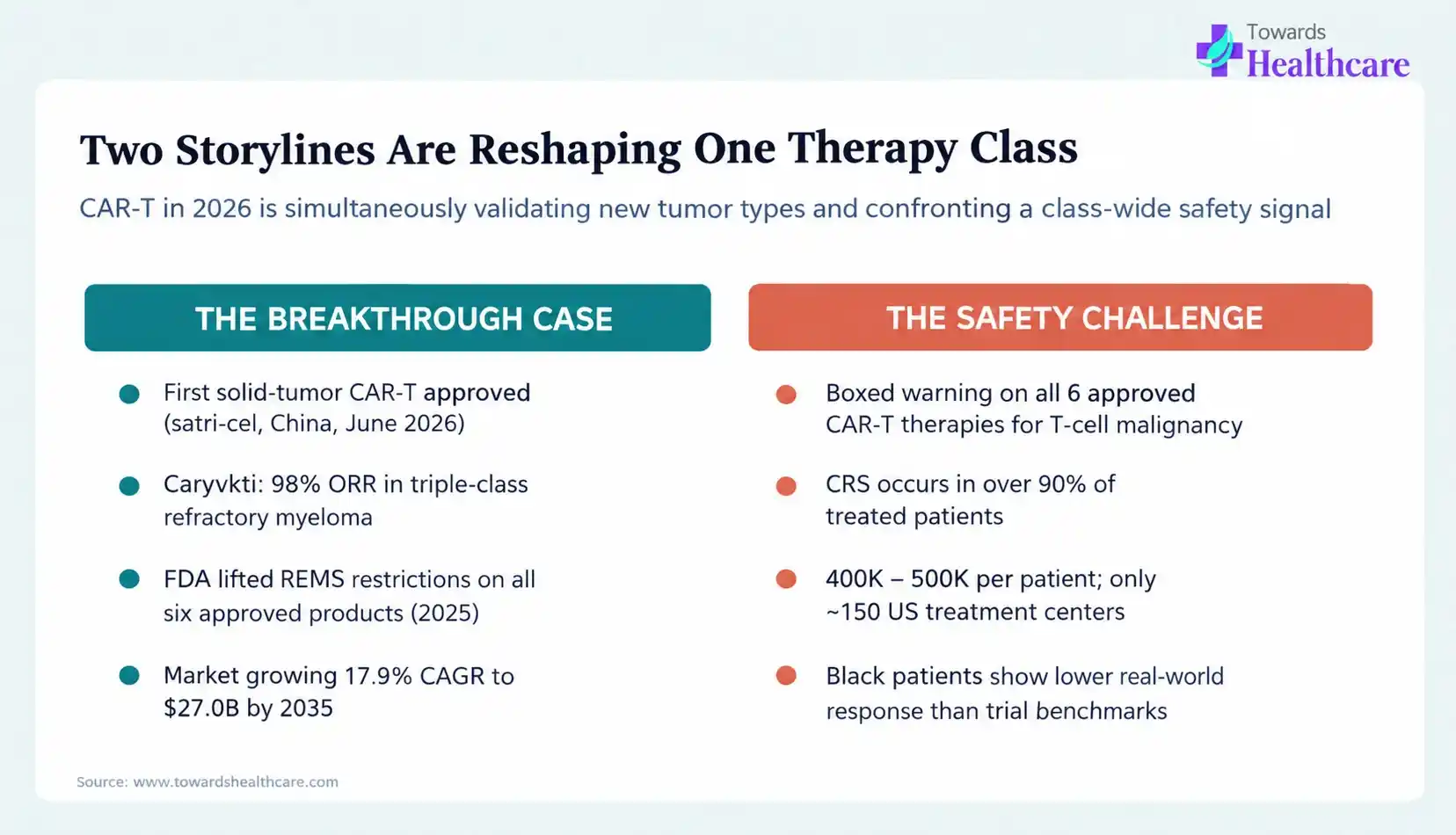
These two key frameworks are exposing the breakthrough case, i.e. new tumor types, record efficacy, easing regulatory friction, strong market growth against the safety challenge, such as a class-wide boxed warning, near-universal cytokine release syndrome, high cost, and documented outcome disparities.
Key Insight: Along with the first CAR-T therapy approved by China, called satri-cel, the market has dictated some scientific transition & its safety examination. This impacts simultaneously across the therapy class development and also both support via revolution in therapy class adoption, their price & monitoring solutions.
Source: FDA Communications; AJMC; OncLive; Precedence Research, 2026.
Today’s Industrial Sector Uncovering Six Approved CAR-T Therapies
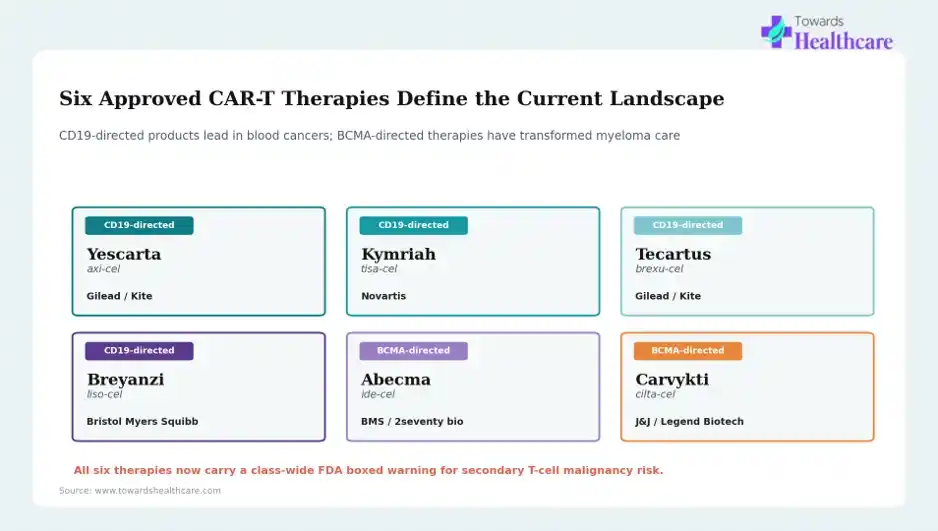
The above-mentioned six FDA-approved CAR-T products are mainly grouped by target antigen (CD19 vs. BCMA) and developer, & all are currently sharing a well-known regulatory feature known as a class-wide boxed warning.
Key Insight: According to our senior analyst, this structural representation has forced consolidation of two targets & four sponsors. All dictated products are showing the same safety label & this unprecedentedly supports the overall industry's progression, while its risk profile shows structural linkage instead of product-specific.
Source: FDA product labels; company disclosures, 2026.
By 2035, The CAR-T Market Will Surge From $5.2B to $27.0B
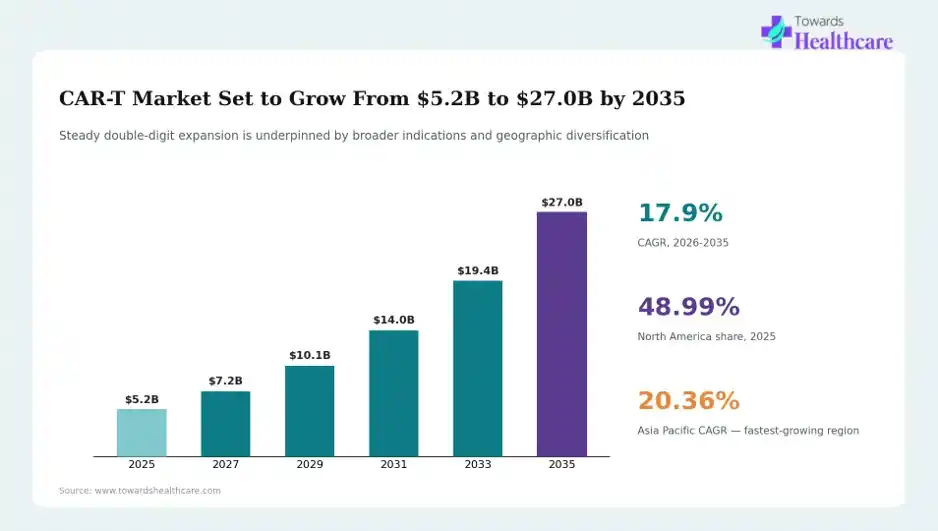
The above graph displays a projection of CAR-T market value from 2025 to 2035, which is anticipated to grow at a 17.88% CAGR, coupled with regional share & growth-rate context.
Key Insight: Based on the overall analysis, the graph indicates North America led the market in 2025 by holding a 48.99% share. Meanwhile, the Asia-Pacific is predicted to witness rapid expansion at 20.36% CAGR in the coming era. However, these evaluations indicate that the future reshaping of the CAR-T market concentrates on manufacturing capacity & clinical infrastructure investment.
Source: Precedence Research, CAR T-Cell Therapy Market Size and Growth, 2026.
In 2025, CD19 Registered Dominance, While Solid Tumors Segment Expand Rapidly in the Future
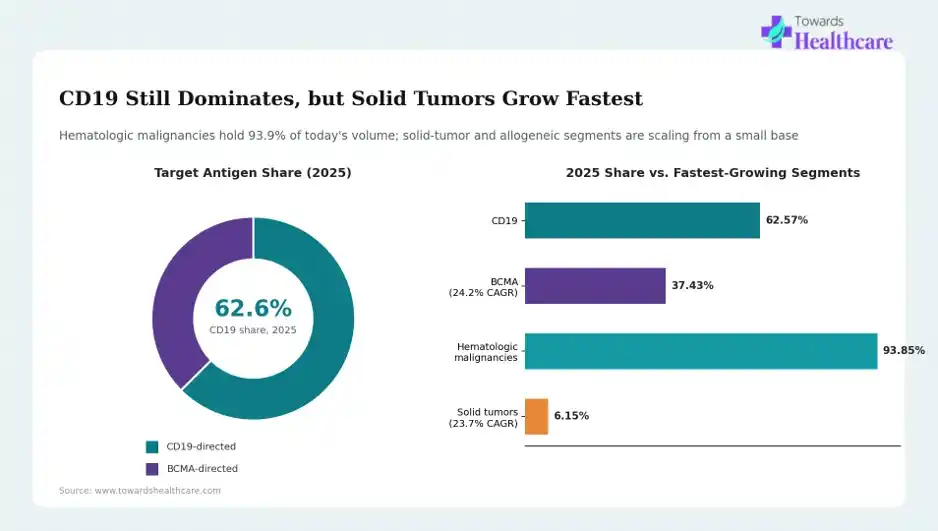
The doughnut chart shows the 2025 market share based on target antigen & indication category, coupled with the CAGR of each fastest-growing segment, which are small segments in this era.
Key Insight: Along with a 62.6% CD19 share in 2025, the entire revenue is focused on hematologic, CD19-directed therapy. Besides this, the market is exploring solid tumors with a 6.15% share, which is expected to grow at a rapid CAGR of 23.7% during the prospective years. This area is considered as preference segment for investors & pioneers in the coming years.
Source: Precedence Research, 2026.
A Pivotal Representation Underlines Data of Carvykti's Myeloma Has Peak CAR-T Efficacy
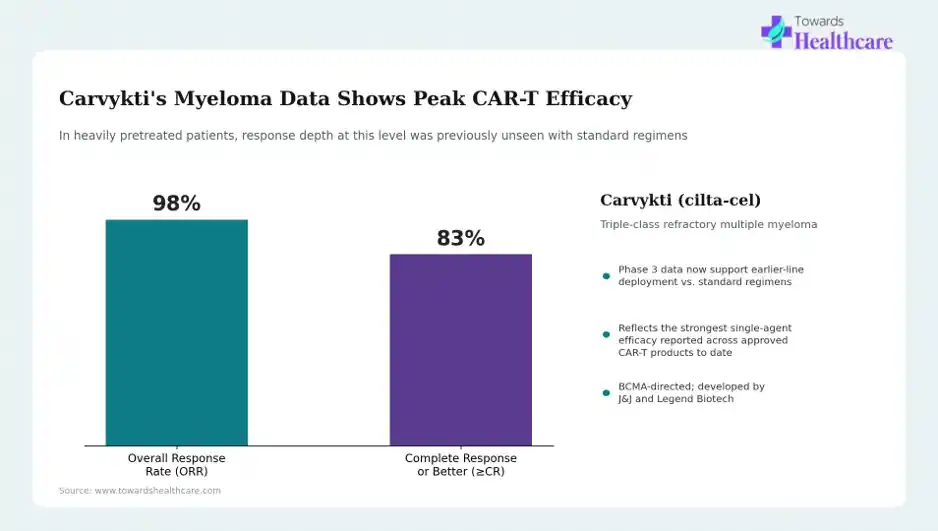
These bars showcase the overall response rate (ORR) & complete response rate for ciltacabtagene autoleucel (Carvykti) in triple-class refractory multiple myeloma.
Key Insight: With 98% ORR & 83% complete response, it illustrates the robust single-agent efficacy so far recorded across a massive pretreated population. Alongside this, Carvykti’s clinical evidence, i.e. Phase 3, is increasingly fostering earlier-line use against standard regimens.
Source: ClinicalMetric, CAR-T Cell Therapy Clinical Trials 2026.
Execution of Four Years of Regulatory Strike Encompasses Warnings, Relief, a First Entity
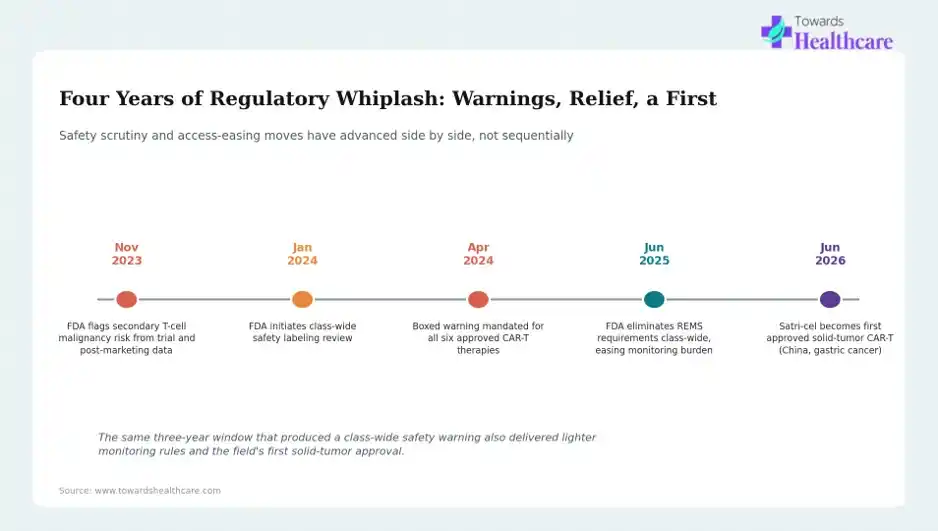
This periodic representation mainly highlights the FDA's initial 2023 safety signal through the 2024 boxed warning, the 2025 REMS elimination, and the 2026 first solid-tumour CAR-T approval.
Key Insight: Throughout 2023-2026, the FDA has stepped towards enforcement of a stringent regulatory landscape to raise safety supervision & allow access requirements. However, the biggest safety & efficacy developments are occurring simultaneously, rather than sequentially.
Source: FDA; OncLive; SmartCancer.org, 2023-2026.
Recently, the FDA Enclosed Warning & Current Era Consists of Every Approved CAR-T Product
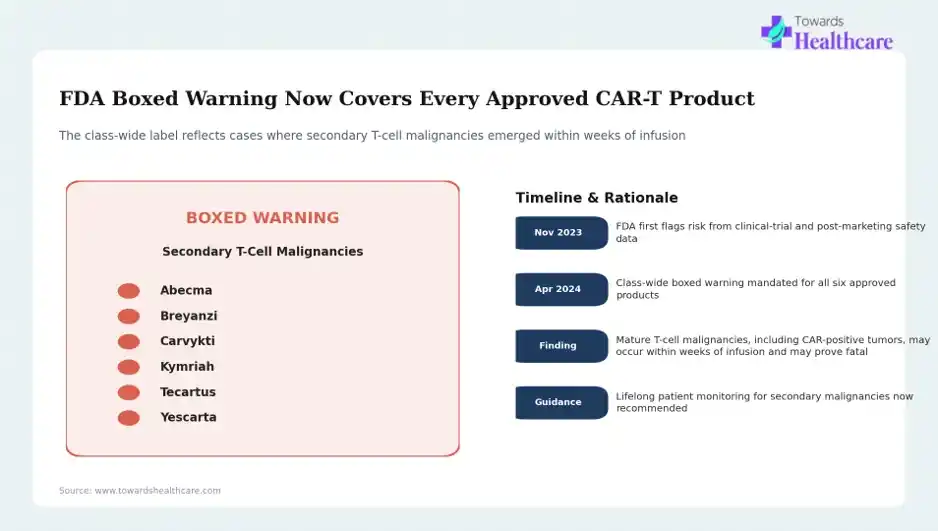
The framework demonstrates six products with the class-wide boxed warning for secondary T-cell malignancies & also addresses the timeline and rationale behind the FDA's decision.
Key Insight: Regardless of joining the above-mentioned warning with any manufacturing process or company, it shows a mechanism-level risk that is recognised to apply across the complete CAR-T modality. This needs lifelong patient monitoring, regardless of which product is leveraged.
Source: OncLive, FDA Requires Boxed Warning for Risk of T-Cell Malignancies, 2024.
Cytokine Release Syndrome Set As A Standard, Not the Special Case
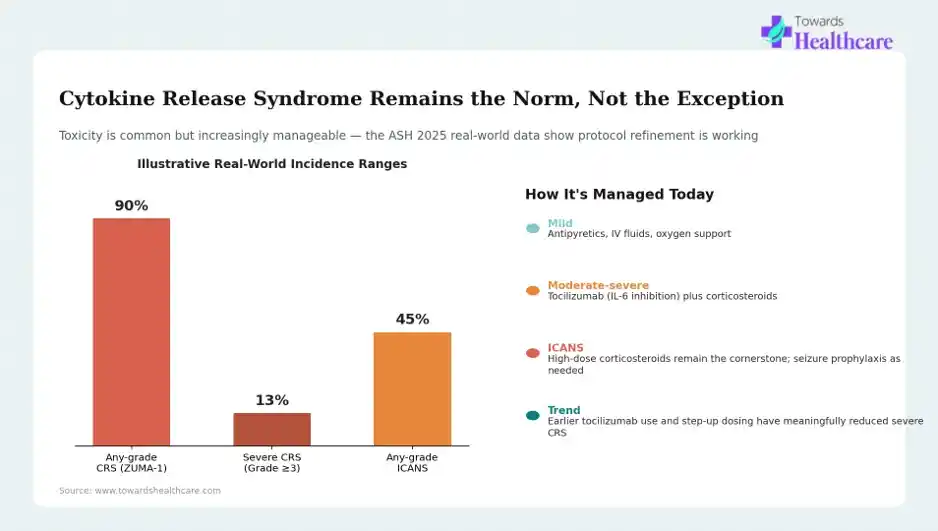
The above chart illustration represents real-world incidence ranges for CRS and ICANS, along with current first-line and escalation management protocols.
Key Insight: Specifically, CRS is highly prevalent across the vast majority of patients which recives CAR-T. Meanwhile, the clinical response has demonstrated pivotal maturity, whereas earlier tocilizumab intervention and step-up dosing are notably lowering severe-grade incidences without omitting the requirement for vigilant monitoring.
Source: ZUMA-1 trial data; Pharmacy Times; ASH 2025 real-world analyses.
Boosted Solid Tumors Reflect Limited Success for CAR-T Sector
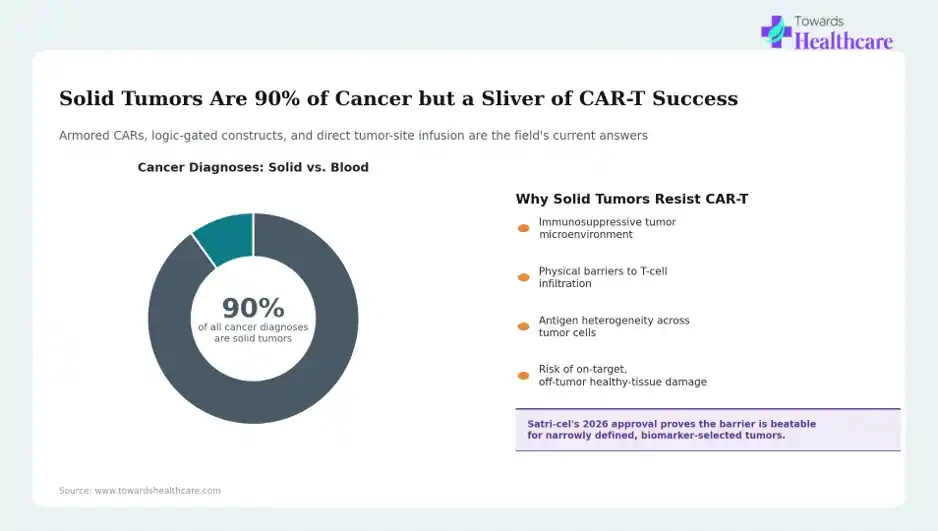
The chart displays cancer diagnoses that are solid tumors versus blood cancers, and the four core biological barriers that have restricted CAR-T's reach into solid tumors so far.
Key Insight: In 2026, Satri-cel was approved for gastric cancer, which is considered evidence from the study, not a general measure. This is applied to a narrow, explored, biomarker-selected population & does not yet span the expansive solid tumor.
Source: SmartCancer.org; Frontiers in Immunology, 2026.
Referral Timing Recognized as the Real Limiting Factor, Not Manufacturing
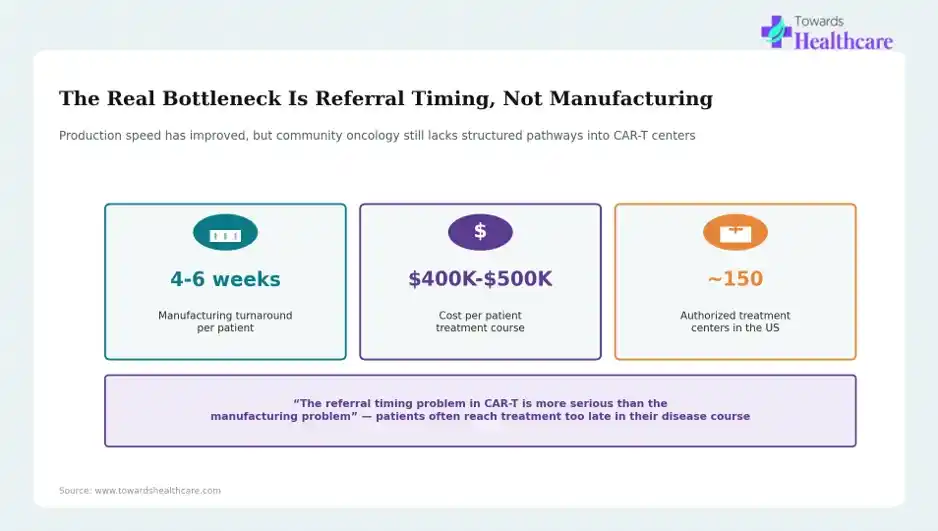
The above representation indicates today’s manufacturing turnaround time, per-patient treatment cost, and the number of authorized US treatment centers, framed against the observation that late referral, not production speed, is the huge access limitation.
Key Insight: By referring to manufacturing as more rapid & more reliable, patients are seeking CAR-T centers at the late stage of their disease course. This pushes benefit & shifts towards a care-coordination concern instead of a genuine technical one.
Source: ClinicalMetric, CAR-T Cell Therapy Clinical Trials 2026.
For Minimal Response, Off-the-Shelf CAR-T Deals Wait Time
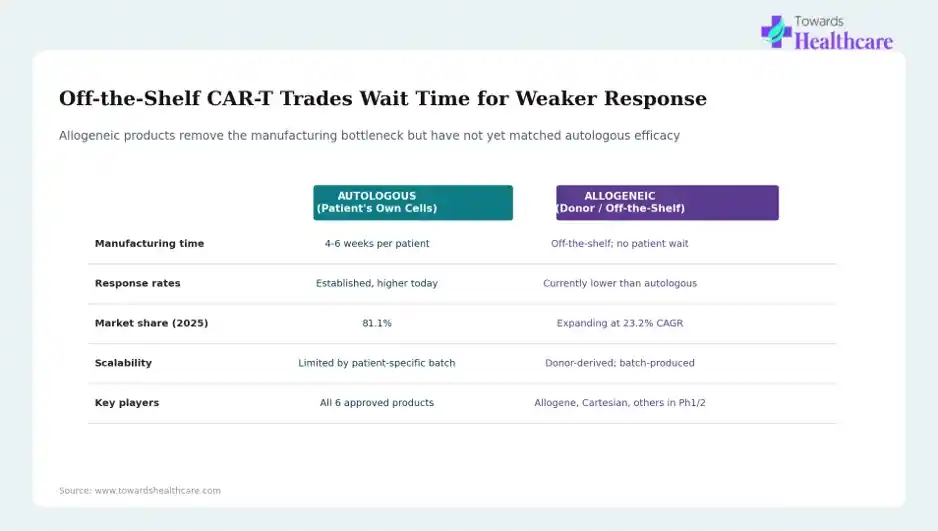
The above structural dictation compares autologous and allogeneic CAR-T throughout manufacturing time, response rates, market share, scalability, and major developers.
Key Insight: A unique exploration of allogeneic CAR-T resolves the single biggest logistical hurdle of the autologous model, i.e. patient-specific manufacturing wait time. Moreover, this has not closed the efficacy difference until now, which makes it a complement to, not a replacement for, currently approved candidates.
Source: Allogene Therapeutics; Precedence Research, 2026.
Demonstration of Real-World Response Can Trace Trial Data for Several Patients
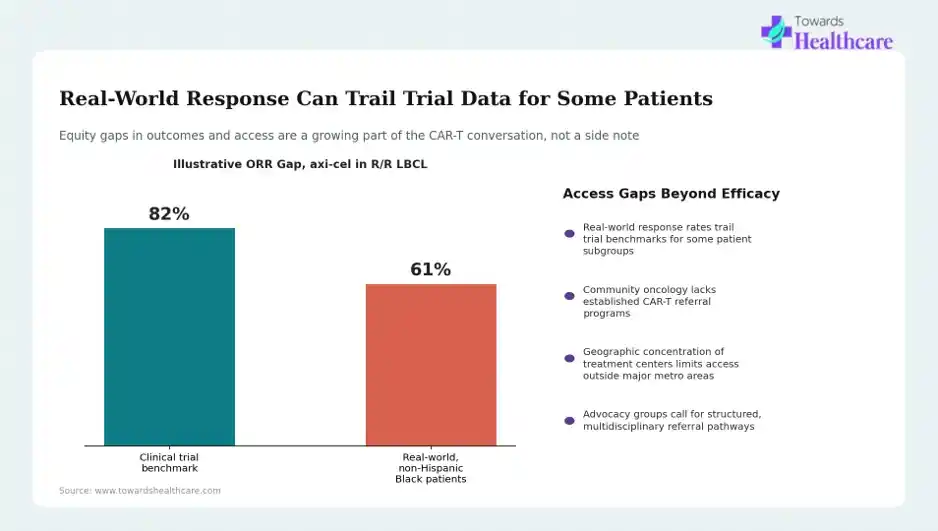
The chart reflects a comparison of clinical-trial response benchmarks against documented real-world response gaps in non-Hispanic Black patients receiving axicabtagene ciloleucel, coupled with wider access obstacles.
Key Insight: Based on the overall analysis, efficacy data acquired from controlled trials does not always convert equally into real-world outcomes across patient populations, and geographic concentration of treatment centers compounds the disparity for patients outside significant metro sectors.
Source: AJMC, CAR T-Cell Therapy in 2026 and Beyond, 2026.
Three Forces Will Determine Prospective Wave of CAR-T
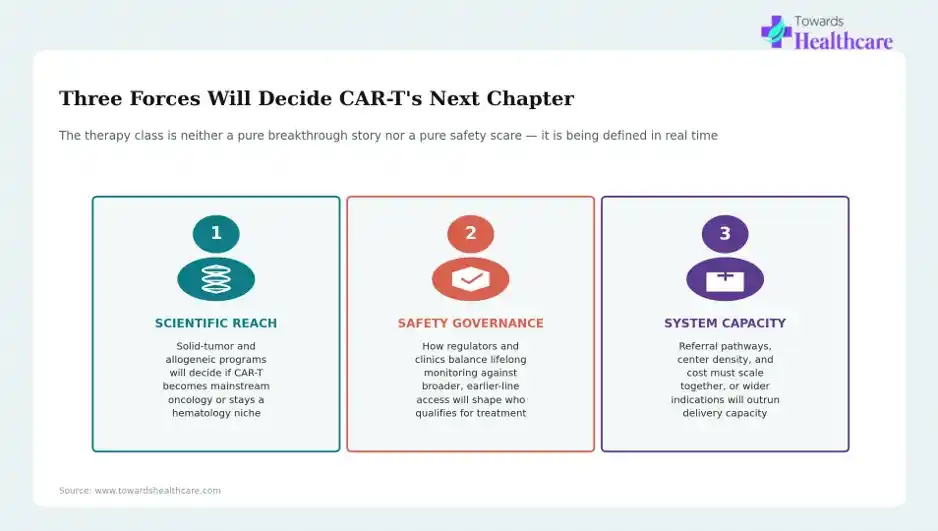
These three variables are supporting to conclude CAR-T's trajectory: scientific reach into solid tumors and allogeneic platforms, safety governance balancing monitoring against access, and system capacity to deliver at scale.
Key Insight: In the upcoming years, the CAR-T therapy area will not only cover any single trial, but will highly emphasize whether regulatory, manufacturing, and care-delivery systems can boost scale-up collaboratively with the science.
Source: Precedence Research analysis, 2026.
Overview of Approved CAR-T Therapies
| Brand Name | Generic Name | Target | Developer | Approved Indication Area |
| Yescarta | axicabtagene ciloleucel | CD19 | Gilead / Kite | Large B-cell lymphoma |
| Kymriah | tisagenlecleucel | CD19 | Novartis | ALL, follicular lymphoma |
| Tecartus | brexucabtagene autoleucel | CD19 | Gilead / Kite | Mantle cell lymphoma, ALL |
| Breyanzi | lisocabtagene maraleucel | CD19 | Bristol Myers Squibb | Large B-cell lymphoma |
| Abecma | idecabtagene vicleucel | BCMA | BMS/2seventy bio | Multiple myeloma |
| Carvykti | ciltacabtagene autoleucel | BCMA | J&J/Legend Biotech | Multiple myeloma |
Latest News Related to CAR-T Therapy in 2026
In August 2026, researchers at Charité – Universitätsmedizin Berlin illustrated that CAR T-cell therapy can redevelop the immune system. This trial has demonstrated an evaluation of CD19-targeted CAR T-cell therapy in six patients with exceptionally severe, treatment-resistant rheumatoid arthritis. This has further shown positive results by reducing disease-driving B cells deep within body tissues.
Across August/September 2026, researchers at USC Viterbi School of Engineering rolled out a method that employs focused ultrasound, i.e., the SHIFTERS technique, to expedite solid tumors cells to temporarily express CD19.
In a collaboration between Columbia University and University Hospital Tübingen, scientists found a unique protein, NFIL3, which exhausts CAR T-cells over time.
In September 2026, India’s healthcare sector aimed at the surging success of indigenously manufactured CAR T-cell therapies for CD19-positive B-cell lymphomas and leukemias. However, early clinical data from robust Indian oncology centers stated outstanding safety margins, with minimal rates of severe Cytokine Release Syndrome (CRS) and minimal neurotoxicity compared to older-generation variants.
Future Pipelines of CAR-T Therapy in 2027
| Company & Therapy | Target | 2027’s Step/Status |
| Kyverna Therapeutics (Miv-cel) | Used for stiff person syndrome (SPS)/autoimmune condition | In the subsequent BLA submission, the leader will commercially launch this entity in 2027. |
| Lyell Immunopharma (Ronde-cel) | This aims at CD19/CD20 for Large B-Cell Lymphoma (LBCL). | In 2027, the company file for FDA on the completion of pivotal trial enrollment. |
| Autolus Therapeutics (Obe-cel) | Widely useful as a CD19 CAR-T for leukemia/autoimmune expansion. | It will complete Phase 2 autoimmune trial enrollment in early 2027. |
| Novartis AG (ianalumab) | It is a first-line CAR-T therapy, studied under the VAYHIT1 trial. | In 2027, it will seek global regulatory approval. |
| Cellectis SA (Lasme-cel) | It is an allogeneic CD19, which is beneficial for R/R B-cell ALL. | The leader will advance via pivotal Phase 2 trials with continuous readouts through 2027. |
Strategic Questions for Industry Leaders
- How should treatment centers restructure long-term follow-up protocols now that lifelong monitoring for secondary malignancies is standard practice?
- What referral-pathway models could most effectively shorten the time between diagnosis and CAR-T treatment eligibility?
- Should manufacturers prioritize allogeneic platform investment even while efficacy trails autologous products, betting on scale advantages materializing first?
- How will the elimination of REMS requirements change site-certification economics for community oncology practices considering CAR-T programs?
- What validation pathway would need to exist before satri-cel's solid-tumor approval model extends to other CLDN18.2-positive cancers?
- How should companies price CAR-T therapies as competition increases across CD19 and BCMA targets without triggering payer pushback?
- What role should real-world evidence platforms play in closing the gap between trial-reported and real-world response rates?
- How can manufacturers reduce the 4-6 week production window without compromising the quality controls tied to patient-specific manufacturing?
- Should the industry pursue targeted outreach to expand the roughly 150 US treatment centers, or focus on regionalizing referral networks instead?
- What data would regulators need to consider narrowing or removing the boxed warning for products with strong post-marketing safety records?
- How should companies communicate secondary-malignancy risk to patients in a way that supports informed consent without discouraging appropriate treatment?
- What combination approaches (bispecifics, checkpoint inhibitors) offer the most promising path to improving solid-tumor CAR-T response rates?
- How should clinical trial designs evolve to better predict real-world outcome disparities before approval rather than after?
- What manufacturing innovations (in vivo CAR-T generation, automated closed-system processing) are closest to reducing cost per patient meaningfully?
- Should payers develop outcomes-based contracting specifically calibrated to CAR-T's high upfront cost and delayed efficacy signal?
- How will earlier-line deployment of BCMA-directed therapies in myeloma reshape the existing standard-of-care treatment sequence?
- What infrastructure investment is needed to make CAR-T viable as a second-line rather than later-line therapy across more indications?
- How should companies balance publication of secondary-malignancy case reports with concerns about undermining physician and patient confidence?
- What lessons from CD19-directed CAR-T's maturation curve are most transferable to accelerating BCMA and emerging solid-tumor programs?
- How should the industry define success for allogeneic CAR-T - efficacy parity with autologous products, or an acceptable efficacy-for-access tradeoff?
Data & Intelligence Pointers
- Track FDA MedWatch and post-marketing surveillance filings for updated secondary-malignancy case counts across all six approved products.
- Monitor ASH and ASCO annual meeting abstracts for real-world CRS/ICANS incidence data as institutions accumulate longer follow-up periods.
- Watch satri-cel's post-approval real-world data from China as the first indicator of solid-tumor CAR-T durability outside a trial setting.
- Follow Allogene, Cartesian Therapeutics, and other allogeneic developers' Phase 1/2 readouts for signs of closing the efficacy gap with autologous products.
- Monitor CMS and major private payer reimbursement policy changes as REMS elimination reduces the administrative burden of CAR-T site certification.
- Track the number of newly authorized CAR-T treatment centers in the US and internationally as a proxy for improving geographic access.
- Review company pipeline disclosures for progress on in vivo CAR-T generation and armored CAR constructs targeting solid tumors.
- Watch health equity research from academic cancer centers for updated real-world response and access disparity data across demographic groups.
- Track manufacturing turnaround-time benchmarks reported by Gilead/Kite, Novartis, BMS, and J&J/Legend Biotech as a competitive differentiator.
- Monitor NCCN and ASCO guideline updates for changes to line-of-therapy recommendations as BCMA-directed and CD19-directed products move earlier in treatment sequences.
- Follow multi-stakeholder referral-pathway pilots (Association of Cancer Care Centers and similar bodies) for models that could be scaled nationally.
- Track CAR-T cost-per-patient trends as competitive density increases within the CD19 and BCMA target classes.
References
- AJMC. "CAR T-Cell Therapy in 2026 and Beyond: Evolving Evidence, Expanding Indications, and the Path to Broader Access." 2026.
- OncLive. "FDA Requires Boxed Warning for Risk of T-Cell Malignancies With Approved CAR T-Cell Therapies." 2024.
- ClinicalMetric. "CAR-T Cell Therapy Clinical Trials 2026: Six Approvals, the Solid Tumor Problem, and What's Next." 2026.
- SmartCancer.org. "Solid Tumor CAR-T Revolution 2026: The First Approved CAR-T Therapy for a Solid Tumor." 2026.
- Precedence Research. "CAR T-Cell Therapy Market Size, Share, Growth Report." 2026.
- Allogene Therapeutics. "Allogene Therapeutics Positions 2026 as a Program-Defining Year for Scalable, Real-World Allogeneic CAR T." Press release, 2026.
- Pharmacy Times. "Managing CRS and ICANS in Real-World Practice: What to Know About CAR T and Bispecific Toxicities." 2026.
- Frontiers in Immunology. "CAR-T cells in solid tumors: engineering, biomarkers, translational pathways and the road ahead." 2026.
- American Society of Hematology (ASH). "Beyond the Trial: Real-World CRS, ICANS, and Healthcare Burden of CAR T-Cell Therapy Across US Oncology Practices." Blood, 2025.
- U.S. Food and Drug Administration. Product labeling and safety communications for Abecma, Breyanzi, Carvykti, Kymriah, Tecartus, and Yescarta. 2023-2025.