
The advanced cancer diagnostics market is projected to increase from USD 28.60 billion in 2025 to USD 68.33 billion by 2035, supported by rising cancer incidence and the growing requirement for accurate molecular and imaging-based cancer assessment. Advancements in precision oncology and screening technologies are driving demand for diagnostic solutions that detect cancer biomarkers and assess treatment responses. Key innovations such as NGS tumor profiling, liquid biopsy, companion diagnostics, and molecular imaging aid in targeted therapy selection. Liquid biopsy provides a minimally invasive testing option, while MRD technologies enhance the monitoring of treatment effectiveness and recurrence risk.
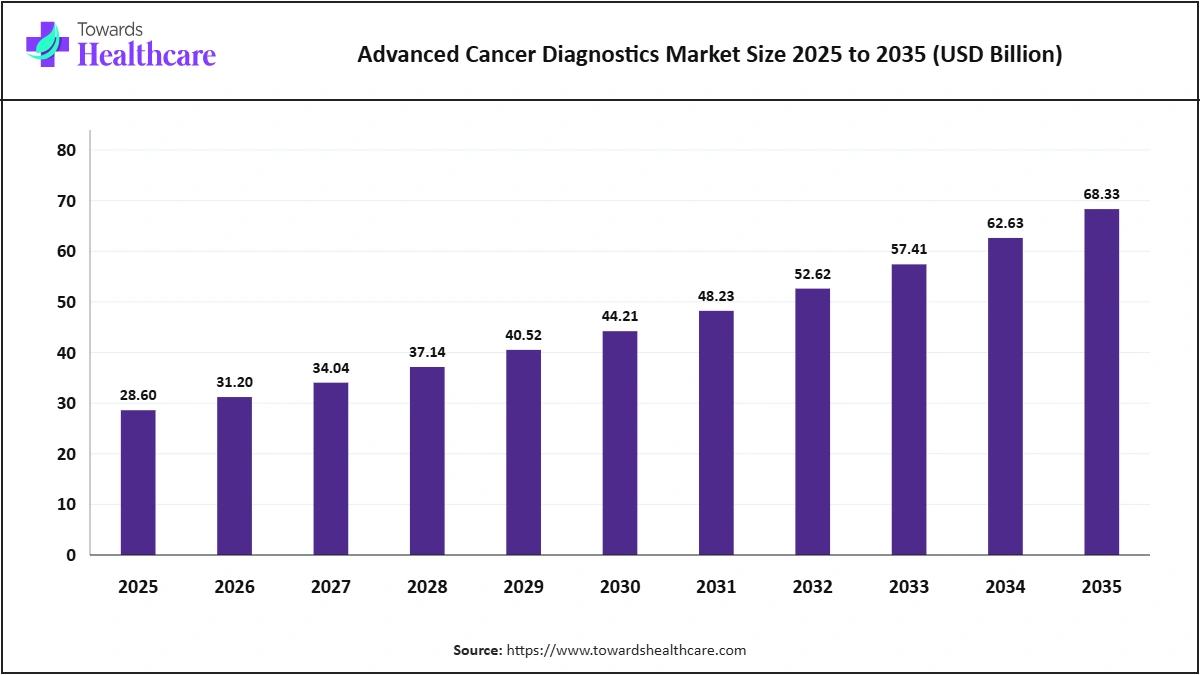
These developments are expected to increase market revenue to USD 44.21 billion by 2030 and sustain a CAGR of 9.1% from 2026 to 2035. Advances in AI-powered pathology, molecular imaging, PSMA PET, and MCED technologies are expected to expand the technological scope of the market during the forecast period.
Analyst View: We estimated the market using advanced cancer diagnostic test volumes across technologies, cancer categories, end users, and geographical markets, together with average testing prices and relevant instrument and imaging revenues. Our assessment includes NGS tumour profiling, liquid biopsy, MCED, companion diagnostics, IHC, digital pathology, and molecular imaging technologies such as PET and SPECT. The market estimate was validated using oncology diagnostics revenues and major suppliers' product offerings. It includes molecular imaging, advanced pathology solutions, and molecular cancer testing, necessitating comparison with evaluations focused specifically on cancer diagnostic assays or genomic testing.
| Driver | Impact | ≈ CAGR Contribution | Time Horizon | Key Regions |
| Cancer incidence rises | High | +3.55 pp | Short to long term | Global, strongest in North America |
| Targeted therapies need biomarkers | Medium | +3.00 pp | Medium to long term | Global, fastest uptake in Asia Pacific |
| Blood-based screening expands | Medium | +2.55 pp | Short to medium term | Global |
| Reimbursement improves | Low | +2.00 pp | Long term | Developed and emerging markets |
Note: Contributions are indicative estimates of each factor's effect on annual growth.
Sources: Expert interviews, secondary sources, Towards Healthcare database and Towards Healthcare analysts.
The advanced cancer diagnostics market is projected to grow by about 11.10% annually, fueled by rising cancer incidence. Key factors include increased demand for molecular testing, pathology assessment, and imaging, as well as the adoption of targeted therapies through biomarker identification. Blood-based screening options are expanding due to their minimally invasive nature. Improvements in reimbursement and access are set to enhance adoption, particularly in North America, while Asia Pacific is expected to integrate these technologies more quickly due to advancements in genomic testing infrastructure.
| Restraint | Impact | ≈ Negative CAGR Contribution | Time Horizon | Key Regions |
| High test prices | High | -0.90 pp | Short to medium term | Global |
| Reimbursement uncertainty for screening | High | -0.66 pp | Medium term | Price-sensitive and emerging markets |
| Evidence gaps for MCED | Medium | -0.44 pp | Short term | North America and other mature markets |
Note: Contributions are indicative estimates of each factor's effect on annual growth.
Sources: Expert interviews, secondary sources, Towards Healthcare database and Towards Healthcare analysts.
High diagnostic testing costs, reimbursement uncertainty, and clinical evidence limitations are projected to decrease the annual growth of the advanced cancer diagnostics market by about 2 percentage points. Comprehensive genomic profiling, liquid biopsy, and advanced molecular imaging are particularly impacted by high costs. Reimbursement issues may hinder the adoption of new screening technologies, as evidence of clinical utility is necessary for healthcare providers and payers. MCED technologies face challenges, including false positives and follow-up testing. However, as technologies become more accessible, clinical evidence improves, and reimbursement evolves, the market is expected to achieve a net CAGR of 9.1% from 2026 to 2035.
The development of MCED technologies, MRD monitoring, and the expanding genomic infrastructure in the Asia Pacific creates significant market opportunities. MCED technologies could extend cancer screening beyond traditional methods, bolstered by regulatory advancements and clinical evidence. MRD monitoring enhances personalized cancer management through the evaluation of residual disease and increased liquid biopsy usage. Asia Pacific presents considerable growth potential because of its large population, rising cancer burden, expanding healthcare infrastructure, and increasing investments in genomic medicine. Diagnostic manufacturers can strengthen their regional positions through affordable NGS platforms, local laboratory partnerships, technology transfers, and investments in regional testing capacity. Additional opportunities are emerging from PSMA PET imaging, theranostic radiopharmaceuticals, AI-enabled digital pathology, and comprehensive genomic profiling.
Note: 2025 is the base year; 2035 shares and CAGRs are forecasts.
Sources: Expert interviews, secondary sources, Towards Healthcare database and Towards Healthcare analysts.
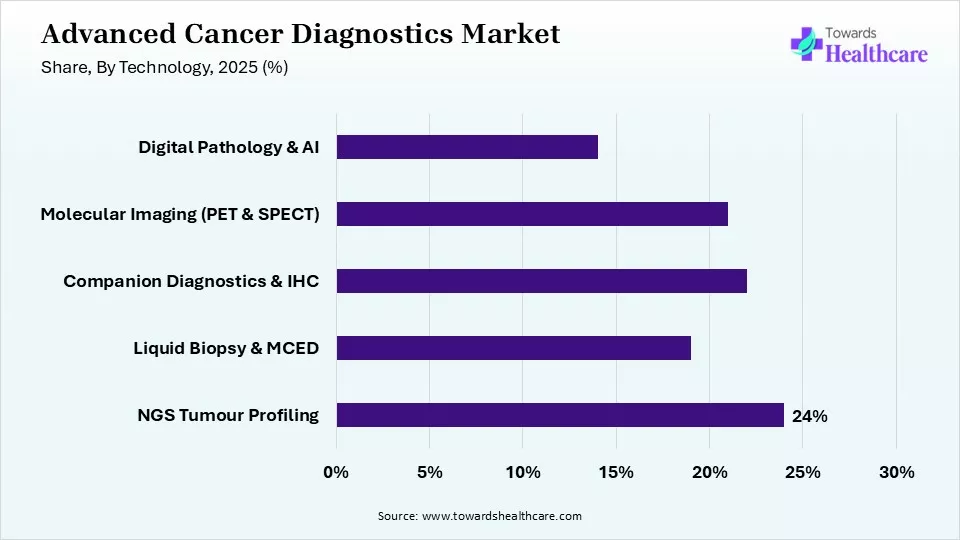
NGS tumour profiling accounted for 24% of the market in 2025 and is projected to expand at a CAGR of 8.16% from 2026 to 2035. NGS tumour profiling is utilized to detect genetic alterations and biomarkers linked to various cancers, facilitating precision oncology through targeted therapy selection. The rise of comprehensive genomic profiling and enhanced sequencing accuracy is driving growth, although this segment is anticipated to expand at a slower rate than the overall market during the forecast period.
Liquid biopsy and MCED technologies are increasingly crucial for identifying cancer biomarkers via blood tests, providing less invasive options compared to traditional methods. They facilitate cancer screening, treatment monitoring, and recurrence evaluation, with growing use of circulating tumor DNA analysis, MRD testing, and multi-cancer screening fostering segment growth, which is anticipated to outpace the overall market.
Companion diagnostics and IHC are crucial for identifying biomarkers linked to targeted therapies and immunotherapies in various cancers, notably HER2 and PD-L1 assessments. While the demand for personalized treatments drives segment growth, it is projected to expand at a slower rate than the overall market.
Technologies like PET and SPECT assess tumor activity and treatment response. Growth is driven by the adoption of advanced PET tracers and PSMA imaging, alongside improvements in imaging equipment and radiopharmaceuticals. However, the segment's growth is expected to lag behind the overall market.
These technologies enhance the digitization of tissue slides, tumor classification, biomarker assessment, and pathology workflows. AI image analysis aids pathologists in handling increased sample volumes and boosts diagnostic efficiency. Investment in computational pathology and cloud-based digital healthcare infrastructure is driving adoption, though this segment is expected to grow more slowly than the overall market during the forecast period.
However, Liquid biopsy and MCED are projected to record the highest CAGR of 11.56%. Increasing demand for minimally invasive testing, early cancer detection, and MRD monitoring is strengthening its growth outlook. Digital Pathology and AI will continue to gain relevance through improvements in automated image analysis and computational pathology, while molecular imaging will remain important for cancer staging and treatment monitoring.
Note: 2025 is the base year; 2035 shares and CAGRs are forecasts.
Sources: Expert interviews, secondary sources, Towards Healthcare database and Towards Healthcare analysts.
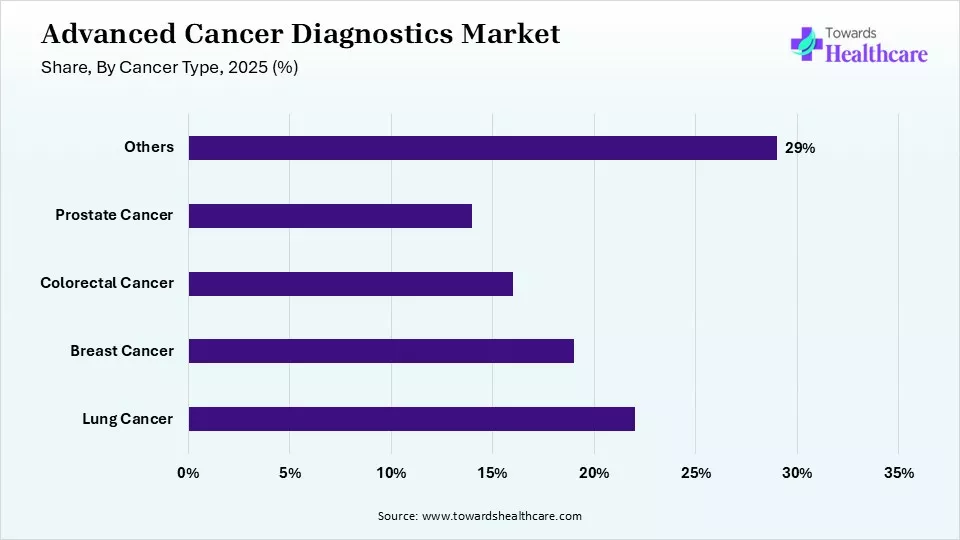
Lung cancer accounted for 22% of the market in 2025, with a projected CAGR of 9.01% from 2026 to 2035. Key components include biomarker assessment, NGS tumor profiling, liquid biopsy, and molecular imaging. Increasing adoption of precision oncology and comprehensive genomic profiling is expected to support continued growth. The segment is projected to grow broadly in line with the overall market.
Advanced cancer diagnostics in breast cancer evaluate HER2 status, hormone receptors, and genomic traits, aiding in treatment selection. Companion diagnostics and IHC play crucial roles, while genomic assays guide decisions for specific patients. The rise of personalized treatments and biomarker testing is anticipated to drive segment growth.
This growth is driven by the adoption of molecular biomarker testing, liquid biopsy, and blood-based screening technologies, along with improvements in non-invasive testing methods that enhance screening participation. Increasing use of molecular profiling and MRD monitoring is supporting segment development. The segment is expected to grow faster than the overall market.
Advanced diagnostics, including PSMA PET imaging, genomic testing, and molecular biomarker assessment, are crucial for prostate cancer detection, staging, and treatment monitoring. The increasing use of advanced radiopharmaceutical imaging and precision oncology is anticipated to support segment growth during the forecast period.
The increasing use of advanced molecular profiling, companion diagnostics, liquid biopsy, and imaging technologies is driving this growth, along with a rising demand for personalized treatment and enhanced cancer monitoring. However, its growth rate is anticipated to be slower than that of the overall market.
However, colorectal cancer is projected to record the highest CAGR of 10.21%. Increasing adoption of blood-based screening, molecular profiling, and liquid biopsy technologies is expected to support colorectal cancer diagnostics. Prostate cancer will continue to represent an important application area for PSMA-based imaging and genomic testing.
Note: 2025 is the base year; 2035 shares and CAGRs are forecasts.
Sources: Expert interviews, secondary sources, Towards Healthcare database and Towards Healthcare analysts.
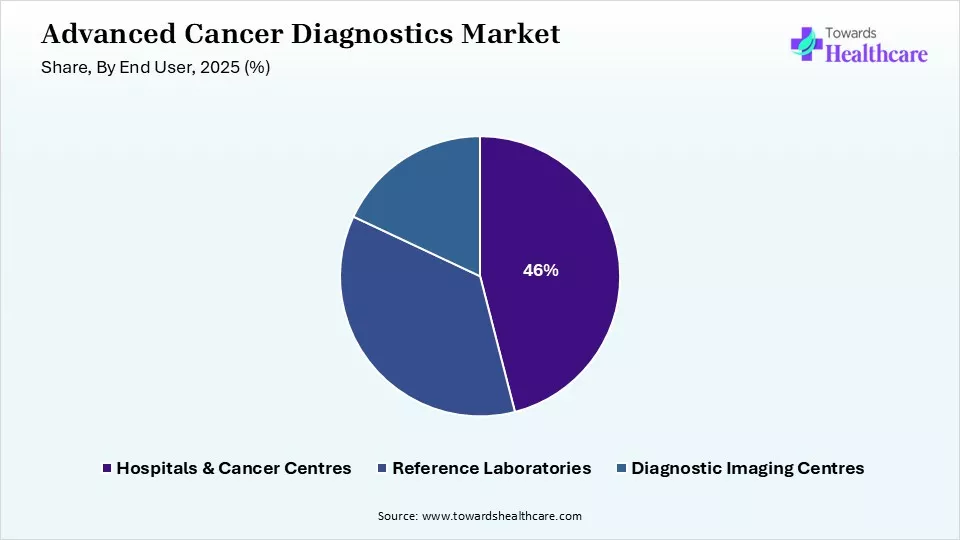
In 2025, hospitals and cancer centers held 46% of the market, with a projected CAGR of 8.43% from 2026 to 2035. These facilities are the largest end-users, offering comprehensive cancer diagnosis and treatment via molecular diagnostics, pathology assessments, companion diagnostics, and advanced imaging. The growth of precision oncology and multidisciplinary cancer care bolsters this segment, although it is expected to grow more slowly than the overall market due to a shift of specialized testing to reference laboratories.
They offer specialized services such as NGS profiling and MRD testing, enhancing cost efficiency and access to advanced cancer diagnostics. The trend of hospitals outsourcing complex genomic tests is set to further boost this segment's growth, which is anticipated to outpace the overall market growth.
These centres offer advanced imaging services for cancer detection, staging, and treatment monitoring. Increasing adoption of molecular imaging, PSMA PET, and theranostic applications, along with advancements in imaging technology and the availability of radiopharmaceuticals, is driving the demand.
However, reference laboratories are projected to record the highest CAGR of 10.03%, supported by increasing demand for specialized genomic testing, liquid biopsy, and MRD analysis. Diagnostic imaging centres will continue to play an important role in PET-based cancer assessment and molecular imaging applications.
Analyst View: Segment shares were allocated using diagnostic demand, product portfolios, testing volumes, and average prices across each category. NGS tumour profiling, the residual ‘Others’ cancer category, and hospitals and cancer centres account for the largest shares within their respective segmentation categories because they address the core requirements of cancer characterization, diagnosis, and treatment management. However, Liquid Biopsy & MCED, Colorectal Cancer, and Reference Laboratories are expected to gain market share as minimally invasive testing, genomic medicine, and specialized laboratory services expand.
Note: 2025 is the base year; 2035 shares and CAGRs are forecasts.
Sources: Expert interviews, secondary sources, Towards Healthcare database and Towards Healthcare analysts.
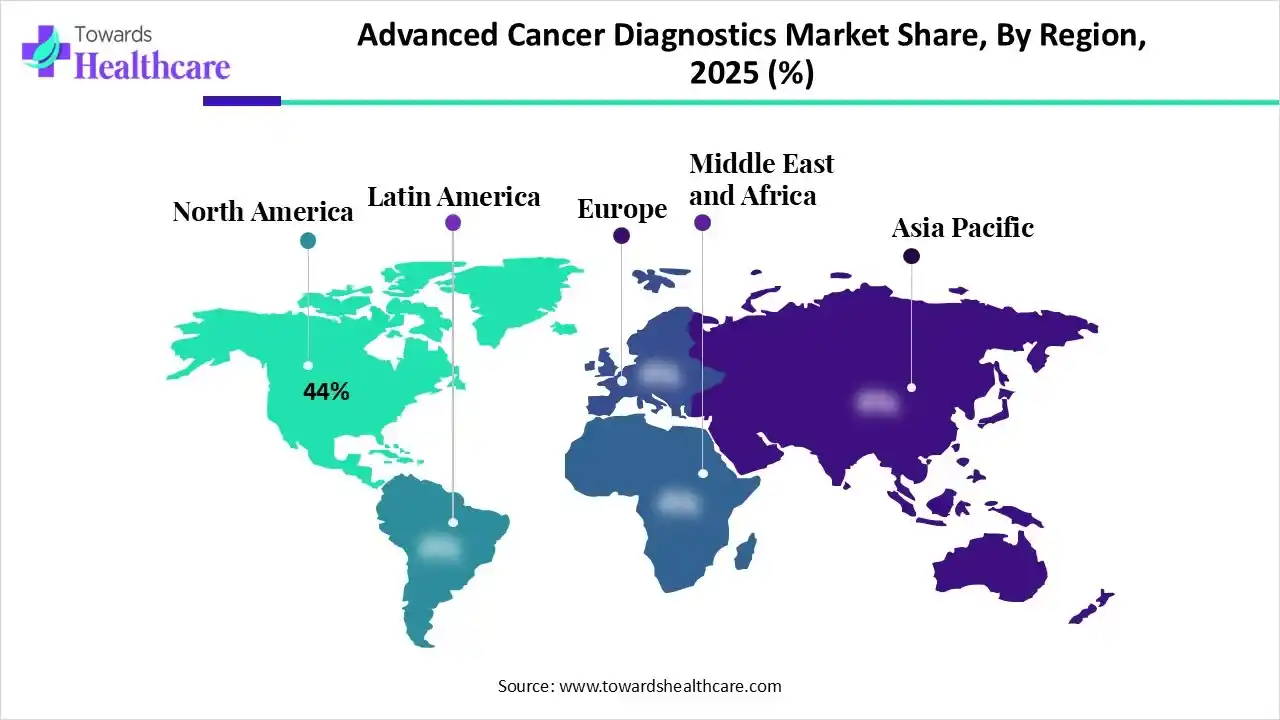
North America held 44% of the advanced cancer diagnostics market in 2025, with a projected CAGR of 8.58% from 2026 to 2035. The region's growth is driven by an established precision oncology ecosystem, high genomic profiling adoption, advanced laboratory infrastructure, and a significant presence of diagnostic manufacturers. The United States contributes due to its robust cancer research infrastructure, demand for targeted therapies, and advanced molecular testing technologies. The growth of reimbursement for selected NGS tests and increased liquid biopsy adoption support the region, although its growth rate is expected to be slower than the overall market during the forecast period.
Europe growth in cancer care is driven by established screening programs, advanced laboratory infrastructure, and a rising demand for personalized oncology. Key markets include Germany, the UK, France, Italy, and Spain, benefiting from strong healthcare systems. The use of NGS tumor profiling, IHC, and molecular imaging is anticipated to enhance growth, aligning with overall market projections for Europe.
Asia Pacific is driven by a large population, rising cancer incidence, enhanced healthcare infrastructure, and increased investment in genomic medicine in the region. Key countries such as China, Japan, India, South Korea, and Taiwan are contributing to this expansion through the adoption of precision oncology, improved access to molecular diagnostics, and increased healthcare spending. Additionally, local manufacturing and partnerships in testing capacity are expected to enhance access to advanced diagnostic solutions.
Latin America is supported by the rise of molecular oncology, better diagnostic infrastructure, and heightened awareness of personalized treatment in the region. Brazil and Argentina are significant markets due to robust healthcare systems and enhanced diagnostic capabilities. However, disparities in healthcare spending, reimbursement, and access to genomic technologies may hinder adoption in some countries.
The Middle East and Africa development in this region is supported by investments in cancer centres, improvements in diagnostic laboratory infrastructure, and increasing healthcare expenditure. GCC countries and South Africa represent important markets for advanced cancer diagnostics. The expansion of specialized oncology facilities and growing access to molecular testing and advanced imaging technologies are expected to support regional adoption.
Analyst View: Based on our analysis, North America maintains its leading position because of its mature precision oncology ecosystem and strong presence of established diagnostic manufacturers. Asia Pacific is expected to receive the highest growth premium because investment in genomic medicine, diagnostic laboratory capacity, and advanced cancer treatment is expanding rapidly. Europe is projected to maintain a substantial market position, while Latin America and the Middle East and Africa will benefit from improvements in cancer care infrastructure and diagnostic access.
| Rank | Company Name | 2025 Share (%) | Key Products / Business | Headquarters |
| 1 | Roche Diagnostics | 38.46% | IHC, companion diagnostics and Foundation Medicine profiling | Switzerland |
| 2 | Illumina | 20.98% | Sequencing systems and TruSight Oncology | United States |
| 3 | Exact Sciences | 20.98% | Cologuard, Oncotype DX and MRD tests | United States |
| 4 | Siemens Healthineers | 20.98% | PET/CT molecular imaging | Germany |
| 5 | Thermo Fisher Scientific | 17.48% | Oncomine NGS and companion diagnostics | United States |
| 6 | GE HealthCare | 17.48% | PET imaging and radiopharmaceuticals | United States |
| 7 | Agilent Technologies | 13.99% | PD-L1 and companion diagnostics | United States |
| 8 | Guardant Health | 10.49% | Guardant360 and Shield blood tests | United States |
| 9 | Natera | 10.49% | Signatera MRD testing | United States |
| 10 | GRAIL | 3.50% | Galleri multi-cancer early detection | United States |
Note: Company shares are 2025 estimates.
Sources: Company press releases, expert interviews, secondary sources, Towards Healthcare database and Towards Healthcare analysts.
Roche Diagnostics, Illumina, and Exact Sciences are among the major participants in the advanced cancer diagnostics market, supported by their established molecular testing platforms, genomic profiling solutions, and extensive oncology diagnostic portfolios. Roche Diagnostics competes in immunohistochemistry, companion diagnostics, and Foundation Medicine profiling. Illumina focuses on sequencing systems and TruSight Oncology solutions, while Exact Sciences engages with Cologuard, Oncotype DX, and new MRD testing technologies.
Key market participants in healthcare technology include Siemens Healthineers, Thermo Fisher Scientific, GE HealthCare, Agilent Technologies, Guardant Health, Natera, and GRAIL. They compete in areas such as molecular imaging, NGS assays, companion diagnostics, liquid biopsy, MRD monitoring, and MCED technologies, with Siemens and GE focused on PET-based imaging, while Thermo Fisher specializes in Oncomine NGS solutions and Agilent in biomarker diagnostics.
Guardant Health and Natera are advancing in blood-based cancer testing and MRD monitoring, while GRAIL is launching its Galleri test for MCED, focusing on signals associated with different cancer types.
The competitive landscape in molecular diagnostics, genomic sequencing, pathology, liquid biopsy, and molecular imaging involves companies competing based on clinical evidence, regulatory approvals, reimbursement, test sensitivity, turnaround time, biopharma partnerships, and data integration. Firms with extensive diagnostic portfolios and advanced testing capabilities are poised to gain from the increasing adoption of precision oncology.
Roche Diagnostics: Roche Diagnostics, a division of F. Hoffmann-La Roche Ltd based in Switzerland, specializes in advanced cancer diagnostics, focusing on IHC, companion diagnostics, and Foundation Medicine profiling. The company leverages its robust clinical diagnostics business, extensive laboratory relationships, and global distribution network to enhance precision oncology through molecular profiling and biomarker assessment. It is classified as a Leader in the Towards Healthcare Companies Quadrant.
Illumina: Illumina, headquartered in the United States, offers advanced cancer diagnostics through sequencing systems and TruSight Oncology solutions. The company enhances genomic profiling with next-generation sequencing technologies and reagents, supported by a strong sequencing platform ecosystem and partnerships with clinical laboratories. In the Towards Healthcare Companies Quadrant, it is placed as a Leader.
Exact Sciences: Exact Sciences, based in the United States, offers a cancer diagnostics portfolio that includes Cologuard, Oncotype DX, and MRD-related tests. The company is active in colorectal cancer screening, genomic testing, and cancer monitoring, maintaining a strong presence in non-invasive screening and molecular diagnostics, which bolsters its competitive edge. In the Towards Healthcare Companies Quadrant, it is positioned as a Leader.
Siemens Healthineers: Siemens Healthineers, based in Germany, specializes in advanced cancer diagnostics, focusing on PET/CT molecular imaging and diagnostic technologies. The company enhances cancer staging, disease monitoring, and treatment assessment through its medical imaging systems. Its strong hospital relationships and imaging expertise solidify its market leadership, as recognized in the Towards Healthcare Companies Quadrant.
Thermo Fisher Scientific: Thermo Fisher Scientific, based in the U.S., offers a cancer diagnostics portfolio that includes Oncomine NGS solutions and companion diagnostics. The company enhances molecular profiling and precision oncology through various technologies, bolstering its competitive edge. It is recognized as a Leader in the Towards Healthcare Companies Quadrant.
GE HealthCare: GE HealthCare is headquartered in the United States. Its advanced cancer diagnostics participation centres on PET imaging and radiopharmaceutical-related technologies. The company provides imaging solutions used in cancer detection, staging, and treatment monitoring. Its established medical imaging business and global hospital relationships support its competitive position. In the Towards Healthcare Companies Quadrant, it is positioned as a Leader.
Agilent Technologies: Agilent Technologies, headquartered in the United States, offers an advanced cancer diagnostics portfolio featuring PD-L1 testing and companion diagnostics. The company enhances biomarker assessment and pathology applications for targeted cancer treatment. Its strength in laboratory technologies and molecular analysis solidifies its market position, categorized as an Innovator in the Towards Healthcare Companies Quadrant.
Guardant Health: Guardant Health, based in the United States, specializes in advanced cancer diagnostics, including the Guardant360 and Shield blood-based testing solutions. The company focuses on liquid biopsy and genomic profiling, enhancing cancer detection, treatment selection, and monitoring. Its emphasis on blood-based molecular diagnostics positions it strongly in the precision oncology market, earning it the status of an Innovator in the Towards Healthcare Companies Quadrant.
Natera: Natera, headquartered in the United States, focuses on advanced cancer diagnostics, particularly through Signatera MRD testing. The company specializes in molecular residual disease monitoring and personalized genomic testing, aiding in cancer treatment monitoring and evaluating potential disease recurrence. It is recognized as an Innovator in the Towards Healthcare Companies Quadrant.
GRAIL: GRAIL, based in the United States, specializes in advanced cancer diagnostics, particularly through its Galleri blood test for early multi-cancer detection. This positions the company favorably in the growing early cancer detection market and classifies it as an Innovator within the Towards Healthcare Companies Quadrant.
The advanced cancer diagnostics ecosystem links technology providers, test developers & labs, pharma partners, providers, and payers & regulators, with each stage adding value before products reach end users.
| Ecosystem Stage | Role in the Market | Key Companies |
| Technology Providers | Supply sequencers, reagents and imaging | Illumina, Thermo Fisher, Siemens Healthineers, GE HealthCare |
| Test Developers & Labs | Develop and run tests | Foundation Medicine, Guardant, Exact Sciences, Natera, GRAIL |
| Pharma Partners | Co-develop companion diagnostics | Oncology drug makers |
| Providers | Order tests | Oncologists, cancer centres |
| Payers & Regulators | Approve and pay | FDA, CMS, private payers |
Sources: Company press releases, expert interviews, secondary sources, Towards Healthcare database and Towards Healthcare analysts.
Technology Providers: Participants in advanced cancer diagnostics provide instruments, reagents, laboratory equipment, imaging systems, and supporting technologies. Notable companies include Illumina, Thermo Fisher Scientific, Siemens Healthineers, and GE HealthCare, which offer products that aid in molecular profiling, imaging-based assessment, and advanced laboratory testing.
Test Developers & Labs: Participants in molecular cancer testing and monitoring include Foundation Medicine, Guardant Health, Exact Sciences, Natera, and GRAIL, offering technologies for cancer screening, biomarker assessment, treatment selection, and disease monitoring through liquid biopsy assays and genomic profiling.
Pharma Partners: Pharmaceutical companies are partnering with diagnostic manufacturers to create companion diagnostics and biomarker-based tests, facilitating the identification of patient populations suitable for targeted therapies and immunotherapies. This trend is amplified by the growing development of precision oncology drugs, enhancing collaboration in the sector.
Providers: Advanced cancer diagnostic technologies are utilized by hospitals, cancer centers, oncologists, and specialized healthcare facilities for molecular tests, pathology assessments, and imaging procedures to aid in cancer diagnosis, treatment selection, and patient monitoring.
Payers & Regulators: Regulatory authorities and healthcare payers impact diagnostic approvals, clinical evidence, reimbursement policies, and market access. The FDA is responsible for evaluating diagnostic products in the U.S., while CMS and private payers determine coverage and reimbursement decisions.
The value chain in the global advanced cancer diagnostics market begins with technology and reagent suppliers, followed by diagnostic manufacturers, test developers, specialized laboratories, and healthcare providers. Pharmaceutical partnerships and regulatory organizations further influence product development, market access, and commercialization. Companies that integrate several stages or establish long-term relationships with healthcare providers and pharmaceutical partners are better positioned to capture value across the ecosystem.
The Towards Healthcare Companies Quadrant positions key participants in the advanced cancer diagnostics market by market strength, reflecting revenue scale, market share, and geographic reach, and by innovation and growth strategy, reflecting product portfolio breadth, R&D intensity, and partnerships. Positions reflect each company's estimated 2025 share of the advanced cancer diagnostics market and our assessment of its product innovation, portfolio breadth, and partnerships.
Sources: Company press releases, expert interviews, secondary sources, Towards Healthcare database, and Towards Healthcare analysts.
Leaders: Roche Diagnostics, Illumina, Exact Sciences, Siemens Healthineers, Thermo Fisher Scientific, and GE HealthCare combine high market share with broad portfolios and strong innovation.
Innovators: Agilent Technologies, Guardant Health, Natera, and GRAIL bring newer technologies and specialised products.
By Technology
By Cancer Type
By End User
By Region
The advanced cancer diagnostics market encompasses technologies and systems used to detect, characterize, and monitor various cancers, including NGS, liquid biopsies, MCED, companion diagnostics, IHC, digital pathology, AI-enabled pathology, and molecular imaging technologies like PET and SPECT. The market applies to multiple cancer types, such as lung, breast, colorectal, and prostate, utilized across hospitals, reference laboratories, cancer centers, and diagnostic imaging facilities.
For the 2025 base year estimate, a bottom-up approach was taken, analyzing testing volumes, technology adoption rates, average testing prices, and revenues across categories and geographical markets. NGS tumor profiling was evaluated separately to capture its specific usage and commercial models. The estimates were further validated through a top-down review of leading suppliers’ oncology diagnostics portfolios, considering product offerings, genomic testing platforms, and clinical partnerships.
Market estimates were organized by technology, cancer type, and geographical demographics. Validation methods included company disclosures, regulatory data, industry publications, expert interviews, and third-party estimates, while conflicting inputs were excluded. All estimates maintained the same 2025 base year, with a projected market growth rate of 9.10% from 2026 to 2035, based on anticipated changes in cancer incidence and advancements in precision oncology practices. However, company-specific market shares need revaluation, as initial figures exceeded total market percentages, necessitating calculations based on verified diagnostics revenues instead of broader corporate revenues.
Analyst View: The advanced cancer diagnostics market is set for significant growth due to increasing cancer incidence and the rising adoption of personalised oncology. Key technologies such as NGS tumour profiling, liquid biopsy, companion diagnostics, molecular imaging, and AI-enabled digital pathology are crucial for cancer detection and treatment. While NGS Tumour Profiling remains vital, Liquid Biopsy & MCED is expected to share market gains quickly. North America will maintain its leading position, supported by strong infrastructure and reimbursement for genomic tests, while Asia Pacific will experience the fastest growth due to expanding cancer care and genomic testing. Growth opportunities are concentrated in MCED technologies, MRD monitoring, and comprehensive genomic profiling, although challenges include high costs and reimbursement uncertainties. Overall, trends in cancer therapy and technological advancements are anticipated to drive market expansion until 2035.