


The global AI in oncology for analytical solutions market size was estimated at USD 1.62 billion in 2025 and is predicted to increase from USD 2.19 billion in 2026 to approximately USD 33.87 billion by 2035, expanding at a CAGR of 35.54% from 2026 to 2035. The growing cancer burden and technological advancements are increasing the use of AI analytical solutions, where the growing biomarker R&D activities, healthcare investments, and new platform launches are also promoting the market growth.
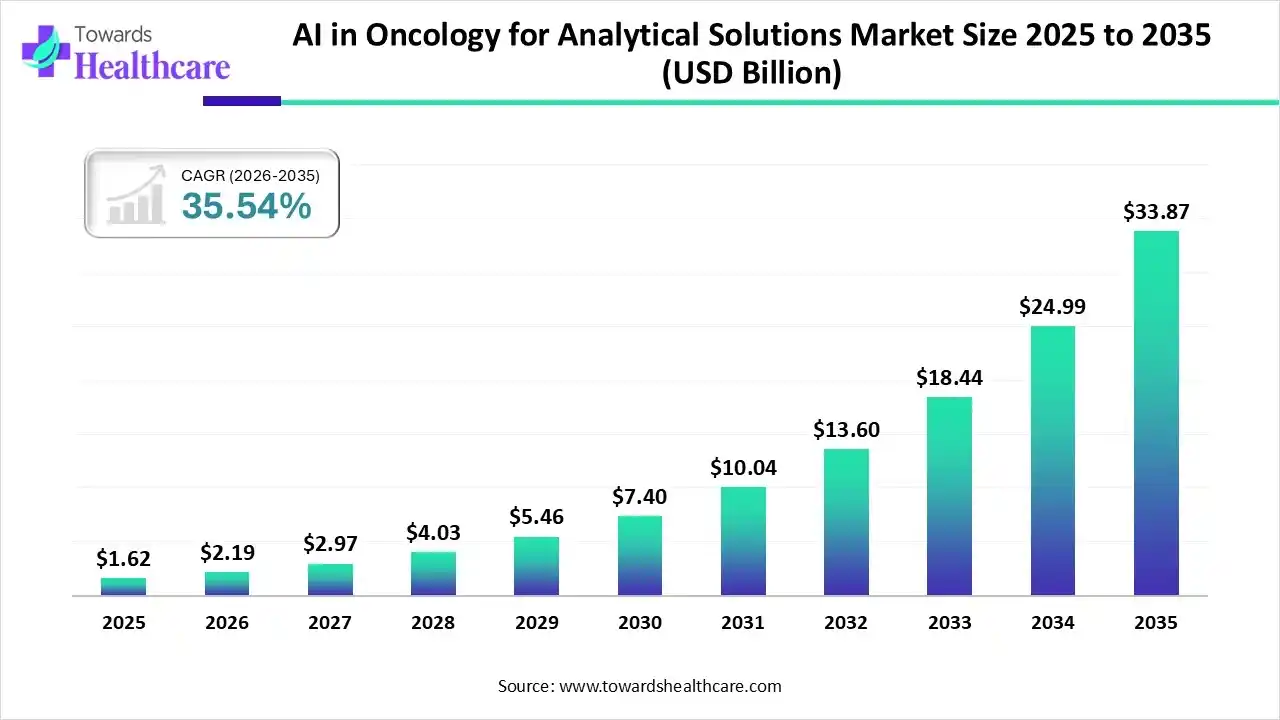
The AI in oncology for analytical solutions market is driven by growing incidences of cancer, increasing demand for personalized treatment, and scalable diagnostic tools. The AI in oncology for analytical solutions refers to the use of artificial intelligence technologies for the analysis of cancer-related data and to support cancer diagnostics, clinical, and research decisions. These solutions are being used for cancer detection, classification of cancer types, prediction of cancer recurrences, treatment planning, forecasting treatment response, etc.
AI in oncology analytical solutions refers to the application of artificial intelligence technologies, including machine learning, deep learning, predictive analytics, and natural language processing, to analyze oncology-related clinical, genomic, imaging, and pathological data for improved cancer diagnosis, treatment planning, and research. The market is expanding due to the growing global cancer burden, increasing demand for precision oncology, and rising adoption of data-driven clinical decision support. Technological advancements such as multimodal data analytics, AI-powered digital pathology, cloud-based oncology platforms, and genomic intelligence are transforming cancer care. Key trends include integration of real-world evidence, biomarker discovery, and AI-assisted clinical trial optimization. Future opportunities lie in personalized treatment strategies, next-generation predictive oncology, and automated therapeutic response analysis. Increasing investments in healthcare AI, expanding oncology datasets, and collaborations between technology companies and healthcare providers continue to accelerate market growth and innovation.
AI in oncology for analytical solutions refers to the application of artificial intelligence technologies to analyze complex oncology data, including medical imaging, genomic information, pathology results, and clinical records, to support cancer diagnosis, treatment planning, biomarker discovery, and clinical decision-making. The market is expanding due to the rising global burden of cancer, increasing adoption of precision oncology, and growing demand for data-driven healthcare solutions. Advancements in machine learning, deep learning, and predictive analytics are improving the accuracy and speed of cancer detection and treatment selection. Additionally, increasing investments in AI-powered healthcare platforms, expanding digital health infrastructure, and collaborations between technology companies, research institutions, and healthcare providers are driving innovation and accelerating market growth worldwide.
Growing Healthcare Dataset
The growing cancer patient volume is increasing the healthcare datasets, which is increasing the demand for AI analytical solutions to offer evidence-based insights. They are also being integrated with other healthcare systems to offer high-quality data, precise diagnostic prediction, and treatment planning. Moreover, they are also used in the development of personalized medicine using patient data sets.
Data Security Concerns
The AI analytical solutions for oncology utilize patient medical records, which consist of sensitive patient information, increasing the risk of cyberattack and data hacking. This, in turn, reduces the data sharing as well as the use of AI technologies for oncological applications.
Growing Cancer Screening Programs
To control the growing incidence of cancer cases, the government, as well as the private sector, is conducting various cancer screening programs, which are increasing the adoption of AI analytical solutions. These solutions help in early and accurate detection of tumors, analyze large data sets, support personalized treatment planning, and help in reducing the cancer burden. This is creating new opportunities for the development of new AI technologies and platforms.
Expanding Personalized Treatment
The growing cancer awareness and demand for value-based care are increasing the shift towards personalized therapies, which is increasing the use of AI analytical solutions for their development and prediction of treatment response.
Growing Application
The growing applications, such as effective screening, accurate diagnosis, treatment monitoring, and real-time outcomes prediction, are driving the adoption of various AI analytical solutions for oncological applications.
Technological Advancements
The growing healthcare digitalization is increasing the use of AI, driving their integration with oncological imaging, pathology, genomics, and clinical data to offer accurate analytical insights, as well as promoting the development of cloud and SaaS based models.
| Table | Scope |
| Market Size in 2026 | USD 1.62 Billion |
| Projected Market Size in 2035 | USD 33.87 Billion |
| CAGR (2026 - 2035) | 35.54% |
| Leading Region | North America by 59% |
| Historical Data | 2020 - 2023 |
| Base Year | 2025 |
| Forecast Period | 2026 - 2035 |
| Measurable Values | USD Millions/Units/Volume |
| Market Segmentation | By Component, By Cancer Type, By Region |
| Top Key Players | Tempus AI, ConcertAI, PathAI, Paige AI, Siemens Healthineers, GE HealthCare, Lunit, Ibex Medical Analytics, Artera, Qure.ai |
Which Component Type Segment Held the Dominating Share of the Market in 2025?
The software solutions segment held the dominating share of the AI in oncology for analytical solutions market in 2025, as they were essential for the detection of tumors and treatment planning. This increased their adoption across various hospitals, where their easy integration with other hospital systems also enhanced their adoption rates. They offered regular updates and compliance with the regulatory standards, which made them widely accepted.
Data Licensing Services
The data licensing services segment is expected to show the highest growth during the upcoming years, due to the limited availability of structured cancer datasets. The growing training and educational practices are also increasing their demand, where the increased focus on personalized treatment is also increasing their use. Additionally, growing R&D activities are also increasing their demand.
What Made Breast Cancer the Dominant Segment in the Market in 2025?
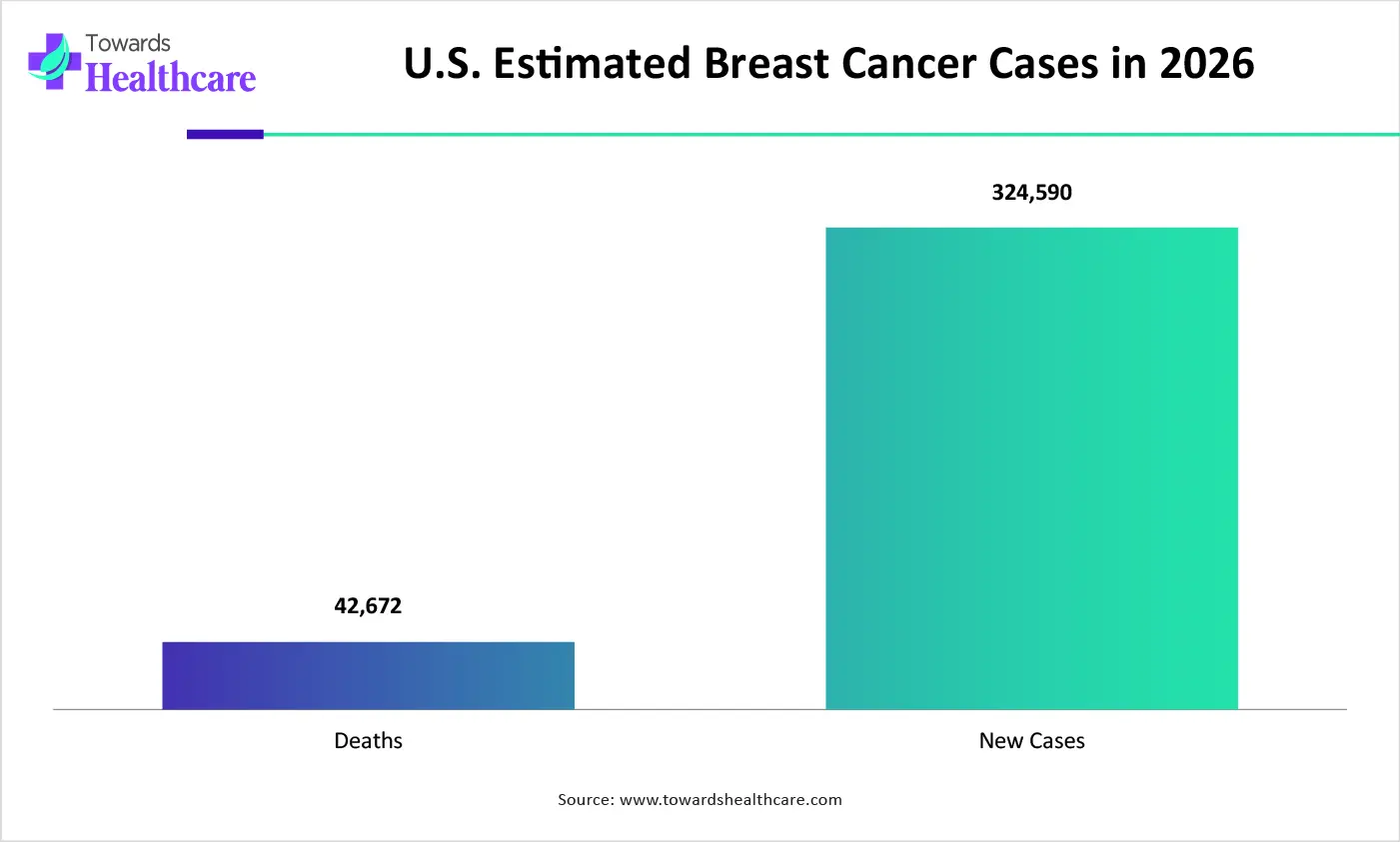
The breast cancer segment contributed the biggest revenue share of the AI in oncology for analytical solutions market in 2025, due to the growth in its incidence rates. The growing health awareness and screening programmes are also increasing the demand for accurate cancer detection, driving the adoption of AI technologies. Growth in biomarker and genetic testing, along with funding, also encouraged their use and advancements.
Bladder Cancer
The bladder cancer segment is expected to expand rapidly in the market during the predicted time, due to their growing cases, where their frequent recurrences are increasing the demand for AI-based analytical solutions. Moreover, the increasing demand for accurate diagnostics, precision medicines, as well as growth in diagnostic laboratories and biomarker R&D activities, are also leveraging these solutions.
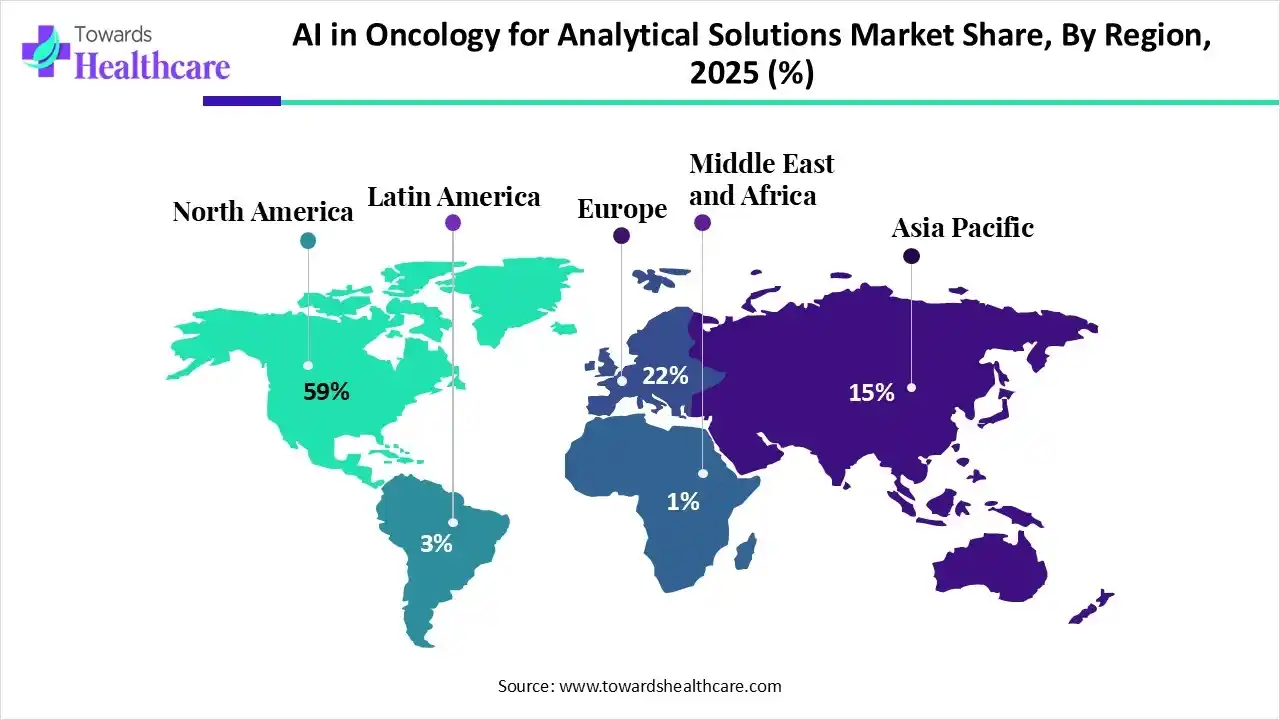
North America dominated the AI in oncology for analytical solutions market by 59% in 2025, due to the presence of advanced healthcare infrastructure, which increased the early adoption of the AI analytical solutions for oncological applications. The growth in healthcare investments also enhanced their adoption for the management of datasets, where a rise in technological innovations also contributed to the market growth.
U.S. Market Trends
The advanced healthcare present in the U.S. is increasing the use of AI solutions for cancer diagnosis, treatment, and monitoring in order to control its growing burden. The companies are also developing various AI technologies to offer a wider range of oncological applications, which are further backed by healthcare investments.
Canada Advanced AI-Powered Oncology Analytics
The Canada Ai in oncology for analytical solutions market is growing due to increasing cancer research investments, widespread adoption of precision medicine, and a strong digital healthcare ecosystem. Rising use of AI-powered medical imaging, genomic analytics, and clinical decision support tools is improving cancer diagnosis and treatment planning. Additionally, collaboration between healthcare providers, research institutions, and AI technology companies is accelerating innovation and driving market expansion.
Asia Pacific is expected to host the fastest-growing AI in oncology for analytical solutions market during the forecast period, due to growing cancer incidences, which are driving the demand for AI-powered diagnostics. Growing government cancer screening programs and investments are also increasing their adoption rates, as expanding healthcare is also increasing their use, enhancing the market growth.
China Market Trends
China is experiencing a rise in the cancer burden, which is increasing the demand and use of AI analytical solutions. The healthcare expansion, increasing R&D activities, and government initiatives are also increasing their adoption rates. Additionally, increasing technological innovations are also driving their advancements.
India Accelerates AI-Driven Oncology Innovation
The India AI in oncology for analytical solutions market is expanding due to the rising cancer burden, increasing adoption of AI-enabled diagnostic technologies, and growing investment in digital healthcare. Expanding use of AI medical imaging, pathology, and genomic analysis is enhancing early cancer detection and treatment planning. Additionally, government initiatives promoting healthcare digitization and collaborations between technology companies and healthcare providers are driving market growth.
Europe is expected to grow significantly in the AI in oncology for analytical solutions market during the forecast period, due to growing cancer awareness through growing cancer screening programs. This is increasing the use of AI-based analytical solutions for accurate cancer diagnosis and treatment planning. Growing government initiatives and collaborations are also promoting the market growth.
UK Market Trends
The presence of robust healthcare systems is increasing the use of AI technologies for early cancer detection across the UK. Growing government funding and R&D activities are also increasing their use in the development of new precision medicines, where the expanding AI startups are also increasing their innovations.
Germany Experiences Significant Growth in the AI in Oncology Analytical Solutions Market
Germany is experiencing significant growth in the AI in oncology analytical solutions market due to its advanced healthcare infrastructure, strong oncology research ecosystem, and increasing adoption of AI-enabled precision medicine. Rising investments in digital pathology, genomic analytics, and cancer data platforms are enhancing diagnostic accuracy and treatment planning. Government support for healthcare digitalization, expanding clinical research, and collaborations between research institutions and technology companies are further accelerating market growth.
South America has a notable contribution to the growth of the AI in oncology for analytical solutions market. The market’s growth in the region is primarily influenced by the growing need to bridge the gap between critical healthcare and oncology workforce shortages. The region faces severe shortages of specialists, such as radiation oncologists and medical physicists, which AI-driven analytical and diagnostic tools help mitigate by automating imaging analysis and clinical workflows.
Brazil Market Trends
Brazil plays a leading role in driving the growth of artificial intelligence (AI) in oncology and analytical solutions within Latin America, backed by large patient volumes, expanding digital health infrastructure, and heavy investments in both public and private care networks. Brazil faces severe shortages in oncology specialists, such as a deficit of 960 radiation oncologists and 359 medical physicists noted in recent health data. AI-driven analytical, diagnostic, and clinical decision support systems help bridge these gaps by automating routine image analysis and assisting with treatment planning, further propelling the growth of the market.
Argentina Market Trends
Argentina contributes to the growth of AI in oncology and analytical solutions primarily as a regional digital health hub in Latin America, driven by local software innovation, national policy frameworks, and growing clinical adoption. The Argentinian Government launched the Argentina National Digital Health Strategy (2020–2024), which formally prioritized the integration of artificial intelligence into public and private healthcare workflows, including cancer care and diagnostics. Local regulatory bodies like ANMAT (Administracion Nacional de Medicamentos, Alimentos y Tecnología Médica) have approved specialized AI-driven medical imaging tools, such as Entelai (an AI medical imaging platform) and solutions from UMA, under the Software as a Medical Device (SaMD) model to streamline oncology and radiology screening, propelling the market’s growth.
The contribution of the Middle East and Africa to the growth of AI in oncology for analytical solutions market is reflected in the form of rapid digital health transformation, government-led infrastructure investments, and rising cancer care demands. National visions (such as Saudi Vision 2030 and digital health strategies in the GCC) heavily back smart-hospital upgrades, cloud adoption, and AI-driven clinical tools. Growing cases of cancer in the region are leading to higher adoption of healthy systems with predictive analytics, digital pathology, and early tumor detection algorithms for cutting down diagnostic delays, also fueling market growth.
Saudi Arabia Market Trends
Saudi Arabia drives the growth of the market through heavy government backing, strategic medical partnerships, and massive infrastructure investments. Establishment of the Saudi Data and AI Authority (SDAIA) in 2019 provide the national framework, data ecosystems, and funding needed to scale artificial intelligence across life sciences and healthcare, helpful for market’s growth.
South Africa Market Trends
South Africa is known to have a notable contribution in the growth of the market. The contribution is reflected through regional scientific output, pioneering digital health tools, and international partnerships. South Africa ranks as one of the top three dominant African countries for research productivity in AI and digital technology applied to non-communicable diseases, including cancer and diabetes.
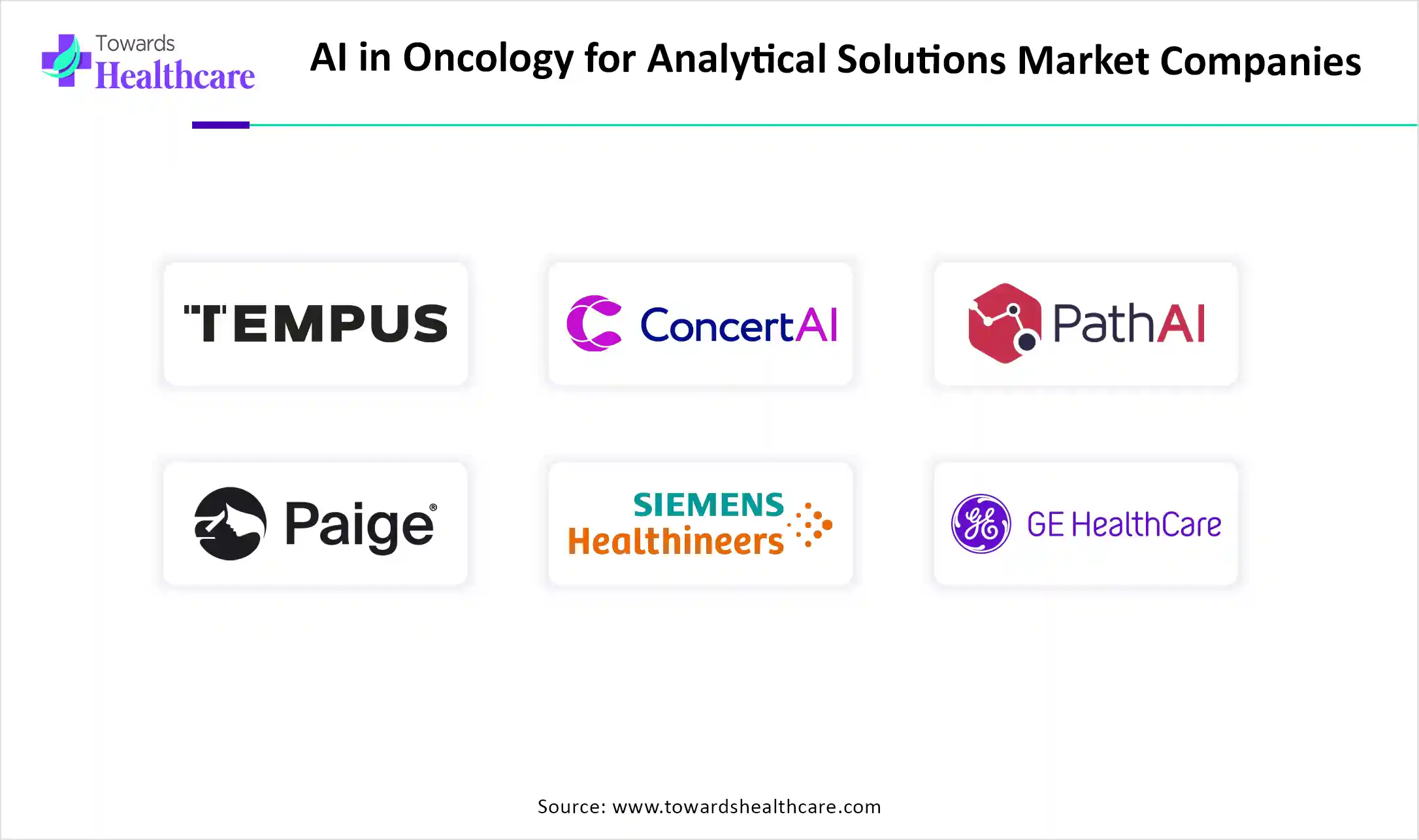
| Company | Headquarters | AI Capabilities | Oncology Contribution | Focus Area | AI Analytical Solutions for Oncology |
| Tempus AI | Chicago, U.S. | Integrates clinical, genomic & imaging data with AI for diagnosis & therapy matching | Enables personalized treatment plans & trial stratification at scale | Genomics-AI integration | Tempus Next and Tempus One |
| ConcertAI | Cambridge, U.S. | AI-driven RWD insights, clinical trial acceleration, CARAai & TeraRecon solutions | Speeds trial design, enriches evidence, improves imaging workflows | Trials & outcomes | CARAai |
| PathAI | Boston, U.S. | Enhances tissue slide analysis with deep learning | Boosts diagnostic accuracy & biomarker discovery | Pathology analytics | AISight Dx |
| Paige AI | New York, U.S. | Whole-slide image interpretation for cancer detection | Early detection & expanded oncology indications | AI in pathology | Paige Prostate Suite |
| Siemens Healthineers | Erlangen, Germany | AI-embedded diagnostics & workflow tools | Improves imaging precision in tumour detection | Imaging tech | AI-Pathway Companion |
| GE HealthCare | Chicago, U.S. | AI suites for diagnostic radiology & cancer care | Enhances screening, workflow & clinical throughput | Imaging integration | Precision DL |
| Lunit | Seoul, South Korea | Biomarker analysis & digital pathology tools | Supports drug development & biomarker discovery | Biomarker AI | Lunit INSIGHT and Lunit SCOPE |
| Ibex Medical Analytics | Tel Aviv, Israel | Expanded AI modules for tumor subtyping & biomarkers | Enriches early detection & therapeutic insights | Pathology AI | Galen Platform |
| Artera | Menlo Park, U.S. | AI tests to guide therapy decisions (e.g., prostate) | Personalizes treatment plans with prognostic data | Predictive oncology | ArteraAI Prostate Test |
| Qure.ai | Mumbai, India | AI tools for lung cancer detection & lesion tracking | Aids automated tumor measurement & clinical decisions | Imaging & measurement | qCT-Lung |
Strengths
Weaknesses
Opportunities
Threats
By Component
By Cancer Type
By Region





Principal Consultant
Payal Rabde is a Healthcare Market Research Analyst at Towards Healthcare Research & Consulting with 4+ years of experience in pharmaceuticals, biotechnology, medical devices, and life sciences.
Learn more about Payal Rabde

Reviewed By
Aditi Shivarkar is a seasoned professional with over 14 years of experience in healthcare market research. As a content reviewer, Aditi ensures the quality and accuracy of all market insights and data presented by the research team.
Learn more about Aditi Shivarkar









