


The global antimicrobial urinary catheters market size was estimated at USD 1.24 billion in 2025 and is predicted to increase from USD 1.35 billion in 2026 to approximately USD 2.8 billion by 2035, expanding at a CAGR of 8.48% from 2026 to 2035.
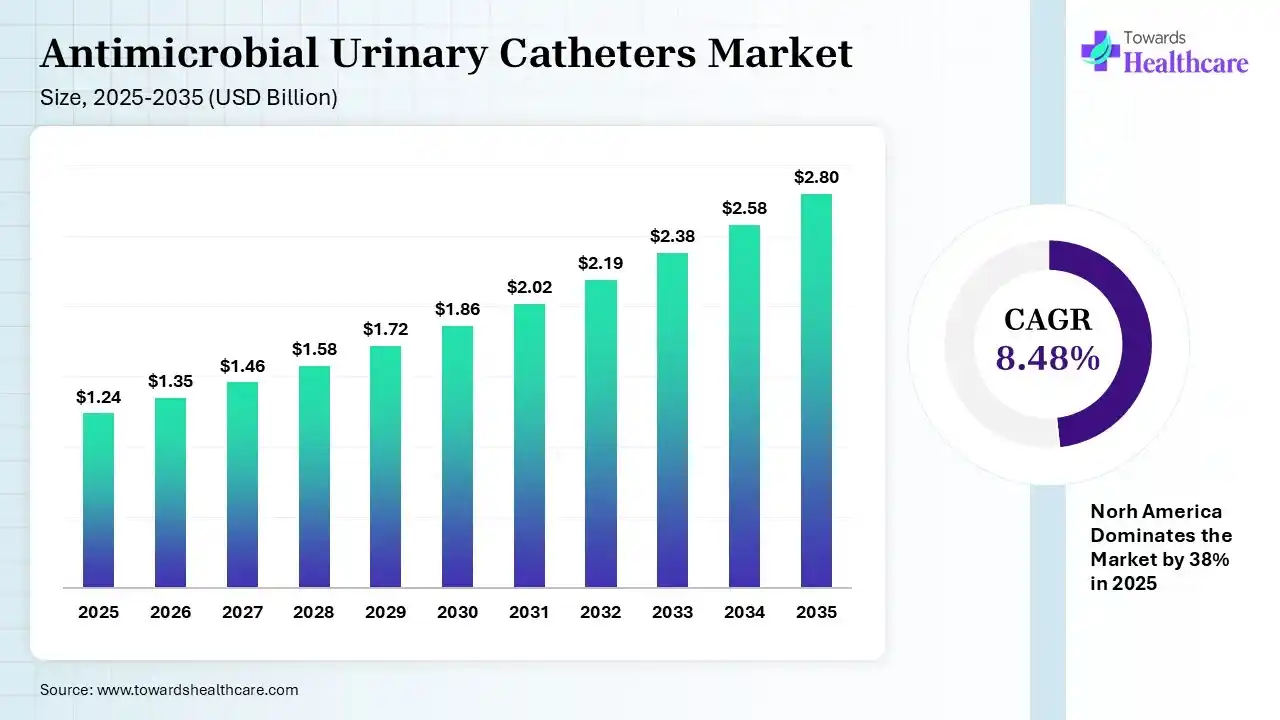
The market is growing steadily due to increased focus on reducing catheter-associated infections, technological advancements in coatings, and rising healthcare expenditure, with strong demand from hospitals and aging populations driving future expansion.
Antimicrobial urinary catheters are medical tubes coated or impregnated with antimicrobial agents to prevent bacterial growth and reduce the risk of catheter-associated urinary tract infections (CAUTIs) during drainage. The antimicrobial urinary catheters market is growing due to increasing cases of catheter-associated urinary tract infections (CAUTIs), rising hospitalizations, and the aging population. Advancements in catheter coatings, greater awareness of infection prevention, and higher healthcare spending are driving adoption in hospitals and clinics. These factors collectively boost demand for safer, infection-resistant urinary care solutions worldwide.
| Causative Organisms | % of Causing Infection |
| Enterococcus spp. | 11 |
| Klebsiella pneumonia | 8 |
| Candida spp. | 7 |
| Staphylococcus aureus | 3 |
| Proteus mirabilis | 2 |
| Pseudomonas aeruginosa | 2 |
| Group B Streptococcus | 2 |
Artificial intelligence can influence the antimicrobial urinary catheter market by improving infection prediction and patient monitoring in hospitals. AI-based analytics can identify patients at high risk of catheter-associated infections, helping clinicians choose advanced antimicrobial catheters. It can also support smarter hospital inventory management and guide research in developing more effective antimicrobial coatings, improving patient outcomes, and encouraging adoption of advanced catheter technologies.
| Table | Scope |
| Market Size in 2026 | USD 1.35 Billion |
| Projected Market Size in 2035 | USD 2.8 Billion |
| CAGR (2026 - 2035) | 8.48% |
| Leading Region | North America by 38% |
| Historical Data | 2020 - 2023 |
| Base Year | 2025 |
| Forecast Period | 2026 - 2035 |
| Measurable Values | USD Millions/Units/Volume |
| Market Segmentation | By Product, By Material, By Coating, By Catheterization, By End Use, By Region |
| Top Key Players | Becton, Dickinson and Company, Medline Industries, ConvaTec Group plc, Well Lead Medical Co., Ltd., Silq Technologies, Halomine Inc. (AvantGuard) |
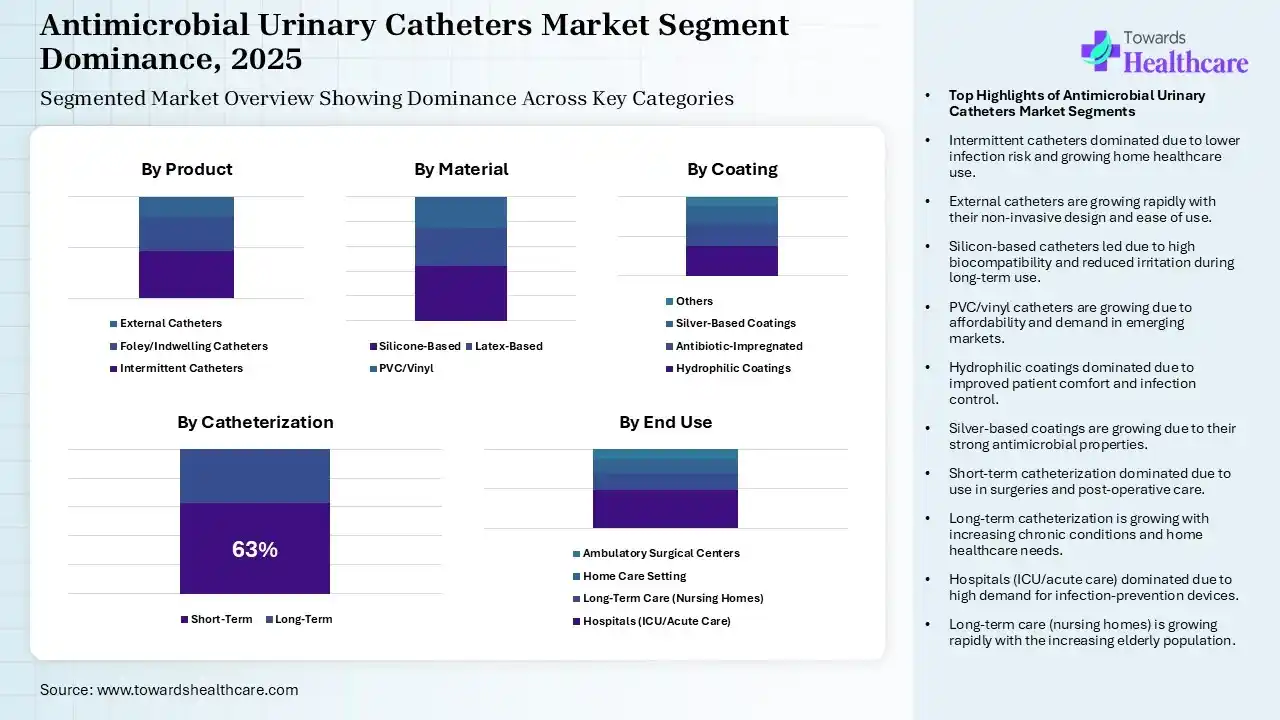
Why Did the Intermittent Catheters Segment Dominate in the Antimicrobial Urinary Catheters Market in 2025?
The intermittent catheters segment dominated the market by 46% in 2025 due to their lower risk of infection compared with indwelling catheters. They are widely recommended for short-term bladder management and self-catheterization, particularly among patients with neurological disorders. Their convenience, reduced complications, and growing use in home healthcare settings further supported strong adoption across hospitals and outpatient care.
External Catheters
The external catheters segment is expected to grow at the fastest CAGR due to their non-invasive design and lower risk of urinary tract infections compared to indwelling catheters. Increasing preference for comfortable and easy-to-use devices, especially among male patients and elderly individuals, is driving adoption. Additionally, rising use in home care settings and improved product design are further supporting the rapid growth of the segment.
What Made the Silicon-Based Segment Dominant in the Antimicrobial Urinary Catheters Market in 2025?
The silicon-based segment dominated the market by 44% in 2025 due to its high biocompatibility, flexibility, and lower risk of irritation during long-term catheterization. Silicon materials also allow better integration of antimicrobial coatings, helping reduce bacterial colonization. Their durability, patient comfort, and sustainability for extended medical use encouraged hospitals and healthcare providers to prefer silicon-based catheters over other materials.
PVC/vinyl
The PVC/vinyl segment is expected to grow at a notable CAGR due to its affordability and widespread availability compared to silicon-based alternatives. These materials are commonly used for short-term catheterization in hospitals because they are easy to manufacture and cost-efficient. Growing healthcare demand in emerging markets and increasing hospital procedures are further supporting the rising adoption of PVC/vinyl antimicrobial urinary catheters.
How Does the Hydrophilic Coatings Segment Dominate the Antimicrobial Urinary Catheters Market in 2025?
The hydrophilic coatings segment dominated the antimicrobial urinary catheter market by 38% in 2025 due to its ability to create a smooth, lubricated surface when activated by water. This reduces friction during catheter insertion and removal, improving patient comfort and minimizing urethral irritation. In addition, hydrophilic coatings help limit bacterial adherence, supporting infection control and encouraging widespread use in hospitals and long-term care settings.
Silver-based Coatings
The silver-based coatings segment is expected to grow at a notable CAGR due to its strong and long-lasting antimicrobial properties. Silver ions effectively inhibit bacterial growth on catheter surfaces, reducing the risk of catheter-associated urinary tract infections. Increasing focus on infection prevention, along with rising hospital adoption of advanced antimicrobial technologies, is expected to accelerate demand for silver-based antimicrobial urinary products during the forecast period.
How Did the Short-Term Segment Dominate the Antimicrobial Urinary Catheters Market in 2025?
The short-term segment dominated the market by 63% in 2025 due to its widespread use during surgeries, post-operative care, and temporary urinary retention treatment. Hospitals frequently prefer short-term catheters to minimize infection risks and complications associated with prolonged catheter use. Increasing surgical procedures and hospital admissions further contributed to the strong demand for short-term antimicrobial catheter solutions.
long-term
The long-term segment is expected to grow at a significant CAGR due to the rising prevalence of chronic conditions such as urinary retention, spinal cord injuries, and neurological disorders. Many patients require continuous bladder management for extended periods, increasing demand for durable antimicrobial catheters. Additionally, the expansion of home healthcare and long-term care facilities is further supporting the rapid growth of this segment.
Why the Hospitals (ICU/acute care) Segment Dominated the Antimicrobial Urinary Catheters Market?
The hospitals (ICU/acute care) segment dominated the antimicrobial urinary catheter market by 48% due to the high number of hospitalized patients requiring continuous monitoring and urinary changes. Critically ill patients, surgical cases, and emergency admissions often need catheterization, increasing demand for infection-prevention devices. Hospitals also prioritize advanced antimicrobial solutions to reduce hospital-acquired infections, which further strengthens the dominance of this segment.
Long-term care (nursing homes)
The long-term care (nursing homes) segment is expected to grow at the fastest CAGR due to the increasing elderly population requiring continuous medical support and urinary management. Many residents in nursing homes need prolonged catheterization because of mobility limitations and chronic illness. This growing demand for safe and infection-resistant catheter solutions is encouraging greater adoption of antimicrobial urinary catheters in long-term care facilities.
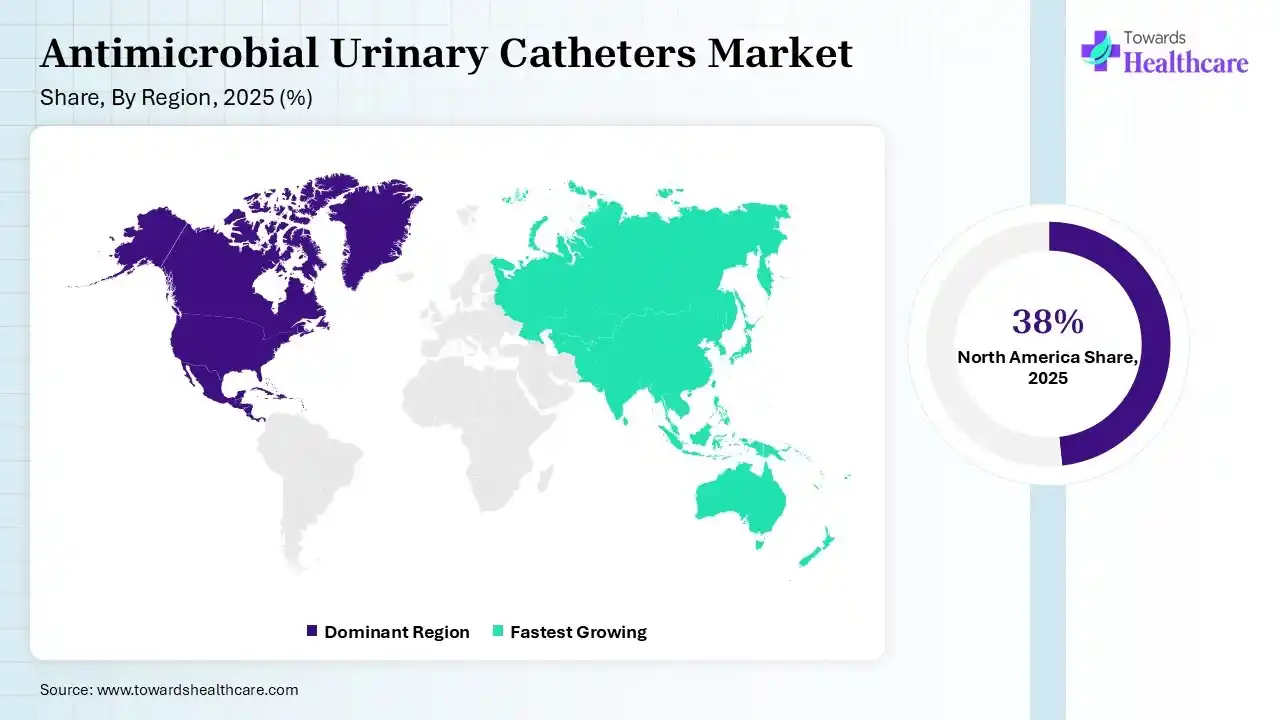

North America dominated the antimicrobial urinary catheters market by 38% share in 2025 due to its well-established healthcare infrastructure, high awareness of infection prevention, and strong adoption of advanced medical devices. The region also benefits from higher healthcare spending, a large number of surgical procedures, and strict hospital infection control guidelines. In addition, the presence of leading medical device manufacturers further strengthened market growth across the region.
Strong Healthcare Investment Supporting U.S. Market Leadership
The U.S. antimicrobial urinary catheters market led in 2025 due to high healthcare spending, advanced hospital infrastructure, and a strong focus on preventing hospital-acquired infections. A large number of surgical procedures and critically ill patients requiring catheterization also increased demand. In addition, the presence of major medical device companies and continuous product innovation further supported the country’s dominant position in the market.
Canada Market Trends
Canada presents demand for the antimicrobial urinary catheters market as hospitals strengthen infection prevention and antimicrobial stewardship. A 2026 federal report found 33% of reported healthcare-associated infections were device-associated in a 2024 Canadian hospital survey. Catheter use therefore remains an important prevention focus. Canadian guidance emphasizes limiting catheter duration and careful device selection. However, routine antimicrobial-coated catheter use is not broadly recommended. This creates opportunities for products with better infection-control evidence. Ageing patients, longer hospital stays, and complex urological care can further support demand across acute-care hospitals and specialist facilities.
Asia Pacific is anticipated to grow at the fastest CAGR due to improving healthcare infrastructure, rising medical expenditures, and increasing awareness about infection prevention. The region’s large and aging population, along with growing hospital admissions and surgical procedures, is boosting demand for antimicrobial urinary catheters. Moreover, expanding healthcare facilities and stronger government support for healthcare facilities and stronger government support for healthcare development are further accelerating the antimicrobial urinary catheters market growth.
Rapid Healthcare Development Supporting India Market Expansion
India is expected to grow at the fastest CAGR in the antimicrobial urinary catheters market due to improving healthcare infrastructure, rising healthcare expenditure, and increasing awareness of infection control. A large patient population, a growing number of surgical procedures, and expanding hospital networks are boosting demand. Additionally, government healthcare initiatives and increasing access to advanced medical devices are further accelerating market growth across the country.
China Market Trends
China offers potential for the antimicrobial urinary catheters market because catheter-associated infections remain an infection-control concern. A 2026 Shanghai hospital study reported a declining trend in catheter-associated urinary tract infections through 2023, but antimicrobial resistance remained challenging. Large tertiary hospitals are upgrading infection-control practices and device management. Demand is likely to favor catheters that reduce bacterial attachment while supporting antimicrobial stewardship. Growing hospital capacity, ageing patients, and high treatment volumes can sustain opportunities for advanced urinary catheter technologies.
R&D
Clinical Trials
Patient Support and Services
| Companies | Headquarters | Offerings |
| Becton, Dickinson and Company | New Jersey, U.S. | Develops infection-control Foley catheters that use antimicrobial coating technologies designed to limit bacterial attachment and reduce catheter-associated urinary tract infections in hospital settings. |
| Medline Industries | Illinois, U.S. | Supplies a wide range of urology products, including urinary catheters and infection-prevention solutions aimed at supporting safer catheterization and reducing the risk of CAUTIs. |
| ConvaTec Group plc | London, U.K. | Offers continence care and urinary catheter products designed for patient comfort, infection management, and long-term bladder care in both clinical and home healthcare environments. |
| Well Lead Medical Co., Ltd. | Guangzhou, China | Manufactures various urology devices such as Foley catheters and antimicrobial-treated urinary catheters intended to improve infection control during catheterization. |
| Silq Technologies | Florida, U.S. | Focuses on advanced catheter surface technologies that help prevent microbial buildup while improving lubrication and comfort for patients requiring catheterization |
| Halomine Inc. (AvantGuard) | Indiana, U.S. | Develops antimicrobial material technologies used in catheters to reduce microbial growth, biofilm formation, and infection risk during urinary drainage. |
Strengths
Weaknesses
Opportunities
Threats
In September 2026, "Intermittent catheterization is part of everyday life for many women, and the device they use should fit into that life as seamlessly as possible," said Colby Wiesman, Presid ent and CEO, HR HealthCare. "Liv reflects our commitment to the bladder-management category, meaningful innovation, and women's quality of life. By bringing clinically informed technology together with thoughtful, purpose-built design, we are expanding our portfolio with a product intended to support active women who self-catheterize."
By Product
By Material
By Coating
By Catheterization
By End Use
By Region






Principal Consultant
Payal Rabde is a Healthcare Market Research Analyst at Towards Healthcare Research & Consulting with 4+ years of experience in pharmaceuticals, biotechnology, medical devices, and life sciences.
Learn more about Payal Rabde

Reviewed By
Aditi Shivarkar is a seasoned professional with over 14 years of experience in healthcare market research. As a content reviewer, Aditi ensures the quality and accuracy of all market insights and data presented by the research team.
Learn more about Aditi Shivarkar










