

Pipeline Programs

CGT Companies Tracked

Manufacturing Facilities


The global biotechnology based chemicals market size was estimated at USD 109.53 billion in 2025 and is predicted to increase from USD 120.09 billion in 2026 to approximately USD 274.93 billion by 2035, expanding at a CAGR of 9.64% from 2026 to 2035.
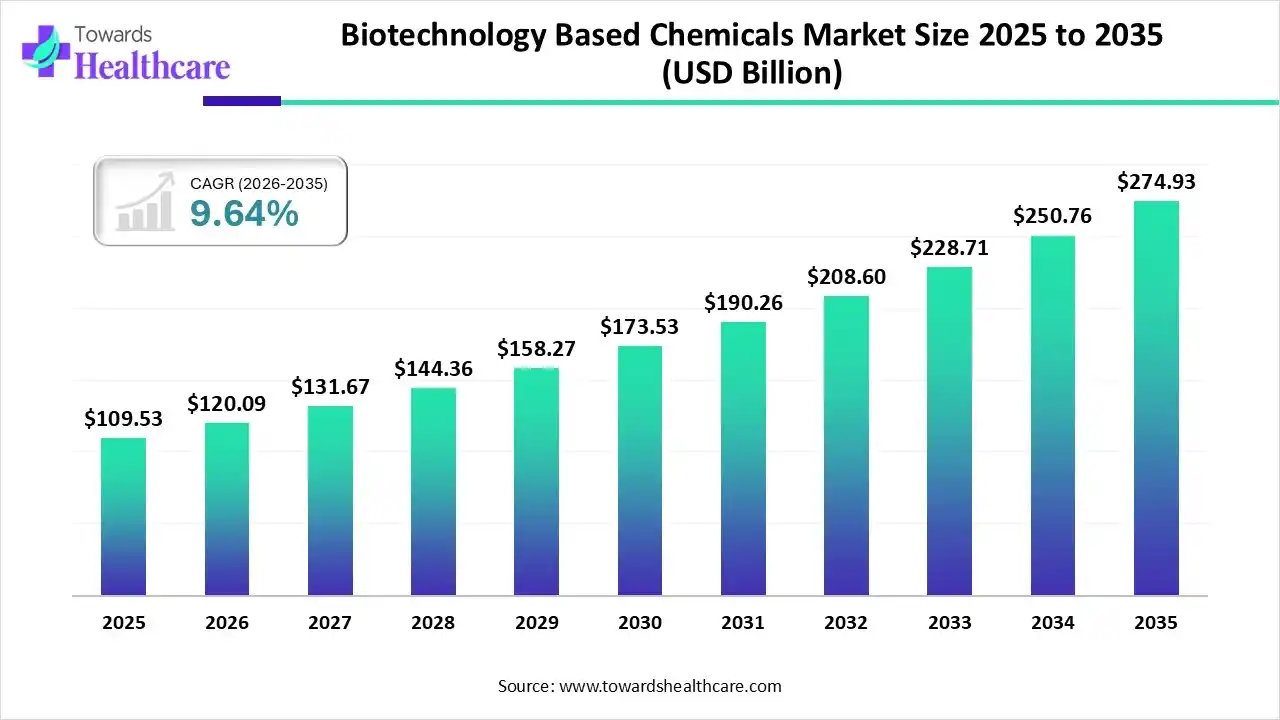
The biotechnology based chemicals market is rapidly growing as sustainable, bio-derived alternatives to petrochemicals gain demand across pharmaceuticals, agriculture, food & personal care. It's driven by eco-friendly trends, tech advances, and regulatory support, with strong CAGR and broad industrial adoption.
Biotechnology-based chemicals are products manufactured using biological processes, such as enzymes or microorganisms, instead of traditional petrochemical methods, offering more sustainable, eco-friendly, and renewable chemical alternatives. The biotechnology based chemicals market is expanding due to rising demand for sustainable and renewable alternatives, stricter environmental regulations, reduced carbon emissions, advancements in bioprocessing technologies, and increasing adoption across pharmaceuticals, agriculture, and industrial applications.
The rising concern about climate change, coupled with the decreasing use of fossil fuels and the rise of bio-based production methods, has spurred many developments in synthetic biology, metabolic engineering, and industrial biotechnology in recent years, resulting in increased production efficiencies, scalability, and cost efficiency for manufacturers producing a wider variety of biotechnology-derived chemical products.
The increasing use of biotechnology chemicals in various industries, including pharmaceuticals, personal care products, foods and beverages, textiles, packaging, and agriculture, is also contributing to the growth of this market. As industries increasingly focus on being environmentally responsible and resource-efficient, the global biotechnology chemicals market will continue to grow rapidly due to advances in technology, expansion of application areas, and increasing consumer preference for sustainable products.
AI can revolutionize the biotechnology-based chemicals market by accelerating molecule discovery, optimizing bioprocesses, reducing production costs, and improving yield efficiency. Advanced analytics enable predictive maintenance, faster scale-up, and smarter supply chains, driving innovation, sustainability, and faster commercialization of bio-based chemical products.
| Key Elements | Scope |
| Market Size in 2026 | USD 427.48 Billion |
| Projected Market Size in 2035 | USD 274.93 Billion |
| CAGR (2026 - 2035) | 9.64% |
| Leading Region | Asia Pacific by 41% |
| Key Applications | Biofuels, bioplastics, biodegradable polymers, food ingredients, pharmaceuticals intermediates, cosmetics ingredients, agricultural chemicals, industrial enzymes, specialty chemicals |
| Primary End Users | Chemical manufacturers, pharmaceutical companies, food & beverage companies, agriculture companies, cosmetics companies, packaging companies, industrial manufacturers |
| Key Challenges | High production costs, scalability issues, feedstock availability, competition from low-cost petrochemical alternatives, regulatory complexity |
| Measurable Values | USD Millions/Units/Volume |
| Market Segmentation | By Product Type, By Application, By Region |
| Top Key Players | BASF, Braskem S.A., Cargill, Incorporated, Champlor (Valtris Specialty Chemicals), dsm-firmenich, DuPont de Nemours Inc., Evonik Industries AG |
| Segments | Shares % |
| Bio-Alcohols | 46% |
| Biopolymers | 31% |
| Bio-Organic Acids | 23% |
Why Did the Bio-Alcohols Segment Dominate in the Market in 2025?
The bio-alcohols segment held the largest biotechnology based chemicals market share of 46% in 2025 due to its wide application across fuels, solvents, pharmaceuticals, cosmetics, and chemical intermediates. Strong demand for bioethanol as renewable fuel additives, combined with established and biobutanol as renewable fuel additives, combined with established production technologies, cost-efficient, and supportive government policies promoting low-carbon alternatives, further strengthened the segment’s dominance.
Bio-Organic Acids
The bio-organic acids segment is expected to grow at the fastest CAGR because these acids, from renewable biomass via fermentation, are increasingly used across food & beverage, bioplastics, pharmaceuticals, and personal care due to sustainability, eco-friendly properties, regulatory support, and rising demand for biodegradable and natural ingredients. Technological advances in production further boost cost-effective scalability and adoption.
| Segments | Shares % |
| Pharmaceuticals and Healthcare | 42% |
| Food & Beverages | 34% |
| Agriculture | 24% |
What Made the Pharmaceuticals and Healthcare Segment Dominant in the Market in 2025?
The pharmaceuticals and healthcare segment led the biotechnology based chemicals market with share of 42% due to the high demand for bio-based solvents, intermediates, and active ingredients used in drug formulation and medical products. Growing prevalence of chronic diseases, increased biopharmaceutical production, stringent quality standards, and a strong shift towards sustainable and biocompatible chemicals further supported the segment’s leading market growth.
Food & Beverages
The food & beverages segment is expected to grow at a notable CAGR because of rising consumer demand for natural, clean-label, and sustainable ingredients. Bio-based acids, enzymes, and preservatives are increasingly used to improve taste, shelf life, and nutritional quality. Health awareness, stricter food safety regulations, and preference for eco-friendly products further drive adoption, boosting growth throughout the forecast period.
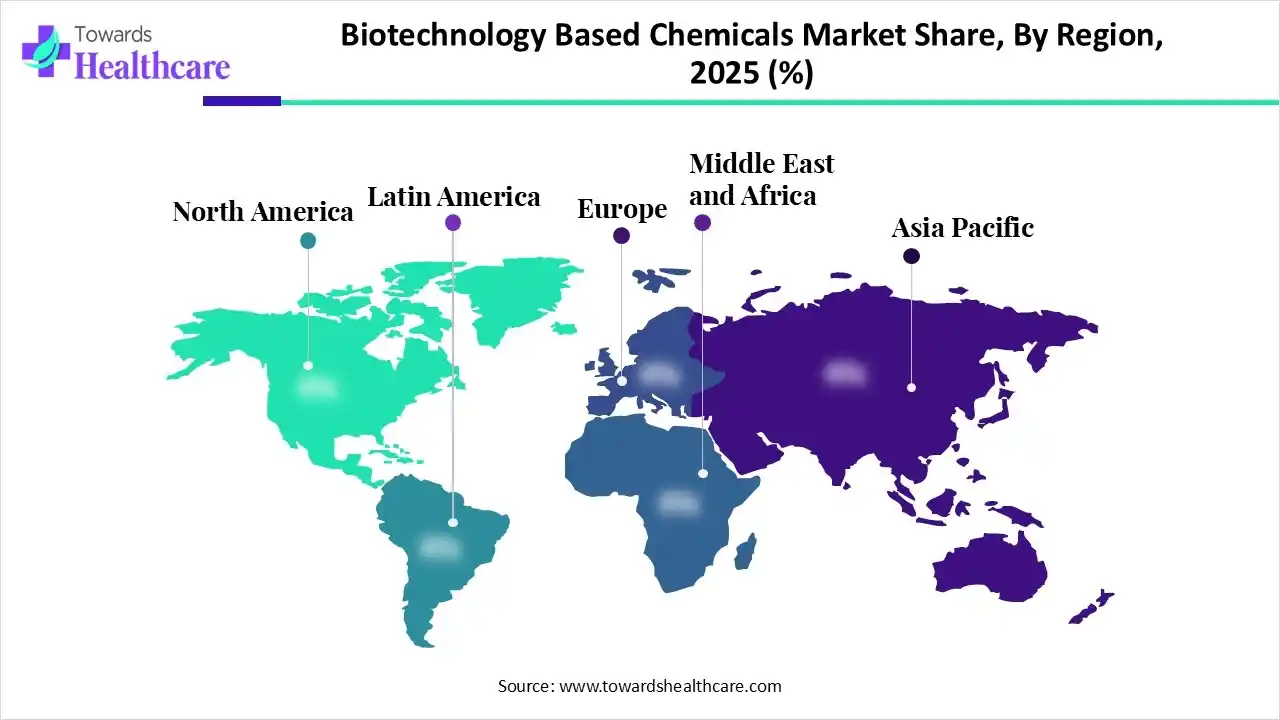
Asia Pacific dominated the market by 41% share and is expected to grow at the fastest CAGR in the biotechnology based chemicals market due to rapid industrialization, rising demand for sustainable and eco-friendly products, expanding pharmaceutical and food & beverage sectors, and strong government support for bioeconomy initiatives. Lower production costs, increasing investments, and growing consumer awareness of green alternatives further accelerate regional market growth throughout the forecast period.
India Market Trends
India led the biotechnology based chemicals market due to its well-established pharmaceutical and chemical manufacturing sectors, abundant availability of raw materials, and cost-efficient production capabilities. Strong government initiatives supporting bio-based industries, growing demand for sustainable chemicals, and increasing exports of bio-alcohols, bio-organic acids, and enzymes further strengthened India’s market leadership and revenue dominance.
China Market Trends
China's biotechnical chemical market is one of the fastest-growing in the world due to its large industrial base, rapidly growing biotechnology sector, and commitment to reducing carbon emissions. Accelerating investment in biomanufacturing, growing demand for sustainable products, and support from the federal government for green technologies are all driving the continued development and commercialization of bio-based chemical products.
Japan Market Trends
Japan's biotechnology chemical market has benefited greatly from a history of advanced research capacity, as well as strong innovation in the area of industrial biotechnology, and a commitment to sustainability on the part of the government. The increasing investment by companies into bio-based materials and the production of green chemicals is reducing dependence on fossil-based resources and helping the company meet an increasing number of environmental performance benchmarks.
North America is expected to grow by 28% share at a notable CAGR in the biotechnology based chemicals market due to high adoption of advanced bioprocessing technologies, strong R&D infrastructure, and increasing investments in sustainable and bio-based chemicals production. Supportive government regulations, rising demand for pharmaceuticals, healthcare, and food & beverages sectors, along with growing consumer preference for eco-friendly products, further drive regional market growth during the forecast period.
U.S. Market Trends
The U.S. is expected to grow rapidly due to rising demand for eco-friendly and renewable chemical solutions across healthcare, food, and industrial sectors. Strong investment in biotech startups, advancements in synthetic biology, and collaboration between private and public institutions enhance innovation, production efficiency, and commercialization, positioning the country as a major hub for sustainable biotechnology growth during the forecast period.
Canada Market Trends
Canada’s biotechnology-based chemicals market is expanding because of government support for eco-friendly manufacturing, plentiful agricultural materials suitable for use in biofuels, and rising investments in bio-based technologies. The rising demand for low-carbon chemicals, whether in industrial, packaging, or consumer applications, has prompted the use of biotechnologically-derived alternatives to petrochemical chemicals.
Europe is expected to grow at a significant rate in the biotechnology based chemicals market by 22% share due to increasing adoption of sustainable and bio-based chemicals across pharmaceuticals, food& beverages, and industrial sectors. Strong government regulation promoting low-carbon and eco-friendly solutions, significant R&D investments, and rising consumer demand for natural and biodegradable products are driving market expansion. Advanced bioprocessing technologies and collaborations between academia and industry further support Europe’s growth during the forecast period.
UK Market Trends
The UK is expected to grow at a rapid CAGR in the market due to strong government support for green and sustainable technologies, significant investments in bio-based research and infrastructure, and a robust pharmaceutical and chemical manufacturing sector. Increasing adoption of eco-friendly chemicals across healthcare, food & beverage, and industrial applications, along with favourable regulatory policies, further accelerates market expansion during the forecast period.
Germany Market Trends
Germany is the largest market for biotechnology-based chemicals in Europe, as a result of very strict environmental regulations, a long-standing tradition of the chemical industry, and investment in circular economy initiatives by many companies. Commercialization of bio-based chemical products has been accelerated in numerous industries due to the increasing demand for renewable feedstocks and sustainable manufacturing practices.
France Market Trends
Biotechnology-based chemicals are gaining popularity in France due to strong support from the French government for the country's bio-economy, as well as a large presence of established biomanufacturers in the country and increased investments in sustainable manufacturing. There is currently a growing interest in creating renewable materials, developing circular economy solutions, and using low-carbon processes within industrial sectors such as pharmaceuticals, agriculture, packaging, and specialty chemicals; therefore, there is potential for bio-manufacturers to create products using plant-based inputs that will replace petrochemical-based products over time.
| Category | Market Role & Examples |
| Technology Providers | Companies developing synthetic biology, fermentation platforms, enzyme engineering, and microbial production technologies. Examples include synthetic biology companies and industrial biotechnology innovators. |
| Product Manufacturers | Producers of bio-based chemicals such as organic acids, bio-polymers, enzymes, bio-alcohols, and specialty chemicals. |
| Service Providers | Biotechnology development services, process optimization, fermentation scale-up, and manufacturing support providers. |
| Platform Providers | Companies offering biological production platforms, engineered microbes, metabolic engineering technologies. |
| CROs/CDMOs | Organizations supporting biological process development, fermentation, and commercial-scale manufacturing. |
| Software Vendors | Bioinformatics, AI-driven biology design, laboratory automation, and process simulation platforms. |
| Research Institutions | Universities and biotechnology research centers developing industrial biotechnology innovations. |
| End-User Industries | Chemicals, pharmaceuticals, agriculture, food ingredients, packaging, consumer products, and industrial manufacturing sectors. |
R&D
Clinical Trials
Formulation
| Tier 1 | Tier 2 | Tier 3 | |
| Typical Market Influence | 62% | 28% | 10% |
| Tier 1 | ||||
| Company Name | Headquarters | Country | Why Relevant to This Market | Key Products/Services |
| BASF | Ludwigshafen, Rhineland-Palatinate, Germany | Germany | Global chemical leader investing in sustainable chemistry and bio-based solutions | Bio-based chemicals, biodegradable materials, sustainable chemical solutions |
| Evonik Industries | Essen, North Rhine-Westphalia, Germany | Germany | Major specialty chemical producer with biotechnology-based production capabilities | Amino acids, fermentation-based products, specialty chemicals |
| DuPont | Wilmington, Delaware, USA | United States | Strong industrial biotechnology history and bio-based materials portfolio | Bio-based polymers, enzymes, specialty materials |
| Tier 2 | ||||
| Company Name | Headquarters | Country | Why Relevant to This Market | Key Products/Services |
| Braskem | São Paulo, Brazil | Brazil | Leading bio-based polymer producer using renewable feedstocks | Bio-based polyethylene, green plastics |
| Corbion | Gorinchem, Netherlands | Netherlands | Specialized in fermentation-based chemicals | Lactic acid, bio-based ingredients, biopolymers |
| Novonesis | Bagsværd, Denmark | Denmark | Global leader in enzymes and microbial biotechnology | Industrial enzymes, fermentation solutions |
| Tier 3 | ||||
| Company Name | Headquarters | Country | Why Relevant to This Market | Key Products/Services |
| Ginkgo Bioworks | Boston, Massachusetts, USA | United States | Synthetic biology platform enabling biological chemical production | Engineered organisms, bio-production platforms |
| Genomatica | San Diego, California, USA | United States | Develops biotechnology routes for chemical manufacturing | Bio-based nylon intermediates, sustainable chemicals |
| Amyris | Emeryville, California, USA | United States | Developed engineered fermentation technologies | Bio-based ingredients, specialty molecules |
Strengths
Weaknesses
Opportunities
Threats
In March 2026, India announced that its bioeconomy reached USD 195.3 billion, reflecting significant growth in biotechnology-driven industries. Union Minister Dr. Jitendra Singh stated that “India is steadily moving towards its target of a USD 300 billion bioeconomy by 2030, supported by a strong base of scientists, entrepreneurs, and startups.” He added that “BIRAC has played a crucial role in connecting research with industry and enabling the transition of ideas from laboratories into market-ready solutions.”
By Product Type
By Application
By Region





Principal Consultant
Shivani Zoting is a dedicated research analyst specializing in the healthcare industry. With a strong academic foundation, a B.Sc. in Biotechnology and an MBA in Pharmabiotechnology, she brings a unique blend of scientific understanding and strategy.
Learn more about Shivani Zoting
Reviewed By
Aditi Shivarkar is a seasoned professional with over 14 years of experience in healthcare market research. As a content reviewer, Aditi ensures the quality and accuracy of all market insights and data presented by the research team.
Learn more about Aditi Shivarkar










