
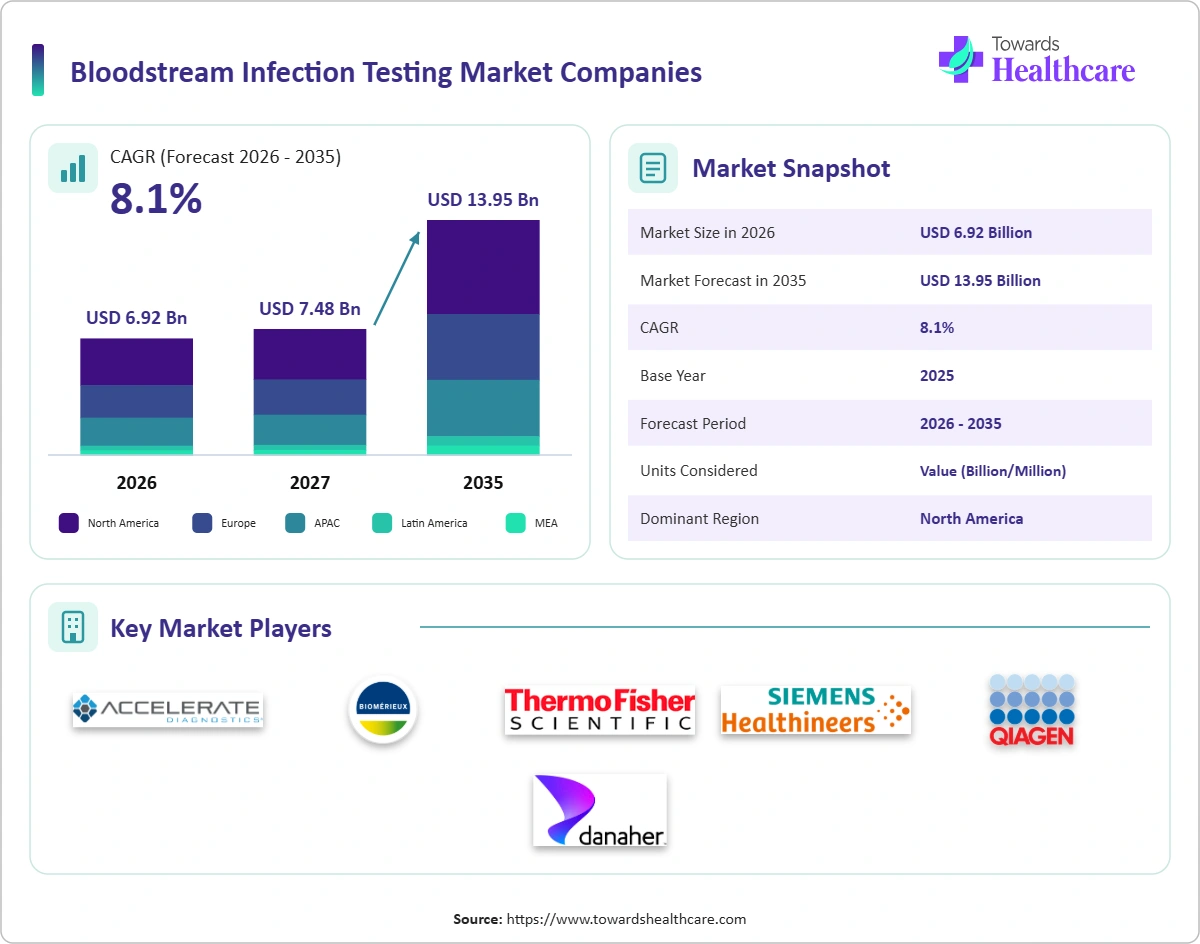
The bloodstream infection testing market is projected to grow from USD 6.40 billion in 2025 to USD 13.95 billion by 2035, supported by the increasing need for timely identification of bloodstream infections and sepsis across healthcare facilities. Bloodstream infections necessitate rapid pathogen identification and antimicrobial selection for effective treatment. Blood culture systems are essential for detecting infectious organisms, and rapid identification panels support treatment decisions.
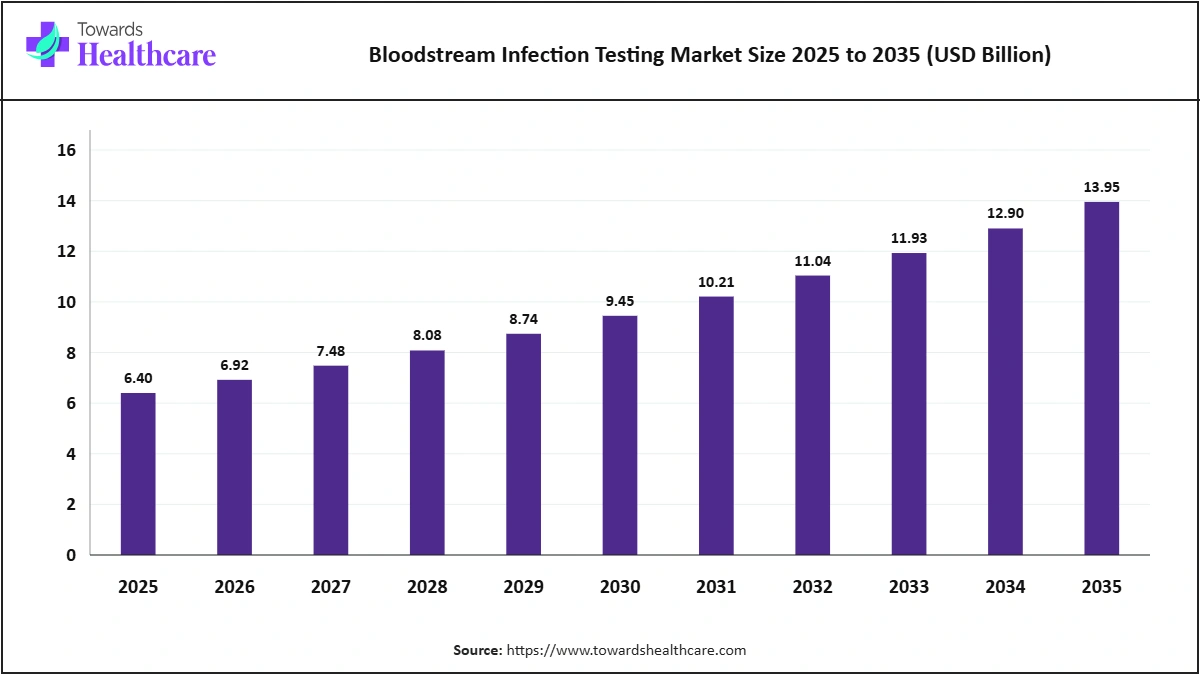
Rising rates of sepsis and antimicrobial resistance, along with a focus on stewardship, are boosting the need for advanced diagnostics. Hospitals are exploring rapid molecular testing and automated systems to improve efficiency and turnaround times. These developments are expected to increase market revenue to USD 9.45 billion by 2030 and sustain a CAGR of 8.1% from 2026 to 2035. Bloodstream infection monitoring is particularly important among patients with central venous catheters, IV therapy, prolonged hospital stays, and other risk factors for healthcare-associated infections.
Analyst View: Our assessment includes conventional blood culture systems, culture media, rapid identification panels, antimicrobial susceptibility testing, culture-independent molecular diagnostics, and host-response markers. The estimate was cross-checked against the microbiology diagnostic activities, product portfolios, and market presence of leading suppliers. Our market definition includes both established culture-based technologies and emerging rapid diagnostic solutions, providing a broader assessment than estimates restricted to molecular bloodstream infection tests.
| Driver | Impact | ≈ CAGR Contribution | Time Horizon | Key Regions |
| Sepsis burden is high | High | +3.16 pp | Short to long term | Global, strongest in North America |
| Antimicrobial resistance rises | Medium | +2.67 pp | Medium to long term | Global, fastest uptake in Asia Pacific |
| Stewardship programmes need fast results | Medium | +2.27 pp | Short to medium term | Global |
| Ageing patients are vulnerable | Low | +1.78 pp | Long term | Developed and emerging markets |
Note: Contributions are indicative estimates of each factor's effect on annual growth.
Sources: Expert interviews, secondary sources, Towards Healthcare database and Towards Healthcare analysts.
The identified growth drivers contribute around 9.88 percentage points to annual growth in the bloodstream infection testing market, with the increasing burden of sepsis representing the largest contribution. Rising antimicrobial resistance necessitates efficient pathogen identification and resistance profiling, prompting hospitals to adopt faster diagnostic technologies through antimicrobial stewardship programmes. This urgency is intensified by an aging population and more high-risk hospitalized patients. North America has an established base of advanced bloodstream infection diagnostic technologies, with the Asia Pacific region expected to increase their adoption as healthcare infrastructure improves.
| Restraint | Impact | ≈ Negative CAGR Contribution | Time Horizon | Key Regions |
| High cost of rapid panels | High | -0.80 pp | Short to medium term | Global |
| Reimbursement limits | High | -0.59 pp | Medium term | Price-sensitive and emerging markets |
| Lab staff shortages | Medium | -0.39 pp | Short term | North America and other mature markets |
Note: Contributions are indicative estimates of each factor's effect on annual growth.
Sources: Expert interviews, secondary sources, Towards Healthcare database and Towards Healthcare analysts.
High costs of rapid diagnostic panels, reimbursement limitations, and shortages of trained laboratory personnel are expected to reduce annual growth of the bloodstream infection testing market by approximately 1.78 percentage points. The high cost of advanced molecular diagnostics presents a challenge for budget-constrained hospitals, compounded by reimbursement gaps and staffing shortages. However, future technological advancements, increased automation, and broader clinical acceptance may gradually mitigate these barriers. Consequently, the market is projected to maintain a net CAGR of 8.10% from 2026 to 2035.
The development of direct-from-blood diagnostic technologies, automated AST platforms, and advanced fungal detection solutions offers considerable opportunities for market participants. Culture-independent molecular tests can address the need for faster detection in patients with suspected bloodstream infections, while automated susceptibility testing can help reduce delays in antimicrobial selection. Asia Pacific presents substantial growth potential because of expanding hospital infrastructure, increasing diagnostic capacity, and rising healthcare expenditure in China and India. Manufacturers can strengthen their market positions through integrated microbiology platforms, expanded resistance detection capabilities, laboratory automation, and partnerships with hospital networks.
Note: 2025 is the base year; 2035 shares and CAGRs are forecasts.
Sources: Expert interviews, secondary sources, Towards Healthcare database, and Towards Healthcare analysts.
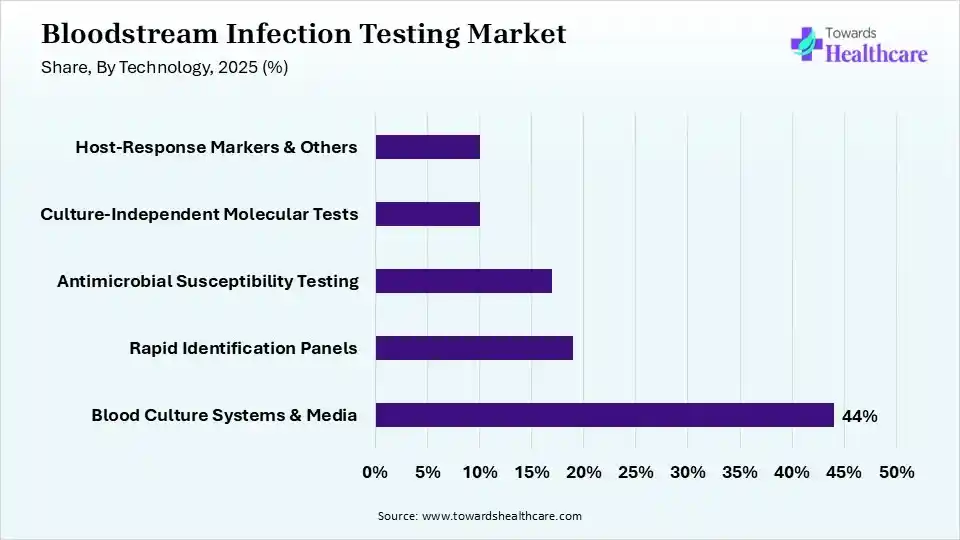
Blood Culture Systems and Media accounted for 44% of the market in 2025 and are projected to expand at a CAGR of 7.53% from 2026 to 2035. Blood culture systems and media are crucial for diagnosing bloodstream infections, aiding in the recovery of bacterial and fungal pathogens from blood samples. Microbiology labs utilize automated instruments, specialized bottles, and compatible growth media. However, growth in this sector is anticipated to lag behind the overall market rate.
Rapid Identification Panels are essential for swiftly identifying multiple pathogens and resistance markers in positive blood cultures, aiding timely clinical decisions and antimicrobial stewardship. The increasing demand for multiplex molecular panels and broader pathogen coverage is expected to fuel segment growth.
Antimicrobial Susceptibility Testing technologies assess microorganism susceptibility to antimicrobial agents, aiding antibiotic selection. Automated testing platforms and rapid phenotypic methods are vital due to rising antimicrobial resistance. Increased focus on targeted treatment and stewardship programs will likely maintain demand.
Culture-Independent Molecular Tests technologies for pathogen detection, particularly molecular assays and T2 magnetic resonance, are expected to experience rapid growth. Their capacity for quicker identification and direct-from-blood testing addresses the need for improved detection and reduced diagnostic delays, driving their adoption in clinical settings.
Host-Response Markers and Others includes sepsis-related biomarkers such as procalcitonin, which provide insights into the host response to infections. These markers improve microbiological testing and clinical assessment. The increasing emphasis on integrated sepsis diagnostic pathways is expected to maintain demand.
Segment Outlook: Blood Culture Systems and Media are expected to remain the largest technology segment through 2035, retaining around 41.79% of the market. However, Culture-Independent Molecular Tests are projected to register the highest CAGR of 10.93%, supported by growing demand for rapid pathogen detection and alternative diagnostic approaches. Rapid identification panels and AST will continue to play important roles in clinical microbiology workflows, while host-response markers will provide complementary information for sepsis assessment.
Note: 2025 is the base year; 2035 shares and CAGRs are forecasts.
Sources: Expert interviews, secondary sources, Towards Healthcare database and Towards Healthcare analysts.
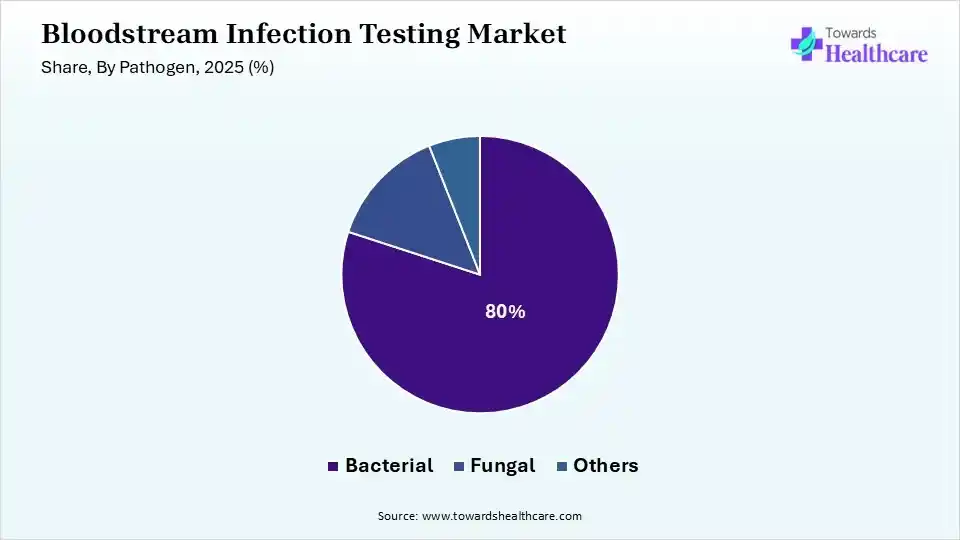
In 2025, bacterial infections dominated the bloodstream infection testing market with a share of 80%, followed by fungal infections at 14% and other infections at 6%. Bacterial pathogens are the main focus of bloodstream infection diagnostics due to their significant presence. However, fungal testing is expected to grow rapidly as hospitals prioritize the early detection of invasive fungal infections.
Bacterial bloodstream infections are a major diagnostic category, with both gram-positive and gram-negative organisms causing bacteraemia and sepsis. Detection relies on blood culture systems, rapid identification panels, and antimicrobial susceptibility testing. The growing issue of antimicrobial resistance and the need for targeted antibiotics are anticipated to maintain demand.
Fungal bloodstream infections caused by Candida species are associated with serious complications in immunocompromised and critically ill patients. The need for timely fungal identification and appropriate antifungal treatment is increasing interest in specialized fungal detection technologies. Improved diagnostic capabilities and greater awareness of invasive fungal infections are expected to support above-average segment growth.
Others category includes less common bloodstream infection pathogens and specialized diagnostic applications beyond the principal bacterial and fungal categories. Growing awareness of diverse infectious agents and improvements in molecular detection technologies are expected to support demand.
Segment Outlook: During the forecast period, the bacterial segment is expected to remain the largest pathogen segment, accounting for roughly 78.35% of the market. However, fungal infections are projected to record the highest CAGR of 9.27%, supported by increasing demand for early identification of invasive fungal pathogens. Other pathogen categories will continue to serve specialized diagnostic requirements.
Note: 2025 is the base year; 2035 shares and CAGRs are forecasts.
Sources: Expert interviews, secondary sources, Towards Healthcare database, and Towards Healthcare analysts.
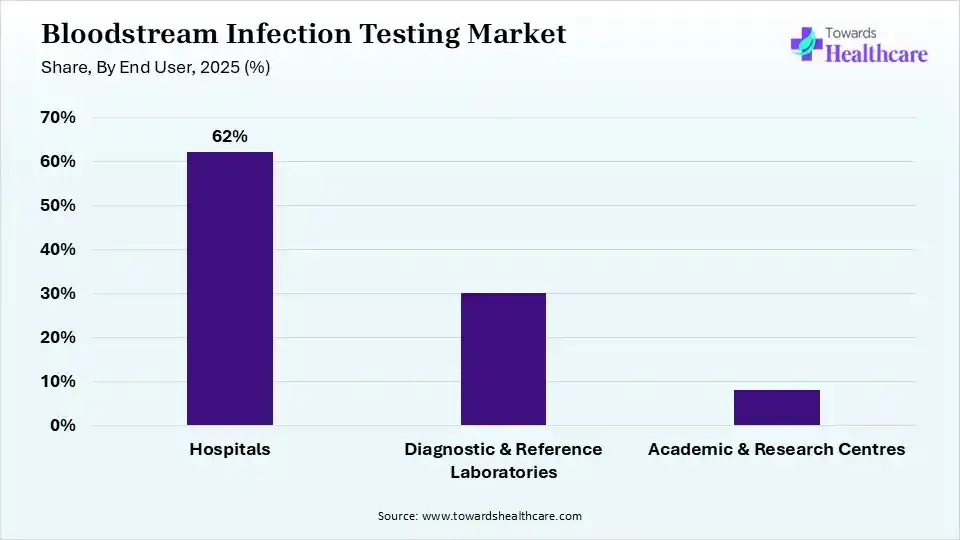
Hospitals accounted for 62% of the global market in 2025 and are projected to expand at a CAGR of 8.25% from 2026 to 2035. Bloodstream infection testing is crucial in hospitals for diagnosing sepsis and severe infections, especially in emergency departments and intensive care units. The demand for hospitals is driven by blood cultures, rapid identification panels, and antimicrobial susceptibility testing, alongside increased sepsis awareness, antimicrobial stewardship initiatives, and automation in microbiology.
Diagnostic and Reference Laboratories offer microbiological testing for hospitals and healthcare facilities, especially in pathogen identification and antimicrobial susceptibility testing. The demand for centralized services and advanced diagnostic testing is anticipated to drive growth in this sector.
Academic and Research Centres are essential in advancing and evaluating diagnostic technologies for bloodstream infections, concentrating on pathogen identification, antimicrobial resistance, biomarker development, and clinical validation. Continued investment in infectious disease research is expected to maintain this demand.
Segment Outlook: By 2035, Hospitals are expected to remain the largest end-user segment, accounting for around 62.87% of the market. Hospitals are also projected to record the highest CAGR of 8.25%, supported by increasing sepsis testing volumes and the growing adoption of rapid diagnostic technologies. Diagnostic and reference laboratories will continue to represent an important market category through their established microbiology testing services, while academic and research centres will contribute to technology development and clinical validation.
Analyst View: In our analysis, segment shares were allocated using diagnostic demand, product portfolios, testing volumes, and average prices across each category. Blood Culture Systems and Media, bacterial infections, and hospitals lead their respective segments because they address the core requirements of established clinical microbiology workflows. However, Culture-Independent Molecular Tests and fungal diagnostics are expected to gain market share as newer technologies, clinical applications, and testing requirements expand during the forecast period.
Note: 2025 is the base year; 2035 shares and CAGRs are forecasts.
Sources: Expert interviews, secondary sources, Towards Healthcare database and Towards Healthcare analysts.
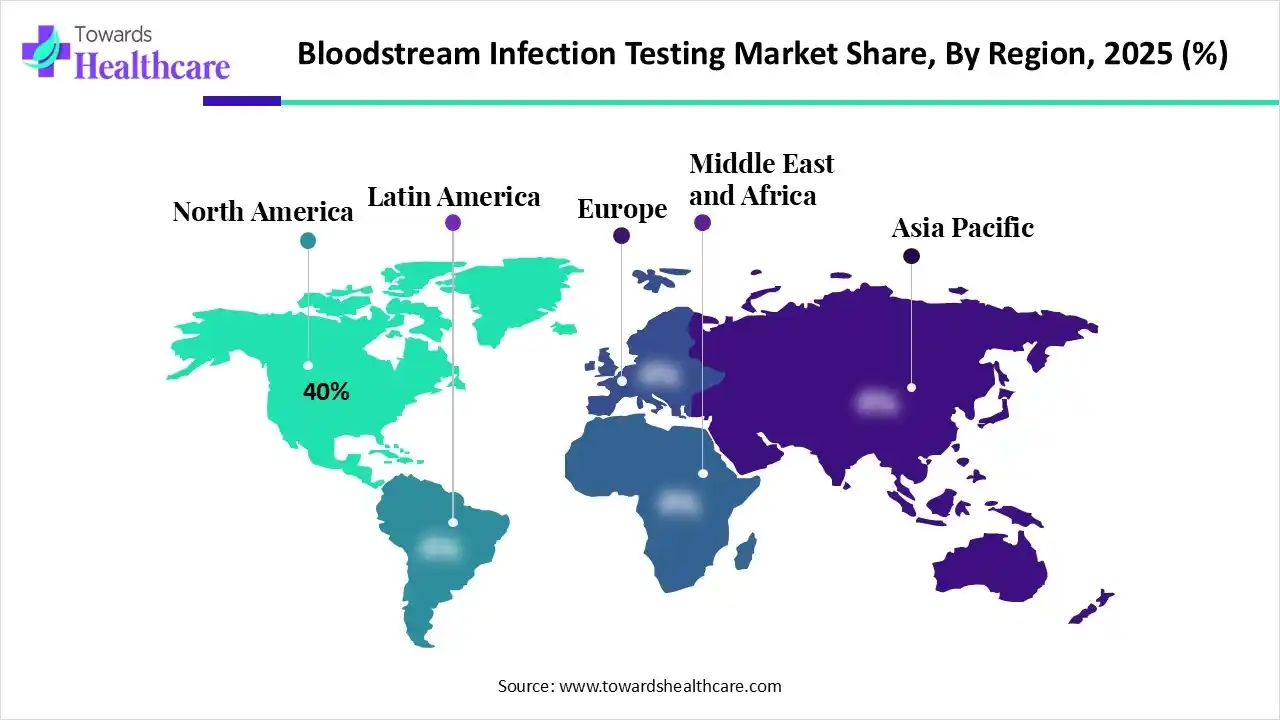
North America accounted for 40% of the bloodstream infection testing market in 2025 and is projected to expand at a CAGR of 7.56% from 2026 to 2035. The region is the leading market for bloodstream infection diagnostics, driven by advanced healthcare and high testing volumes. The U.S. contributes significantly through automated blood culture systems and rapid molecular panels, aided by antimicrobial stewardship and sepsis management. Nonetheless, growth in North America is anticipated to be slower than the overall market during the forecast period.
Europe market benefits from established hospital networks and advanced diagnostic laboratories, emphasizing antimicrobial resistance and infection control. Countries such as Germany, the U.K., France, Italy, and Spain have strong clinical microbiology capabilities and healthcare systems. Regional initiatives to enhance antimicrobial stewardship and infectious disease surveillance are expected to promote rapid identification and susceptibility testing technologies.
Asia Pacific region is projected to experience rapid growth due to enhanced hospital infrastructure, greater diagnostic capacity, and higher healthcare expenditure in China, India, Japan, and South Korea. The expansion of private hospitals and diagnostic laboratories is creating opportunities for manufacturers of automated culture systems, molecular panels, and rapid AST platforms.
Latin America demand for bloodstream infection diagnostics is growing due to better hospital infrastructure, heightened awareness of antimicrobial resistance, and improved clinical microbiology services, particularly in Brazil and Argentina. Nonetheless, challenges such as healthcare spending disparities, reimbursement issues, and limited access to advanced testing technologies may impede adoption in certain areas.
Middle East and Africa development in healthcare is driven by investments in hospital infrastructure and increased healthcare spending, especially in GCC countries and South Africa. Focus on issues like hospital-acquired infections and antimicrobial resistance is likely to promote the use of advanced bloodstream infection testing technologies.
Analyst View: In the global bloodstream infection testing market, North America maintains its leading position because of its mature healthcare infrastructure, high diagnostic utilization, and established supplier presence. Asia Pacific is expected to receive the highest growth premium because hospital investments, diagnostic capacity, and adoption of advanced testing technologies are expanding rapidly. Europe is projected to maintain a substantial market position, while Latin America and the Middle East and Africa will benefit from improvements in healthcare access and microbiology laboratory infrastructure.
| Rank | Company Name | 2025 Share (%) | Key Products / Business | Headquarters |
| 1 | BD | 343.75% | BACTEC blood culture and Phoenix AST | United States |
| 2 | bioMérieux | 328.12% | BACT/ALERT, BIOFIRE BCID2 and VITEK | France |
| 3 | Thermo Fisher Scientific | 93.75% | Blood culture media and AST | United States |
| 4 | Danaher (Beckman Coulter, Cepheid) | 93.75% | MicroScan AST and molecular tests | United States |
| 5 | Roche Diagnostics | 78.12% | Procalcitonin and molecular tests | Switzerland |
| 6 | Bruker | 62.50% | MALDI Biotyper identification | United States |
| 7 | QIAGEN | 46.88% | QIAstat-Dx BCID panels | Netherlands |
| 8 | Siemens Healthineers | 46.88% | Sepsis markers and lab automation | Germany |
| 9 | Accelerate Diagnostics | 15.62% | Rapid AST from positive blood cultures | United States |
| 10 | T2 Biosystems | 15.62% | Culture-independent T2 panels | United States |
Note: Company shares are 2025 estimates.
Sources: Company press releases, expert interviews, secondary sources, Towards Healthcare database and Towards Healthcare analysts.
BD and bioMérieux are among the leading participants in the global bloodstream infection testing market, supported by their established blood culture systems, microbiology platforms, and extensive hospital laboratory relationships. BD competes through its BACTEC blood culture systems and Phoenix antimicrobial susceptibility testing portfolio, while bioMérieux offers BACT/ALERT blood culture systems, BIOFIRE BCID2 identification panels, and VITEK susceptibility testing platforms.
Other major participants include Thermo Fisher Scientific, Danaher, Roche Diagnostics, Bruker, QIAGEN, Siemens Healthineers, Accelerate Diagnostics, and T2 Biosystems. These companies compete through blood culture media, automated identification systems, molecular diagnostic panels, sepsis biomarkers, and rapid susceptibility testing technologies.
The competitive landscape in diagnostics includes established manufacturers with extensive portfolios and specialized firms emphasizing rapid pathogen detection. Established providers benefit from installed laboratory infrastructure, recurring consumables demand, and long-standing hospital relationships, while emerging developers focus on quicker results, broader pathogen identification, enhanced resistance detection, and specialized molecular platforms.
Competition in the bloodstream infection testing market is driven by diagnostic accuracy, time to result, resistance marker coverage, clinical evidence, workflow compatibility, and testing costs. Companies integrating established microbiology infrastructure with advanced molecular technologies can enhance their competitive standing.
BD: BD, part of Becton, Dickinson and Company, is headquartered in the United States. Its bloodstream infection diagnostic portfolio centres on BACTEC automated blood culture systems and Phoenix antimicrobial susceptibility testing solutions. The company benefits from an established microbiology product portfolio, hospital relationships, and global distribution capabilities. In the Towards Healthcare Companies Quadrant, BD is positioned as a Leader.
bioMérieux: bioMérieux is headquartered in France. Its portfolio includes BACT/ALERT blood culture systems, BIOFIRE BCID2 rapid identification panels, and VITEK antimicrobial susceptibility testing platforms. The company combines traditional microbiology with advanced molecular diagnostics, utilizing various infectious disease tests and a global presence to stay competitive. In the Towards Healthcare Companies Quadrant, it is positioned as a Leader.
Thermo Fisher Scientific: Thermo Fisher Scientific, a U.S.-based company, operates in the bloodstream infection testing market, providing blood culture media, microbiology reagents, and solutions for antimicrobial susceptibility testing, thereby strengthening its market position through a robust product portfolio and diagnostic customer base. In the Towards Healthcare Companies Quadrant, it is categorized as a Leader.
Danaher (Beckman Coulter, Cepheid): Danaher, based in the United States, operates in the diagnostic sector through brands like Beckman Coulter and Cepheid. Its offerings include MicroScan antimicrobial susceptibility testing and molecular diagnostic technologies, supported by robust laboratory infrastructure and global customer relationships, enhancing its competitive position. The company is positioned as a Leader in the Towards Healthcare Companies Quadrant.
Roche Diagnostics: Roche Diagnostics, part of F. Hoffmann-La Roche Ltd, is headquartered in Switzerland. The company benefits from a broad clinical diagnostics portfolio, established hospital laboratory relationships, and global distribution capabilities. In the Towards Healthcare Companies Quadrant, Roche Diagnostics is positioned as a Leader.
Bruker: Bruker, headquartered in the United States, is involved in the bloodstream infection testing market through its MALDI Biotyper technology, which utilizes mass spectrometry for rapid microbial identification within microbiology workflows. The company is positioned as a Leader in the Towards Healthcare Companies Quadrant.
QIAGEN: QIAGEN, based in the Netherlands, specializes in multiplex molecular diagnostics and pathogen identification, particularly in bloodstream infection diagnostics. In August 2026, the company obtained U.S. FDA clearance for its inaugural U.S. bloodstream infection panel, enhancing its role in rapid diagnostic testing. In the Towards Healthcare Companies Quadrant, it is positioned as an Innovator.
Siemens Healthineers: Siemens Healthineers, headquartered in Germany, focuses on sepsis-related biomarkers and automated laboratory diagnostic technologies. Its clinical chemistry and laboratory automation portfolio enhances its role in hospital diagnostic networks. In the Towards Healthcare Companies Quadrant, Siemens Healthineers is categorized as an Innovator.
Accelerate Diagnostics: Accelerate Diagnostics, headquartered in the United States, specializes in rapid identification and antimicrobial susceptibility testing for positive blood culture samples, aiming to reduce the time needed to obtain actionable microbiology results. The company is positioned as an Innovator in the Towards Healthcare Companies Quadrant.
T2 Biosystems: T2 Biosystems, based in the U.S., offers T2 magnetic resonance diagnostic technologies for detecting pathogens directly from blood samples, bypassing traditional culture growth. The company specializes in culture-independent diagnostics for bloodstream infections and expedited pathogen identification. In the Towards Healthcare Companies Quadrant, it is positioned as an Innovator.
The bloodstream infection testing ecosystem links media & reagent suppliers, diagnostic makers, laboratories, clinicians & stewardship teams, and regulators & public health, with each stage contributing to product development, manufacturing, testing and clinical utilization.
| Ecosystem Stage | Role in the Market | Key Companies |
| Media & Reagent Suppliers | Supply culture media and reagents | Media makers |
| Diagnostic Makers | Make culture, ID and AST systems | BD, bioMérieux, QIAGEN, Bruker, Danaher |
| Laboratories | Run tests | Hospital and reference microbiology labs |
| Clinicians & Stewardship Teams | Use results | ICU, ED, infectious disease teams |
| Regulators & Public Health | Clear tests and track resistance | FDA, CDC, WHO |
Sources: Company press releases, expert interviews, secondary sources, Towards Healthcare database and Towards Healthcare analysts.
Media & Reagent Suppliers: Participants provide blood culture bottles, culture media, diagnostic reagents, and other consumables essential for bloodstream infection testing, which are crucial for conventional microbiology workflows and automated blood culture platforms.
Diagnostic Makers: Diagnostic manufacturers develop and commercialize automated blood culture systems, molecular identification panels, microbial identification technologies, and antimicrobial susceptibility testing platforms. Key participants include BD, bioMérieux, QIAGEN, Bruker, and Danaher.
Laboratories: Hospital microbiology laboratories and independent reference laboratories perform blood culture, pathogen identification, and susceptibility testing. They serve as essential links between diagnostic manufacturers and healthcare providers by processing patient samples and delivering clinically relevant results.
Clinicians & Stewardship Teams: Clinicians and infectious disease specialists utilize diagnostic results to inform pathogen-specific treatment decisions, in emergency departments and intensive care units where quick evaluation is crucial for patients with suspected sepsis.
Regulators & Public Health: Regulatory authorities and public health organizations, such as the U.S. FDA, CDC, and WHO, impact diagnostic development, product approvals, infection surveillance, and the monitoring of antimicrobial resistance.
The value chain in the global bloodstream infection testing market begins with the supply of culture media, reagents, and diagnostic components, followed by the manufacturing of diagnostic instruments and testing platforms. These products are distributed to hospitals, reference laboratories, and other healthcare providers. Clinicians and stewardship teams use the resulting diagnostic information to support patient management, while regulatory and public health organizations establish testing standards and monitor infectious disease trends.
The Towards Healthcare Companies Quadrant positions key participants in the bloodstream infection testing market by market strength, reflecting revenue scale, market share, and geographic reach, and by innovation and growth strategy, reflecting product portfolio breadth, R&D intensity, and partnerships. Positions reflect each company's estimated 2025 share of the bloodstream infection testing market and our assessment of its product innovation, portfolio breadth, and partnerships.
Sources: Company press releases, expert interviews, secondary sources, Towards Healthcare database and Towards Healthcare analysts.
Leaders: BD, bioMérieux, Thermo Fisher Scientific, Danaher (Beckman Coulter, Cepheid), Roche Diagnostics, and Bruker combine broad portfolios and strong innovation.
Innovators: QIAGEN, Siemens Healthineers, Accelerate Diagnostics, and T2 Biosystems bring newer technologies and specialised products.
By Technology
By Pathogen
By End User
By Region
The global bloodstream infection testing market encompasses diagnostic tests, systems, reagents, and technologies used to detect and characterize bloodstream infections, including bacteraemia, fungaemia, and sepsis. Key components include automated blood culture systems and media, rapid identification panels, antimicrobial susceptibility testing, culture-independent molecular diagnostics, T2 magnetic resonance testing, and sepsis-related host-response markers. These technologies are utilized across hospitals, diagnostic and reference laboratories, and academic and research centres.
The 2025 base-year market estimate was developed through a bottom-up assessment of bloodstream infection diagnostic testing volumes, installed instrument bases, reagent utilization, product adoption, and average selling prices across major regions. Revenue from blood culture systems and media, rapid identification panels, antimicrobial susceptibility testing, molecular diagnostics, and host-response markers was evaluated as separate technology categories. The analysis also considered pathogen-specific testing demand across bacterial, fungal, and other infections, along with utilization patterns across different end users.
The resulting estimates were cross-checked against product-level supplier revenues, company disclosures, diagnostic portfolios, commercial availability, regulatory developments, and regional microbiology testing activity. Segment, regional, and company assessments were evaluated against the same 2025 base year to maintain consistency. Forecasts from 2026 to 2035 incorporate changes in sepsis testing volumes, antimicrobial resistance, rapid diagnostic adoption, laboratory automation, molecular testing utilization, and healthcare infrastructure development.
Analyst View: The bloodstream infection testing market is poised for steady expansion as healthcare providers place greater emphasis on timely pathogen identification, sepsis management, and antimicrobial stewardship. Conventional blood culture systems will continue to form the foundation of bloodstream infection diagnosis because of their established clinical role and broad utilization across hospitals and microbiology laboratories. However, rapid identification panels, automated antimicrobial susceptibility testing, and culture-independent molecular technologies are expected to gain importance as healthcare providers seek to reduce diagnostic delays.
North America will retain market leadership in diagnostics due to robust infrastructure and high testing volumes, while Asia Pacific is expected to experience rapid growth driven by improvements in hospital and laboratory capacities. Key opportunities lie in molecular diagnostics and advanced testing methods, although challenges include high costs and staffing issues. The demand for efficient bloodstream infection diagnosis is projected to foster market growth through 2035.