


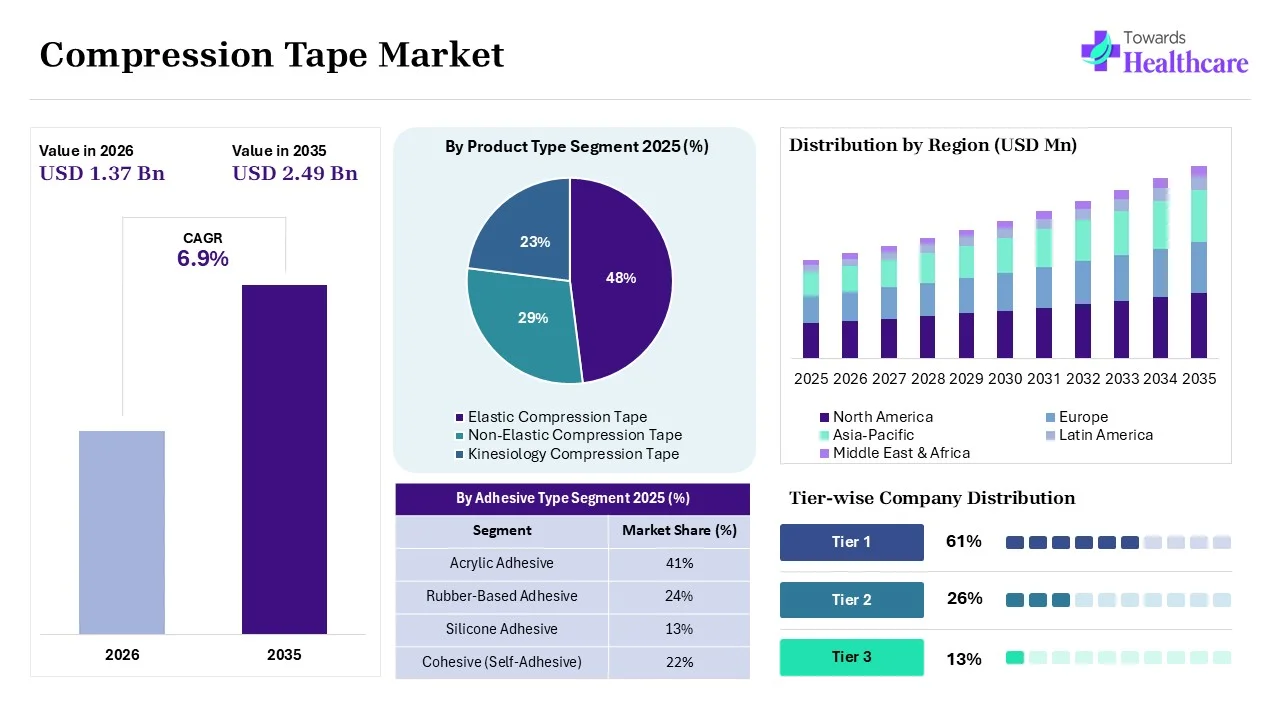
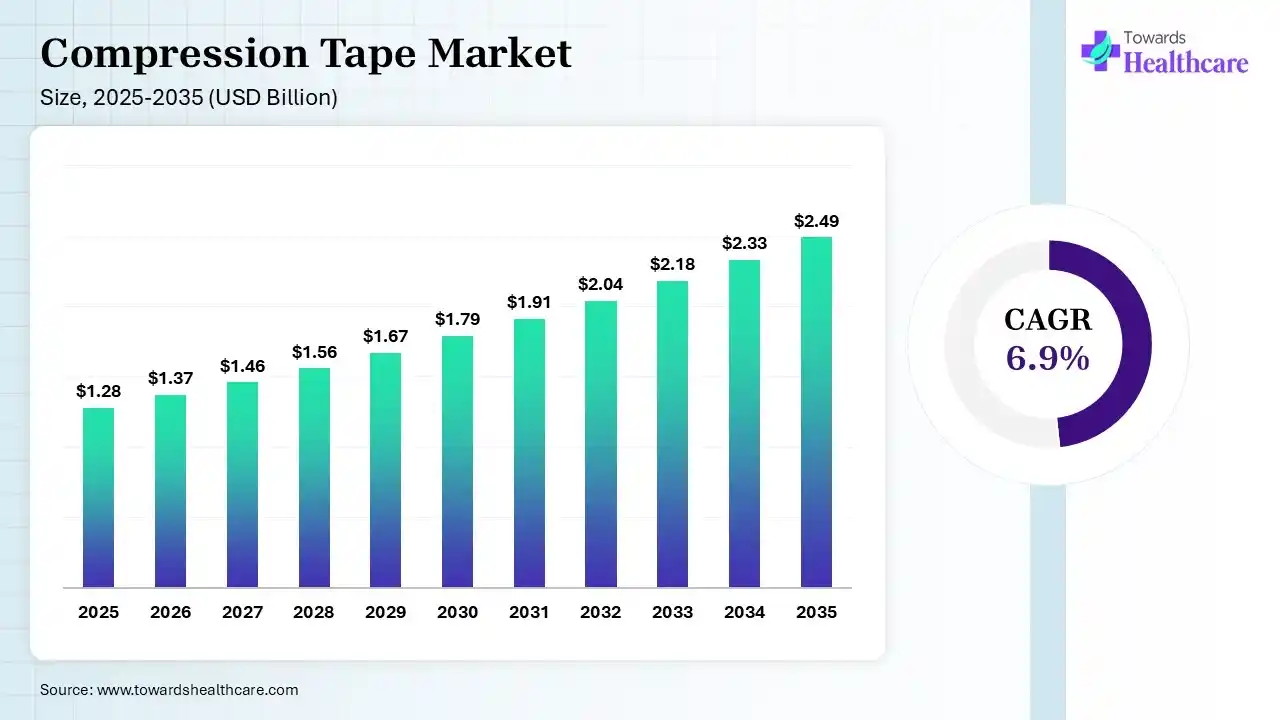
The compression tape market size is calculated at USD 1.28 billion in 2025 and push from USD 1.37 billion in 2026, is expected to reach USD 2.49 billion by 2035, expanding at a CAGR of 6.9% from 2026 to 2035, as compression tape stabilizes muscles, reduces fatigue, and optimizes movement. The market is growing in 2026 because compression tape improves blood circulation, safeguarding muscles receive satisfactory oxygen and nutrients. It is expected to expand through 2035 because it releases pain, lowers inflammation, and enhances athletic performance by exciting the skin to encourage blood flow and lymphatic drainage. North America accounted for 6.3% of the market in 2025 due to the well-developed medical care infrastructure and increasing prevalence of long-term illnesses.
Compression tape is used strategically on the body to provide support, reduce pain, lower swelling, and enhance performance. This tape increases circulation and lymphatic drainage in the particular area, reducing inflammation and assisting in muscle recovery as it helps muscles and joints. The tape also enhances the body's sense of position and movement. It can be used to relieve pain from strains, sprains, and lymphedema. It lowers muscle oscillation that often leads to fatigue and stabilizes joints and muscles during high-resolution actions.
To use a compression tape, wrap it snugly but not tightly enough to cause discomfort or restrict circulation. These tapes should be applied for the first 24 to 48 hours after an injury to enable precise healing. A compression tape is an elastic wrap used to apply pressure to an injury, such as a sprain or strain. It's wrapped steadily around the region to support reducing pain and inflammation by promoting blood flow. Its use is a simple yet effective technology promote healing, but may require seeing a medical care provider.
Advanced technology use in the compression tape sector includes smart textiles and conductive elements, auxetic and 3D geometric structures, zoned and active compression, skin-friendly adhesive chemistries, and compression-tape hybrids. Advanced technology made compression tapes simple to use and more precise. Automated machines apply tapes more exactly, which lessens challenges and waste, particularly in large-scale manufacturing. Also, advanced coating processes make sure the adhesive is consistently spread, so the tape performs better in different situations.
AI-based technologies in compression processes exhibit noteworthy promise for precise risk stratification, prompt diagnosis, and modified treatment planning. Digital platforms, involving telehealth solutions, mobile applications, and virtual rehabilitation programs, it enhances accessibility, improve patient engagement, and encourage sustained adherence over time. Advanced compression modalities, like sensor-equipped garments, adaptive pneumatic technology, and vibration-driven apparatus, deliver dynamic, feedback-informed medicine interventions. Implanted sensors track moisture, temperature, and pH levels, providing data for diagnostic machine learning algorithms. Telemedicine-connected tape enables incessant at-home monitoring, lowering the frequency of in-person hospital visits, which drives the growth of the compression tape market.
Smart Tapes:
Recent advancements in smart tapes designed for easy don/doff, flexibility to different leg sizes, a capability to tune the compression magnitude of the tape using pre‐stretch, and a modular structure that allows a safe fit around various areas of the leg. Applying specific pressure via compression tape, it increases blood circulation, lowers inflammation, and expedites healing processes.
Rise of Home Care:
Increasing demand for healthcare-at-home programmes lowers inpatient admissions and accelerates discharge times, rapidly making valuable hospital space available for patients who require acute or emergency care. Compression tape appropriately applied and removed, which involves efficient wound healing, avoiding infection, and improving patient comfort at home. It improves recovery and reduces the complication rate.
Growth in Orthopaedics:
Growth Orthopedics is a managed solutions organization which collbrate with independent orthopedic practices while protecting their health autonomy. Age is a significant risk factor for orthopedic damage since the muscles become stiff and lose their flexibility. Advanced compression tape promises more efficient management, lowers recovery times, and enhances results for patients with musculoskeletal conditions in orthopedics.
| Table | Scope |
| Market Size in 2026 | USD 1.37 Billion |
| Projected Market Size in 2035 | USD 2.49 Billion |
| CAGR (2026 - 2035) | 6.9% |
| Historical Data | 2020 - 2023 |
| Base Year | 2025 |
| Forecast Period | 2026 - 2035 |
| Measurable Values | USD Millions/Units/Volume |
| Market Segmentation | By Product Type, By Material, By Adhesive Type, By Application, By Application, By Distribution Channel, By Region |
| Top Key Players | 3M Company, Johnson & Johnson Services, Inc., Essity, KT Tape, Rocktape, Mueller Sports Medicine, Inc. |
| Segment | Share 2025 (%) |
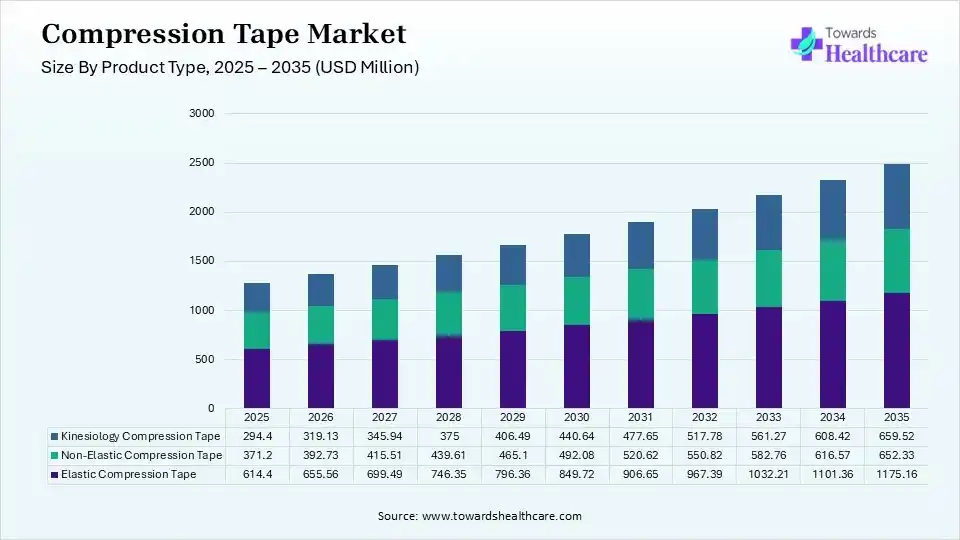
| Elastic Compression Tape | 48% |
| Non-Elastic Compression Tape | 29% |
| Kinesiology Compression Tape | 23% |
The Elastic Compression Tape Segment Led the Compression Tape Market in 2025
The elastic compression tape segment contributed the largest market share of 48% in 2025, as this type of tape enables the body to stretch and return to shape, supporting clothing acclimate to body flexibility. In children's clothing, it offers flexibility for growth and is simple to wear. Elastic tapes are supportive in compression wear and close-fitting apparel where shape retention is significant. Elastic compression tapes are applicable in cycling shorts, leggings, track pants, sports bras, and t-shirts for a healthier fit without controlling movements.
The non-elastic compression tape segment held a significant share of 29% and is expected to grow at the fastest CAGR of 10.44% during the forecast period in the market, as non-elastic tape significantly prevents swelling, but as inflammation resolves in the first postoperative week, it lowers pressure on the skin and padding, likely improving blood circulation and lymphatic drainage, reducing local adverse skin reactions.
The kinesiology compression tape segment held a significant share of 23% and is expected to grow at the fastest CAGR of 8.4% during the forecast period in the market, as Kinesiology tape is a thin, flexible tape that was developed to aid muscle movement and enhance athletic performance. It is often used to relieve pain, reduce swelling and inflammation, and provide support to joints and muscles. The elasticity, or stretchiness, of kinesiology tape allows for movement.
| Segment | Share 2025 (%) |
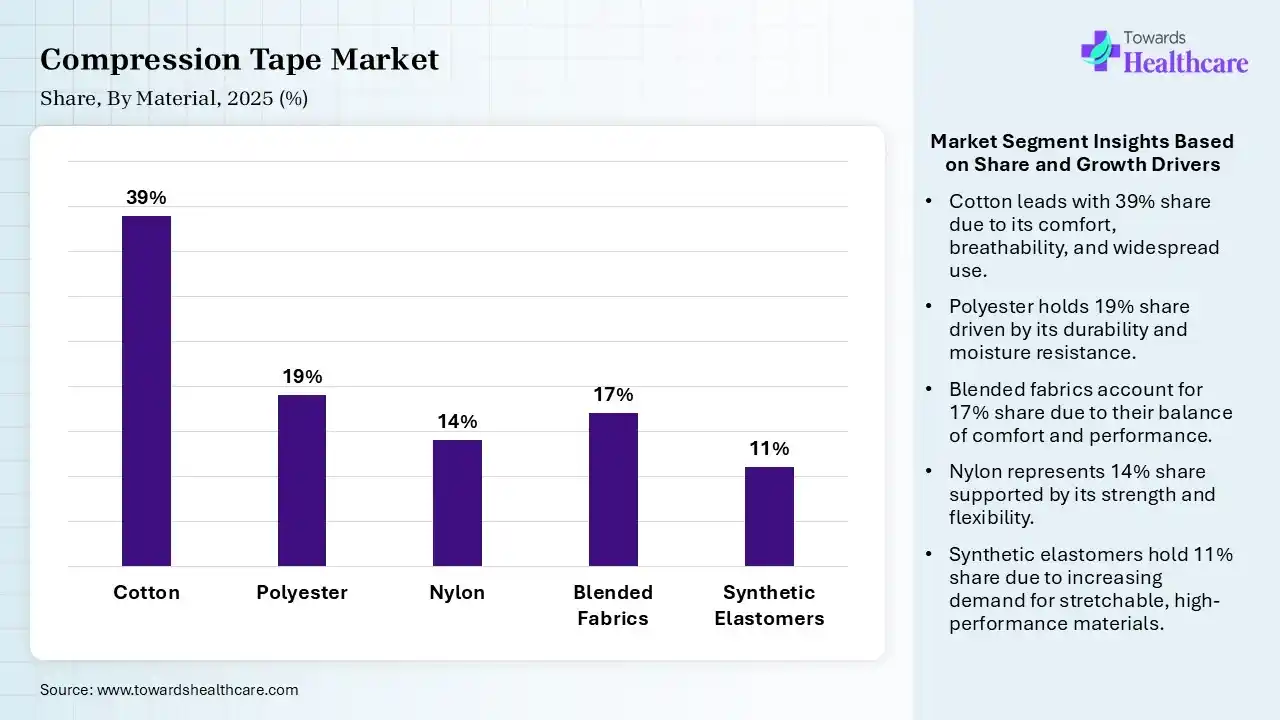
| Cotton | 39% |
| Polyester | 19% |
| Nylon | 14% |
| Blended Fabrics | 17% |
| Synthetic Elastomers | 11% |
The Cotton segment led the Compression Tape Market in 2025
The cotton segment contributed the largest market share of 39%, as cotton tape provides exceptional breathability, enabling air to circulate and moisture to vanish, which is significant for maintaining skin health during physical activities. This charecteristics is specifically important in sports therapeutics, where continued tape application is often required. Cotton offers a soft, comfortable surface against the skin, reducing friction and irritation during intense actions.
The polyester segment held a significant share of 19% of the market, as polyesters have found varied applications in healthcare, like controlled drug release technology. Polyester compression tapes are consistent, meaning they stick only to themselves and not to the skin or hair. Polyester fabric is permeable and lightweight, enabling air and moisture vapor to simply pass through.
The nylon segment held a significant share of 14% of the market, as this type of medical tape is intended to adhere steadily to the skin while confirming painless removal. This aspect is specifically important in wound care, where reducing patient discomfort pays significantly to the overall healing experience. The soft yet protected adhesion of nylon tape offers a steady foundation for wound dressings, allowing a comfortable environment for the healing procedure.
The synthetic elastomers segment held a significant share of 11% of the market, and is expected to grow at the fastest CAGR of the 8% during the forecast period. This material offers gentle, secure adhesion for fragile skin, lowering trauma while guaranteeing reliable fixation. These tapes offer advanced elasticity, moisture resistance, and skin-friendly characteristics. By providing customizable support without limiting mobility, they are broadly applied to manage edema and soothe wounded joints.
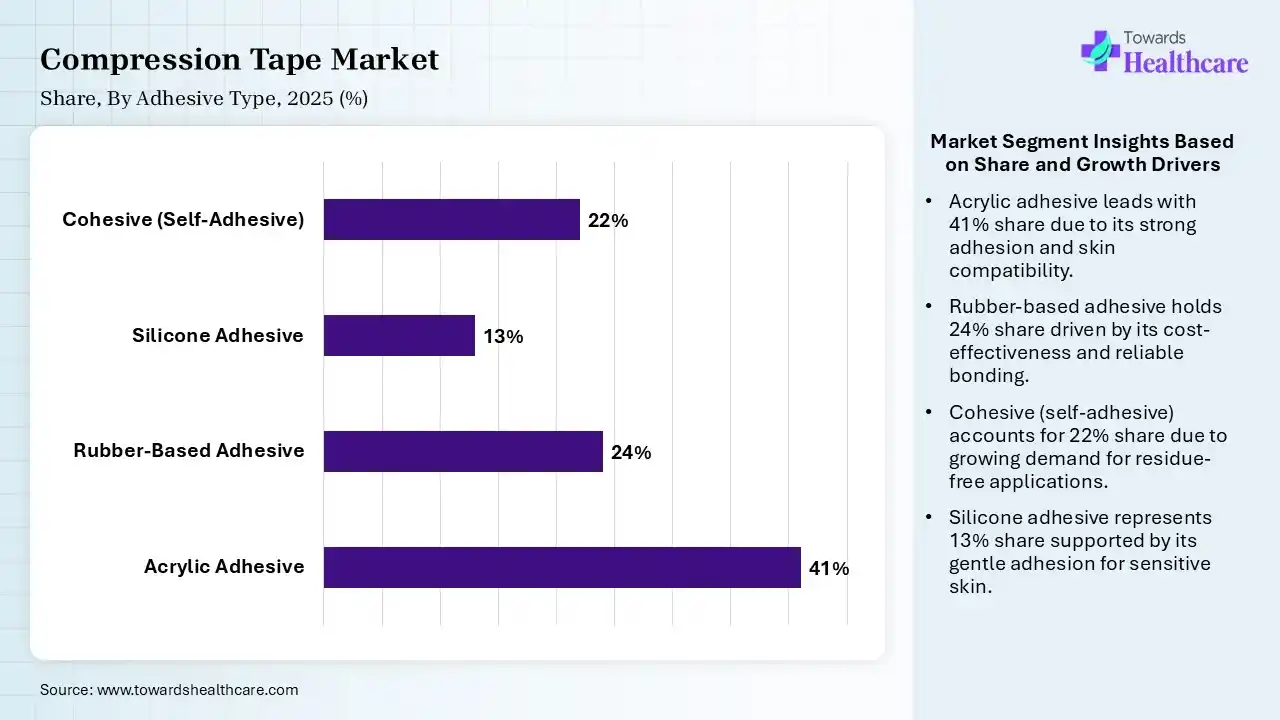
| Segment | Share 2025 (%) |
| Acrylic Adhesive | 41% |
| Rubber-Based Adhesive | 24% |
| Silicone Adhesive | 13% |
| Cohesive (Self-Adhesive) | 22% |
The Acrylic Adhesive Segment Led the Compression Tape Market in 2025
The acrylic adhesive segment held a significant share of 41% in the market. acrylic-based adhesives for healthcare wearable tools because of their durable versatility, adhesion, and suitability for prolonged wear. Acrylic adhesives enable physicians and nurses to have full visibility of the skin and tool components. Acrylic adhesive expertise is that recent developments have made many of these adhesives gentler on the skin, increasing their usability.
The rubber-based adhesive segment contributed the largest compression tape market share of 24%, as rubber-based adhesives are more careful and less expensive than acrylic or silicone-based adhesive products. They are resistant to heat, moisture, vibration, oils, and solvents, creating durable adhesives even in harsh environments. Rubber adhesives set rapidly and are applied simply with sprays, brushes, or rolls.
The silicone adhesive segment held a significant 13% share of the market, as silicone material offers gentle adhesion, lowers pain on removal, and supports optimal healing with balanced moisture. Silicone adhesive used for bone grafting, repairing organs, replacing sutures, ligation closure, efficiently stops bleeding, covers wounds, and treats vesicles.
The cohesive (self-adhesive) segment contributed the largest compression tape market share of 22%, and is expected to grow at the fastest CAGR of the 8.2% during the forecast period, as the cohesive tapes are highly stretchable, and the stretched length is almost the same as the unstretched length. This provides a cohesive bandage with a lot of flexibility, as base to the situation and the level of compression.
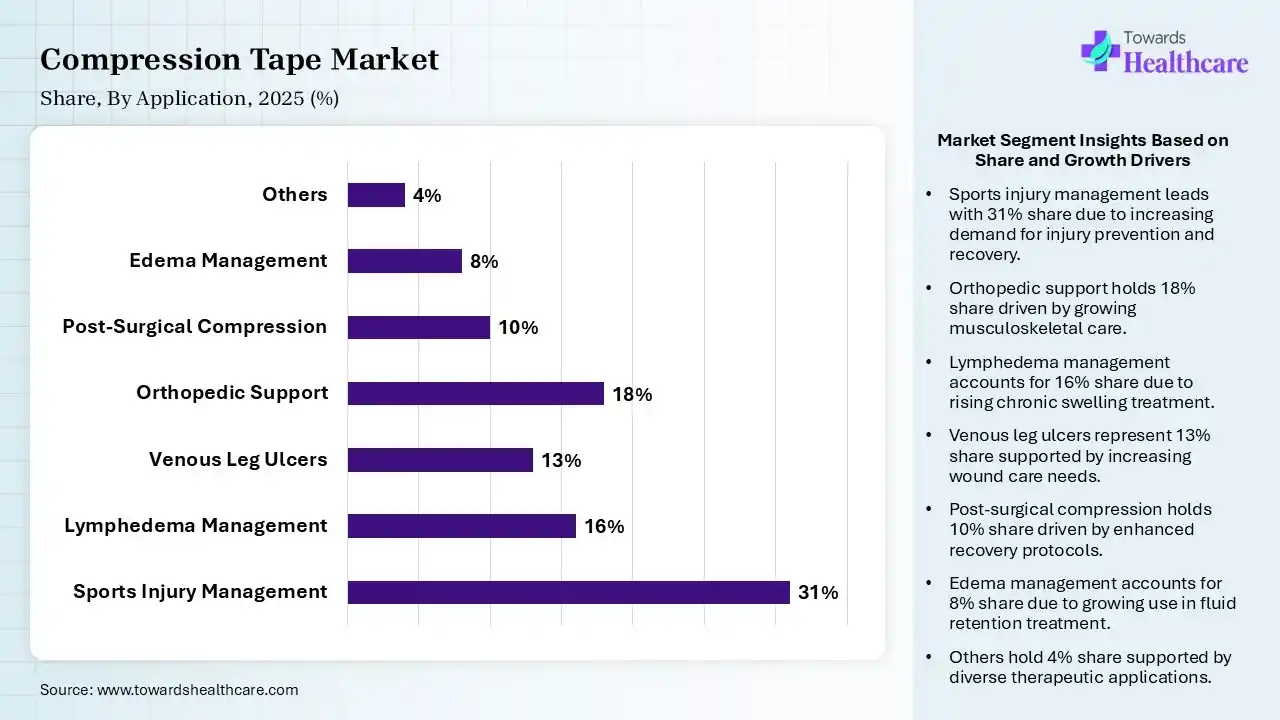
| Segment | Share 2025 (%) |
| Sports Injury Management | 31% |
| Lymphedema Management | 16% |
| Venous Leg Ulcers | 13% |
| Orthopedic Support | 18% |
| Post-Surgical Compression | 10% |
| Edema Management | 8% |
| Others | 4% |
The Sports Injury Management Segment led the Compression Tape Market in 2025
The sports injury management segment contributed the largest market share of 31%, as taping predominantly lowers the incidence of injuries, specifically in high-risk regions such as the ankles and knees. This tape is intended to lift the skin a little, making space among the skin and underlying tissues. It offers extra support to muscles and joints, helping to avoid strains and sprains by limiting excessive movement.
The lymphedema management segment held a significant share of 16% in the compression tape market, as taping is supposed to lessen pain or abnormal sensation, improve muscle function, lower lymph accumulation below the skin, and enhance the position of joints. Taping for lymphatic drainage supports in lowering inflammation, lowering discomfort, and enhancing mobility.
The venous leg ulcers segment held a significant share of 13% in the market, as compression therapy is more effective in ulcer healing, lowering of pain and edema, and avoiding recurrence. Compression therapy is the backbone of the management of venous leg ulcers (VLU). Better wound care and compression therapy heal the significance of small venous ulcers of limited duration. It reduces ambulatory venous pressure, therefore lowering venous reflux.
The post-surgical compression segment held a significant share of 10% in the market, and is expected to grow at the fastest CAGR of the 8.1% during the forecast period, as compression tapes support increasing circulation and quick wound healing, which lowers the challenges of blood clots and infection. Postoperative compression therapy is designed to enhance surgical results, like lessen the edema, ecchymosis, pain, and seroma formation.
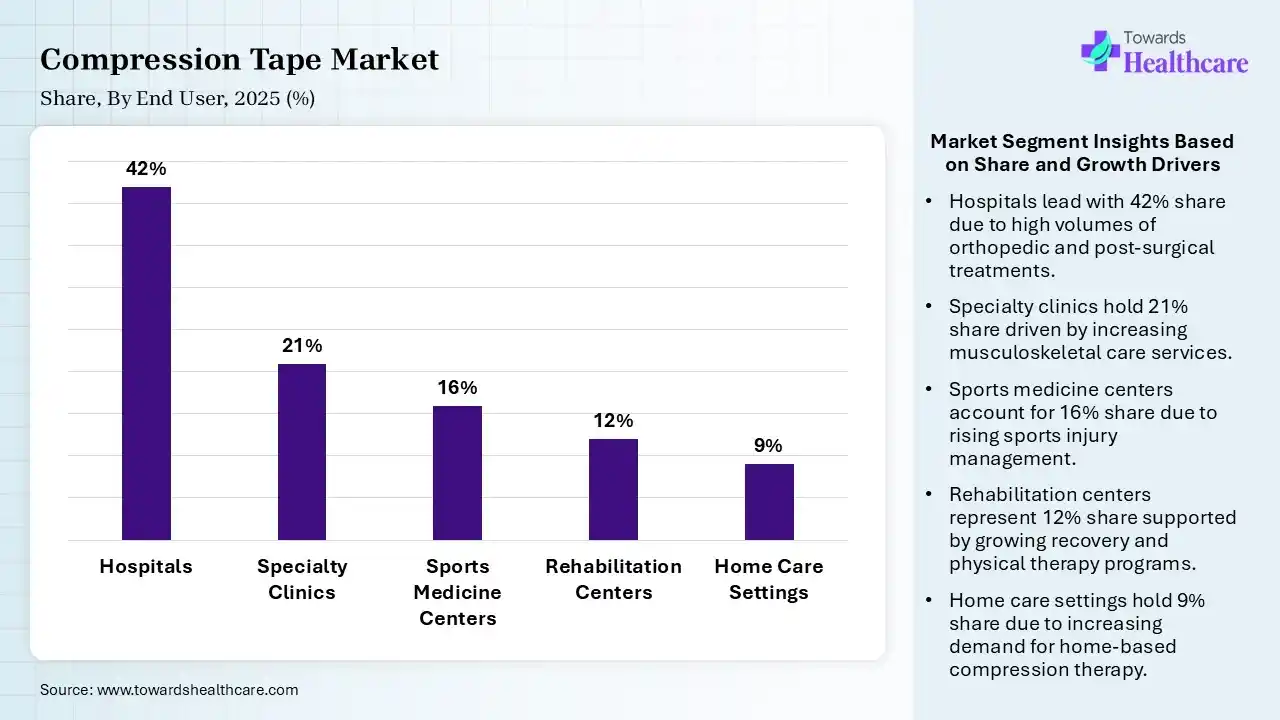
| Segment | Share 2025 (%) |
| Hospitals | 42% |
| Specialty Clinics | 21% |
| Sports Medicine Centers | 16% |
| Rehabilitation Centers | 12% |
| Home Care Settings | 9% |
The Hospitals Segment led the Compression Tape Market in 2025
The hospitals segment contributed the largest market share of 42%, as compression therapy helps to increase blood circulation in the lower legs, ankles, and feet. It is an efficient management for pain and swelling caused by conditions related to poor circulation, like chronic venous insufficiency and varicose veins. Compression therapy is a behavior to support and enhance blood flow in the lower legs.
The specialty clinics segment held a significant share of 21% in the market, as compression taping is applied for rehabilitation and injury prevention, support, and stability are required. It serves as a first-aid device and supports the protection of injured anatomical structures during the healing procedures.
The sports medicine centers segment held a significant share of 16% in the compression tape market, and is expected to grow at the fastest CAGR of 8.3% during the forecast period, as this taping avoids injuries, lowers pain, improves performance, and helps recovery. Supports injured muscles and joints and assistances relieve pain by exciting the skin and enabling enhanced blood and lymph flow.
The rehabilitation centers segment held a significant share of 12% in the compression tape market, as by stabilising the injured region and applying suitable pressure, the tape lessens strain on nerves, resulting in lower pain signals transmitted to the brain. Sports taping stands as an advanced process that has undeniably altered the physiotherapy rehabilitation stage.
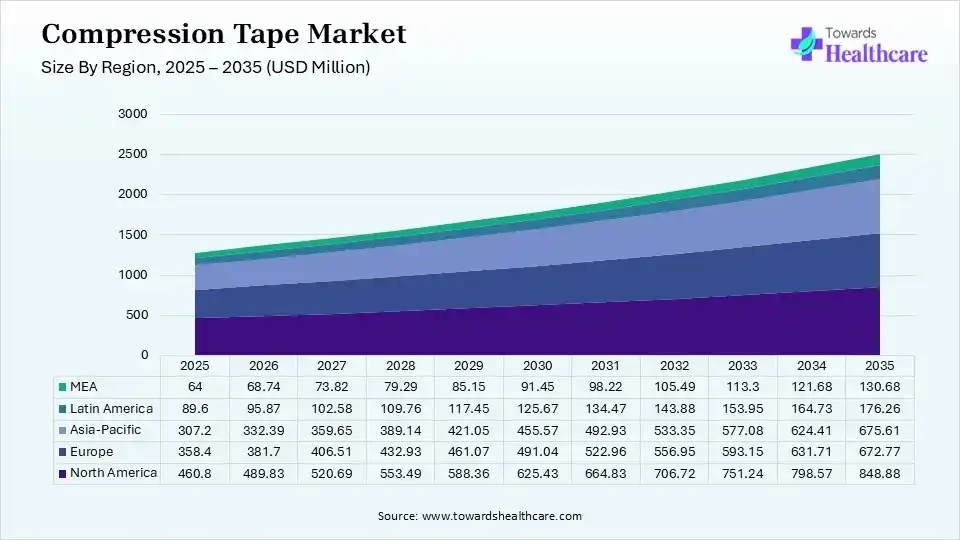
In 2025, North America dominated the compression tape market with a share 36%, because of the increasing aging population and also growing rates of obesity, diabetes, and venous thromboembolism (VTE), which need non-invasive management such as compression garments and tapes to achieve precise circulation and inflammation. Increasing technological infrastructure and increasing adoption rates drive demand for compression tape, which drives the growth of the market.
US Market Growth
The U.S. is a hub to industry giants such as 3M, Medline (CURAD), and Mueller Sports Medicine. These organizations fuel continuous innovation in advanced textiles, sensor integration, and skin-friendly adhesives. Compression taping is significantly incorporated into standard post-operative recovery and physical therapy protocols in U.S. hospitals and rehabilitation centres.
Canada Market Growth
In Canada, growing rates of participation in rigorous sports and outdoor activities create continuous demand for orthopedic support and injury recovery devices. Canada's prominence in outpatient care, rehabilitation, and sports therapeutics confirms which high-quality compression products are commonly prescribed and incorporation in the long-term recovery protocols.
Asia Pacific is the fastest growing with a share of 24% in the compression tape market, and is expected to grow at the fastest CAGR of 8.2% during the forecast period, driven by the increasing proliferation of advanced digital health storefronts in India and Southeast Asia, which has made lots of domestic and international tape brands significantly accessible to clients, bypassing chaotic or uneven physical pharmacy systems. Increasing middle-class expenditure power and increasing access to healthcare case research transform regional consumer preferences to early intervention and self-care, which drives the growth of the market.
Chinese Market Growth
Chinese producers are continually exploring novel materials to enhance the performance of healthcare pressure-sensitive tapes. Robotics and intelligent industry are becoming the norm in the healthcare tape manufacturing industry. Major producers introduced advanced manufacturing tools and automatic production lines.
India Market Growth
India has a growing rate of sports contribution, driven by initiatives such as the Khelo India program. Taping is significantly popular amongst cricket wicket-keepers and fast bowlers to avoid finger wounds, support hamstrings, and achieve joint stability. India has a remarkably high diabetic and geriatric population. Compression therapy is important for managing chronic venous insufficiency and stopping diabetic foot ulcers, supporting the high demand for compression tape.
R&D:
Clinical Trials:
Patient Support & Services:
| Company | Headquarters | Latest Update |
| 3M Company | Lucknow | An important leader in medical adhesives, they are well-known for their Nexcare and clinical product lines. |
| Johnson & Johnson Services, Inc. | Japan | It provides heavy-duty, non-stretchy zinc oxide tapes and porous elastic adhesive tapes. |
| Essity | Switzerland | This company produces industry-leading cohesive and elastic compression tapes like the Tensoplast and Elastoplast lines. |
| KT Tape | New Zealand | Highly popular brand among athletes, providing pre-cut and uncut kinesiology tape. |
| Rocktape | Germany | Focusses on premium, stretchable kinesiology tape known for its robust adhesion and lively patterns. |
| Mueller Sports Medicine, Inc. | Germany | This company provides a broad range of athletic tapes, involving rigid strapping tapes, underwrap foam, and dedicated kinesiology tapes. |
In September 2025, Hidehito Takahashi, President and CEO of Resonac Holdings Corporation, stated, "JOINT3 brings together world-class companies from a variety of fields. Combining the complementary strengths and expertise of each company allows us to collectively address challenges in areas that were previously unreachable. This endeavor goes beyond mere technological development and will lead to solutions that address societal challenges. We are excited by the potential that this initiative offers."
By Product Type
By Material
By Adhesive Type
By Application
By End User
By Distribution Channel
By Region










Principal Consultant
Shivani Zoting is a dedicated research analyst specializing in the healthcare industry. With a strong academic foundation, a B.Sc. in Biotechnology and an MBA in Pharmabiotechnology, she brings a unique blend of scientific understanding and strategy.
Learn more about Shivani Zoting
Reviewed By
Aditi Shivarkar is a seasoned professional with over 14 years of experience in healthcare market research. As a content reviewer, Aditi ensures the quality and accuracy of all market insights and data presented by the research team.
Learn more about Aditi Shivarkar









