


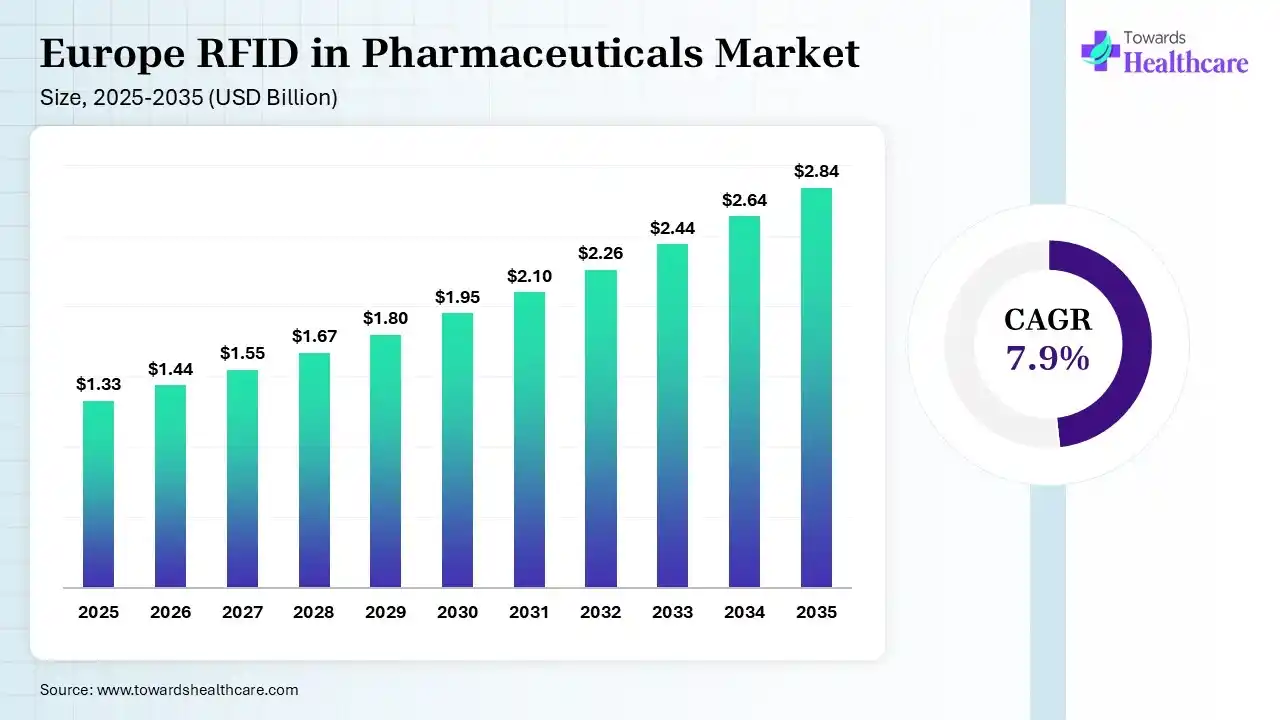
The Europe RFID in pharmaceuticals market size was estimated at USD 1.33 billion in 2025 and is predicted to increase from USD 1.44 billion in 2026 to approximately USD 2.84 billion by 2035, expanding at a CAGR of 7.9% from 2026 to 2035. Her analysis highlights that the Europe RFID in pharmaceuticals market is rapidly expanding due to growing demand for RFID readers, expanding pharmaceutical manufacturing capabilities, increasing falsified medicine detection, rising patent applications, evolving regulations, and key industry players like Avery Dennison Corporation, Zebra Technologies Corporation, Impinj, Inc., CCL Industries Inc., and Checkpoint Systems.
The Europe RFID in pharmaceuticals refers to the radio-frequency identification technology in pharmaceuticals used to transmit data for identification and tracking across Europe. They help in covering tags, readers, and middleware used across drug track-and-trace, authentication and anti-counterfeiting, quality management, inventory management, and clinical/hospital applications. They help in enhancing the pharmaceutical supply chain and identifying implementation barriers.
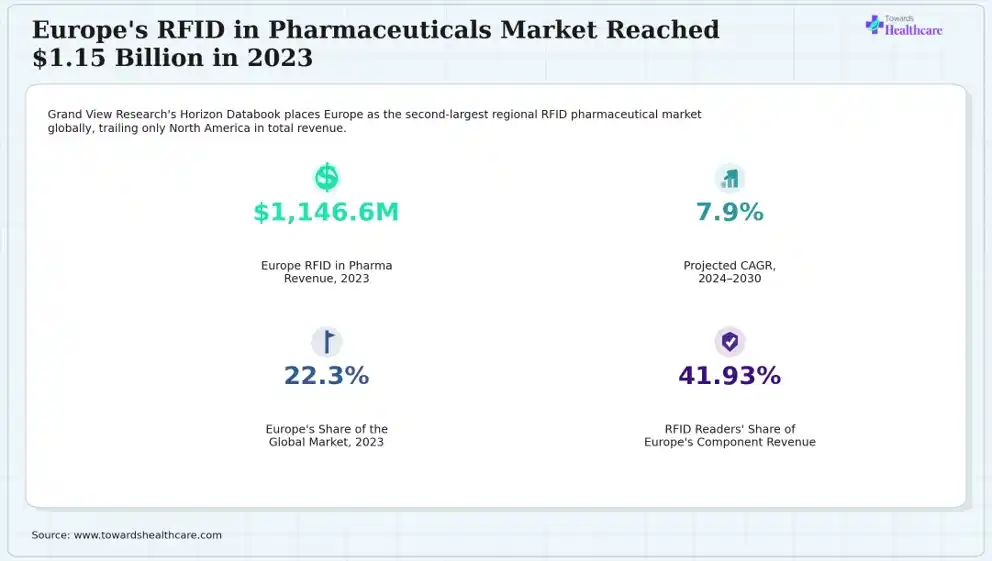
As the market analyst, I interpret that the infographic stat panel illustrates Europe's RFID in pharmaceuticals market-size metrics. In 2023, Europe's RFID in pharma revenue was $1,146.6 million, while its share of the global market in the same year was reported to be 22.3%. RFID readers' share of Europe's component revenue was noted to be 41.93%, whereas the projected CAGR between 2024 and 2030 is recorded to be 7.9%.
Key Insight:
Fixed scan-point infrastructure investment is responsible for driving the European market's growth, not the marginal cost of tagging individual drug units, as the readers contribute more revenue share than either tags or middleware.
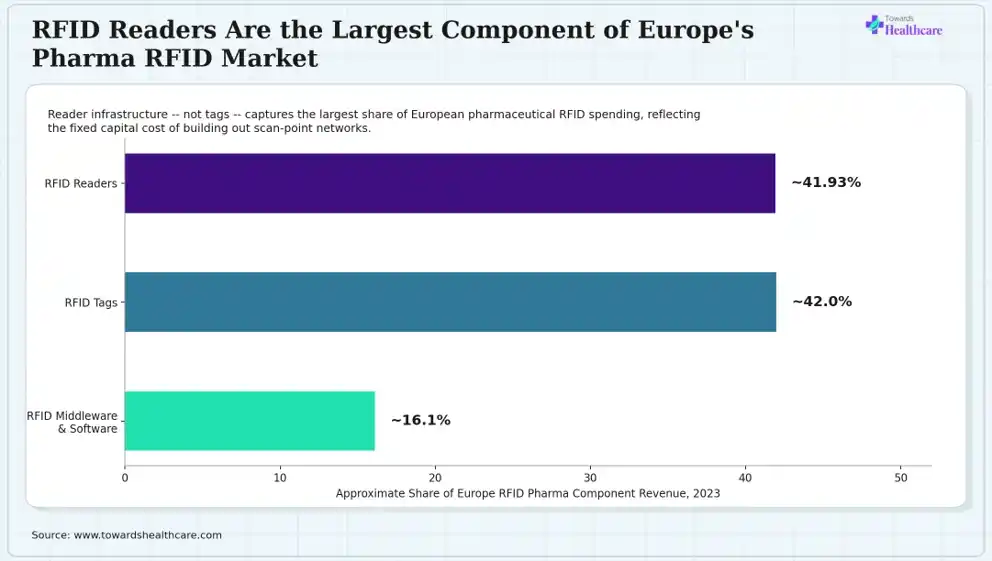
The given horizontal bar chart represents Europe's RFID pharma component revenue share. The approximate share of 2023 revenue for components like RFID readers was noted to be 41.93%, where RFID tags held approximately a 42% share, and RFID middleware & software contributed to roughly a 16% share.
Key Insight:
Reader infrastructure is thus considered the largest and fastest-growing component, reflecting that European pharmaceutical operators are not simply replenishing consumable tags on already-deployed reader networks but are focusing on an active infrastructure build-out phase.
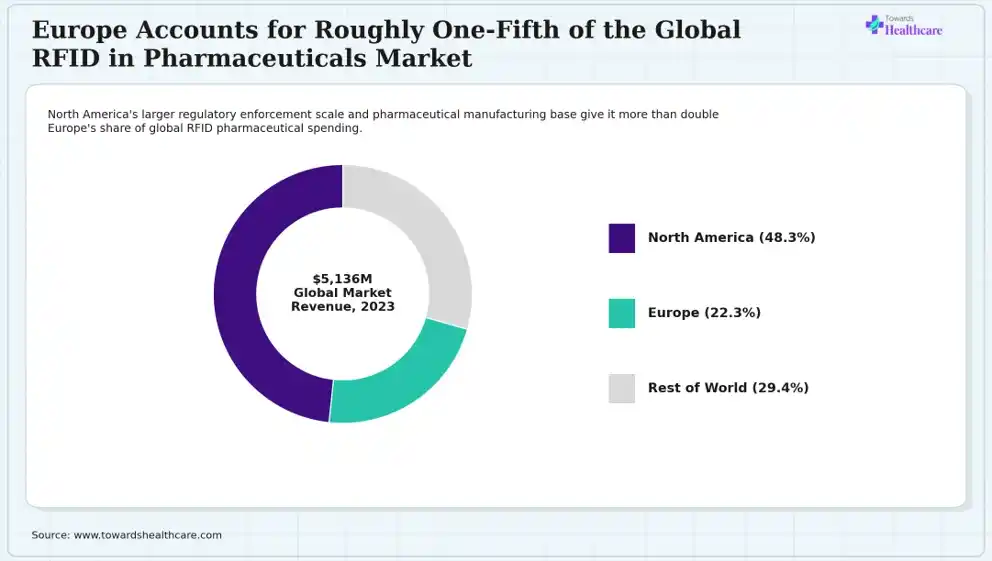
Based on our research, the donut chart highlights global RFID in pharmaceuticals market share by region in 2023. North America held a 48.3% share of global 2023 market revenue, which indicates a rise of $2,479.9 million, while Europe held 22.3%, which noted a rise of $ 1,146.6 million. Furthermore, the rest of the world held a 29.4% share of global 2023market revenue.
Key Insight:
Europe's decade-old FMD serialization infrastructure offers the country a data foundation that contributes to its significant growth, despite trailing North America by more than 26 percentage points in current market share, with a more fragmented, state-by-state DSCSA rollout, which has not yet matched.
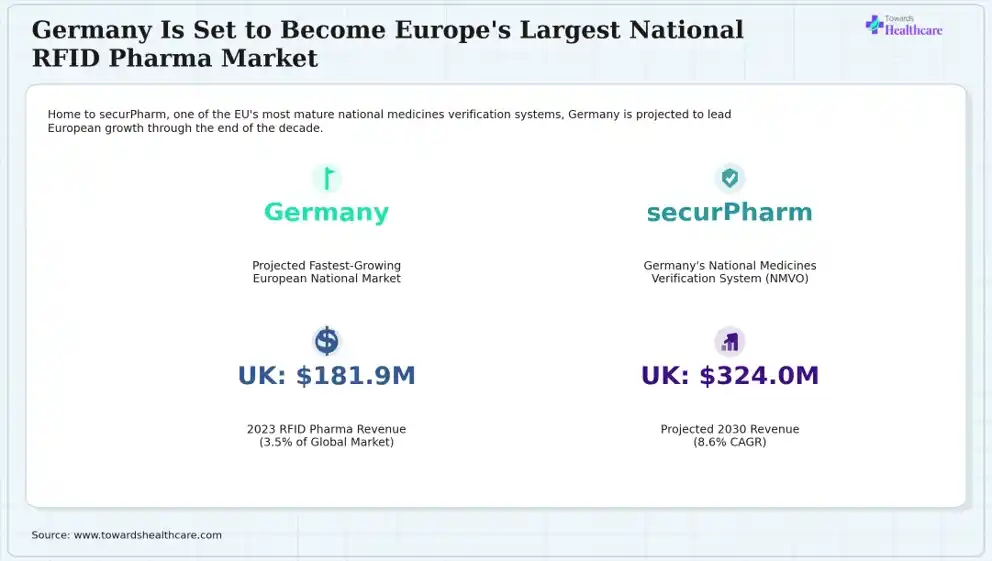
As per the survey conducted, the infographic stat-panel covers Germany and UK national RFID pharma market metrics. Germany is considered the fastest-growing European national market with its national verification system, securPharm. In 2023, UK RFID pharma revenue was noted to be $181.9 million, which reported a rise of 3.5% in the global market, while it is projected to achieve $324.0 million with an 8.6% CAGR by 2030.
Key Insight:
Germany registered its dominance as Europe's largest pharmaceutical manufacturing base as well as considered one of the first EU countries to fully operationalize national medicines verification under securPharm.
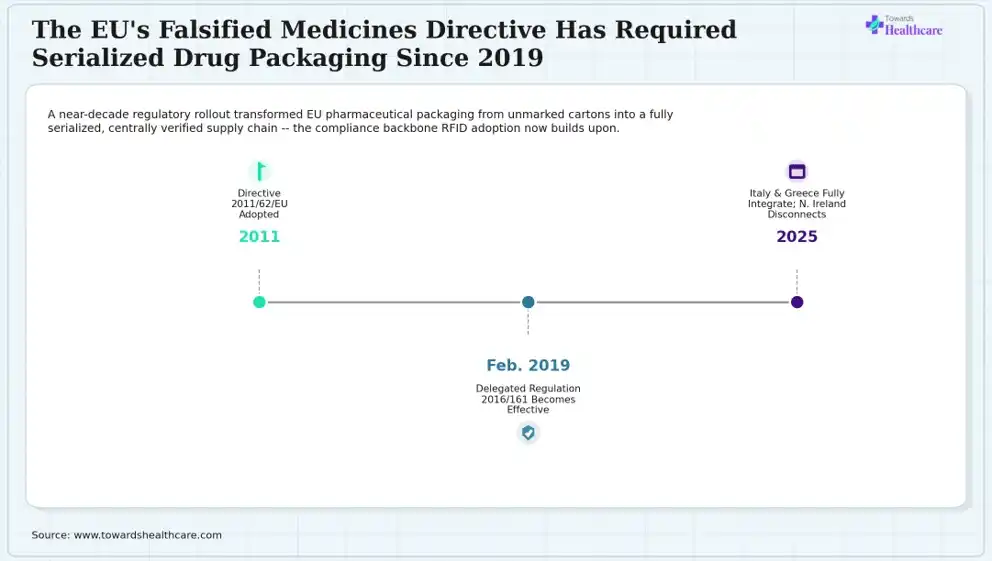
The above-mentioned timeline infographic highlights EU Falsified Medicines Directive regulatory milestones. In 2011, Directive 2011/62/EU was adopted, while Delegated Regulation 2016/161 became effective in February 2019, which increased the requirement for 2D barcodes on all prescription packs. Moreover, 2025 full integration with the EU FMD system was reported by Italy and Greece, while Northern Ireland was disconnected under the Windsor Framework.
Key Insight: The 2025 milestone shows EU pharmaceutical serialization is not a static, fully settled system -- both expansion (Italy, Greece) and contraction (Northern Ireland) occurred in the same year, confirming the regulatory perimeter remains actively subject to political and administrative change.
Source: IntuitionLabs, “FMD Explained: A Guide to Pharma Serialization & Barcodes,” 2026; European Commission, COM(2024) 274 final.
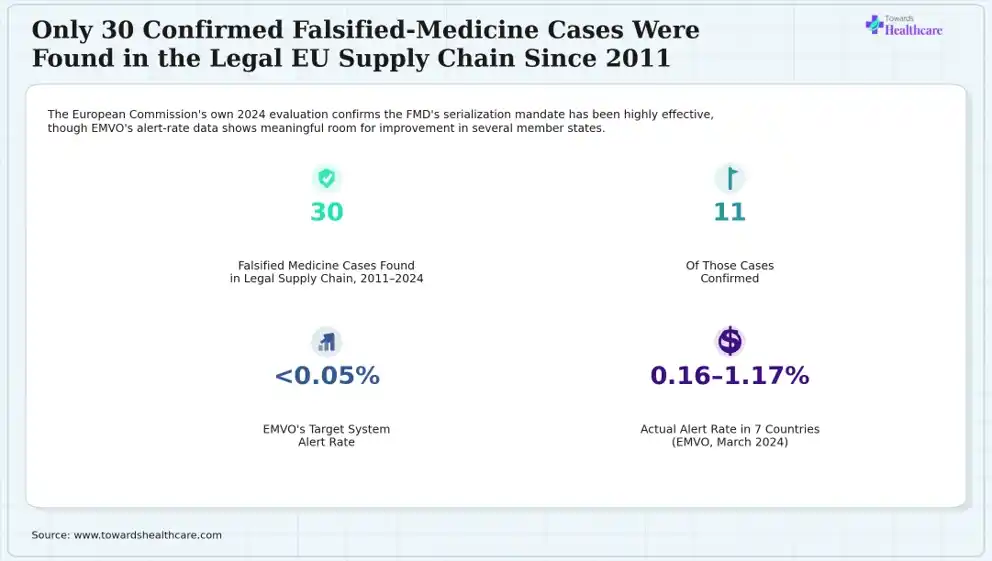
Based on the information gathered by Aman, the infographic stat-panel encompasses EU falsified medicine detection and alert-rate metrics. A total of 30 falsified medicine cases were found in the legal supply chain between 2011 and 2024, where 11 of them were the confirmed cases. In March 2024, EMVO's actual alert rate in 7 countries, including Liechtenstein, was reported between 0.16%-1.17%, while its target system alert rate was reported to be less than 0.05%.
Key Insight:
The barcode-scanning infrastructure integrating with RFID is not yet operating at its intended precision, leading to a data-quality gap that item-level RFID tracking could help address, which is represented by the false-alert rate running 3-23x above EMVO's own target across several countries.
Source: European Commission, COM(2024) 274 final, citing EMVO's March 2024 report; hello-pharma.com, “EU FMD Serialization Requirements 2026.”
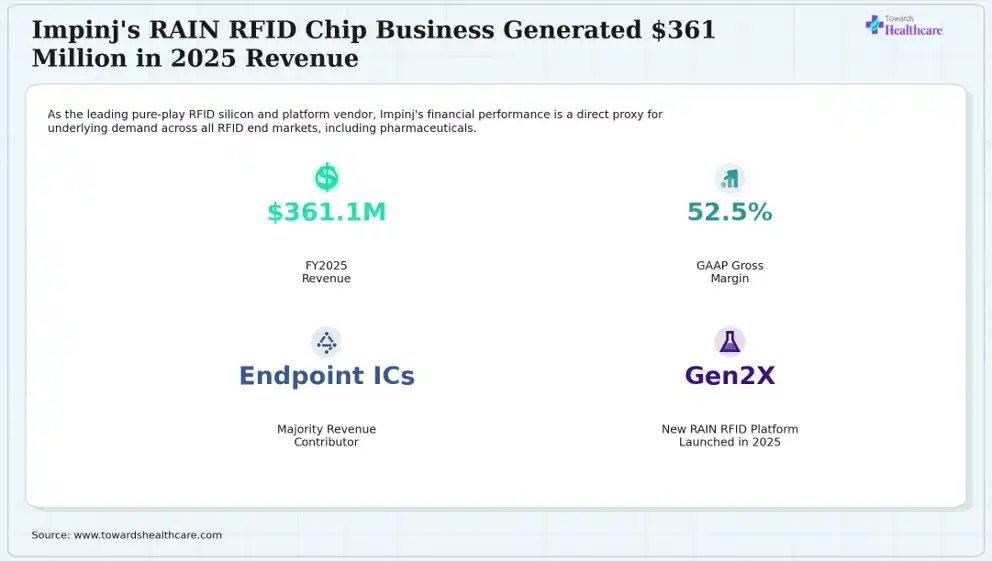
According to the analysis, the infographic stat panel focuses on Impinj FY2025 financial and product metrics. In 2025, Gen2X, a new platform, was launched, whereas FY2025 revenue was reported to be $361.1 million with a GAAP gross margin of 52.5%, highlighting endpoint ICs as the majority revenue contributor.
Key Insight:
Endpoint ICs, which are the chips embedded in individual RFID tags contributing to the majority of Impinj's revenue growth, act as the direct, real-time indicator of item-level tagging volume across all of its end markets, including pharmaceuticals
Source: Towards Healthcare, independently consistent with Impinj's publicly reported FY2025 financial results.
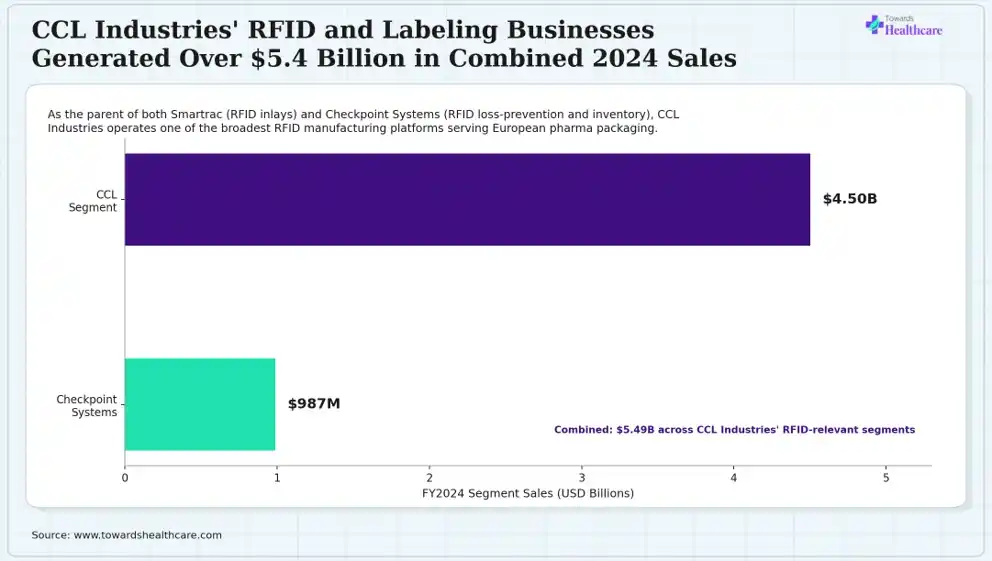
As the market analyst, I interpret that the horizontal bar chart outlines CCL Industries' RFID-relevant segment sales in FY2024. The FY2024 sales of the CCL segment, including Smartrac RFID inlays, were reported to be $4.503 billion; the checkpoint systems segment contributed $986.9 million, and combined RFID-relevant segment sales were noted to be $5.490 billion.
Key Insight:
The combination of most pure-play competitors vertically integrating label manufacturing, RFID inlay production, and inventory/loss-prevention technology under one corporate structure represents low revenue compared to CCL Industries' scale, generating more RFID-adjacent revenue
Source: Towards Healthcare, independently consistent with CCL Industries' publicly reported FY2024 financial results.
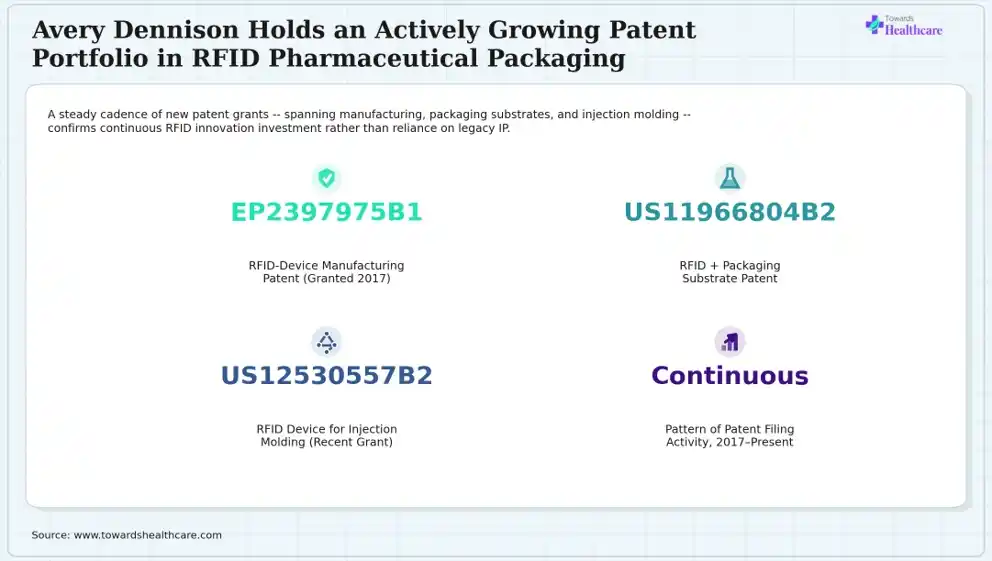
The given infographic stat panel covers Avery Dennison RFID patent portfolio examples. The product EP2397975B1 supporting RFID-device manufacturing was granted patent approval in 2017. US11966804B2 or US20220398425A1, focusing on RFID + packaging substrate integration, was also patented, and US12530557B2 or US20250068879A1, an RFID device for injection molding, also received patent protection.
Key Insight:
The continuous patent protection from 2017 to 2025 indicates that Avery Dennison has sustained RFID patent investment for nearly a decade, which helps it to file uninterrupted patent applications rather than going dormant after filing a single cluster of patents
Source: Towards Healthcare, citing published European (EP) and U.S. patent office records.
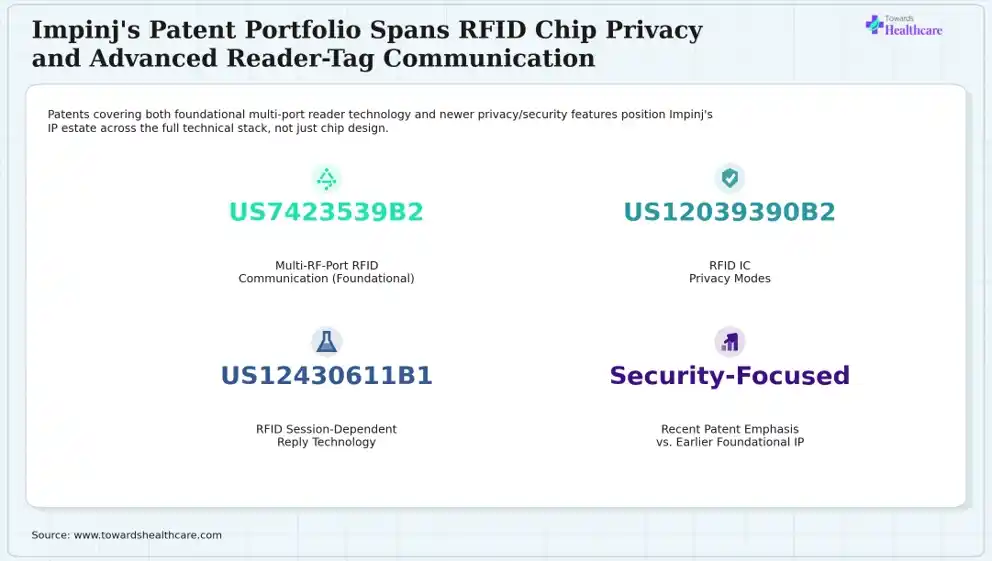
Based on our research, the infographic stat panel covers Impinj RFID patent portfolio examples. US7423539B2, under patent protection, focuses on multi-RF-port RFID communication; US12039390B2 offers RFID IC privacy modes, whereas US12430611B1 provides RFID session-dependent reply technology.
Key Insight:
To overcome growing European data-protection scrutiny such as GDPR-adjacent concerns around item-level tracking technology, Impinj's patents are shifting toward more recent privacy- and security-focused claims, with a main focus on its IP estate.
Source: Towards Healthcare, citing published U.S. patent office records.
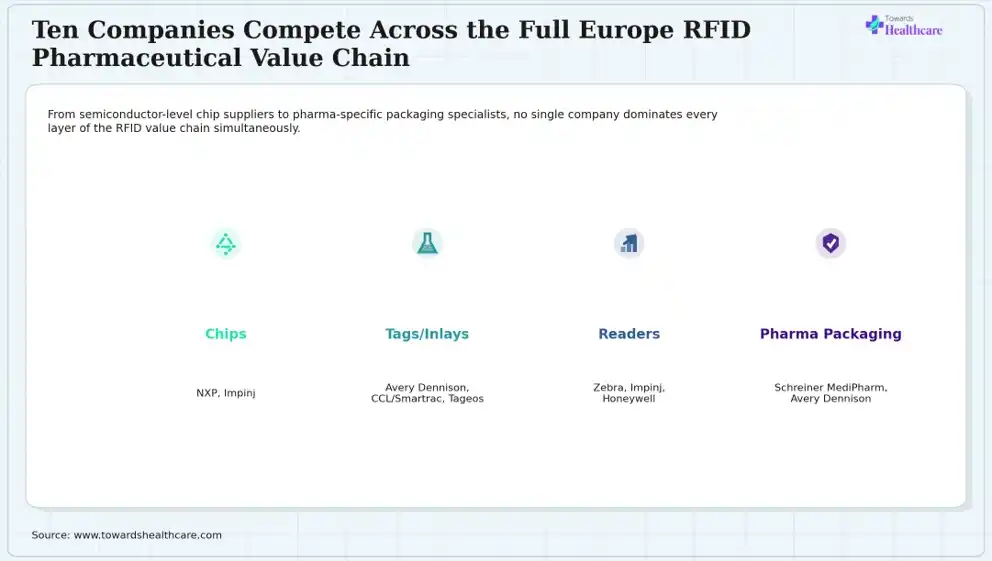
As per the analysis, the ecosystem infographic highlights Europe RFID pharmaceutical value-chain layers and leading companies. NXP Semiconductors and Impinj focus on chips, whereas tags/inlays are components of interest for Avery Dennison, CCL Industries/Smartrac, and Tageos. Similarly, Zebra Technologies, Impinj, and Honeywell support readers, while pharma-specific packaging is driven by Schreiner MediPharm and Avery Dennison.
Key Insight:
To maintain competitive advantage in this market, vertical presence across at least two adjacent value-chain layers is essentials which is represented by Impinj focusing on the chip and reader layers and Avery Dennison spanning both tags/inlays and pharma packaging.
Source: Towards Healthcare, cross-referenced against published competitor lists for RFID in pharmaceuticals.
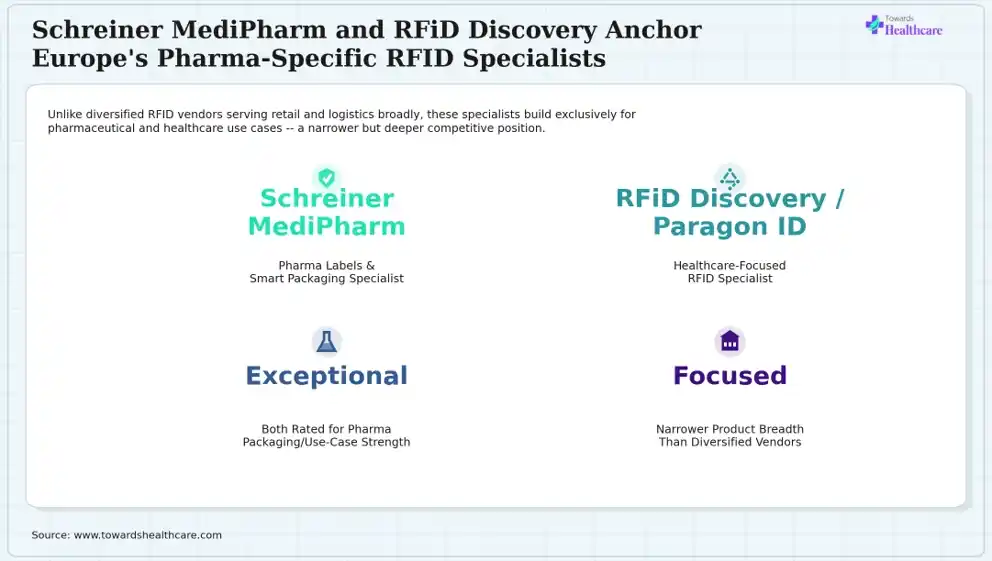
The above-mentioned graph infographic stat panel represents pharma-specific RFID specialist positioning. Schreiner MediPharm, specializing in pharmaceutical labels and smart packaging, was rated as Exceptional (pharma packaging) in the competitive rating. Similarly, RFiD Discovery/Paragon ID, specializing in healthcare-focused RFID, was positioned as Exceptional (anti-counterfeiting) in the competitive rating.
Key Insight:
Both specialists' competitive strategy is depth within pharmaceutical use cases instead of horizontal expansion into adjacent industries, unlike other diversified vendors such as Zebra or Honeywell, which rated them “focused” rather than “broad” in product breadth
Source: Towards Healthcare.
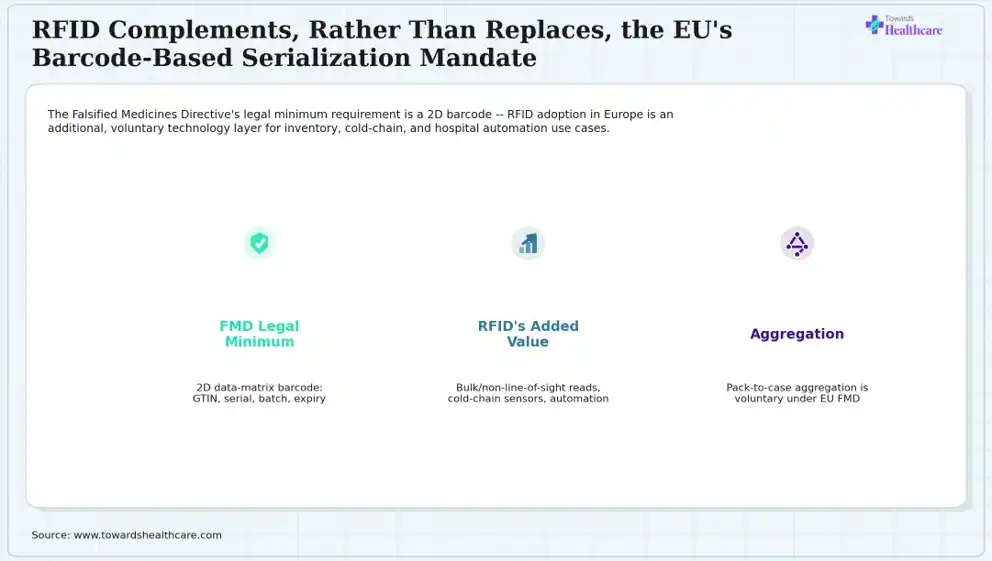
Based on the survey conducted, the ecosystem infographic reflects the FMD barcode requirement vs. RFID's complementary value. FMD legal minimum highlights a 2D data-matrix barcode containing GTIN, serial number, batch, and expiry, while RFID's added value encompasses bulk/non-line-of-sight reads, cold-chain sensor integration, and automated dispensing, where Aggregation status under EU FMD is considered voluntary and not mandatory.
Key Insight:
RFID adoption in Europe is a fundamentally different adoption dynamic than the FMD's compliance-driven barcode rollout, as it voluntary process that entirely relies on individual pharmaceutical companies and hospitals independently concluding the operational ROI.
Source: rfxcel.com, “Complete Understanding of the EU Falsified Medicines Directive”; hello-pharma.com, “EU FMD Serialization Requirements 2026.”
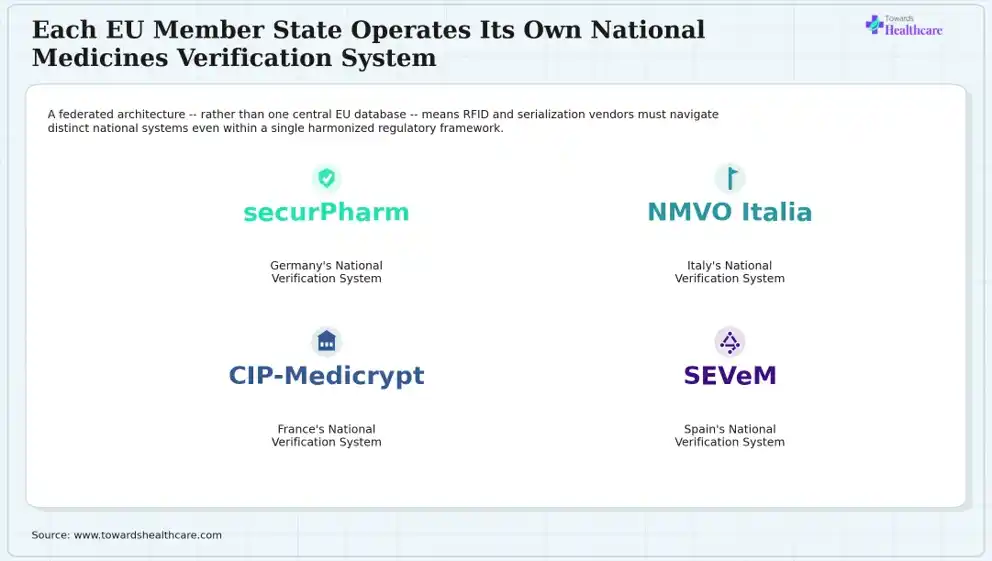
According to the analysis of Aman, the infographic stat-panel focuses on EU member state national medicines verification systems. Germany consists of securPharm as its national verification system; Italy has NMVO Italia; France comprises CIP-Medicrypt, while Spain embraces SEVeM.
Key Insight:
It is essential to integrate each country's distinct NMVO system with RFID or serialization solutions across multiple European markets individually, indicating that country-by-country technical integration work is required for true pan-European scale rather than a single unified connection.
Source: hello-pharma.com, “EU FMD Serialization Requirements 2026: Complete Compliance Guide.”
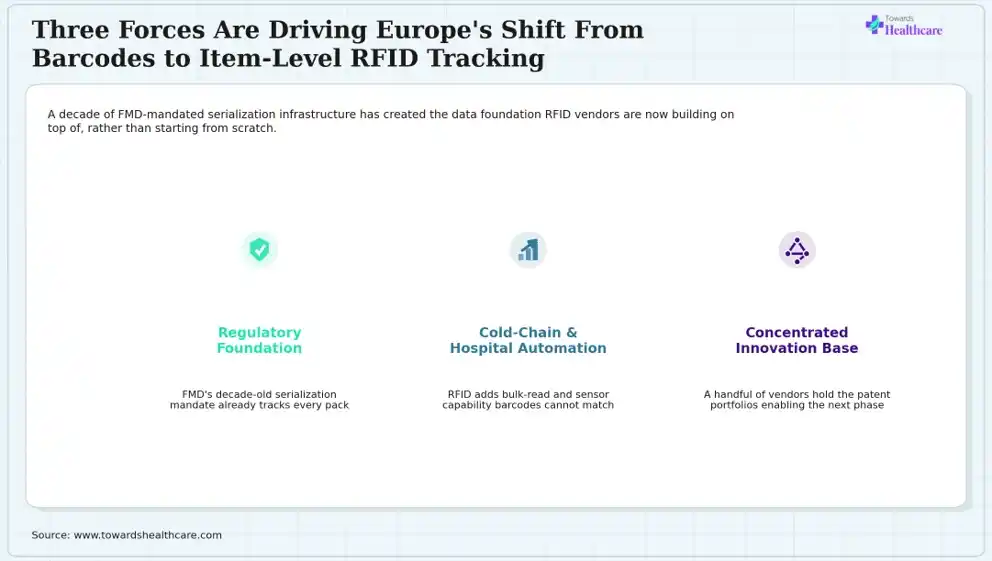
As the market analyst, I interpret that the synthesis infographic illustrates three structural forces shaping Europe's RFID pharma market. The force Regulatory Foundation is FMD's decade-old serialization mandate, which already tracks every prescription pack, while Cold-Chain & Hospital Automation includes RFID, which adds bulk-read and sensor-capability barcodes that cannot be matched, whereas Concentrated Innovation Base focuses on a handful of vendors holding the patent portfolios enabling the next phase of adoption.
Key Insight:
The case for RFID adoption in Europe is expected to be made on operational ROI grounds, including automation, cold-chain visibility, and inventory efficiency, instead of closing the regulatory compliance gap, as Europe consists of already matured and functioning barcode-based compliance infrastructure.
| Indicator | Value |
| Europe RFID in pharmaceuticals revenue, 2023 | $1,146.6 million |
| Europe CAGR, 2024–2030 | 7.9% |
| RFID readers' share of Europe component revenue | 41.93% |
| Europe's share of global market, 2023 | 22.3% |
| Global RFID in pharmaceuticals revenue, 2023 | $5,136.0 million |
| Global market projected revenue, 2030 | $8,696.6 million |
The table highlights RFID in pharmaceuticals revenue growth over the years. In 2023, global RFID in pharmaceuticals revenue was noted to be $5,136.0 million; that of Europe RFID in pharmaceuticals revenue was reported to be $1,146.6 million, whereas Europe's share of the global market contributed 22.3%. RFID readers' share of Europe component revenue accounted for 41.93%. Global market projected revenue by 2030 is expected to be $8,696.6 million, while Europe’s CAGR between 2024 and 2030 is anticipated to show 7.9% growth.
The section covers five segmentation dimensions such as Component, Type, Application, End User, and Region with their market share, CAGR percentages, and recent advancements.
RFID Readers segment held 41.93% of 2023 revenue contributing to the largest and fastest-growing component share across Europe. Furthermore, the largest number of individual units deployed contributed to RFID Tags and RFID Middleware together but held a smaller share of total revenue.
| Country | Recent Advancements | Source |
| Germany |
Expected to be Europe's fastest-growing national market Operates securPharm, which is one of the EU's most mature NMVOs |
_ |
| United Kingdom |
In 2023, contributed to $181.9 million in revenue, with 3.5% of the global market. It is anticipated to reach $324.0 million by 2030 with an 8.6% CAGR |
_ |
| Italy | Aimed to fully integrate with the EU FMD system by 2025, where it has previously operated a parallel national system | IntuitionLabs, 2026 |
| Greece | Focused on fully integrating with the EU FMD system by 2025, where it has previously operated a parallel national system | IntuitionLabs, 2026 |
The table illustrates European countries and their recent advancements. Germany held 26% and is expected to grow with the fastest CAGR of 8.8% during the forecast period due to advanced automation infrastructure accelerating deployment. UK held the second-largest share of 17%, with major pharmaceutical manufacturing and distribution activities supporting RFID. Italy held 9% due to growing pharmaceutical manufacturing creating demand for automated tracking. Greece is expected to expand significantly due to expanding pharmaceutical manufacturing capabilities.
The segment encompasses five application categories such as Drug Track & Tracing Systems, Drug Authentication & Anti-Counterfeiting, Drug Quality Management, Pharmaceutical Inventory Management, and Clinical & Hospital Applications. FMD's own regulatory framework involving serialization for track-and-trace and anti-counterfeiting, along with additional operational use cases such as quality/cold-chain monitoring, inventory, and hospital automation, extending beyond FMD's legal minimum requirements, are driving the growth of this category.
In February 2026 (FY2025) full-year revenue of $361.1 million with a 52.5% GAAP gross margin was reported by Impinj, which was primarily driven by endpoint IC sales.
Source: Towards Healthcare
In November 2025, long-operated parallel national serialization systems of Italy and Greece were obligated to fully integrate with the pan-European EMVS to bring the system closer to comprehensive coverage.
Source: IntuitionLabs, “FMD Explained,” 2026
In January 2025, Gen2X, the newest RAIN RFID platform, with endpoint IC volumes and the M800 chip, was launched by Impinj, making it the company's volume-leading product line.
Source: Towards Healthcare
On January 1, 2025, the EU's Falsified Medicines Directive system was disconnected from Northern Ireland under the Windsor Framework, eliminating the need to scan packs against the EMVS across local pharmacies, hospitals, and wholesalers.
Source: IntuitionLabs, “FMD Explained,” 2026
In March 2024, automated code-scanning alert rates between 0.16% and 1.17% were recorded by seven countries, including Liechtenstein, which was above the system's target rate of under 0.05%, as per the European Medicines Verification Organisation (EMVO).
Source: European Commission, COM(2024) 274 final
FY2024, the CCL segment, including Smartrac RFID inlays, contributed $4.503 billion, and the Checkpoint Systems segment accounted for $986.9 million, which brought CCL Industries' combined sales to $5.49 billion
Source: Towards Healthcare
In 2024, an evaluation report on the Falsified Medicines Directive was published by the European Commission, which confirmed that only 30 cases of falsified medicines were found, while 11 were confirmed in the legal EU supply chain between 2011 and 2024.
Source: European Commission, COM (2024) 274 final
It is the tags/inlays and pharma packaging leader with an active RFID patent portfolio spanning 2017-2025, with products like EP2397975B1, US11966804B2, and US12530557B2.
It is a leader in readers, printers, and identification infrastructure and is listed among leading RFID-in-pharmaceuticals companies, with a strong position in reader and enterprise ID infrastructure.
It is an RFID chip and reader technology leader with FY2025 revenue of $361.1M and has launched the Gen2X platform in 2025.
It is an RFID inlay and label manufacturing platform with FY2024 sales of $4.503B for the CCL segment, while the Checkpoint Systems segment recorded $986.9M.
It is an RFID loss-prevention and inventory management company and is reported within CCL Industries' FY2024 results as a distinct operating segment.
It is an RFID inlay specialist, sustaining its position in high-volume RFID inlay tagging applications.
It is a pharmaceutical-specific labeling and packaging specialist and is responsible for rating “exceptional” for pharmaceutical packaging and anti-counterfeiting use cases.
It is a well-known RFID/NFC semiconductor technology supplier, offering a broad semiconductor and RFID/NFC IP portfolio supporting secure identification.
It offers RFID reader, automation, and identification solutions, with a wide range of industrial and healthcare automation capabilities and cross-functional RFID strength.
It is a regulatory infrastructure operator of the EU hub and oversees the EMVS, where it reported alert-rate data in March 2024.
Aditi is a healthcare IT research expert with strong experience in RFID components, serialization infrastructure, and European regulations markets. She conducted detailed market research, analyzed company data, clinical trends, and industry developments. Based on her comprehensive analysis, the following strategic key takeaways highlight the most important market insights and opportunities.
For Service Providers & CDMOs
For Pharma Companies
For Investors & Corporate Strategy Teams
Based on my assessment, the market is expanding rapidly due to growing demand for RFID readers. The growth in tags/inlays and pharma packaging are also driving the market expansion. I also anticipate that the new collaboration among the major companies can enhance access to their services. I also see strong market opportunities due to evolving European regulations.
Payal Rabde led the primary market research, developed the methodology, analyzed trends, segmentation, competition, forecasts, and strategic opportunities, forming the report's analytical foundation.
Aman was responsible for collecting and validating clinical trial data, research publications, company information, partnerships, and other quantitative datasets, strengthening evidence-based analysis and market estimations.
Aditi reviewed the complete research document, performed quality checks, validated findings, refined content, corrected inconsistencies, and finalized the report, ensuring accuracy, clarity, credibility, and publication-ready quality.
By Component
By Type
By Application
By End User
By Region

















Principal Consultant
Payal Rabde is a Healthcare Market Research Analyst at Towards Healthcare Research & Consulting with 4+ years of experience in pharmaceuticals, biotechnology, medical devices, and life sciences.
Learn more about Payal Rabde

Reviewed By
Aditi Shivarkar is a seasoned professional with over 14 years of experience in healthcare market research. As a content reviewer, Aditi ensures the quality and accuracy of all market insights and data presented by the research team.
Learn more about Aditi Shivarkar









