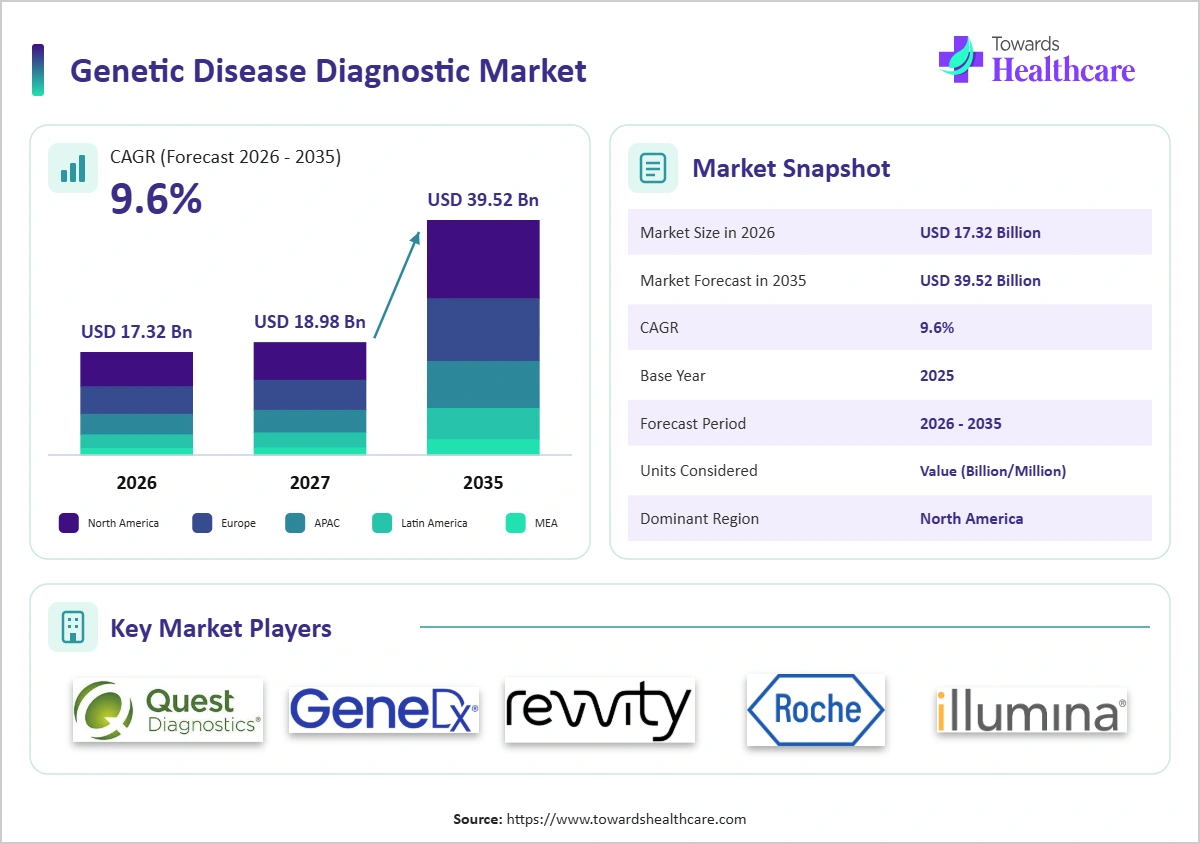
The genetic disease diagnostics market is expected to expand from USD 15.80 billion in 2025 to USD 39.52 billion by 2035. Declining sequencing costs and the growing ability to identify a wider range of genetic conditions are supporting this expansion. Advances in sequencing technologies and the expansion of screening programmes are expected to drive market revenue to USD 24.99 billion by 2030, with the market registering a CAGR of 9.60% from 2026 to 2035.
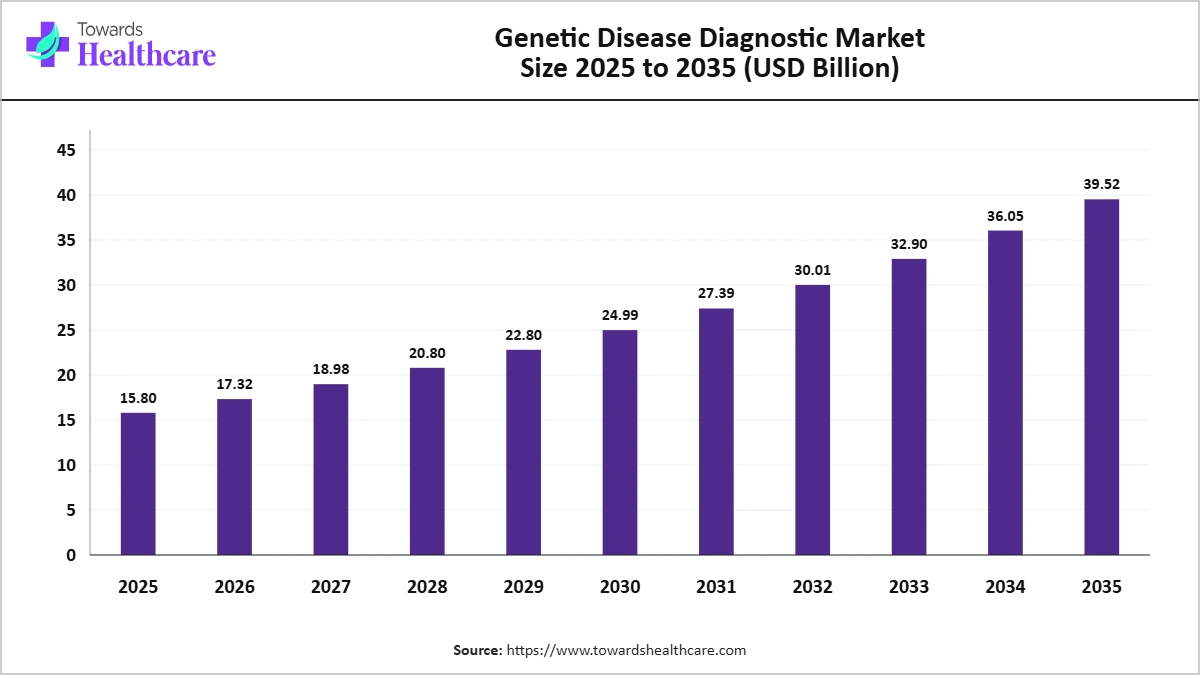
Analyst View: The market estimate is based on genetic testing volumes across different test types and technologies, average reimbursement rates, and company revenue data. These estimates are further cross-checked against laboratory activity and screening programme data to assess market size and growth trends.
The genetic disease diagnostic market is moving from single-gene tests to exome and genome sequencing, with newborn genome screening now being tested.
Falling Costs
Declining sequencing costs are making genetic testing more affordable and accessible. Lower costs encourage wider adoption of advanced technologies, including next-generation sequencing, across diagnostic laboratories and healthcare facilities.
Rare Disease Diagnosis
Genetic testing plays an important role in identifying thousands of rare inherited conditions. Exome sequencing, genome sequencing, and targeted gene panels help clinicians investigate unexplained symptoms and reach more accurate diagnoses.
Prenatal Screening
Growing adoption of non-invasive prenatal testing (NIPT) is supporting demand for genetic screening during pregnancy. These tests help assess the risk of selected chromosomal abnormalities through a maternal blood sample.
Hereditary Cancer Testing
Greater awareness of inherited cancer risks is encouraging wider use of genetic testing for BRCA1 and BRCA2 mutations. These tests help identify individuals with an increased inherited risk of certain cancers and support informed screening and prevention decisions.
Market Drivers - Impact & CAGR Contribution (2026-2035)
| Driver | Impact | ≈ CAGR Contribution | Time Horizon | Key Regions |
| Falling costs | High | +3.75 pp | Short to long term | Global, strongest in North America |
| Rare disease | Medium | +3.16 pp | Medium to long term | Global, fastest uptake in Asia Pacific |
| Prenatal screening | Medium | +2.69 pp | Short to medium term | Global |
| Hereditary cancer | Low | +2.11 pp | Long term | Developed and emerging markets |
Note: Contributions are indicative estimates of each factor's effect on annual growth.
Sources: Expert interviews, secondary sources, Towards Healthcare database and Towards Healthcare analysts.
Falling sequencing costs, rare disease testing, and prenatal screening drive most growth in the genetic disease diagnostic market.
Reimbursement
Coverage for genetic diagnostic tests varies across healthcare systems and insurance providers. Limited or inconsistent reimbursement can increase out-of-pocket expenses, making advanced testing less accessible to some patients.
Genetic Counsellor Shortage
A shortage of trained genetic counsellors and specialists can slow the adoption of genetic testing. Limited access to expert guidance may also make it difficult for patients to understand test results and assess their clinical implications.
Data Privacy Concerns
Genetic testing involves highly personal information, raising concerns about data security, confidentiality, and unauthorised access. These concerns may affect patients' willingness to undergo testing or share their genetic information.
Market Restraints - Impact & Negative CAGR Contribution (2026-2035)
| Restraint | Impact | ≈ Negative CAGR Contribution | Time Horizon | Key Regions |
| Reimbursement | High | -0.95 pp | Short to medium term | Global |
| Counsellor shortage | High | -0.70 pp | Medium term | Price-sensitive and emerging markets |
| Privacy | Medium | -0.46 pp | Short term | North America and other mature markets |
Note: Contributions are indicative estimates of each factor's effect on annual growth.
Sources: Expert interviews, secondary sources, Towards Healthcaredatabase and Towards Healthcare analysts.
Reimbursement is the main restraint, followed by counsellor shortages and privacy concerns.
Newborn Genome Screening
Expanding population-based genomic screening programmes create opportunities for early identification of inherited disorders. Screening newborns can help detect certain genetic conditions before symptoms appear, allowing timely diagnosis and appropriate medical intervention.
Emerging Markets
Growing investment in healthcare infrastructure is encouraging the establishment of new genetic testing laboratories across Asia. Improved access to sequencing technologies, trained professionals, and diagnostic services is expected to support market expansion in emerging economies.
Gene Therapy
The development of gene therapies is increasing the importance of accurate genetic diagnosis before treatment. Genetic testing helps identify eligible patients, understand disease-causing mutations, and support the selection of appropriate targeted therapies.
Note: 2025 is the base year; 2035 shares and CAGRs are forecasts.
Sources: Expert interviews, secondary sources, Towards Healthcare database, and Towards Healthcare analysts.
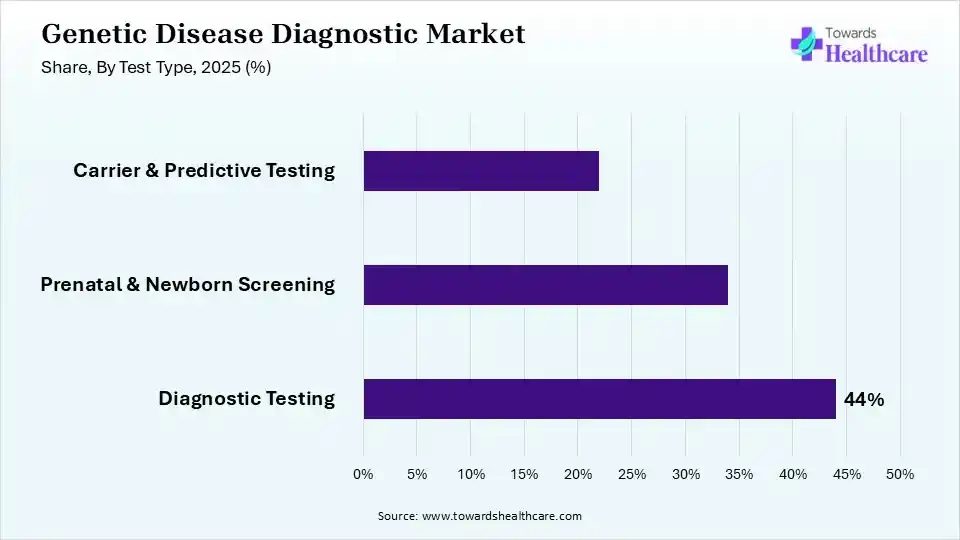
Diagnostic testing accounted for the largest share of the genetic disease diagnostics market at 44.00%. Demand is driven by the need to identify and confirm inherited conditions in children and adults through targeted gene panels, exome sequencing, and whole-genome sequencing.
Prenatal and newborn screening: GeneDx supports Florida's Sunshine Genetics program, which aims to sequence 100,000 newborns, as well as the NIH-funded BEACONS study, which plans to include up to 30,000 newborns. These initiatives highlight the growing role of genomic screening in early disease detection.
Carrier and predictive testing: In July 2026, Labcorp launched its 163-gene Marker panel, offering consumers clinical-grade insights into hereditary health risks. Such tests help individuals understand inherited disease risks and make more informed healthcare decisions.
Monogenic and rare disorders accounted for the largest disease-type share at 40.00% in 2025. Growing use of targeted gene panels, exome sequencing, and genome sequencing is improving the identification of inherited conditions and supporting more accurate diagnoses.
Chromosomal abnormalities conditions are commonly identified through screening and diagnostic methods such as non-invasive prenatal testing (NIPT) and chromosomal microarray analysis.
Hereditary cancer syndromes is rising awareness of inherited cancer risks and wider adoption of BRCA1 and BRCA2 testing are supporting demand in this segment.
Cardiovascular, metabolic & other conditions collectively helps identify inherited risk factors and disease-causing variants, supporting earlier diagnosis and more targeted patient management.
Next-Generation Sequencing (NGS) dominated the technology segment with a 52.00% market share in 2025 and is projected to grow at a CAGR of 10.52%. Its ability to analyse multiple genes simultaneously makes it valuable for diagnosing rare, inherited, and complex genetic conditions.
PCR-based technologies established role in detecting specific genetic variations and mutations supports their continued use in genetic diagnostics.
Microarray technology is widely used to identify chromosomal gains, losses, and other genetic variations, particularly in the evaluation of developmental and inherited conditions.
Cytogenetics & others, including karyotyping and fluorescence in situ hybridization (FISH), along with other methods, collectively held 14.00% of the market. These approaches remain relevant for identifying chromosomal abnormalities and structural genetic changes.
Analyst View: Prenatal and newborn screening, hereditary cancer testing, and NGS are expected to gain market share at a faster pace. Meanwhile, diagnostic testing and monogenic and rare disorders are likely to retain their leading positions as the largest segments of the genetic disease diagnostics market.
Note: 2025 is the base year; 2035 shares and CAGRs are forecasts.
Sources: Expert interviews, secondary sources, Towards Healthcare database, and Towards Healthcare analysts.
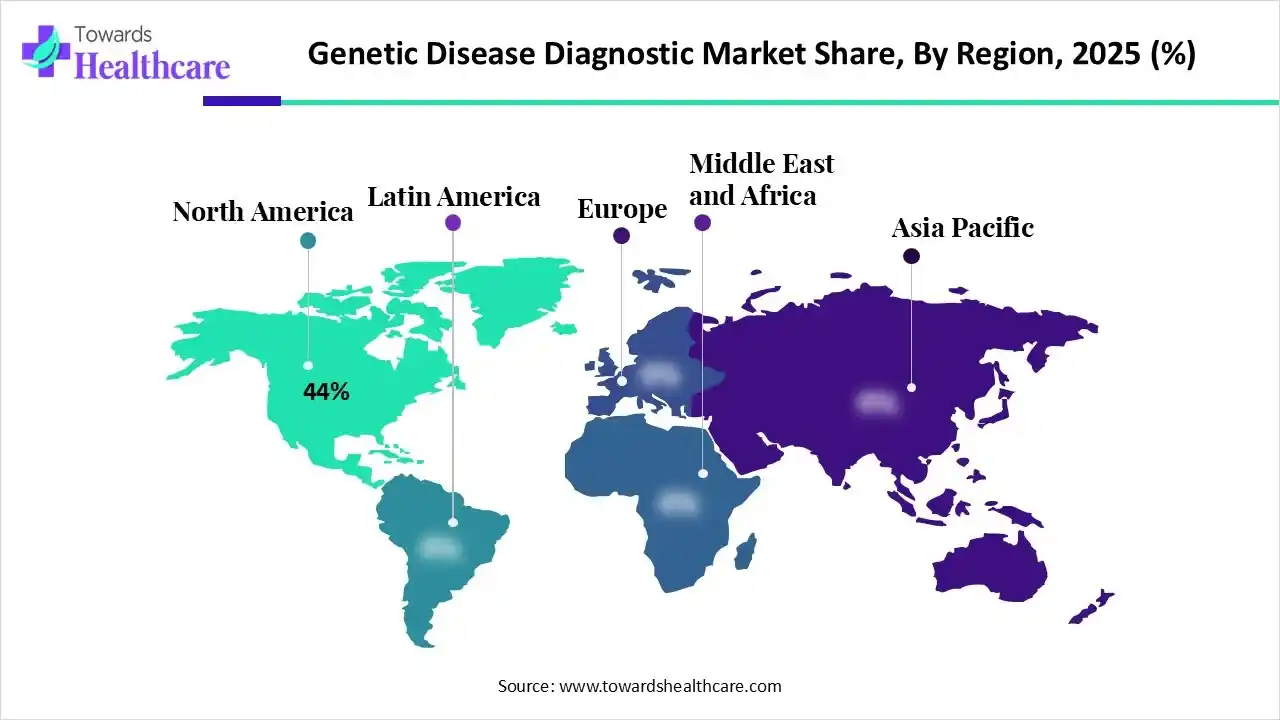
North America leads because exome and prenatal testing are widely covered, while Asia Pacific grows fastest with large NIPT volumes.
North America dominated the genetic disease diagnostics market with a 44.00% share in 2025. Its leading position is supported by widespread access to exome sequencing and non-invasive prenatal testing (NIPT), along with established diagnostic providers such as GeneDx, Labcorp, Quest Diagnostics, and Natera.
Europe region benefits from established genomic healthcare infrastructure and national genomic medicine initiatives across countries such as the U.K., France, and the Nordic nations.
Asia Pacific is rising NIPT volumes in China and the expansion of genomic medicine programmes in Japan are supporting regional demand.
Latin America gradual improvements in healthcare infrastructure and access to genetic testing are creating opportunities for regional market development.
The Middle East and Africa collectively: In Gulf countries, relatively high rates of consanguinity are contributing to demand for premarital and newborn genetic screening.
Analyst View: North America is expected to maintain its leading market position, supported by established testing infrastructure and broad clinical adoption. Asia Pacific, meanwhile, is projected to grow at the fastest pace as screening programmes and genomic medicine initiatives continue to expand.
| Rank | Company Name | 2025 Share (%) | Key Products / Business | Headquarters |
| 1 | Labcorp | 9.00% | Labcorp Genetics and Invitae | United States |
| 2 | Quest Diagnostics | 7.00% | genetic and prenatal testing | United States |
| 3 | Natera | 6.00% | Panorama NIPT and carrier screening | United States |
| 4 | GeneDx | 6.00% | exome and genome testing | United States |
| 5 | Illumina | 6.00% | sequencers and assays | United States |
| 6 | Roche | 5.00% | Harmony prenatal test | Switzerland |
| 7 | BGI Genomics | 4.00% | NIPT and genetic testing | China |
| 8 | Revvity | 4.00% | newborn screening | United States |
| 9 | Myriad Genetics | 4.00% | hereditary cancer and prenatal | United States |
| 10 | Fulgent Genetics | 2.00% | genetic testing services | United States |
Note: Company shares are 2025 estimates.
Sources: Company press releases, expert interviews, secondary sources, Towards Healthcare database and Towards Healthcare analysts.
Labcorp led the genetic disease diagnostics market in 2025, accounting for an estimated 9.00% of total revenue. Quest Diagnostics followed with a 7.00% share, while Natera held 6.00%. Labcorp maintains its market presence through Labcorp Genetics and Invitae, while Quest Diagnostics offers a range of genetic and prenatal testing services. Natera strengthens its position through Panorama NIPT and carrier screening solutions.
Other notable participants include GeneDx, Illumina, Roche, BGI Genomics, Revvity, Myriad Genetics, and Fulgent Genetics. These companies compete across various areas, including exome and genome sequencing, sequencing platforms and assays, Harmony prenatal testing, NIPT, genetic testing, newborn screening, hereditary cancer testing, and prenatal diagnostic services.
The top 10 companies collectively accounted for an estimated 52.97% of market revenue in 2025, while the remaining 47.03% was distributed among numerous hospital-based genetics laboratories and national healthcare services. Despite the presence of established players, the genetic disease diagnostics market remains fragmented. Large U.S.-based laboratories hold significant positions; GeneDx has a strong presence in rare disease exome and genome testing, while Natera and Roche are prominent participants in prenatal screening.
Labcorp, headquartered in the United States, accounted for an estimated 9.00% of the genetic disease diagnostics market in 2025. Its market position is supported by Labcorp Genetics and its Invitae portfolio. The Towards Healthcare Companies Quadrant identifies Labcorp as a Leader.
US-based Quest Diagnostics captured approximately 7.00% of market revenue in 2025. Its competitive presence is driven by a broad portfolio of genetic and prenatal testing services. The company is positioned as a Leader in the Towards Healthcare Companies Quadrant.
Natera held an estimated 6.00% share of the genetic disease diagnostics market in 2025. Its Panorama NIPT and carrier screening solutions support its presence in prenatal and genetic testing. Headquartered in the United States, Natera is classified as a Leader in the Towards Healthcare Companies Quadrant.
GeneDx, based in the United States, represented approximately 6.00% of the market in 2025. Its expertise in exome and genome testing, particularly for rare genetic disorders, strengthens its competitive position.
US-based Illumina accounted for an estimated 6.00% market share in 2025. Its sequencing platforms and associated assays support genetic testing across a wide range of inherited conditions. The company is recognized as a Leader in the Towards Healthcare Companies Quadrant.
Roche, headquartered in Switzerland and part of F. Hoffmann-La Roche Ltd, captured an estimated 5.00% share of the market in 2025. Its Harmony prenatal test supports its presence in non-invasive prenatal screening.
China-based BGI Genomics held approximately 4.00% of market revenue in 2025. Its portfolio of non-invasive prenatal testing (NIPT) and genetic testing solutions supports its position in the market.
Revvity, headquartered in the United States, entered 2026 with an estimated 4.00% market share. Its newborn screening solutions form a key part of its presence in genetic disease diagnostics.
US-based Myriad Genetics accounted for approximately 4.00% of the market in 2025. Its portfolio includes hereditary cancer testing and prenatal genetic testing solutions. The company is recognized as an Innovator in the Towards Healthcare Companies Quadrant.
Fulgent Genetics held an estimated 2.00% share of the genetic disease diagnostics market in 2025, supported by its range of genetic testing services. Headquartered in the United States, the company is positioned as an Innovator in the Towards Healthcare Companies Quadrant.
The genetic disease diagnostic ecosystem links technology providers, testing labs, clinicians & counsellors, public health programs and payers & regulators, with each stage adding value before products reach end users. Labs use next-generation sequencing and genomics databases, and results support precision medicine and gene and cell therapy decisions.
| Ecosystem Stage | Role in the Market | Key Companies |
| Technology Providers | Make sequencers and assays | Illumina, Thermo Fisher, Revvity |
| Testing Labs | Run tests | GeneDx, Labcorp, Natera |
| Clinicians & Counsellors | Order and explain | geneticists, genetic counsellors |
| Public Health Programs | Screen newborns | state programs, NHS |
| Payers & Regulators | Pay and approve | CMS, insurers, FDA |
Sources: Company press releases, expert interviews, secondary sources, Towards Healthcare database, and Towards Healthcare analysts.
Value in the genetic disease diagnostic market flows from upstream material and technology suppliers to manufacturers and service providers, then through distribution partners to end users. Companies that integrate several stages or build long-term relationships with end users capture a larger share of this value.
The Towards Healthcare Companies Quadrant positions key participants in the genetic disease diagnostic market by market strength, reflecting revenue scale, market share and geographic reach, and by innovation and growth strategy, reflecting product portfolio breadth, R&D intensity and partnerships. Positions reflect each company's estimated 2025 share of the genetic disease diagnostic market and our assessment of its product innovation, portfolio breadth and partnerships.
Sources: Company press releases, expert interviews, secondary sources, Towards Healthcare database and Towards Healthcare analysts.
Leaders: Labcorp, Quest Diagnostics, Natera, GeneDx, Illumina and Roche combine high market share with broad portfolios and strong innovation.
Innovators: BGI Genomics, Revvity, Myriad Genetics and Fulgent Genetics bring newer technologies and specialised products.
By Test Type
By Disease Type
By Technology
By Region
The genetic disease diagnostic market was defined as tests that diagnose or screen for inherited and genetic diseases worldwide, including diagnostic testing, prenatal and newborn screening, and carrier and predictive testing, using next-generation sequencing, PCR, microarray, and cytogenetics, for monogenic and rare disorders, chromosomal abnormalities, hereditary cancer syndromes, and cardiovascular, metabolic, and other conditions. The 2025 base year was built bottom-up from demand volumes and average prices by test type, disease type and technology and region, and checked top-down against the market-specific revenues of leading companies and public industry data.
Segment, regional and company values were allocated from test type, disease type and technology and region demand. Key estimates were verified by cross-checking company disclosures, regulatory and industry data, and published third-party estimates, and inputs that could not be reconciled were excluded. All segment, regional and company figures were reconciled to the same 2025 base year, and the 2026-2035 forecast, which applies a constant CAGR from the 2025 base, was recalculated and validated.
Analyst View: We expect the genetic disease diagnostic market to grow strongly. Reimbursement, counsellor shortages and privacy are the main limits.