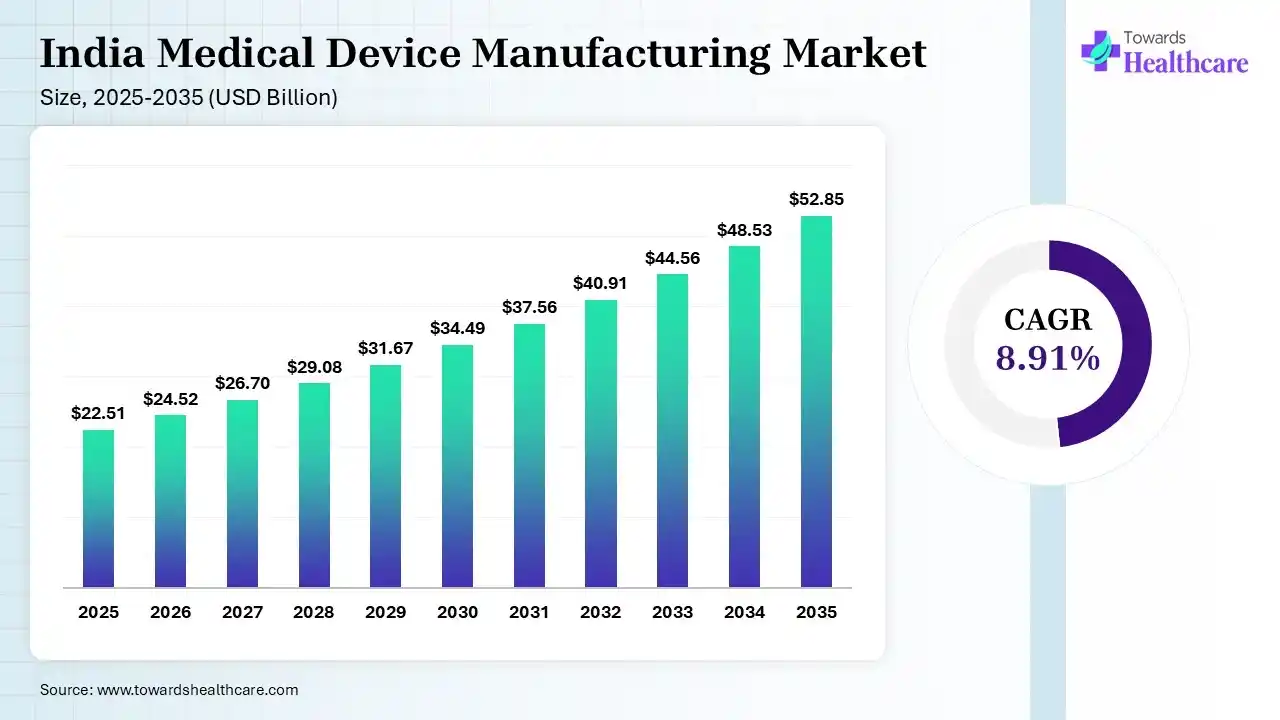
Research indicates strong growth opportunities in the India medical device manufacturing market. The India medical device manufacturing market size was estimated at USD 22.51 billion in 2025 and is predicted to increase from USD 24.52 billion in 2026 to approximately USD 52.85 billion by 2035, expanding at a CAGR of 8.91% from 2026 to 2035. Her analysis highlights that the India medical device manufacturing market is rapidly expanding due to increasing chronic disease burden, rising health awareness, expanding licensed medical device manufacturers, increasing government support, and growing equipment manufacturing services.
India's medical device manufacturing refers to the design, development, testing, and distribution of various devices across the healthcare sector. They encompass diagnostic and imaging equipment, along with consumables and disposables, in-vitro diagnostics, orthopedic and prosthetic devices, cardiovascular devices, surgical instruments, patient monitoring equipment, and specialized devices. They are used across a wide range of applications such as dental, diabetes care, ophthalmic, wound management, and nephrology. Moreover, domestic manufacturing across product type, technology, manufacturing model, application, end user, and distribution channel, along with proprietary market model and independently verified government policy and trade data, are covered in this report.
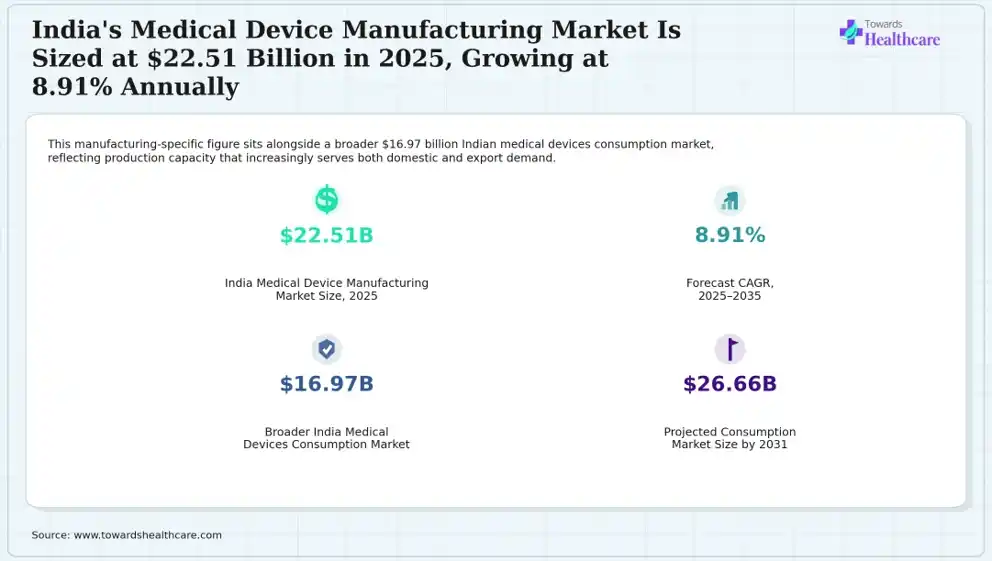
As a market research analyst, I interpret that the infographic stat panel covers market definition and sizing metrics. In 2025, the India medical device manufacturing market size was noted to be $22.51 billion and is expected to show 8.91% CAGR growth from 2025 to 2035. The Broader India medical devices consumption market in 2025 was noted to be $16.97 billion, and the projected consumption market size by 2031 is anticipated to be $26.66 billion.
Key Insight:
India's device manufacturing produces more than domestic hospitals' and clinics' consumption rates, which is a structural indicator that export capacity is central to this market's scale and not just import substitution, as confirmed by the manufacturing market's $22.51 billion size exceeding the $16.97 billion domestic consumption market
Source: Towards Healthcare, India Medical Device Manufacturing Market Model, 2025.
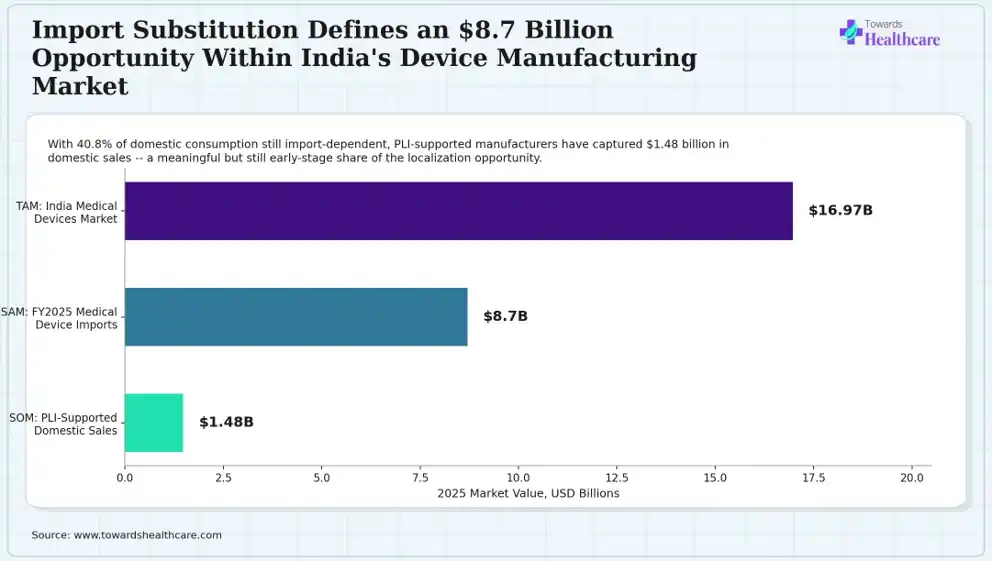
The given horizontal bar chart outlines the India medical device TAM-SAM-SOM value funnel. The TAM, focusing on India medical device market, recorded $16.97 billion in 2025, while SAM, covering FY2025 medical device imports, was noted to be $8.7 billion. On the other hand, SOM, highlighting PLI-supported domestic manufacturing sales, was reported to be $1.48 billion in 2025.
Key Insight:
With 17% penetration of the import-substitution opportunity, due to $1.48 billion in PLI-supported manufacturers and an $8.7 billion import base reflects that even after several years of active government-incentivized localization, substantial headroom will be present.
Source: Towards Healthcare, India Medical Device Manufacturing TAM/SAM/SOM Analysis, 2025, citing Government of India trade and PLI disclosures.
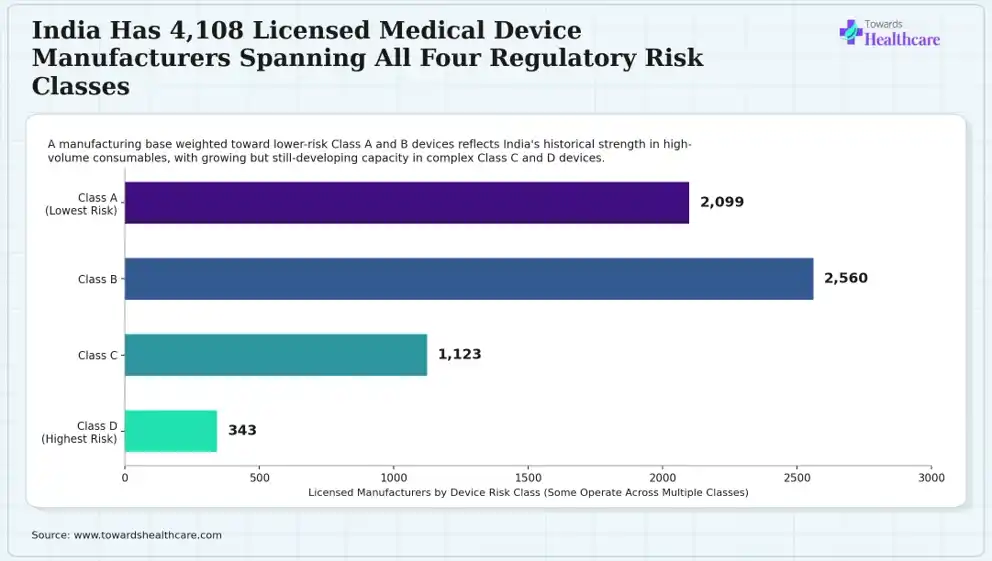
Based on our research, the horizontal bar chart represents India's licensed medical device manufacturers by regulatory risk class. Device risk class A, with the lowest risk, contributed 2,099 licensed manufacturers, while class B held 2,560 licensed manufacturers. The device risk class C recorded a total of 1,123 licensed manufacturers, whereas class D, with the highest risk, is noted to be 343.
Key Insight:
The central challenge PLI incentives are designed to address is that India's manufacturing base is disproportionately concentrated in lower-complexity devices relative to the high-value Class C/D equipment supporting the country's import bill are highlighted by the Class D manufacturers under Class B manufacturers.
Source: Towards Healthcare, India Medical Device Manufacturing SOM Analysis, 2025, citing Government of India manufacturer licensing data.
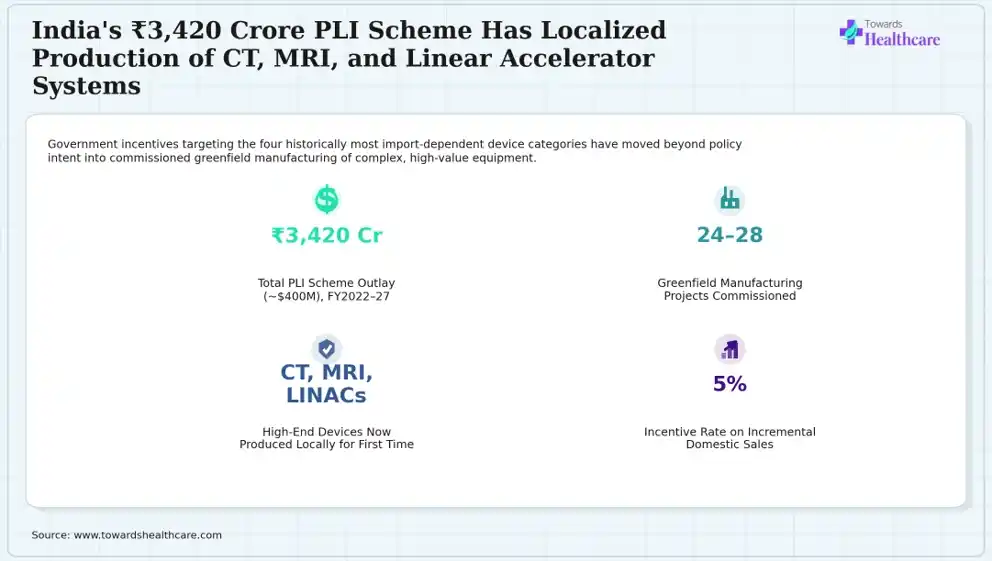
As per the analysis, the infographic stat panel focuses on PLI scheme scope and manufacturing milestones. The total PLI scheme outlay for FY2022-27 is recorded to be ₹3,420 crore, contributing to approximately $400 million, with 24- 28 greenfield manufacturing projects commissioned. High-end devices like CT, MRI, LINACs, mammography, C-arms, and ultrasound are now produced locally for the first time, with a 5% incentive rate on incremental domestic sales.
Key Insight:
Based on the SAM analysis quantified in his report, the scheme's success is directly measurable against the same import categories, that is, cancer/radiotherapy, radiology/imaging, anaesthetics/cardio-respiratory/renal, and implants, which are the four PLI target segments, as they are deliberately selected because they historically accounted for a disproportionate share of India's device imports.
Source: Government of India, Ministry of Chemicals and Fertilizers, PLI Scheme for Medical Devices, Annual Report 2025–26; India Briefing, “India's Medical Devices Sector: PLI Progress & 2026 Outlook.”
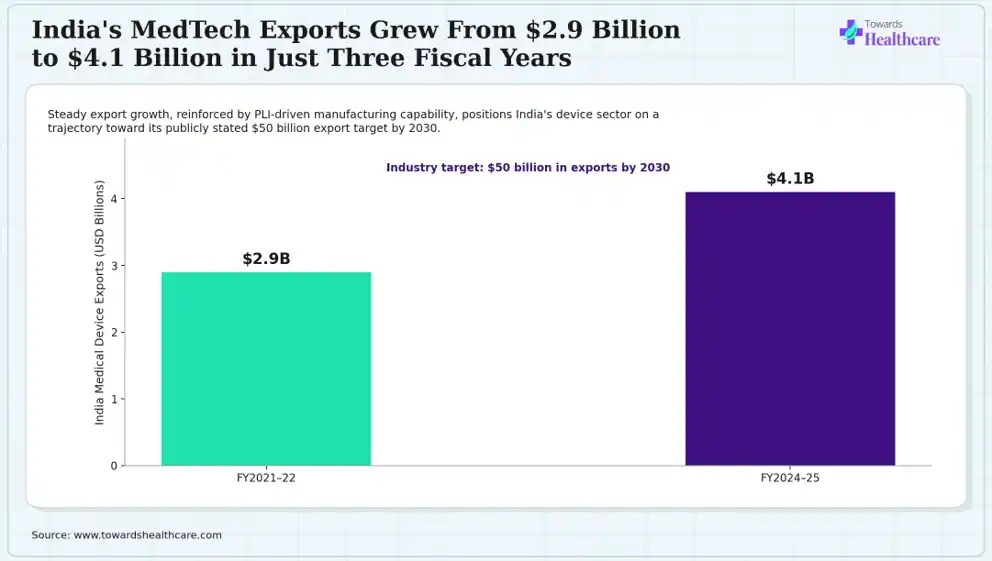
The above-mentioned bar chart compares India's medical device export growth, FY2021-22 and FY2024-25. FY2021-22 recorded $2.9 billion in MedTech exports, and FY2024-25 reported $4.1 billion, while $50 billion in MedTech exports is the industry's target for 2030.
Key Insight:
The exports increased approximately 41% in three fiscal years; however, with the given industry target of $50 billion in 2030, exports are expected to grow more than 12-fold from current levels, reflecting an aspirational long-term ceiling rather than a near-term forecast.
Source: DigitalHealthNews, “India Steps Up MedTech Export Push as Domestic Manufacturing Gains Speed”; Navi Exports, “Medical Device & Pharma Exports from India.”
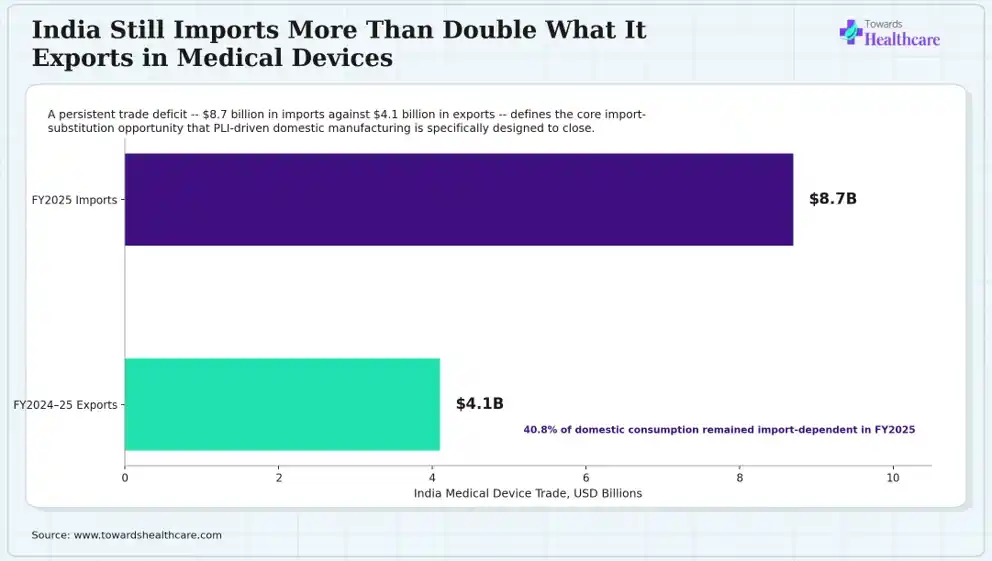
Based on the information gathered by our senior researcher, Aman Singh, the horizontal bar chart illustrates India's medical device trade balance, imports vs. exports. The FY2025 imports are noted to be $8.7 billion, while FY2024-25 exports were recorded to be $4.1 billion, with the import dependency that is share of domestic consumption reported to be 40.8%.
Key Insight:
India's medical device trade deficit remains structurally wide despite active PLI incentives, with imports expanding at roughly 2.1x the level of exports, suggesting that many years of sustained capacity investment will be required to close the gap instead of a near-term policy fix.
Source: Navi Exports, “Medical Device & Pharma Exports from India: Opportunity & Compliance,” citing FY2025 trade data.
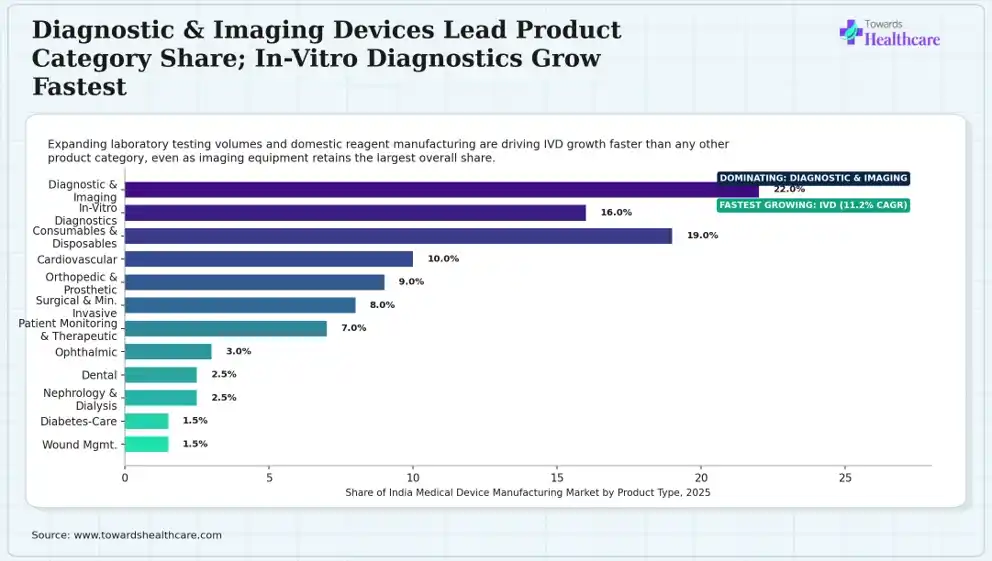
According to the survey conducted, the horizontal bar chart highlights the India medical device manufacturing market share by product type in 2025. The diagnostic & imaging devices segment dominated the market with 22% in 2025, while the consumables & disposables segment held the second-largest share of 19%. The in-vitro diagnostics segment held a 16% share of the market and is expected to expand rapidly with an 11.2% CAGR during the forecast period. The cardiovascular devices segment held 10% in 2025, while orthopedic & prosthetic devices contributed a 9% share of the market. The surgical & minimally invasive devices segment held an 8% share in 2025, whereas the patient monitoring & therapeutic devices segment held a 7% market share. The ophthalmic devices segment accounted for 3%, while the dental devices segment held a 2.5% market share in 2025. The nephrology & dialysis devices segment held a 2.5% share in 2025, while the diabetes-care devices segment contributed 1.5% share, whereas the wound management devices segment accounted for 1.5% market share.
Key Insight:
India's expanding molecular diagnostics capability is aligned with expanding IVD, which suggests that the growing laboratory test volumes are consistent across both the product-type and technology dimensions driving the market growth.
Source: Towards Healthcare, India Medical Device Manufacturing Market Model, 2025.
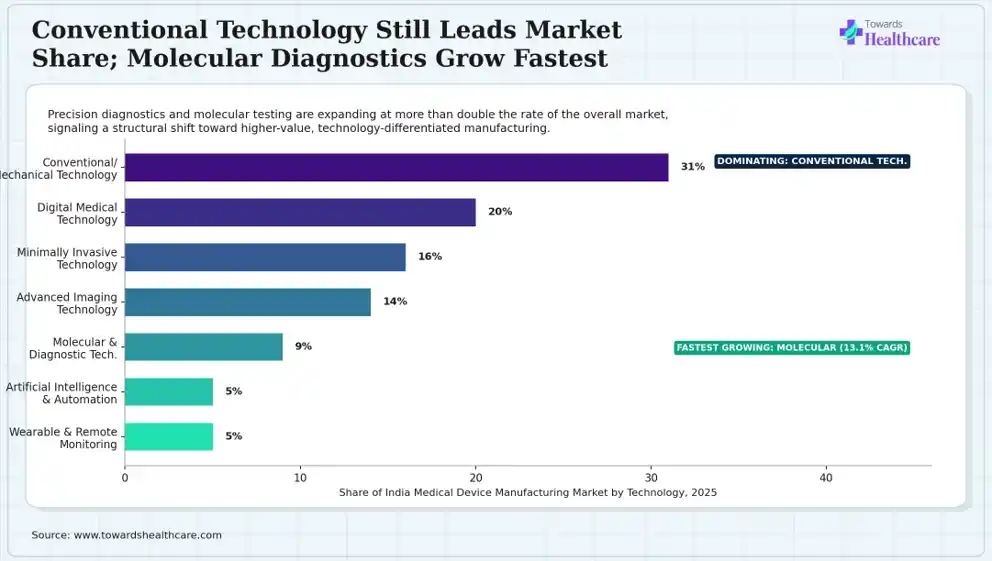
As the market research analyst, I interpret that the horizontal bar chart encompasses India's medical device manufacturing market share by technology in 2025. The conventional/mechanical technology segment dominated the market with a 31% share in 2025 and is expected to grow at a 6.9% CAGR during the predicted period, while the digital medical technology segment held the second-largest share of the market, which is 20%. The minimally invasive technology segment held a 16% share in 2025, whereas the advanced imaging technology segment accounted for a 14% market share. The molecular & diagnostic technology segment contributed to 9.0% market share in 2025 and is anticipated to expand rapidly with 13.1% CAGR during the predicted time. The artificial intelligence & automation segment and the wearable & remote monitoring technology segment contributed to 5%
Key Insight:
India's manufacturing base is experiencing a genuine technology-mix transformation, shifting the country towards higher-value production rather than producing more of the same, which in turn is confirmed by the slowest-growing conventional technology segment with 6.9% CAGR compared to other categories growing at more than 10%.
Source: Towards Healthcare, India Medical Device Manufacturing Market Model, 2025.
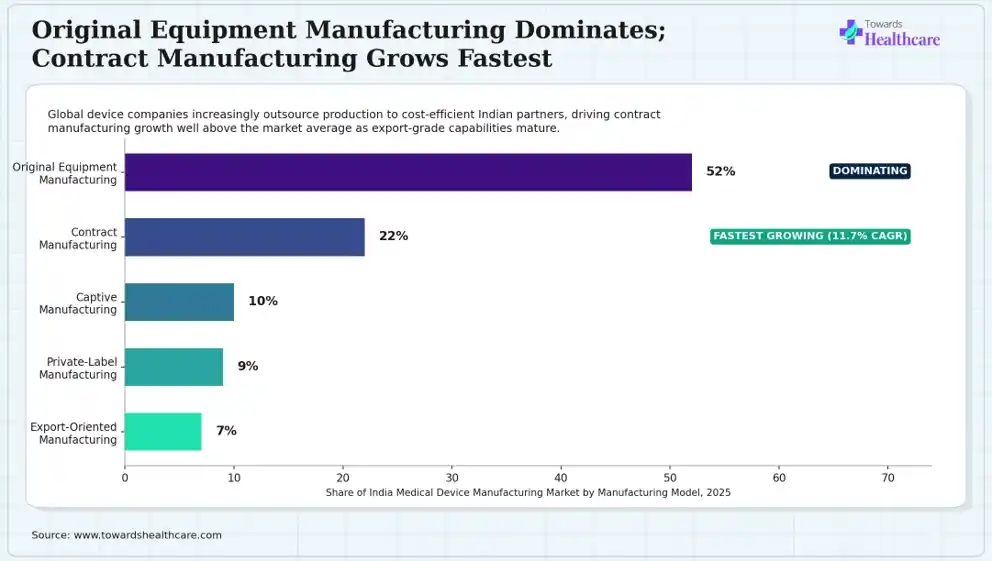
The given horizontal bar chart reflects India's medical device manufacturing market share by manufacturing model, 2025. The original equipment manufacturing segment led the market with 52%, while the contract manufacturing segment held a 22% share in 2025 and is anticipated to show the fastest growth with an 11.7% CAGR in the upcoming years. The captive manufacturing segment contributed to 10% market share in 2025, whereas the private-label manufacturing segment held 9%, while the export-oriented manufacturing segment accounted for 7.0% and is predicted to expand at a 10.9% CAGR during the upcoming years.
Key Insight:
The combination of fast-growing contract manufacturing and export-oriented manufacturing's above-average 10.9% CAGR drives India’s position as a global production base for international device companies, rather than a domestic-demand-focused manufacturing sector.
Source: Towards Healthcare, India Medical Device Manufacturing Market Model, 2025.
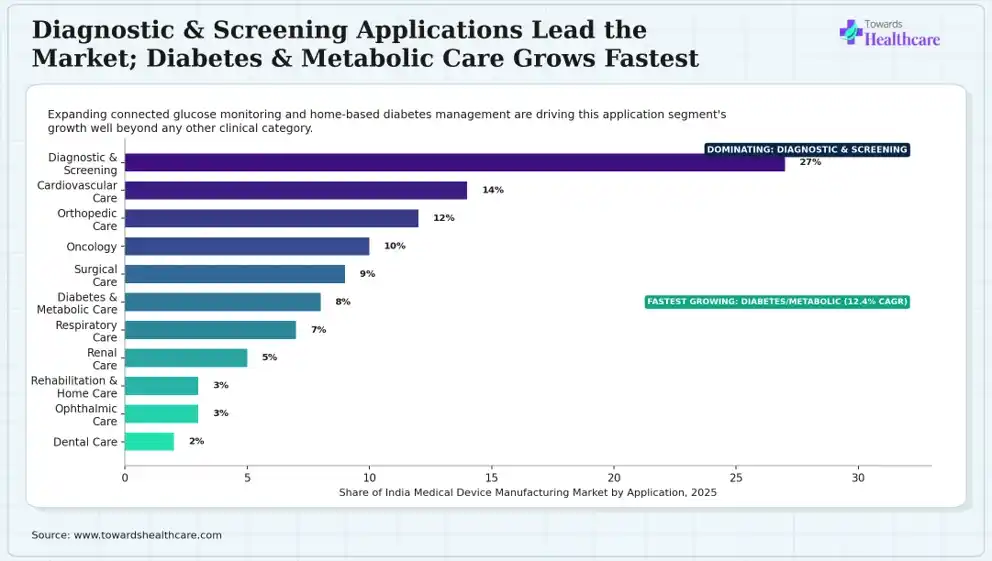
Based on our research, the horizontal bar chart focuses on India's medical device manufacturing market share by application in 2025. The diagnostic & screening segment dominated the market with 27% in 2025, while the cardiovascular care segment held the second-largest share of 14% in 2025. The orthopedic care segment contributed 12% market share in 2025, while the oncology segment accounted for a 10% share of the market. The surgical care segment held 9%, while diabetes & metabolic care held an 8% share and is anticipated to expand rapidly with a 12.4% CAGR during the predicted period. The respiratory care segment held a 7% share in 2025, while the renal care segment accounted for 5% market share, whereas the rehabilitation & home care segment held a 3% share and is anticipated to grow at 11.9% CAGR during the predicted period. The ophthalmic care segment held a 3% share in 2025, while the dental care segment accounted for 3% market share in 2025.
Key Insight:
The rapid expansion of the rehabilitation & home care segment, despite its 3% share, is the second-fastest of any application, driving home-based care and is an emerging growth frontier alongside diabetes management, confirming that both reflect the same broader shift toward decentralized, technology-enabled patient care.
Source: Towards Healthcare, India Medical Device Manufacturing Market Model, 2025.
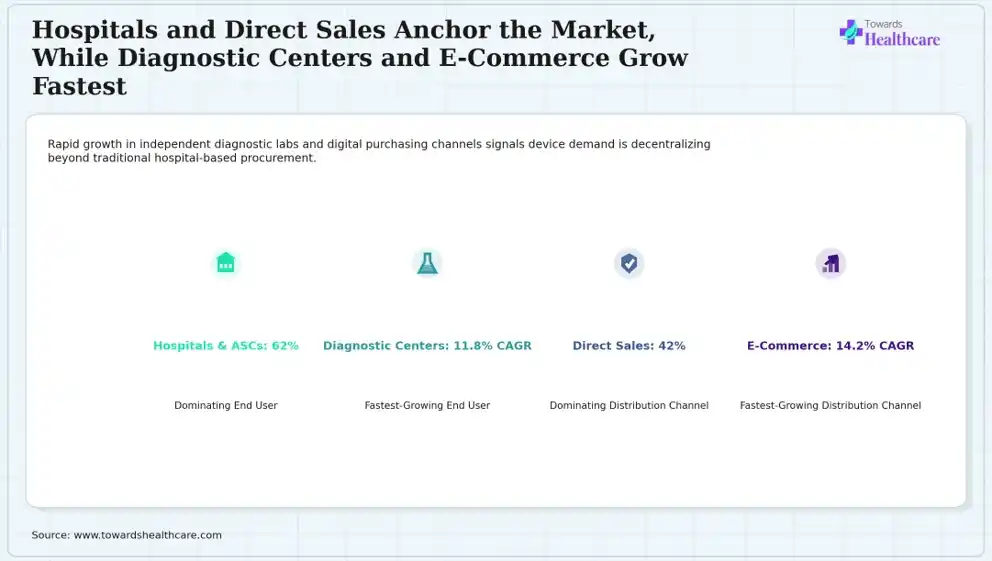
The above-mentioned ecosystem infographic covers end-user and distribution channel segment leaders. By end user, the hospitals & ASCs segment dominated the market with a 62% share in 2025, and the diagnostic centers & laboratories segment is expected to show the fastest growth with an 11.8% CAGR during the forecast period. Similarly, by distribution channel, the segment held the major share of 42% in 2025, while the e-commerce & digital channels segment contributes to the fastest-growing segment with 14.2% CAGR during the upcoming years.
Key Insight:
The growing online purchasing of home-care devices directly is driving a channel shift in this market with an institution-dominated purchasing structure, which is confirmed by the rapidly expanding e-commerce segment in the distribution channel across this entire segmentation.
Source: Towards Healthcare, India Medical Device Manufacturing Market Model, 2025.
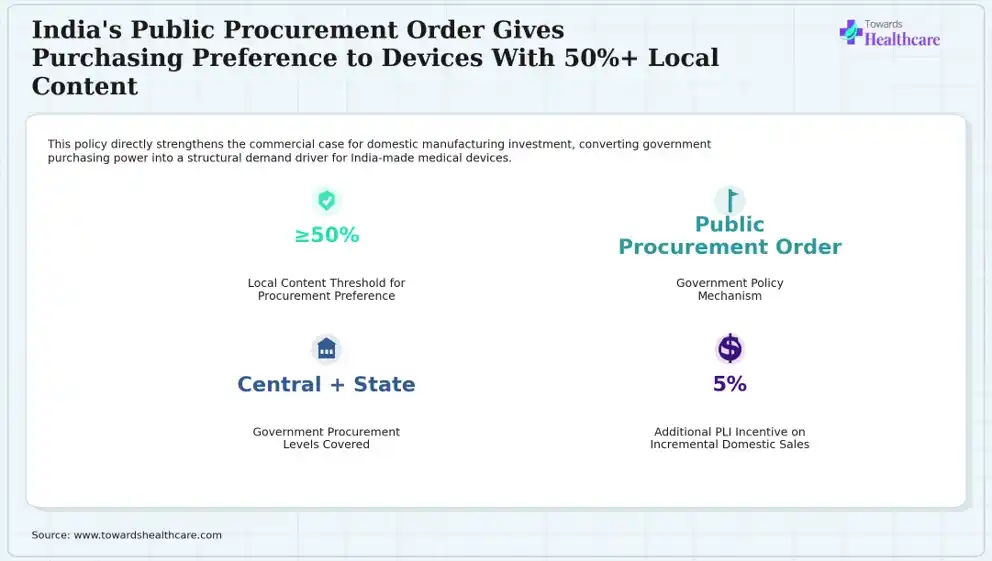
As per the analysis conducted, the infographic stat panel focuses on government procurement policy metrics. Under the public procurement order, the government policy mechanism highlights that the local content threshold for procurement preference was recorded to be ≥50%, with central and state procurement levels covered, along with a 5% additional PLI incentive on incremental domestic sales.
Key Insight:
More than 50% local-content procurement preference with a 5% PLI sales incentive indicates domestic manufacturers are benefiting from two independent, compounding government policy mechanisms driving a stronger structural advantage over other policies.
Source: Government of India, Public Procurement (Preference to Make in India) Order, as cited in Towards Healthcare Buyer Intelligence, 2025.
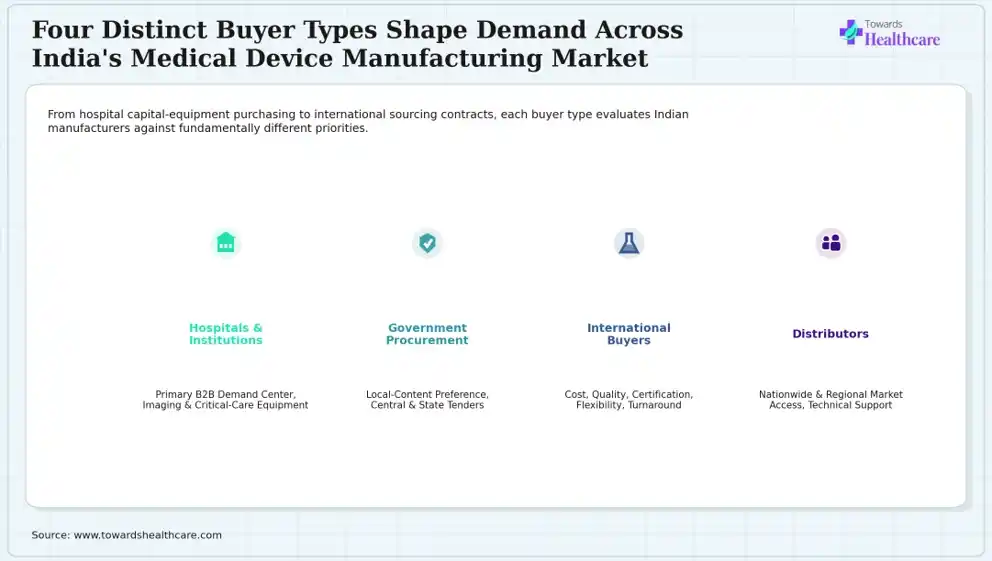
Based on the information gathered by our senior researcher, Aman Singh, the ecosystem infographic covers four primary India medical device manufacturing buyer segments. The hospitals & institutions prioritize primary B2B demand centers for imaging, critical-care, and surgical equipment, while government procurement focuses on local-content preference and central and state tenders. International buyers revolve around cost, quality, certification, flexibility, and turnaround, and distributors show interest in nationwide and regional market access and technical support.
Key Insight:
Hospitals contribute to a dominant B2B demand center, while government procurement drives additional structural preference, which creates a fundamentally different buyer landscape for domestic manufacturers compared to export-focused manufacturers, which compete primarily on international buyer criteria.
Source: Towards Healthcare, India Medical Device Manufacturing Buyer Intelligence, 2025.
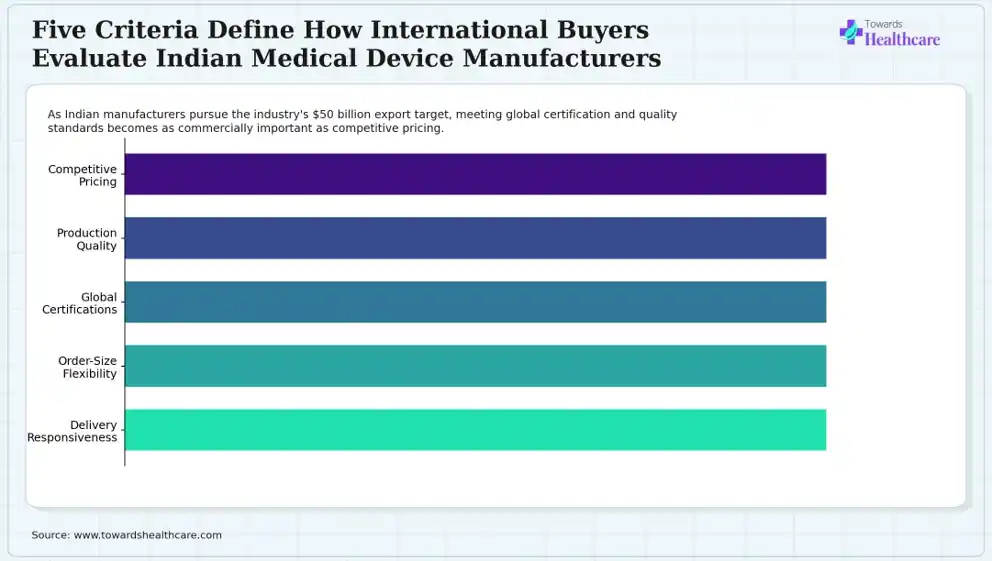
As per the survey conducted by our senior researcher, Aman Singh, the horizontal list chart represents five international buyer evaluation criteria for Indian manufacturers. The competitive pricing focuses on cost efficiency relative to alternative global sourcing locations, while production quality revolves around consistency and reliability of manufactured output. The global certifications focus on FDA, CE, and other international regulatory compliance, while order-size flexibility highlights the ability to accommodate varying international order volumes. Furthermore, delivery responsiveness outlines reliable, timely fulfillment of international orders.
Key Insight:
Formal regulatory compliance acts as its own commercial gatekeeper for manufacturers across India pursuing international buyers, independent of actual product quality, which is represented by global certifications appearing as a distinct, named criterion, separate from production quality generally.
Source: Towards Healthcare, India Medical Device Manufacturing Buyer Intelligence, 2025.
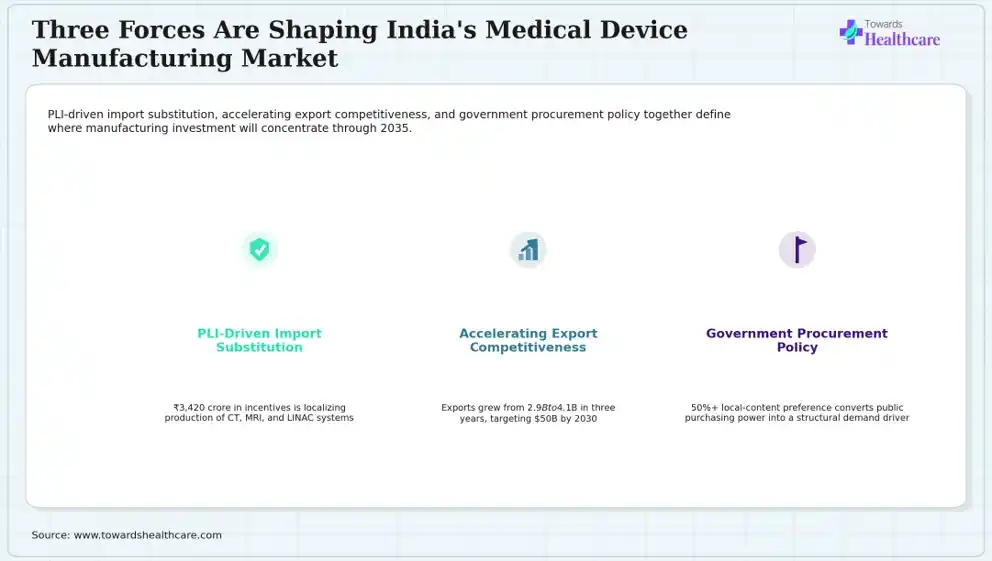
As the market research analyst, I interpret that the synthesis infographic encompasses three structural forces shaping India's medical device manufacturing competition. The first force is PLI-driven import substitution, which highlights ₹3,420 crore in incentives for localizing production of CT, MRI, and LINAC systems. The second force is represented by accelerating export competitiveness, which covers expansion of exports in three years from $2.9B to $4.1B and a $50B target by 2030. The government procurement policy is the third force, encompassing more than 50% local-content preference, which converts public purchasing power into a structural demand driver.
Key Insight:
Different points in the same value chain are covered by these three forces simultaneously, where PLI incentivizes production investment, procurement policy guarantees domestic demand for that production, while export competitiveness covers the resulting capacity toward international markets, which makes these three forces a coordinated policy architecture instead of three independent initiatives.
In February 2023, a total financial outlay of ₹3,420 crore, operational through FY2027-28, focused on cancer/radiotherapy, radiology/imaging, anaesthetics/cardio-respiratory/renal, and implant devices was launched along with the Production Linked Incentive (PLI) Scheme for promoting domestic manufacturing of medical devices.
Source: Government of India, Ministry of Chemicals and Fertilizers
Through FY2024-25, the commission was granted for 24-28 greenfield manufacturing projects under the PLI scheme, along with commercial production for linear accelerators, CT and MRI machines, C-arms, heart valves, stents, ultrasound systems, and mammography systems.
Source: Operon Strategist; India Briefing, 2025-2026
From FY2021-22 to FY2024-25, significant support from the National Medical Devices Policy 2023 and PLI-driven manufacturing capability was provided, which promoted India's medical device exports from $2.9 billion to $4.1 billion.
Source: DigitalHealthNews, citing Government of India trade data
In November 2024, the Scheme for Strengthening the Medical Device Industry (SMDI), focusing on component manufacturing, clinical studies, skills development, and common testing facilities, was launched with a ₹500 crore outlay.
Source: DigitalHealthNews, 2025
From FY2021-22 to FY2025-26, the boost in global investor confidence in India as an emerging medical device manufacturing hub was reflected in the growth in foreign direct investment, which reached ₹17,201 crore in India's MedTech sector.
Source: Operon Strategist, “Government Releases Medical Device Scheme Data,” 2025
Our senior researcher, Aditi Shivarkar, conducted detailed market research, analyzed company data, clinical trends, and industry developments. Based on her comprehensive analysis, the following strategic key takeaways highlight the most important market insights and opportunities.
For Service Providers & CDMOs
For Pharma & Biotech Companies
For Investors & Corporate Strategy Teams
Based on the assessment, the market is significantly expanding due to growing disease burden. The growth in manufacturing capabilities and expanding MedTech exports also drives the demand for medical device manufacturing services. The new collaboration among the major companies can enhance access to their services. The strong growth in remote monitoring and minimally invasive technologies, are also creating new market opportunities.
Payal Rabde, Senior Research Analyst, led the primary market research, developed the methodology, analyzed trends, segmentation, competition, forecasts, and strategic opportunities, forming the report's analytical foundation.
Aman Singh, senior researcher, was responsible for collecting and validating clinical trial data, research publications, company information, partnerships, and other quantitative datasets, strengthening evidence-based analysis and market estimations.
Aditi Shivarkar, senior researcher, reviewed the complete research document, performed quality checks, validated findings, refined content, corrected inconsistencies, and finalized the report, ensuring accuracy, clarity, credibility, and publication-ready quality.
By Product Type
By Technology
By Manufacturing Model
By Application
By End User
By Distribution Channel

















Principal Consultant
Payal Rabde is a Healthcare Market Research Analyst at Towards Healthcare Research & Consulting with 4+ years of experience in pharmaceuticals, biotechnology, medical devices, and life sciences.
Learn more about Payal Rabde

Reviewed By
Aditi Shivarkar is a seasoned professional with over 14 years of experience in healthcare market research. As a content reviewer, Aditi ensures the quality and accuracy of all market insights and data presented by the research team.
Learn more about Aditi Shivarkar