Pipeline Programs

CGT Companies Tracked

Manufacturing Facilities


The global intelligent infusion management system market size was estimated at USD 1.15 billion in 2025 and is predicted to increase from USD 1.23 billion in 2026 to approximately USD 2.29 billion by 2035, expanding at a CAGR of 7.14% from 2026 to 2035.
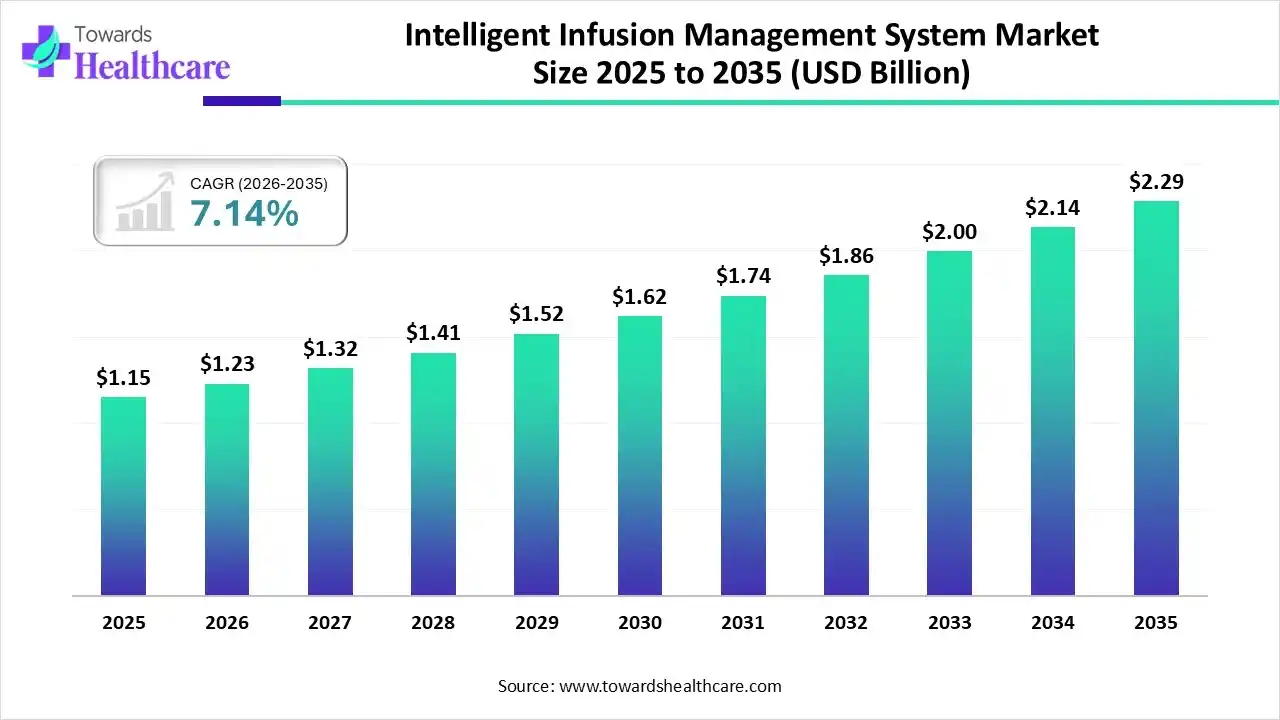
The intelligent infusion management system market is growing as it offers real-time monitoring and alert functions. The system simplifies the timely identification and management of infusion irregularities, improving the quality of infusion management for patients, safeguarding infusion safety, and enhancing patient satisfaction.
The intelligent infusion management system market is increasing because this system incorporates IoT technology, software, and sensors to modernize intravenous (IV) therapy, improving safety, effectiveness, and patient care. Intelligent infusion monitoring system proves substantial clinical strength via automating the monitoring technology. The intelligent infusion monitoring system comprises four parts: mobile infusion devices, infusion client, infusion server, and HIS. A smart infusion system is intended to minimize programming challenges and the associated risk of patient injury. Each facility provides a customized infusion. Smart IV infusion dosing system for identification, signalling, and monitoring of liquid in an IV bottle at a remote location.
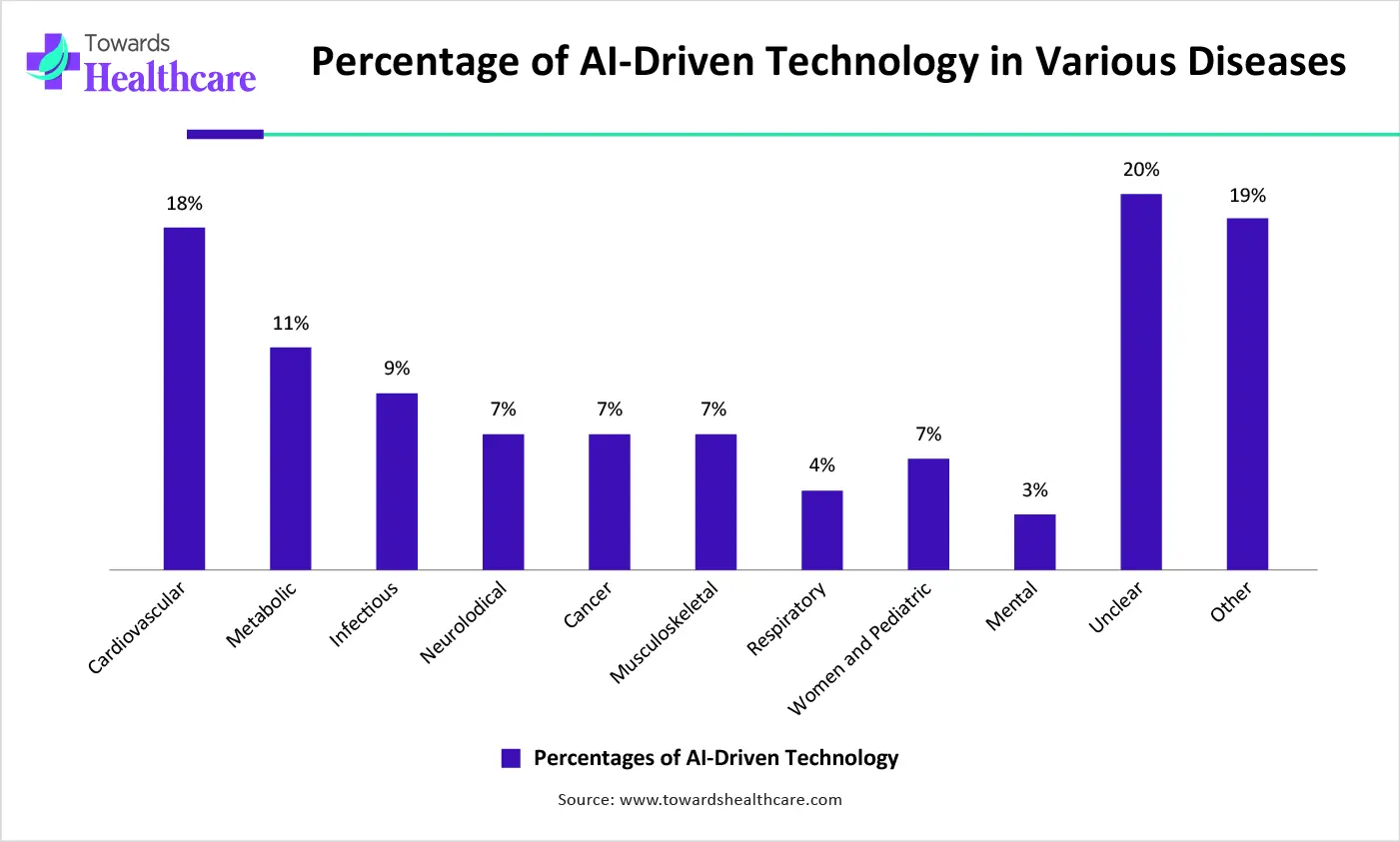
Integration of AI-driven technology in intelligent infusion management systems drives the growth of the market, as AI-based infusion therapy points toward better automation, targeted care, and enhanced operational effectiveness. AI-driven novelties, like smart infusion pumps with real-time monitoring, predictive analytics for maintenance, and remote management via telehealth, are altering traditional infusion practices and setting novel standards for patient precision and safety.
For Instance,
Smart Infusion Pumps:
Smart infusion pumps drive harmless, precision medication delivery and workflow alteration in modern medical care. It showed an efficient impact on the care of patients, the reduction of IV medication challenges, and the creation of safer work settings for nurses.
Focus on Cybersecurity and Safety:
Aligning cybersecurity and patient safety programmes not only supports major organization protect patient safety and secrecy, but also ensures continuity of operative delivery of high-quality care by mitigating disruptions that can have a negative impact on healthcare results.
EMR/EHR Linkage:
EMR integration supports continuity of care, improves partnership across care teams, and offers data-driven insights that directly impact patient outcomes.
| Key Elements | Scope |
| Market Size in 2026 | USD 1.23 Billion |
| Projected Market Size in 2035 | USD 2.29 Billion |
| CAGR (2026 - 2035) | 7.14% |
| Leading Region | North America by 39.5% |
| Key Applications | Intravenous drug delivery, chemotherapy, critical care, anesthesia, neonatal care, pain management, diabetes management, medication safety, remote infusion monitoring |
| Primary End Users | Hospitals, Ambulatory Surgery Centers (ASCs), Specialty Clinics, Cancer Centers, Home Infusion Providers, Long-Term Care Facilities |
| Key Challenges | High implementation costs, interoperability issues, cybersecurity concerns, software validation requirements, hospital budget constraints, legacy infrastructure integration |
| Measurable Values | USD Millions/Units/Volume |
| Market Segmentation | By Component, By Product Type, By Technology, By Application, Regional Outlook |
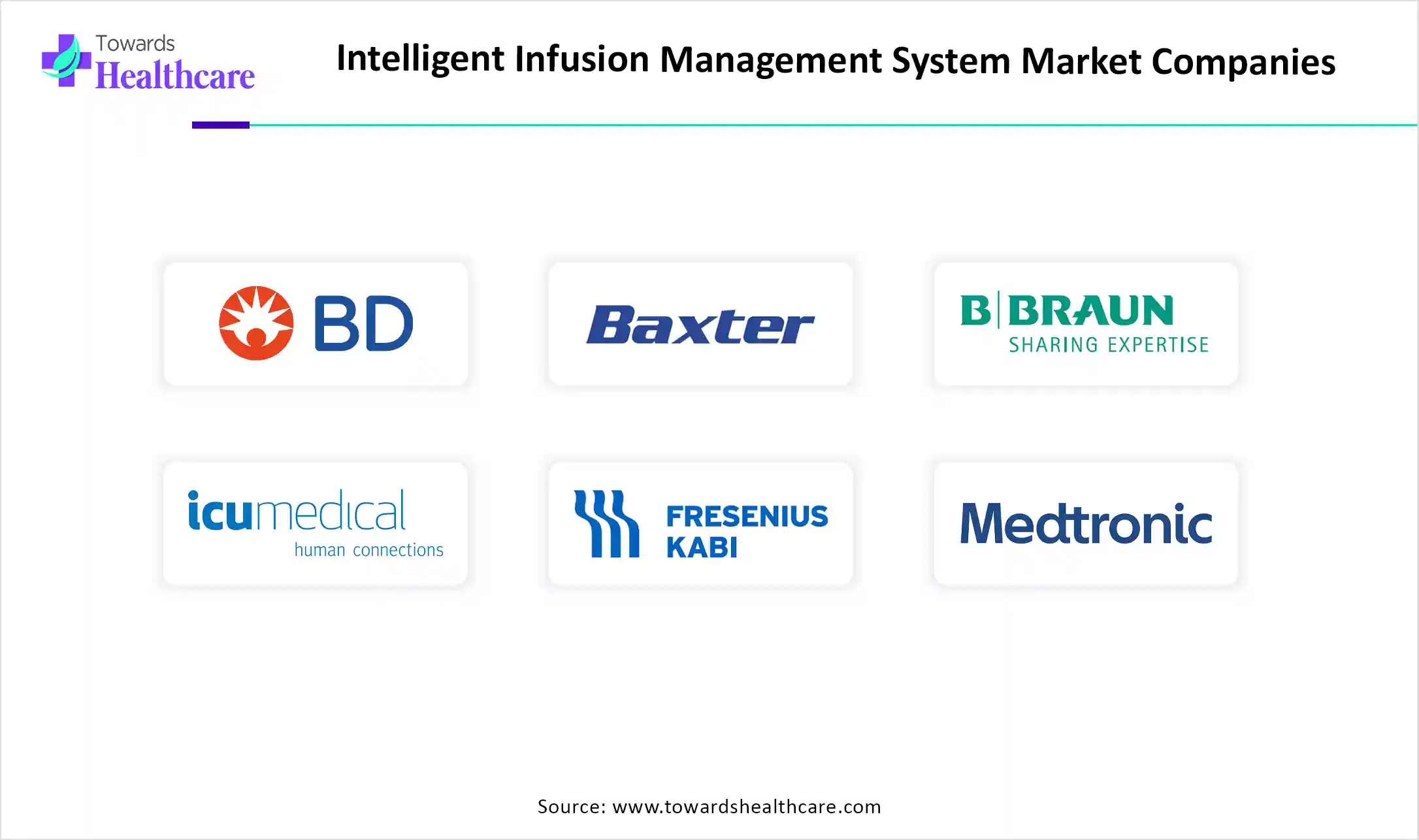
| Top Key Players | Becton, Dickinson and Company, Baxter International Inc., B. Braun SE, ICU Medical, Inc., Fresenius Kabi AG, Medtronic plc |
Which Component Led the Intelligent Infusion Management System Market in 2025?
In 2025, the hardware segment held the dominant market share with approximately 74% share in 2025, as it includes the physical devices and electronic components applied to precisely deliver and monitor fluids. It is usually categorized in the core pump instruments, electronic control units, sensors, and clinical peripherals.
Software
Whereas the software segment is the fastest-growing in the market, as a software platform that supports hospitals streamline and enhancing medication delivery. Infusion software is significant for short-term anesthesia and post-operative pain recovery. The software schedules infusions, sets reminders, and automates transfer sequences, reducing physical work. It provides a combination of real-time monitoring, retrospective reporting, and analysis solutions.
Why did the Volumetric Infusion Pumps Segment Dominate the Market in 2025?
The volumetric infusion pumps segment is dominant and fastest-growing in tissue regenerative therapy, with approximately 39% share in 2025, as this pump has an advantage to deliver a high volume of fluid at an exact administered rate, where other pumps may have restricted or no use at all. These pumps ensure precise fluid delivery, which is significant for administering high-potency drugs and lowering the challenges related to manual, gravity-based, or over/under-dosing.
Syringe Infusion Pumps
Whereas the syringe infusion pumps segment is the fastest-growing in the market, as syringe pumps include lessening volume challenges in instrumental analytics for drug delivery, sample delivery, and other microanalyses, like microfluidics, high-performance liquid chromatography (HPLC), liquid chromatography-mass spectrometry (LC-MS), and mass spectrometry (MS). They are applicable in research sectors that use correct dosing, reagents, and add miniature traces of chemicals during an ongoing trial.
Why did the Wireless/Connected Systems Segment Dominate the Market in 2025?
The wireless/connected systems segment is dominant in the intelligent infusion management system market with approximately 58% share in 2025, as wireless system improves efficiency and partnership. Wireless technology is effective and also affordable. This technology is becoming a handy device for the mobile workforce. Wireless healthcare devices are transforming hospitals, enhancing patient care, and improving operational effectiveness.
Wired/Legacy Systems
Whereas the wired/legacy systems segment is the fastest-growing in the market, as legacy systems are often intensely embedded in clinical workflows. Wired pumps are not susceptible to low battery alarms or power disappointments that interrupt therapy during critical wireless-only transport.
Why did the Oncology Segment Dominate the Market in 2025?
The oncology segment is dominant in the intelligent infusion management system market with approximately 42% share in 2025. In oncology, these systems play a significant role in delivering chemotherapy, immunotherapy, and supportive care medications. The precise control afforded by infusion pumps ensures ideal drug delivery, lessening toxicity while increasing therapeutic effectiveness. Infusion therapy devices are lifelines, delivering significant fluids, drugs, and nutrition to patients in intensive care units.
Diabetes Management
Whereas the diabetes management segment is the fastest-growing in the market, as applications of these technologies are to enhance glycemic control, reduce the risk of hypoglycemia, lessen the burden of existing with diabetes, and enhance quality of life. By monitoring glucose trends in real-time, the system automatically lowers insulin delivery when blood sugar drops, stopping severe hypoglycemic incidents.
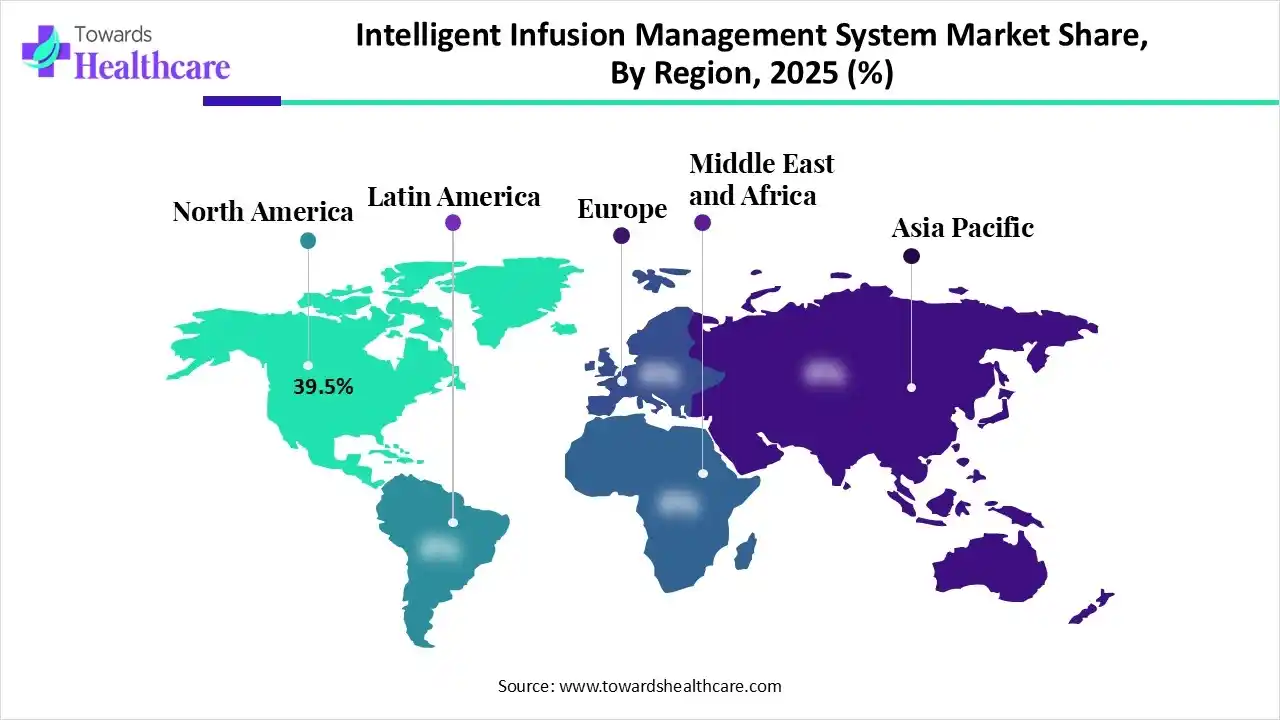
In 2025, North America dominated the intelligent infusion management system market with approximately 39.5% share, as the prevalence of chronic conditions has increased steadily, such as 60% of North Americans living with at least one long term disease, which drives the demand for intelligent infusion management systems. North America’s health care landscape is experiencing an advanced transformation, which contributes to the growth of the market.
For Instance,
U.S. Market Trends
The US medical care system is approaching a significant transformation. With more than $5 trillion in yearly investments and costs increasing at unsustainable rates, leaders in the industry are being forced to rethink long-held assumptions about how care is delivered, sponsored, and experienced. Smart infusion pump interoperability with electronic health records (EHRs) has the possible to reduce intravenous (IV) drug administration challenges.
Canada Market Trends
The infusion management systems market in Canada has been steadily rising as more hospitals implement intelligent infusion management systems to reduce medicine errors, improve workflow efficiency, and enhance clinical decision-making. The growth of Canada’s market for intelligent infusion management systems can be attributed to the increasing adoption of smart health technologies, high rates of chronic disease, and emphasis on patient safety.
Mexico Market Trends
In Mexico, the market for intelligent infusion management systems is also steadily increasing as hospitals continue to invest in digital technologies to improve their infrastructure. Some of the primary drivers of the increased demand for intelligent infusion management systems in Mexico are due to the need for more accurate medication delivery and improved patient care, so many hospitals are adopting these technologies.
Asia Pacific is expected to see rapid growth in the intelligent infusion management system market, driven by growing demand in the different applications, including chemotherapy/oncology, diabetes management, and gastroenterology. Rapid population ageing and increased rates of chronic disease necessitate long-term, incessant medication, which is better achieved with portable, at-home services, which contributes the growth of the market.
India Market Trends
India's healthcare system is experiencing a digital renovation, driven by regulatory initiatives, policy reforms, and technological development. An AI-driven system is renovating the Indian medical care system by allowing early disease detection, targeted treatment, and operational effectiveness. India's ground-breaking medical care strategy provides a model to other low- and middle-income countries, starting with revolutionary uses of AI.
Japan Market Trends
The intelligent infusion management systems market in Japan has been driven by Japan’s advanced healthcare system, the large number of connected devices in the country, and the quickly aging population in the country. As such, healthcare institutions are adopting intelligent infusion management technologies to improve medication administration as well as enhance the quality of patient care.
China Market Trends
China has one of the fastest-growing markets globally for intelligent infusion management systems due to the significant expansion of healthcare infrastructure in the country, increased uptake of digital health technologies by institutions, and increased demand for sophisticated patient monitoring technologies. Government initiatives to modernize the country’s healthcare system have further accelerated the growth of this market.
Europe is significantly growing in the intelligent infusion management system market, due to an increasing aging population, a noteworthy occurrence of chronic illnesses, and a growing requirement for classy medical care options. Strong spending in research and development, specifically for AI-driven, IoT-allows pumps that provide real-time monitoring and integration with Electronic Health Records (EHRs), has paved Europe's position, which drives the growth of the market.
Germany Market Trends
Intelligent infusion management systems (IIMs) in Germany are projected to continue growing as many hospitals have already implemented advanced technology infrastructures. High healthcare expenditures, coupled with increased use of connected devices, enable IIMs to reduce medication errors and improve clinical efficiency.
France Market Trends
France is seeing increased growth in intelligent infusion management systems due to hospitals upgrading or investing in their own technical capabilities to provide digital healthcare and advanced medication management technologies. The increasing focus on automated infusion monitoring systems and a greater focus on enhancing clinical efficiency are key drivers for this growth.
UK Market Trends
In the UK, the intelligent infusion management system (IIM) market is large, as digitally enabled healthcare continues to evolve and patient safety is at the forefront of all hospital-based operations. The growth of this market is being accelerated by the integration of infusion devices with electronic health record systems.
| Ecosystem Segment | Key Participants | Role |
| Technology Providers | Baxter International, Becton Dickinson (BD), ICU Medical, Fresenius Kabi, B. Braun | Develop smart infusion technologies, embedded software, connectivity, and safety algorithms. |
| Product Manufacturers | Baxter, BD, B. Braun, ICU Medical, Fresenius Kabi, Smiths Medical | Manufacture infusion pumps, syringe pumps, volumetric pumps, infusion sets, and related accessories. |
| Service Providers | GE HealthCare, Philips, IQVIA, Agiliti Health | Deployment, maintenance, integration, fleet management, clinical engineering, consulting services. |
| Platform Providers | Epic Systems, Oracle Health (Cerner), Philips, Capsule Technologies (BD) | Enable interoperability between infusion devices and hospital information systems. |
| Software Vendors | Baxter (Dose IQ), BD (Alaris Guardrails), ICU Medical (MedNet), Epic Systems | Drug libraries, analytics, infusion management dashboards, medication safety software. |
| Research Institutions | Mayo Clinic, Johns Hopkins University, Cleveland Clinic, ECRI | Clinical validation, medication safety research, smart pump optimization studies. |
| End-User Industries | Hospitals, Oncology Centers, Home Healthcare, Long-Term Care, Ambulatory Care | Deploy intelligent infusion systems for medication delivery and patient safety. |
| Tier 1 | Tier 2 | Tier 3 | |
| Typical Market Influence | 72% | 19% | 9% |
| Tier 1 | ||||
| Company Name | Headquarters | Country | Why Relevant to This Market | Key Products/Services |
| Baxter International Inc. | Deerfield, Illinois | United States | Global leader in infusion therapy with one of the largest installed smart pump bases. | Novum IQ Infusion Platform, Sigma Spectrum IQ, Dose IQ Safety Software |
| Becton, Dickinson and Company (BD) | Franklin Lakes, New Jersey | United States | Market leader in smart infusion and medication safety solutions. | BD Alaris Infusion System, Guardrails Suite, BD HealthSight |
| ICU Medical, Inc. | San Clemente, California | United States | Strong portfolio following acquisition of Smiths Medical and infusion therapy leadership. | Plum 360, Plum Duo, MedNet Software, LifeShield Infusion Systems |
| Tier 2 | ||||
| Company Name | Headquarters | Country | Why Relevant to This Market | Key Products/Services |
| Smiths Medical | Minneapolis, Minnesota | United States | Well-established infusion pump manufacturer integrated within ICU Medical portfolio but still commercially recognized. | CADD Ambulatory Infusion Pumps, Medfusion Syringe Pumps |
| Moog Inc. | East Aurora, New York | United States | Leading supplier of ambulatory and enteral infusion technologies. | Curlin Infusion Pumps, Infinity Enteral Feeding Pumps |
| Zyno Medical | Natick, Massachusetts | United States | Specialized infusion technology provider serving hospitals and alternate care. | Z-800 Infusion System, Z-Pump Platform |
| Tier 3 | ||||
| Company Name | Headquarters | Country | Why Relevant to This Market | Key Products/Services |
| Eitan Medical | Netanya | Israel | Innovative connected infusion technology company focused on digital infusion. | Sapphire Infusion Platform |
| Mindray Bio-Medical Electronics Co., Ltd. | Shenzhen, Guangdong | China | Expanding global smart infusion portfolio with integrated monitoring. | BeneFusion Series Infusion Pumps |
| Arcomed AG | Kloten, Zurich | Switzerland | Specialist manufacturer of precision infusion systems. | Volumed μVP7000, Syramed Pumps |
Strengths
Weaknesses
Opportunities
Threats
By Component
By Product Type
By Technology
By Application
By Region






Reviewed By
Aditi Shivarkar is a seasoned professional with over 14 years of experience in healthcare market research. As a content reviewer, Aditi ensures the quality and accuracy of all market insights and data presented by the research team.
Learn more about Aditi Shivarkar