


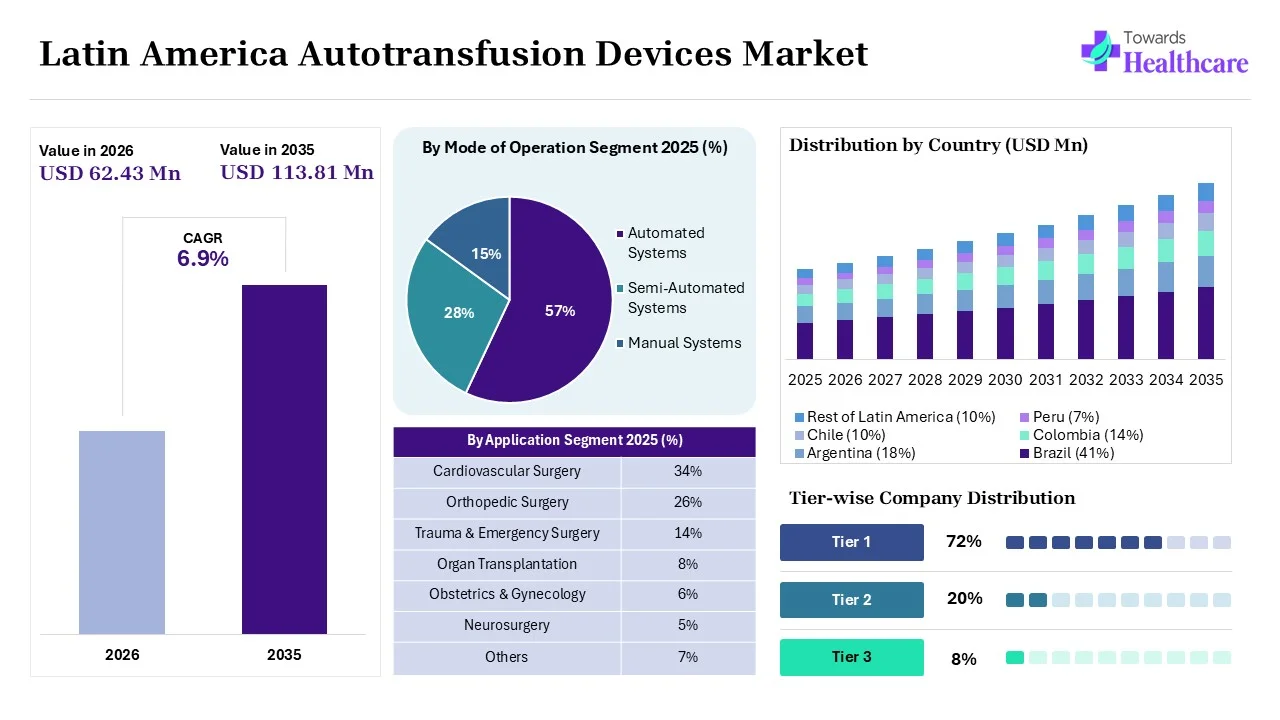
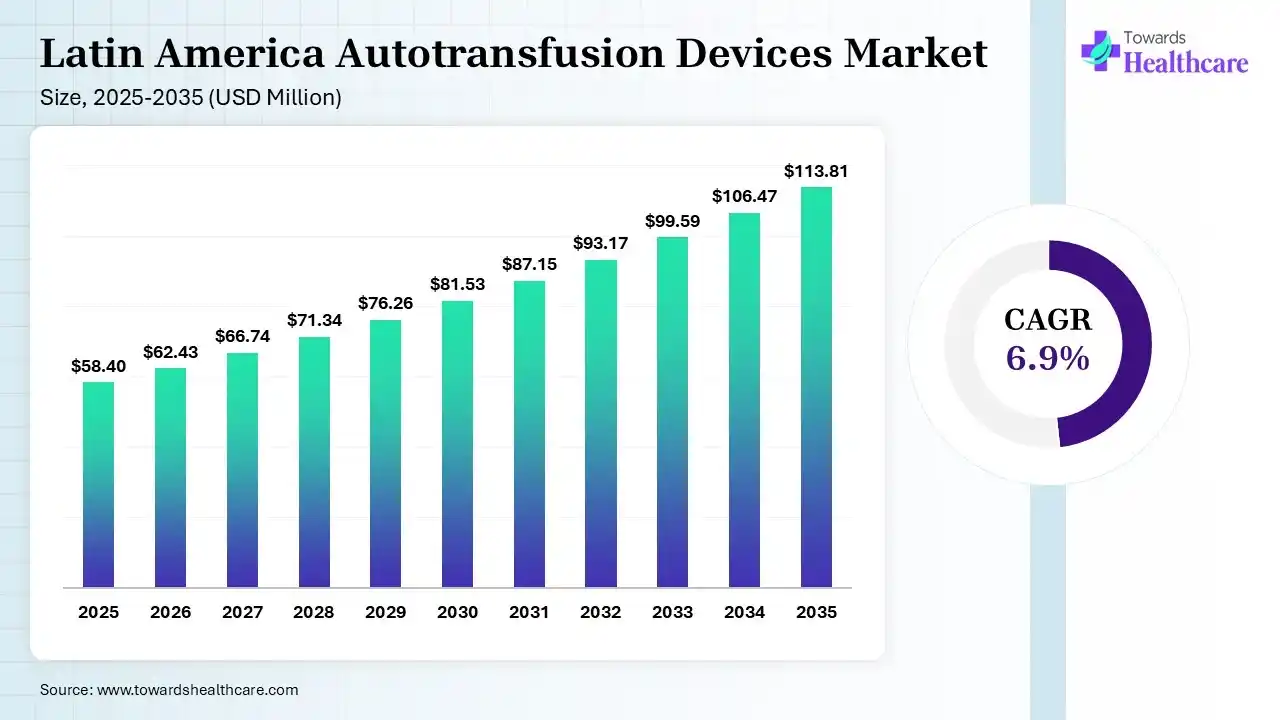
The Latin America autotransfusion devices market size touched US$ 58.4 million in 2025, with expectations of climbing to US$ 62.43 million in 2026 and hitting US$ 113.81 million by 2035, driven by a CAGR of 6.9% over the forecast period.
Autotransfusion devices refer to medical systems used during or after surgery to collect, filter, and reinfuse a patient’s own blood, reducing the need for donor blood transfusions and lowering risks such as infections and transfusion reactions. It is expanding due to increasing surgical procedures, rising cases of trauma, cardiovascular, and orthopedic diseases, and growing awareness of patient blood management practices across hospitals in countries like Brazil, Mexico, and Argentina.
Key trends include rising adoption of advanced automated cell salvage systems and increasing use in high-blood-loss surgeries such as cardiac and orthopedic procedures. Growth is further driven by improving healthcare infrastructure and expanding private hospitals. Opportunities lie in the growing focus on cost-effective surgical care, increasing government and institutional support for blood conservation strategies, and wider implementation of standardized transfusion safety guidelines across Latin America.
The Latin America autotransfusion devices market is growing due to rising surgical procedures, including trauma and chronic cases, and greater awareness of patient blood management. Hospitals are adopting cell salvage systems to reduce reliance on donor blood and improve safety. Expanding healthcare infrastructure, growth of private hospitals, and rising demand for cost-effective and minimally invasive surgeries are further driving market expansion across the region.
AI can significantly improve the Latin America autotransfusion devices segment by enhancing real-time blood monitoring, optimizing cell salvage efficiency, and reducing human error during surgical procedures. AI-driven systems can support better decision-making in blood reinfusion, improve patient safety, and streamline workflows. Additionally, predictive analytics can help hospitals manage blood usage more effectively and reduce overall surgical costs.
Adoption of Advanced Cell Salvage Technologies
Hospitals in Latin America are increasingly using automated and improved cell salvage systems for safer and faster blood recovery during surgery. This trend enhances efficiency, reduces manual intervention, and improves patient outcomes, especially in high-blood-loss procedures like cardiac and orthopedic surgeries.
Growth of Patient Blood Management Practices
There is a rising implementation of patient blood management (PBM) programs across healthcare facilities to reduce dependence on donor blood. This trend promotes autotransfusion use, improves transfusion safety, and supports cost-effective surgical care, especially in public and tertiary care hospitals.
Expansion of Healthcare Infrastructure and Surgical Volumes
Improving healthcare infrastructure and increasing the number of surgeries in countries like Brazil and Mexico are driving future growth. Expansion of private hospitals and better access to advanced surgical technologies are expected to boost adoption of autotransfusion systems across the region.
| Table | Scope |
| Market Size in 2026 | USD 62.43 Million |
| Projected Market Size in 2035 | USD 113.81 Million |
| CAGR (2026 - 2035) | 6.9% |
| Historical Data | 2020 - 2023 |
| Base Year | 2025 |
| Forecast Period | 2026 - 2035 |
| Measurable Values | USD Millions/Units/Volume |
| Market Segmentation | By Product Type, By Application, By End User, By Technology, By Mode of Operation, By Region |
| Top Key Players | Braile Biomédica, Baumer S.A., Lifemed, Fanem Ltd., Magnamed, Scitech Medical, Labcor Laboratórios Ltd. |
| Segment | Share 2025 (%) |
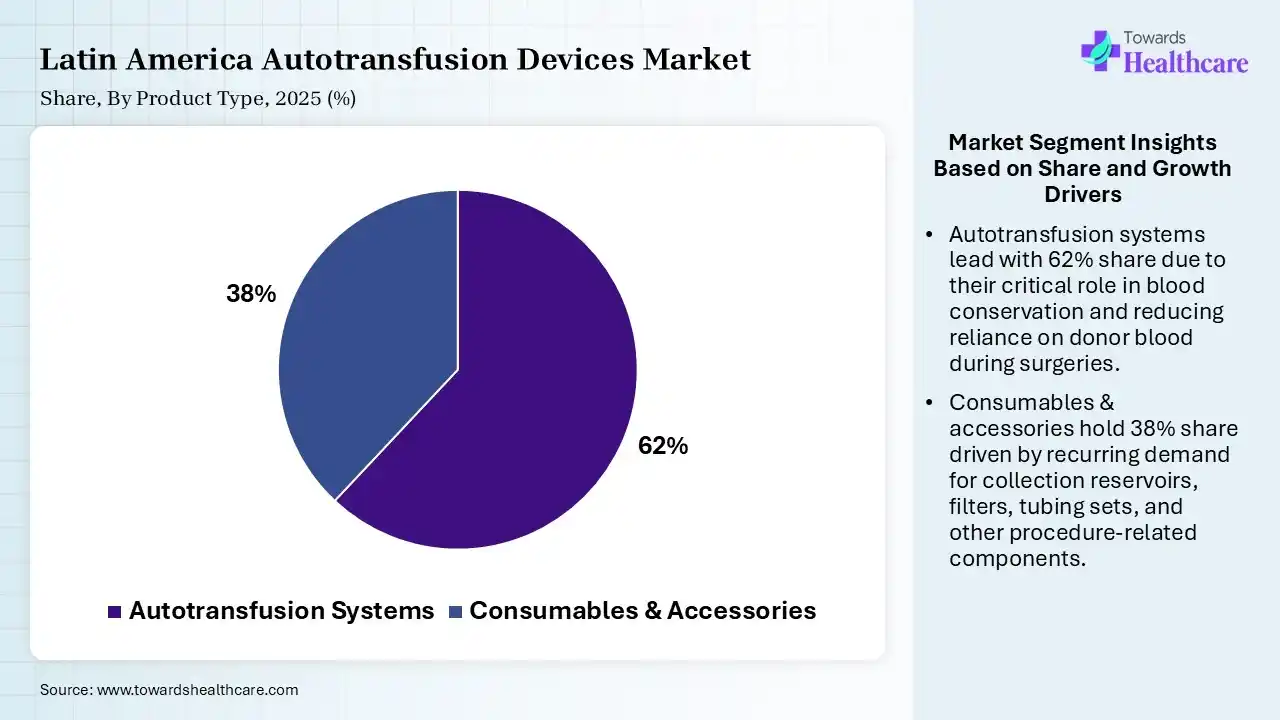
| Autotransfusion Systems | 62% |
| Consumables & Accessories | 38% |
The Autotransfusion Systems Segment Dominated the Latin America Autotransfusion Devices Market in 2025
The autotransfusion systems segment held a dominant share of 62% in 2025 due to its widespread use in high-blood-loss surgeries such as cardiac, orthopedic, and trauma procedures. These systems efficiently collect, process, and reinfuse blood, reducing dependence on donor blood and improving patient safety. Rising surgical volumes, growing awareness of blood conservation, and increasing adoption of automated and advanced cell salvage technologies further strengthened its leading position in the region.
The consumables & accessories segment held the second-largest share of 38% in 2025 and is expected to grow at the fastest CAGR of 7.60% in the Latin America autotransfusion devices market during the forecast period because these products are essential and repeatedly required for every surgical procedure. Items such as tubing, filters, suction sets, and collection reservoirs need frequent replacements, ensuring continuous demand. Rising surgical volumes, increasing adoption of cell salvage systems, and growing hospitals' focus on infection control and efficient blood management further support strong and consistent revenue generation from this segment.
| Segment | Share 2025 (%) |
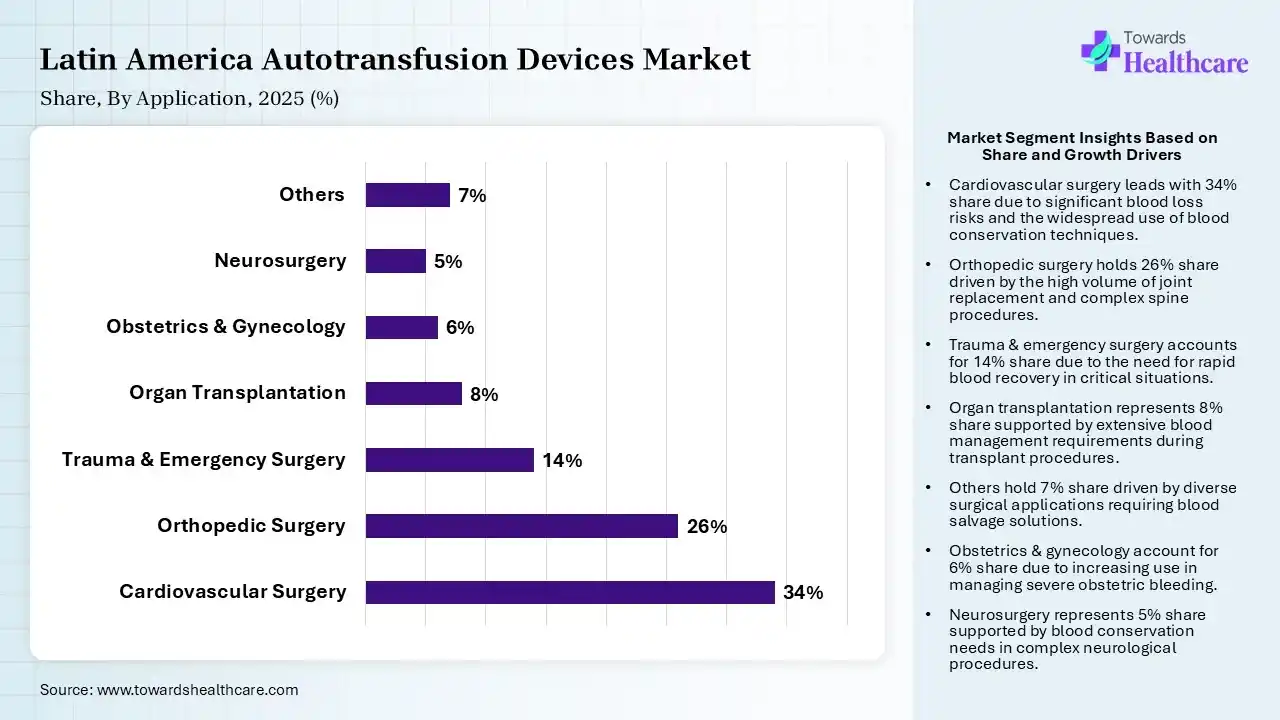
| Cardiovascular Surgery | 34% |
| Orthopedic Surgery | 26% |
| Trauma & Emergency Surgery | 14% |
| Organ Transplantation | 8% |
| Obstetrics & Gynecology | 6% |
| Neurosurgery | 5% |
| Others | 7% |
The Cardiovascular Surgery Segment Led the Market in 2025 with the Largest Share
The cardiovascular surgery segment led the Latin America autotransfusion devices market with a share of 34% in 2025 due to the high volume of complex heart procedures such as CABG and valve replacements, which involve significant blood loss. Autotransfusion systems are widely used in these surgeries to ensure rapid blood recovery, reduce reliance on donor blood, and improve patient safety. Rising cardiovascular disease prevalence and growing adoption of advanced surgical techniques further strengthened this segment’s dominance.
The orthopedic surgery segment held the second-largest share of 26% in 2025 and is expected to grow at the fastest CAGR of 7.3% in the market during the forecast period due to the high number of joint replacements, spine, and trauma surgeries, which often involve significant blood loss. Autotransfusion systems help reduce the need for donor blood, improve recovery, and lower infection risks. Rising geriatric population, increasing road accidents, and growing adoption of knee and hip replacement procedures further support its strong market position.
The trauma & emergency surgery segment held 14% of the Latin America autotransfusion devices market share due to the rising incidence of road accidents, injuries, and emergency cases requiring rapid blood management. Autotransfusion systems are highly valuable in uncontrolled bleeding situations as they provide quick blood recovery and reduce dependence on donor blood. Increasing emergency care infrastructure, improving trauma centers, and growing adoption of life-saving surgical technologies further drive this segment’s growth.
The organ transplantation segment held an 8% market share due to the increasing number of kidney, liver, and heart transplant procedures. These surgeries involve complex operations with blood loss, making autotransfusion systems essential for maintaining blood volume and patient stability. Growing transplant awareness, improving surgical expertise, and expanding specialized transplant centers, along with rising demand for safer and more efficient blood management, are driving segment growth.
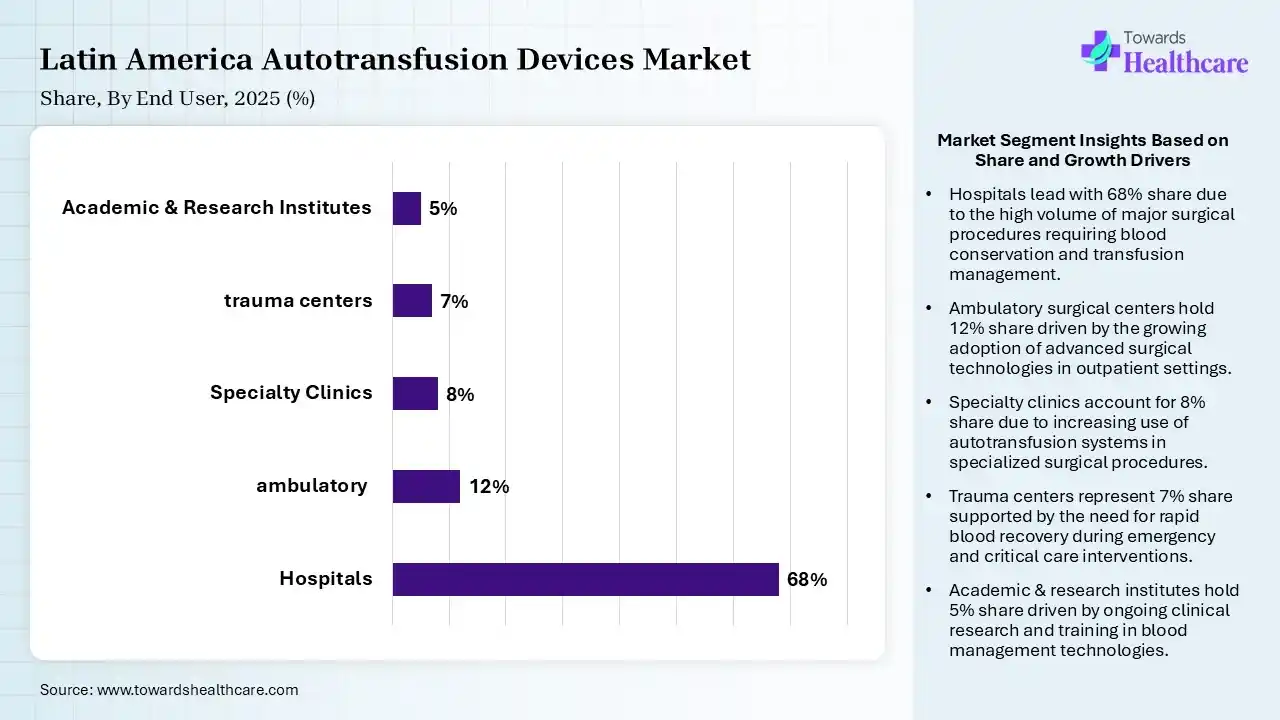
| Segment | Share 2025 (%) |
| Hospitals | 68% |
| ambulatory | 12% |
| Specialty Clinics | 8% |
| trauma centers | 7% |
| Academic & Research Institutes | 5% |
The Hospitals Segment Led the Latin America Autotransfusion Devices Market in 2025 with the Largest Share
The hospitals segment held a dominant share of 68% in 2025 due to the high volume of surgical procedures performed in hospital settings, especially in cardiac, orthopedic, and trauma cases. Hospitals have advanced infrastructure, skilled surgical teams, and better and better access to autotransfusion systems compared to other facilities. Increasing patient admissions, rising emergency cases, and growing adoption of patient blood management practices further strengthen hospitals as the primary end user.
The ambulatory surgical centers (ASCs) segment held the second-largest share of 12% in 2025 and is expected to grow at the fastest CAGR of 7.4% in the market during the forecast period due to the growing preference for outpatient procedures that offer lower costs, shorter hospital stays, and faster recovery. Increasing numbers of minimally invasive and elective surgeries are driving demand for efficient blood management solutions in ASCs. Expanding healthcare infrastructure and rising investments in specialized surgical centers further support the segment’s growth.
The specialty clinics segment held an 8% share of the Latin America autotransfusion devices market due to the increasing number of clinics focused on cardiovascular, orthopedic, and transplant procedures. These facilities are adopting advanced surgical technologies to improve patient outcomes and reduce transfusion-related risks. Rising demand for specialized care, shorter treatment timelines, and expanding access to high-quality healthcare services are encouraging greater use of autotransfusion systems in specialty clinic settings.
The trauma centers segment held a 7% market share due to the increasing incidence of road accidents, workplace injuries, and other emergency trauma cases that often involve severe blood loss. Autotransfusion systems enable rapid blood recovery and reinfusion, supporting critical patient care. Growing investments in emergency healthcare infrastructure, development of specialized trauma facilities, and rising focus on improving survival outcomes are further driving segment growth.
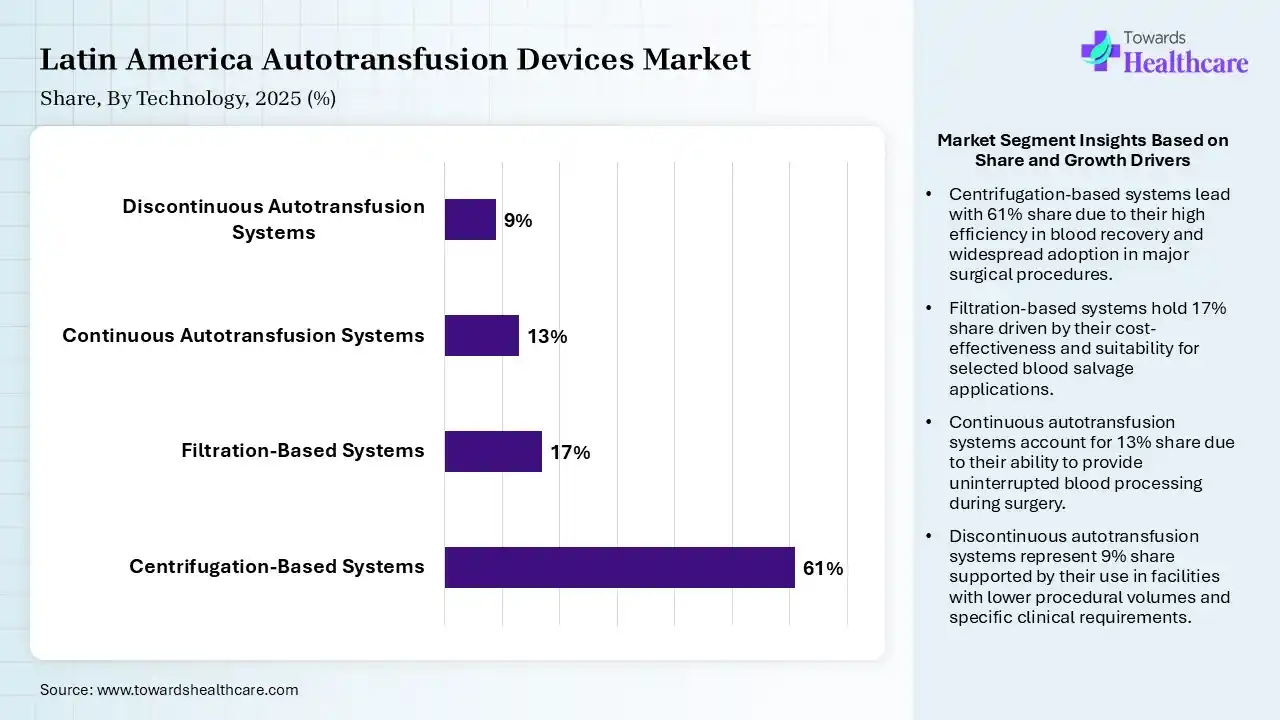
| Segment | Share 2025 (%) |
| Centrifugation-Based Systems | 61% |
| Filtration-Based Systems | 17% |
| Continuous Autotransfusion Systems | 13% |
| Discontinuous Autotransfusion Systems | 9% |
The Centrifugation-based systems Segment Led the Latin America Autotransfusion Devices Market in 2025 with the Largest Share
The centrifugation-based systems segment held a dominant share of 61% in 2025 due to its high efficiency in separating and concentrating red blood cells for reinfusion. These systems provide superior blood quality, reliable performance, and effective removal of contaminants, making them widely preferred in complex surgeries. Their extensive use in cardiac, orthopedic, and trauma procedures, along with proven clinical effectiveness and stronger adoption in major hospitals, supported their leading position.
The filtration-based systems segment held the second-largest share of 17% in 2025 and is expected to grow at the fastest CAGR of 7.5% in the market during the forecast period due to its cost-effectiveness, ease of use, and suitability for a wide range of surgical procedures. These systems efficiently remove debris and contaminants from recovered blood while requiring less complex equipment than centrifugation-based systems. Growing adoption in smaller hospitals and surgical centers, along with increasing demand for affordable blood conservation solutions, supports its strong market position.
The continuous autotransfusion systems segment held 13% of the Latin America autotransfusion devices market share due to their ability to provide uninterrupted blood collection, processing, and reinfusion during lengthy and complex surgeries. These systems improve surgical efficiency, reduce treatment delays, and support better patient outcomes. Increasing demand for advanced blood management technologies, rising cardiovascular and trauma surgeries, and growing investments in modern healthcare infrastructure are driving adoption across the region.
The discontinuous autotransfusion systems segment held a 9% market share due to its affordability, operational simplicity, and suitability for hospitals with moderate surgical volumes. These systems effectively recover and process blood in batches, making them a practical choice for various surgical procedures. Growing adoption in community hospitals, increasing intervention, and the need for a cost-efficient blood management solution are supporting the segment’s continued growth.
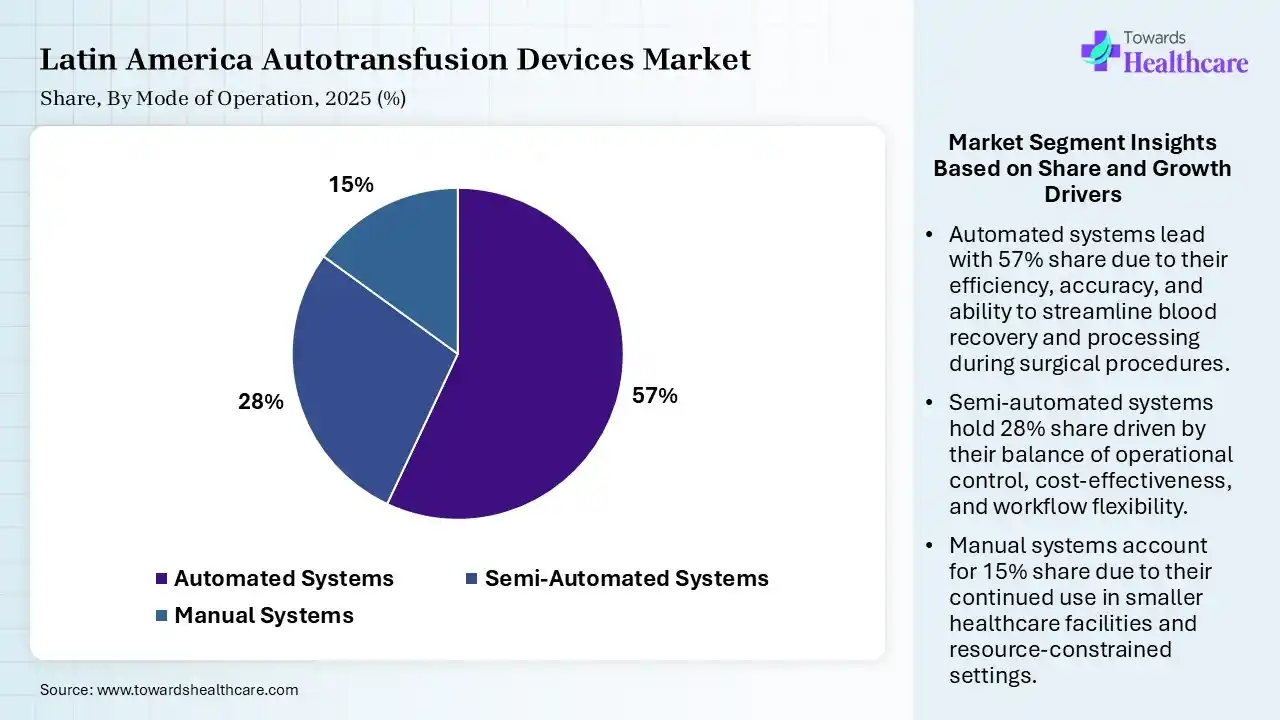
| Segment | Share 2025 (%) |
| Automated Systems | 57% |
| Semi-Automated Systems | 28% |
| Manual Systems | 15% |
The Automated Systems Segment Led the Latin America Autotransfusion Devices Market in 2025 with the Largest Share
The automated systems segment dominated the market with a share of 57% in 2025 and is expected to grow at the fastest CAGR of 7.2% in the market during the forecast period due to its ability to deliver faster, more accurate, and highly efficient blood collection and processing with minimal manual intervention. These systems reduce the risk of human error, improve patient safety, and enhance surgical workflow efficiency. Growing adoption of advanced surgical technologies, increasingly complex procedures, and rising demand for standardized blood management solutions further strengthened the segment’s leading position.
The semi-automated systems segment held the second-largest share of 28% in 2025 due to its balance between operational efficiency and cost-effectiveness. These systems offer improved blood processing capabilities while requiring lower investment than fully automated systems, making them attractive for mid-sized hospitals and surgical centers. Increasing surgical volumes, budget constraints in healthcare facilities, and the growth of blood conservation practices have contributed to the segment’s strong position.
The manual systems segment held 15% of the Latin America autotransfusion devices market share due to its low acquisition cost and accessibility for smaller hospitals and healthcare facilities with limited budgets. These systems provide a practical blood recovery solution in settings where advanced automated equipment may not be available. Increasing surgical procedures in developing areas, improving healthcare access, and the need for affordable blood management options are supporting the segment’s growth.
The Latin America autotransfusion devices market is gaining momentum due to rising surgical volumes, increasing prevalence of cardiovascular and orthopedic disorders, and growing emphasis on patient blood management. Expanding healthcare infrastructure, improving access to advanced surgical technologies, and greater awareness of blood conservation practices are accelerating adoption. Additionally, investments in specialized hospitals and trauma care facilities are supporting the broader use of autotransfusion systems across the region.
Brazil dominated the Latin America Autotransfusion devices market with a share of 41% in 2025 due to its large healthcare sector, high volume of cardiovascular and orthopedic surgeries, and strong presence of advanced hospitals. The country benefits from greater adoption of patient blood management practices, increasing healthcare investment, and a well-established medical device industry. Rising trauma cases, expanding access to complex surgical procedures, and growing awareness of blood conservation further supported Brazil’s leading position.
Colombia held a 14% share in 2025 and is expected to grow at the fastest CAGR of 7.50% in the market during the forecast period due to increasing investments in healthcare infrastructure, rising surgical procedure volumes, and growing adoption of advanced blood management technologies. Expanding access to specialized cardiac and trauma care, improving hospital capabilities, and greater awareness of patient blood conservation practices are accelerating demand. Supportive healthcare reforms and increasing private sector participation further contribute to the country’s rapid growth trajectory.
R&D
Regulatory Approvals
Patient Support and Services
| Companies | Headquarters | Offerings |
| Braile Biomédica | Brazil | Cardiovascular surgery products, perfusion systems, oxygenators, blood reservoirs, and autotransfusion-related solutions. |
| Baumer S.A. | Brazil | Surgical equipment, orthopedic devices, hospital technologies, and healthcare solutions |
| Lifemed | Brazil | Infusion systems, monitoring equipment, hospital devices, and critical care solutions. |
| Fanem Ltd. | Brazil | Hospital equipment, neonatal care systems, surgical support technologies, and patient monitoring products. |
| Magnamed | Brazil | Mechanical ventilators, critical care equipment, and respiratory support technologies. |
| Scitech Medical | Brazil | Cardiovascular devices, interventional cardiology products, and vascular healthcare solutions. |
| Labcor Laboratórios Ltd. | Brazil | Biological heart valves, cardiovascular implants, vascular grafts, and cardiac surgery |
In February 2026, “For several years, we have worked alongside Fresenius Kabi to build resilient, end-to-end supply assurance for essential medicines. This expanded collaboration is focused on securing a reliable domestic supply of epinephrine, one of the most critical, life-saving drugs used across emergency and acute care settings in the United States,” said Eric Edwards, M.D., Ph.D., CEO of Phlow.
By Product Type
By Application
By End User
By Technology
By Mode of Operation
By Region










Principal Consultant
Shivani Zoting is a dedicated research analyst specializing in the healthcare industry. With a strong academic foundation, a B.Sc. in Biotechnology and an MBA in Pharmabiotechnology, she brings a unique blend of scientific understanding and strategy.
Learn more about Shivani Zoting
Reviewed By
Aditi Shivarkar is a seasoned professional with over 14 years of experience in healthcare market research. As a content reviewer, Aditi ensures the quality and accuracy of all market insights and data presented by the research team.
Learn more about Aditi Shivarkar









