
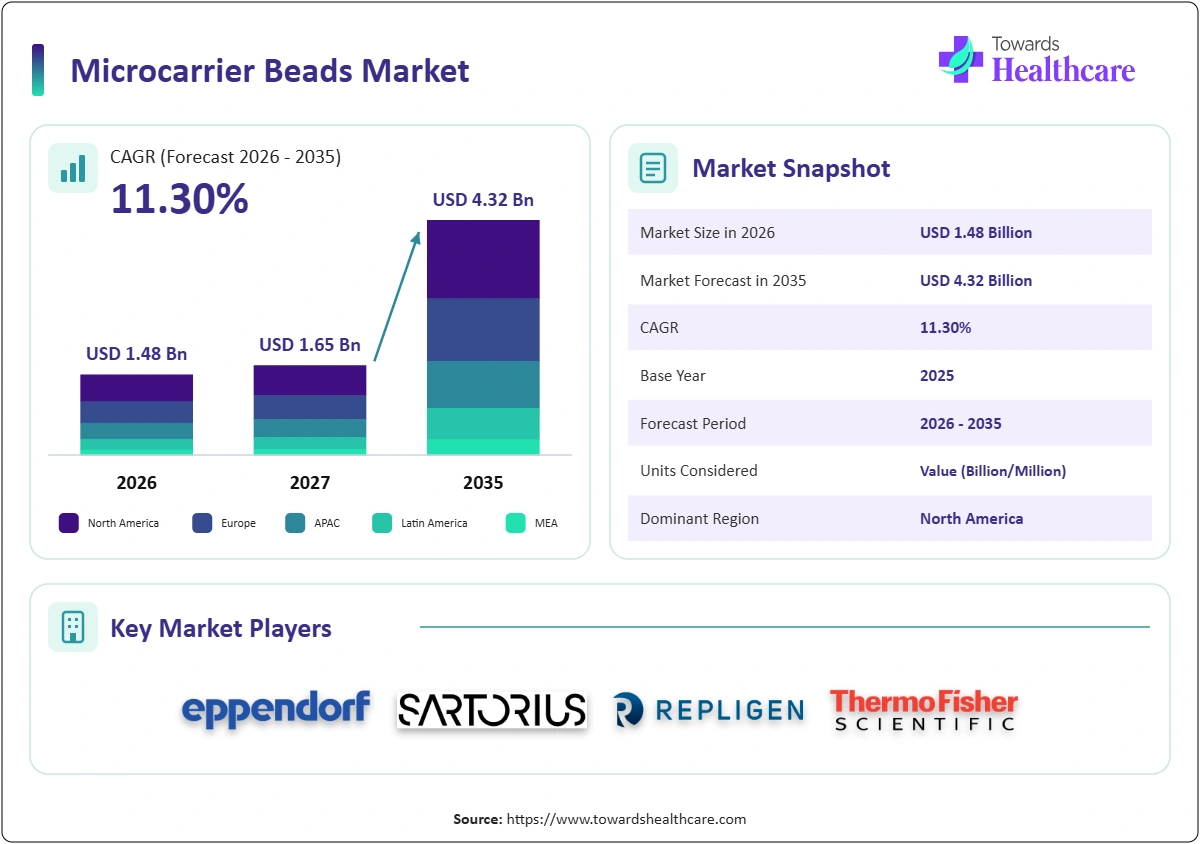
The microcarrier beads market is projected to grow from USD 1.48 billion in 2025 to USD 4.32 billion by 2035 because adherent cells used for vaccines, viral vectors and cell therapies must be grown on surfaces, and microcarriers let producers scale these cells in large bioreactors. Vaccine and viral vector production, mesenchymal stem cell and other cell therapies, dissolvable and animal-free beads, CDMO capacity expansion and cultured meat research support strong growth, promoting the market growth to USD 2.53 billion by 2030 and sustaining a CAGR of 11.30% throughout the forecast timeframe.
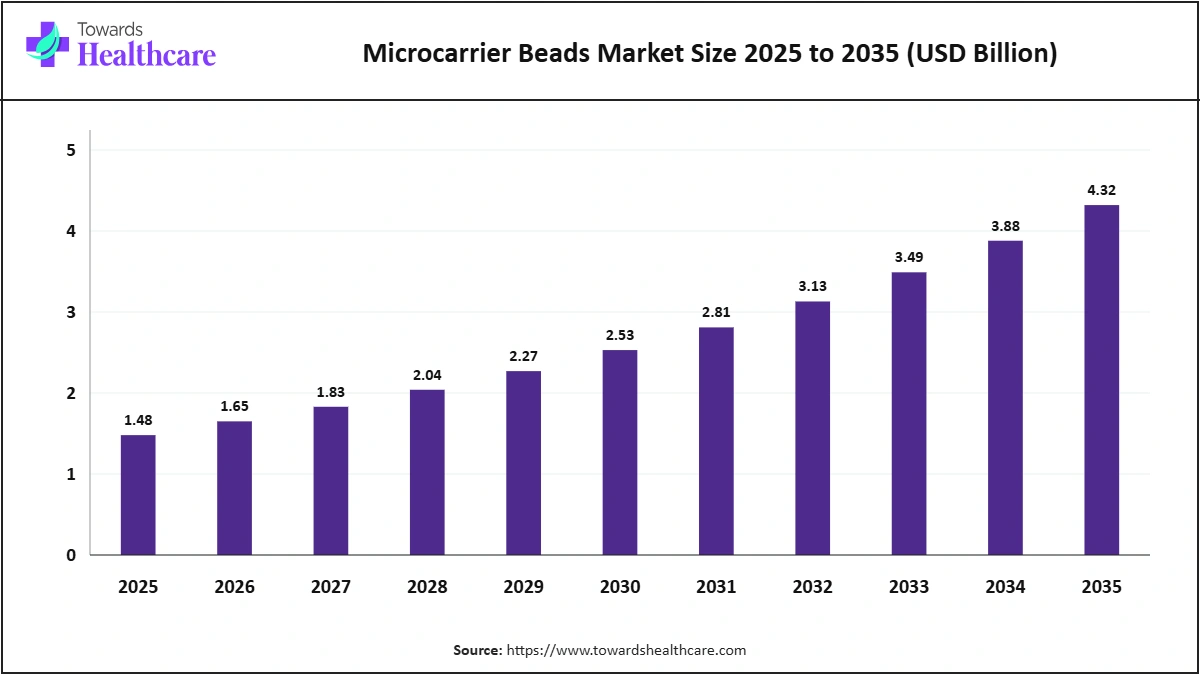 Analyst View: We built the estimate from the volume of microcarriers used by type, material, target cell, application, end use and region, multiplied by average prices, which are higher for coated, dissolvable and GMP-grade beads. Volumes reflect vaccine, biologics and cell therapy production and research activity, while prices reflect the shift to specialized beads. The total was cross-checked against the microcarrier revenues of leading bioprocessing suppliers and against published estimates, which places our base year slightly above the highest credible comparable figure. The growth rate reflects strong demand from cell therapy and viral vector production, which we judge supports a slightly higher rate than comparable estimates, moderated by competition from fixed-bed and suspension culture systems.
The microcarrier beads market is driven by the growing need for surface-dependent adherent cell expansion in biopharmaceutical manufacturing. Increasing production of cell therapies, vaccines using Vero and MRC-5 cells, and viral vectors is supporting demand. Additionally, dissolvable microcarrier beads are improving cell harvesting efficiency and reducing downstream processing requirements.
Market growth is constrained by challenges associated with cell detachment, bead removal, and downstream purification. Competition from fixed-bed bioreactor systems and the increasing adoption of suspension-adapted cell lines may reduce microcarrier demand in certain applications. Furthermore, complex process development and optimization requirements can increase manufacturing costs and development timelines.
Expanding mesenchymal stem cell manufacturing and emerging cultured meat production offer significant growth opportunities for microcarrier beads. Increasing demand for animal-free, GMP-compliant materials, expanding vaccine manufacturing capacity across Asia Pacific, and integration of microcarrier beads with automated bioreactor systems are expected to create additional avenues for market expansion.
Note: 2025 is the base year; 2035 values are forecasts.
Sources: Expert interviews, secondary sources, Towards Healthcare database and Towards Healthcare analysts.
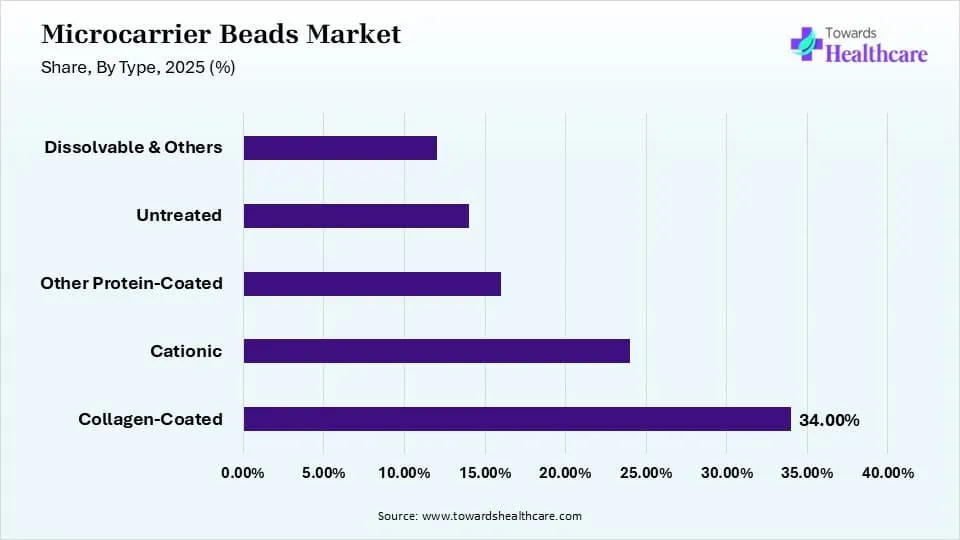
Collagen-Coated: Dominating the type category with a 34.00% share (USD 0.50 billion) in 2025, this segment is projected to reach USD 1.37 billion by 2035, registering a CAGR of 10.55%. Its leading position reflects collagen's ability to support the attachment and growth of various adherent cells, including Vero, MRC-5, and stem cells, alongside its established use in vaccine production.
Cationic beads carry a positive surface charge that attracts cells and are widely used for Vero and other cells in viral vaccine production.
Demand is supported by the use of fibronectin, laminin, vitronectin, and recombinant protein coatings to facilitate the attachment and expansion of specialized cells, particularly stem cells.
These beads are preferred for cell types that attach without surface modification and by manufacturers that require flexibility to apply customized coatings for specific cell culture applications.
Dissolvable and other beads are the fastest-growing type because dissolvable beads can be broken down at harvest, releasing cells without separation steps, which improves yield and suits cell therapy manufacturing.
Note: 2025 is the base year; 2035 values are forecasts.
Sources: Expert interviews, secondary sources, Towards Healthcare database and Towards Healthcare analysts.
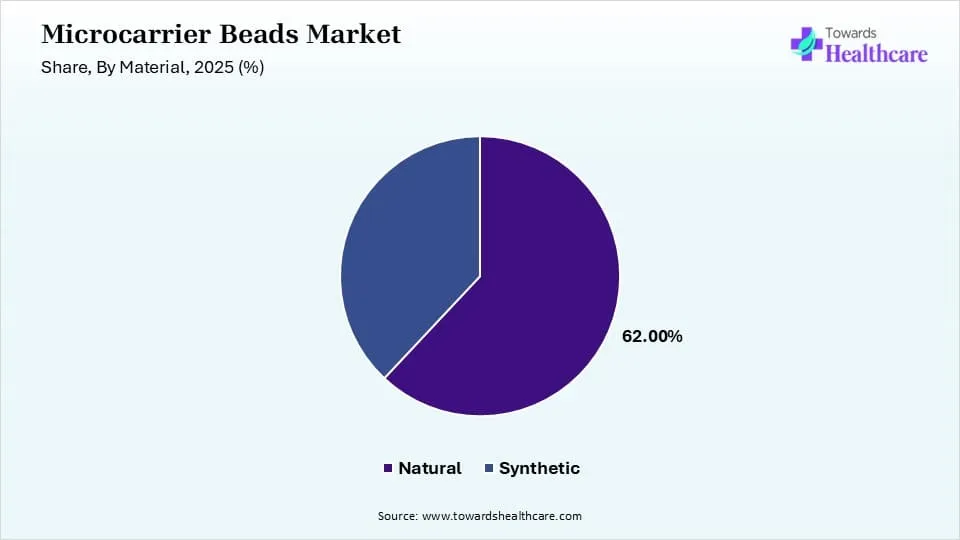
Natural: This segment accounted for 62.00% (USD 0.92 billion) of the microcarrier beads market in 2025 and is projected to reach USD 2.50 billion by 2035, expanding at a CAGR of 10.54% from 2026 to 2035. Natural materials, such as cross-linked dextran, collagen, gelatin and alginate, lead because they are biocompatible and support strong cell attachment.
Growth is driven by increasing demand for animal-free, chemically defined, and consistent materials that support regulated cell therapy manufacturing.
Note: 2025 is the base year; 2035 values are forecasts.
Sources: Expert interviews, secondary sources, Towards Healthcare database and Towards Healthcare analysts.
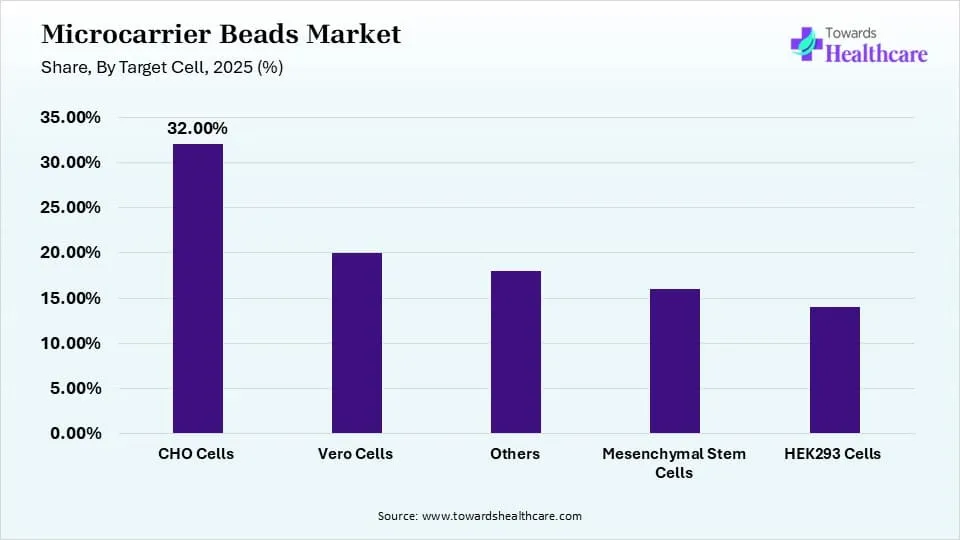
CHO Cells: Leading the target cell category with a 32.00% share (USD 0.47 billion) in 2025, this segment is projected to reach USD 1.29 billion by 2035, registering a CAGR of 10.49%. Demand is supported by the use of CHO cells in biologics manufacturing and process development, where microcarrier-based systems facilitate adherent cell expansion.
Vero cells are used to produce many viral vaccines on microcarriers.
Mesenchymal stem cells are the fastest-growing target because cell therapies need billions of these adherent cells, which microcarriers can produce in bioreactors.
Note: 2025 is the base year; 2035 values are forecasts.
Sources: Expert interviews, secondary sources, Towards Healthcare database and Towards Healthcare analysts.
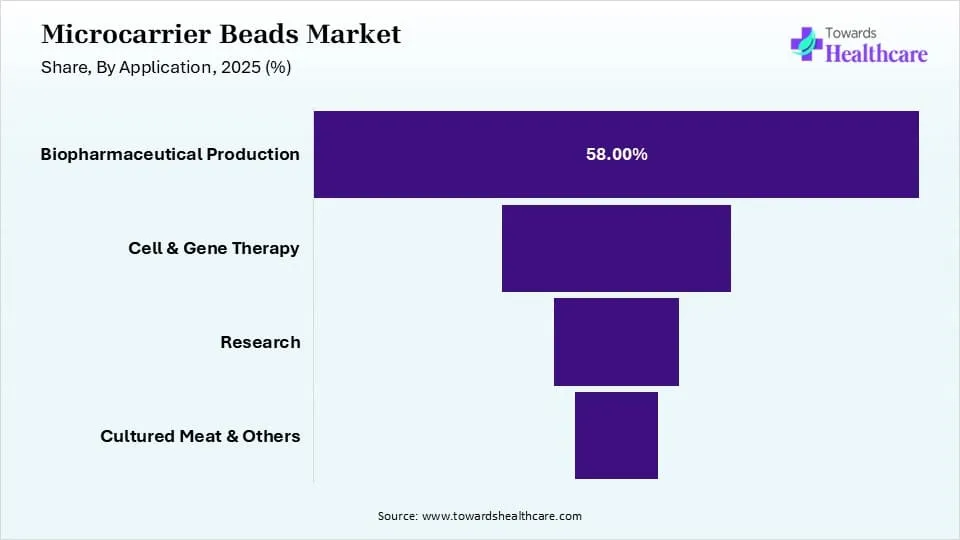
Biopharmaceutical Production: Dominating the application category with a 58.00% share (USD 0.86 billion) in 2025, this segment is projected to reach USD 2.28 billion by 2035, registering a CAGR of 10.26%. Its leading position reflects the established use of microcarrier beads to scale adherent cell cultures for viral vaccine and biologics manufacturing.
Cell and gene therapy is the fastest-growing application because of the need to expand stem cells and produce viral vectors at large scale.
Adoption is supported by academic investigations, industrial research, and process development activities that use microcarrier beads to optimize adherent cell culture conditions and evaluate scalable manufacturing methods.
Note: 2025 is the base year; 2035 values are forecasts.
Sources: Expert interviews, secondary sources, Towards Healthcare database and Towards Healthcare analysts.
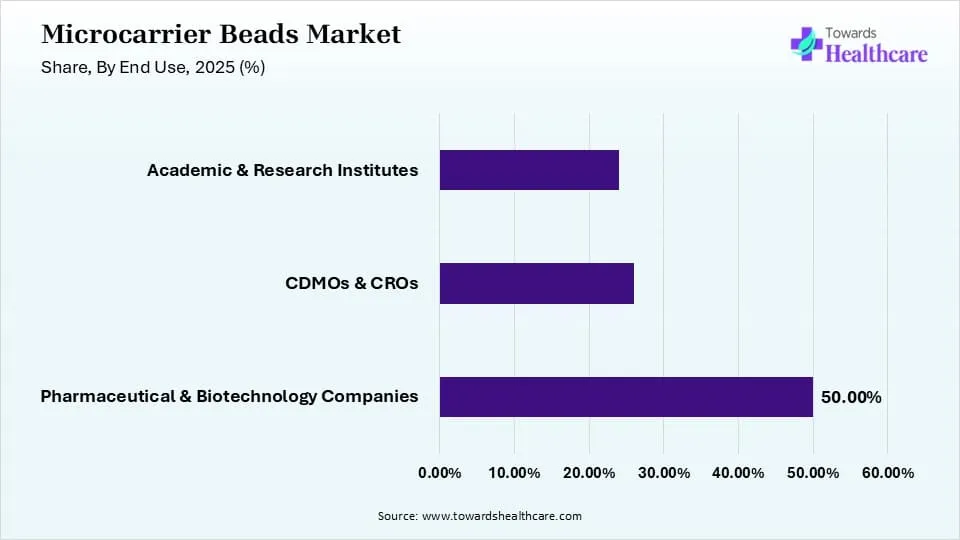
Pharmaceutical & Biotechnology Companies: This segment accounted for 50.00% (USD 0.74 billion) of the microcarrier beads market in 2025 and is projected to reach USD 2.02 billion by 2035, expanding at a CAGR of 10.54% during the forecast period. Pharmaceutical and biotechnology companies are the largest users because they produce vaccines, biologics and cell therapies.
Growth is supported by increasing outsourcing of viral vector production, cell therapy manufacturing, and specialized cell culture development to contract service providers.
Academic and research institutes use microcarriers for research and process development.
Analyst View: Segment values were allocated by matching microcarrier volumes and prices to types, materials, target cells, applications and end uses, using supplier portfolios and production data. Collagen-coated beads, natural materials, CHO cells, biopharmaceutical production and pharmaceutical companies lead. We expect dissolvable beads, synthetic materials, mesenchymal stem cells, cell and gene therapy and CDMOs to gain share.
Note: 2025 is the base year; 2035 values are forecasts.
Sources: Expert interviews, secondary sources, Towards Healthcare database and Towards Healthcare analysts.
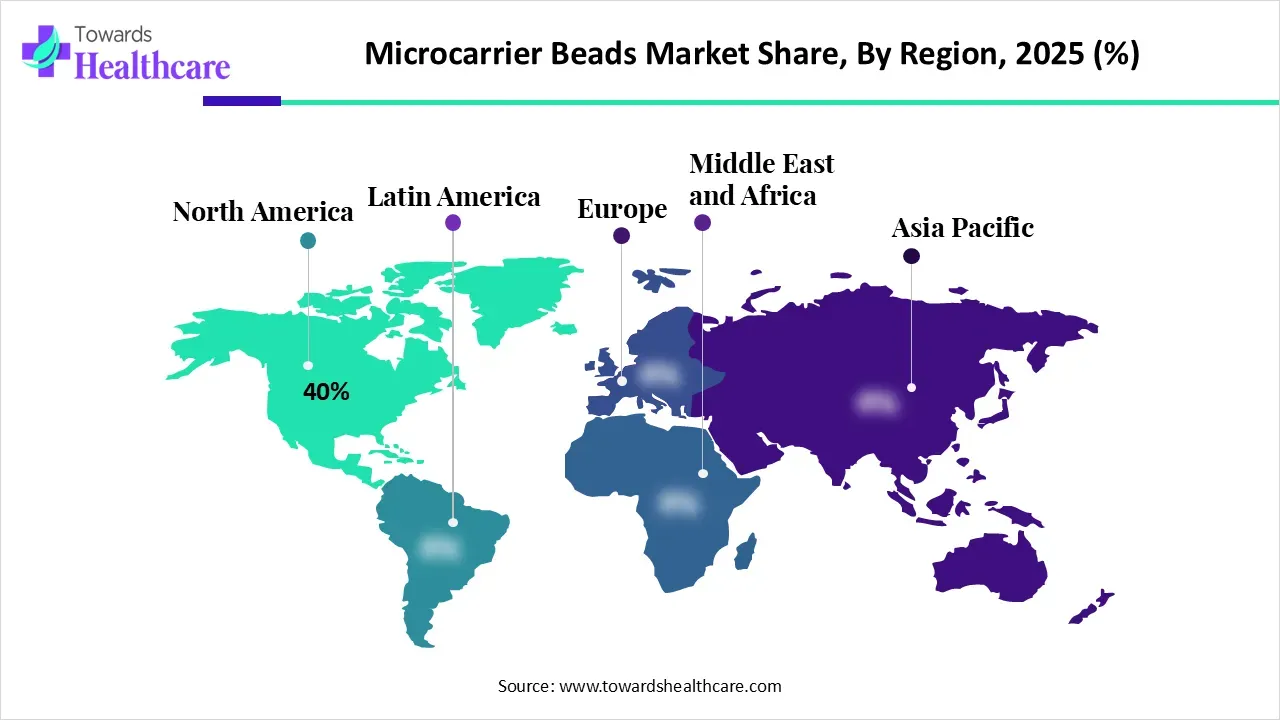
North America: Dominating the global market with a 40.00% share (USD 0.59 billion) in 2025, North America is projected to reach USD 1.64 billion by 2035, growing at a CAGR of 10.68%. Its leadership is supported by established biopharmaceutical, vaccine, and cell therapy industries, alongside major bioprocessing suppliers such as Cytiva, Corning, and Thermo Fisher Scientific.
Europe has major vaccine producers, cell therapy developers and suppliers such as Sartorius and Merck KGaA.
Asia Pacific Expanding vaccine and biologics manufacturing in China and India, growing cell therapy development in China, Japan, and South Korea, and cultured meat research in Singapore are driving regional demand.
Latin America is supported by vaccine production in Brazil.
Middle East & Africa New vaccine manufacturing projects and investments in regional biopharmaceutical infrastructure are expected to support market expansion.
Analyst View: Regional shares were built from microcarrier use in each region. North America leads because of its biopharmaceutical and cell therapy industries. We assign Asia Pacific the highest growth premium because vaccine and cell therapy capacity is expanding fastest there.
| Rank | Company Name | Market-Specific Revenue (USD Billion) | 2025 Share | Key Products / Business | Headquarters |
| 1 | Cytiva | 0.26 | 17.57% | Cytodex microcarriers | United States |
| 2 | Sartorius | 0.18 | 12.16% | Microcarriers and bioreactors | Germany |
| 3 | Corning | 0.18 | 12.16% | Synthemax, dissolvable and coated microcarriers | United States |
| 4 | Merck KGaA | 0.13 | 8.78% | Microcarriers and reagents | Germany |
| 5 | Thermo Fisher Scientific | 0.10 | 6.76% | Nunc microcarriers | United States |
| 6 | Eppendorf | 0.03 | 2.03% | Microcarrier culture solutions | Germany |
| 7 | Bio-Rad Laboratories | 0.03 | 2.03% | Cellulose and other microcarriers | United States |
| 8 | Repligen (Tantti) | 0.03 | 2.03% | Microcarriers | United States |
| 9 | Rousselot | 0.02 | 1.35% | Collagen and dissolvable microcarriers | Netherlands |
| 10 | HiMedia Laboratories | 0.02 | 1.35% | Microcarriers | India |
Note: Company revenues and shares are 2025 estimates.
Sources: Company press releases, expert interviews, secondary sources, Towards Healthcare database and Towards Healthcare analysts.
Cytiva led the microcarrier beads market with an estimated 17.57% (USD 0.26 billion) of 2025 revenue, followed by Sartorius at 12.16% (USD 0.18 billion) and Corning at 12.16% (USD 0.18 billion). Cytiva, part of Danaher, leads with the widely used Cytodex range of microcarriers for vaccine and cell production. Sartorius offers microcarriers alongside its bioreactors, and Corning supplies synthetic, dissolvable and coated microcarriers. Merck KGaA, Thermo Fisher Scientific, Eppendorf, Bio-Rad Laboratories, Repligen, Rousselot and HiMedia Laboratories compete through microcarriers, reagents, culture solutions and collagen-based and cost-competitive beads.
The top 10 companies accounted for an estimated 66.22% (USD 0.98 billion) of 2025 revenue, while the remaining 33.78% (USD 0.50 billion) was shared among many specialized bead makers and cultured meat suppliers. The microcarrier beads market is moderately concentrated, and competition targets cell attachment and yield, harvest efficiency, animal-free and GMP composition, lot consistency, integration with bioreactors and price. Dissolvable and synthetic beads are a key area of innovation.
The microcarrier beads ecosystem links material and coating suppliers with bead makers, bioreactor suppliers, biomanufacturers and regulators.
| Ecosystem Stage | Role in the Market | Key Companies |
| Materials & Coatings | Supply polymers and proteins | Dextran, collagen and polymer suppliers |
| Bead Makers | Make microcarriers | Cytiva, Corning, Sartorius, Merck KGaA, Rousselot |
| Bioreactor Suppliers | Provide culture systems | Sartorius, Eppendorf, Thermo Fisher |
| Biomanufacturers | Grow cells at scale | Vaccine, cell therapy and viral vector makers, CDMOs |
| Regulators | Approve processes | FDA, EMA |
Sources: Company press releases, expert interviews, secondary sources, Towards Healthcare database and Towards Healthcare analysts.
The Towards Healthcare Companies Quadrant positions key participants in the microcarrier beads market by market strength, reflecting revenue scale, market share and geographic reach, and by innovation and growth strategy, reflecting product portfolio breadth, R&D intensity and partnerships. Positions reflect each company's estimated 2025 microcarrier revenue and our assessment of its bead technology, integration, and innovation.
Sources: Company press releases, expert interviews, secondary sources, Towards Healthcare database and Towards Healthcare analysts.
Leaders: Cytiva, Sartorius, Corning, Merck and Thermo Fisher Scientific combine large microcarrier revenue with established products and bioprocess integration.
Innovators: Eppendorf, Bio-Rad Laboratories, Repligen (Tantti), Rousselot and HiMedia Laboratories bring dissolvable, collagen-based and specialized microcarriers.
By Type
By Material
By Target Cell
By Application
By End Use
By Region
The microcarrier beads market was defined as microcarrier beads used to grow adherent cells in bioreactors, including coated, untreated and dissolvable beads of natural and synthetic materials, worldwide. The 2025 base year was built bottom-up from microcarrier volumes by type, material, target cell, application, end use and region, and average prices, and checked top-down against the microcarrier revenues of leading bioprocessing suppliers. Segment, regional, and company values were allocated from types, materials, target cells, applications, end uses, and regional demand. Key estimates were verified by cross-checking company disclosures, regulatory and industry data and published third-party estimates, and inputs that could not be reconciled were excluded. All segment, regional and company figures were reconciled to the same 2025 base year, and the 2026-2035 forecast, which applies a constant CAGR from the 2025 base, was recalculated and validated.
Analyst View: The microcarrier beads market is a growing segment of bioprocessing consumables, tied to vaccine, viral vector and cell therapy production using adherent cells. Our estimate links demand to bead volumes and prices, so the forecast follows biomanufacturing growth and adoption of new bead types. The main upside comes from cell therapy and dissolvable beads, while the main risks are competition from fixed-bed and suspension systems.