Pipeline Programs

CGT Companies Tracked

Manufacturing Facilities


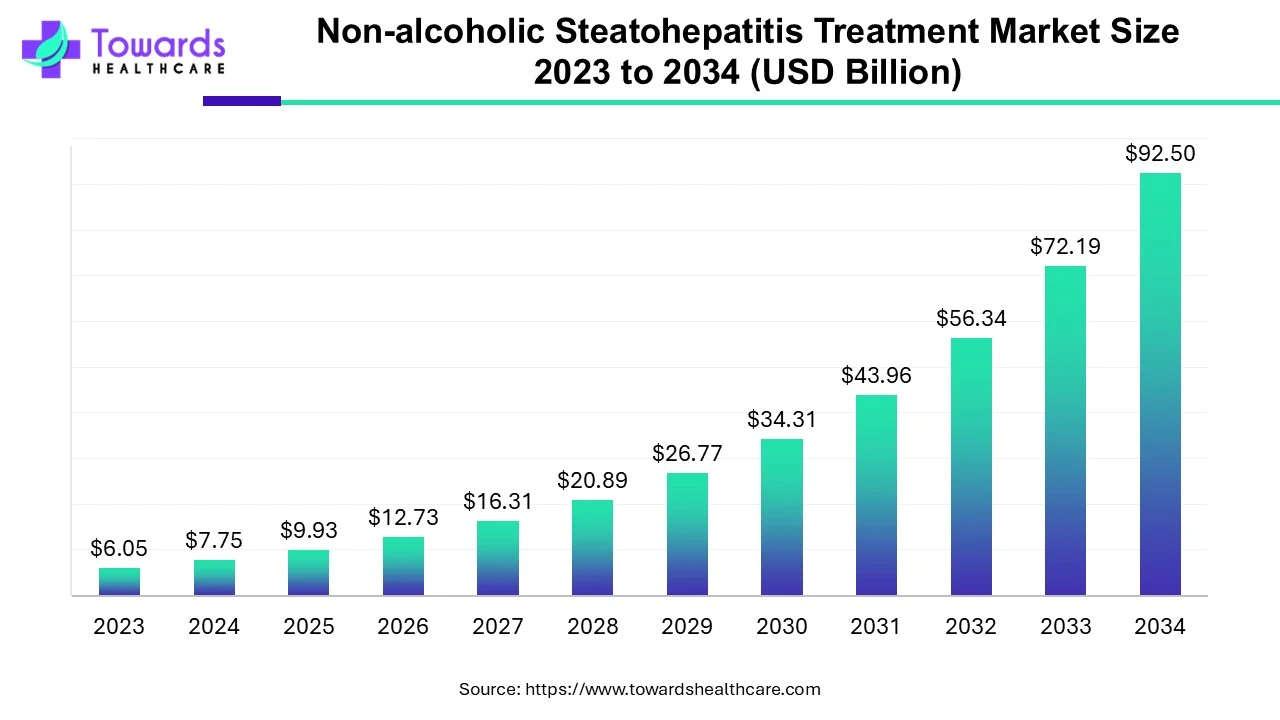
The global non-alcoholic steatohepatitis treatment market size was calculated at USD 9.93 billion in 2025, grew to USD 12.73 billion in 2026 and is projected to reach around USD 92.5 billion by 2034. The market is expanding at a CAGR of 28.14% between 2025 and 2034.
Non-alcoholic fatty liver disease (NAFLD) occurs when fat builds up in the liver. There are two types: non-alcoholic fatty liver (NAFL) and non-alcoholic steatohepatitis (NASH). Nowadays, NASH is known as metabolic dysfunction-associated steatohepatitis (MASH). A person may have NAFL when he has only a fatty liver, whereas, in NASH, he has inflammation and liver damage along with a fatty liver.
Doctors recommend weight loss to treat NASH, as it moderates the conditions causing NASH. Losing 3-5% of body weight can reduce fat in the liver and losing 7-10% can help reduce fat and inflammation. The other treatment options include controlling diabetes and cholesterol. Coffee, vitamin E intake, and over-the-counter medications have also proved to be beneficial.
The rising prevalence of obesity potentiates the chances of NASH in obese patients. This necessitates effective treatment of the disease, boosting market growth. The growing research and development activities lead to the development of novel drugs or treatment regimens for NASH. Several government and private agencies provide funding to conduct research for NASH treatment. Moreover, technological advancements transform the research process and help lead to better outcomes.
Non-alcoholic steatohepatitis (NASH) treatment refers to therapeutic approaches used to manage liver inflammation and damage caused by the accumulation of excess fat in the liver, with the goal of slowing disease progression and reducing complications. The NASH treatment market is growing as obesity, diabetes, and other metabolic conditions increase the risk of liver disease. Growing disease awareness and improved diagnostic capabilities are encouraging earlier identification and treatment. A key trend is the development of targeted medicines designed to address liver inflammation, fibrosis, and underlying metabolic dysfunction.
Technological advancements in biomarker discovery, non-invasive diagnostic tools, clinical trial methods, and drug-development platforms are accelerating therapeutic innovation. Future opportunities include combination therapies, personalized treatment strategies, and non-invasive disease monitoring. Increasing pharmaceutical investment, expanding clinical research, and the search for safer and more effective long-term treatments are further driving market development.
Artificial intelligence (AI) plays a pivotal role in transforming the way a disease is diagnosed and treated. Numerous research organizations have investigated the role of AI and machine learning (ML) in diagnosing and treating NASH. AI-assisted programs have found significant results in detecting NASH and its complications. This allows healthcare professionals to make timely decisions, reducing manual errors. AI can also suggest the severity and stage of NASH, improving efficiency and accuracy. AI can also design personalized treatment regimens for NASH patients based on their lifestyle and food habits. It enables physicians to reduce the overall treatment costs, thereby increasing accessibility. AI and ML enable significant improvements in research and development activities by developing novel drugs with enhanced efficacy and fewer side effects.
Driver
Increasing Prevalence of Obesity
The major growth factor of the non-alcoholic steatohepatitis treatment market is the rising prevalence of obesity globally. Obesity is a major health concern among individuals of all ages. According to the World Obesity Federation, more than 1 billion people are obese globally. They also estimated that by 2035, the majority of the global population, i.e., 51% or over 4 billion people, will be obese. Obesity is mainly caused due to sedentary lifestyles and junk food eating habits, especially in emerging economies. Other risk factors include adverse effects of long-term medications, stress, genetics, poor sleep, and environment. Obesity is the leading cause of many disorders, including NASH. Thus, there is a growing need to combat obesity in order to treat NASH.
Restraint
Lack of Effective Treatment
The major challenge faced by healthcare professionals is the lack of appropriate treatment. Currently, there are no U.S. FDA-approved drugs to treat NASH that can halt or reverse the progression of hepatic fibrosis, cirrhosis, and hepatocellular carcinoma. Also, healthcare professionals find significant challenges in screening or diagnosis for NASH as the patients have either no or low symptoms. All these aspects hinder the market growth.
Opportunity
Rising Number of Clinical Trials
The future of the non-alcoholic steatohepatitis treatment market is promising, driven by the rising number of clinical trials. Currently, there is only one U.S. FDA-approved drug for NASH. This necessitates an urgent need to design and develop novel treatment regimens. Hence, several research organizations and pharmaceutical & biotechnology companies are researching to develop novel treatment regimens. Researchers are investigating the role of various natural or herbal products in treating NASH. The growing demand for drug repurposing also presents significant growth opportunities for the market. This involves finding novel applications for already existing marketed drugs. The increasing investments in conducting NASH research facilitate both research and clinical trials. The funding is provided by both government and private organizations.
| Metric | Details |
| Market Size in 2025 | USD 9.93 Billion |
| Projected Market Size in 2034 | USD 92.5 Billion |
| CAGR (2025 - 2034) | 28.14% |
| Leading Region | North America |
| Market Segmentation | By Drug, By Disease Stage, By Distribution Channel and By Region |
| Top Key Players | AstraZeneca, Eli Lilly & Company, Galectin Therapeutics, Galmed Pharmaceuticals, Ltd., Intercept Pharmaceuticals, Madrigal Pharmaceuticals, Mayo Foundation for Medical Education & Research, NGM Biopharmaceuticals, Novo Nordisk A/S, Pfizer, Inc., Shilpa Medicare, Viking Therapeutics, Inc. |
By drug, the vitamin E & pioglitazone segment held a dominant presence in the non-alcoholic steatohepatitis treatment market in 2025. Vitamin E is considered to be the first line of treatment for NASH. Vitamin E, in combination with pioglitazone, has been found to reduce serum alanine and aspartate aminotransferase levels. Studies have proved that vitamin E with pioglitazone has shown better efficacy than both administered alone. Thus, these therapeutic effects increase the demand for vitamin E and pioglitazone. In addition, their easy availability and cost-effectiveness boost the segment’s growth.
By drug, the semaglutide segment is estimated to show lucrative growth in the market during the forecast period. Semaglutide is an anti-diabetic medication used for treating type 2 diabetes and long-term weight management. It has been found to be effective in improving cardiometabolic risk factors and reducing liver fat. It is usually prescribed to patients suffering from other chronic disorders like diabetes and cholesterol. The rising prevalence of chronic disorders and NASH potentiate the demand for semaglutide.
By disease stage, the NASH stage F1 segment held the largest share in the non-alcoholic steatohepatitis treatment market in 2025. NASH stage F1 is a stage causing minimal fibrosis without septa, which are tissue changes that show advancing liver damage. It is an essential stage as NASH initiates from this stage. It becomes necessary for healthcare professionals to provide effective treatment at this stage. Patients also experience symptoms at this stage, allowing for rapid diagnosis. The latest advancements in diagnosis and effective treatment plans to prevent entering into advanced stages of NASH promote the segment’s growth.
By disease stage, the NASH stage F0 segment is anticipated to grow with the highest CAGR in the market during the studied years. It is the most preliminary stage of NASH, showing signs of fatty liver but no fibrosis. The segmental growth is attributed to favorable government support for screening of NAFLD and increasing awareness for early treatment of NASH. The rising number of regular full-body health check-up procedures globally increases the chance of identifying the risk of NASH.
By distribution channel, the hospital pharmacies segment led the global non-alcoholic steatohepatitis treatment market in 2025. The presence of trained professionals and the availability of suitable infrastructure potentiate the segment’s growth. Hospital pharmacies contain a wide range of medications prescribed by doctors. They play a vital role in providing personalized treatment to the patients.
By distribution channel, the retail & pharmacies segment is predicted to witness significant growth in the market over the forecast period. Retail & specialty pharmacies are highly preferred due to the availability of generic medications and special discounts. They also offer 24/7 facility and same-day home delivery services. The increasing number of retail & specialty pharmacies potentiate the accessibility for patients. There are more than 67,000 pharmacies in the U.S., and 88.9% of individuals live within 5 miles of a pharmacy.
North America dominated the global non-alcoholic steatohepatitis treatment market share by 79% in 2025. The presence of key players, state-of-the-art research and development facilities, and technological advancements drive the market. Key players such as Madrigal Pharmaceuticals and Eli Lilly & Company hold the major share of the market. The U.S. FDA approved the world’s first NASH drug, which was developed by Madrigal Pharmaceuticals. Favorable government policies and increasing investments also contribute to market growth in North America. The National Institute of Diabetes and Digestive and Kidney Diseases (NIDDK) governs research related to NASH in the U.S. The FY2025 President’s Budget for NIDDK is approximately $2,310 million, an increase of $6.9 million from FY2023. The rising prevalence of NASH in the region also fuels market growth. There are approximately 6-8 million people suffering from NASH in the U.S. and around 8 million people in Canada.
U.S. NASH Treatment Market: Accelerating Liver Disease Management
The U.S. is significantly growing in the NASH treatment market due to the increasing burden of obesity and metabolic disorders. Greater awareness of liver health and improved diagnosis are encouraging more patients to seek treatment. Strong pharmaceutical research and advanced healthcare infrastructure are supporting the development of innovative therapies. Growing clinical research, investment in drug discovery, and interest in targeted and personalized treatments are further creating opportunities for market expansion.
Canada NASH Treatment Market: Strengthening Advanced Liver Care
Canada is notably expanding in the NASH treatment market due to rising metabolic health concerns and growing recognition of liver-related complications. Increasing awareness and improved diagnostic approaches are encouraging earlier disease identification. Pharmaceutical research and clinical studies are supporting the development of innovative therapies, while expanding healthcare capabilities are improving access to specialized care. Growing interest in targeted treatments, non-invasive disease monitoring, and personalized therapeutic strategies is further creating opportunities for market expansion across Canada.
Asia-Pacific is projected to host the fastest-growing non-alcoholic steatohepatitis treatment market in the coming years. The rising prevalence of chronic disorders and obesity, growing research and development activities, and increasing investments drive the market. The growing demand for natural or herbal remedies supports market growth in Asia-Pacific. The Chinese government promotes traditional Chinese medicine (TCM) and lifestyle changes for people living with NASH. The Indian government considers NAFLD as a major non-communicable disease and recently revised the Operational Guidelines and Training Module of NAFLD. The increasing awareness of obesity treatment and healthy lifestyle and eating habits propel market growth.
India NASH Treatment Market: Expanding Focus on Liver Health
India is significantly growing in the NASH treatment market due to increasing obesity, diabetes, and other metabolic conditions that contribute to liver disease. Rising awareness of fatty liver complications is encouraging earlier diagnosis and treatment. Improvements in healthcare infrastructure, diagnostic capabilities, and pharmaceutical research are supporting market development. Growing clinical research and interest in affordable, targeted, and personalized therapies are further creating opportunities for NASH treatment adoption across India.
China NASH Treatment Market: Building Momentum in Liver Disease Care
China has a notable share of the NASH treatment market due to a large population affected by metabolic disorders and increasing healthcare awareness. Growing rates of obesity and diabetes are strengthening the need for effective liver disease management. Expanding pharmaceutical R&D, improved diagnostic capabilities, and increasing clinical research are supporting treatment development. Government efforts to strengthen healthcare infrastructure and rising adoption of advanced therapies are further contributing to China’s market position.
Europe is expected to host a significantly growing market during the forecast period. In Europe, the growing emphasis on early diagnosis and detection of NASH has significantly raised the need for biomarkers. Early intervention can improve the outcome of treatment by reducing the risk of severe liver damage. More precise biomarkers are also being developed as a result of the move toward customized treatment plans tailored to the needs of individual patients. With the focus on early diagnosis and customized therapies, the non-alcoholic steatohepatitis biomarkers market is expected to grow in Europe as doctors search for more accurate and efficient diagnostic tools.
A number of criteria, including prevalence and awareness of NASH screening, indicate that the clinical trial sector in Germany has a promising future. Health care organizations and public health campaigns raise awareness of NASH, particularly its connection to obesity, type 2 diabetes, and metabolic syndrome. Since the majority of individuals can obtain preventative care thanks to the excellent infrastructure in the German healthcare system, the number of participants rises. The growing awareness is also being used by several German academic institutions and pharmaceutical businesses to expedite and facilitate patient recruitment.
Wajahat Mehal, MD, Director of the Yale Metabolic Health & Weight Loss Program, on approval of Rezdiffra, envisioned that this would enable pharmaceutical companies to understand better the threshold to get future drug approvals. He added that this makes companies more enthusiastic about continuing new drug development in this area and also stated that more such drugs are coming along.
By Drug
By Disease Stage
By Distribution Channel
By Region


Principal Consultant
Payal Rabde is a Healthcare Market Research Analyst at Towards Healthcare Research & Consulting with 4+ years of experience in pharmaceuticals, biotechnology, medical devices, and life sciences.
Learn more about Payal Rabde

Reviewed By
Aditi Shivarkar is a seasoned professional with over 14 years of experience in healthcare market research. As a content reviewer, Aditi ensures the quality and accuracy of all market insights and data presented by the research team.
Learn more about Aditi Shivarkar