

Pipeline Programs

CGT Companies Tracked

Manufacturing Facilities


The North America biopharmaceutical process analytical technology market size was estimated at USD 2.3 billion in 2025 and is predicted to increase from USD 2.57 billion in 2026 to approximately USD 6.85 billion by 2035, expanding at a CAGR of 11.53% from 2026 to 2035. Her analysis highlights that the North America biopharmaceutical process analytical technology market is rapidly expanding due to increasing FDA approvals, rising demand for single-use systems, expanding bioprocessing systems, evolving regulations, and the presence of key industry players like Danaher Corporation, Sartorius AG/Sartorius Stedim Biotech, Repligen Corporation, Thermo Fisher Scientific Inc., and Merck KGaA.
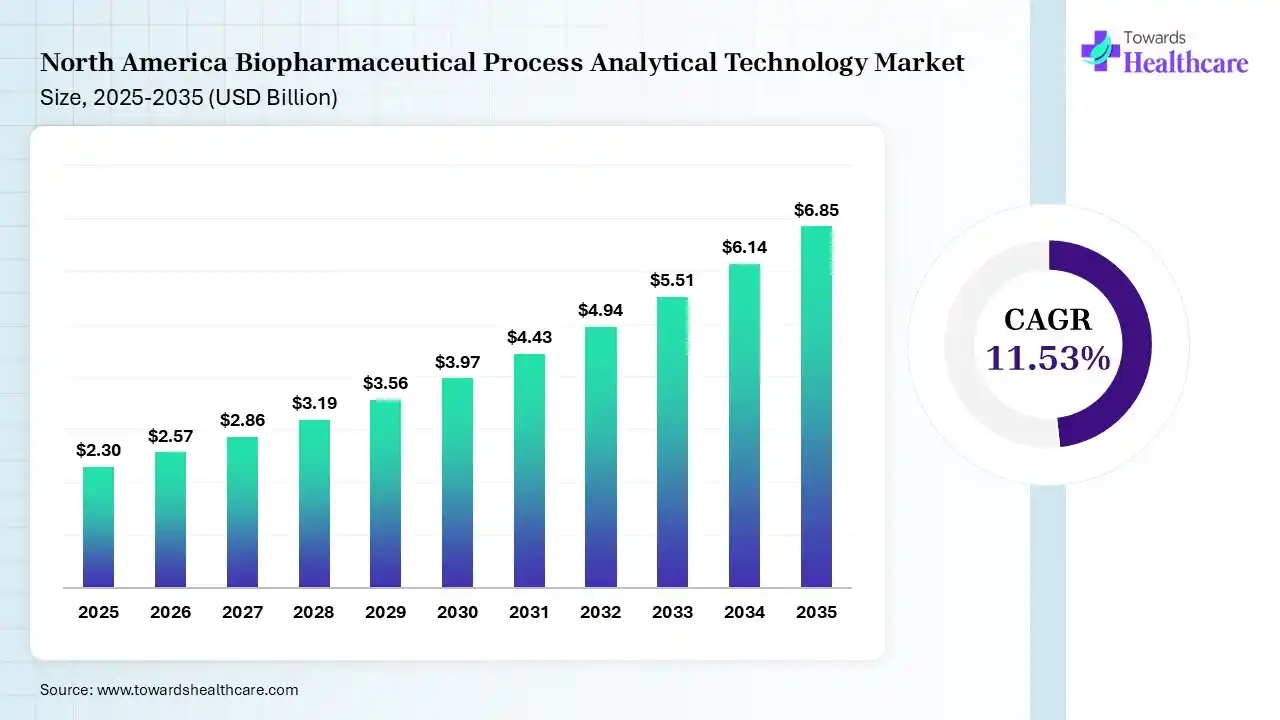
North America biopharmaceutical process analytical technology encompasses analytical tools, systems, and software used in production processes to ensure product quality, manufacturing efficiency, and regulatory compliance across North America. It includes different types of technologies such as spectroscopy, chromatography, particle size analyzers, sensors, and process monitoring software. This drives their use for drug development, upstream-downstream processes, fill-finish operations, real-time testing, and quality control.
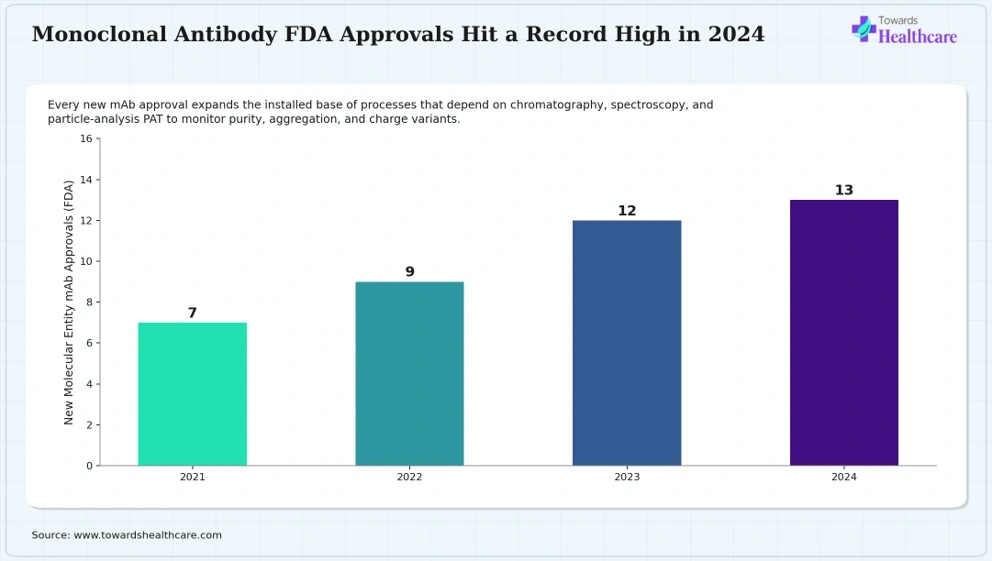
Graph 1: As the market analyst, I interpret that the graph illustrates a comparison between the monoclonal antibody approvals from 2021 to 2024, which shows a gradual growth. This expands the installed base of processes that depend on chromatography, spectroscopy, and particle-analysis PAT to monitor purity, aggregation, and charge variants of monoclonal antibodies. In 2021, new molecular entity mAb approvals by the FDA were recorded to be 7, which increased to 9 approvals in 2022. Similarly, 2023 contributed to 12 FDA approvals of new molecular entity mAbs, while 2024 achieved a new record with 13 new approvals.
Key Insight:
2024 contributed to 25% of new monoclonal antibody approvals compared to all FDA drug approvals that year, which made mAb manufacturing the major structural demand driver for chromatography and molecular-analysis PAT across North American biologics facilities.
Source: PMC, “The Pharmaceutical Industry in 2024: An Analysis of the FDA Drug Approvals,” peer-reviewed
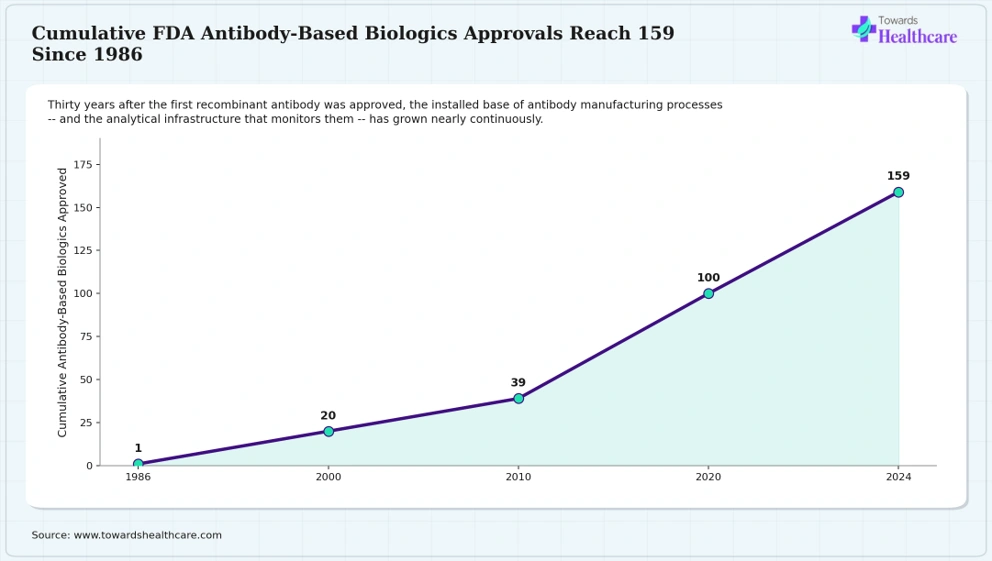
Graph 2: The graph represents cumulative FDA approvals of antibody-based biologics since 1986 till 2024, highlighting significant growth. In 1986, the first recombinant mAb, abciximab, was approved, followed by 20 approvals in 2000, 39 approvals in 2010, and 100 approvals in 2020. 2024, the highest peak was reached with 159 cumulative FDA approvals of antibody-based biologics, where 106 were IgG-based, 13 ADCs, 14 bispecifics, and fragments/fusions. This rise highlights the continuous growth in the installed base of antibody manufacturing processes and the analytical infrastructure, monitoring the mAb production process.
Key Insight:
With antibody-based drugs representing roughly 32% of all novel molecular entities approved in 2024, the year was recognized as the strongest year ever for FDA antibody approvals, confirming antibody manufacturing's structural position as the largest single application propelling North American PAT deployment.
Source: Oxford Academic, Antibody Therapeutics journal, “Structure and function of therapeutic antibodies approved by the U.S. FDA in 2024,” June 2025
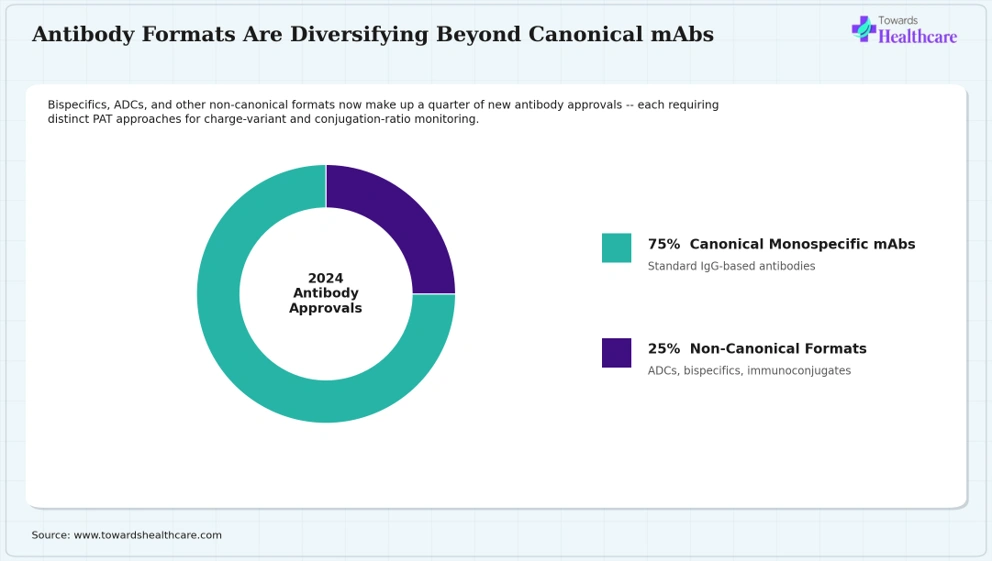
Graph 3: Based on the information gathered, the donut chart highlights different types of antibodies approved in 2024. It represents that canonical monospecific mAbs approved in 2024 contributed to approximately 75%, while non-canonical formats (ADCs, bispecifics, immunoconjugates) held approximately 25%. It outlines that bispecifics, ADCs, and other non-canonical formats hold up a quarter of new antibody approvals, driving the demand for distinct PAT approaches for charge-variant and conjugation-ratio monitoring.
Key Insight:
The growing approval of non-canonical antibodies, covering around 30% of antibodies in current regulatory review, encourages PAT vendors serving North American biologics manufacturers to support conjugation-ratio and multi-specificity analytics technologies.
Source: Taylor & Francis, mAbs journal, “Antibodies to watch in 2025,” 2024
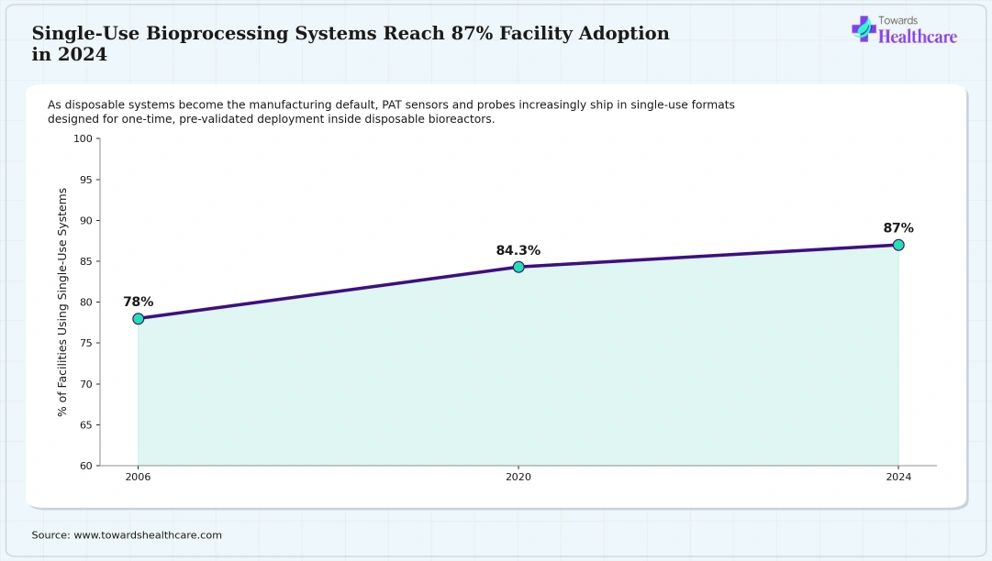
Graph 4: The graph illustrates a significant rise in the adoption of single-use bioprocessing systems from 2006 to 2024. 2006 recorded that approximately 78% of facilities utilized single-use bioprocessing systems, with the highest adoption reported for disposable filter cartridges. In 2020, 84.3% of facilities adopted single-use bioprocessing systems, which increased to 87% in 2024, highlighting the shift towards disposable systems for one-time, pre-validated deployment inside disposable bioreactors.
Key Insight:
The rise in the adoption of single-use bioprocessing systems is shifting the PAT vendors' single-use-compatible sensor and probe portfolios from a differentiator to a baseline requirement to dominate North American biomanufacturing contracts.
Source: BioPlan Associates, 21st Annual Report and Survey of Biopharmaceutical Manufacturing Capacity, 2024
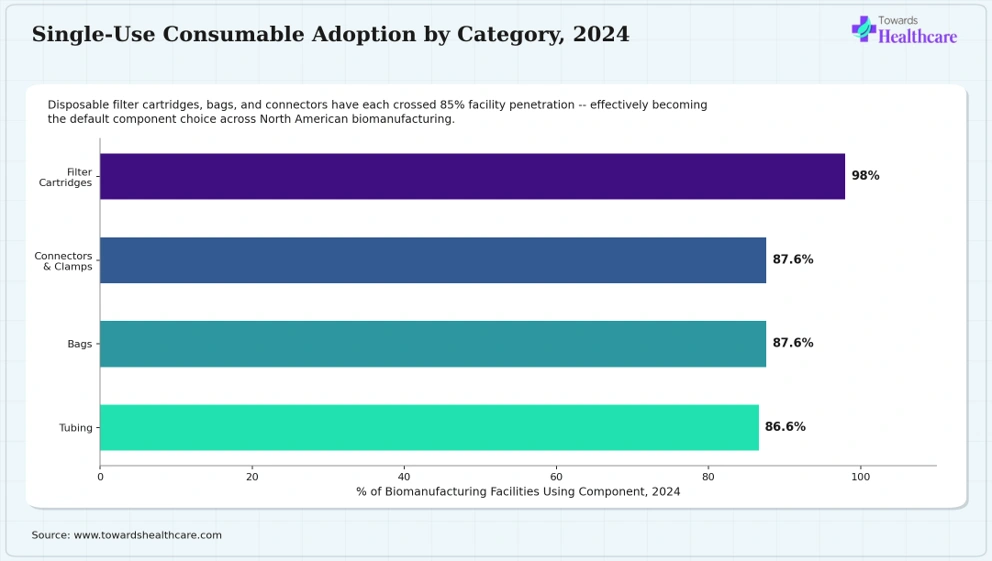
Graph 5: The above-mentioned graph highlights the adoption rate of single-use consumables in 2024. The disposable filter cartridges contributed to the highest share, with 98% of facilities using them, while single-use bags were used by 87.6% of the facilities in 2024. Connectors and clamps were adopted by 87.6% of the facilities, while tubing for disposable applications was utilized by 86.6% of facilities.
Key Insight:
With the growing use of single-use consumables across North American biomanufacturing, they are being considered as the default component, while more than 60% of bioprocessing professionals remain dissatisfied with their costs, creating commercial tension between category ubiquity and pricing pressure, shaping PAT and consumables vendor strategy.
Source: BioPlan Associates, 21st Annual Report and Survey of Biopharmaceutical Manufacturing Capacity, 2024
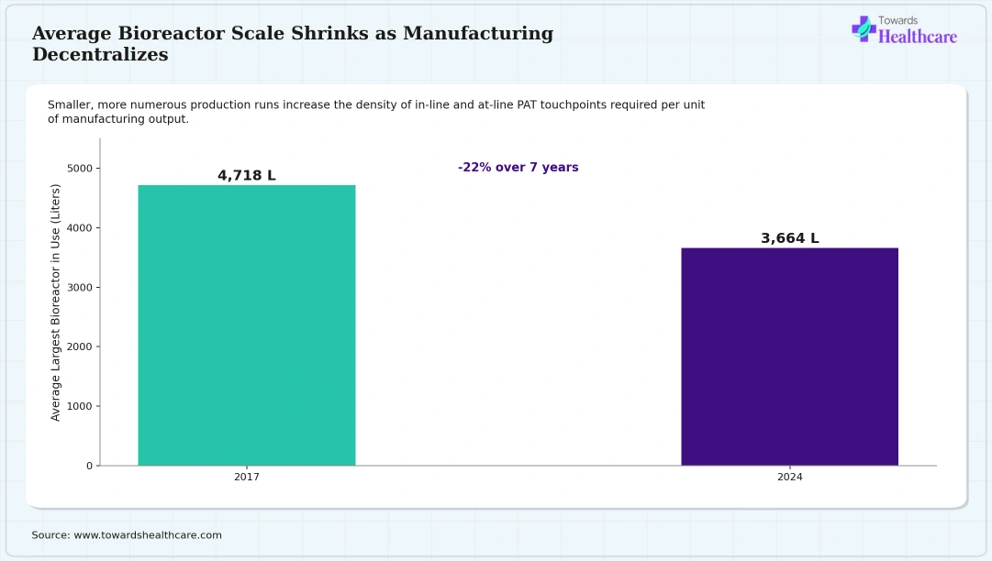
Graph 6: Based on the information gathered by Aman, the graph compares average bioreactor scale, which shows a decline as manufacturing decentralizes. In 2017, the average largest bioreactor in use was 4,718 liters, which dropped to 3,664 liters in 2024, representing a decline of 22%. It also highlights that the smallest production runs drive the density of in-line and at-line PAT touchpoints, which are essential per unit of manufacturing output.
Key Insight:
The 22% decline in average bioreactor scale over seven years signifies a broader shift toward modular, flexible, multi-product manufacturing, favoring PAT vendors that provide compact, single-use-compatible sensors over large fixed-installation analyzers.
Source: BioPlan Associates, 21st Annual Report and Survey of Biopharmaceutical Manufacturing Capacity, 2024
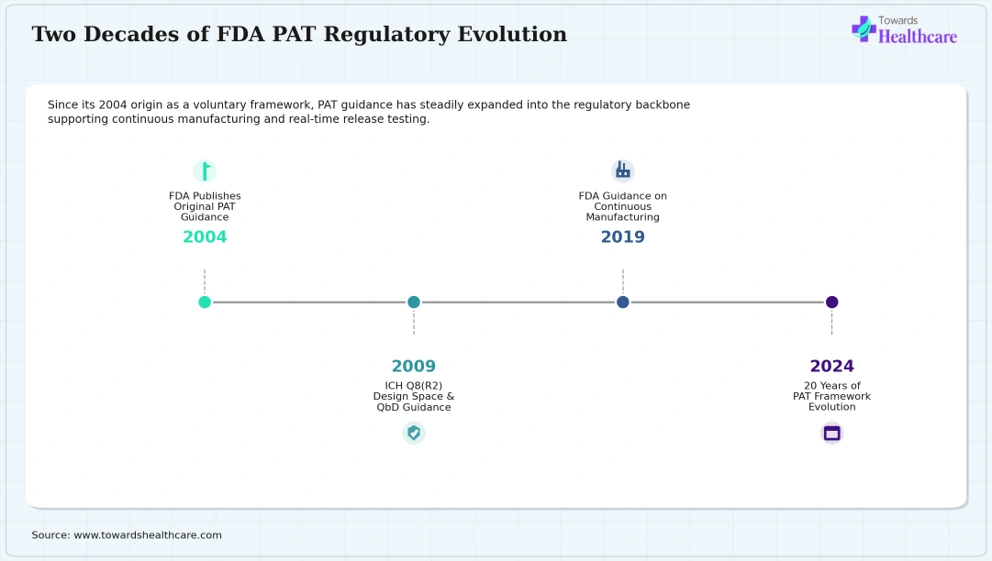
Graph 7: As the market analyst, I interpret that the given information in the timeline infographic covers the FDA PAT regulatory evolution over the two decades. 2004, the FDA published the original PAT guidance, under the title “A Framework for Innovative Pharmaceutical Development, Manufacturing, and Quality Assurance”, where in 2009 ICH Q8(R2) formalized design-space and Quality by Design (QbD) principles that rely on PAT. In 2019, the FDA published guidance on continuous manufacturing, which further embedded PAT as regulatory infrastructure, while 2024 marked the 20th anniversary of the original PAT framework.
Key Insight:
The regulatory evolution of PAT since 2004 reflects two decades of the FDA actively incentivizing the technology category, sustaining regulatory tailwind for an entire analytical instrument market.
Source: FDA Federal Register, Oct. 2004; ISPE Pharmaceutical Engineering, Sept.–Oct. 2020; FDA CGMP Q&A
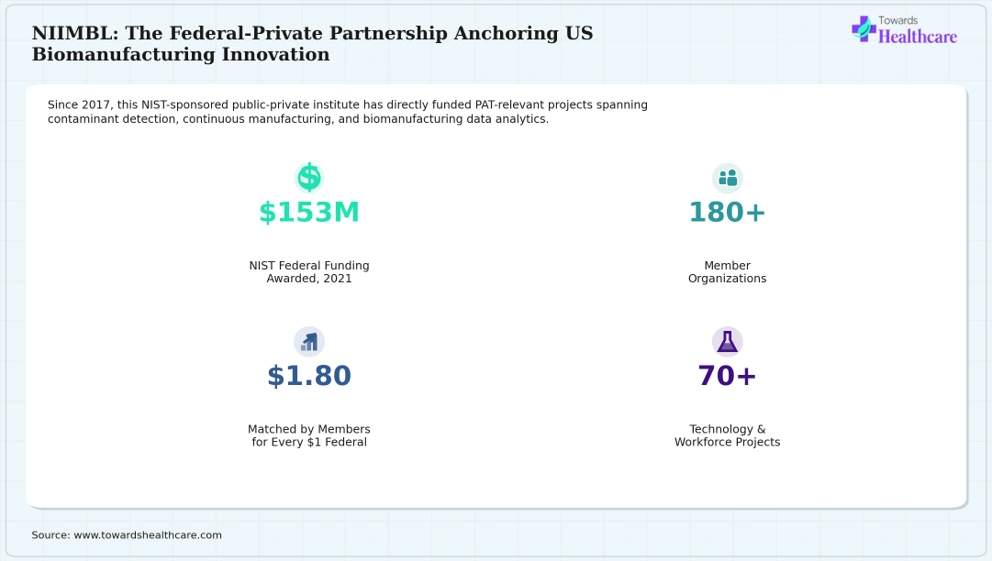
Image 1: The above-mentioned infographic stat panel encompasses the information regarding NIMBL, which is a federal-private partnership supporting U.S. biomanufacturing innovations. In July 2021, $153 million in NIST federal funding was awarded, with $70M base renewal and $83M ARP coronavirus response. Non-federal funding matched per $1 federal accounted for $1.80. The organization consists of more than 180 members, while technology and workforce development projects funded to date were reported to be more than 70.
Key Insight:
Since 2017, NIMBL, a public-private institute, has funded analytical technologies for contaminant detection alongside single-use components for continuous manufacturing, where it also supports PAT-relevant projects.
Source: U.S. Department of Commerce/NIST Press Release, July 14, 2021; BioSpace, 2020–2021
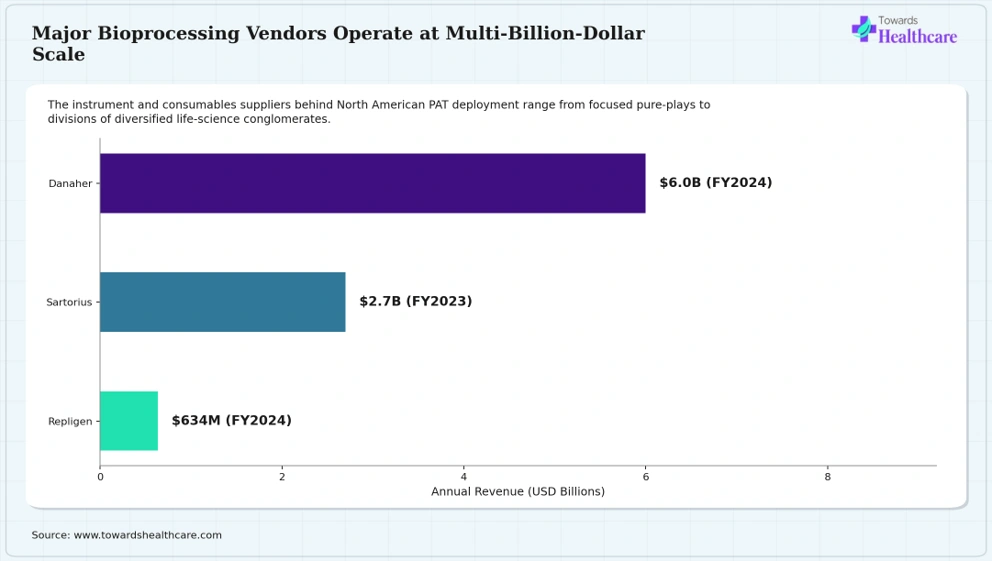
Graph 8: The graph illustrates annual revenue of the leading bioprocessing vendors in the market. Danaher Biotechnology segment (incl. Cytiva, Pall) led the biopharmaceutical process analytical technology industry across North America with an annual revenue of approximately $6.0 billion for FY2024. Sartorius Bioprocess Solutions division held the second largest share with FY2023 annual revenue of $2.7 billion, while Repligen Corporation held the third position with $634 million revenue for FY2024 (+8% sequential Q4).
Key Insight:
The growth in Danaher's annual revenue, followed by the rapid expansion of Repligen, reflects diversified platform breadth versus focused specialization, driving PAT and bioprocessing infrastructure, attracting North American biomanufacturers.
Source: Danaher 2024 Annual Report/Investor Presentation; Sartorius Group FY2023 Results; Repligen Q4/FY2024 Earnings Release, Feb. 2025
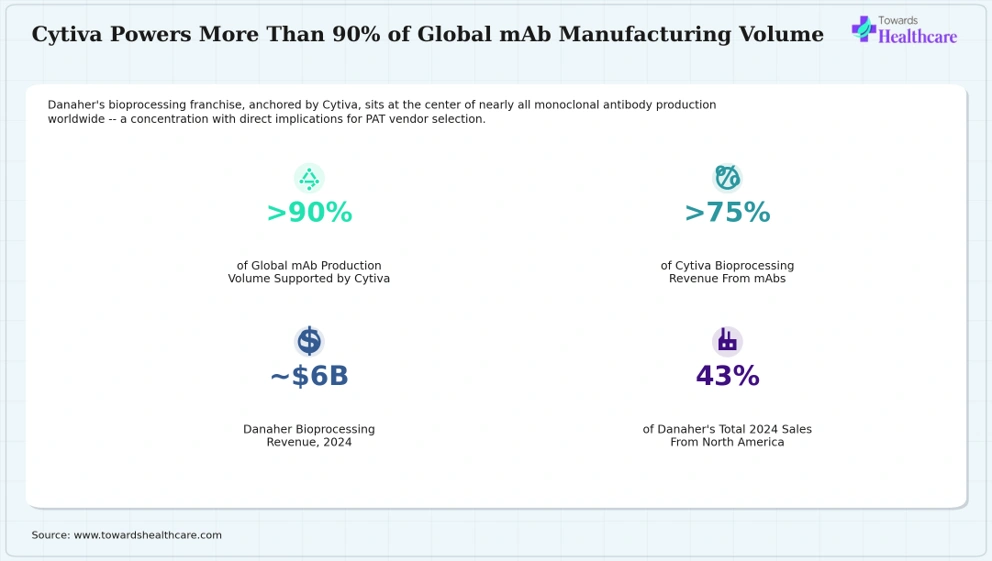
Image 2: Based on the information gathered by Aman, the infographic stat-panel covers all information related to Cytiva and Danaher, which are at the center of nearly all monoclonal antibody production worldwide. The global mAb production volume supported by Cytiva accounted for more than 90%, while its share of bioprocessing revenue from mAbs surpasses 75%. Danaher Biotechnology segment revenue for 2024 was noted to be approximately $6 billion, whereas its 2024 total sales from North America held a 43% share, while a 42% share was held by the U.S.
Key Insight:
With the rapid growth of Cytiva's platforms, any PAT vendor seeking to serve North American biologics manufacturers now should focus on a design compatible with the Cytiva ecosystem, which is a de facto industry standard shaping competitive dynamics across the entire market.
Source: Danaher Corporation 2024 Investor Overview Presentation, April 2025; Danaher 2024 Annual Report
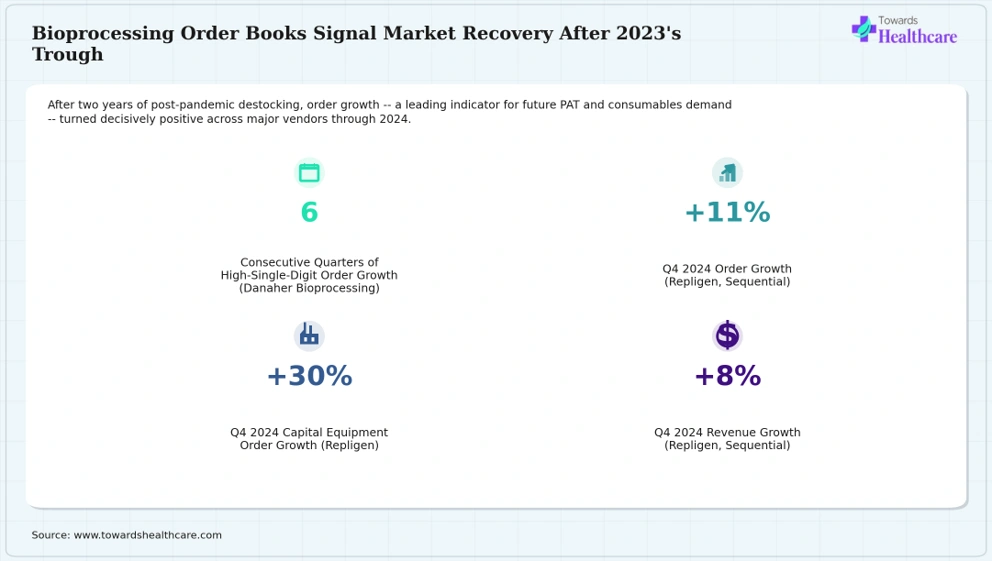
Image 3: The infographic stat-panel represents growing demand for bioprocessing systems, which act as the leading indicator for future PAT and consumables demand. Consecutive quarters of high-single-digit sequential order growth by Danaher Bioprocessing were valued at 6. The Q4 2024 sequential order growth by Repligen was reported to be more than 11%, where its Q4 2024 capital equipment sequential order growth was noted to be more than 30%, while Q4 2024 sequential revenue growth contributed to more than 8%.
Key Insight:
The accelerating order growth at Danaher and Repligen’s sequential jump in capital equipment orders are promoting the biomanufacturers to resume capital investment in PAT and bioprocessing infrastructure
Source: Danaher Q4 2024 Earnings Call Transcript, Jan. 2025; Repligen Q4/FY2024 Earnings Release, Feb. 2025
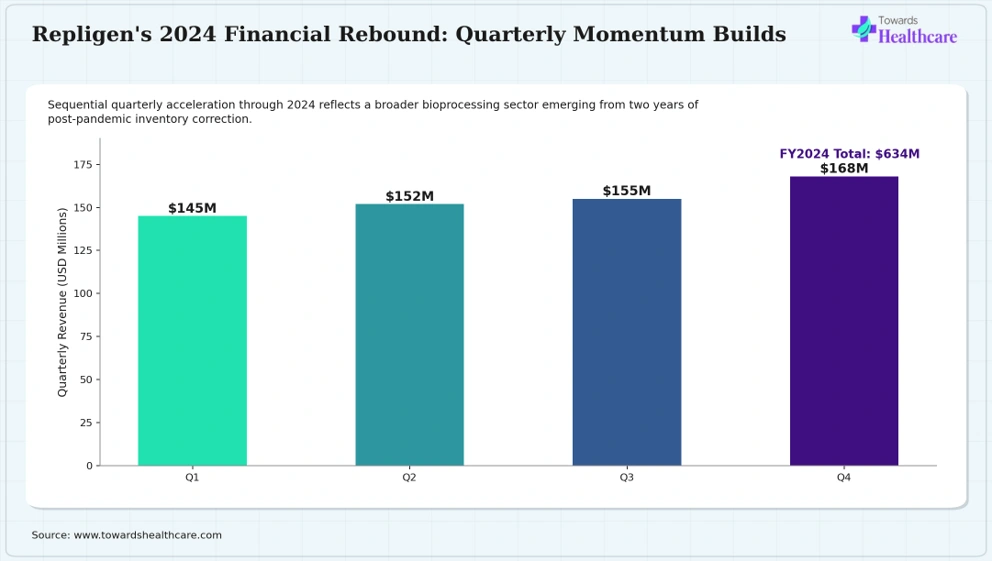
Graph 9: The graph illustrates the quarterly revenue of Repligen, which shows gradual growth, highlighting the expansion of the bioprocessing sector from two years of post-pandemic inventory correction. The full-year 2024 total revenue of Repligen was reported to be $634 million, while its Q4 2024 revenue was recorded to be $168 million, with more than 8% sequential revenue and more than 11% sequential orders.
Key Insight:
Based on Repligen's Q4 2024 order momentum, the company is surpassing the revenue growth by 6 percentage points, which reflects confidence that this sequential acceleration will continue.
Source: Repligen Corporation, Q4/FY2024 Financial Results Press Release, Feb. 20, 2025
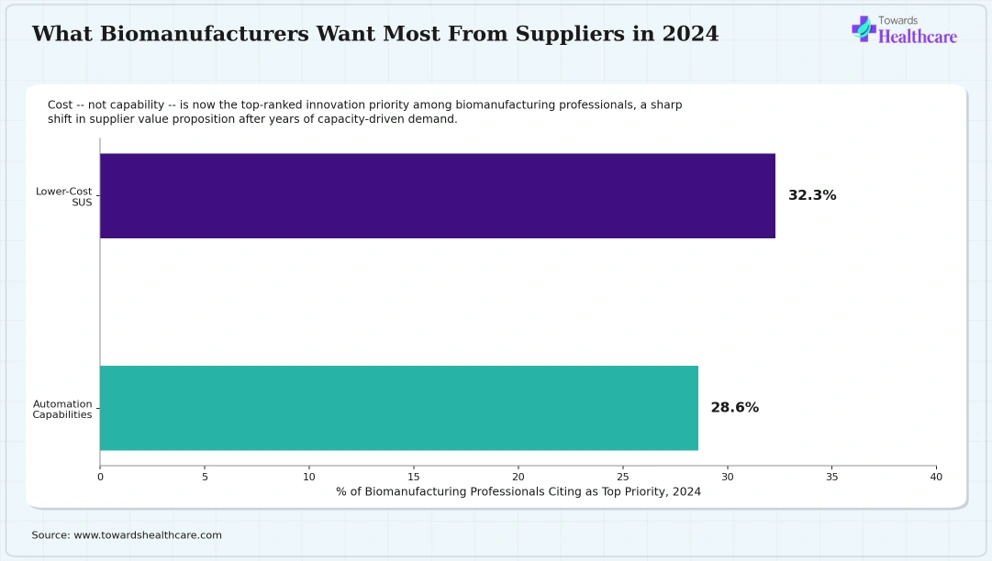
Graph 10: The given graph highlights the biomanufacturing professionals' priorities in the market, supporting a shift in supplier value proposition after years of capacity-driven demand. Lower-cost single-use systems held 32.3% of the share, with the profession citing it as the top priority in 2024. Improved automation capabilities held the second position as the top priority, with 28.6% of professionals supporting its demand.
Key Insight:
Increasing demand for low-cost single-use systems rather than automation is indicating that PAT and bioprocessing vendors are competing purely on advanced capability and not total cost of ownership, increasing the risk of losing their position in the price-sensitive North American biomanufacturing market.
Source: BioPlan Associates, 21st Annual Report and Survey of Biopharmaceutical Manufacturing Capacity, 2024
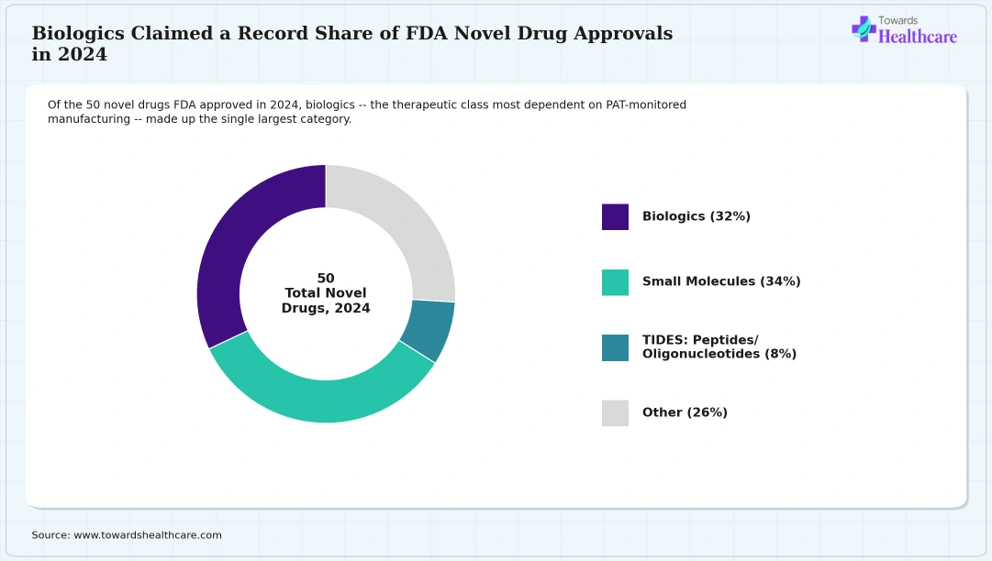
Graph 11: As the market analyst, I interpret that the above-mentioned donut chart represents the total number of novel drugs approved in 2024, where the year accounted for 50 novel drug FDA approvals, with a major share held by biologics. The growth in biologics approvals, which contributed to 16 drugs with 13 mAbs and 3 protein approvals, made them hold a share of 32%, highlighting a rise in the dependence on PAT-monitored manufacturing, which increased their use. Small molecules approved in 2024 were recorded to be 34%, TIDES (peptides and oligonucleotides) held 8%, while Other (natural products, deuterated drugs, etc.) contributed to 26%.
Key Insight:
With the rising approvals of biologics and TIDES, the demand for PAT-monitored bioprocessing is increasing, promoting their rapid expansion more than pharmaceutical overall approvals.
Source: PMC, “The Pharmaceutical Industry in 2024: An Analysis of the FDA Drug Approvals,” peer-reviewed
June 2025, 15 antibody-based drugs (plus one antibody-targeted CAR-T) were approved in 2024, which represented approximately 32% of all novel FDA-approved molecular entities, which made 2024 the strongest year ever for FDA antibody-based drug approvals and was mentioned in a peer-reviewed analysis in Antibody Therapeutics.
Source: Oxford Academic, Antibody Therapeutics journal
February 20, 2025, Q4 2024 revenue of $168 million and full-year revenue of $634 million were recorded by Repligen, where orders surpassed revenue by 6 percentage points, highlighting accelerating bioprocessing demand recovery, while 2025 reported growth by 8-12%.
Source: Repligen Corporation, Q4/FY2024 Earnings Release
January 2025, growth in the sixth consecutive quarter of high-single-digit sequential ordering in the bioprocessing business, followed by a rise in equipment demand, was reported by Danaher, where customers remained cautious on capital spending.
Source: Danaher Q4 2024 Earnings Call Transcript
2025, Cytiva-supported platforms account for more than 90% of global monoclonal antibody production volume, where monoclonal antibodies contributed to more than 75% of Cytiva's bioprocessing revenue, as mentioned in Danaher's investor overview.
Source: Danaher Corporation 2024 Investor Overview Presentation
December 2024, in 2024, 21 antibody therapeutics received first approval globally, where 9 of 21 (43%) were approved in the U.S. or EU, and non-canonical formats (ADCs, bispecifics) contributed to 25% of approvals, which was confirmed in the Antibody Society's “Antibodies to Watch in 2025” report.
Source: Taylor & Francis, mAbs journal
September 2024, it was highlighted that 32.3% of biomanufacturing professionals ranked lower-cost single-use systems as suppliers' top development priority for 2024, in the BioPlan Associates' survey, which crossed automation capabilities for the first time, with 28.6%
Source: BioPlan Associates, BioProcess Online
August 2024, 21st Annual Report and Survey of Biopharmaceutical Manufacturing Capacity, was published by BioPlan Associates, which confirmed single-use system adoption reached 87% among surveyed facilities, while the average largest bioreactor size declined to 3,664 liters from 4,718 liters in 2017.
Source: BioPlan Associates, BioProcess Online
2021 (July 14), $153 million in new NIST federal funding for NIIMBL was announced by the U.S. Secretary of Commerce Gina Raimondo, which included $83 million in American Rescue Plan coronavirus-response funding along with federal sponsorship of the public-private biomanufacturing innovation institute for five more years.
Source: U.S. Department of Commerce Press Release
It is a diversified life-sciences conglomerate, where its biotechnology segment is the leading global bioprocessing/PAT-adjacent supplier. Biotechnology segment revenue for FY2024 was noted to be approximately $6.0B, while Cytiva platforms supported more than 90% of global mAb production volume.
It is a global bioprocessing equipment and consumables supplier, consisting of the bioprocess solutions division, which contributed to $2.7B in revenue in FY2023. Its core technologies include filtration, fermentation, and fluid management.
It is a pure-play bioprocessing technology company offering filtration, chromatography, and process analytics solutions. FY2024 recorded revenue of $634M and closed the acquisition of chromatography innovator Tantti Laboratory.
It is a diversified life-sciences and analytical instrumentation supplier, which included bioproduction in its life sciences solutions segment, and was announced to have held revenue of $9.9B in FY2023.
It is a major bioprocessing filtration, chromatography, and process-analytics competitor to companies such as Repligen, Danaher, and Sartorius.
It is a NIST-sponsored public-private partnership focusing on U.S. biopharmaceutical manufacturing innovation, including PAT. It consists of more than 180 member organizations and has funded more than 70 technology/workforce projects since 2017, where in 2021 it received $153M in NIST federal funding
It is a federal agency that regulates and approves biologics such as all monoclonal antibodies, cell/gene therapies, and biologics license applications (BLAs) governing PAT-monitored biologics manufacturing.
It is a federal agency that is the author of the foundational 2004 “PAT-A Framework for Innovative Pharmaceutical Development, Manufacturing, and Quality Assurance” guidance framework and continues to regulate small-molecule and biologic manufacturing quality.
It is an independent biomanufacturing market research firm that publishes the industry's most-cited annual capacity and technology-adoption survey reports.
It is a nonprofit trade association that tracks global antibody therapeutic development and regulatory approvals. It publishes the annual report titled “Antibodies to Watch,” which acts as the industry-standard tracker of antibody approvals.
Aditi is a life science research expert with strong experience in biopharmaceuticals, analytical technologies, and biologics markets. She conducted detailed market research, analyzed company data, clinical trends, and industry developments. Based on her comprehensive analysis, the following strategic key takeaways highlight the most important market insights and opportunities.
Based on my assessment, the market is expanding rapidly due to increasing FDA approvals of biologics. The growth in demand for antibodies, single-use bioprocessing systems, low-cost systems, and single-use consumables is also driving the market expansion. I also anticipate that growing funding and collaboration will increase the use of biopharmaceutical process analytical technologies. I also see significant growth in the demand for PAT technologies and automation capabilities, which will create new market opportunities.
Payal Rabde led the primary market research, developed the methodology, analyzed trends, competition, forecasts, and strategic opportunities, forming the report's analytical foundation.
Aman was responsible for collecting and validating clinical trial data, research publications, company information, partnerships, and other quantitative datasets, strengthening evidence-based analysis and market estimations.
Aditi reviewed the complete research document, performed quality checks, validated findings, refined content, corrected inconsistencies, and finalized the report, ensuring accuracy, clarity, credibility, and publication-ready quality.
By Type
By Product & Service
By Technology/Analytical Technique
By Monitoring Method
By Application
By Process Stage
By End User
By Organization Size
By Distribution Channel
















Principal Consultant
Payal Rabde is a Healthcare Market Research Analyst at Towards Healthcare Research & Consulting with 4+ years of experience in pharmaceuticals, biotechnology, medical devices, and life sciences.
Learn more about Payal Rabde

Reviewed By
Aditi Shivarkar is a seasoned professional with over 14 years of experience in healthcare market research. As a content reviewer, Aditi ensures the quality and accuracy of all market insights and data presented by the research team.
Learn more about Aditi Shivarkar









