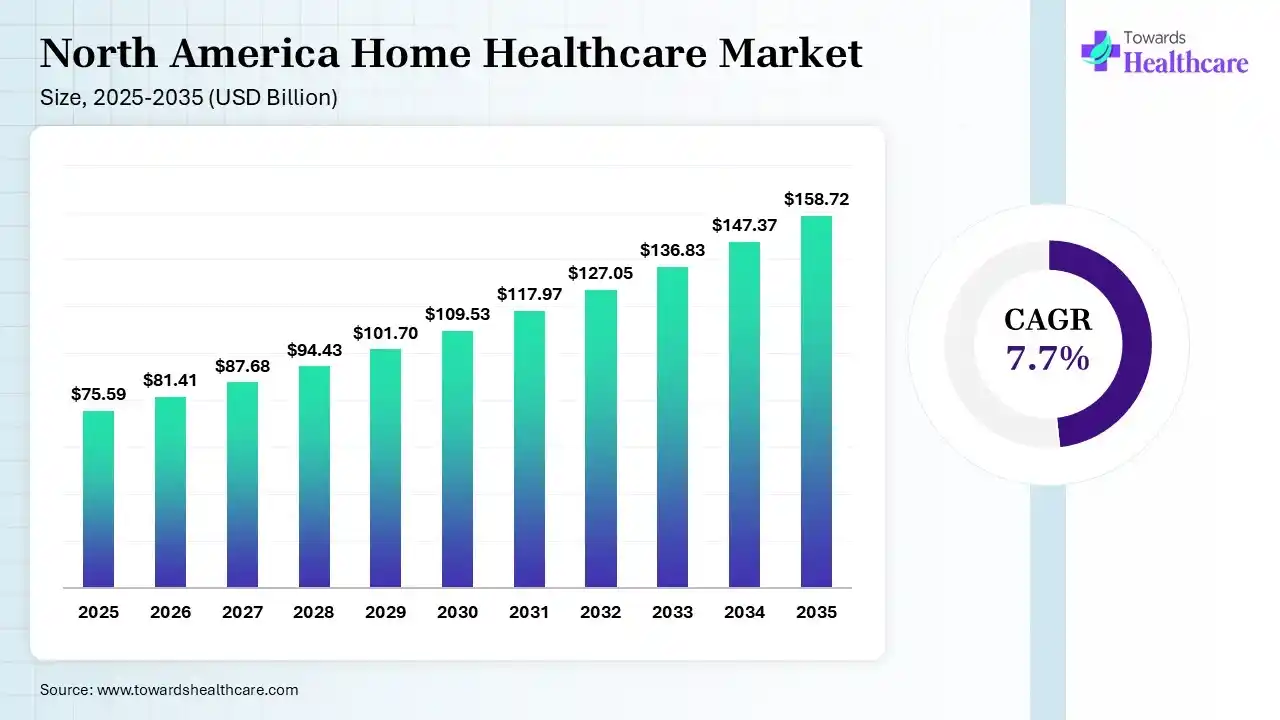
The North America home healthcare market size was estimated at USD 75.59 billion in 2025 and is predicted to increase from USD 81.41 billion in 2026 to approximately USD 158.72 billion by 2035, expanding at a CAGR of 7.7% from 2026 to 2035. The North American home healthcare market is increasing due to growing aging populations, technology, convenience, and rising demand for targeted care.
The North America home healthcare market is growing very fast because the elderly population is expanding quickly, and more people are living with long-term sicknesses. Instead of staying in crowded hospital beds, many patients now prefer to heal comfortably at home. This major shift creates big new opportunities for technology companies to build smart medical gadgets and wearable tracking sensors. Today, doctors can check heart rates from afar and hold easy video calls to treat patients directly in their living rooms. Governments are also giving strong support by providing better payouts and clear funding programs like Medicare. This public funding helps make home care affordable, keeps local hospitals from overflowing, and saves valuable healthcare money for everyone.
Home healthcare is medical care offered in the individual's home. Home healthcare employees provide hands-on chronic care and personal assistance to clients with challenges or other chronic health conditions. Home health care brings solutions to the homes of aging people to lower the effects of disease or disability, or to enhance or maintain health. Its purpose is to support older people to better function in their own home, which may have become difficult because of physical or mental changes. Home health care is a temporary medical and therapeutic solution which provided in a patient’s home. The care is offered by licensed professionals and follows modified treatment plans. It enables the care team to see the patients’ everyday experiences, which supports tweaking treatment plans to best suit their patients' requirements.
For Instance,
Artificial intelligence technology is increasingly being introduced into home healthcare, ensuring enhanced effectiveness and healthcare decision-making. AI-based in-home care involves remote patient monitoring tools, AI-based chatbots for patient communication, voice-enabled supporters for medication prompts, and scheduling platforms that improve caregiver assignments. Accepting AI technology via predictive analytics, which flag high-risk patients, natural language processing (NLP) devices that lower documentation time, AI-based scheduling engines that match caregivers with the correct clients, and voice-permitted assistants that guide patients via medication procedures or check-in queries. AI-based technology automatically validates visit information against electronic visit verification (EVV) needs, flags incomplete records, and generates compliance-ready certification.
Hospital-at-Home and Acute Care Services:
Hospital-at-home programs that allow individuals to receive acute care at home have proven effective in lowering complications while cutting the expenses of care by 30 percent or more, leading to commercial efforts to promote their use.
Shift Toward Preventive and Wellness Care:
Patients and caregivers are transforming their focus toward preventive health and long-term disease management. This involves everything from routine mobility assistance to intensive care of diabetes and cardiovascular disorders.
| Table | Scope |
| Market Size in 2026 | USD 81.41 Billion |
| Projected Market Size in 2035 | USD 158.72 Billion |
| CAGR (2026 - 2035) | 7.7% |
| Historical Data | 2020 - 2023 |
| Base Year | 2025 |
| Forecast Period | 2026 - 2035 |
| Measurable Values | USD Millions/Units/Volume |
| Market Segmentation | By Component, By Indication, By Application, By End User, By Payer, By Delivery Mode, By Region |
| Top Key Players | Healthcare atHome, Nightingales, Abbott, Fresenius Medical Care |
| Segment | Share 2025 (%) |
| Equipment | 42% |
| Services | 58% |
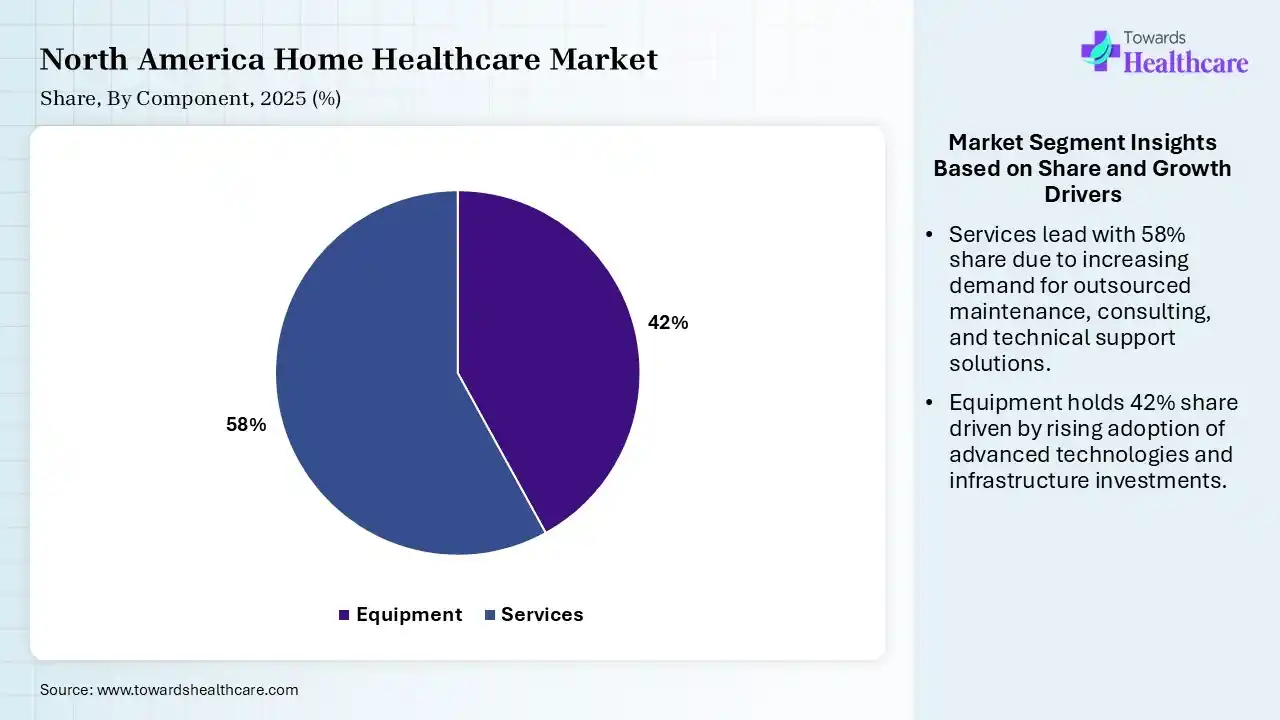
The Services Segment Led the North America Home Healthcare Market in 2025
The services segment contributed the largest market share of 58% in 2025, as home healthcare services remove the requirement for travel to healthcare facilities, creating significant medical treatments, diagnostic tests, and therapeutic interventions more reachable and convenient. Avoiding hospital stays and delaying or preventing nursing home placement results in significant expense savings.
The equipment segment held a significant share of 42% in the market and is expected to grow at the fastest CAGR of 8.60% during the forecast period, as home care equipment standardizes home medical care and makes it simple for caregivers to perform their responsibilities. Medical tools used at home potentially enhance comfort, flexibility, and recovery for patients and caregivers. Medical devices used in home health care need to be suitable for the person who uses them and for the environments in which they are used.
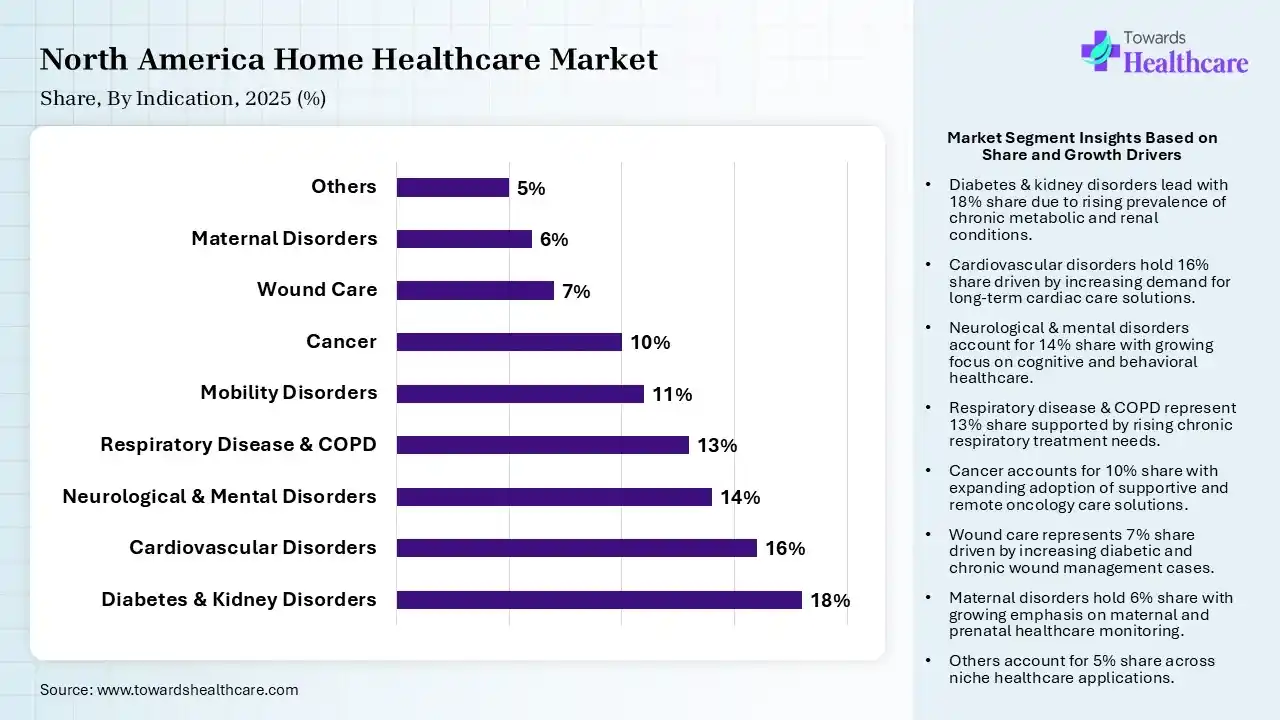
| Segment | Share 2025 (%) |
| Diabetes & Kidney Disorders | 18% |
| Cardiovascular Disorders | 16% |
| Neurological & Mental Disorders | 14% |
| Respiratory Disease & COPD | 13% |
| Mobility Disorders | 11% |
| Cancer | 10% |
| Wound Care | 7% |
| Maternal Disorders | 6% |
| Others | 5% |
Diabetes & Kidney Disorders Segment Led the North America Home Healthcare Market in 2025
The diabetes & kidney disorders segment contributed the largest market share of 18%, as the home care approaches for patients suffering from type 2 diabetes mellitus provide advanced glycemic control as compared to hospital care. There are plenty of affordable supportive options available to those who require them, including taking on a diabetes targeted care assistant. Diet management is the significance of preserving the function of the kidneys.
The cardiovascular disorders segment held a significant share of 16% of the market, as home care for heart disease patients offers various advantages, targeted care plans based on individual needs and assessments help in managing symptoms effectively. It helps patients maintain their health outside traditional hospital settings.
The neurological & mental Disorders segment held a significant share of 14% of the North America home healthcare market, as home care offers benefits to mental health patients suffering from depression and isolation. It offers comfort and security for patients stressed with anxiety or other mental health disorders. Home care providers support patients with depression and isolation by encouraging healthy habits.
The mobility disorders segment held a significant share of 11% of the market and is expected to grow at the fastest CAGR of 8.20% during the forecast period. In-home care gives more choices for where to live. In-home care saves the energy of patients for the things they enjoy, the pursuits that make them come alive, and which give them a sense of purpose.
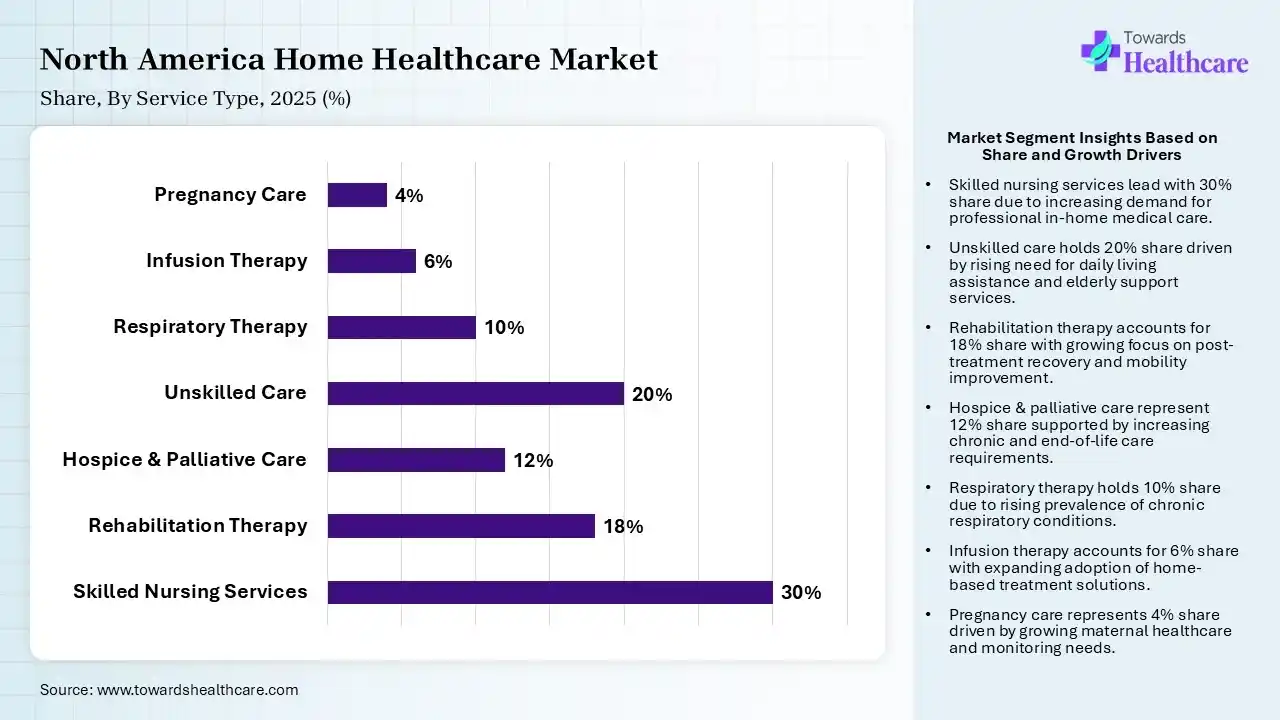
| Segment | Share 2025 (%) |
| Skilled Nursing Services | 30% |
| Rehabilitation Therapy | 18% |
| Hospice & Palliative Care | 12% |
| Unskilled Care | 20% |
| Respiratory Therapy | 10% |
| Infusion Therapy | 6% |
| Pregnancy Care | 4% |
The Skilled Nursing Services Segment led the North America Home Healthcare Market in 2025
The skilled nursing services segment held a significant share of 30% in the market. Skilled nursing care is designed to lower the challenges for rehospitalization. This is done by supporting patients to become stronger and more independent. Skilled nursing care includes physical therapy, speech therapy, and occupational therapy. These three therapies often work together to offer the most advanced possible results.
The unskilled care segment contributed a market share of 20% in 2025, as unskilled care supports patients in maintaining their independence while receiving the care they need. It enables them to continue in the comfort of their own home, where they feel comfortable and most safe. Unskilled care is usually more cost-effective than skilled care.
The telehealth & remote diagnostics segment held a significant 18% share of the North America home healthcare market, as in-home rehabilitation services provide a convenient, targeted, and supportive strategy to recovery from an injury, improving results. In-home rehabilitation provides targeted care, flexible scheduling, and reduced infection challenges.
The hospice & palliative care segment held a significant share of 12% in the market, and is expected to grow at the fastest CAGR of 8.00% during the forecast period, as HBPC is reported to improve the quality of life, lower needless hospitalizations, and increase the likelihood of patients dying in their preferred settings. Home-driven palliative care (HBPC) has emerged as a noteworthy model to tackle the complex requirements of patients with life-limiting illnesses, especially in super-aged societies.
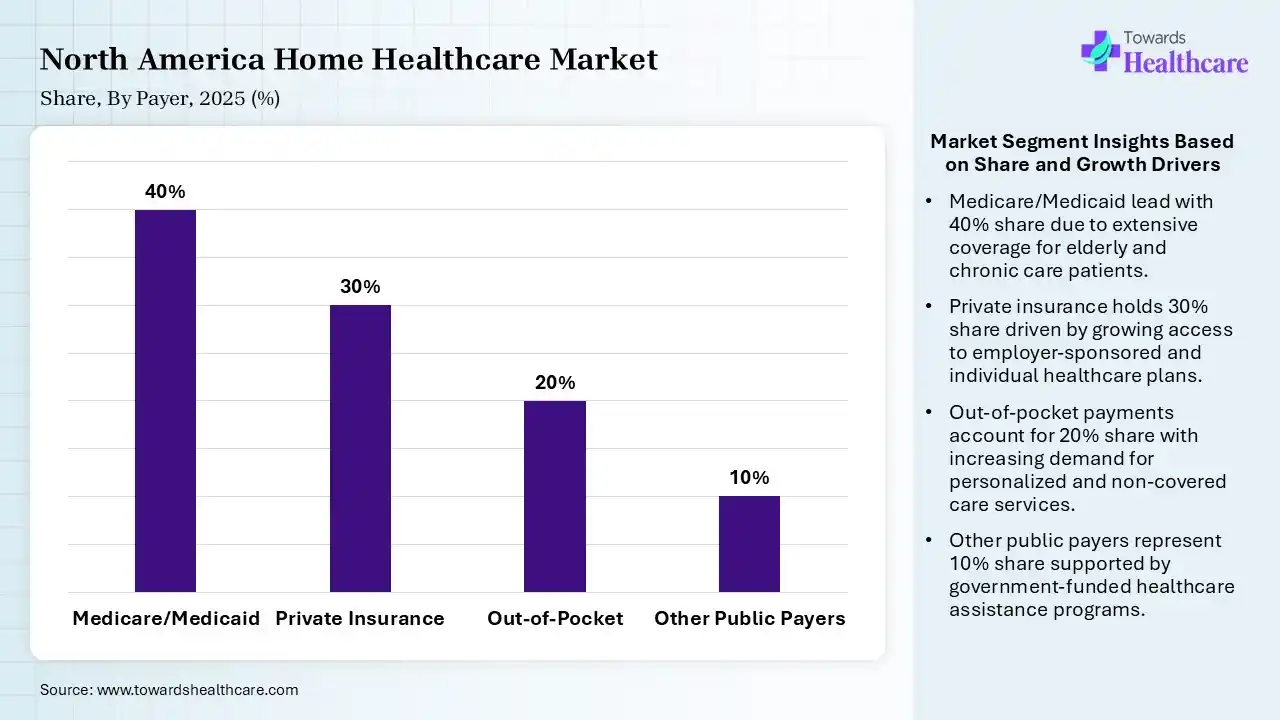
| Segment | Share 2025 (%) |
| Medicare/Medicaid | 40% |
| Private Insurance | 30% |
| Out‑of‑Pocket | 20% |
| Other Public Payers | 10% |
The Medicare/Medicaid Segment led the North America Home Healthcare Market in 2025
The Medicare/Medicaid segment contributed the largest market share of 40%, as it provides long-term savings, plan flexibility, and better care, which leads to rarer provider choices, additional costs, and lifestyle trials. These plans are provided by private insurers and offer the same advantages as original Medicare.
The private insurance segment held a significant share of 30% in the market and is expected to grow at the fastest CAGR of 8.00% during the forecast period. The significance of healthcare insurance is evident when unexpected health challenges arise, and savings are at risk. Health Insurance is an agreement between the insurer, such as a health insurance company, and the insured. Private insurance usually grants rapid access to specialist consultations and elective surgeries.
The out‑of‑pocket segment held a significant share of 20% in the North America home healthcare market, as paying out-of-pocket (OOP) for home medical care, often referred to as private pay, allows patients to bypass the rigid eligibility needs and solution limits typical of government programs such as Medicare or Medicaid.
The other public payers segment held a significant share of 10% in the market, as in-home medical care public payers safeguard equitable access to care for susceptible populations, potentially lower out-of-pocket costs, and drive systemic affordability.
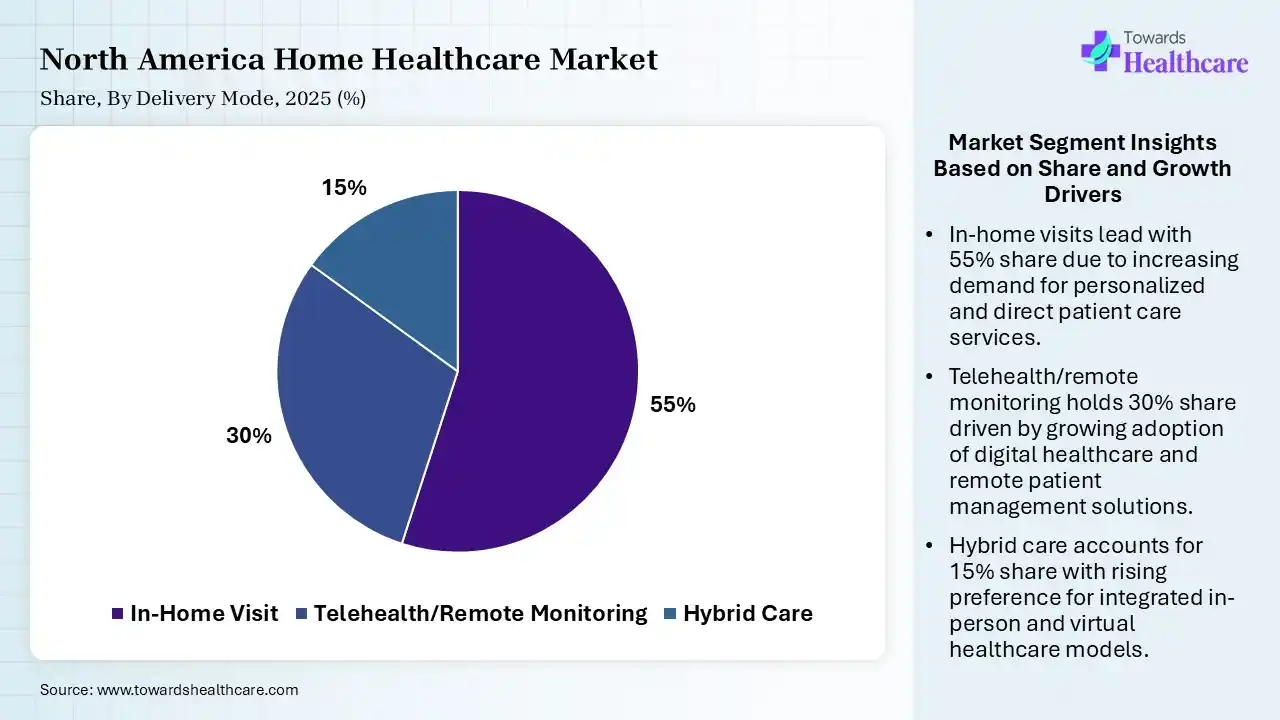
| Segment | Share 2025 (%) |
| In‑Home Visit | 55% |
| Telehealth/Remote Monitoring | 30% |
| Hybrid Care | 15% |
The In‑Home Visit Segment led the North America Home Healthcare Market in 2025
The in‑home visit segment contributed the largest market share of 55% in 2025, as in-home visits provide professional healthcare care of hospital standards to the patient in the comfort of their home. It is extremely affordable compared to in-hospital care. In-home care supports provide the patient with professional health care in their own familiar surroundings.
The telehealth/remote monitoring segment held a significant share of 30% in the market, and is expected to grow at the fastest CAGR of 9.20% during the forecast period because remote monitoring and control systems offer important benefits for data centres and server rooms, improving security, operational effectiveness, and business stability. Remote monitoring ensures incessant surveillance of environmental conditions, power supply, and system performance.
The hybrid care segment held a significant share of 15% in the market, as hybrid healthcare is its ability to remove barriers to access. Individual struggle with transportation, flexibility, or time constraints still receive high-quality care via virtual appointments. Hybrid healthcare provides affordable benefits for both patients and providers.
The global home healthcare market size was estimated at USD 226.92 billion in 2025 and is predicted to increase from USD 246.44 billion in 2026 to approximately USD 517.81 billion in 2035, expanding at a CAGR of 8.6% from 2026 to 2035.
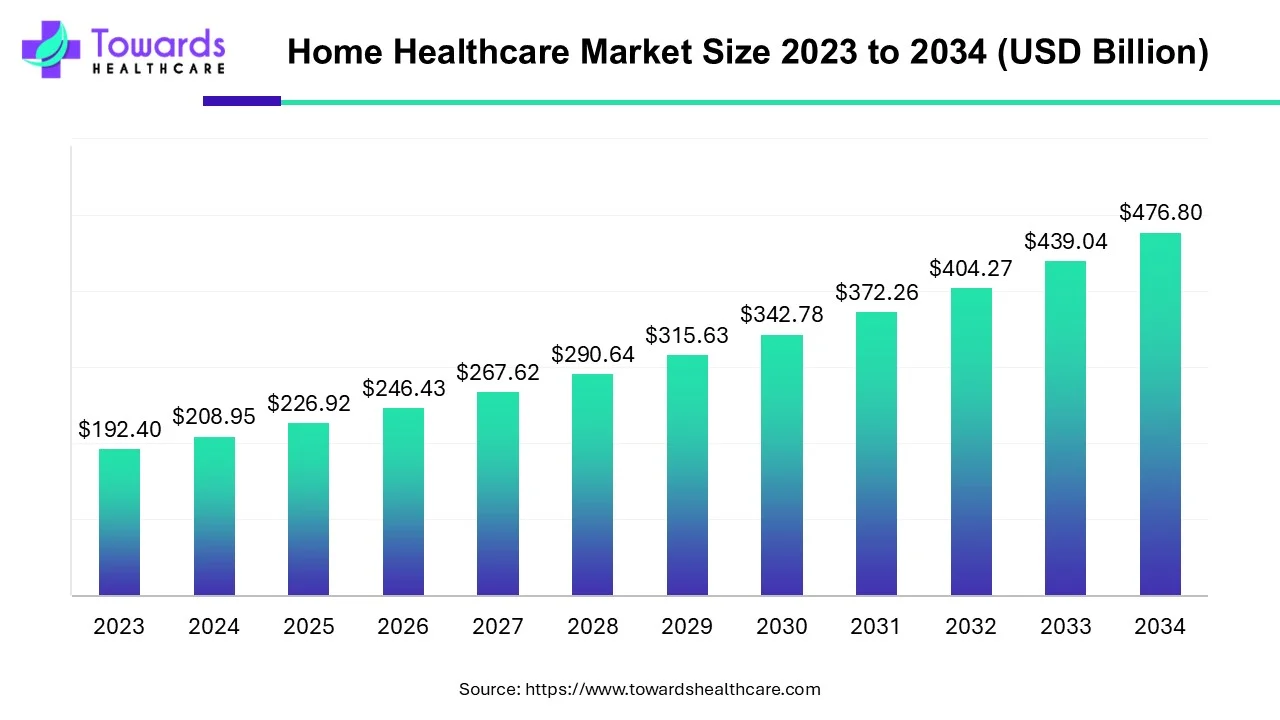
The U.S. home healthcare market is expanding due to rising chronic diseases, aging populations, and increasing preference for in-home treatment. Advanced remote monitoring technologies, telehealth integration, and supportive reimbursement policies are improving patient access and outcomes. Demand for skilled nursing, rehabilitation, and personalized care services continues to grow steadily nationwide today.
Canada Home Healthcare Market
Canada’s home healthcare market is growing through stronger government support, increasing elderly populations, and greater awareness of cost-effective home-based treatment. Healthcare providers are expanding nursing, physiotherapy, and palliative care services to reduce hospital burdens. Digital health platforms and community care programs are also improving accessibility for patients across Canadian provinces
Mexico Market Trends
The home healthcare market in Mexico is growing very fast. More elderly people live in the country today. This large geriatric population needs daily medical help. Chronic diseases like diabetes are also rising quickly. Hospital stays are too expensive for many families. Healing at home saves them a lot of money. The government supports this shift by funding public healthcare programs. Better internet also helps doctors check patients through video calls. New technology allows nurses to track heart rates from a distance. Patients feel much safer and more comfortable resting in their own homes.
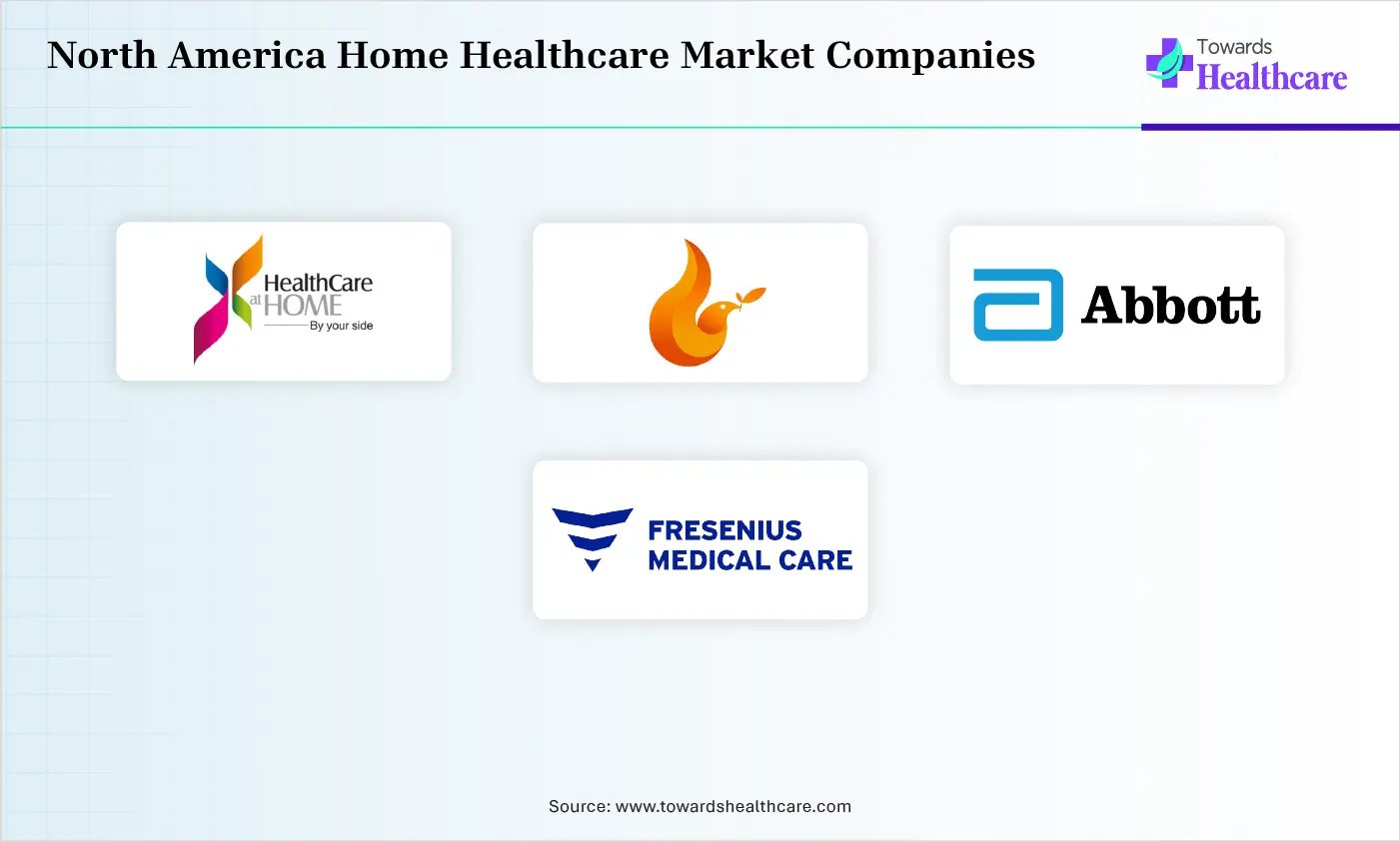
| Company | Headquarters | Latest Update |
| Healthcare atHome | United States | Handling surgical drains, dressing variations, and intravenous therapies to prevent infections and aid in curative. |
| Nightingales | United States | A well-established home health brand in India offering specialized care for chronic diseases, dementia, and stroke rehabilitation. |
| Abbott | United States | This company is leader in home medical equipment, well-known for continuous glucose monitoring (CGM) devices that empower patients to manage diabetes. |
| Fresenius Medical Care | United States | In May 2026, Intel launched Core Series 2 processors and a healthcare Edge AI suite at Embedded World 2026, directing real-time industrial workloads and AI-driven patient monitoring. |
In April 2026, Robert Stanley, founder and chief executive officer of CHAH AI Care and Stay at Home Nursing, said demographic pressure on the healthcare system leaves little room to rely on hospital expansion alone. "Canada's healthcare system is facing a demographic wave that will fundamentally reshape how care needs to be delivered," Stanley said. "We cannot build enough hospital beds fast enough to meet demand. The future of healthcare will require intelligent infrastructure in the home, technology that helps identify risks earlier, supports care teams, and allows Canadians to age safely where they want to be," he added.
Strengths
Weakness
Opportunities
Threat
By Component
By Indication
By Application
By End User
By Payer
By Delivery Mode
By Region









Principal Consultant
Payal Rabde is a Healthcare Market Research Analyst at Towards Healthcare Research & Consulting with 4+ years of experience in pharmaceuticals, biotechnology, medical devices, and life sciences.
Learn more about Payal Rabde

Reviewed By
Aditi Shivarkar is a seasoned professional with over 14 years of experience in healthcare market research. As a content reviewer, Aditi ensures the quality and accuracy of all market insights and data presented by the research team.
Learn more about Aditi Shivarkar