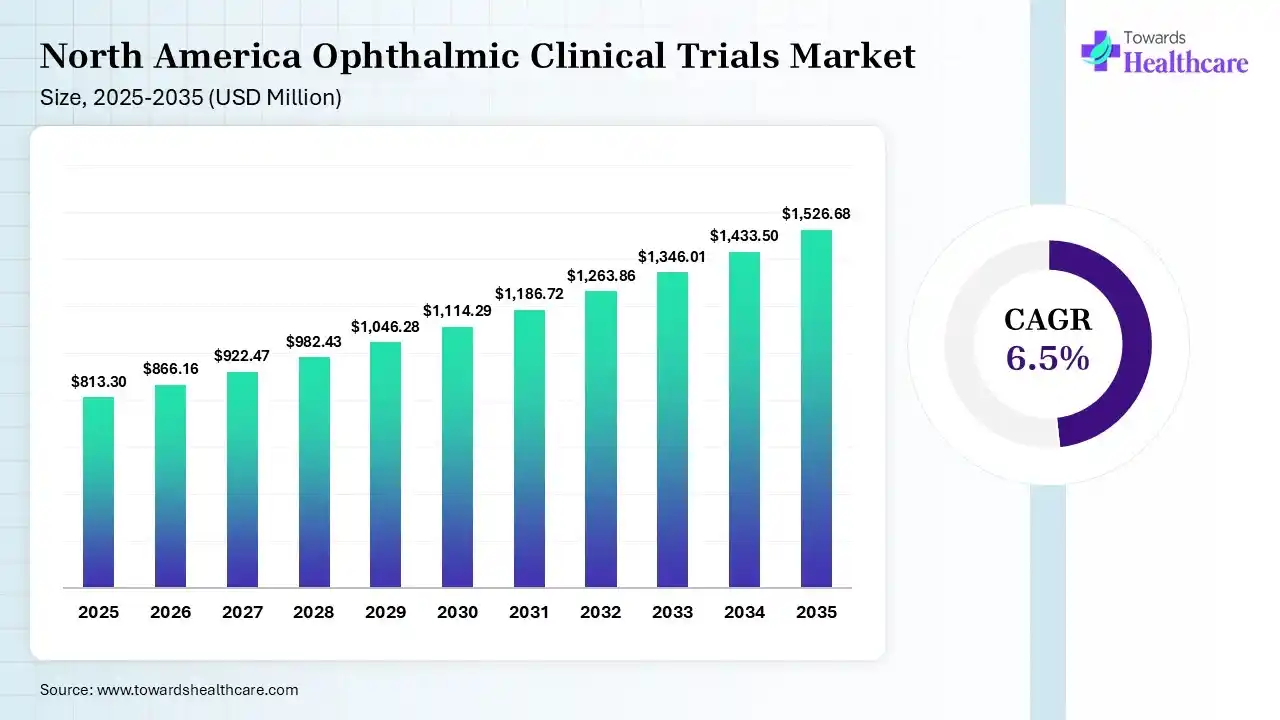
The North America ophthalmic clinical trials market size was estimated at USD 813.3 million in 2025 and is predicted to increase from USD 866.16 million in 2026 to approximately USD 1526.68 million by 2035, expanding at a CAGR of 6.5% from 2026 to 2035. Her analysis highlights that the North America ophthalmic clinical trials market is rapidly expanding due to growing advancements in geographic atrophy drugs, an expanding clinical pipeline, emerging cell and gene therapies, growing patent approvals, and key industry players like IQVIA, ICON plc, Labcorp, Charles River Laboratories, and Medpace Holdings.
North America ophthalmic clinical trials refer to the research studies conducted for the evaluation of efficacy, safety, and tolerability of drugs and devices targeting eye disorders across North America. Ophthalmic clinical trials encompass a wide range of treatment options such as drugs, biologics, gene/cell therapy, and devices. These treatments target eye diseases from macular degeneration and glaucoma to dry eye disease, retinopathy, and rare inherited retinal conditions.
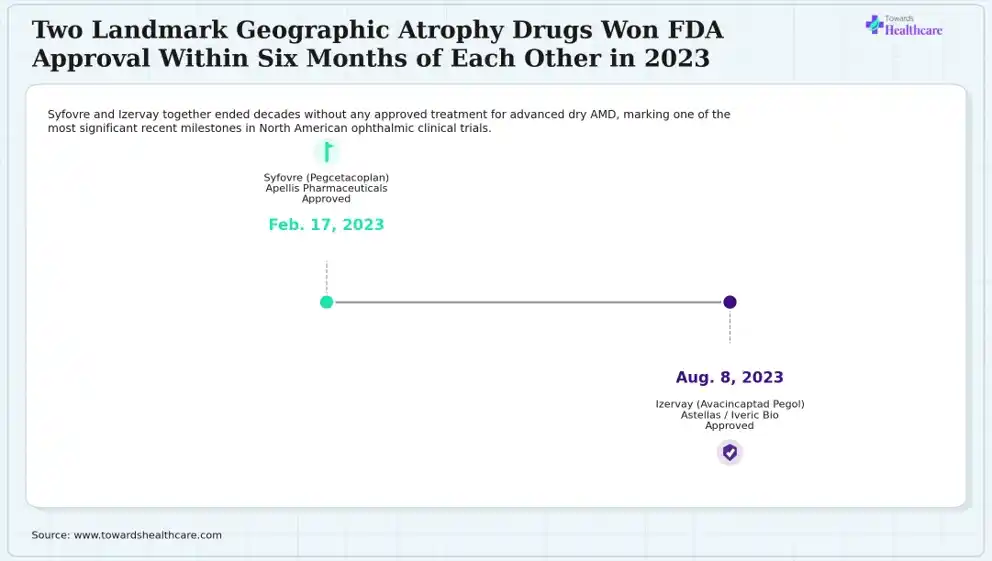
As the market analyst, I interpret that the timeline infographic illustrates the first two FDA-approved geographic atrophy drugs in 2023. On February 17, 2023, Syfovre (pegcetacoplan) was launched by Apellis Pharmaceuticals, and on August 8, 2023, Astellas/Iveric Bio launched Izervay (avacincaptad pegol).
Key Insight:
Complement inhibition became the clinically validated therapeutic mechanism for geographic atrophy due to the launch of these drugs in the same year, targeting different points in the complement cascade, such as C3 and C5, respectively.
Source: American Academy of Ophthalmology, “What to Know About Syfovre and Izervay for Geographic Atrophy,” April 17, 2025; Houston Methodist, Jan. 30, 2024.
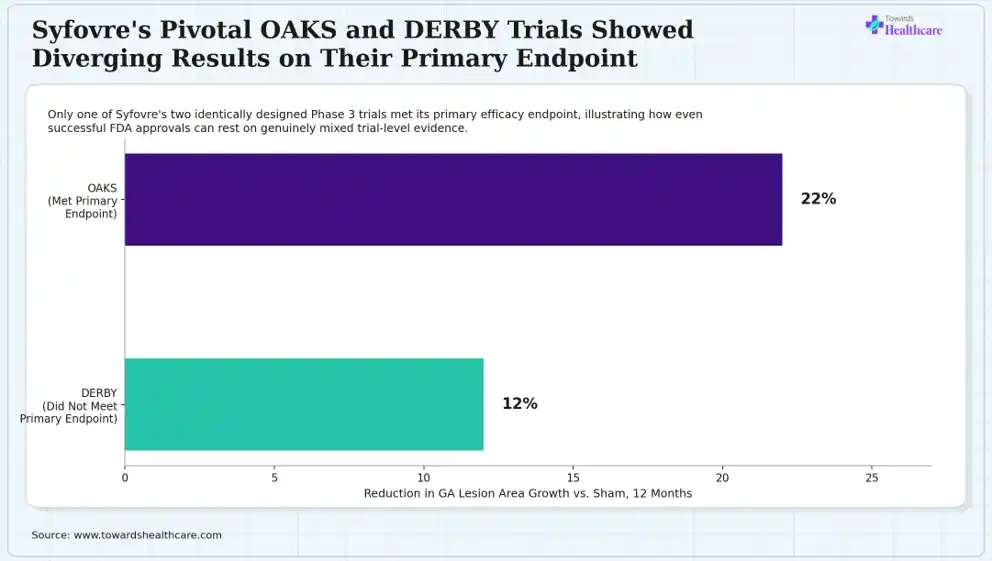
The given horizontal bar chart compares Syfovre OAKS and DERBY trial results. The reduction in GA lesion growth vs sham contributed to 22% in OAKS, meeting the primary endpoint. The DERBY trial reported a 12% reduction in GA lesion growth vs sham, which did not meet the primary endpoint.
Key Insight:
The FDA approval of Syfovre despite missing its primary endpoint in one of its two pivotal trials indicates that severity of unmet need has factored into benefit-risk assessment alongside strict trial-level statistical success.
Source: American Journal of Ophthalmology, “Drug Approval for the Treatment of Geographic Atrophy: How We Got Here and Where We Need to Go,” Feb. 20, 2024.
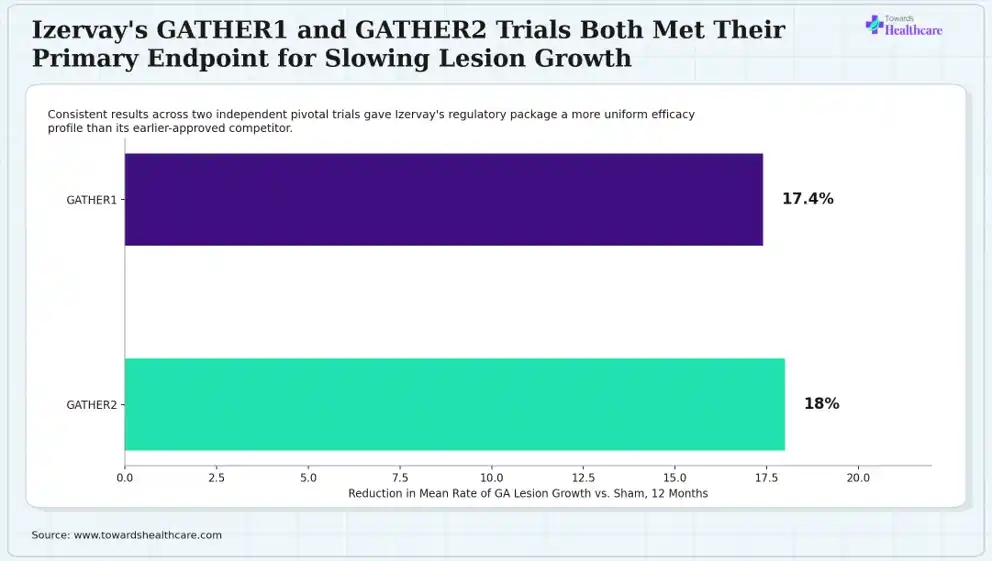
Based on our research conducted, the horizontal bar chart represents Izervay GATHER1 vs. GATHER2 trial results. The reduction in mean rate of GA lesion growth vs sham was noted to be 17.4% in GATHER1, while GATHER2 accounted for an 18% reduction in mean rate of GA lesion growth vs sham.
Key Insight:
More consistent two-trial success of Izervay gave prescribers a second complement-inhibitor option along with a cleaner head-to-head efficacy for the same indication right after six months of Syfovre approval.
Source: ScienceDirect, “Novel drug development for geographic atrophy,” 2026.
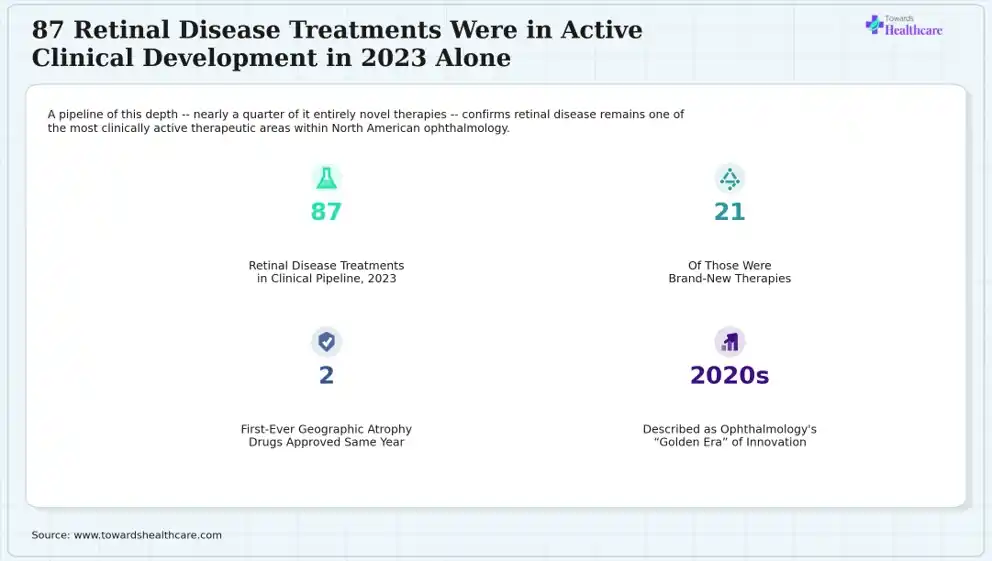
As per the survey conducted, the infographic stat panel covers 2023 retinal disease clinical pipeline metrics. In 2023, a total of 87 retinal disease treatments were reported in the clinical pipeline, of which 21 belonged to brand-new therapies, and the year also contributed to the approval of 2 first-ever geographic atrophy drugs. Moreover, the 2020s were recorded as the period described as ophthalmology's “golden era” of innovation.
Key Insight:
The depth of innovation is moving beyond the two headline GA approvals into a much broader wave of retinal disease drug development, due to approximately 1 in 4 pipeline retinal treatments with genuinely novel therapies rather than incremental variations.
Source: Houston Methodist, “Geographic Atrophy Trial Results in First-Ever Drug Approval for Complication of AMD,” Jan. 30, 2024.
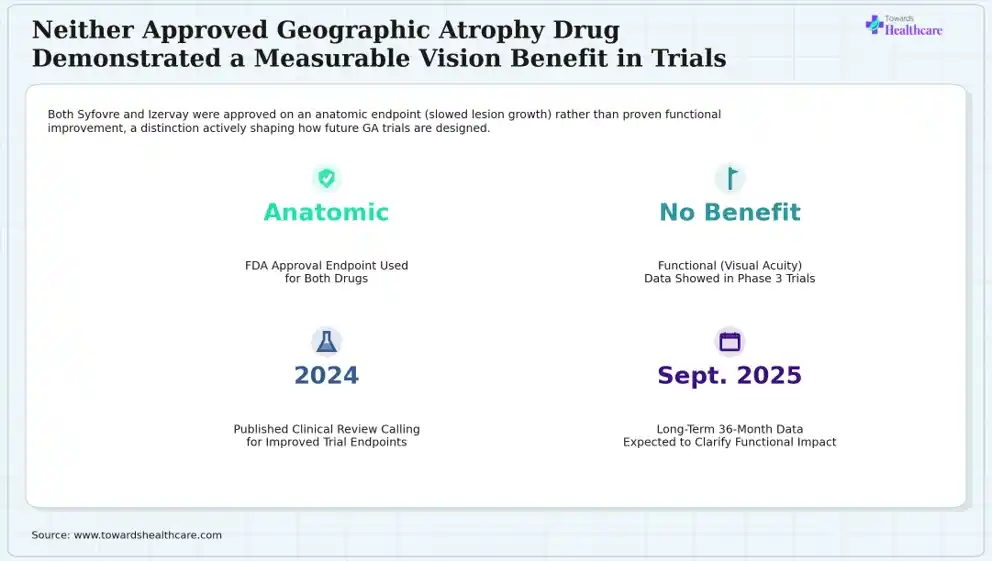
Based on the information gathered by Aman, the infographic stat panel focuses on geographic atrophy trial endpoints and functional-outcome metrics. The FDA approval endpoint used for Syfovre and Izervay focuses on anatomic GA lesion area growth, whereas the functional that is visual acuity data shown in Phase 3 trials does not offer a statistically significant benefit. In 2024, a clinical review calling for improved trial endpoints was published, while September 2025 highlighted that long-term 36-month data are expected to clarify functional impact.
Key Insight:
The major issue in current retinal clinical trial design is this anatomic-versus-functional gap, which encourages close monitoring of longer-term (36-month) follow-up data to identify whether slowed anatomic progression eventually translates into preserved vision.
Source: American Journal of Ophthalmology, Feb. 20, 2024; PMC, “Drug Approval for the Treatment of Geographic Atrophy.”
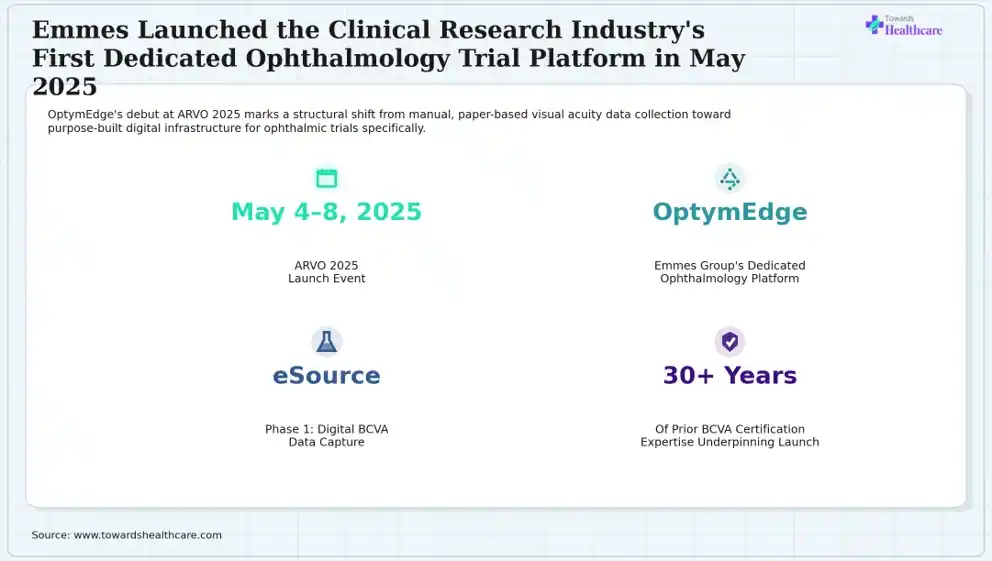
The above-mentioned infographic stat panel encompasses OptymEdge ophthalmology trial platform launch metrics. OptymEdge, part of Emmes Group, offering digital eSource for best-corrected visual acuity (BCVA) data capture Phase 1 capability with more than 30 years of BCVA certification experience, was launched at ARVO 2025 on May 4-8, 2025.
Key Insight:
In an industry with major CRO platforms designed for general, cross-therapeutic-area clinical trial use, the launch of a purpose-built ophthalmology trial technology platform offers Emmes/OptymEdge a meaningful positioning advantage.
Source: Samedan, “Rockville-Based CRO Emmes Group's OptymEdge Launch the First Dedicated Ophthalmology Clinical Trial Platform at ARVO,” May 14, 2025.
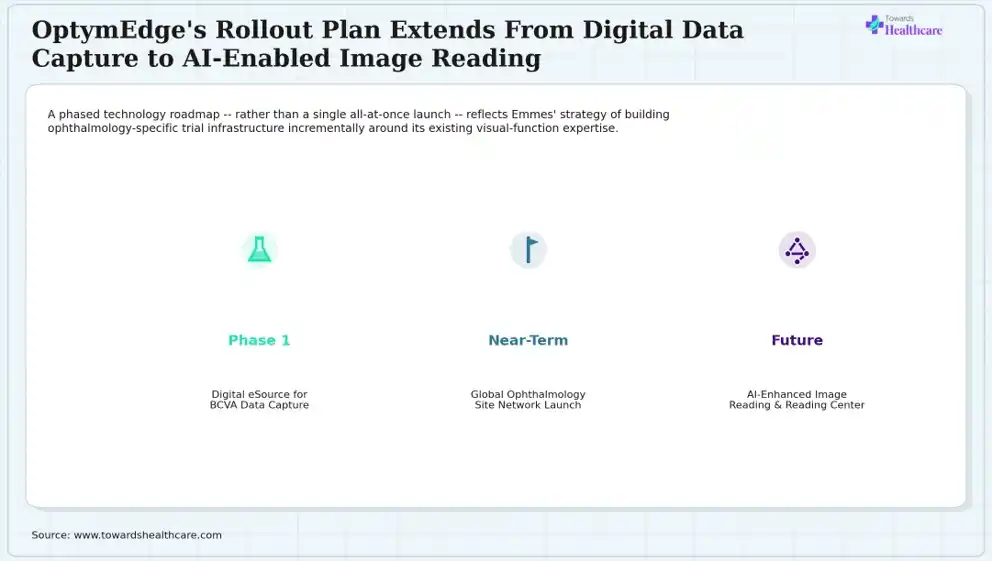
According to the analysis, the roadmap infographic highlights OptymEdge's phased technology rollout. Phase 1 focused on digital eSource for BCVA data capture capability, where its near-term includes a global ophthalmology site network launch, while the future phase is expected to drive AI-enhanced image reading and reading center services.
Key Insight:
Sequencing site-network expansion before AI-enabled image reading reflects that after establishing a broader site footprint, Emmes will prioritize operational trial-execution scale over layering more advanced analytical capability.
Source: European Pharmaceutical Manufacturer, “OptymEdge launch ophthalmology clinical trial platform at ARVO,” May 2025.
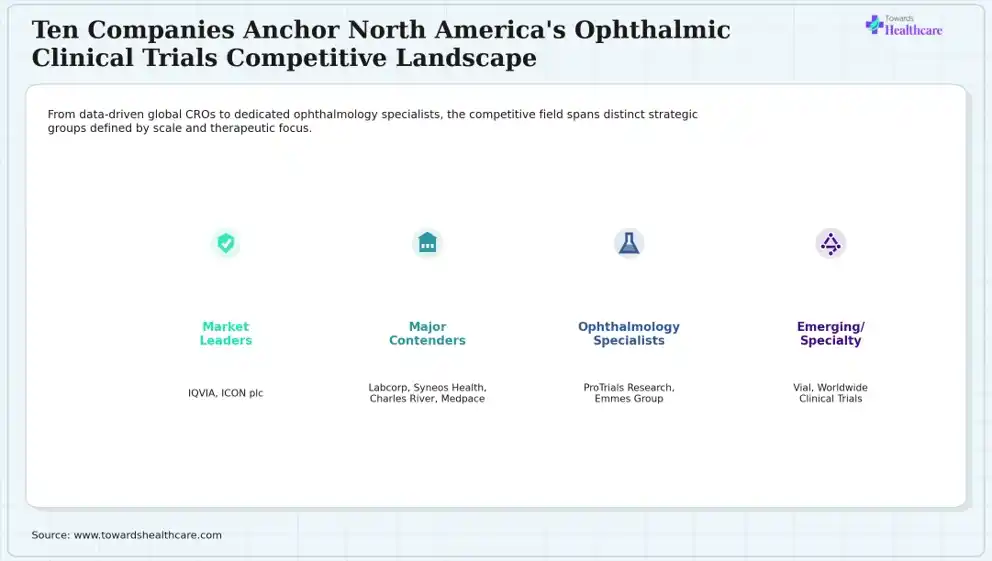
As the market research analyst, I interpret that the ecosystem infographic reflects four strategic groups within North America's ophthalmic trials competitive field. The market leaders are reported to be IQVIA and ICON plc, whereas Labcorp, Syneos Health, Charles River, and Medpace are the major contenders. Similarly, the ophthalmology specialists position is occupied by ProTrials Research and Emmes Group, while Vial and Worldwide Clinical Trials are noted to be emerging/specialty strategic groups.
Key Insight:
The presence of mega-CROs and dedicated ophthalmology specialists highlights that the market encompasses both broad-scale execution capability and deep therapeutic-area instead of supporting only one strategy.
Source: Towards Healthcare, cross-referenced against publicly identified competitor lists for North American ophthalmic clinical-trial market coverage.
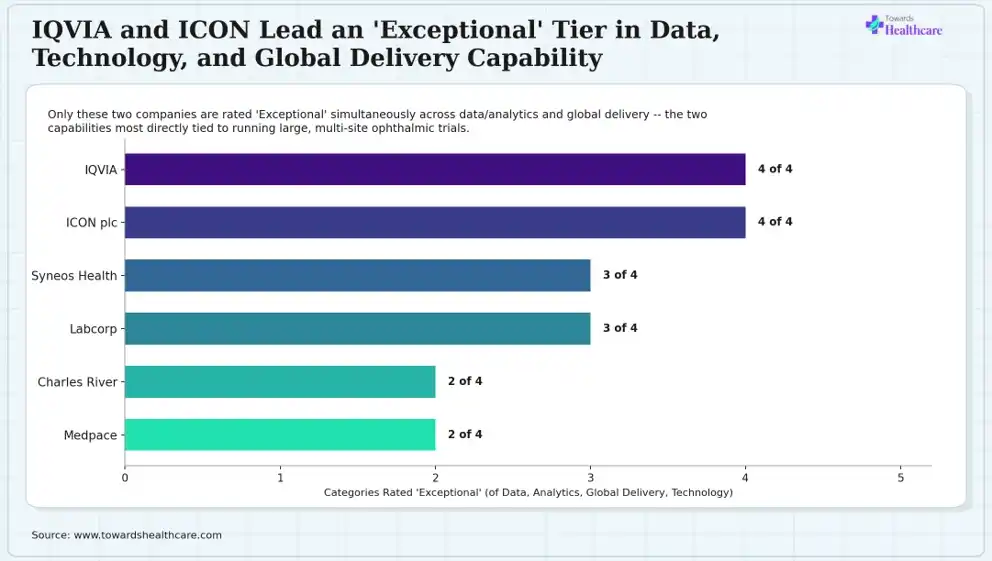
Based on the research conducted by Aman, a horizontal bar chart illustrates companies rated 'Exceptional' across core capability categories. 4 of 4 categories of IQVIA and ICON plc were rated 'Exceptional', where 3 of 4 categories of Labcorp and Syneos Health were rated 'Exceptional', while 2of 4 categories of Charles River and Medpace were rated 'Exceptional'.
Key Insight:
IQVIA and ICON's scale advantage, represented by the clear two-company gap at the top, helps translate into a genuinely differentiated capability tier, rather than a marginal edge over the next group of major contenders.
Source: Towards Healthcare.
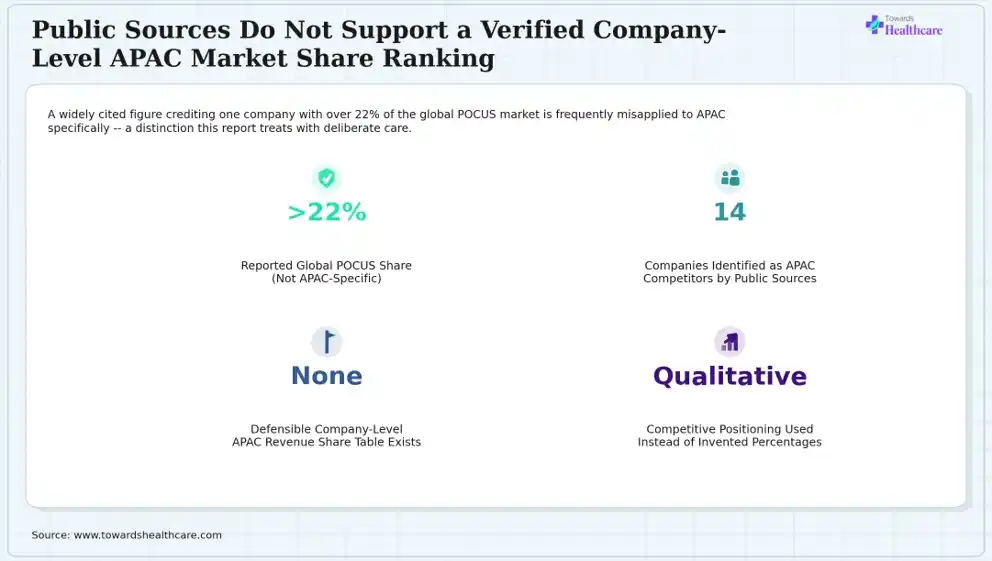
As per the analysis conducted by Aman, the given infographic stat panel covers data availability and methodology transparency metrics. Based on qualitative competitive positioning and not on invented percentages, a total of 10 companies were identified as leading market participants, with no audited company-level revenue-share figures and a moderately concentrated broader NA clinical trials market structure.
Key Insight:
The above-mentioned data confirms that even with the presence of ten identified major participants, the granular company-level revenue attribution remains proprietary and unpublished.
Source: Towards Healthcare, correctly distinguishing qualitative competitive positioning from unavailable company-level revenue shares
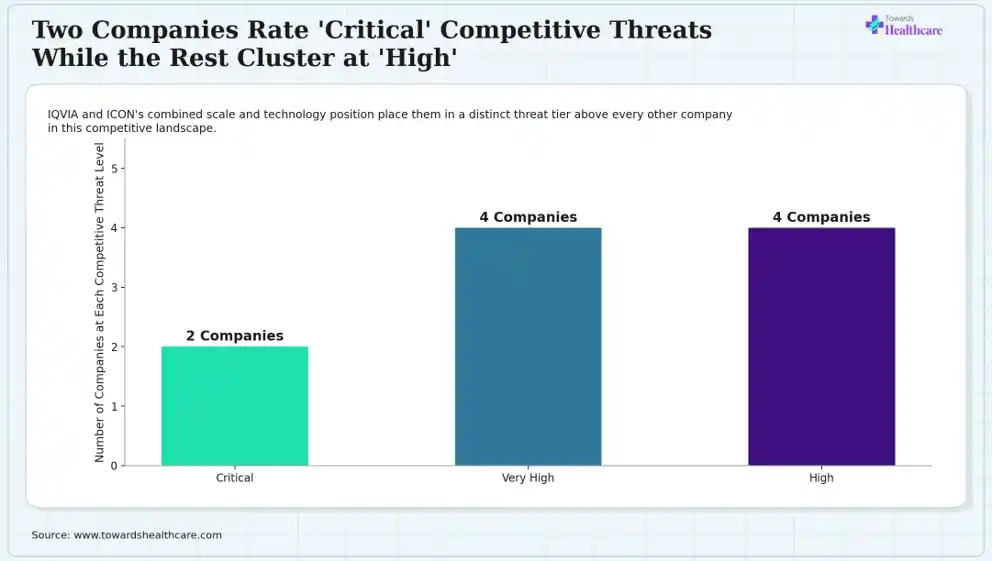
The given bar chart illustrates the distribution of companies across competitive threat levels. A total of 2 companies are at the critical threat level, while 4 are at the very high threat level, and 4 are at a high threat level.
Key Insight:
A small number of the largest players are expanding the competitive intensity of the market disproportionately, as the threat-level distribution is concentrated at the top and not spread evenly.
Source: Towards Healthcare.
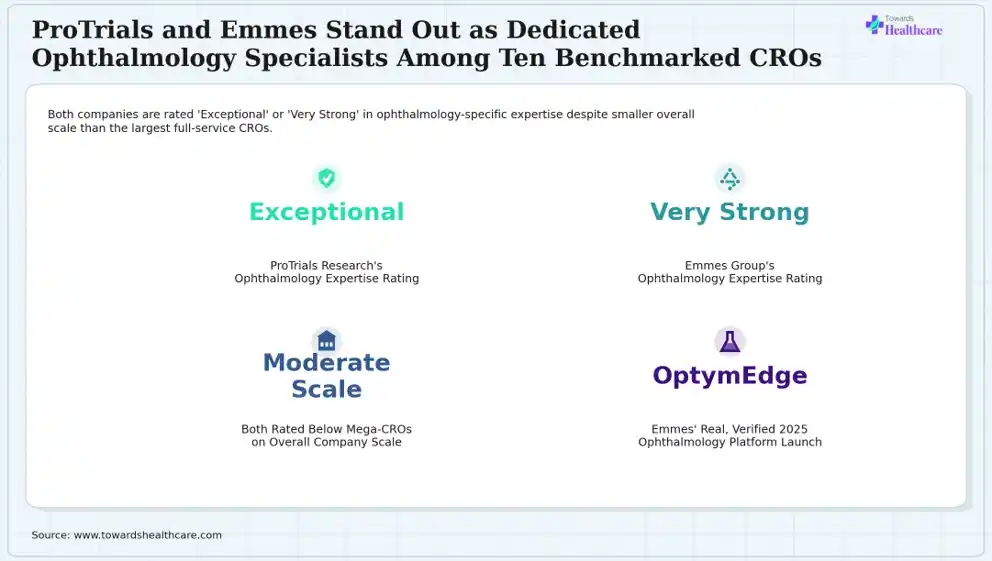
As per the survey, the infographic stat panel encompasses ophthalmology specialist competitive positioning metrics. ProTrials Research's ophthalmology expertise was rated ‘Exceptional’, while Emmes Group's ophthalmology expertise was rated ‘Very Strong’, and it was confirmed that both were rated below mega-CROs on the overall company scale. Moreover, the real, verified 2025 ophthalmology platform OptymEdge launched by Emmes contributed to strengthening its position.
Key Insight:
The launch of the OptymEdge platform by Emmes offers its 'Very Strong' ophthalmology-expertise rating, highlighting a focus on genuine, recent strategic investment instead of a static or outdated assessment.
Source: Towards Healthcare, cross-referenced against verified OptymEdge platform launch.
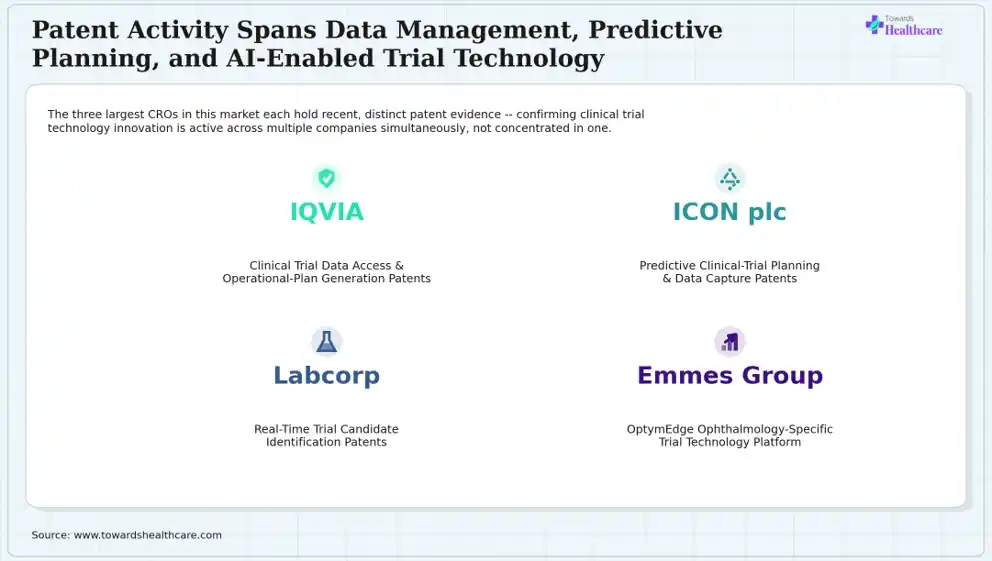
The above-mentioned infographic stat-panel focuses on the recent clinical trial technology patent themes by company. IQVIA consists of clinical trial data access and operational-plan generation patents, while ICON plc contributes to predictive clinical-trial planning and data capture patents. Real-time trial candidate identification was patented by Lacorp, while OptymEdge ophthalmology-specific trial technology platform of Emmes Group is under patent protection.
Key Insight:
The verified platform launched by Emmes reflects a live, market-facing product instead of the filed intellectual property alone, offering a meaningfully different and more competitive form of technology differentiation compared to the other three companies' patent-level evidence.
Source: Towards Healthcare, cross-referenced against verified OptymEdge platform launch.
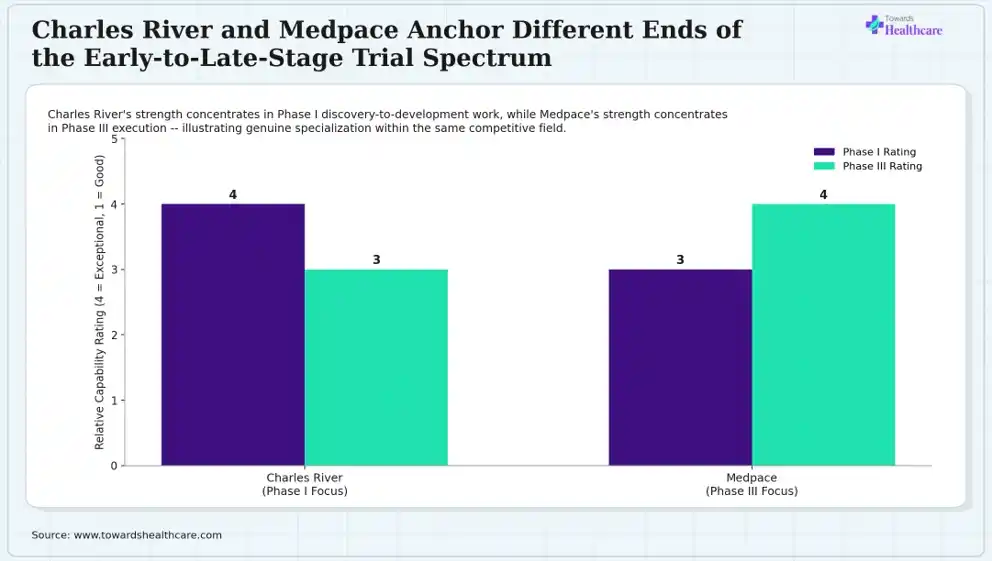
Based on the information gathered, the given grouped bar chart compares Charles River and Medpace Phase I and Phase III capability ratings. Charles River was rated ‘Exceptional’ in Phase I, while it was rated ‘Strong’ in Phase III. On the other hand, Medpace was rated as ‘Strong’ and ‘Exceptional’ for Phase I and Phase III capabilities.
Key Insight:
Charles River's discovery-to-development capability strengthens the early proof-of-concept work, whereas Medpace's late-stage execution capability strengthens the pivotal registration trials, creating a genuine trade-off for sponsors choosing between these two companies for an ophthalmic program.
Source: Towards Healthcare.
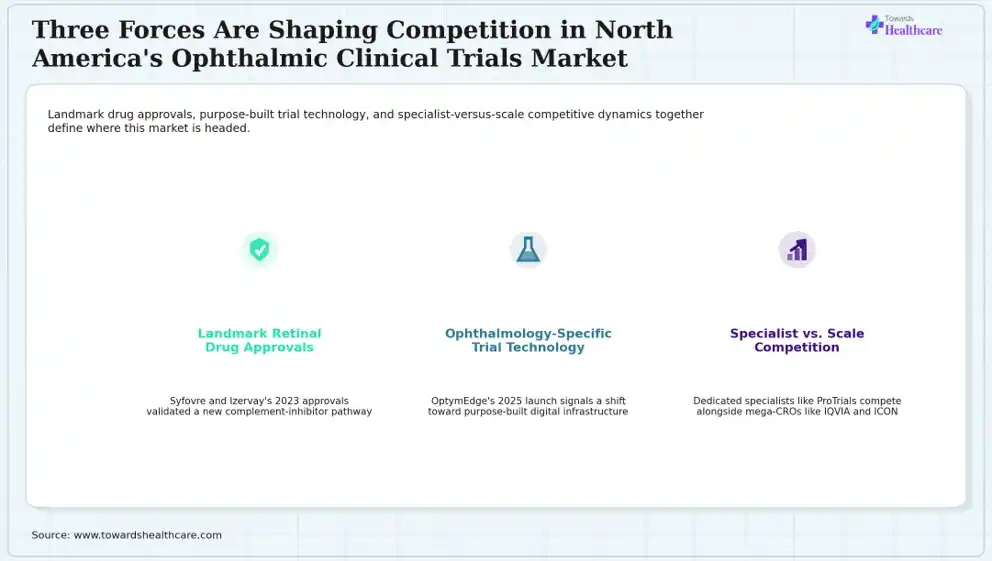
As the market research analyst, I interpret that the synthesis infographic represents three structural forces shaping North America's ophthalmic clinical trials competition. 2023 was recognized as a landmark retinal drug approvals due to the approvals of Syfovre and Izervay, with a new complement-inhibitor pathway. In 2025, the launch of ophthalmology-specific trial technology OptymEdge fueled a shift toward purpose-built digital infrastructure. Furthermore, the presence of dedicated specialists like ProTrials and mega-CROs like IQVIA and ICON contributed to specialist vs. scale competition.
Key Insight:
The volume of ophthalmic trials is driven by landmark drug approvals; purpose-built technology like OptymEdge is responsible for enhancing the efficiency of trials executed, while resulting demand supports both scale players and specialists finding distinct competitive footholds, which makes these three forces underpin each other.
|
Indicator
|
Value
|
Source
|
|
Retinal disease treatments in active clinical pipeline, 2023
|
87
|
Houston Methodist, Jan. 2024
|
|
Of those, brand-new therapies
|
21
|
Houston Methodist, Jan. 2024
|
|
First-ever FDA-approved geographic atrophy drugs, 2023
|
2 (Syfovre, Izervay)
|
AAO, April 2025
|
|
Days between the two GA drug approvals
|
~172 days (Feb. 17 – Aug. 8, 2023)
|
AAO, April 2025
|
|
OptymEdge ophthalmology trial platform launch
|
May 2025 (ARVO 2025)
|
Samedan, May 2025
|
|
Years of prior BCVA certification expertise underpinning OptymEdge
|
30+
|
Samedan, May 2025
|
The table represents the active clinical trial pipeline, approved therapies, and expertise. In 2023, a total of 87 retinal disease treatments were reported to be in the active clinical pipeline, which consisted of 21 brand-new therapies, followed by approval of 2 first-ever geographic atrophy drugs, namely Syfovre and Izervay, by the FDA, with approximately 172 days of gap between their approvals. In May 2025, the OptymEdge ophthalmology trial platform was launched, which was supported by more than 30 years of prior BCVA certification expertise.
The section covers six segmentation dimensions such as Product, Indication, Clinical Trial Phase, Service Type, Sponsor Type, and Region, along with their market shares, CAGR percentages, and recent advancements, which are cited with qualitative segment structure and real, verified data points.
Macular degeneration, which is specifically geographic atrophy, an advanced form of age-related macular degeneration, dominates the market as it has the strongest verified clinical-trial evidence base. The dominance contributes to the 2023 FDA approvals of two independently developed drugs, that is, Syfovre and Izervay, which were evaluated through four combined pivotal Phase 3 trials, namely OAKS, DERBY, GATHER1, and GATHER2, respectively.
The research revolves around the drugs/pharmaceuticals area of the market, highlighting recent drug development activity across geographic atrophy. Based on the research conducted, no comparably significant, dated device-specific clinical trial milestone was reported, indicating a data gap rather than being filled with an estimate.
| Strategic Group | Recent Advancements | Source |
| Market Leaders (IQVIA, ICON) | Supplied competitive intelligence, rated both as 'Exceptional' across data/analytics, technology, and global delivery categories. | Towards Healthcare |
| Ophthalmology Specialists (Emmes/OptymEdge) | In May 2025, it launched its first dedicated ophthalmology trial technology platform. | Samedan, May 2025 |
| Major Contenders (Charles River, Medpace) | Both demonstrate genuine early-stage vs. late-stage specialization within the same competitive tier. | Towards Healthcare |
Market leaders like IQVIA and ICON are rated 'Exceptional' for their data/analytics, technology, and global delivery categories, where ophthalmology specialists such as Emmes/OptymEdge is well-known for the launch of its first ophthalmology trial technology platform. Furthermore, major contenders such as Charles River and Medpace are advancing with their early-stage vs. late-stage specialization.
In September 2025, additional clarity demonstrating slowing of anatomic geographic atrophy progression translating into measurable functional (visual) benefit over time was expected to be provided in the long-term 36-month follow-up data for pegcetacoplan.
Source: American Journal of Ophthalmology, Feb. 2024
On May 4-8, 2025, the first technology platform dedicated exclusively to ophthalmology trials was revealed at the ARVO 2025 conference, beginning with digital eSource capture for Best Corrected Visual Acuity data by Emmes Group's OptymEdge.
Source: Samedan, May 14, 2025
On February 20, 2024, a formal review of the geographic atrophy drug approvals, published by the American Journal of Ophthalmology, presented that despite meeting anatomic endpoints, neither drug demonstrated a statistically significant functional (visual acuity) benefit.
Source: American Journal of Ophthalmology, Feb. 2024
In January 2024, the recent active clinical development consisted of 87 retinal disease treatments, including 21 entirely new therapies, representing ophthalmology's emerging “golden era.”
Source: Houston Methodist, Jan. 2024
On August 8, 2023, based on consistent results across two pivotal Phase 3 trials, FDA approval was granted to Izervay (avacincaptad pegol), developed by Astellas/Iveric Bio, which made it the second approved treatment for geographic atrophy.
Source: American Academy of Ophthalmology, April 2025
On February 17, 2023, Syfovre (pegcetacoplan), developed by Apellis Pharmaceuticals, was approved by the FDA, making it the first-ever treatment for geographic atrophy secondary to age-related macular degeneration.
Source: American Academy of Ophthalmology, April 2025
It is the market leader, rated 'Exceptional' across data/analytics, technology, and global delivery, with active patents in trial data access and operational-plan generation.
It is a market leader that has active patents in predictive trial planning and data capture, and is rated 'Exceptional' across data/analytics, technology, and global delivery.
A major contender with active patents in real-time trial candidate identification as well as clinical development and laboratory integration.
It is a major contender rated 'Exceptional' for its Phase I discovery-to-development capability.
It is a major contender, with its Phase III late-stage trial execution rated 'Exceptional'.
It is a major contender, offering integrated clinical development and commercialization services.
It is an ophthalmology specialist well-known for the launch of OptymEdge, its first dedicated ophthalmology trial platform in May 2025.
It is an ophthalmology specialist recognized as 'Exceptional' in ophthalmology-specific expertise among all benchmarked companies.
It is a sponsor/drug developer of Syfovre, which is the first FDA-approved geographic atrophy treatment.
It is the sponsor/drug developer of Izervay, the second FDA-approved geographic atrophy treatment, which was launched in Aug. 2023
Aditi is a healthcare services research expert with strong experience in drug approvals, purpose-built trial technology, and laboratory services markets. She conducted detailed market research, analyzed company data, clinical trends, and industry developments. Based on her comprehensive analysis, the following strategic key takeaways highlight the most important market insights and opportunities.
For Service Providers & CDMOs
For Pharma & Biotech Companies
For Investors & Corporate Strategy Teams
Based on my assessment, the market is expanding rapidly due to increasing retinal disease treatments in the clinical pipeline. The growth in geographic atrophy drugs is also driving new market opportunities. I also anticipate that collaboration among companies will support and accelerate the development of new ophthalmic products and technologies. I also see strong growth in gene & cell therapies, which will support the market expansion.
Payal Rabde led the primary market research, developed the methodology, analyzed trends, segmentation, competition, forecasts, and strategic opportunities, forming the report's analytical foundation.
Aman was responsible for collecting and validating clinical trial data, research publications, company information, partnerships, and other quantitative datasets, strengthening evidence-based analysis and market estimations.
Aditi reviewed the complete research document, performed quality checks, validated findings, refined content, corrected inconsistencies, and finalized the report, ensuring accuracy, clarity, credibility, and publication-ready quality.
By Product
By Indication
By Clinical Trial Phase
By Service Type
By Sponsor Type
By Region

















Principal Consultant
Payal Rabde is a Healthcare Market Research Analyst at Towards Healthcare Research & Consulting with 4+ years of experience in pharmaceuticals, biotechnology, medical devices, and life sciences.
Learn more about Payal Rabde

Reviewed By
Aditi Shivarkar is a seasoned professional with over 14 years of experience in healthcare market research. As a content reviewer, Aditi ensures the quality and accuracy of all market insights and data presented by the research team.
Learn more about Aditi Shivarkar