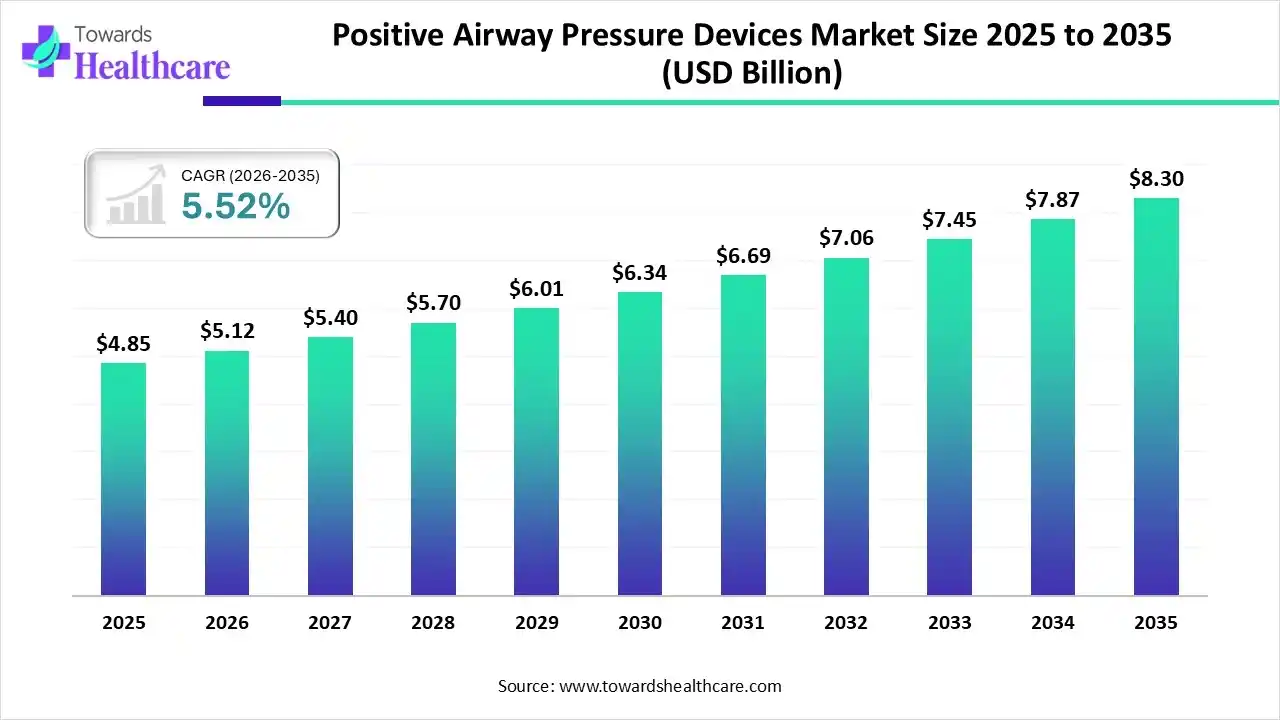
The global positive airway pressure devices market size is predicted to increase from USD 5.12 billion in 2026 to approximately USD 8.3 billion by 2035, expanding at a CAGR of 5.52% from 2026 to 2035. The growing respiratory disease burden is increasing the demand for positive airway pressure devices (PAP), leading to new launches. Additionally, growing health awareness, home-based care, and technological advancements are also enhancing the market growth.
The positive airway pressure devices market is driven by the growing incidence of obstructive sleep apnea and COPD. The positive airway pressure devices encompass the medical devices responsible for the treatment of breathing disorders by delivering pressurized air via mask or nasal interfaces, opening the patient's airways. These devices help in the management and treatment of sleep and respiratory disorders by improving oxygenation and minimizing breathing efforts.
The positive airway pressure devices market is driven by the growing incidence of obstructive sleep apnea and COPD. The positive airway pressure devices encompass the medical devices responsible for the treatment of breathing disorders by delivering pressurized air via mask or nasal interfaces, opening the patient's airways. These devices help in the management and treatment of sleep and respiratory disorders by improving oxygenation and minimizing breathing efforts. These devices come in various types depending on patient needs. Continuous Positive Airway Pressure, or CPAP, provides a single steady level of air pressure throughout the night. It is the most common option for obstructive sleep apnea.
Another type is BiPAP, which offers two distinct pressures for inhalation and exhalation. This dual-pressure system makes breathing out much easier and more comfortable for patients with severe respiratory issues like COPD. Newer smart devices feature automatic pressure adjustment. They monitor every single breath and change the airflow dynamically to match the user's sleeping patterns. Modern machines also include built-in humidifiers to prevent dryness in the throat and nasal passages.
AI plays an important role in the positive airway pressure devices market, driving the development of personalized and smart PAP devices by auto-adjusting them in response to the real-time airways obstruction. It identifies breathing patterns, anomalies, mask leaks, etc, offering early detection of diseases and device defects. It also helps in the analysis of larger datasets, optimization of therapy protocols, device design, and pressure algorithms, promoting the development of advanced PAP devices.
Expanding Home Healthcare
The growing health awareness, increasing geriatric population, and expanding digital healthcare platforms are increasing the adoption of positive airway pressure devices for remote patient monitoring and enhancing PAP device adherence.
Increasing Respiratory Diseases
The growing incidence of respiratory diseases like asthma and chronic obstructive pulmonary disease is increasing the demand for positive airway pressure devices to enhance oxygenation, reduce breathing difficulties, and promote their effective management.
Blooming Technological Innovations
A rise in technological advancements is driving the development of new, smaller, portable designs, with quieter motors, wireless connectivity, auto-adjusting pressure systems, and cloud-based monitoring.
| Table | Scope |
| Market Size in 2026 | USD 5.12 Billion |
| Projected Market Size in 2035 | USD 8.3 Billion |
| CAGR (2026 - 2035) | 5.52% |
| Leading Region | North America |
| Key Applications | Obstructive Sleep Apnea (OSA) treatment, Central Sleep Apnea, Chronic Respiratory Disorders, COPD support, Home respiratory care, Hospital respiratory therapy |
| Primary End Users | Hospitals, Sleep Clinics, Home Healthcare Providers, Pulmonologists, Sleep Physicians, Patients |
| Key Growth Drivers | Rising sleep apnea prevalence, increasing obesity rates, aging population, home healthcare adoption, connected PAP devices, remote patient monitoring, insurance coverage expansion |
| Measurable Values | USD Millions/Units/Volume |
| Market Segmentation | By Product, By Application, By End Use, By Region |
| Top Key Players | ResMed Inc., Koninklijke Philips N.V,Fisher & Paykel Healthcare, BMC Medical Co., Ltd., Drive DeVilbiss Healthcare, Lowenstein, Medical, Wellell Inc., React Health, Somnetics International, Inc., Invacare Corporation |
Why Did the CPAP Segment Dominate in the Market in 2025?
The CPAP segment registered its dominance over the global positive airway pressure devices market in 2025, as they are considered the first-line treatment for obstructive sleep apnea. Their simple technology, easy operation, and high effectiveness also increased their use, where their affordability also promoted their acceptance rates.
Bi-PAP
The Bi-PAP segment is expected to show the highest growth during the predicted time, driven by its two-pressure level, offering higher pressure for inhalation while lower for exhalation, improving the patient’s breathing patterns. This increases patient comfort and compliance, driving their use in the treatment of severe respiratory conditions.
Which Application Type Segment Held the Dominating Share of the Market in 2025?
The obstructive sleep apnea segment held the dominating share of the positive airway pressure devices market in 2025, due to growth in their incidence rates. This increased the use of positive airway pressure devices as the primary treatment option, where the growth in health awareness also increased their adoption rates.
COPD
The COPD segment is expected to grow with the highest CAGR during the upcoming years, due to growing COPD cases driven by increasing air pollution and smoking. The growing demand for non-invasive ventilation and remote patient care trends for COPD management are also increasing the use of positive airway pressure devices.
What Made Hospitals & Clinics the Dominant Segment in the Market in 2025?
The hospitals & clinics segment contributed the biggest revenue share of the positive airway pressure devices market in 2025, driven by the presence of skilled personnel and enhanced access to critical care services. This increased the effective use of positive airway pressure devices for the treatment of various respiratory conditions.
Home Care Settings
The home care settings segment is expected to show the fastest growth rate during the predicted time, due to growing demand for home-based treatment. This, in turn, is increasing the use of affordable positive airway pressure devices, enhancing patient comfort and convenience, and driving the development of new user-friendly, portable PAP devices.
North America dominated the positive airway pressure devices market in 2025, due to the presence of a well-developed healthcare infrastructure, which promoted the early adoption of positive airway pressure devices for the treatment of sleep apnea and respiratory conditions. The growth in health awareness and health care investments also contributed to the market growth.
U.S. Market Trends
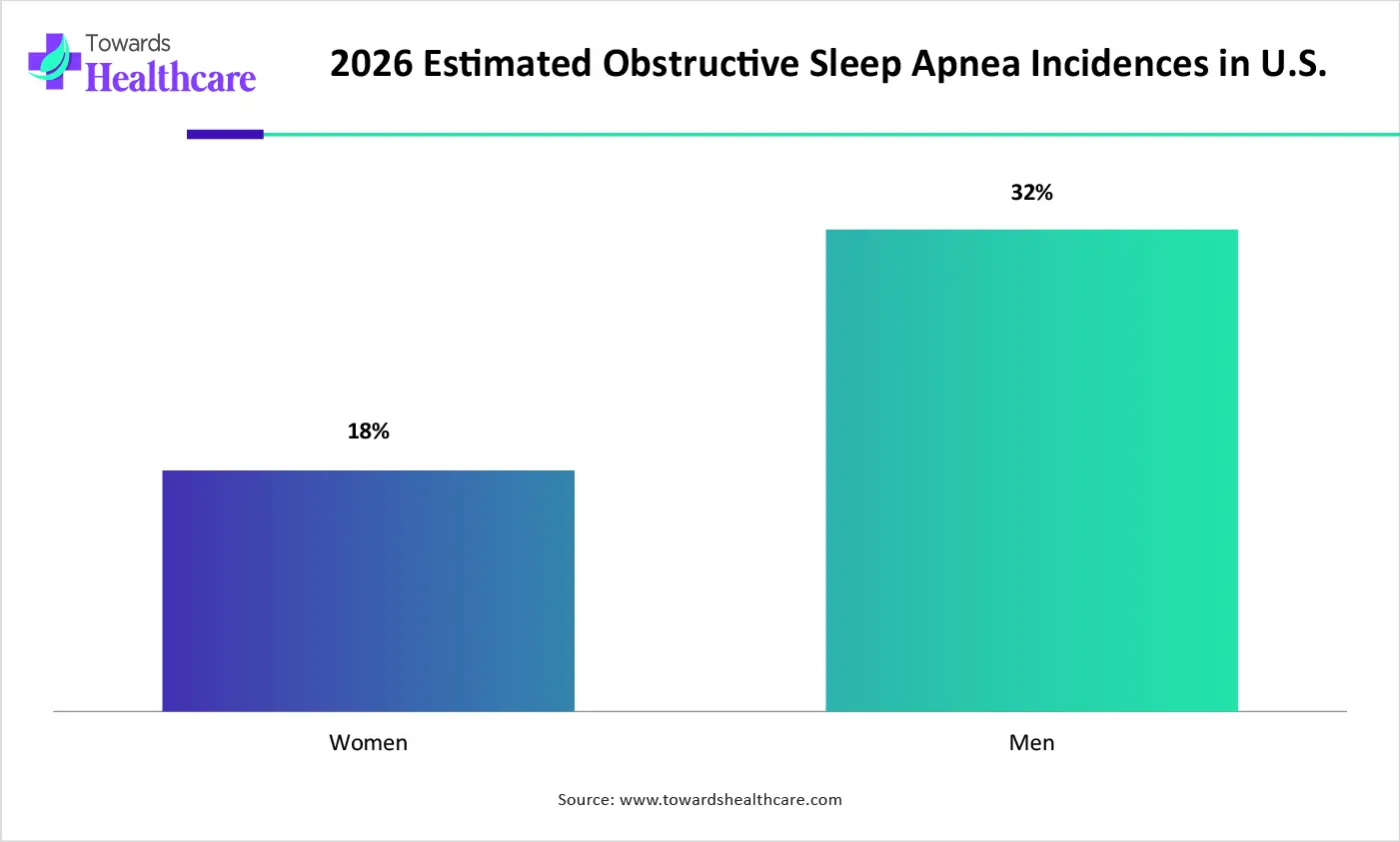
The growth in the sleep apnea cases and patient awareness is increasing the demand for positive airway pressure devices in the U.S. The presence of advanced healthcare infrastructures, along with insurance coverage are increasing their accessibility, where technological advancements are also accelerating their innovations.
Canada sees rising demand for airway devices due to an aging population. More citizens suffer from chronic respiratory disorders. Public healthcare programs increasingly cover these essential machines. This financial support makes them highly accessible to everyday families. Remote northern communities benefit immensely from new telehealth features. Doctors track patient data easily from long distances. Awareness campaigns also educate people about sleep hygiene. Consequently, more Canadians actively seek treatment every year.
Asia Pacific is expected to host the fastest-growing positive airway pressure devices market during the forecast period, due to growing respiratory conditions and expanding healthcare, which is increasing the adoption of positive airway pressure devices. Increasing government initiatives, disease screening programs, and technological innovations are also enhancing the market growth.
China Market Trends
The rapid expansion of the healthcare sector across China is increasing the adoption of positive airway pressure devices for the treatment of growing respiratory disorders. The growing advancements in home care services are also increasing their use, encouraging the development of portable and user-friendly PAP devices.
India Market Trends
India faces a sharp rise in serious respiratory issues. Urban air pollution and smog damage lung health. Rising personal wealth allows many families to buy modern medical equipment. Private clinics are expanding rapidly across major cities. They buy advanced breathing machines to treat sleep problems. Local production makes these devices more affordable. More doctors get specialized training in sleep medicine. Thus, patients in smaller towns always receive proper care today.
Europe is expected to grow significantly in the positive airway pressure devices market during the forecast period, due to the presence of well-established healthcare systems, which are increasing the availability of positive airway pressure devices. A rise in sleep disorders, health awareness, government initiatives, and R&D activities is also promoting the market growth.
The growing incidence of sleep disorders is increasing the use of positive airway pressure devices to improve breathing patterns. Additionally, the growing health awareness is also increasing the early detection of various respiratory disease increasing their use, where the presence of reimbursement policies is also attracting patients.
UK Market Trends
The UK market expands because of the National Health Service. The NHS actively funds breathing therapies for patients. This funding removes financial barriers for everyone. A high rate of obesity is linked directly to sleep apnea cases. Local clinics run massive screening programs to find hidden breathing disorders early. Patients prefer quiet home care options over staying in hospitals. Therefore, compact, user-friendly breathing machines find widespread adoption across the entire nation.
Germany Market Trends
The increasing incidence of sleep apnea in Germany is driving the demand for positive airway pressure devices. An increasing geriatric population and the presence of advanced healthcare facilities are also promoting the adoption of these devices. Favorable health insurance coverage is also encouraging their usage.
South America is expected to show significant growth during the predicted period, due to increasing incidence of sleep apnea. Similarly, rising obesity rates are also increasing the use of positive airway pressure devices. Growing healthcare awareness and healthcare expenditure are also increasing their use.
Brazil Market Trends
Due to the increasing incidence of obesity cases, the demand for PAP devices is increasing in Brazil. Additionally, growing health awareness and demand for improved respiratory care are also increasing the adoption of these devices. The expanding private healthcare sector is also increasing access to these services.
Rest of South America Market Trends
Increasing incidence of sleep apnea is driving the demand for PAP devices in South America. Additionally, increasing obesity care is also increasing their adoption rates. At the same time, growing health awareness and home healthcare are also driving the demand for portable PAP devices.
MEA is predicted to show lucrative growth in the market during the forecast period due to the increasing prevalence of obesity and sleep apnea disorders. Expanding healthcare infrastructure and health awareness are also increasing the adoption of positive airway pressure devices. Increasing healthcare investments are also driving their advancements.
United Arab Emirates (UAE) Market Trends
The presence of advanced healthcare infrastructure is increasing the adoption of positive airway pressure devices in the UAE. Increasing government investments and technological advancements are also encouraging the development of smart PAP devices. The growing incidence of sleep apnea is also increasing their demand.
Qatar Market Trends
Increasing obesity risk and sleep apnea cases in Qatar are driving the demand for positive airway pressure devices. Increasing government investments and specialized sleep clinics are also promoting their use and improving their accessibility. Growing technological advancements and home healthcare are also creating new opportunities.
|
Ecosystem Category
|
Key Players / Description |
| Technology Providers | Companies developing PAP algorithms, pressure-control systems, sensors, connectivity modules, and respiratory monitoring technologies |
| Product Manufacturers | Major medical device companies producing CPAP, APAP, BiPAP machines, masks, humidifiers, and accessories |
| Service Providers | Home respiratory care companies providing device setup, rental, maintenance, and patient support |
| Platform Providers | Digital health platforms enabling remote monitoring, adherence tracking, and cloud-based therapy management |
| CROs/CDMOs | Limited role; involved mainly in device development, clinical studies, manufacturing partnerships |
| Software Vendors | Companies providing PAP compliance software, telehealth platforms, and connected care solutions |
| Research Institutions | Sleep medicine institutes, respiratory research centers, clinical trial organizations |
| End-User Industries | Healthcare systems, hospitals, sleep laboratories, home healthcare, insurance providers |
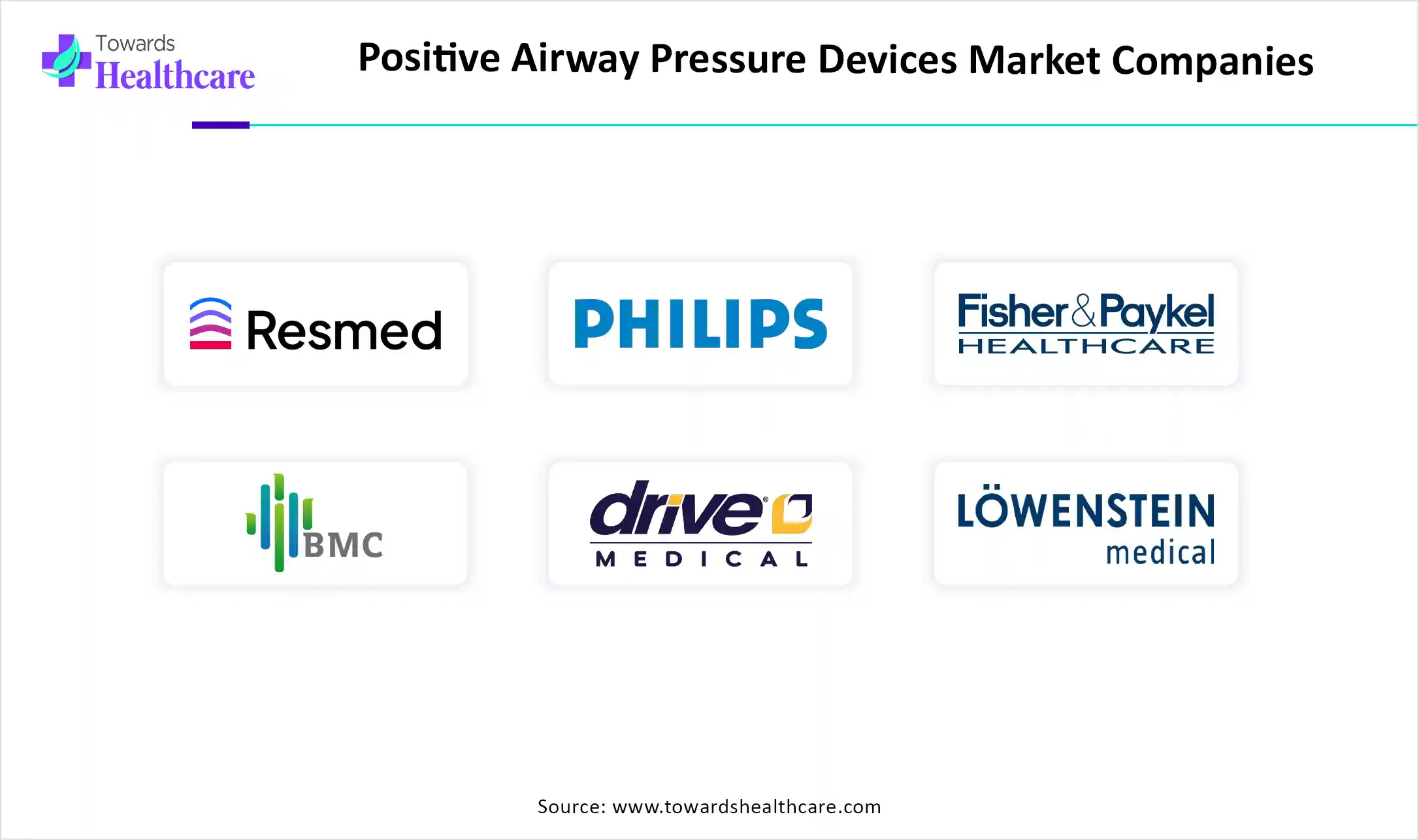
| Tier 1 | ||||
| Company Name | Headquarters | Country | Why Relevant to This Market | Key Products/Services |
| ResMed | San Diego, California, USA | USA | Global leader in sleep apnea and respiratory care with major PAP device revenue contribution | AirSense CPAP/APAP devices, AirCurve BiPAP systems, masks, myAir digital platform |
| Philips | Amsterdam, Netherlands | Netherlands | One of the largest respiratory care companies globally with extensive PAP portfolio | DreamStation CPAP/BiPAP systems, respiratory monitoring solutions |
| Fisher & Paykel Healthcare | Auckland, New Zealand | New Zealand | Leading respiratory device manufacturer specializing in sleep and breathing solutions | SleepStyle CPAP, masks, humidification systems |
| Tier 2 | ||||
| Company Name | Headquarters | Country | Why Relevant to This Market | Key Products/Services |
| BMC Medical Co., Ltd. | Beijing, China | China | Growing PAP device manufacturer with strong Asia-Pacific presence | CPAP, Auto CPAP, BiPAP devices, masks |
| Apex Medical | New Taipei City, Taiwan | Taiwan | Specialized respiratory device company focused on sleep therapy | iCH CPAP series, masks, humidifiers |
| Somnetics International | New Brighton, Minnesota, USA | USA | Specialist in portable PAP therapy solutions | Transcend Micro CPAP, portable sleep apnea devices |
| Tier 3 | ||||
| Company Name | Headquarters | Country | Why Relevant to This Market | Key Products/Services |
| React Health | St. Petersburg, Florida, USA | USA | Emerging respiratory technology company expanding in PAP therapy | Luna CPAP/BiPAP systems, sleep management platforms |
| Compumedics | Abbotsford, Victoria, Australia | Australia | Sleep diagnostics company connected with PAP therapy ecosystem | Sleep monitoring systems, sleep therapy technologies |
| Breas Medical | Mölnlycke, Sweden | Sweden | Specialized non-invasive ventilation and respiratory care provider | Vivo ventilation systems, PAP-related respiratory devices |
In February 2026, speaking on the launch, Dr Sharvil Patel, Managing Director, Zydus Lifesciences, said, “At Zydus, patient-centric innovation is about advancing healthcare in ways that make everyday care more accessible for patients. With PEPAIR, India’s first affordable OPEP device, we are introducing a drug-free, handheld solution designed to support better breathing for patients with COPD, asthma, and bronchiectasis. We look forward to expanding our efforts in advancing respiratory health through this launch.”
By Product
By Application
By End Use
By Region




Principal Consultant
Payal Rabde is a Healthcare Market Research Analyst at Towards Healthcare Research & Consulting with 4+ years of experience in pharmaceuticals, biotechnology, medical devices, and life sciences.
Learn more about Payal Rabde

Reviewed By
Aditi Shivarkar is a seasoned professional with over 14 years of experience in healthcare market research. As a content reviewer, Aditi ensures the quality and accuracy of all market insights and data presented by the research team.
Learn more about Aditi Shivarkar