


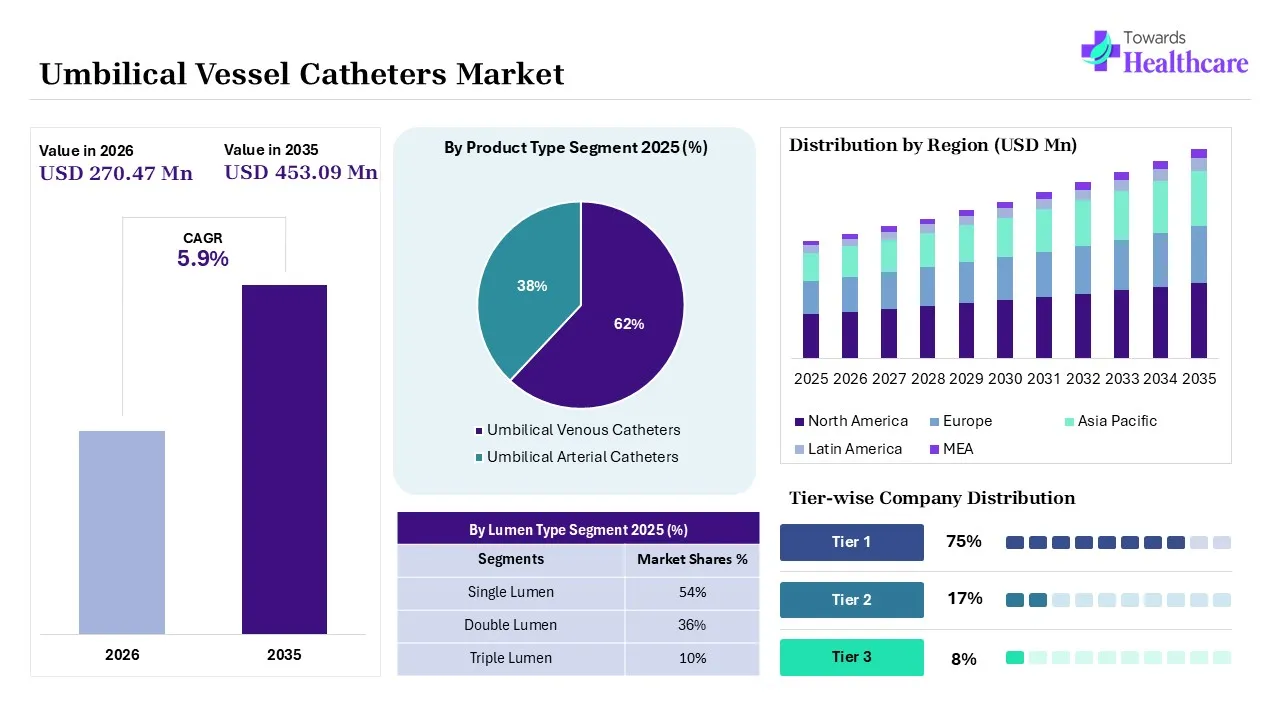
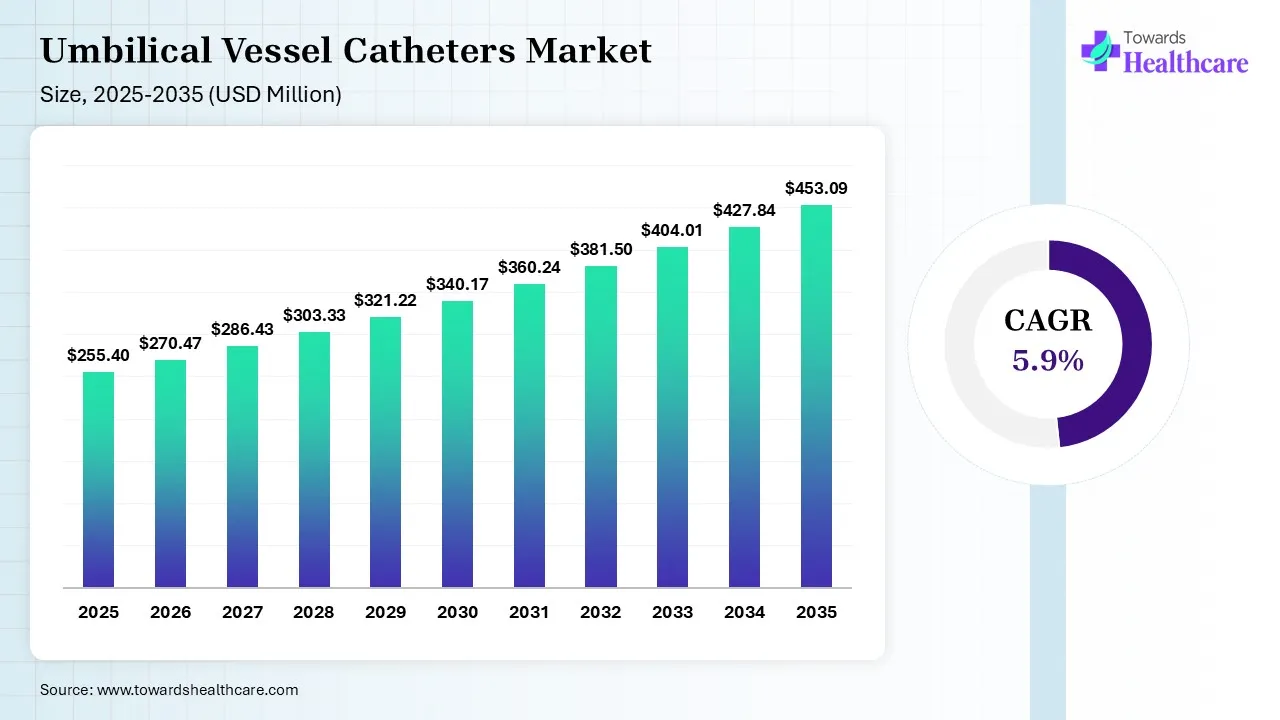
The global umbilical vessel catheters market size is calculated at USD 255.4 million in 2025, where it continues to grow in 2026 at USD 270.47 million due to increasing neonatal critical conditions. It is expected to reach USD 453.09 million by 2035 with a CAGR of 5.9% due to growing focus on infection control and healthcare digitalization. North America accounted for 38% of the market in 2025 due to its advanced NICU infrastructure.
What are the Umbilical Vessel Catheters?
Umbilical vessel catheters refer to thin and flexible medical tubes used to offer vascular access for diagnosis, treatment, and monitoring in neonatal intensive care settings by insertion into the umbilical vein or artery of newborn infants.
They are used to administer medication, monitor blood pressure, and perform blood sampling of newborns. This drives their use for emergency care, parenteral nutrition delivery, continuous blood pressure monitoring, management of sepsis, and treatment of respiratory distress syndrome.
As per the information gathered by Payal Rabde, increasing premature births, growing technological advancements, and demand for advanced biomaterial catheters are driving market growth. The growing neonatal critical condition, expanding NICUs, increasing awareness, and infection control are also increasing their adoption.
Rising Demand for Advanced Neonatal Intensive Care
Expanding NICU capacity and improving neonatal survival rates are driving the demand for advanced neonatal intensive care products, increasing the adoption of umbilical vessel catheters.
Growing Preference for Infection-Prevention Technologies
Increasing emphasis on catheter safety, antimicrobial coatings, and infection control protocols is promoting their use for infection prevention.
Product Design Innovation Improving Clinical Outcomes
Expanding recent innovations in catheter materials, flexibility, lumen configurations, and ease of insertion are improving clinical outcomes, creating new opportunities.
Digital Healthcare Integration in Neonatal Care
Rapid healthcare digitalization is increasing the adoption of connected monitoring systems and advanced NICU technologies, which influences catheter utilization.
Shift Toward Premium Disposable Medical Devices
Changing hospital purchasing preferences toward high-quality sterile disposable vascular access devices are driving the demand for umbilical vessel catheters.
Macro Factors
Micro Factors
Competitive Rivalry
Competition is moderate to high. Several medical device companies offer neonatal catheter products. Companies compete on safety, quality, pricing, product design, and hospital relationships. Product reliability is important for maintaining trust.
Threat of New Entrants
The threat is low. New companies face strict medical device regulations, testing requirements, and quality standards. They also need clinical knowledge, manufacturing capabilities, and established distribution networks. These barriers protect existing manufacturers.
Bargaining Power of Buyers
Buyer power is moderate to high. Hospitals and healthcare systems can compare suppliers, prices, and product quality. Large hospital groups have stronger negotiating power. However, safety and clinical performance can limit switching.
Bargaining Power of Suppliers
Supplier power is moderate. Manufacturers depend on specialized materials, components, and skilled workers. Limited suppliers for certain materials can increase costs. Larger manufacturers can negotiate better purchasing terms.
Threat of Substitutes
The threat is moderate. Other neonatal vascular access products can replace umbilical catheters in some situations. However, umbilical vessel catheters remain useful for early neonatal care. Their clinical advantages limit substitute pressure.
Market Drivers
Market Restraints
Market Opportunities
Market Challenges
| Table | Scope |
| Market Size in 2026 | USD 270.47 Million |
| Projected Market Size in 2035 | USD 453.09 Million |
| CAGR (2026 - 2035) | 5.9% |
| Leading Region | North America by 38% |
| Historical Data | 2020 - 2023 |
| Base Year | 2025 |
| Forecast Period | 2026 - 2035 |
| Measurable Values | USD Millions/Units/Volume |
| Market Segmentation | By Product Type, By Material Insights, By Lumen Type Insights, By Size Insights, By End User Insights, By Application Insights, By Sterility Insights, By Distribution Channel Insights, By Region |
| Top Key Players | Vygon SA, Utah Medical Products, Inc., Cardinal Health, Inc., Poly Medicure Limited, Footprint Medical, Inc. |
| Segments | Shares % |
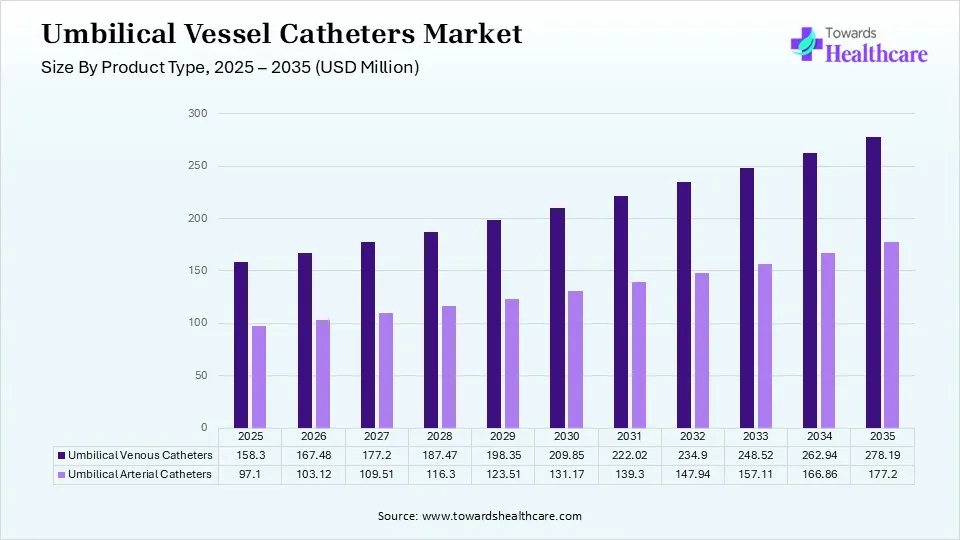
| Umbilical Venous Catheters | 62% |
| Umbilical Arterial Catheters | 38% |
The Umbilical Venous Catheters Segment Dominated the Umbilical Vessel Catheters Market With 62% in 2025
The umbilical venous catheters segment led the market with a 62% share in 2025, due to preference for neonatal drug delivery and parenteral nutrition. Increased NICU admissions also supported their demand. According to the information gathered by Payal Rabde, hospitals favored versatile venous access solutions, which increased their use.
The umbilical arterial catheters segment held the second-largest share of 38% of the umbilical vessel catheters market in 2025 and is expected to witness the fastest growth with a CAGR of 6.2% during the forecast period, driven by the rising need for continuous blood pressure monitoring. Higher adoption in critical neonatal care also increases their use. Improved catheter designs increase procedural safety, promoting their use.
| Segments | Shares % |
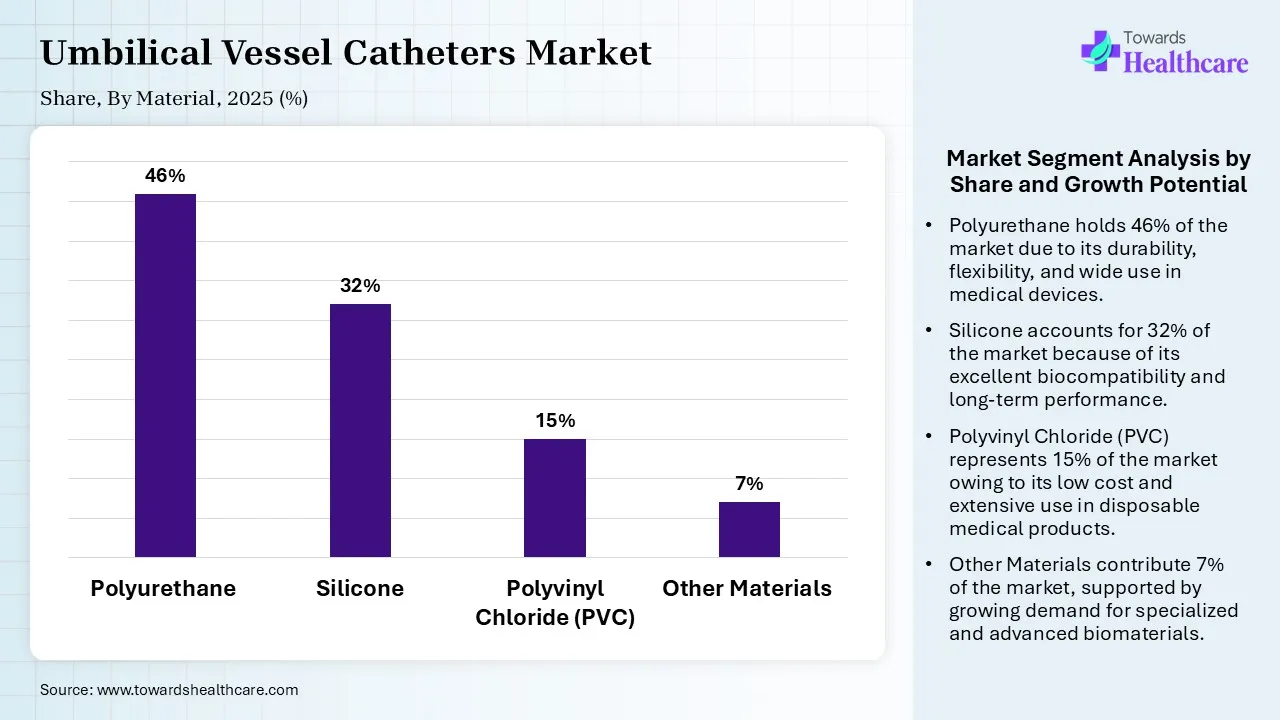
| Polyurethane | 46% |
| Silicone | 32% |
| Polyvinyl Chloride (PVC) | 15% |
| Other Materials | 7% |
The Polyurethane Segment Dominated the Umbilical Vessel Catheters Market With 46% in 2025
The polyurethane segment accounted for the highest revenue share of 46% of the market in 2025, driven by its excellent strength and flexibility. It also supports extended catheter placement, which increased its demand. At the same time, it was widely preferred in hospitals for durability.
The other materials segment held the second-largest share of 7% of the umbilical vessel catheters market in 2025 and is expected to show the highest growth with a CAGR of 6.8% during the forecast period, due to advanced polymers improving flexibility and safety. Manufacturers introduce innovative materials for infection reduction. Growing research also expands commercial use.
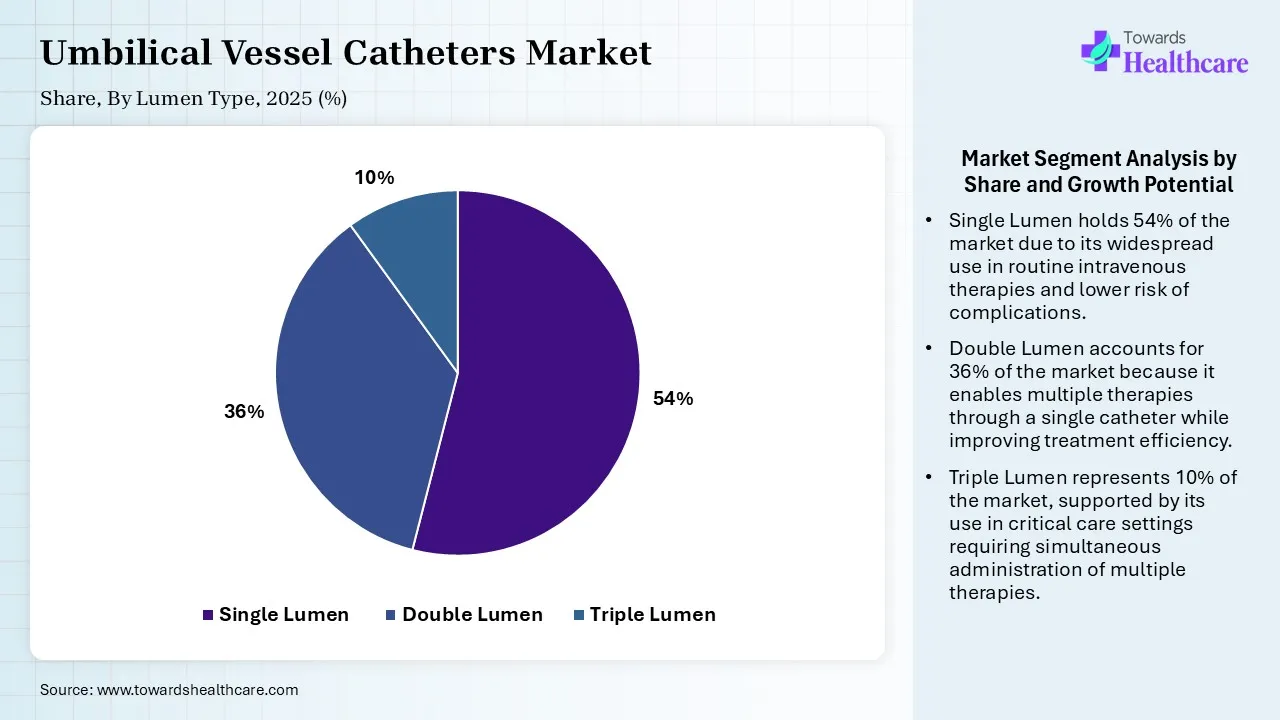
| Segments | Shares % |
| Single Lumen | 54% |
| Double Lumen | 36% |
| Triple Lumen | 10% |
The Single Lumen Segment Dominated the Umbilical Vessel Catheters Market With 54% in 2025
The single lumen segment held a major revenue share of 54% of the market in 2025, as they were commonly used in routine neonatal procedures. Lower complexity also encouraged their widespread adoption. They also supported essential infusion requirements, which promoted their use.
The triple lumen segment held the second-largest share of 10% of the umbilical vessel catheters market in 2025 and is expected to expand rapidly with a CAGR of 6.9% during the forecast period, due to increasing use in critically ill neonates. Facilitates multiple therapies through one access point. Product innovations also expand their availability.
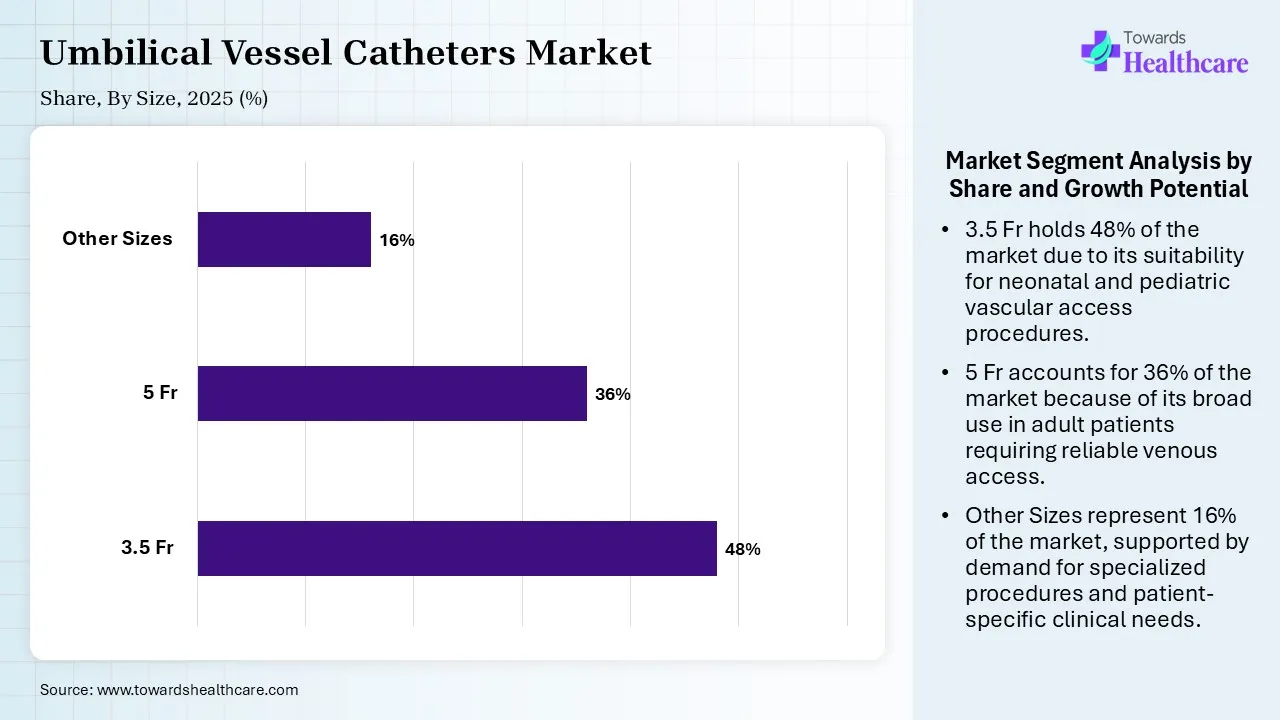
| Segments | Shares % |
| 3.5 Fr | 48% |
| 5 Fr | 36% |
| Other Sizes | 16% |
The 3.5 Fr Segment Dominated the Umbilical Vessel Catheters Market With 48% in 2025
The 3.5 Fr segment contributed the biggest revenue share of 48% of the market in 2025, as they were ideal for premature and low-birth-weight infants. They were frequently recommended in NICUs, which increased their utilization. High procedure volume also sustained their demand.
The other sizes segment held the second-largest share of 16% of the umbilical vessel catheters market in 2025 and is expected to gain the highest share with a CAGR of 6.5% during the forecast period, due to customized catheter sizing improving patient outcomes. Rising focus on individualized neonatal care also drives their adoption. Manufacturers are also expanding product portfolios.
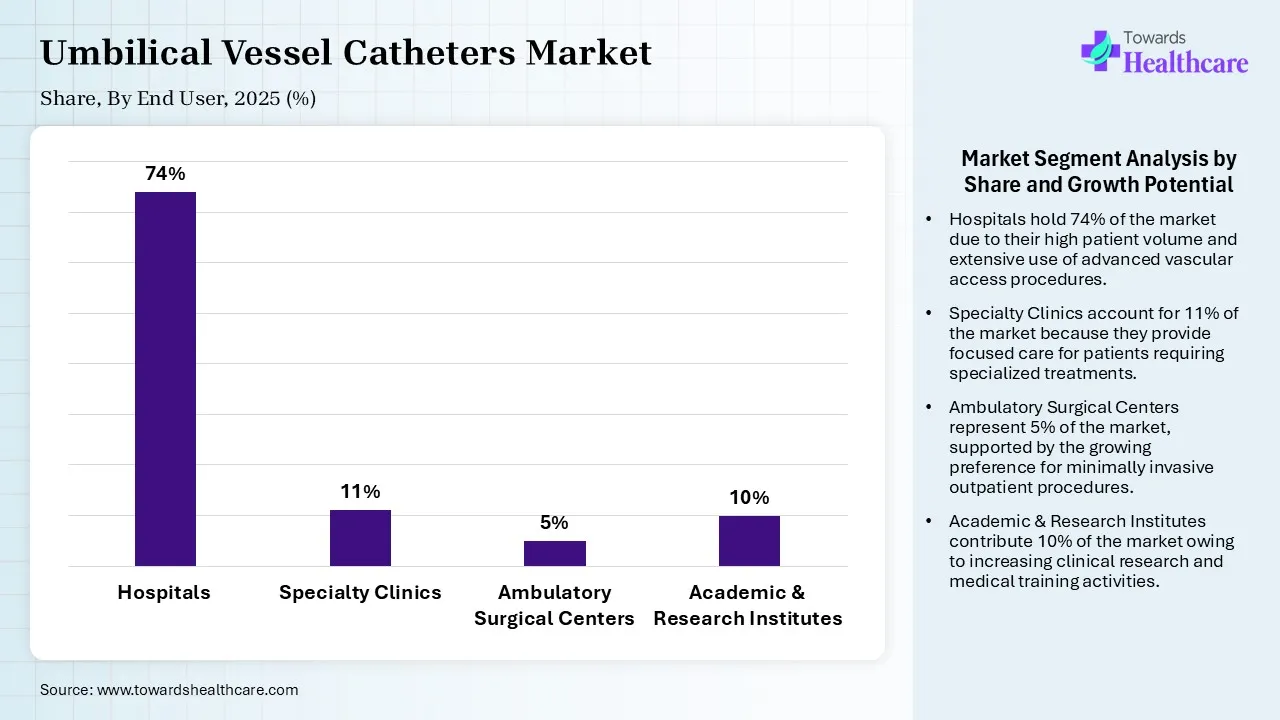
| Segments | Shares % |
| Hospitals | 74% |
| Specialty Clinics | 11% |
| Ambulatory Surgical Centers | 5% |
| Academic & Research Institutes | 10% |
The Hospitals Segment Dominated the Umbilical Vessel Catheters Market With 74% in 2025
The hospitals segment held the largest revenue share of 74% of the market in 2025, as most neonatal intensive care procedures occurred in hospitals. Availability of specialized NICUs also supported the utilization of umbilical vessel catheters. Continuous investments also improved neonatal care infrastructure.
The academic & research institutes segment held the second-largest share of 10% of the umbilical vessel catheters market in 2025 and is expected to grow with the fastest CAGR of 6.8% during the forecast period, due to increasing neonatal research, which expands catheter utilization. Clinical trials require specialized vascular access devices, which drives their demand. Government funding also supports innovation.
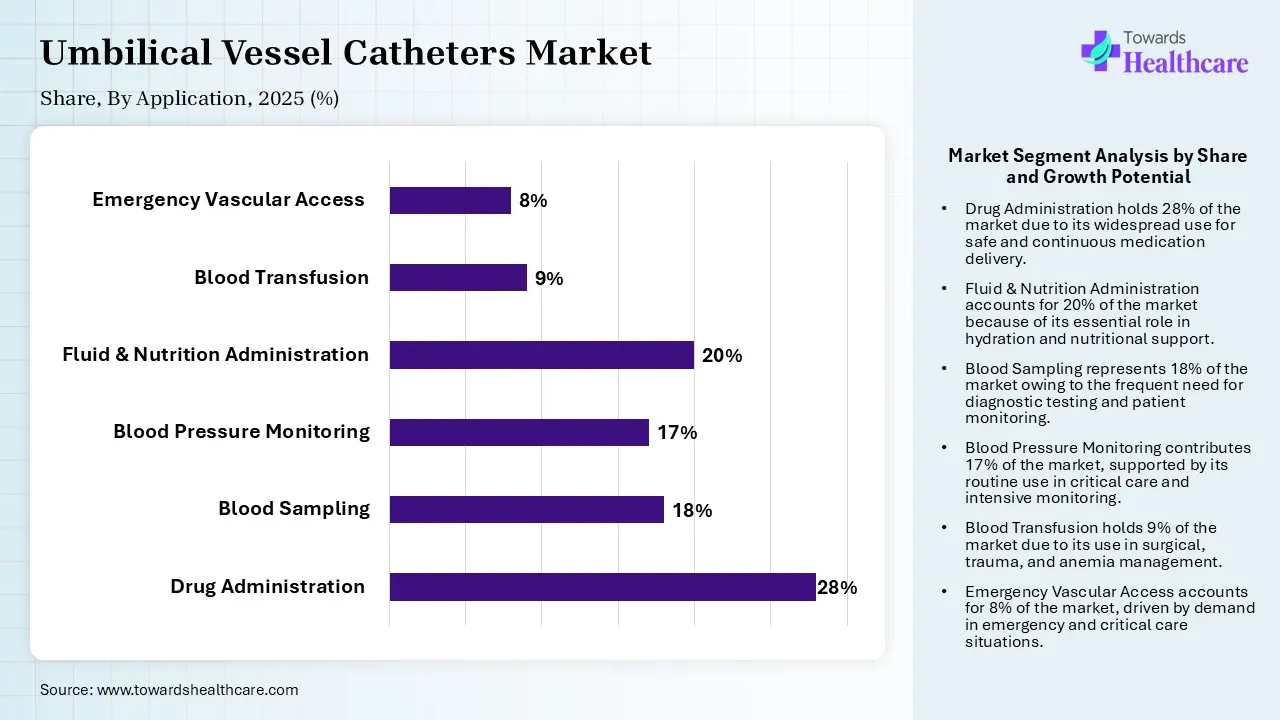
| Segments | Shares % |
| Drug Administration | 28% |
| Blood Sampling | 18% |
| Blood Pressure Monitoring | 17% |
| Fluid & Nutrition Administration | 20% |
| Blood Transfusion | 9% |
| Emergency Vascular Access | 8% |
The Drug Administration Segment Dominated the Umbilical Vessel Catheters Market With 28% in 2025
The drug administration segment led the market with a 28% share in 2025, as umbilical vessel catheters were essential for administering medications in critically ill neonates. They were also utilized to support continuous therapy administration. High NICU utilization also sustains their demand.
The emergency vascular access segment held the second-largest share of 8% of the umbilical vessel catheters market in 2025 and is expected to witness the fastest growth with a CAGR of 6.7% during the forecast period, due to increasing emergency neonatal care driving their adoption. Rapid vascular access improves treatment outcomes. Training initiatives also enhance clinical utilization.
| Segments | Shares % |
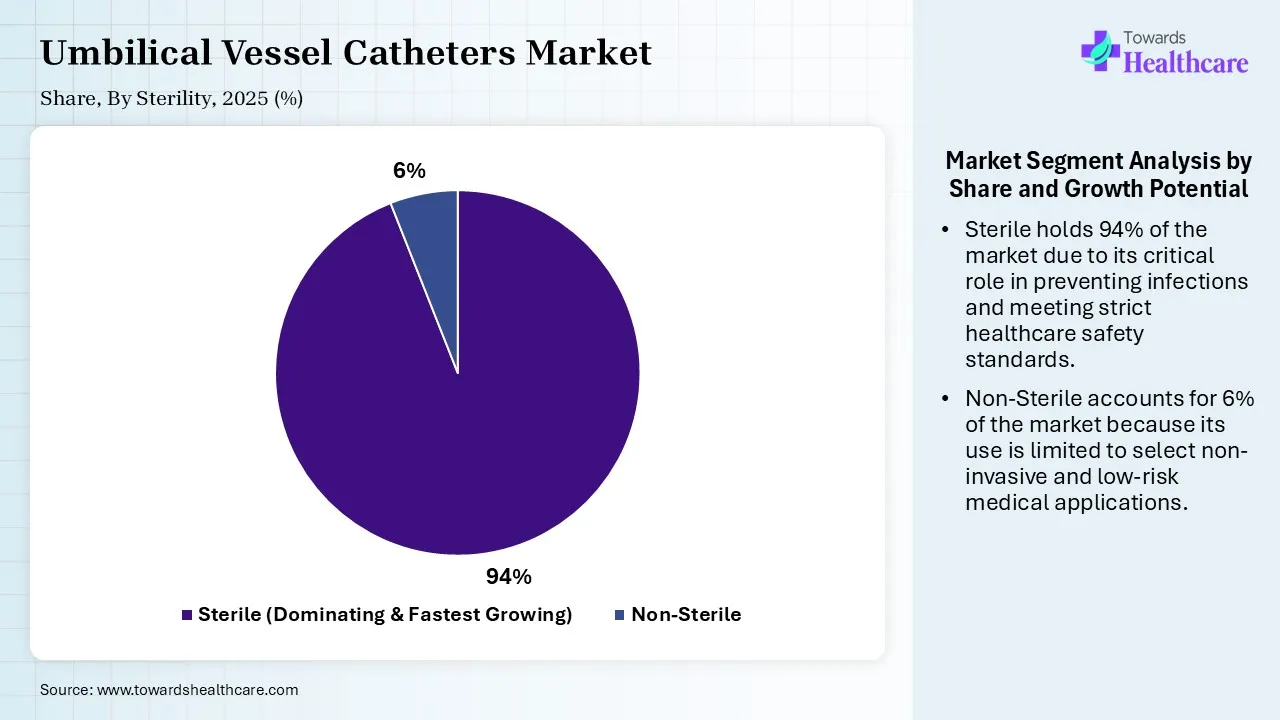
| Sterile | 94% |
| Non-Sterile | 6% |
The Sterile Segment Dominated the Umbilical Vessel Catheters Market With 94% in 2025
The sterile segment accounted for the highest revenue share of 94% of the market in 2025 and is expected to show the highest growth with a CAGR of 6% during the forecast period, as infection prevention remained the highest clinical priority. Regulatory standards required sterile devices, which increased their use. Hospitals' overwhelming procurement also encouraged the use of sterile catheters.
The non-sterile segment held a share of 6% of the umbilical vessel catheters market in 2025, driven by their primary use for education and research purposes. Based on Payal Rabde's survey, their lower cost and flexibility also increase adoption rates. Their widespread availability also increases their use.
| Segments | Shares % |
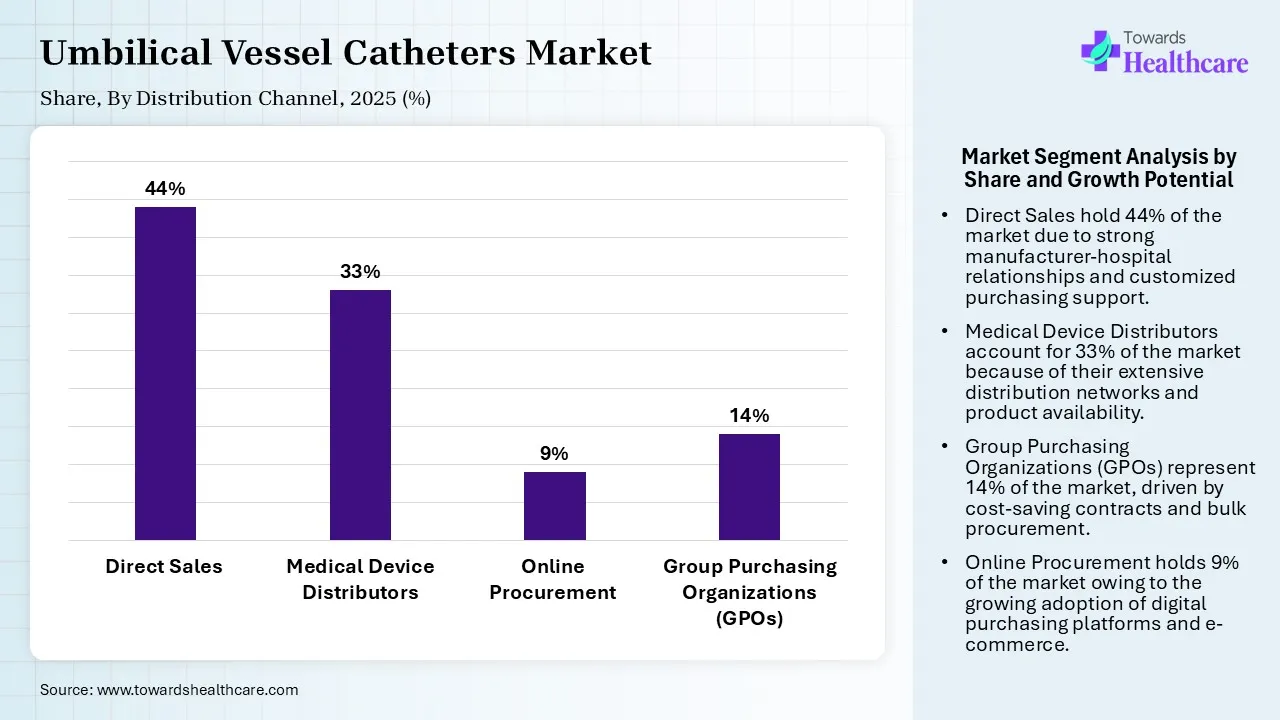
| Direct Sales | 44% |
| Medical Device Distributors | 33% |
| Online Procurement | 9% |
| Group Purchasing Organizations (GPOs) | 14% |
The Direct Sales Segment Dominated the Umbilical Vessel Catheters Market With 44% in 2025
The direct sales segment held a major revenue share of 44% of the market in 2025, as large hospitals prefer procurement directly from manufacturers. Long-term supply contracts also improved purchasing efficiency. Technical support also strengthened customer relationships.
The online procurement segment held the second-largest share of 9% of the umbilical vessel catheters market in 2025 and is expected to expand rapidly with a CAGR of 7.2% during the forecast period, driven by digital procurement platforms improving purchasing efficiency. Healthcare institutions increasingly adopt e-procurement. Transparent pricing also encourages online purchasing.
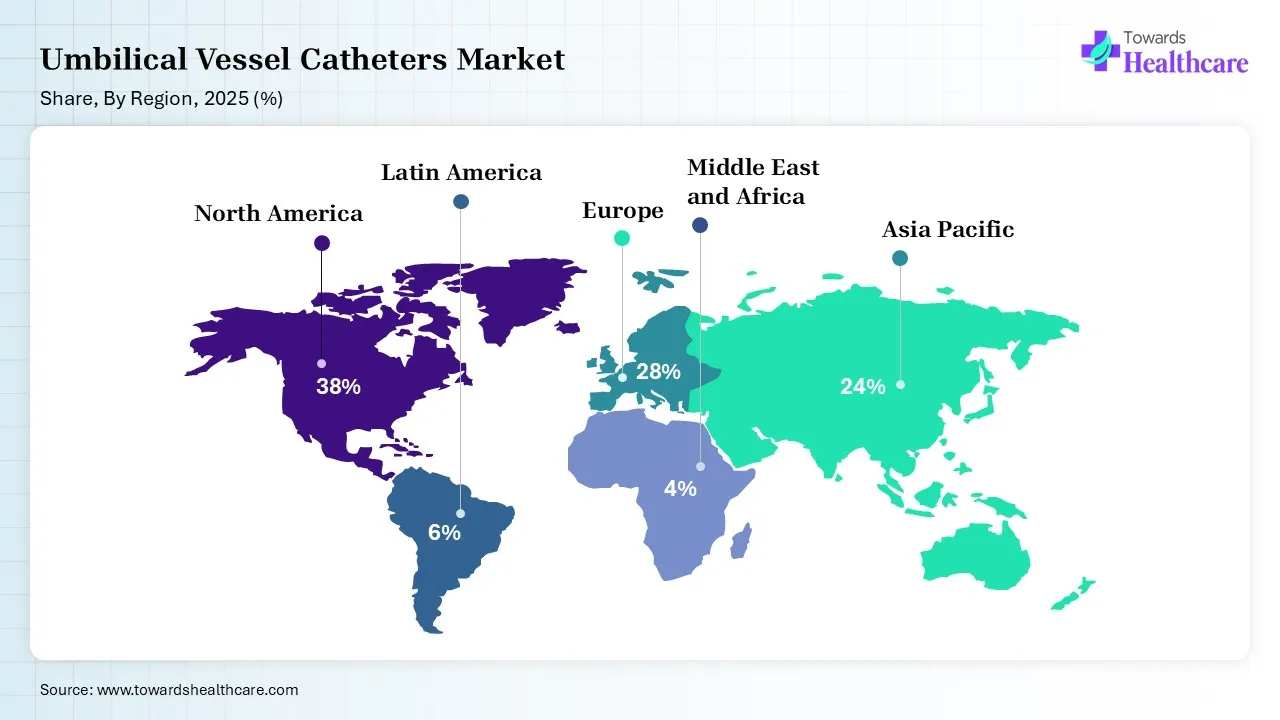
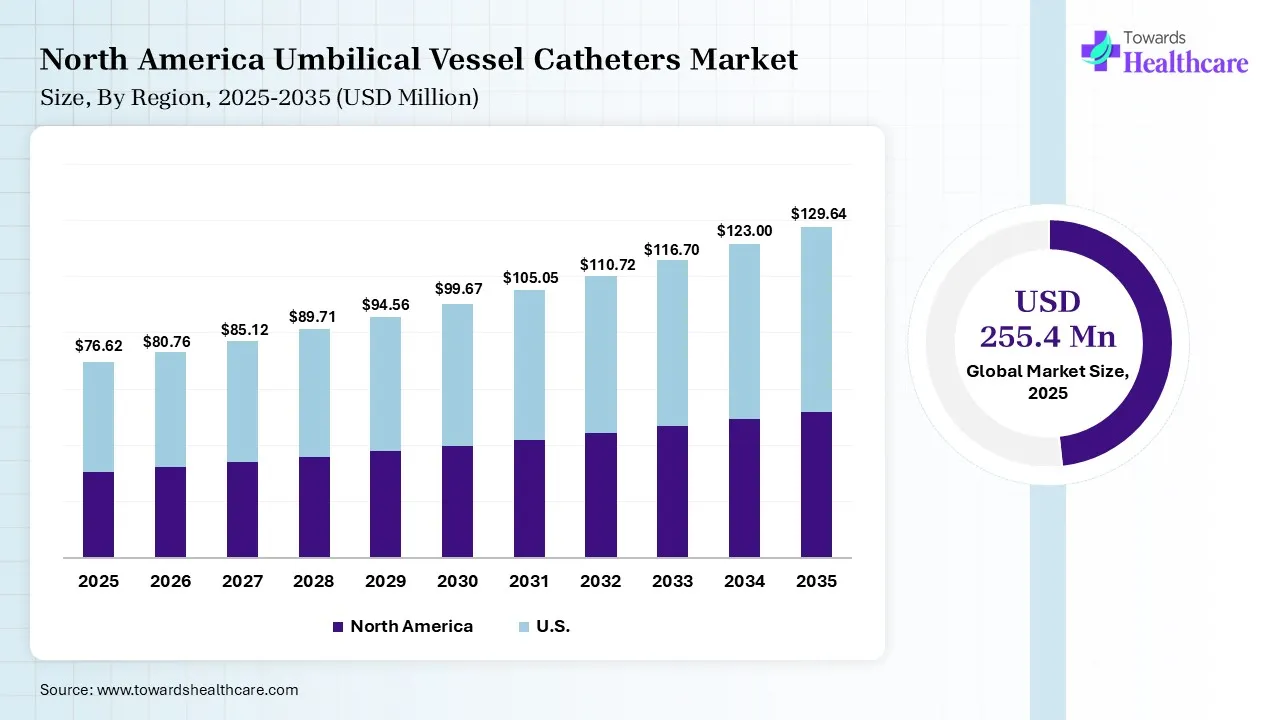
North America dominated the market with 38% in 2025, due to the presence of advanced NICU infrastructure, which supported consistent demand. High healthcare expenditure also enabled adoption of umbilical vessel catheters. Strong regulatory standards also promoted premium products. The presence of leading catheter manufacturers also increased their innovations, where growth in high-risk births also increased their demand. Expansion of pediatric care centres also increased their adoption, which contributed to market growth.
U.S. Market Trends
U.S. held a 30% share of the umbilical vessel catheters market in 2025, driven by large neonatal care networks, which supported the demand for umbilical vessel catheters. Continuous innovation improved catheter utilization, where favorable reimbursement encouraged their adoption. The growth in R&D activities and hospital infrastructure also increased their adoption. Based on the information gathered by Payal Rabde, advanced industries like Cardinal Health, with third-quarter fiscal year 2026 revenues of $60.9 billion, also contributed to their expansion. (Source: Cardinal Health Reports Third Quarter Fiscal Year 2026 Results and Raises Outlook - Apr 30, 2026)
Mexico Market Trends
Mexico held a 3% share in the umbilical vessel catheters market in 2025 and is expected to grow with the highest CAGR of 6% during the studied years, due to healthcare infrastructure continuing to improve. Rising neonatal care awareness also supports the rise in the demand for umbilical vessel catheters, where growing public investments also increase their adoption. Growing innovations and government investments are also increasing their adoption rates. Growing demand for vascular access devices is also driving their advancements.
Europe held a 28% share of the market and is expected to grow significantly during the forecast period, due to the presence of strong public healthcare systems sustaining demand. Increasing preterm birth management also supports utilization of umbilical vessel catheters. Medical device innovation also drives replacement sales, increasing their adoption. Favorable reimbursement supports and growing health awareness are also increasing their demand. Expanding neonatal care centres and innovations are also driving market growth.
Germany Market Trends
Germany held a 7% share in the umbilical vessel catheters market in 2025, driven by advanced neonatal care, which supported high adoption of umbilical vessel catheters. Continued Hospital modernization and expansion of clinical standards also encouraged the adoption of premium devices. Growth in healthcare items and focus on reducing infant mortality rates also increased their use. Furthermore, growth in infection control also increased their innovations, which promoted the development of safe, effective, and high-quality catheters.
The rest of Europe held a 3% share in the umbilical vessel catheters market in 2025 and is expected to witness the fastest growth with a CAGR of 5.7% over the forecast period, due to healthcare modernization, which expands the demand for umbilical vessel catheters. Regional investments improve neonatal care, where device availability continues increasing, promoting their adoption. Rising health awareness and healthcare expenditure are also increasing their demand, while expanding industries are also accelerating their innovations.
Asia Pacific held a 24% share of the market in 2025 and is expected to grow at the fastest CAGR of 7% during the forecast period, due to rapid healthcare expansion, which drives the demand for umbilical vessel catheters. Increasing birth rates and NICU investments also accelerate their adoption. Local manufacturing improves affordability, driving their demand, where growing health awareness also encourages their use. Increasing government support, healthcare expenditures, and R&D activities are also fueling the market expansion.
China Market Trends
China held a 9% share of the umbilical vessel catheters market in 2025, driven by a large neonatal population, which supported market expansion. Hospital investments increased utilization of umbilical vessel catheters, where domestic manufacturing also boosts their accessibility. Rapid expansion of neonatal intensive care units and growth in preterm cases also increased their use. Growth in the focus on infant mortality reduction also encouraged the development of next-generation catheters.
India Market Trends
India held a 5% share in the umbilical vessel catheters market in 2025 and is expected to expand rapidly with a CAGR of 7.6% in the coming years, due to rising healthcare expenditure accelerating growth. Expanding NICU infrastructure improves access to umbilical vessel catheters, where government maternal health initiatives also support their adoption. High birth rates and preterm cases also increase their use, where expansion of medical devices industries is also increasing innovations. Growing collaborations are also driving their advancements.
Latin America held a 6% share in the market in 2025 and is expected to show lucrative growth during the forecast period, due to healthcare modernization improving neonatal care. Rising investments also support medical device adoption. Growing government initiatives are also strengthening infrastructure, promoting the adoption of umbilical vessel catheters. Growing high-risk birth rates are also increasing their demand, where rising reimbursement support is also improving their accessibility, enhancing market growth.
Brazil Market Trends
Brazil held a 3% share in the umbilical vessel catheters market in 2025 and is expected to gain the highest market share with a CAGR of 6.3% during the forecast period, driven by the largest regional healthcare market, which supported demand. NICU expansion also increased their procurement, where local distribution improved access to umbilical vessel catheters. Growth in birth rates and government investments also increased their adoption. A rise in health awareness and expansion of the medical devices industry also increased their advancements.
The rest of Latin America held a 2% share in the umbilical vessel catheters market in 2025, due to improving healthcare infrastructure expanding utilization. International suppliers increase market penetration, where neonatal services continue developing, which increases umbilical vessel catheters accessibility. Increasing government interest and NICUs are also driving their demand. As per Payal Rabde’s analysis, expanding health awareness, healthcare spending, and distribution networks are also increasing their availability and adoption rates.
MEA held a 4% share in the market in 2025 and is expected to show notable growth during the forecast period, due to investments in tertiary hospitals supporting adoption. Growing neonatal care capacity improves demand for umbilical vessel catheters, where healthcare reforms also encourage advanced medical devices adoption. Growing birth rates and high-risk pregnancies are also increasing the use of umbilical vessel catheters. A rise in government initiatives and healthcare expenditures are also driving their innovations, propelling the market growth.
Saudi Arabia Market Trends
Saudi Arabia held a 1.50% share in the umbilical vessel catheters market in 2025 and is expected to show the fastest growth with a CAGR of 6.6% over the forecast period, driven by vision-driven healthcare investments, which expanded NICU capacity. Premium medical device procurement also increased the adoption of umbilical vessel catheters, where specialized hospitals also contributed to their growth. Growth in focus on neonatal mortality rates also increased their use, where a rise in collaborations also increased their innovations.
UAE Market Trends
United Arab Emirates (UAE) held a 1% share in the umbilical vessel catheters market in 2025, due to advanced hospitals adopting modern neonatal technologies. Growing medical tourism also supports a rise in the demand for umbilical vessel catheters, where government investments also continue to support their utilization. Expansion of paediatric specialty centres and quality healthcare services are also increasing their use. A rise in healthcare digitalisation initiatives and healthcare spending are also promoting the development of the next generation of catheters.
| Companies | Headquarters | Solutions |
| Vygon SA | Ecouen, France | Vygon XRO |
| Utah Medical Products, Inc. | Midvale, U.S. | Umbili-Cath |
| Cardinal Health, Inc. | Dublin, U.S. | Argyle |
| Poly Medicure Limited | Haryana, India | Polymed PU Umbilical Catheter |
| Footprint Medical, Inc. | San Antonio, U.S. | Footprint Polyurethane Umbilical Catheter |
Strengths
Weaknesses
Opportunities
Threats
Competitive Positioning of Leading Companies
Cardinal Health, Utah Medical Products, Inc., and Vygon SA dominated the market depending on the overall competitive environment, market concentration, and competitive intensity.
Market Share Analysis of Key Players
Cardinal Health, Utah Medical Products, Inc., and Vygon SA are leading manufacturers based on product portfolio, geographic presence, innovation, and strategic initiatives.
Competitive Benchmarking
Navi Medical Technologies, Laborie Medical Technologies, and Vygon SA are top companies across innovation, pricing strategy, manufacturing capabilities, regulatory approvals, distribution strength, and customer reach.
Strategic Developments
Laborie Medical Technologies, BD (Becton, Dickinson and Company), and Teleflex Incorporated led the market based on mergers, acquisitions, partnerships, collaborations, new product launches, manufacturing expansions, and regulatory approvals.
| Company Overview | Manufacture and deliver high-quality, high-impact diagnostic and therapeutic products |
| Product Portfolio | T-DOC air-charged catheters, interventional urology, bladder scanners, injection needles, etc |
| Service Portfolio | Urology & urogynecology, gastroenterology, maternal & child health |
| Geographical Presence | North America, Europe, and Asia Pacific |
| Strategic Initiatives | Agreement with Organon |
| Recent Developments | Successful completion of the first procedures using the Optilume® Ureteric Drug-Coated Balloon (DCB) in the ENDURE 1 study |
| SWOT Analysis |
Strengths:
Weakness:
Opportunities:
Threats:
|
| Company Overview | Develop technically sophisticated products |
| Product & Service Portfolio | Vascular, enteral, monitoring, nervous, respiratory surgery, and urology |
| Geographical Presence | Africa, Asia & Middle East, Europe, North America, and South America |
| Strategic Initiatives | Acquisition of Stiletto® |
| Recent Developments | An international campaign that highlights healthcare professionals committed to vascular access safety |
| SWOT Analysis |
Strengths:
Weakness:
Opportunities:
Threats:
|
| Company Overview | Distributor of pharmaceuticals and specialty products |
| Financial Performance | Third quarter fiscal year 2026 revenues of $60.9 billion |
| Product Portfolio | Medical supplies, medical products, & pharmaceutical products |
| Service Portfolio | Ambulatory, home care, hospitals, and laboratory services |
| Geographical Presence | North America, Europe, Middle East, and Asia Pacific |
| Strategic Initiatives | Will acquire the Diabetes Health business of AdaptHealth Corp. (NASDAQ: AHCO), and, in its entirety, Strive Medical, a multi-specialty supply provider with a focus on urology |
| Recent Developments | Completed acquisition of Solaris Health |
| SWOT Analysis |
Strengths:
Weakness:
Opportunities:
Threats:
|
Global Pricing Trends
It encompasses pricing differences across product categories, catheter materials, and regions.
Complete Supply Chain Overview
The movement of products from raw material suppliers to manufacturers, distributors, hospitals, and end users is highlighted in the complete supply chain overview.
End-to-End Industry Value Chain
The end-to-end industry value chain encompasses value creation across raw material suppliers, manufacturers, distributors, hospitals, healthcare professionals, and patients.
Value Creation Across Each Stage
Value creation across each stage encompasses areas where companies generate the highest value and profitability.
Global Regulatory Environment
It encompasses major regulatory frameworks governing neonatal catheter manufacturing and commercialization, which include approval pathways, quality standards, and compliance requirements within each region.
Investment Trends Across the Neonatal Medical Device Industry
A rise in funding, healthcare investments, R&D spending, collaboration, manufacturing capabilities, and technological innovations drives investments in the neonatal medical device industry.
Current Demand by Healthcare Facility Type
Growing NICU admissions, increasing premature birth rates, focus on neonatal survival care are driving the demand for umbilical vessel catheters in healthcare facilities.
Hospital Procurement Decision Factors
They encompass safety, cost-effectiveness, ease of use, and clinical effectiveness.
Market Forecast Through 2035
The growing premature birth rates, expanding NICUs, growing healthcare investments, and demand for advanced catheters are expected to drive market growth.
Advancements in antimicrobials, thrombosis reduction, single-use, and improved biocompatibility catheters are creating new opportunities.
Growing demand for safety, improved quality, clinical performance, and sensor-enabled catheters is anticipated to drive industry transformation.
By Product Type
By Material
By Lumen Type
By Size
By End User
By Application
By Sterility
By Distribution Channel
By Region













Principal Consultant
Payal Rabde is a Healthcare Market Research Analyst at Towards Healthcare Research & Consulting with 4+ years of experience in pharmaceuticals, biotechnology, medical devices, and life sciences.
Learn more about Payal Rabde

Reviewed By
Aditi Shivarkar is a seasoned professional with over 14 years of experience in healthcare market research. As a content reviewer, Aditi ensures the quality and accuracy of all market insights and data presented by the research team.
Learn more about Aditi Shivarkar










