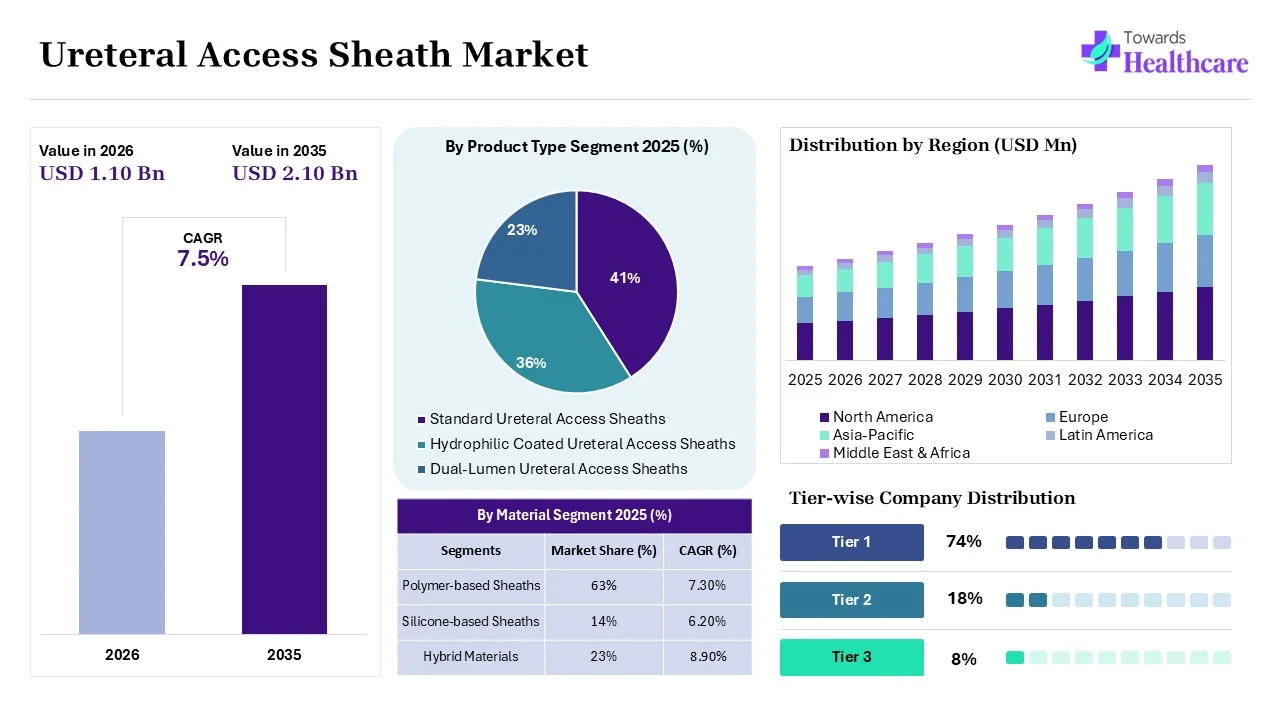
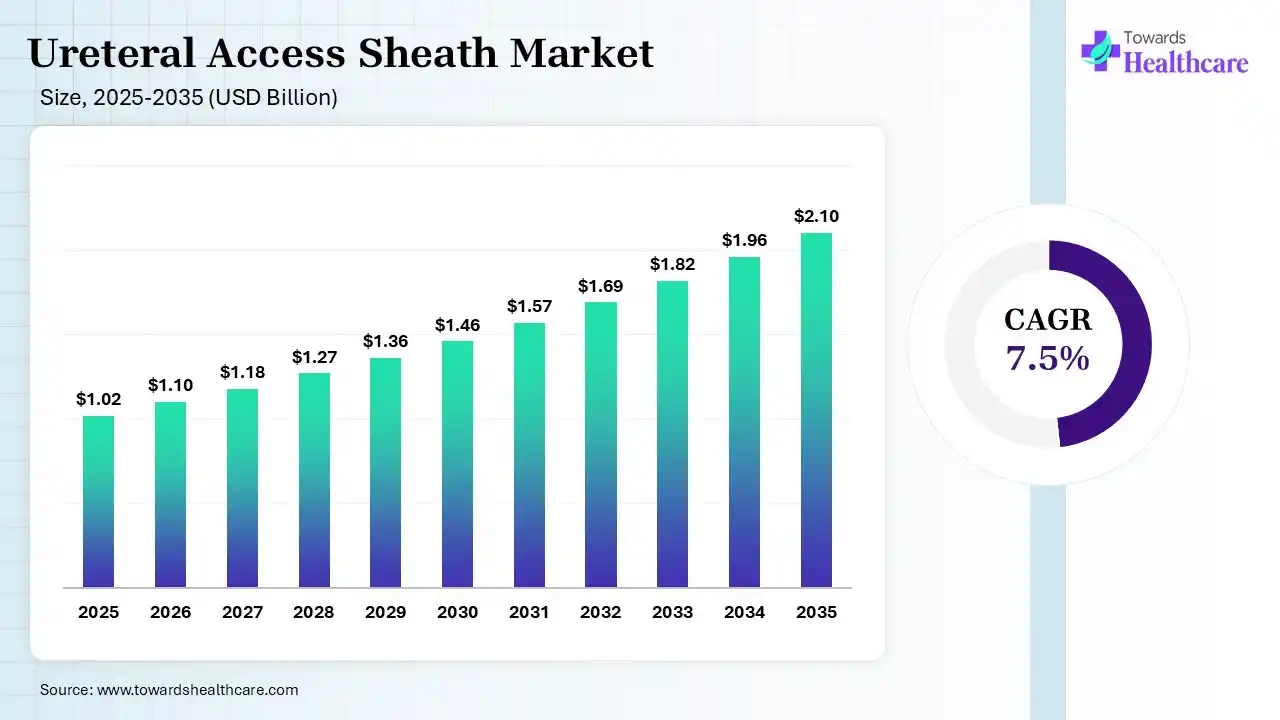
The ureteral access sheath market size is calculated at USD 1.02 billion in 2025, grew to US$ 1.1 billion in 2026 and is expected to reach USD 2.1 billion by 2035, expanding at a CAGR of 7.5% from 2026 to 2035, driven by broader adoption of this sheath in routine stone management, affordability, and proven reliability. The market is growing in 2026 because of the growing diagnosis of kidney stones in children, particularly in metabolic & congenital concerns. It is expected to expand through 2035 due to the highly shifting towards minimally invasive, same-day, or outpatient procedures, and accelerating demand for single-use, disposable devices, further driving the market growth. North America accounted for 7.1% of the market in 2025 due to the safety and effectiveness, with acceptable postoperative complication rates and stone-free status.
Ureteral access sheaths (UASs) are part of a urologist's armamentarium when performing retrograde intrarenal surgery (RIRS). Applied to found a conduit during endoscopic urological technology, therefore enabling the passage of endoscopes and different tools in the urinary tract. The functioning channel protects the ureter during repeated tool exchanges. The sheath protects delicate devices and smaller flexible scopes from injury. The sheath has a hydrophilic coating to make a low-friction surface as the ureter is dilated. A ureteral access sheath is an intended device used during ureteroscopic and retrograde intrarenal operation, which contributed to the growth of the ureteral access sheath market.
A ureteral access sheath is essentially a means of getting up and down the ureter multiple times while evading the requirement for re-establishment of guidewires to do so. Sheath range between 10F and 16F in outside diameter. The ureteral access sheath is intended to guard the ureter during repeated tool exchanges during ureteroscopy. These access sheaths are applied to establish a conduit while endoscopic urological processes facilitate the passage of endoscopes and various tools into the urinary tract. This sheath (UAS) facilitates the use of flexible ureteroscopy, allowing enhanced minimally invasive management of challenging upper urinary tract diseases.
The ureteral access sheath market is increasing due to rising cases of urological disease, technological development, and procedural effectiveness. Opportunities of this market are minimally invasive shift, rising aging population, broader diagnostic interventions, and faster recovery demands. Significant applications of the ureteral access sheath are kidney stone removal, improved visualization and drainage, scope protection, and retrograde intrarenal surgery.
Increasing adoption of AI-based algorithms, where specifically intelligent pressure-controlled Sheath (IPC-UAS) systems are assisting in the maintenance of consistent, low-pressure, high-flow irrigation. This further minimizes the risk of urinary tract infections, sepsis, & patient discomfort. Alongside, the flexible navigable suction UAS (FANS) refers to an AI-enabled, versatile, & steerable sheath, which supports active navigation of the inferior calyx. The significant incorporation of AI-based planning, execution, and postoperative assessment optimizes stone targeting, enhances navigation, and raises overall treatment precision. AI-driven technology continuously monitors and robotically adjusts intrarenal pressure (IRP) in real-time. By moderating irrigation and suction, AI prevents hazardous pressure spikes, which radically reduces the challenges of postoperative complications, which drives the growth of the market.
Accessing Tip-Bendable Designs:
Researchers are exploring novel suction sheaths, especially tip-bendable designs (TBS-UAS), which provide robust maneuverability within the renal calyces and also enable targeted suction in restricted anatomical sites. Its specific design facilitates advanced stone clearance and improves surgical effectiveness, creating it an invaluable tool in the sectors. These groundbreaking tools allow for improved manoeuvrability in the renal pelvis and calyces, allowing advanced access to stones in the complex region, which drives the growth of the ureteral access sheath market.
Shifting Towards Integrated Technology:
The ureteral access sheath market is highly leveraging the integration of UAS with smaller, single-use digital ureteroscopes & high-power lasers, like the thulium fiber laser (TFL), which allows for rapid dusting and instant removal of fine dust. Ureteral access sheath allows multiple ureteral permits, increasing time effectiveness and procedural standardization in stone management.
Seeking Optional Techniques:
Many research studies emphasize no-touch techniques versus active insertion and the application of topical agents to lower ureteral injury during insertion. Driving the growth of the ureteral access sheath market by the advanced Sheath with venting or intended suction channels enables active fluid administration.
| Table | Scope |
| Market Size in 2026 | USD 1.1 Billion |
| Projected Market Size in 2035 | USD 2.1 Billion |
| CAGR (2026 - 2035) | 7.5% |
| Historical Data | 2020 - 2023 |
| Base Year | 2025 |
| Forecast Period | 2026 - 2035 |
| Measurable Values | USD Millions/Units/Volume |
| Market Segmentation | By Product Type, By Material, By Size, By Length, By End User, By Usage, By Application, By Distribution Channel, By Region |
| Top Key Players | Boston Scientific Corporation, BD, Olympus, Coloplast, Cook Medical, AMECATH |
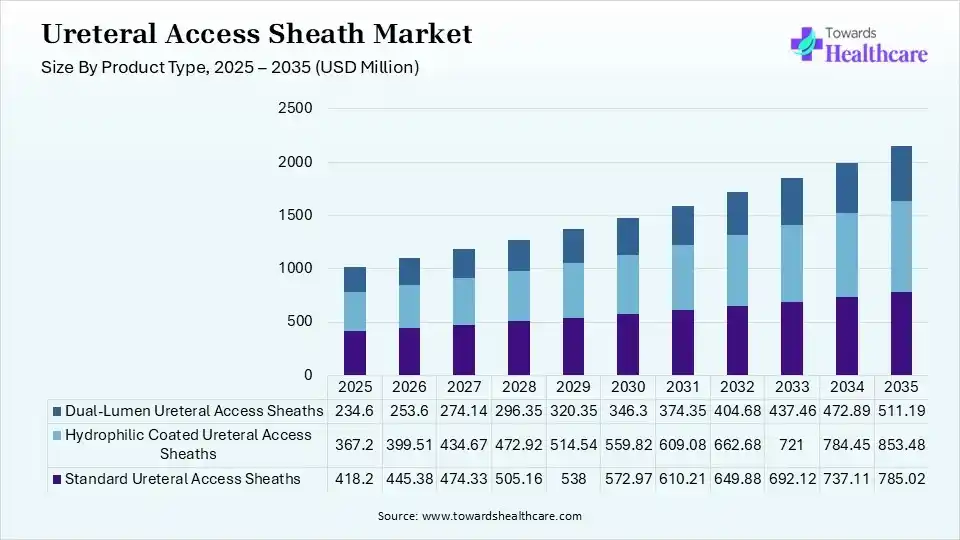
| Segment | Share 2025 (%) |
| Standard Ureteral Access Sheaths | 41% |
| Hydrophilic Coated Ureteral Access Sheaths | 36% |
| Dual-Lumen Ureteral Access Sheaths | 23% |
The Standard Ureteral Access Sheath Segment Led the Ureteral Access Sheath Market in 2025
The standard ureteral access sheath segment contributed the largest market share of 41% in 2025, as ureteral access sheaths allow multiple ureteral passes, enhancing time effectiveness and procedural standardization in kidney stone management. They provide benefits such as facilitating the insertion and removal of the ureteroscope, offering a clearer field of view, and reducing postoperative complications.
The hydrophilic-coated ureteral access sheath segment held a significant share of 36% and is expected to grow at the fastest CAGR of 8.80% during the forecast period in the market, as the hydrophilic coating reduces friction. It enables easy insertion and removal deprived of harmful the ureter. Hydrophilic coating intended to confer smooth passage into the ureter with adequate resistance to buckling and kinking.
The dual-lumen ureteral access sheath segment held a significant share of 23% in 2025, as it provides simple access for delivering irrigation fluid and contrast media into the renal cavities while ureteroscopic technologies keep the guidewire in place. Also, its assistances in draining fluids from the urinary tract. It removes the requirements for many catheterizations.
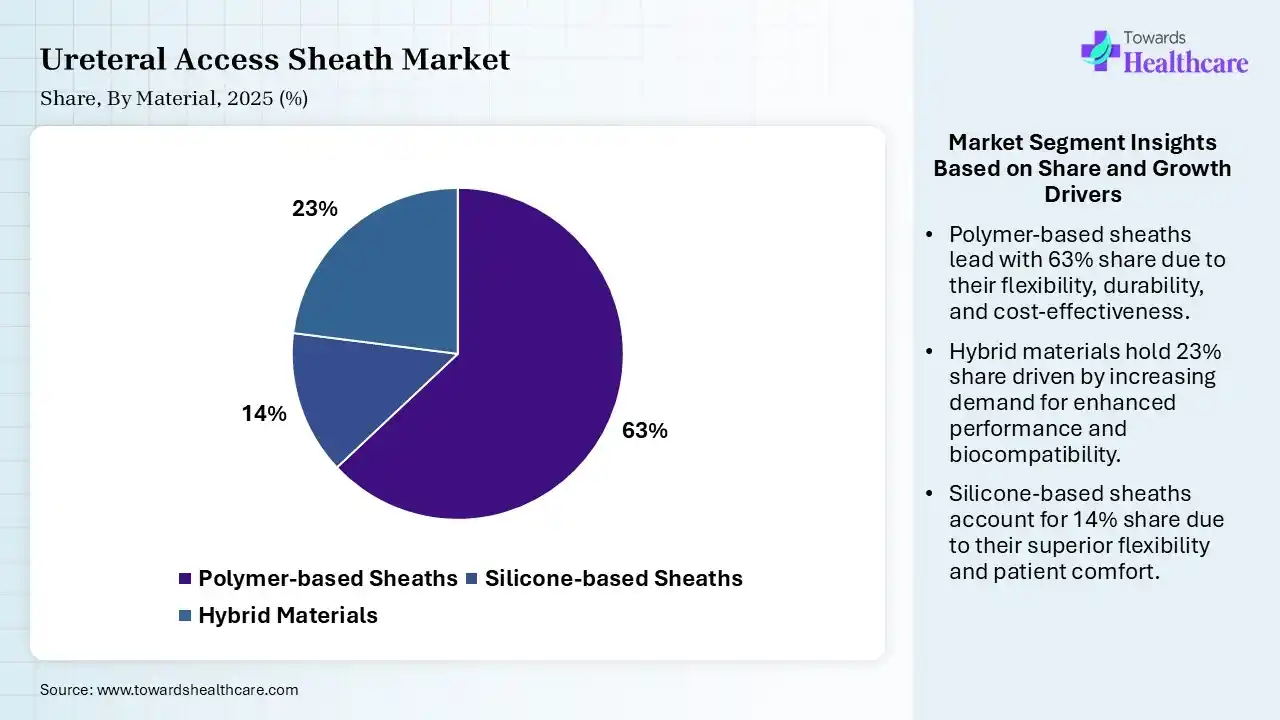
| Segment | Share 2025 (%) |
| Polymer-based Sheaths | 63% |
| Silicone-based Sheaths | 14% |
| Hybrid Materials | 23% |
The Polymer-based Sheaths segment led the Ureteral Access Sheath Market in 2025
The polymer-based sheaths segment contributed the largest market share of 63% in 2025, as the internal polymer sheath is used to maintain the bore fluid integrity. It also allows exposure concentrations and maintains fluid temperature. Polyethylene (PE) protective sheathing offers reliable mechanical, chemical, and environmental protection for electrical wiring while preserving flexibility and affordability.
The hybrid materials segment held a significant share of 23% of the market and is expected to grow at the fastest CAGR of 8.90% during the forecast period in the market, as hybrid sheaths and catheters incorporating a structural inner core, such as super-elastic nitinol, along with lubricious exterior materials such as hydrophilic polymers or silicone to lower friction, reduce insertion forces, and minimize tissue trauma.
The silicone-based sheath segment held a significant share of 14% of the market in 2025, as silicone is more resistant to encrustation and blockage, creating it an excellent choice for patients prone to various renal challenges. Silicone-based sheaths offer greater comfort and biocompatibility. They feature hypoallergenic, skin-friendly, and non-porous exteriors.
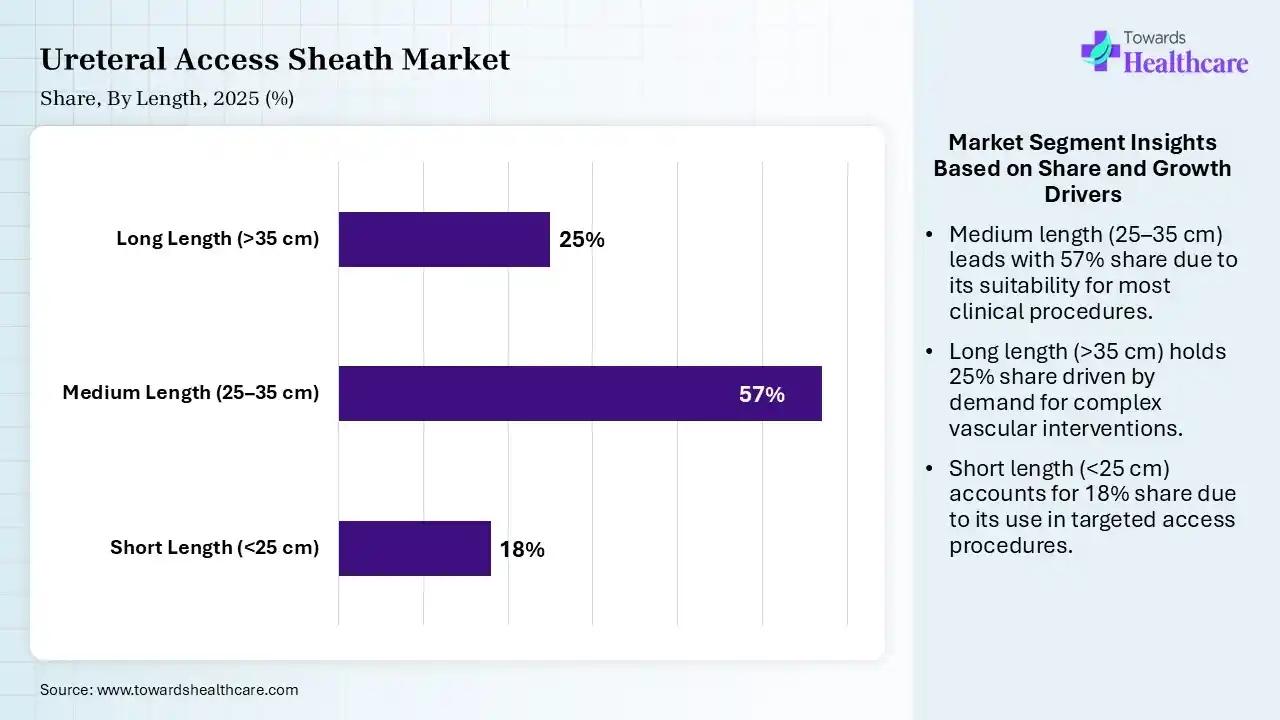
| Segment | Share 2025 (%) |
| Short Length (<25 cm) | 18% |
| Medium Length (25–35 cm) | 57% |
| Long Length (>35 cm) | 25% |
The Medium Length (25–35 cm) Segment Led the Ureteral Access Sheath Market in 2025
The medium length (25–35 cm) segment held a significant share of 57% in the market. This sheath provides outstanding flexibility. Also, it maintains sufficient strength to prevent kinking. They offer a way for the entry of the ureteroscope and drainage in the ureter. It provides a significant balance by allowing safe retrograde admission of stones, which drives the growth of the market.
The long length (>35 cm) segment contributed a significant ureteral access sheath market share of 25% in 2025, and is expected to grow at the fastest CAGR of the 8% during the forecast period, as this sheath provides low intra-luminal pressure, rising stone clearance rates, enhanced visual region, and lowers reliance on accessory tools. The extended length of the sheath marks the speed of kidney stone aspiration.
The short length (<25 cm) segment held a significant 18% share of the market in 2025, as the ureteral access sheath plays a profound supporting role in growing efficiency and safety while performing ureteroscopy. It enhanced visibility and effective removal of split stones. It offers focused endourological access while lowering ureteral friction.
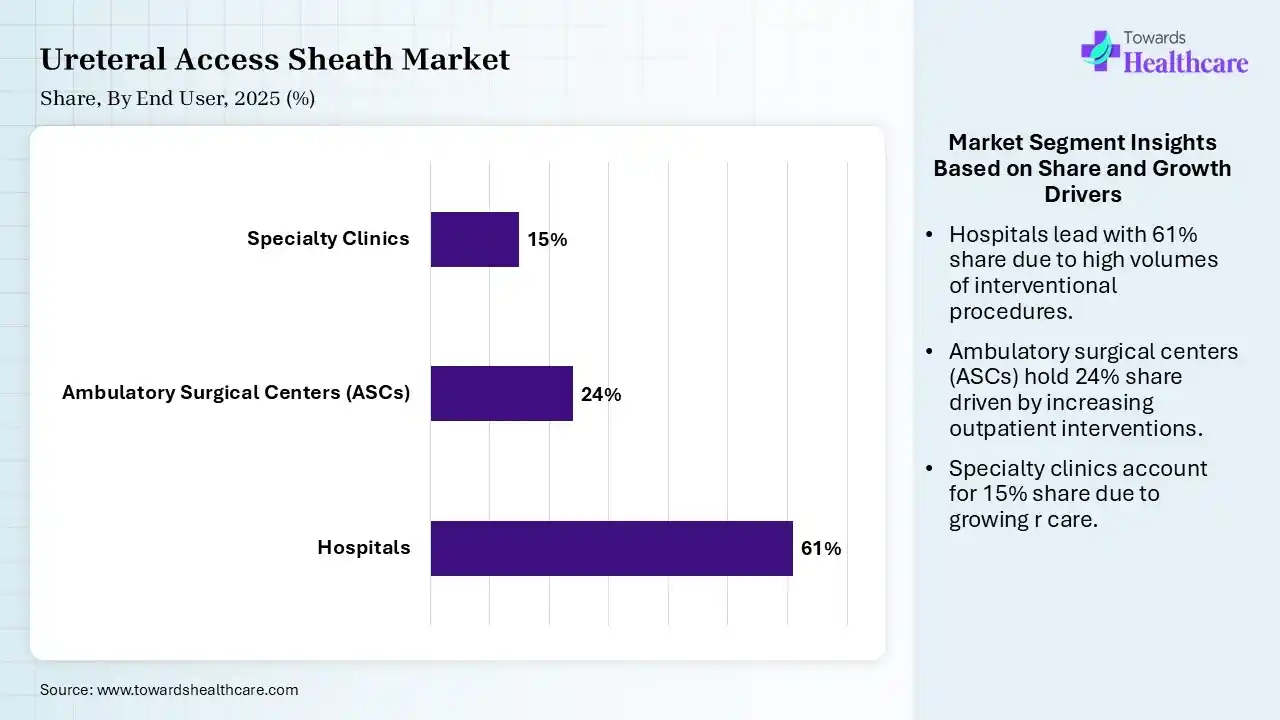
| Segment | Share 2025 (%) |
| Hospitals | 61% |
| Ambulatory Surgical Centers (ASCs) | 24% |
| Specialty Clinics | 15% |
The Hospitals Segment led the Ureteral Access Sheath Market in 2025
The hospitals segment contributed the largest market share of 61%, as ureteral access sheaths allow multiple ureteral passes, enhancing time effectiveness and procedural correction in kidney stone management. Its capability to preserve low intra-luminal pressure. The incessant irrigation and aspiration make a vortex that potentially eliminates excess fluid.
The ambulatory surgical centers (ASCs) segment held a significant share of 24% in the ureteral access sheath market and is expected to grow at the fastest CAGR of the 8.70% during the forecast period, as increasing applications of a UAS has the benefits of allowing repeated passage of the ureteroscope while reducing damage to the ureter, thus enhancing the flow of irrigation fluid and visualization in the urethra with lowering in operative times, which enhances both the efficiency of the surgery and lessens the expenses.
The specialty clinics segment held a significant share of 15% in the market in 2025, as ureteral access sheaths (UAS) are significant tools in endourology, widely utilized in specialty clinics for retrograde intrarenal surgery (RIRS) and ureteroscopy. It functions as a protective, navigable conduit between the bladder and the kidney, providing important procedural and clinical advantages, which contribute to the growth of the market.
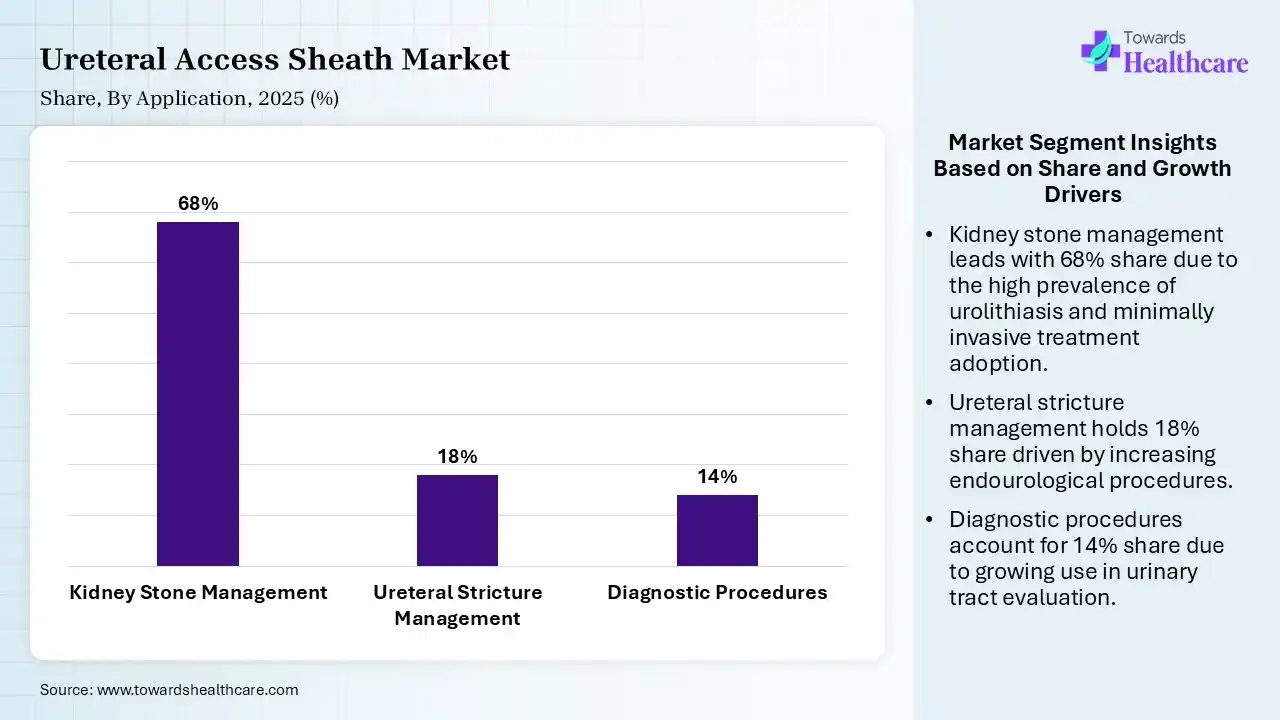
| Segment | Share 2025 (%) |
| Kidney Stone Management | 68% |
| Ureteral Stricture Management | 18% |
| Diagnostic Procedures | 14% |
The Kidney Stone Management Segment led the Ureteral Access Sheath Market in 2025
The kidney stone management segment contributed the largest market share of 68%, and is expected to grow at the fastest CAGR of 8% during the forecast period, as regular applications of UAS during ureteroscopic lithotripsy enable the entry and exit of the ureteroscope, enhance intraoperative visibility, and lower postoperative challenges. The evolution of clinically improved tools like intelligent pressure-controlled, tip bendable, and rigid ureteroscopes aided UAS in tackling these issues, placing a foundation for their further healthcare application.
The ureteral stricture management segment held a significant share of 18% in the market in 2025, as ureteral access Sheath provide benefits like facilitating the insertion and removal of the ureteroscope, offering a clearer arena of view, and lowering post-operative complexities for managing ureteral stricture. It also enhanced visibility and reduced intrapelvic pressure, arguments persist. Recent developments in laser technologies, the miniaturization of digital ureteroscopes, and the introduction of tools equipped with pressure-measuring and aspiration technology have redesigned the landscape of elastic ureteroscopy.
The diagnostic procedures segment held a significant share of 14% in the ureteral access sheath market in 2025, as this sheath offers a devoted outflow channel for irrigation fluid. This prevents the buildup of hazardous intrarenal pressure, which causes renal complications and lowers the risk of post-operative infections and urosepsis. Ureteral access sheath allows many ureteral passes, enhancing time effectiveness and procedural standardization in stone management.
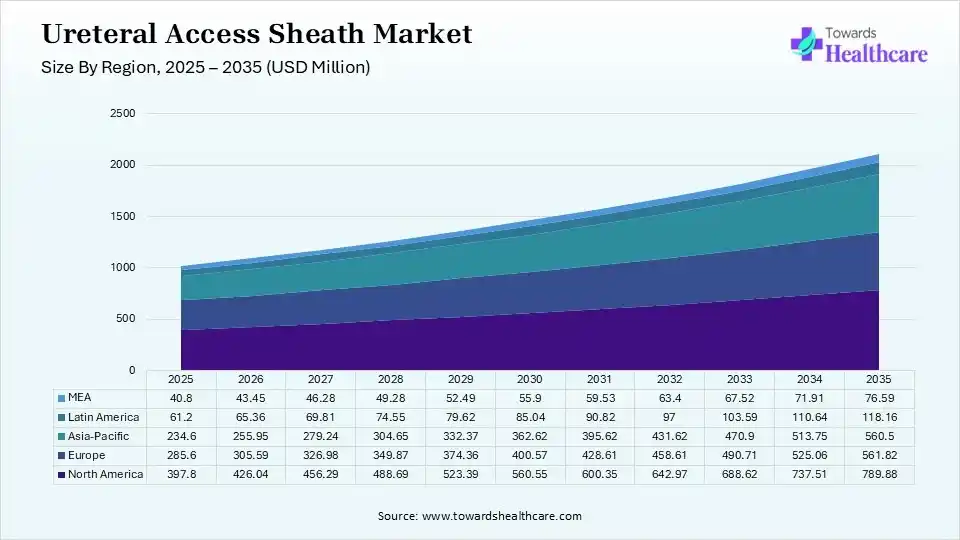
North America registered dominance with a share 39% in the market in 2025, due to the surging cases of urological disorders, like kidney stones & ureteral strictures. Also, the regional leading firms are bolstering groundbreakings in product design, such as optimized hydrophilic coatings, flexible shafts, and excellent compatibility with digital endoscopes.
US Market Trends
Whereas the U.S. market is widely promoting novel systems, which combine real-time intrarenal pressure (IRP) monitoring & automated suction to hold pressure within safe limits, i.e., typically below 30 mmHg. The latest trends in the U.S. encompass Bluetooth-equipped sensors to track the force applied during insertion.
Canada Market Trends
Canadian healthcare organizations have closely partnered with medical tools producers to refine sheath designs, involving advanced lubricious hydrophilic coatings and hub-locking mechanisms. Growing medical care programs in Canada train endourologists in progressive retrograde intrarenal surgery (RIRS), increasing the adoption and refinement of UAS-driven techniques, which drives the growth of the ureteral access sheath market.
The Asia Pacific held a significant share of 23% in the market and is expected to grow at the fastest CAGR of the 9.10% during the forecast period. In the upcoming years, the Asia Pacific is estimated to witness the fastest expansion in the ureteral access sheath market. This region is greatly investing in advancing hospitals, primarily in China & India, which is fostering the availability of sophisticated medical devices, like UAS. Moreover, several firms are exploring studies related to the new Sheath, which demonstrate increased stone-free rates (SFR) up to 98.2% in one-month follow-ups.
India Market Trends
However, India has been pushing innovations in pediatric RIRS, such as research activities from Indian centers, which are highly leveraging FANS-UAS in children to provide safe, effective, single-stage stone clearance. Several healthcare organizations are executing smart UAS, like hydrophilic coatings, radiopaque platinum rings for excellent imaging, and tapered, flexible tips.
China Market Trends
In China, clinical researchers have profoundly driven advanced endourology guidelines and literature, publishing various research and meta-analyses that validate the effectiveness, safety, and greater stone-free rates of these new sheaths. China's well-developed healthcare device manufacturing infrastructure enables the mass manufacturing of these well-developed disposable tools, which drives the urethral access sheath market.
R&D
Clinical Trials & Regulatory Approvals
Patient Support & Services

| Companies | Headquarters | Offerings |
| Boston Scientific Corporation | United States | A firm facilitates a comprehensive portfolio of ureteral access sheaths (UAS), particularly for the Navigator HD Ureteral Access Sheath. |
| BD | United States | This primarily explores the Proxis Ureteral Access Sheath to offer endoscopic access to the upper urinary tract during stone management. |
| Olympus | Japan | This company offers the UroPass Ureteral Access Sheath for ureteroscopy and stone management. |
| Coloplast | Denmark | It has unveiled the ReTrace Ureteral Access Sheath for use in flexible ureteroscopy (FURS) & retrograde intrarenal surgery (RIRS). |
| Cook Medical | United States | It is focused on the Flexor family of reinforced sheaths to facilitate a secure conduit for instrument exchange. |
| AMECATH | Egypt | This prominently explores sterile, single-use ureteral access Sheath (UAS), characterizing reinforced, kink-resistant materials, a platinum tip for radiopacity, a tapered dilator, and a funneled luer end. |
In September 2025, “Dornier MedTech America has a deep understanding of urological workflows and urologists’ needs. The Dornier Hoover delivers best-in-class suction performance and Dornier Axis II Slim offers best-in-class deflection giving urologists a proven competitive edge in the operating theater,” said Brock Faulkner, CEO, Dornier MedTech America.
By Product Type
By Material
By Size
By Length
By End User
By Usage
By Application
By Distribution Channel
By Region











Principal Consultant
Shivani Zoting is a dedicated research analyst specializing in the healthcare industry. With a strong academic foundation, a B.Sc. in Biotechnology and an MBA in Pharmabiotechnology, she brings a unique blend of scientific understanding and strategy.
Learn more about Shivani Zoting
Reviewed By
Aditi Shivarkar is a seasoned professional with over 14 years of experience in healthcare market research. As a content reviewer, Aditi ensures the quality and accuracy of all market insights and data presented by the research team.
Learn more about Aditi Shivarkar