


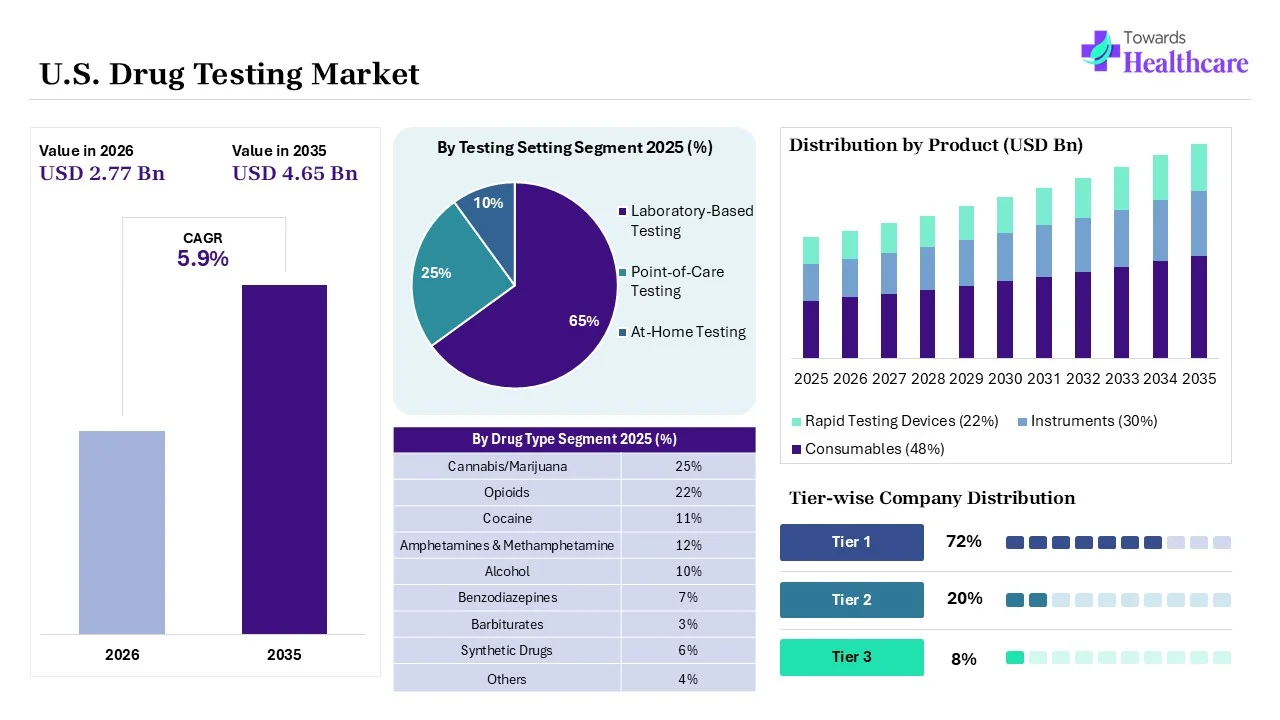
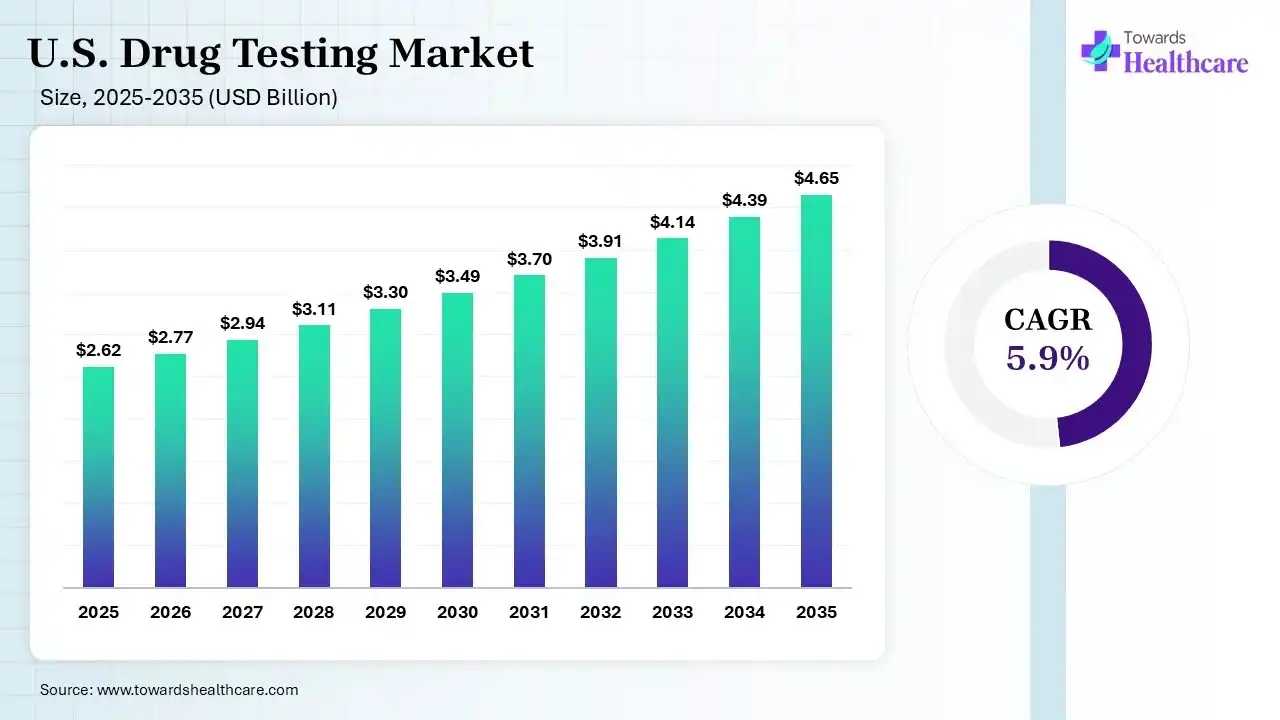
The U.S. drug testing market size was valued at US$ 2.62 billion in 2025 and is projected to grow to 2.77 billion in 2026. Forecasts suggest it will reach approximately US$ 4.65 billion by 2035, registering a CAGR of 5.9% during the period.
A drug test is a sign of illegal drugs and certain prescription and over-the-counter (OTC) drugs, which can be misused. Therapeutic testing uses a sample of a patient's blood, saliva, sweat, hair, fingernails, or breath. This testing identifies the presence or absence of therapeutics or their metabolites in biological samples. Drug testing aids in confirming assumed use, monitoring adherence to prescribed therapy, and detecting potential toxicity. Its enhanced competence allows physicians to efficiently engage in interprofessional partnerships for the care of persons affected by illicit drug use.
In the U.S., rising concerns over illegal drug use have prompted the federal government to implement testing for military personnel and federal employees. The drug-free workplace program will include applicant testing, random drug testing, reasonable suspicion testing, accident testing, voluntary testing, and follow-up testing. Early identification of substance use through drug testing programs helps prevent workplace disruptions and supports a healthier, more reliable workforce.
AI-driven technology is used to detect drug toxicity by analysing the chemical structures and characteristics of compounds. Recent technology, such as ML algorithms trained on toxicology databases, predicts detrimental properties and classifies dangerous structural attributes. The application of AI-based virtual screening, target-based virtual screening, has developed prevalently in the prediction of target-ligand interactions. AI screening leverages machine learning (ML) procedures to analyse massive datasets, classify patterns, and generate AI-based scoring purposes.
Progressive AI models analyze molecular structures to spot possible adverse side effects and efficiency in human tissue long before healthcare trials begin. AI-based technology is used to predict drug toxicity by analysing the chemical structures and characteristics of compounds. ML algorithms, qualified on toxicology databases, predict detrimental effects and classify dangerous structural qualities. AI-driven and machine learning are renovating the landscape of drug testing, providing novel opportunities for more accurate diagnoses and rapid drug development.
Rapid Point-of-Care (POC) drug Testing:
Point-of-care drug testing is a very rapid sample assortment process, and it saves hours when testing massive numbers of employees on-site. Fast testing at the point of care enables faster diagnosis and management, which leads to improved patient results.
Advanced Synthetic Drug Testing Panels:
Modern drug testing machinery provides rapid outcomes, and it detects a broader range of substances with superior sensitivity. This is significant in a fast-paced world, where timely and precise testing potentially impacts decision-making technology in different settings.
Oral-Fluid and Breath Sampling:
Oral fluid provides a quick and non-invasive specimen for therapeutic testing. These fluid samples are obtained under direct observation. This eliminates privacy complexities. Moreover, this lowers the challenges of interference. It offers benefits such as simplicity of collection and a generally more rapid window of drug identification than urine.
| Table | Scope |
| Market Size in 2026 | USD 2.77 Billion |
| Projected Market Size in 2035 | USD 4.65 Billion |
| CAGR (2026 - 2035) | 5.9% |
| Historical Data | 2020 - 2023 |
| Base Year | 2025 |
| Forecast Period | 2026 - 2035 |
| Measurable Values | USD Millions/Units/Volume |
| Market Segmentation | By Product Type, By Sample Type, By Drug Type, By Testing Method, By End User, By Testing Setting |
| Top Key Players | Abbott Laboratories, Thermo Fisher Scientific, OraSure Technologies, Premier Biotech, LabCorp |
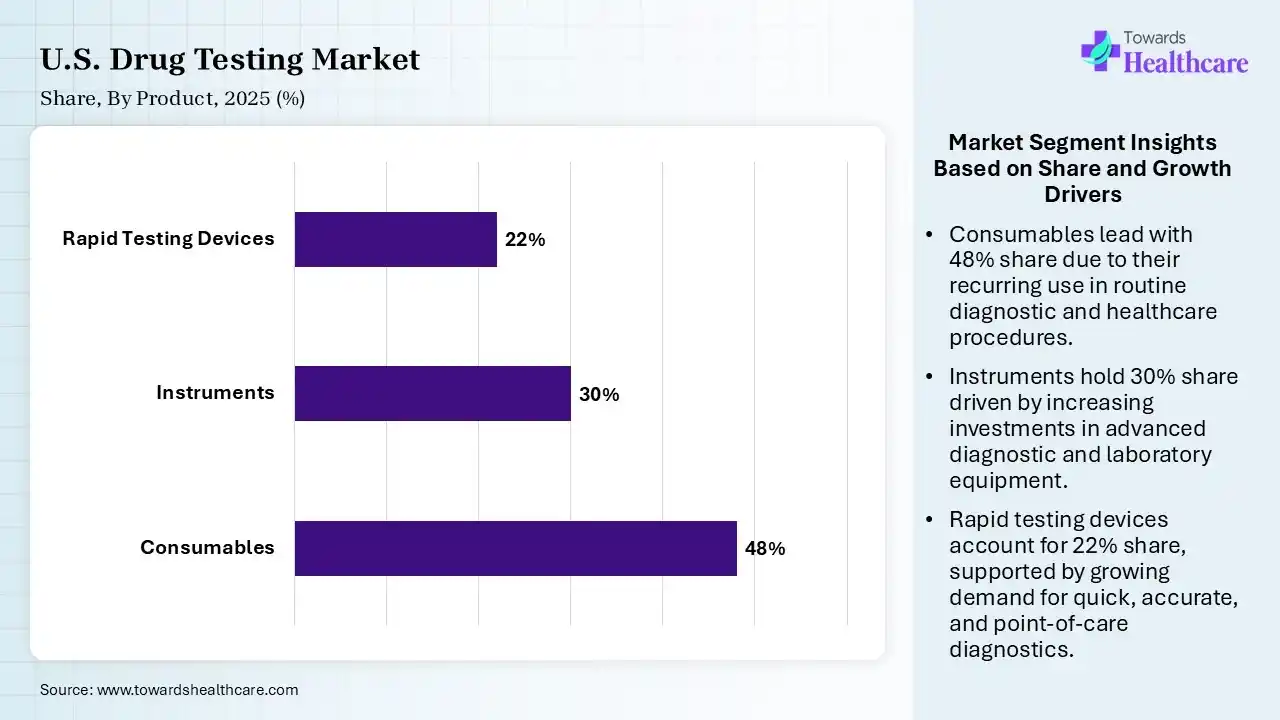
| Segment | Share 2025 (%) |
| Consumables | 48% |
| Instruments | 30% |
| Rapid Testing Devices | 22% |
The Consumables Segment Led the U.S. Drug Testing Market in 2025
The consumables segment contributed the largest market share of 48% in 2025, as this consumable includes testing strips, oral fluid swabs, and urine cups; it offers quick and actionable insights. It can be effortlessly detected using both laboratory-driven and on-site testing tools. It amplified safety and output, and the lack of therapeutics in the workplace makes for a much healthier and more positive atmosphere for the staff.
The instruments segment held a significant share of 30%, as novel drug testing instruments increase speed and precision, giving pharmaceutical organizations a clear strategic edge. These tools support investigators in optimizing drug formulations and medicines. Using advanced novel drug testing equipment speeds up research and advancement cycles.
The rapid testing devices segment held a significant share of 22% and is expected to grow at the fastest CAGR of 7.40% during the forecast period in the market. It offers rapid testing times, improved test integrity, and momentous affordability. This testing provides a quicker, more effective service that is conducted on-site with negligible disruption to processes.
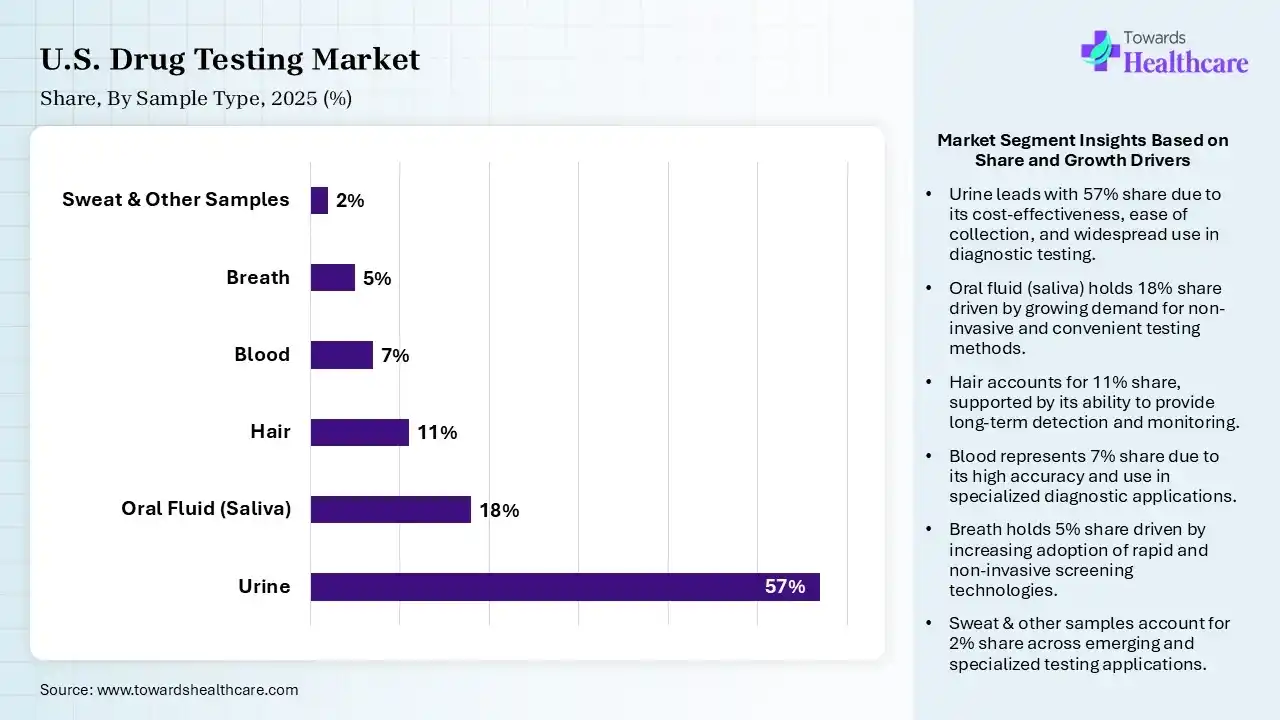
| Segment | Share 2025 (%) |
| Urine | 57% |
| Oral Fluid (Saliva) | 18% |
| Hair | 11% |
| Blood | 7% |
| Breath | 5% |
| Sweat & Other Samples | 2% |
The Urine Segment Led the U.S. Drug Testing Market in 2025
The urine segment contributed the largest market share of 57.0% in 2025. Urine offers detailed information on both current and recent past substance usage. Urine is a preferred matrix from which to measure drug concentrations as it produces accurate outputs and enables a noninvasive collection procedure.
The oral fluid (saliva) segment held a significant share of 18% of the market and is expected to grow at the fastest CAGR of 8.10 % during the forecast period. Oral fluid offers a rapid and non-invasive sample for drug testing. Oral fluid concentrations of basic drugs like the amphetamines, cocaine, and opioids are similar to or higher than those in plasma.
The hair segment held a significant share of 11% of the U.S. drug testing market in 2025, as hair follicle drug testing is well-known for its accuracy. It identifies a broad range of substances, involving both common drugs such as marijuana, cocaine, opioids, and amphetamines, as well as less frequently tested substances. Hair follicle testing is its lengthy identification window.
The blood segment held a significant share of 7% of the market in 2025, as blood drug tests involve precision, short detection windows, and the capability to measure active therapeutic levels. A blood drug test is conducted by drawing a blood sample from a vein, which is then analysed in a laboratory using progressive techniques like gas chromatography-mass spectrometry (GC-MS) or enzyme-linked immunosorbent assay (ELISA).
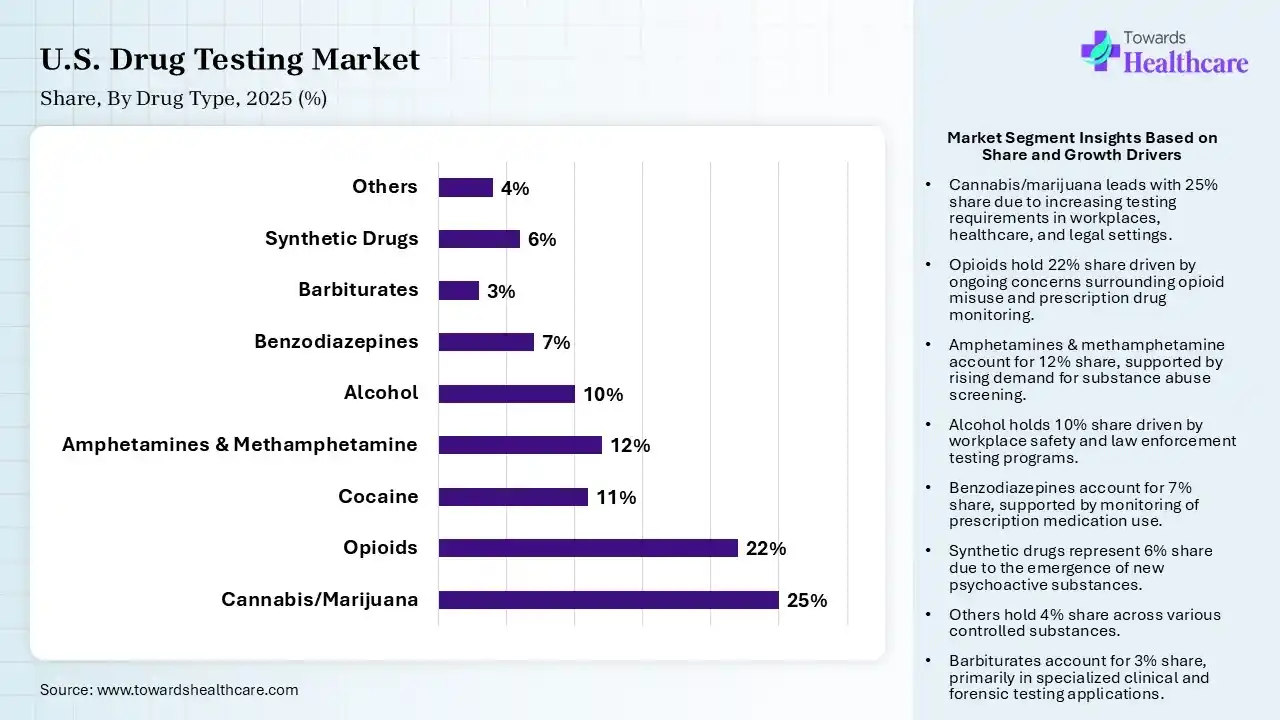
| Segment | Share 2025 (%) |
| Cannabis/Marijuana | 25% |
| Opioids | 22% |
| Cocaine | 11% |
| Amphetamines & Methamphetamine | 12% |
| Alcohol | 10% |
| Benzodiazepines | 7% |
| Barbiturates | 3% |
| Synthetic Drugs | 6% |
| Others | 4% |
The Cannabis/Marijuana Segment led the U.S. Drug Testing Market in 2025
The cannabis/marijuana segment held a significant share of 25% in the market, as drug testing for marijuana has historically been complex. Nowadays, the rising prevalence and potency make it even more significant to find a service. Cannabis testing solutions cover a wide range of applications, from potency testing to pesticide screening. Drug testing for marijuana measures cannabinoids or cannabinoid metabolites in a sample of urine, blood, saliva, or hair.
The opioids segment contributed a market share of 22% in 2025 and is expected to grow at the fastest CAGR of 7.50% during the forecast period, as drug testing for opioid drugs is a significant tool that health care providers use to assess opioid treatment compliance and opioid waste. Opioid testing looks for opioids, typically in a sample of urine. Testing supports monitoring use and treating misuse of illegal and therapeutic opioids.
The amphetamines & methamphetamine segment held a significant 12% share of the U.S. drug testing market in 2025, as analyzing amphetamines and methamphetamine offers various benefits for forensic toxicology, healthcare monitoring, and workplace screening because of their unique metabolic pathways and chemical strengths.
The cocaine segment held a significant 11% share of the market in 2025, as cocaine is an enormously powerful sedative. It produces increased anxiety, acuity, neurosis, and irritability. Cocaine usually makes people feel euphoric, talkative, energetic, and mentally alert. A cocaine urine test enables rapid screening with easy-to-read outputs on a built-in specimen validity test.
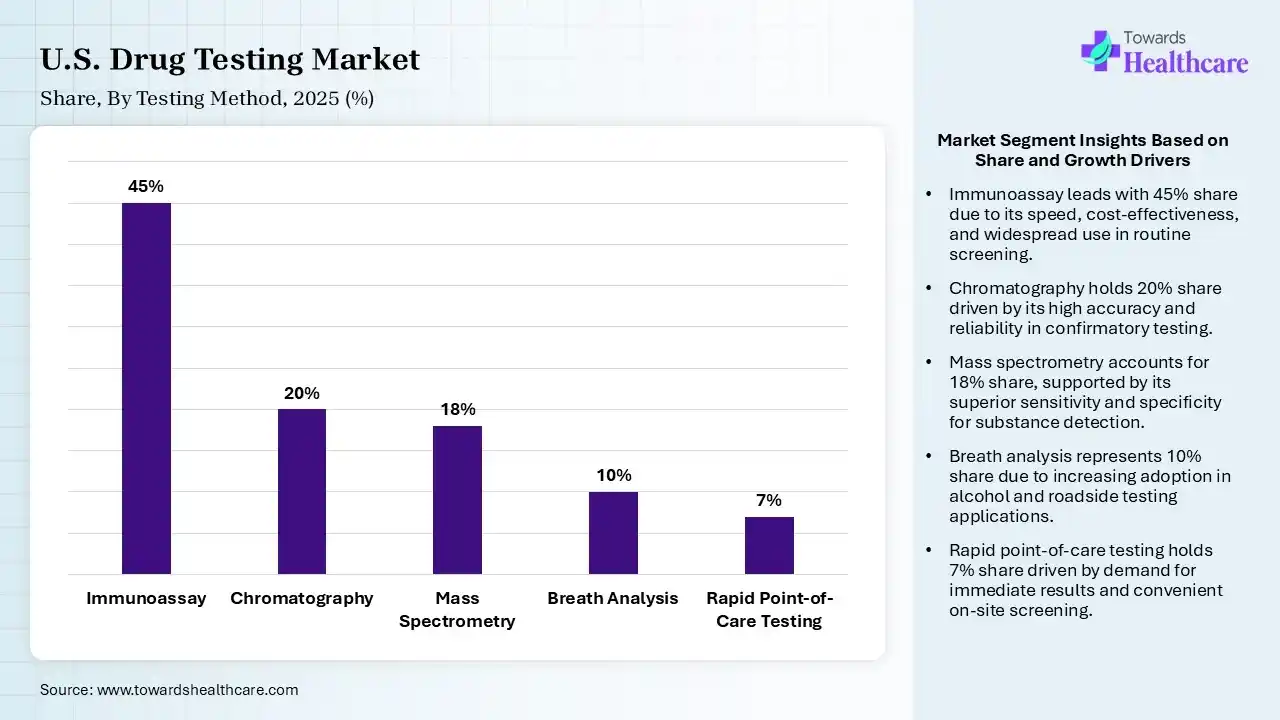
| Segment | Share 2025 (%) |
| Immunoassay | 45% |
| Chromatography | 20% |
| Mass Spectrometry | 18% |
| Breath Analysis | 10% |
| Rapid Point-of-Care Testing | 7% |
The Immunoassay Segment led the U.S. Drug Testing Market in 2025
The immunoassay segment contributed the largest market share of 45%, as this testing supports identifying challenges early and gives women a significant chance to become mothers. Early diagnosis offers emotional benefits, lowering frustration and stress through managing symptoms through appropriate treatment pathways.
The chromatography segment held a significant share of 20% in the market in 2025, as chromatography offers exceptional sensitivity, enabling the detection and quantification of therapeutic abuse at very low concentrations. This ability is significant in precisely classifying drug use when a person attempts to evade detection by consuming minute quantities.
The mass spectrometry segment held a significant share of 18% in the U.S. drug testing market and is expected to grow at the fastest CAGR of 7.80% during the forecast period. Mass spectrometry has become a significant standard for TDM of ISDs because of its high precision, specificity, and sensitivity. MS detects and quantifies each HCP within a sample, offering far more granular insight in a short period. MS aids hit identification, optimization, and target validation in drug advancement.
The breath analysis segment held a significant share of 10% in the market in 2025, as this type of analysis is used for early identification and precision therapeutics for a multitude of diseases. Exhaled breath presents prominent advantages compared to conventional specimens such as blood and urine, involving remarkable availability, convenience, non-invasive sampling, and a virtually boundless supply available for unceasing sampling.
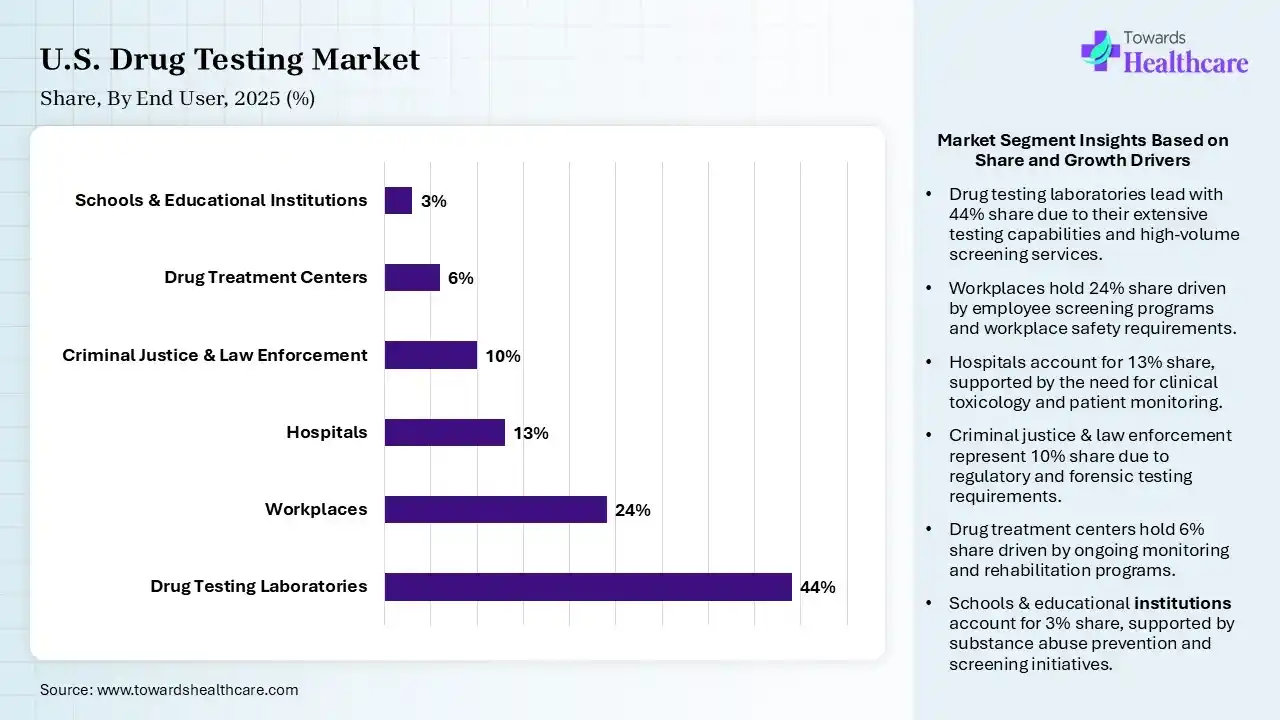
| Segment | Share 2025 (%) |
| Drug Testing Laboratories | 44% |
| Workplaces | 24% |
| Hospitals | 13% |
| Criminal Justice & Law Enforcement | 10% |
| Drug Treatment Centers | 6% |
| Schools & Educational Institutions | 3% |
The Drug Testing Laboratories Segment led the U.S. Drug Testing Market in 2025
The drug testing laboratories segment contributed the largest market share of 44% in 2025, as these labs support employers in identifying and addressing substance use disorders in their employees, as well as deterring potential drug users. Labs use advanced tools to deliver extremely precise outputs. Labs maintain an airtight chain of custody, confirming that sample handling is documented from collection to end analysis.
The workplaces segment held a significant share of 24% in the market in 2025 and is expected to grow at the fastest CAGR of 6.90% during the forecast period. A drug testing program supports employers in detecting and addressing substance use disorders in their employees and deters potential drug consumers. Workplace drug testing cites reduce accident and injury rates and overall positive outcomes as the number one advantage of screening job applicants for drugs.
The hospitals segment held a significant share of 13% in the U.S. drug testing market in 2025, as hospital physicians screen for present substances before prescribing extremely controlled medications or therapies. Rapid diagnostic panels rapidly pinpoint particular toxic substances during an overdose. Drug tests support identifying substance abuse, verifying compliance with medical treatment, or assessing suitability for work.
The criminal justice & law enforcement segment held a significant share of 10% in the market in 2025, as the identification of drugs has an imperative role to play in significant areas of society, like sport, suspicious deaths, violent crime, and travel and work safety. Drug testing works as a way to monitor compliance with supervision circumstances. Drug testing acts as a significant bridge between public safety and rehabilitation by offering objective information to guide legal results.
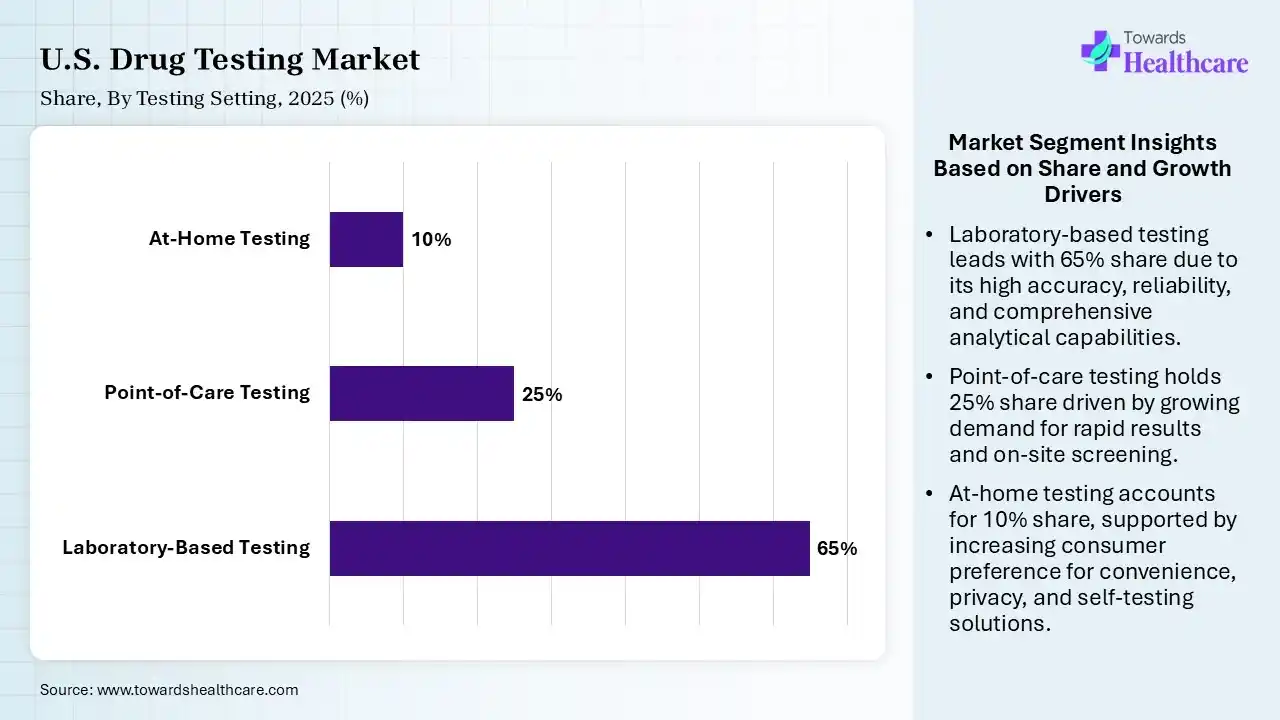
| Segment | Share 2025 (%) |
| Laboratory-Based Testing | 65% |
| Point-of-Care Testing | 25% |
| At-Home Testing | 10% |
The Laboratory-Based Testing Segment led the U.S. Drug Testing Market in 2025
The laboratory-based testing segment contributed the largest market share of 65% in 2025, as lab-based urine testing technology is the most significant technology in workroom drug testing and is considered the standard. Lab-based drug testing stands out as the gold standard, providing unmatched precision and reliability compared to on-site substitutes
The point-of-care testing segment held a significant share of 25% in the market and is expected to grow at the fastest CAGR of 7.20% during the forecast period. This testing provides various advantages of POCT, including its capability to integrate real-time outputs directly into the patient's electronic healthcare record. Point-of-care testing includes cost-effective and rapid output, yet lacks total laboratory testing abilities.
The at-home testing segment held a significant share of 10% in the U.S. drug testing market , as this type of drug testing is often used to identify recreational drug use. It is used by those who are concerned about facing stigma by health care workers or employers, or by parents who want to detect if their children are using entertaining drugs, among other reasons. At-home tests need at-home collection and are then sent out to a laboratory for further testing.
In the U.S., there is a growing need for drug screening products and solutions. The U.S. is employing drug testing to improve the overall health, safety, and productivity of its offices. The surge in positive tests is largely attributed to the increasing potency and THC levels in cannabis products. The growing number of post-accident positive drug tests specifically for marijuana has alarmed employers, compelling organizations to implement extra rigorous screening protocols to mitigate challenges, which drives the growth of the market.
R&D:
Manufacturing Processes:
Patient Services:
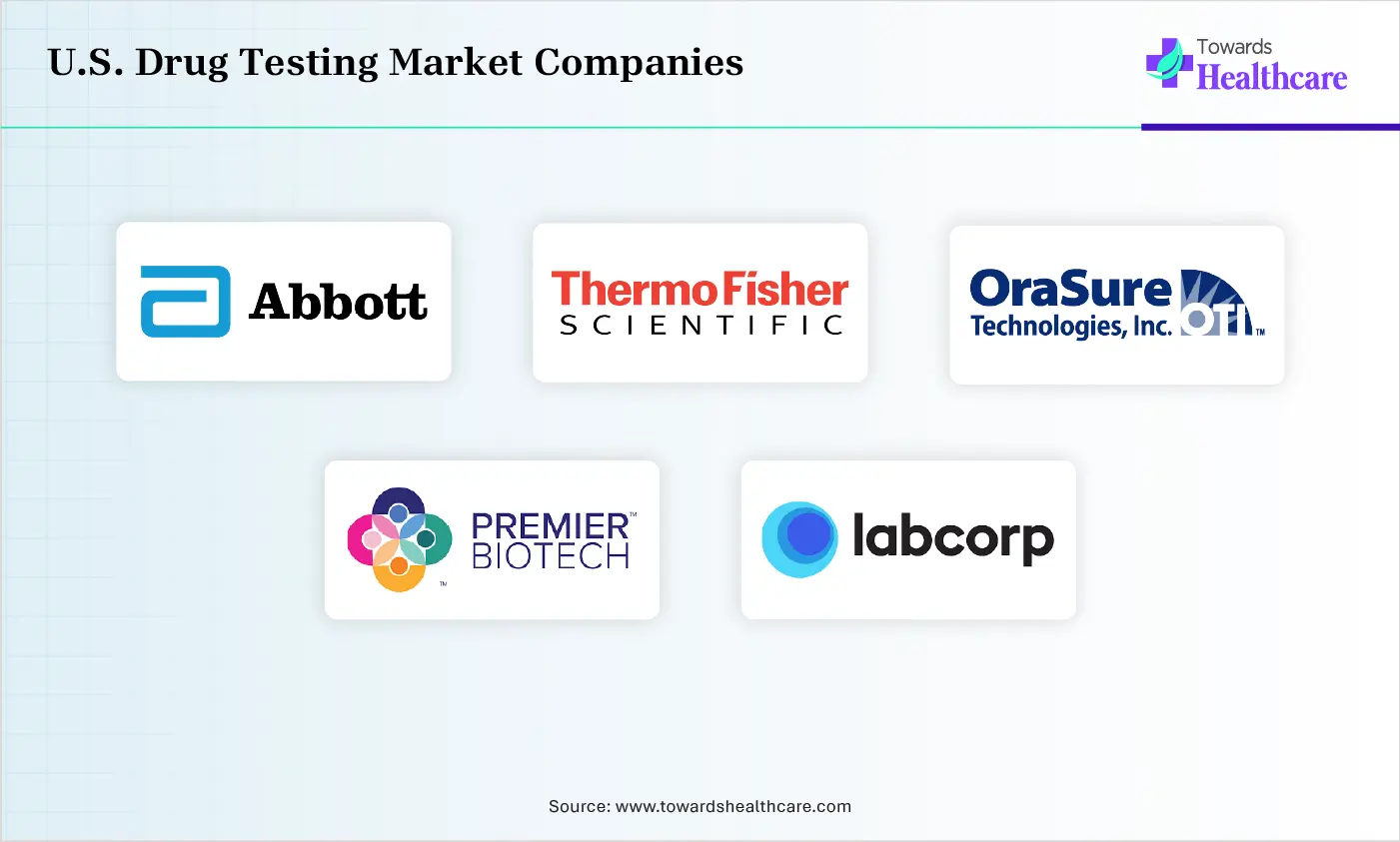
| Company | Headquarters | Latest Update |
| Abbott Laboratories | U.S. | In June 2025, Abbott, the healthcare company, announced the launch of its laboratory-driven blood test to evaluate mild traumatic brain injury (mTBI), usually known as concussions. |
| Thermo Fisher Scientific | U.S. | In May 2025, Thermo Fisher Scientific introduced the Thermo Scientific TruNarc Delta and Tau Handheld Narcotics Analyzers to support communities in combating known and developing narcotics and illicit substances. |
| OraSure Technologies | U.S. | OTI pioneers non-invasive testing devices and sample collection tools that empower patients, medical care providers, and scientists to enhance health results. |
| Premier Biotech | U.S. | In November 2025, Premier acquired NTS to hasten growth in point-of-care drug screening services and acquired National Test Systems. |
| Labcorp | U.S. | Labcorp, in a novel tab, a leader of ground-breaking and comprehensive laboratory solutions |
In June 2025, Ravi Sinha, General Manager & Country Head – Diagnostics, Abbott India, said, “Abbott’s TBI blood test improves patient evaluation and delivers reliable results in just minutes, helping doctors quickly and accurately rule out the need for a CT scan".
By Product Type
By Sample Type
By Drug Type
By Testing Method
By End User
By Testing Setting











Principal Consultant
Shivani Zoting is a dedicated research analyst specializing in the healthcare industry. With a strong academic foundation, a B.Sc. in Biotechnology and an MBA in Pharmabiotechnology, she brings a unique blend of scientific understanding and strategy.
Learn more about Shivani Zoting
Reviewed By
Aditi Shivarkar is a seasoned professional with over 14 years of experience in healthcare market research. As a content reviewer, Aditi ensures the quality and accuracy of all market insights and data presented by the research team.
Learn more about Aditi Shivarkar










