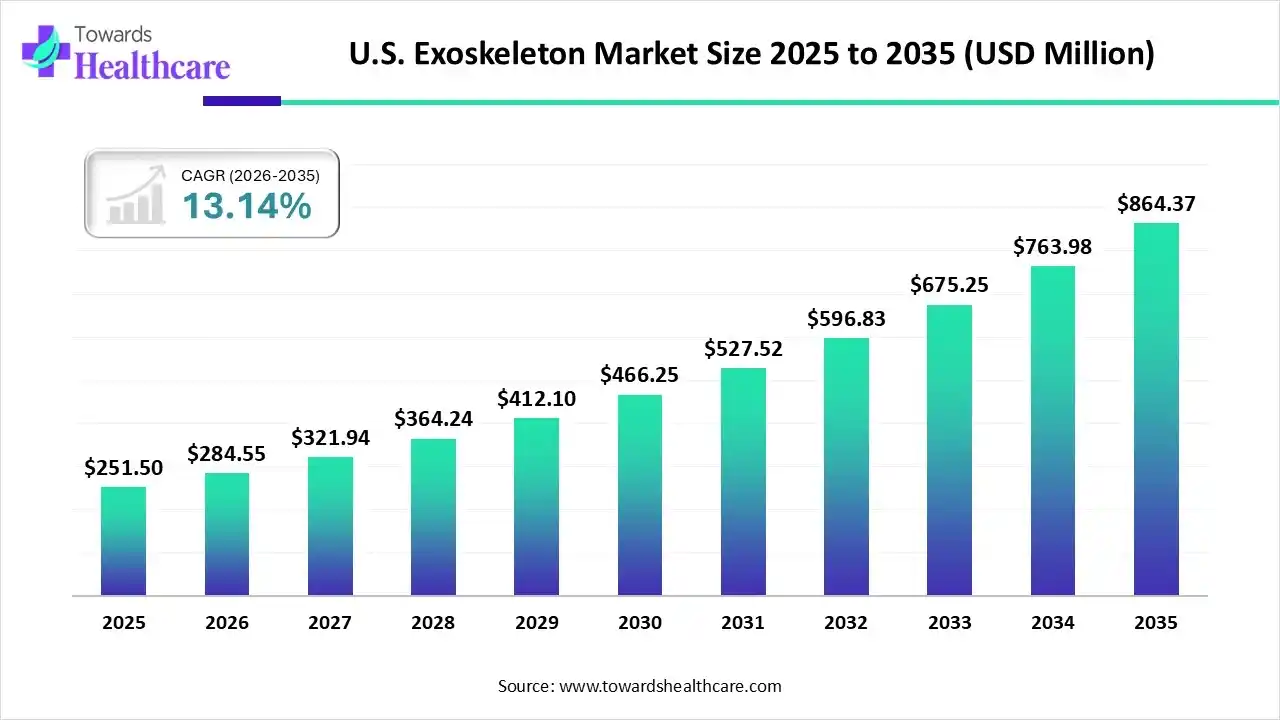
The U.S. exoskeleton market size was estimated at USD 251.5 million in 2025 and is predicted to increase from USD 284.55 million in 2026 to approximately USD 864.37 million by 2035, expanding at a CAGR of 13.14% from 2026 to 2035.
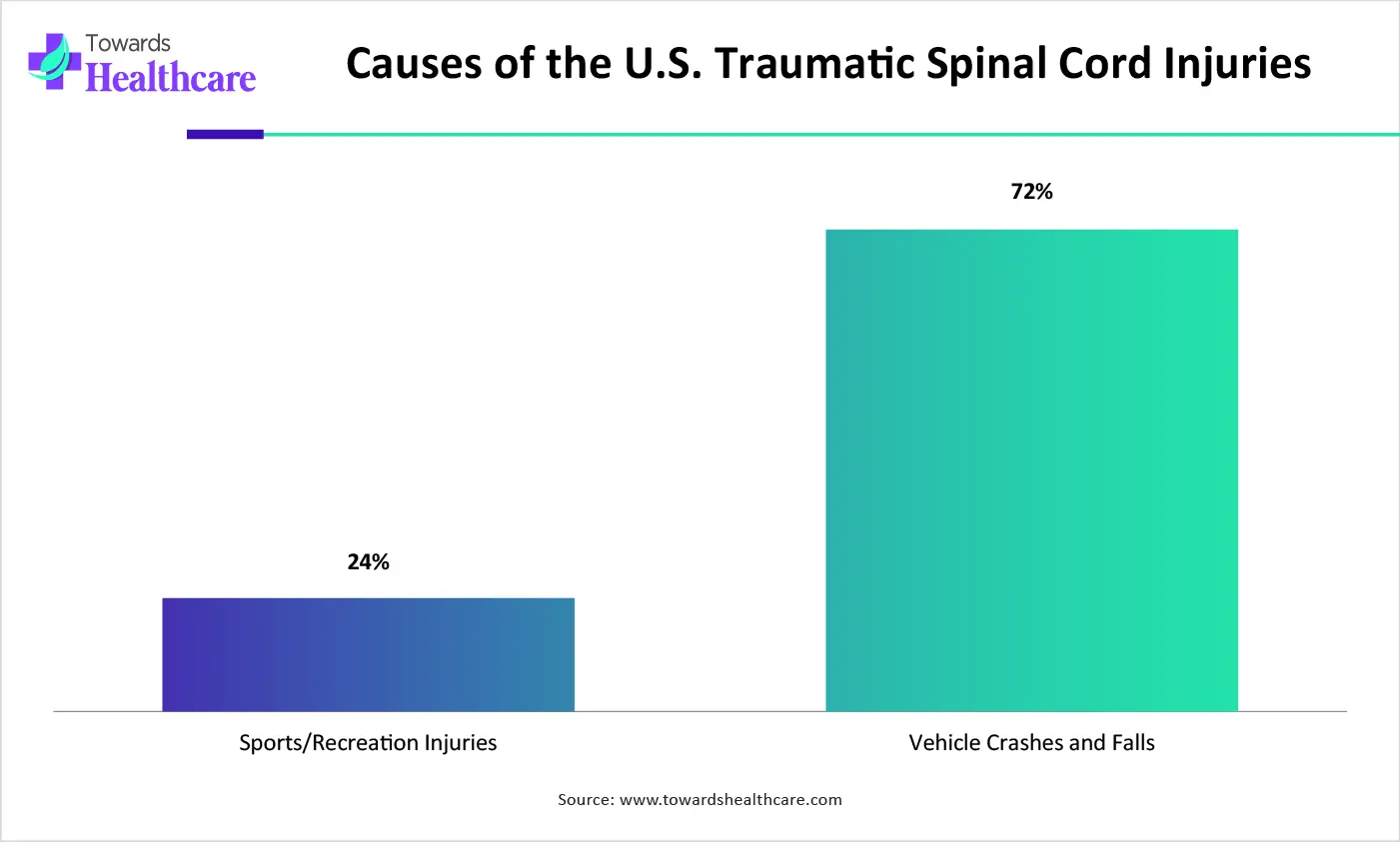
The growing number of spinal cord injuries is increasing the demand for exoskeletons across the U.S. Additionally, growing AI integration, expanding rehabilitation centres, increasing innovations, and launches are also enhancing the market growth.
The U.S. exoskeleton market is driven by high R&D investments and early adoption across healthcare and industrial sectors. The U.S. exoskeleton refers to the wearable robotic devices or suits, utilized across the U.S. to enhance, restore, or support human movements. These devices are used for mobility recovery, muscle strengthening, physical therapy support, injury prevention, supporting physically impaired individuals, and increasing endurance.
AI offers a wide range of applications that are increasing its use in the development of exoskeletons across the U.S., where it provides adaptive movement control and tracks the patient's progress, promoting the development of personalized therapy plans. It also offers the user movement prediction, instability detections, performance tracking, and control over the motors and actuators, reducing the unnecessary power usage, driving the development of smarter exoskeletons.
Growing Applications
The use of exoskeleton across the U.S. is expanding beyond the treatment of spinal cord injuries, mobility impairments, and strokes towards the industrial and military applications to reduce the workers' fatigue and injuries and to enhance the soldier endurances, respectively.
Shift Towards Home Care
A rise in the U.S. FDA approvals of the exoskeleton and a growing geriatric population are increasing the adoption of these devices for home-use rehabilitation, where the expanding telehealth platforms and insurance policies are also increasing their demand.
Technological Advancements
The growing technological advancements are driving the development of smarter, wearable, and more adaptive exoskeletons, where the focus on enhancing the user comfort and usability are also increasing the development of new control systems.
| Table | Scope |
| Market Size in 2026 | USD 284.55 Million |
| Projected Market Size in 2035 | USD 864.37 Million |
| CAGR (2026 - 2035) | 13.14% |
| Leading Region | North America |
| Historical Data | 2020 - 2023 |
| Base Year | 2025 |
| Forecast Period | 2026 - 2035 |
| Measurable Values | USD Millions/Units/Volume |
| Market Segmentation | By Mobility, By Technology, By Extremity, By End-use |
| Top Key Players | Ekso Bionics Holdings, Inc., Lifeward Ltd., Sarcos Technology & Robotics Corp, SuitX, Myomo, Inc., AIRFRAME, HeroWear, LLC |
Why Did the Mobile Segment Dominate in the U.S. Exoskeleton Market in 2025?
The mobile segment registered its dominance over the global market in 2025, as they enhance the mobility of the users, enhancing their ability to walk and move freely. This is increasing their adoption across the rehabilitation centres in the treatment of spinal cord injuries and stroke. Additionally, they were also adopted for home care to enhance the user’s daily tasks.
Fixed/Stationary
The fixed/stationary segment is expected to gain the highest share of the market during the predicted time, due to high stability offering improved and strong support and balance, enhancing the safety and reducing the risk of falls. This is increasing their use across various hospitals and rehab centres to monitor patient movements, where their easy use is also increasing their acceptance rates.
How Powered Segment Dominated the U.S. Exoskeleton Market in 2025?
The powered segment contributed the biggest revenue share of the market in 2025, due to the presence of motors and actuators, which enhanced the ability to walk, stand, lift, and climb. Their high efficiency also increased their adoption rates for a wide range of applications across the healthcare, industrial, and military sectors.
Non-powered
The non-powered segment is expected to witness rapid growth during the predicted time, due to their lightweight designs and affordability. Furthermore, due to no use of batteries, the need for regular charging is eliminated, where its simple maintenance is also increasing their acceptance rates. This, in turn, increases their adoption rates to prevent musculoskeletal disorders and enhance workplace safety.
Which Extremity Type Segment Held the Dominating Share of the U.S. Exoskeleton Market in 2025?
The lower body segment held the dominating share of the market in 2025, due to growth in spinal cord injuries and strokes, which affected the patient's ability to walk. This increased the demand for lower limb therapies, driving the adoption of the exoskeleton across the U.S., which supported activities like standing, climbing stairs, and walking.
Upper Body
The upper body segment is expected to show the highest growth during the upcoming years, due to growing workplace injuries. This, in turn, is increasing the use of exoskeletons across U.S. healthcare, industries, warehouses, military, and construction sectors, where the growing development of portable and lightweight designs is also increasing their demand.
What Made Healthcare the Dominant Segment in the U.S. Exoskeleton Market in 2025?
The healthcare segment held the largest revenue share of the market in 2025, due to a rise in the focus on patient recovery and safety. The growth in spinal cord injuries and orthopedic surgeries also increased the adoption of exoskeletons across various hospitals and rehab centres of the U.S. The growth in government investments also encouraged their adoption rates.
Industry
The industry segment is expected to grow at the fastest CAGR during the upcoming years, due to growing workplace injuries. This is increasing the use of exoskeletons to perform repetitive tasks like lifting and carrying the products. Additionally, increasing technological advancements are also driving the development of new exoskeletons to enhance workplace safety, increasing their adoption rates.
The U.S. exoskeleton market is expected to show significant growth during the forecast period due to the presence of a robust healthcare sector, which is increasing the adoption of the exoskeleton to deal with the growing spinal cord injuries and stroke rates. The growing R&D activities, government investments, and technological advancements are also increasing their adoption rates across various sectors, which is promoting the market growth.
R&D
Clinical Trials and Regulatory Approvals
Packaging and Serialization
Distribution to Hospitals, Pharmacies
Patient Support and Services
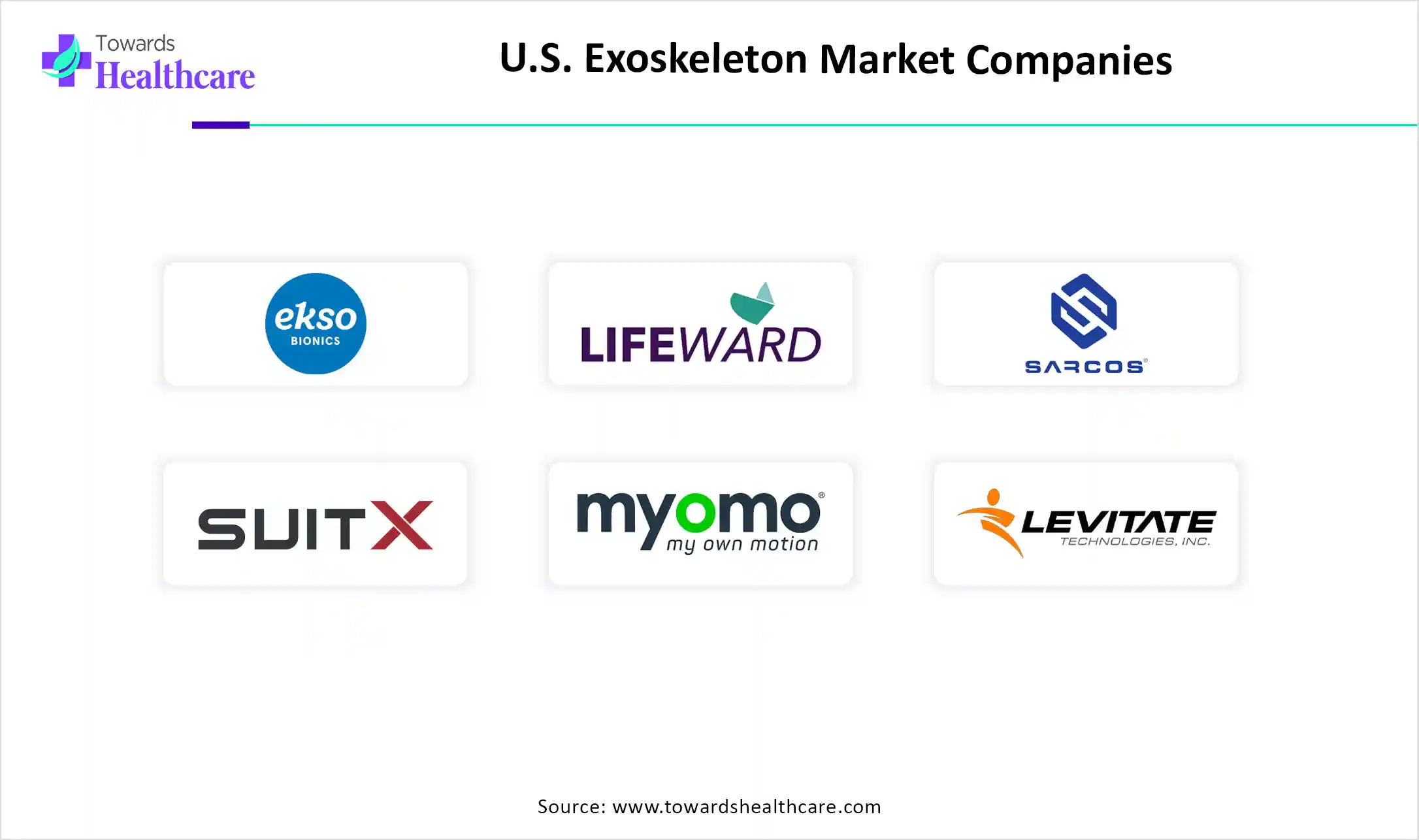
| U.S. Companies | Headquarters | Exoskeletons |
| Ekso Bionics Holdings, Inc. | San Rafael, California | EksoNR, Ekso Indego, and Ekso EVO |
| Lifeward Ltd. | Marlborough, Massachusetts | ReWalk Personal 7, MyoCycle FES, and ReStore |
| Sarcos Technology & Robotics Corp. | Salt Lake City, Utah | Guardian XO and Guardian XT |
| SuitX | Berkeley, California | Phoenix, Shoulder LegX, and BackX |
| Myomo, Inc. | Boston, Massachusetts | Myopro |
| Lockheed Martin Corporation | Bethesda, Maryland | ONYX and HULC |
| Levitate Technologies Inc. | San Diego, California | AIRFRAME |
| Harmonic Bionics, Inc. | Austin, Texas | Harmony SHR |
| Seismic Powered Clothing | Menlo Park, California | Seismic Suit |
| HeroWear, LLC | Nashville, Tennessee | Apex 2 |
Strengths
Weaknesses
Opportunities
Threats
By Mobility
By Technology
By Extremity
By End-use




Principal Consultant
Rohan Patil is a seasoned market research professional with over 5+ years of focused experience in the healthcare sector, bringing deep domain expertise, strategic foresight, and analytical precision to every project he undertakes.
Learn more about Rohan Patil

Reviewed By
Aditi Shivarkar is a seasoned professional with over 14 years of experience in healthcare market research. As a content reviewer, Aditi ensures the quality and accuracy of all market insights and data presented by the research team.
Learn more about Aditi Shivarkar