

Pipeline Programs

CGT Companies Tracked

Manufacturing Facilities


The U.S. gene and cell therapies targeting CNS disorders market size was estimated at USD 3.5 billion in 2025 and is predicted to increase from USD 4.11 billion in 2026 to approximately USD 17.26 billion by 2035, expanding at a CAGR of 17.3% from 2026 to 2035. Her analysis highlights that the U.S. gene and cell therapies targeting CNS disorders market is rapidly expanding due to growing adoption of SMA therapies, advancements in in vivo gene therapy, increasing focus on intravenous and intrathecal routes, rising Alzheimer’s and Parkinson's cases, and the presence of key industry players like Novartis AG, FDA, Alzheimer's Association, and Cure SMA.
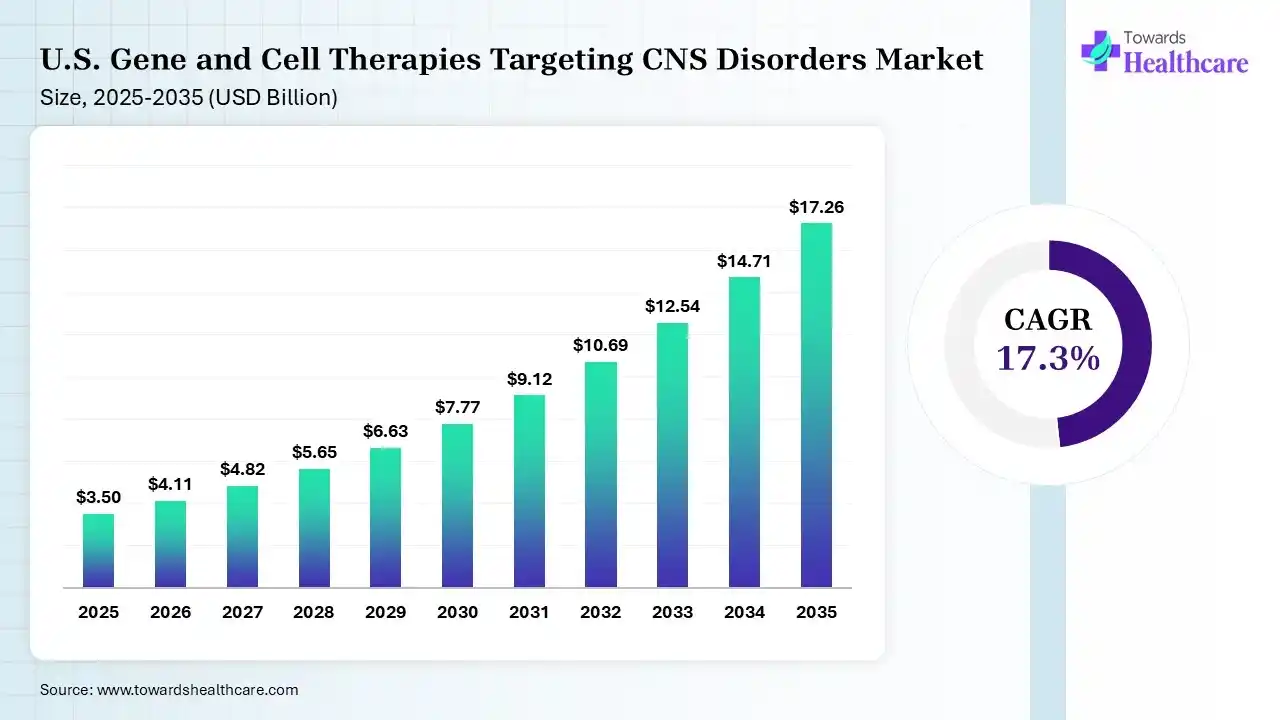
U.S. gene and cell therapies targeting CNS disorders refer to advanced medical treatments with modified genes and cells targeting the root cause of disease. They encompass in vivo and ex vivo gene therapy, gene-modified cell therapy, and neural/stem cell therapy. They help in addressing neurodegenerative diseases, such as Parkinson's, Alzheimer's, Huntington's, ALS, as well as genetic and rare neurological disorders like spinal muscular atrophy and others. They also help in targeting demyelinating diseases, neuromuscular disorders, and CNS injury.
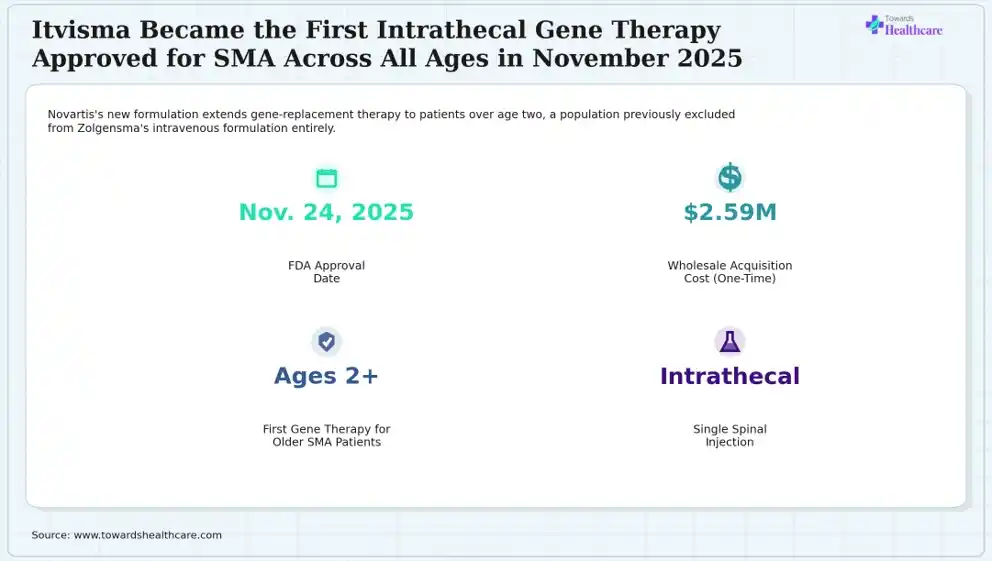
As the market research analyst, I interpret that the infographic stat panel illustrates Itvisma FDA approval metrics. A single intrathecal (spinal) injection of Itvisma, the first gene replacement therapy for SMA patients aged 2 and older, approved on November 24, 2025, was announced to have a wholesale acquisition cost of $2.59 million.
Key Insight:
Itvisma and Zolgensma consist of an identical AAV-delivered SMN1 gene payload, indicating that by focusing on delivery-route innovation rather than a new drug substance, Novartis achieved this age-range expansion.
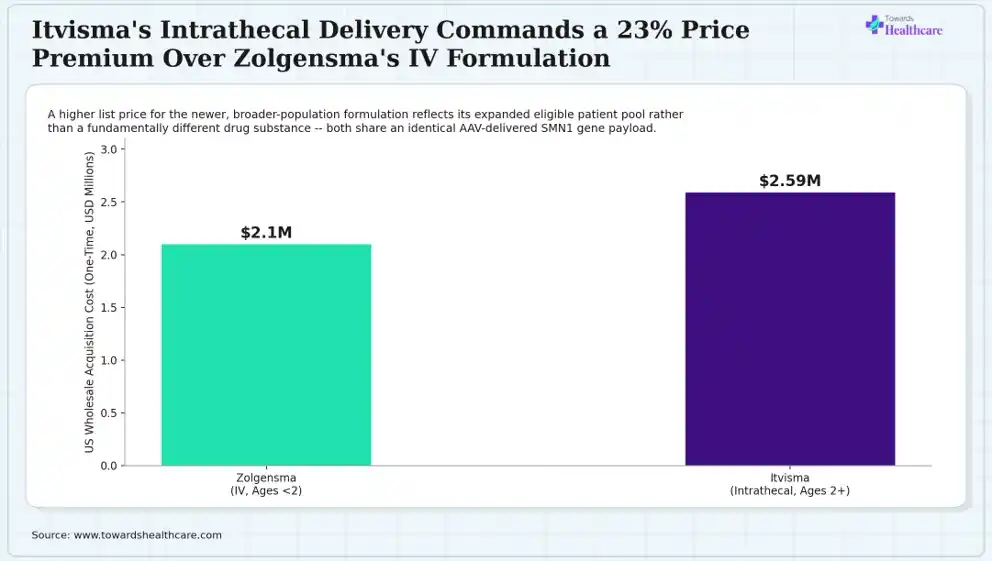
The above-mentioned bar chart compares Zolgensma and Itvisma U.S. wholesale acquisition costs. The U.S. wholesale acquisition cost of Zolgensma IV for ages under 2 was recorded to be $2.1 million, while for Itvisma intrathecal for ages 2+ the U.S. wholesale acquisition cost was noted to be $2.59 million.
Key Insight:
The one-time price of Itvisma was 35-46% lower than the 10-year cost of currently available chronic SMA therapies, which increased the premium over Zolgensma to expand patient eligibility instead of minimizing cost-competitiveness against non-gene-therapy alternatives.
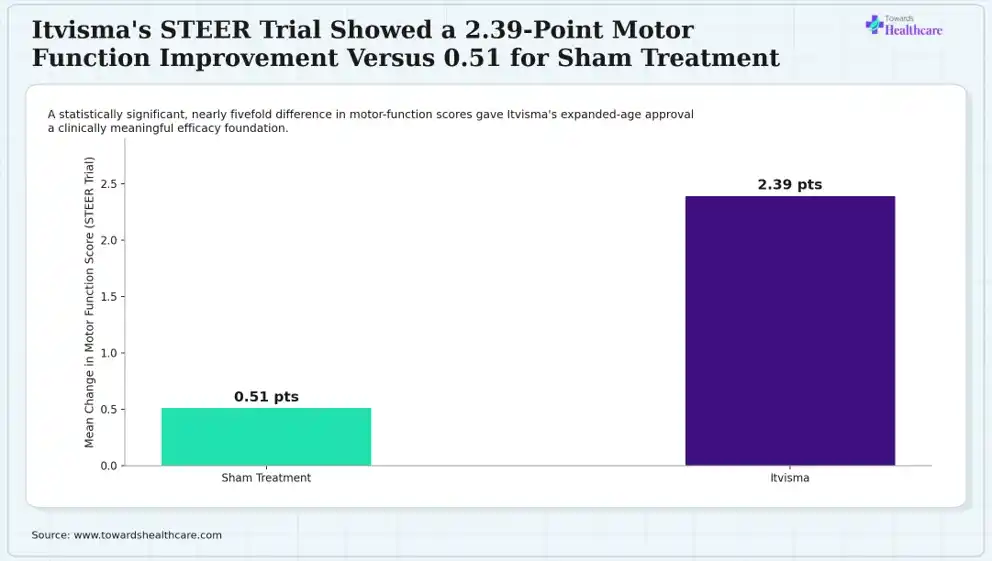
Based on our research, the bar chart represents STEER trial motor function results of Itvisma and sham. The mean motor function score changes for Itvisma and sham were recorded to be 2.39 points and 0.51 points, respectively.
Key Insight:
The Itvisma approval was based on the evidence of success across treatment-naive SMA patients who could sit but were unable to walk in the STEER trial, and the STRENGTH trial, which consisted of patients previously treated with Spinraza or Evrysdi
Source: Medpath, “FDA Approves First Intrathecal Gene Therapy for Spinal Muscular Atrophy Across All Ages,” Nov. 2025.
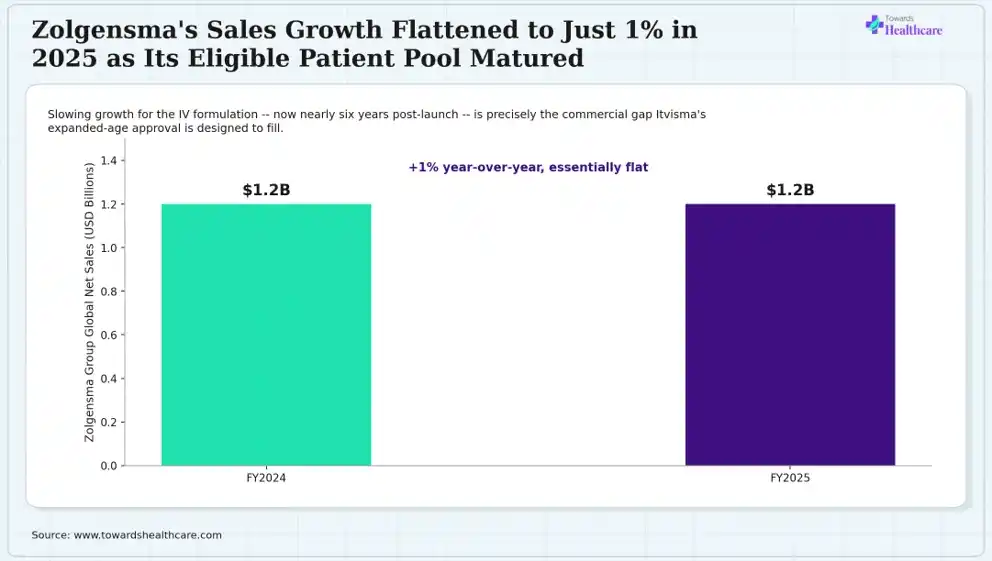
As per the survey conducted, the bar chart reflects Zolgensma Group's global net sales, FY2024 vs. FY2025. Zolgensma Group global net sales for FY2024 and FY2025 were noted to be $1.2 billion and $1.2 billion, which represented +1% and +0% constant currency, due to a high penetration rate in the incident SMA population. Moreover, in Q4 2025, Itvisma was launched across the U.S. and UAE.
Key Insight:
Zolgensma's sales plateauing to market saturation among newly diagnosed infants was mentioned in the 20-F filing of Novartis, suggesting it as the structural growth constraint, which can be addressed with an age-range expansion like Itvisma.
Source: Novartis AG, SEC Form 20-F, FY2025.
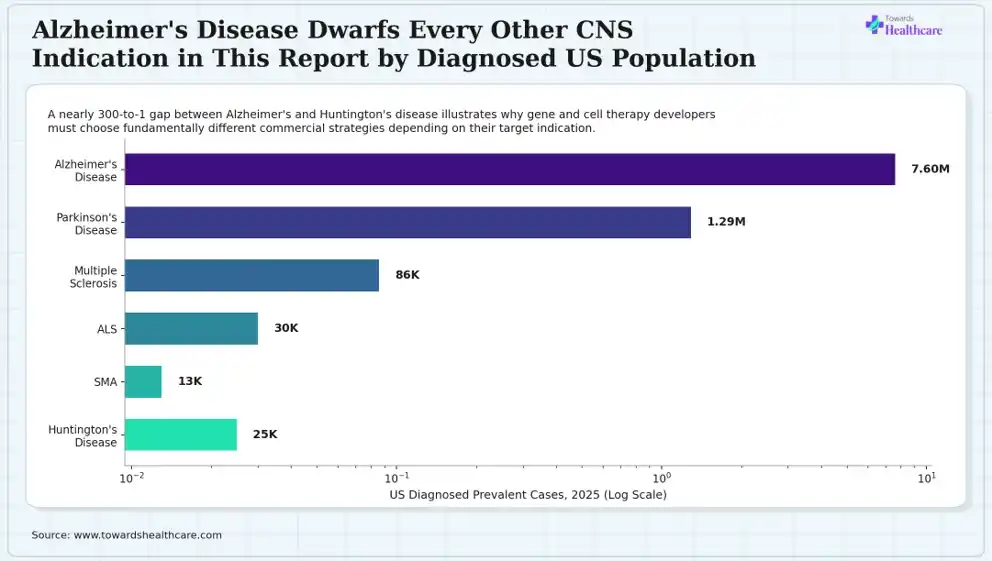
The given horizontal bar chart (log scale) highlights the U.S. diagnosed prevalence across six CNS indications. In 2025, the U.S. diagnosed prevalent cases of Alzheimer's disease were noted to be approximately 7.6 million, while for Parkinson's disease it was roughly 1.29 million, and for multiple sclerosis it was almost 86,000. Furthermore, in the same year, U.S. diagnosed prevalent cases of ALS, Huntington's disease, and spinal muscular atrophy were recorded to be around 30,000, nearly 25,000, and roughly 13,000, respectively.
Key Insight:
Structurally different businesses among the companies with the same broad CNS gene therapy category label are being observed, as the companies developing Alzheimer's or Parkinson's therapies are moving towards mass-market commercial strategies analogous to common chronic diseases, while, on the other hand, SMA, Huntington's, and ALS developers are focusing on rare-disease commercial infrastructure.
Source: Towards Healthcare, citing 2025 U.S. diagnosed prevalent case estimates.
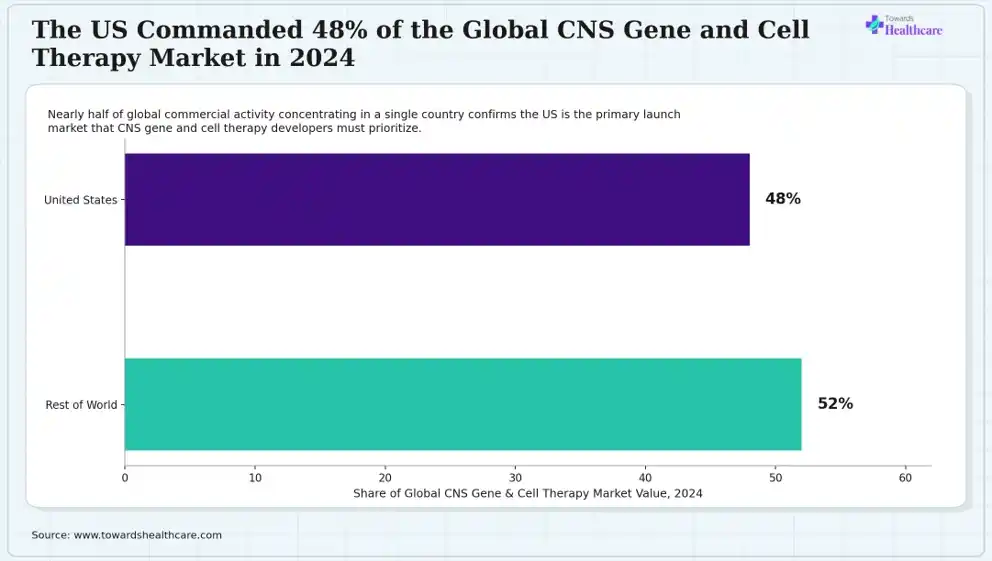
According to the analysis, the horizontal bar chart reflects the U.S. share of the global CNS gene and cell therapy market in 2024. The share of the global CNS gene & cell therapy market in the U.S. was 48% in 2024, while the rest of the world captured a 52% share.
Key Insight:
The approximately 50% share held by the U.S., which is unusually concentrated even by the standards of specialty pharmaceutical markets, explains why every major CNS gene therapy program pursues U.S. regulatory approval even before other major markets.
Source: Towards Healthcare, citing external market-benchmark figures for context.
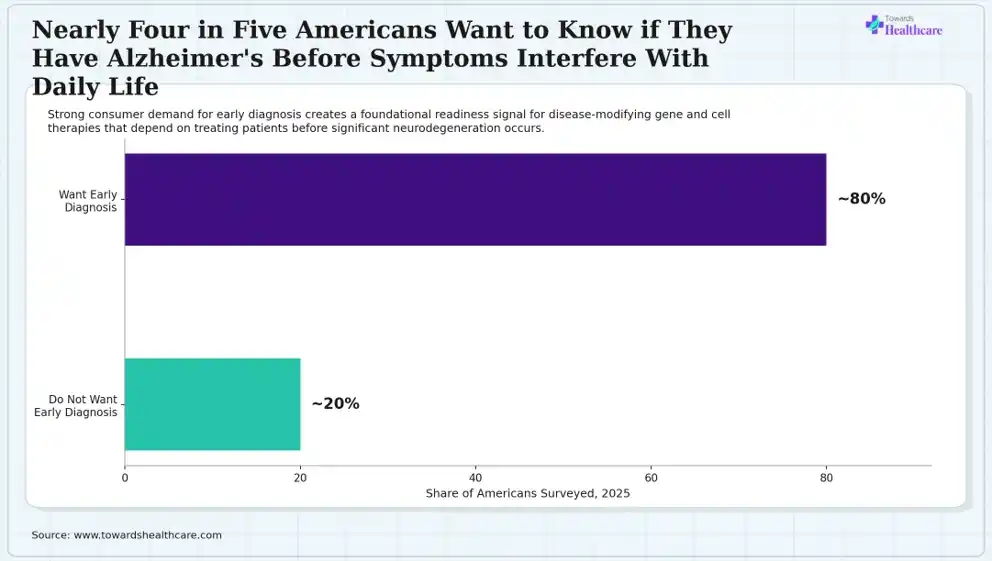
Based on the information gathered by Aman, the horizontal bar chart covers Americans' desire for early Alzheimer's diagnosis in 2025. Approximately 80% of Americans, contributing to nearly 4 in 5, desired early Alzheimer's diagnosis, while around 20% of Americans avoided early diagnosis.
Key Insight:
The growth in early diagnosis led to early administration of gene and cell therapies before the occurrence of substantial neuronal loss, which helps eliminate the potential adoption barrier that might limit future Alzheimer's gene therapy uptake.
Source: Alzheimer's Association, 2025 survey, as cited in Towards Healthcare.
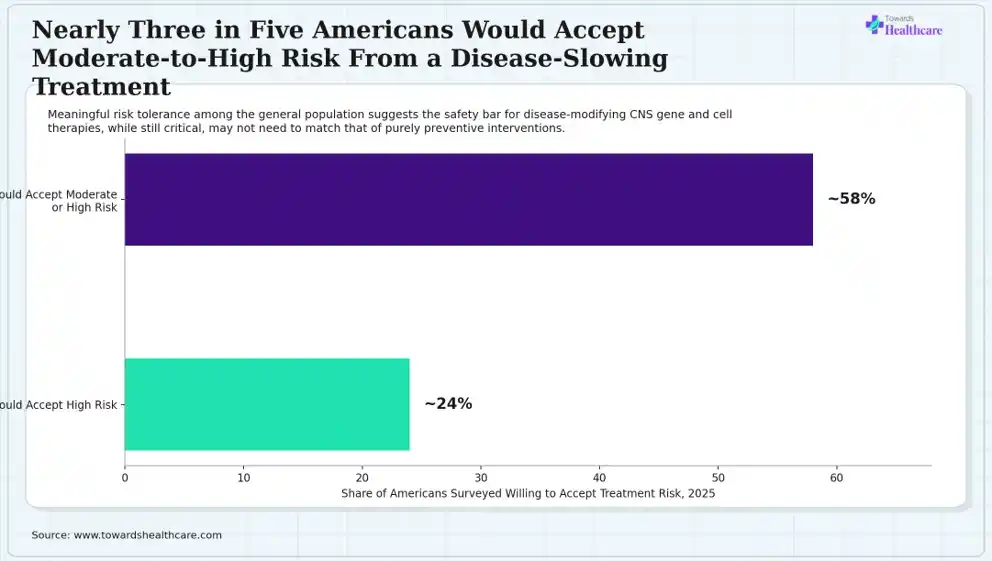
As the market research analyst, I interpret that the horizontal bar chart focuses on Americans' willingness to accept treatment risk for disease-slowing therapy in 2025. Roughly 58% of Americans, that is nearly 3 in 5, are willing to accept moderate or high risk, while almost 24% of Americans, that is nearly 1 in 4, are willing to accept high risk specifically.
Key Insight:
The higher-reward gene and cell therapy approaches to Alzheimer's are indicated by the meaningful quarter of Americans willing to accept high treatment risk specifically and not just moderate risk, leading to a rise in the early-adopter population and establishing broader safety confidence.
Source: Alzheimer's Association, 2025 survey, as cited in Towards Healthcare.
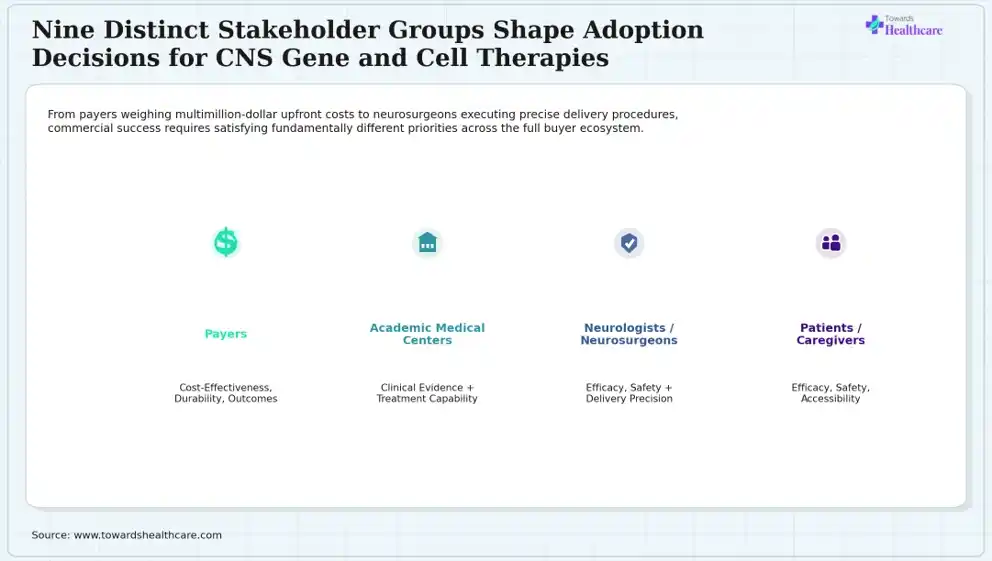
The given ecosystem infographic covers four representative stakeholder groups in CNS gene therapy adoption. The payers/health plans prioritize cost-effectiveness, durability, and outcomes, while academic medical centers focus on clinical evidence and treatment capability. Additionally, neurologists/neurosurgeons provide special attention to efficacy, safety, and delivery precision, whereas efficacy, safety, and accessibility are areas of interest for patients/caregivers.
Key Insight:
A CNS gene therapy with strong clinical efficacy data alone is insufficient for successful commercialization, due to different priorities of payers, clinicians, and patients, while its success rates also depend on value-based pricing thresholds with payers and operational feasibility bars at treatment centers.
Source: Towards Healthcare.
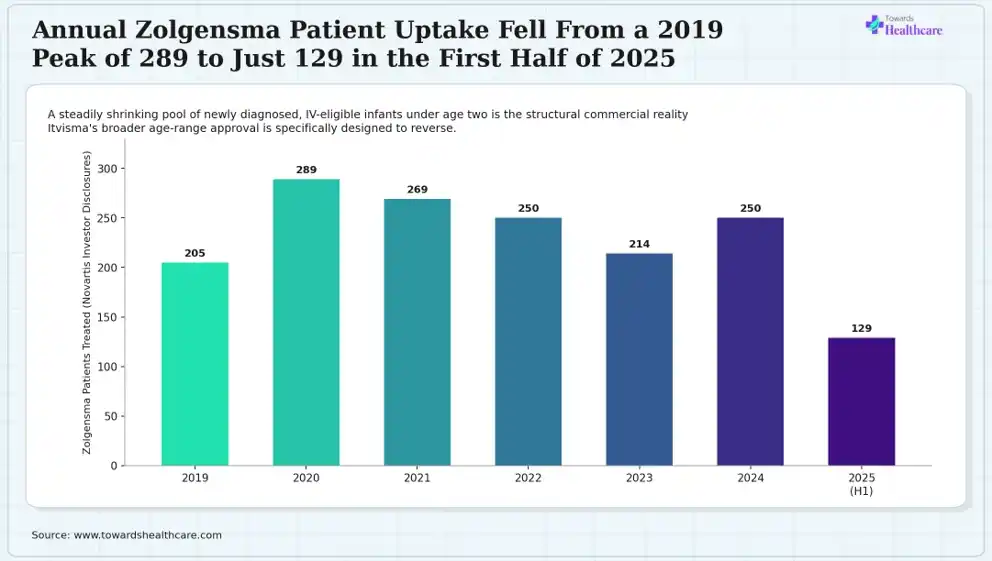
Based on the research conducted, the bar chart reflects annual Zolgensma patient uptake from 2019 to 2025. In 2019, a total of 205 Zolgensma patients were treated, which increased to 289 in 2020, while in 2021 it reached 269. In 2022, it dropped to 250, and in 2023 it fell further to 214. Moreover, 2024 reported a rise in Zolgensma patient treatments, reaching 250, whereas the first 2 quarters of 2025 accounted for 129.
Key Insight:
Zolgensma's annualized pace roughly tracks its 2023 trough rather than recovering, and the treatment of only 129 patients in just the first half of 2025 indicates that it was necessary to launch Itvisma to reestablish the growth momentum of SMA gene therapy franchise of Novartis.
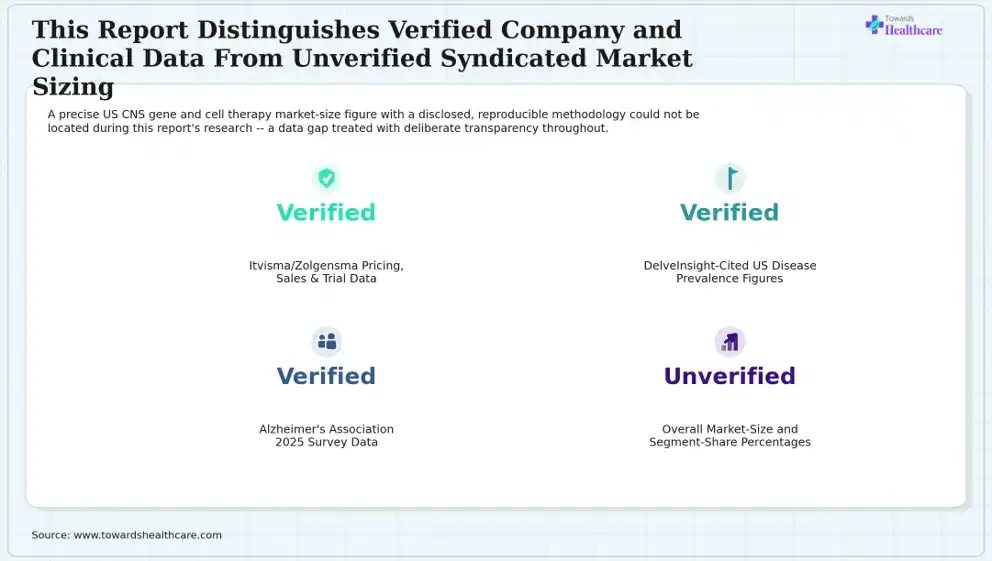
As per the survey conducted by Aman, the infographic stat-panel reflects data verification status by category. Itvisma/Zolgensma pricing, sales & trial data were verified against primary sources, while Alzheimer's Association 2025 survey data were verified against the cited primary survey source. Additionally, overall market-size and segment-share percentages were evaluated through unverified syndicated estimates, which were excluded.
Key Insight:
The presence of a strong verifiable evidence base for specific topics covering real FDA approvals, SEC-filed sales data, and a named research organization's survey differs significantly from market-size and segmentation figures with unverifiable data, irrespective of the surrounding data's quality.
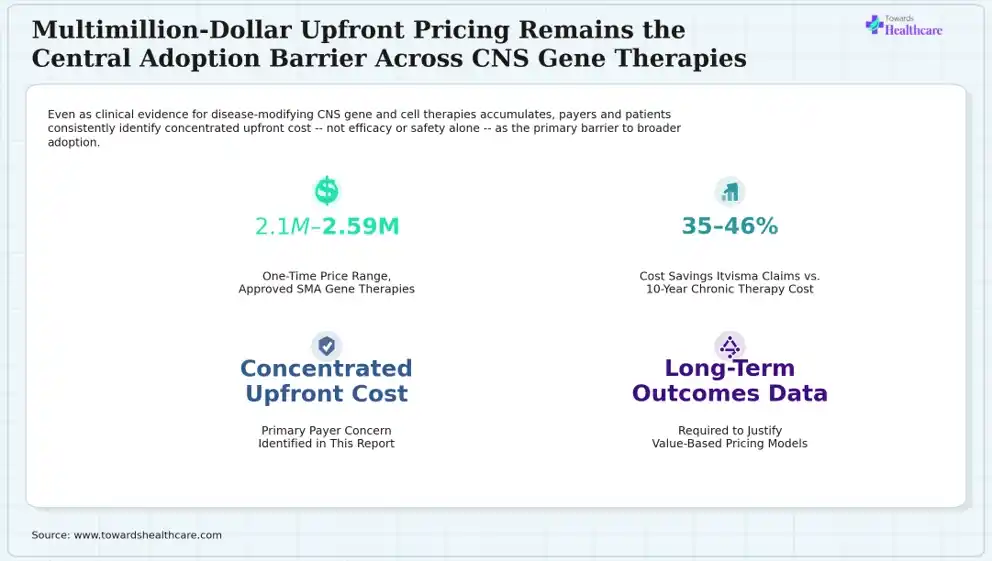
The above-mentioned infographic stat panel represents CNS gene therapy cost-barrier metrics. $2.1 million-$2.59 million was the one-time price range of approved SMA gene therapies. Cost savings Itvisma claims vs. 10-year chronic therapy cost were reported to range between 35-46%. Moreover, concentrated upfront cost was the primary payer concern, whereas long-term outcomes data are required to justify value-based pricing models.
Key Insight:
The upfront-cost objection, with total-cost-of-care arguments that is a pricing communication strategy that will be replicated during CNS gene therapy launches targeting larger populations in the future and is the main focus of the manufacturers, as highlighted by this explicit 35-46% cost savings of Novartis's versus chronic therapy.
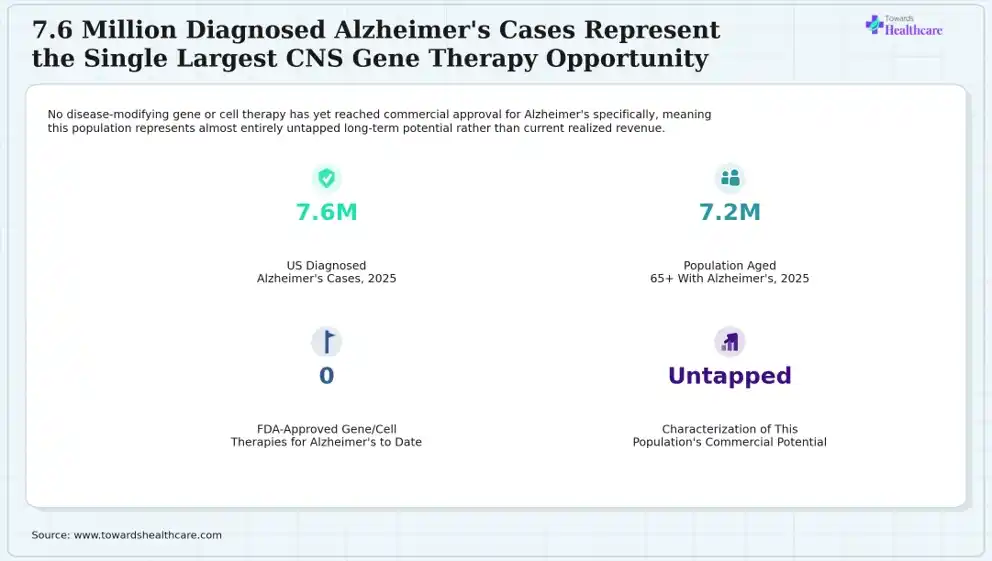
According to the survey conducted, the infographic stat panel illustrates U.S. Alzheimer's population and gene therapy opportunity metrics. In 2025, approximately 7.6 million Alzheimer's cases were diagnosed in the U.S., while almost 7.2 million people aged 65+ have Alzheimer's. Furthermore, it was reported that no FDA-approved gene/cell therapies are available for Alzheimer's to date.
Key Insight:
Alzheimer's represents the single largest unrealized commercial opportunity across every CNS indication due to the lack of approved gene or cell therapies, in spite of having a nearly 600 times larger patient population compared to the SMA market, consisting of Zolgensma and Itvisma with multi-hundred-million-dollar quarterly sales.
Source: Towards Healthcare, citing 2025 U.S. diagnosed prevalent case estimates.
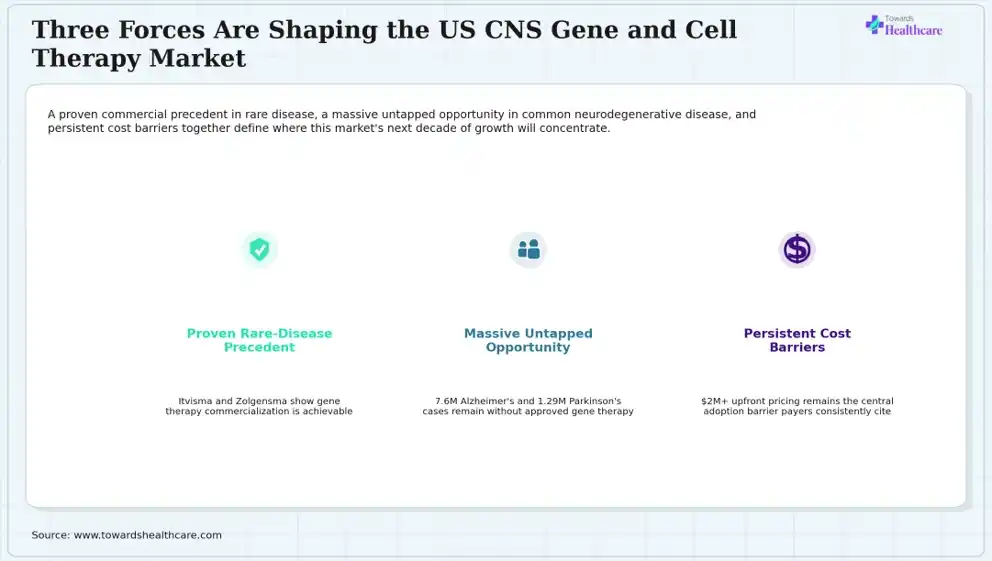
Based on the information gathered, the synthesis infographic reflects three structural forces shaping U.S. CNS gene and cell therapy competition. Proven rare-disease precedent focuses on Itvisma and Zolgensma, demonstrating gene therapy commercialization is achievable. Massive untapped opportunity points to 7.6M Alzheimer's and 1.29M Parkinson's cases without approved gene therapy. Persistent cost barriers span more than $2M upfront pricing, which acts as the central adoption barrier payers consistently cite.
Key Insight:
Fundamentally different commercial infrastructure and pricing strategies are required to support rare-disease precedents like SMA and the large-population opportunity for Alzheimer's and Parkinson's, which reduces the chances of transfers into neurodegenerative-disease commercial readiness by companies.
| Indicator | Value | Source |
| Zolgensma Group global net sales, FY2025 | $1.2 billion (+1% YoY) | Novartis SEC Form 20-F |
| Itvisma U.S. wholesale acquisition cost | $2.59 million (one-time) | - |
| U.S. share of global CNS gene & cell therapy market, 2024 | 48% | Towards Healthcare |
| U.S. diagnosed Alzheimer's cases, 2025 | ~7.6 million | Towards Healthcare |
| U.S. diagnosed Parkinson's cases, 2025 | ~1.29 million | Towards Healthcare |
| Zolgensma patients treated, first half 2025 | 129 | Novartis investor disclosures |
The table represents global net sales, acquisitions, and CNS disorder incidences. In the first half of 2025, Zolgensma patients treated contributed to 129, where Zolgensma Group global net sales for FY2025 were reported to be $1.2 billion, with a rise of 1% YoY. In 2024, the U.S. share of the global CNS gene & cell therapy market was noted to be 48%, whereas Itvisma U.S. wholesale acquisition cost accounted for $2.59 million. In 2025, U.S. diagnosed Alzheimer's cases and Parkinson's cases accounted for approximately 7.6 million and roughly 1.29 million, respectively.
This section covers seven segmentation dimensions such as Therapy Type, CNS Disorder, Vector/Cell Platform, Route of Administration, Mechanism of Action, Development Stage, and End User, where it also highlights their market share, CAGR percentages, and recent real, verified data points.
Gene therapy, specifically in vivo gene therapy, registered dominance over the market. Based on the research conducted, Zolgensma and Itvisma are the only commercially approved CNS gene therapies under in vivo gene replacement using AAV vectors. Moreover, no comparably verifiable data for cell therapy or gene-modified cell therapy targeting CNS disorders specifically was identified.
| Disorder | Verified Data Point | Source |
| Spinal Muscular Atrophy | It is the only CNS/neuromuscular indication consisting of an approved gene therapy franchise generating more than $1.2B in annual sales. | Novartis SEC Form 20-F |
| Alzheimer's Disease | It represents the largest diagnosed population, contributing to approximately 7.6M, with no approved gene/cell therapies to date. | Towards Healthcare |
| Parkinson's Disease | It reflects the second-largest diagnosed population with roughly 1.29M and zero approved gene/cell therapies to date. | Towards Healthcare |
The table highlights CNS disorders and recent advancements. The spinal muscular atrophy subsegment dominated the market with 24% in 2025, due to established gene-therapy commercialization. The Alzheimer's Disease subsegment held 12% due to the presence of a large patient population. The Parkinson's Disease subsegment held the second-largest share of 21% and is expected to expand rapidly during the forecast period due to growing advanced cell and gene therapy pipelines.
This segment revolves around both intravenous (Zolgensma) and intrathecal (Itvisma) administration for the same underlying drug substance, representing them as important route categories. It was identified that Itvisma's intrathecal route provides broader age/weight-range approval, while intrathecal delivery also offers more direct CNS access than systemic administration.
In December 2025, at a wholesale acquisition cost of $2.59 million, Itvisma was made commercially available across the U.S.
Source: Institut de Myologie, Dec. 2025
On November 24, 2025, based on positive STEER and STRENGTH Phase 3 trial results, Itvisma (onasemnogene abeparvovec-brve), the first intrathecal gene therapy for SMA patients aged 2 and older, was approved by the FDA.
Source: U.S. Food & Drug Administration, “FDA Approves Gene Therapy for Treatment of Spinal Muscular Atrophy”, Nov. 2025
Q4 2025, Itvisma marked early international expansion for the intrathecal formulation, after approval in the UAE and U.S. clearance.
Source: Novartis SEC Form 20-F
FY2025, Zolgensma Group global net sales for FY2025 accounted for $1.2 billion with a growth of +1% year-over-year, which was reported in Novartis SEC Form 20-F annual filing.
Source: Novartis SEC Form 20-F
2023, due to saturation of the eligible under-2 patient pool, annual Zolgensma patient uptake reported a decline from a 2020 peak of 289 to 214 patients.
Source: Novartis investor disclosures
In May 2019, for the treatment of pediatric patients less than 2 years of age suffering from spinal muscular atrophy (SMA) and biallelic mutations in the survival motor neuron 1 (SMN1) gene, Zolgensma® (onasemnogene abeparvovec-xioi), developed by AveXis, a Novartis company, was granted U.S. FDA approval.
Source: Novartis, “AveXis receives FDA approval for Zolgensma®, the first and only gene therapy for pediatric patients with spinal muscular atrophy (SMA)”, May 2019
It is a verified commercial CNS gene therapy developer that received Itvisma approval in November 2025 at $2.59M and consists of the Zolgensma and Itvisma franchise, with $1.2B FY2025 group sales.
It is a federal regulator that was responsible for the approval of Zolgensma in 2019 and Itvisma in November 2025 for SMA.
It is a well-known research & advocacy organization that published a survey on early-diagnosis desire and treatment-risk tolerance among Americans in 2025.
It is a recognized patient advocacy organization that publicly greeted the broad FDA approval of Itvisma in November 2025.
Aditi is a life science research expert with strong experience in biotechnology, chronic diseases, and vector/cell platform markets. She conducted detailed market research, analyzed company data, clinical trends, and industry developments. Based on her comprehensive analysis, the following strategic key takeaways highlight the most important market insights and opportunities.
For Service Providers & CDMOs
For Pharma & Biotech Companies
For Investors & Corporate Strategy Teams
Based on my assessment, the market is expanding rapidly due to increasing adoption of intrathecal gene therapies. The growth in early CNS disease diagnosis is also increasing the adoption rate of cell and gene therapies. I also anticipate that the growing cases of Alzheimer's and Parkinson’s will also increase innovation. I also see strong growth in collaborations, which will create new market opportunities.
Payal Rabde led the primary market research, developed the methodology, analyzed trends, segmentation, competition, forecasts, and strategic opportunities, forming the report's analytical foundation.
Aman was responsible for collecting and validating clinical trial data, research publications, company information, partnerships, and other quantitative datasets, strengthening evidence-based analysis and market estimations.
Aditi reviewed the complete research document, performed quality checks, validated findings, refined content, corrected inconsistencies, and finalized the report, ensuring accuracy, clarity, credibility, and publication-ready quality.
By Therapy Type
By CNS Disorder
By Vector/Cell Platform
By Route of Administration
By Mechanism of Action
By Development Stage
By End User/Treatment Setting
















Principal Consultant
Payal Rabde is a Healthcare Market Research Analyst at Towards Healthcare Research & Consulting with 4+ years of experience in pharmaceuticals, biotechnology, medical devices, and life sciences.
Learn more about Payal Rabde

Reviewed By
Aditi Shivarkar is a seasoned professional with over 14 years of experience in healthcare market research. As a content reviewer, Aditi ensures the quality and accuracy of all market insights and data presented by the research team.
Learn more about Aditi Shivarkar









