

Pipeline Programs

CGT Companies Tracked

Manufacturing Facilities


The U.S. topical drugs market size was estimated at USD 66.50 billion in 2025 and is predicted to increase from USD 70.16 billion in 2026 to approximately USD 113.59 billion by 2035, expanding at a CAGR of 5.5% from 2026 to 2035. Her analysis highlights that the market growth can be attributed to the rising acne issues in teenagers and rising demand for topical drugs in the medical aesthetics industry. Major key players promoting the market's growth include Bayer AG, Johnson & Johnson, GSK plc, Novartis AG, and Bausch Health Companies Inc.
1 Like reaction.
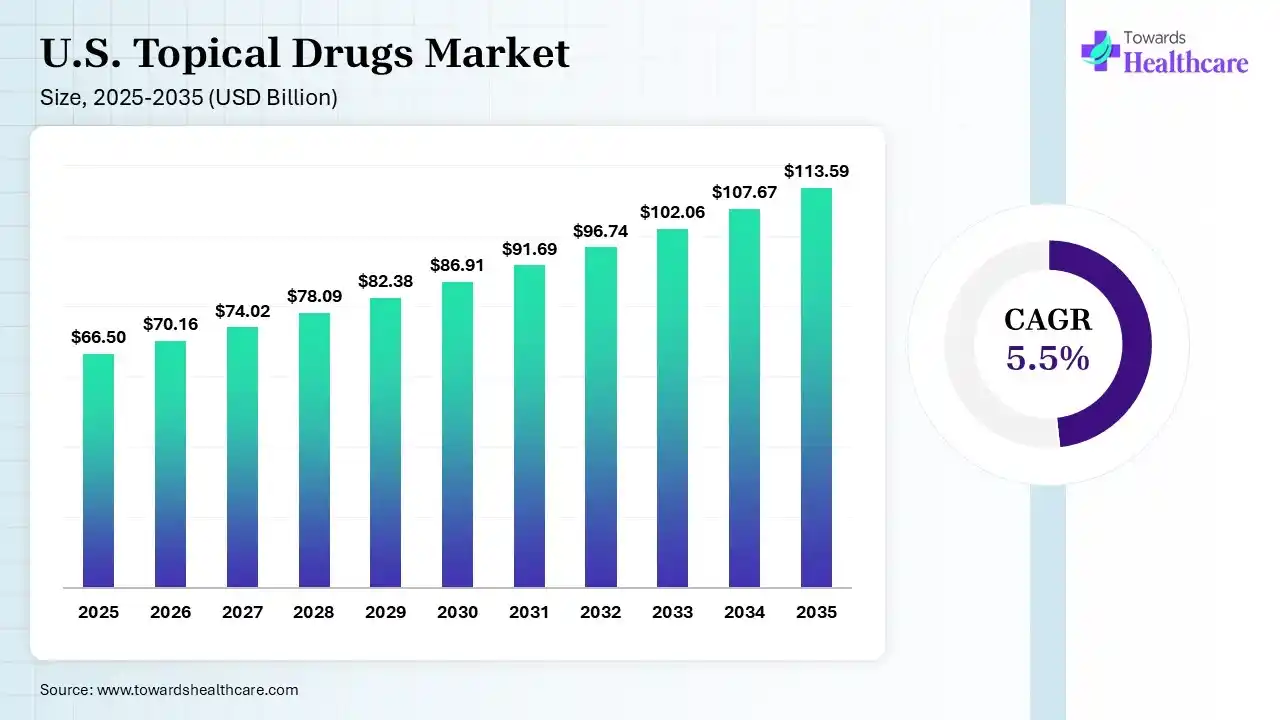
Topical drugs are medications administered directly to the skin, eye, or mucosal surfaces to produce a localized therapeutic effect. They include various administration routes, such as dermal, ophthalmic, rectal, vaginal, and nasal, and are available in formulations including creams, ointments, gels lotions, foams, and transdermal systems. This report provides a comprehensive analysis of the U.S. topical drugs market based on route of administration, formulation, prescription status, drug type, therapeutic class, indication, distribution channel, and end use. It also includes detailed competitive intelligence and benchmarking of major branded, generic and over-the- counter manufacturers operating in the market.
AI has a massive contribution to the growth of the market, which is fueled by optimizing skin barrier penetration, accelerating formulation development, and lowering high R&D costs. AI and deep learning models analyze molecular weight, lipophilicity, and solubility data to predict how topical and transdermal formulations cross the human skin barrier, eliminating much of the traditional trial-and-error laboratory testing, which is helpful for the growth of the market. Machine learning algorithms and Bayesian optimization streamline the complex mixing of bases, active ingredients, and penetration enhancers to create stable, high-efficacy topical products faster, further fueling the market’s growth. Generative AI and advanced neural networks also assist in designing smart transdermal delivery systems and nanocarriers that control drug release rates through the skin.
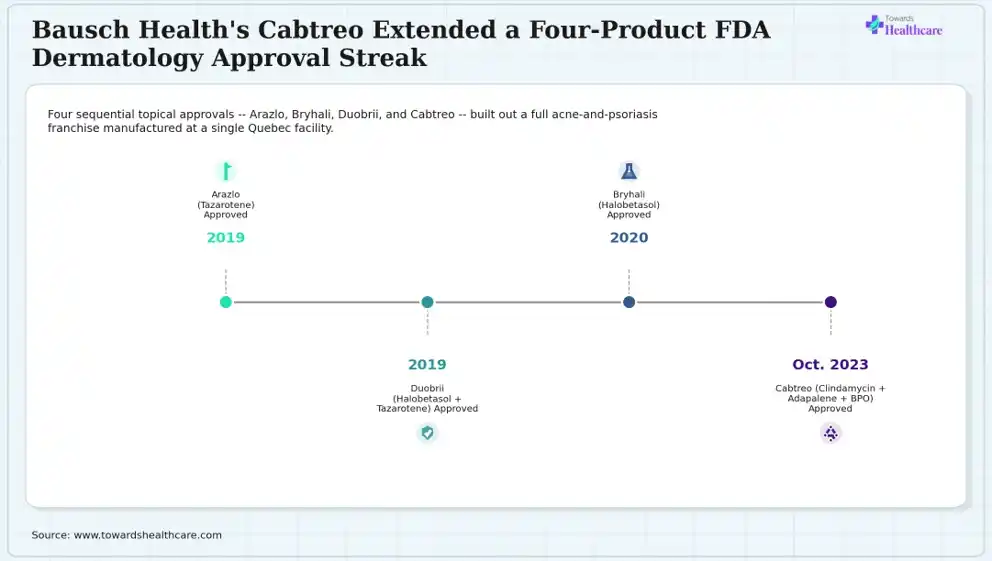
Based on the research, between 2019 and 2023, Bausch Health strengthened its position in the U.S. topical dermatology market through a series of FDA approvals. The company received approval for Duobril in April 2019, followed by Arazlo in December 2019, and Bryhail in 2020. The approval of Cabtreo in October 2023 further expanded its dermatology portfolio, particularly in acne treatment. Together, these four products created a franchise addressing both acne and psoriasis through different topical formulations.
Key Insight:
Bausch Health produces all four products at its Laval, Quebec facility for distribution across Canada and the U.S. This demonstrates how a single manufacturing site can support a broad dermatology portfolio comprising multiple products developed over four years.
Source: Drugs.com, Bausch Health Companies Inc. company approval history; PatSnap Synapse, “Adapalene/Benzoyl Peroxide/Clindamycin - Drug Targets, Indications, Patents.”
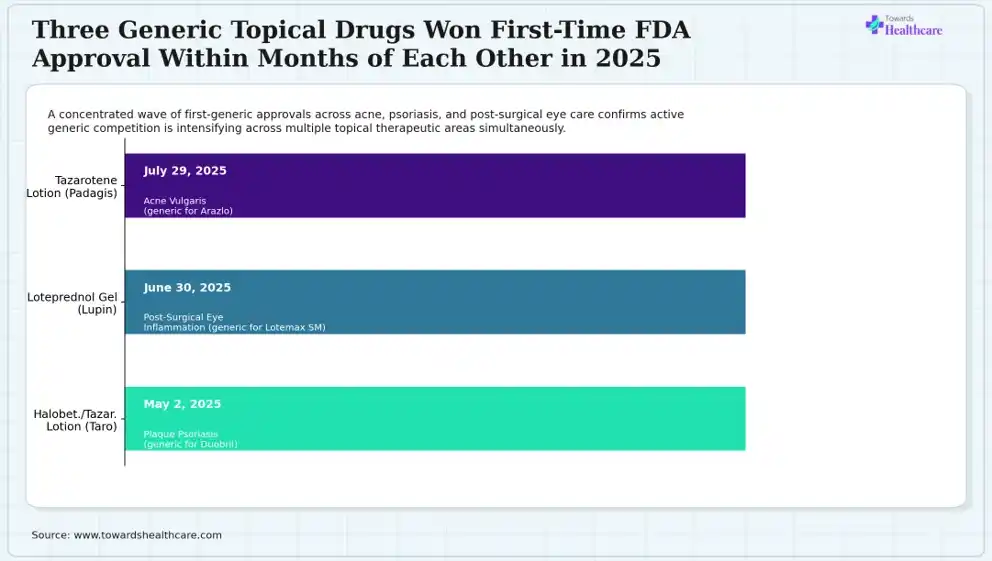
Based on our research, rising generic competition across key dermatology and ophthalmic treatments. Between May and July 2025, generic versions of Duobrii, Lotemax SM, and Arazlo received approvals for psoriasis, post-surgical eye inflammation, and acne, respectively.
Key Insight:
Two of the three approvals directly compete with Bausch Health’s Duobrii and Arazlo products, indicating that therapies developed between 2019 and 2023 have begun facing generic competition relatively soon after their market introduction.
Source: Drugs.com, “2025 First Generic Drug Approvals” archive; FDA, “2025 First Generic Drug Approvals.”
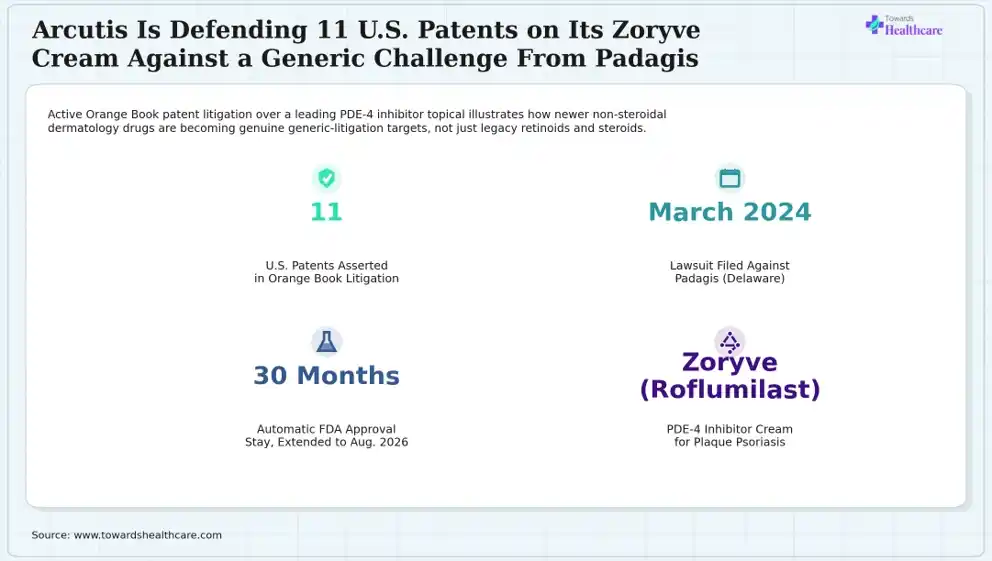
The research shows that newer non-steroidal dermatology products are increasingly facing patent challenges from generic manufacturers. The Zoryve litigation involves 11 asserted patents, with the case filed in March 2024 and an FDA approval stay extending to August 2026. This highlights how innovative topical therapies are becoming important targets for generic competition and patent litigation.
Key Insights:
An 11-patent Orange Book portfolio indicates that PCE-4 inhibitor topicals such as Zoryve are supported by a more extensive and layered IP strategy than older combination products, which are typically protected by only 2-3 patents.
Source: Arcutis Biotherapeutics, Inc., SEC Form 10-Q, Q1 and Q2 2025 (filed with SEC, 2025).
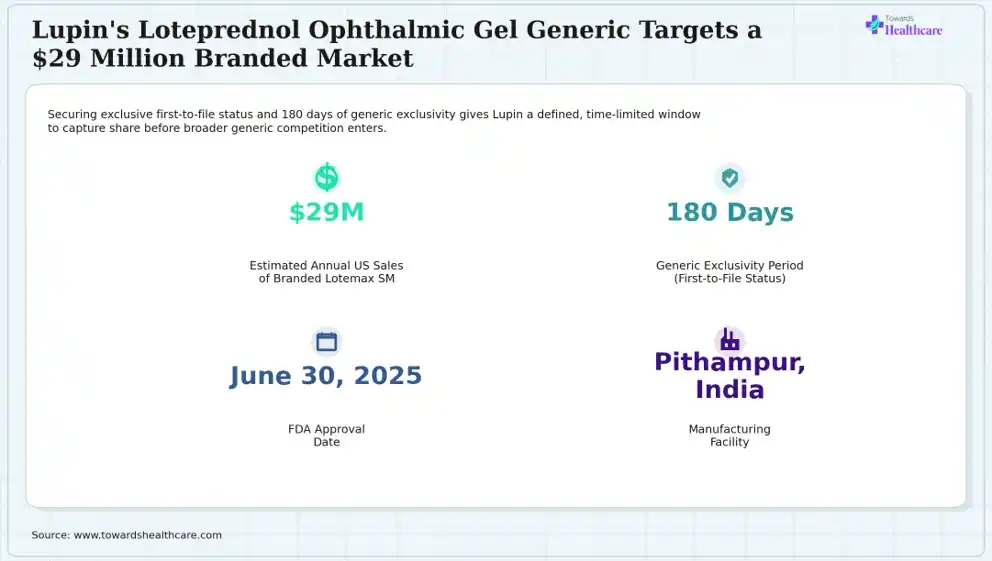
The research highlights Lupin’s strong opportunity in the U.S. generic Lotemax SM market. With branded sales of around $29 million annually, its 180-day exclusivity gives Lupin a valuable period to establish market share before other generics enter. FDA approvals in June 2025 and manufacturing at its Pithampur, India facility further support its commercial launch strategy.
Key Insights:
With estimated annual branded sales of only $29 million, the approval highlights a shift toward targeting smaller, specialized topical and locally delivered therapies, showing that generic competition extends beyond major blockbuster combination products.
Source: Lupin Limited, press release, “Lupin Receives Approval from U.S. FDA for Loteprednol Etabonate Ophthalmic Gel,” July 1, 2025
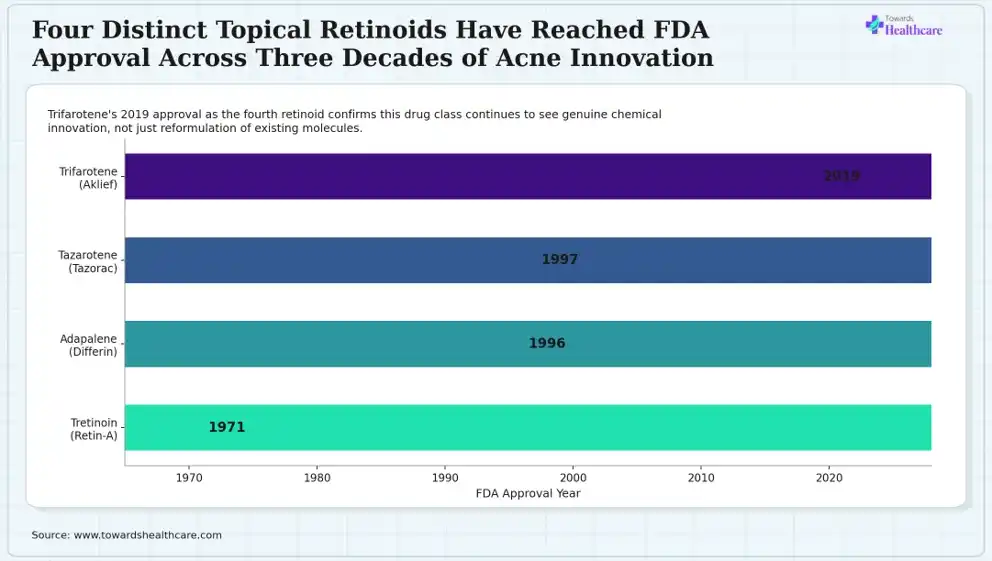
The research highlights more than three decades of innovation in topical retinoids for acne treatment. Tretinoin was the first major topical retinoid approved in 1972, followed by adapalene and tazarotene in the 1990s. The 2019 approval of trifarotene as a newer-generation retinoid demonstrates continued molecular innovation within the class, rather than relying only on reformulations of older treatments.
Key Insights: The research indicates that the 22-year interval between tarzarotene (1997) and trifarotene (2019), compared with the one-year gap between adapalene and tarzarotene, suggests that retinoid innovation has become slower but remains active, with new molecules continuing to enter the market decades after the class was established.
Source: The Medical Letter, “Trifarotene (Aklief) for Acne,” Dec. 2019 (Med Lett Drugs Ther. 2019 Dec 16;61(1587):195-7).
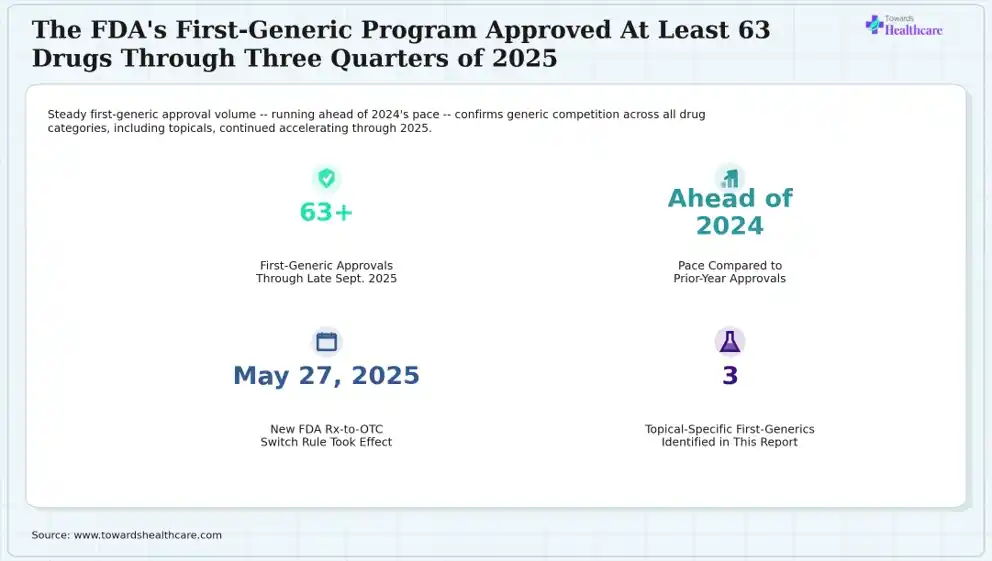
As a market analyst, the generic drug competition strengthened in 2025, with 63+ first-generic approvals recorded by late September, already exceeding the previous year’s [ace. The approvals of three topical first-generics further confirm that competition is expanding across topical therapies alongside broader FDA regulatory changes.
Key Insights: The May 2025 regulatory period that introduced the new Rx-to-OTC rule also included two of the report’s three topical first-generic approvals. This overlap suggests that FDA regulatory and generic-approval activities may have followed a similar administrative timeline rather than occurring entirely by chance.
Source: GoodRx, “FDA Approval Stats: Trends in First Generics, Biosimilars, and More,” Oct. 2025.
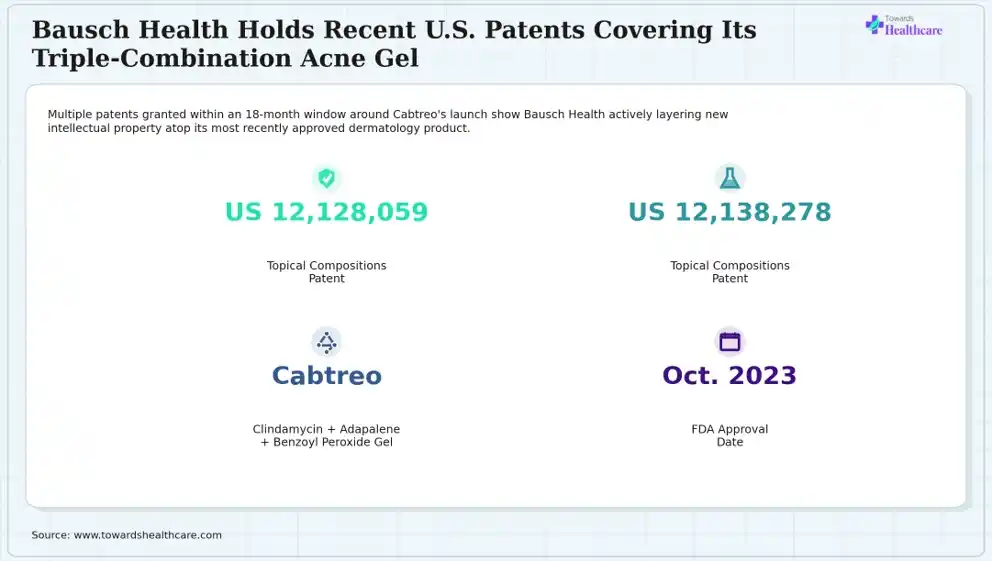
The researcher highlights Bausch Health’s active IP strategy for Cabtro, with two patents covering its topical formulation granted around the product’s 2023-FDA approvals. This suggests the company is strengthening patent protection around its newer dermatology product.
Key Insights: Both patents were granted after Cabtro received FDA approval, indicating that Bausch Health continued strengthening the product’s formulations-related intellectual property even after its commercial launch.
Source: Google Patents, US12128059B2 and US12138278B2, “Topical compositions.”
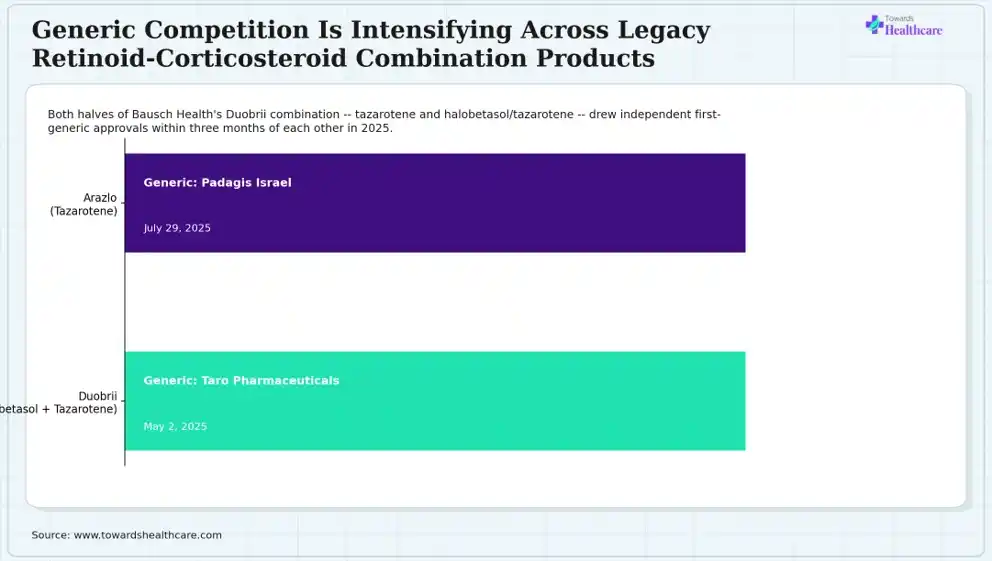
As the market research analyst, Bausch Health’s Duobrii and Arazlo faced first-generic competition in 2025, with Duobrii’s generic approved in May and Arazlo’s in July. The close timing shows that generic entry was increasing across Bausch Health’s topical dermatology products during 2025.
Key Insights: Two separate generic manufacturers entering the market for related products from the same Bausch Health portfolio within one quarter indicates that the company is facing competitive pressure across multiple key products, rather than seeing competition limited to just one product.
Source: Drugs.com, “2025 First Generic Drug Approvals” archive.
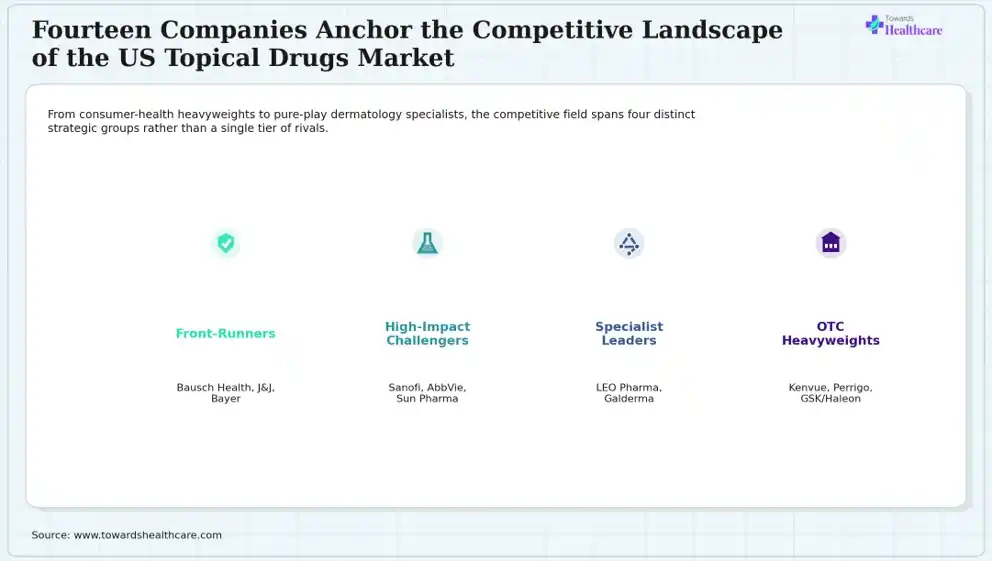
The research shows that the dermatology market has a diverse competitive landscape, with companies grouped into four strategic categories based on their market position and focus. It includes leading players, high-impact challenges, specialized dermatology companies, and major ITC healthcare brands, indicating competition across both prescription and consumer-health segments.
Key Insights: The four groups show that companies need different competitive strategies based on their market focus. Galderma competes through dermatology expertise and specialized products, while Kenvue relies on strong consumer brands and broad OTC reach.
Source: Company competitive intelligence data as supplied, cross-referenced against publicly identified competitor lists for topical drug market coverage.
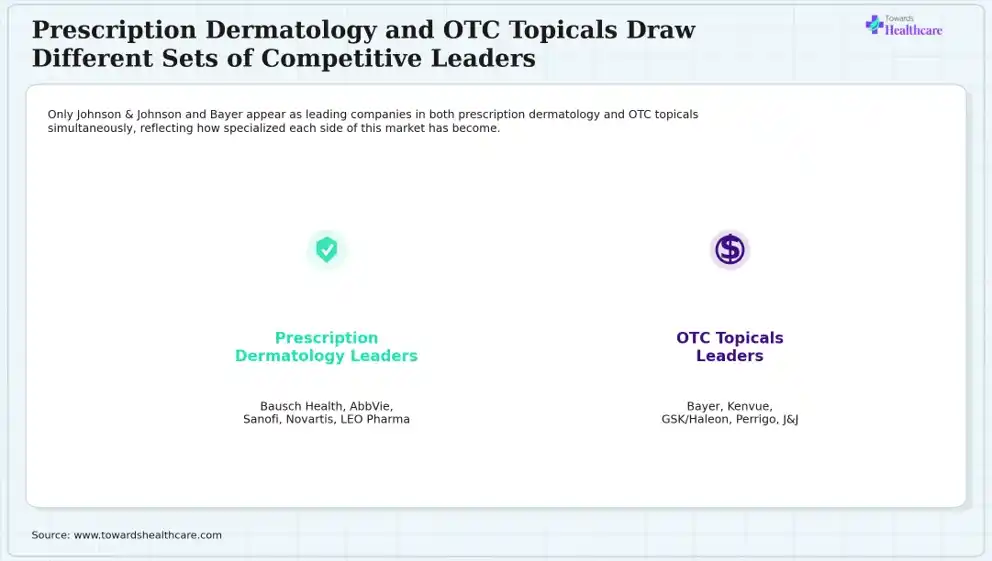
Based on our research, the prescription dermatology and OTC topicals have largely different leading players. Only Johnson & Johnson and Bayer have a presence across both segments, highlighting the specialized nature of each market and the limited overlap between prescription and OTC leaders.
Key Insights: The limited overlap between the two groups shows that success in prescription dermatology does not necessarily provide a strong advantage in the OTC topical market, and vice versa. This is why companies tend to focus on one segment rather than compete across both.
Source: Company competitive intelligence data as supplied.
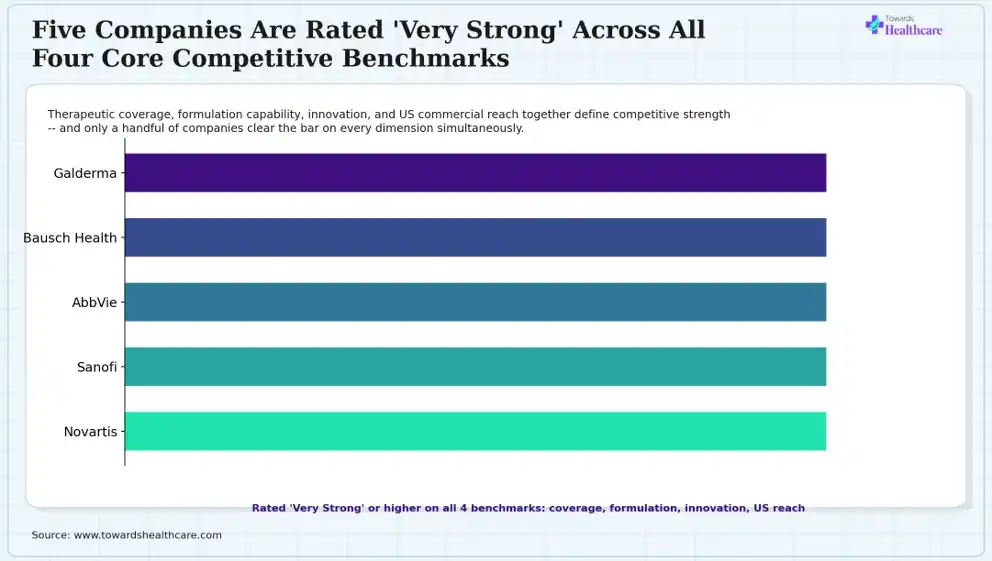
The research highlights that all five companies have a strong focus on speciality dermatology or specialty pharmaceuticals rather than broad consumer healthcare. This suggests that therapeutic expertise and focused market presence are more important than overall company size in achieving strong performance across all competitive areas.
Key Insights: All five companies mainly focus on speciality dermatology or speciality pharmaceuticals instead of broad consumer healthcare. This shows that strong therapeutic focus and expertise play a bigger role than company size in achieving high performance across all key competitive areas.
Source: Company competitive intelligence data as supplied.
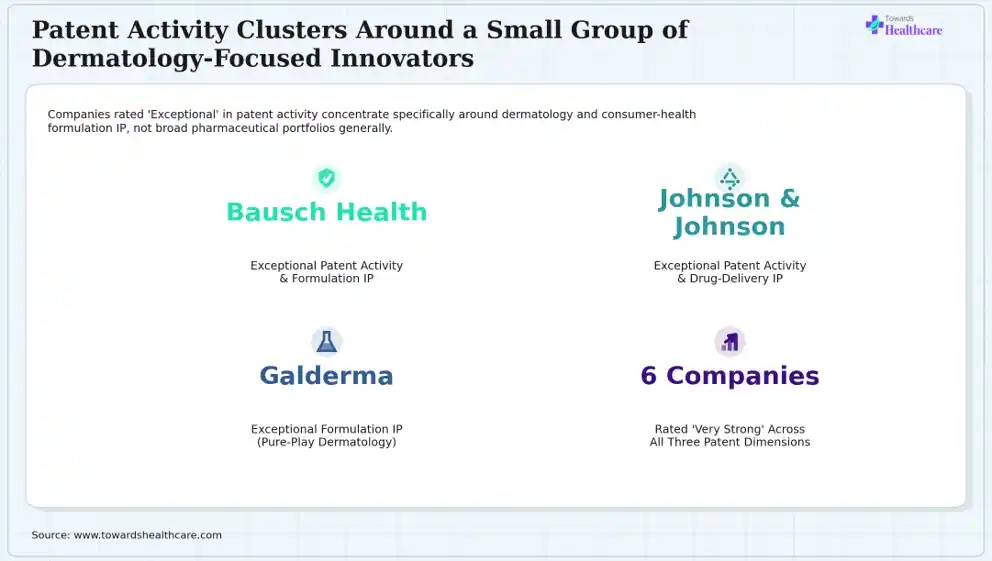
As the market research analyst, Bausch Health, Johnson & Johnson, and Galderma have particularly strong patent positions, especially in dermatology formulations and drug-delivery technologies. Overall, these six companies demonstrate very strong performance across all three patent-related areas, highlighting the importance of formulation and delivery innovation in the market.
Key Insights: Bausch Health’s recent patent activity supports its “Exceptional” patent rating, showing that the company continues to invest in new intellectual property. This indicates that its strong patent position is based on an ongoing IP department rather than only older patents.
Source: Company competitive intelligence data as supplied, cross-referenced against verified Bausch Health patent activity
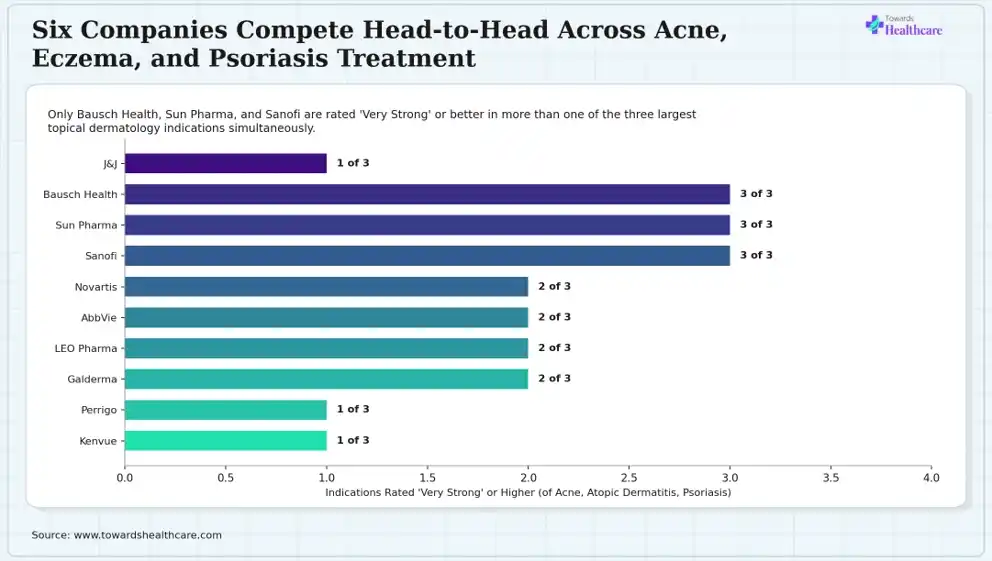
Based on the research, Sanofi, Sun Pharma, and Bausch Health have the strongest therapeutics coverage rates very strong across all three key indications. Novartis, AbbiVie, LEO Pharma, and Galderma show strong coverage across two of the three indications, indicating a more focused therapeutic presence.
Key Insights: Sanofi, Sun Pharma, and Bausch Health achieve full coverage across all three indications despite having different business models. This shows that there is no business strategy required to achieve broad therapeutic coverage in the market.
Source: Competitive intelligence benchmarking methodology as supplied; commercial, pipeline, and patent figures independently cross-verified against company SEC filings and press releases.
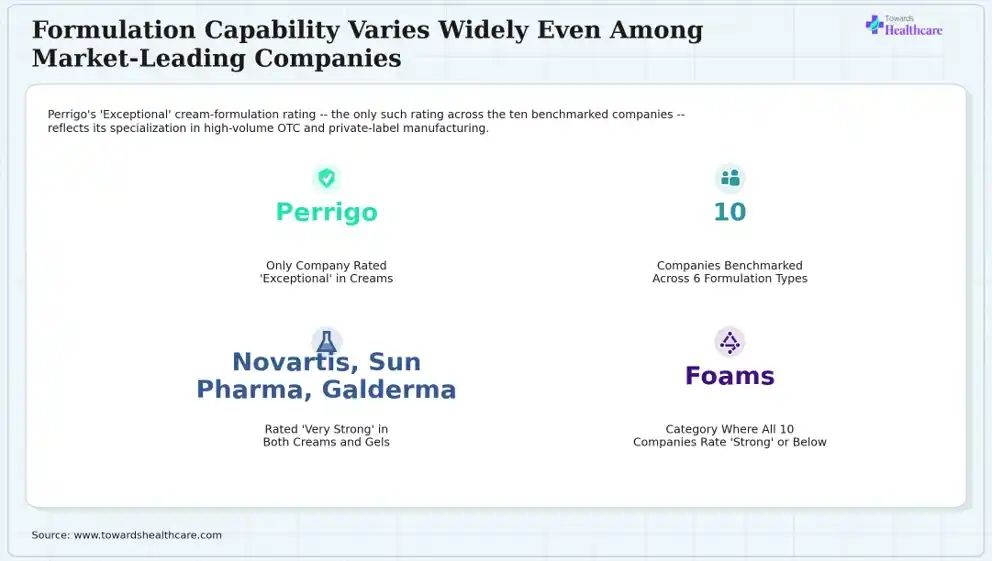
The research highlights that Perrigo leads in cream formulation, with the only Exceptional rating. Novartis, Sun Pharma, and Galderma show strong capabilities in creams and gels, while foams are the weakest formulation across the benchmarked companies.
Key Insights: No company has received a top rating for foam formulations, making it the only delivery format where no clear technology or manufacturing leader has emerged among the benchmarked companies.
Source: Company competitive intelligence data as supplied
| Force | Description |
| Generic Erosion of Legacy Combinations | 3 first-generic approvals hit Duobrii and Arazlo in 2025 alone |
| Active Defense of Newer Non-Steroidals | Arcutis is litigating 11 patents to protect its Zoryve franchise |
| Continued Retinoid Chemical Innovation | Trifarotene's 2019 approval shows the drug class is still evolving |
As a market analyst, the table highlights three key market forces growing generic competition, strong patent protection, and continued innovation in retinoid treatments shaping competition and product development.
Key Insights: These three forces show that older products are facing generic competition, newer non-steroidal drugs are being protected, and new treatments are still being developed. This means companies need to focus on both patent protection and continued R&D to stay competitive.
Source: Synthesis of evidence presented in Sections 1–14 of this report.
|
Indicator
|
Value
|
Source
|
|
First-generic drug approvals, FDA, through Q3 2025
|
63+
|
GoodRx, Oct. 2025
|
|
Topical-specific first-generic approvals identified, 2025
|
3
|
Drugs.com, 2025
|
|
Estimated annual US sales, branded Lotemax SM (loteprednol)
|
$29 million
|
Lupin press release, 2025
|
|
Bausch Health dermatology approvals, 2019–2023
|
4 products
|
Drugs.com
|
|
Patents asserted in Arcutis-Padagis Zoryve litigation
|
11
|
Arcutis SEC Form 10-Q, 2025
|
|
FDA-approved topical retinoids to date
|
4 (tretinoin, adapalene, tazarotene, trifarotene)
|
The Medical Letter, 2019
|
The above-mentioned table highlights the revenue of the MASH drugs across the U.S. More than 63 first-generic approvals through Q3 2025 and three topical-specific approvals indicate increasing competition. Lotemax SM’s $29 million annual sales highlight the market value of branded topical products. Bausch Health’s four dermatology approvals reflect continued innovation, while 11 patents in Zoryve litigation show the importance of intellectual property. Four approved topical retinoids further demonstrate ongoing treatment development.
This section encompasses eight segmentation dimensions, including Route of Administration, Formulation, Prescription Status, Drug Type, Therapeutic/Drug Class, Indication, Distribution Channel, and End User, with their market share, CAGR percentages, and recent advancements.
|
Drug Class
|
Verified Data Point
|
Source
|
|
Retinoids
|
4 distinct FDA-approved molecules across 3 decades (1971–2019); tazarotene and its combinations drew 2 separate first-generic approvals in 2025
|
The Medical Letter; Drugs.com
|
|
PDE-4 Inhibitors
|
Arcutis is defending 11 US patents on Zoryve (roflumilast) against a generic challenge, with FDA approval stay extended to August 2026
|
Arcutis SEC Form 10-Q, 2025
|
|
Corticosteroids
|
Halobetasol (as part of Duobrii and standalone Bryhali) drew a first-generic approval in May 2025
|
Drugs.com, 2025
|
|
Antibiotic Combinations
|
Cabtreo (clindamycin + adapalene + benzoyl peroxide) received 2 new US patents in the 12–18 months following its Oct. 2023 approval
|
Google Patents, US12128059B2 and US12138278B2
|
As the market research analyst, I interpret that the given table highlights different types of therapeutic/drug class. By therapeutic/drug class, the corticosteroids segment dominated the market with 24.60%, due to formulary and anti-inflammatory treatment, the Retinoids segment held the second-largest share of 11.80% because acne treatment generates substantial retinoid demand. PDE-4 inhibitors segment held 6.10% and is expected to show the fastest CAGR growth due to the expansion of new treatment options like newer non-steroidal therapies, while the antibiotic combination segment held 10.20% because of increasing demand for bacterial and skin infection treatments.
New Jersey is considered to be the primary contributor to the growth of the market. The state is also known to host 8 of the world’s top 10 pharmaceutical companies. New Jersey also boasts the #1 pharmaceutical manufacturing employment rate and concentration of companies in the United States. Its massive cluster of Contract Development and Manufacturing Organizations (CDMOs) specializes in handling the unique formulation challenges of topicals, such as maintaining cream stability, adjusting viscosity, and processing active pharmaceutical ingredients (APIs), which is helpful for the growth of the market. New Jersey’s unparalleled concentration of scientists and specialized labs drives research into cutting-edge topical drug delivery mechanisms, helping the growth of the market.
California also has a notable contribution to the growth of the market through its major life sciences hubs, contract manufacturing infrastructure, and research institutions. Major metropolitan areas act as primary centers for pharmaceutical and biotechnology innovation, supporting the development of novel non-steroidal creams, foams, and transdermal systems, which helps drive market growth. The region also features established clusters for contract development and manufacturing organizations (CDMOs). Strong research universities and medical institutions across the state drive clinical trials, formulation technologies (such as sustained-release gels), and dermatological therapies for conditions like psoriasis, eczema, and acne, helping the growth of the market.
Pennsylvania also has a major contribution to the growth of the market. The market’s growth is reflected by major corporate footprints, clinical and biotech innovation hubs, and large-scale manufacturing investments. Various well-renowned institutions of the state drive high-impact dermatological research, clinical trials, and health economics studies evaluating topical drug pricing, access, and therapeutic outcomes, helpful for market’s growth. Pennsylvania continues to attract multibillion-dollar life sciences and pharmaceutical manufacturing investments, as well further propelling market’s growth.
By Late September 2026, the FDA had approved at least 63 first-generic drugs during 2025, exceeding the pace of 2024 and highlighting continued growth in generic drug competition.
Source: GoodRx, “FDA Approval Stats,” Oct. 2025
On July 29, 2025, Padagis Israel Pharmaceuticals received FDA approval for the first version of tazarotene topical lotion, 0.045%, for acne vulgaris, as a generic of Bausch Health’s Arazlo.
Source: Drugs.com, “2025 First Generic Drug Approvals”
On June 30, 2025, FDA approval was received by Lupin Limited for Loteprednol etabonate ophthalmic gel, 0.38% as the exclusive first-to-file generic of Lotemax SM, providing 180 days of generic exclusivity.
Source: Lupin Limited press release, July 1, 2025
On May 2, 2025, Tari Pharmaceuticals U.S.A., Inc, received FDA approval for the first generic version of halobetasol propionate and tazarotene topical lotion, 0.01%/0,045% for plaque psoriasis, as a generic of Bausch Health’s Duobrii
Source: Drugs.com, “2025 First Generic Drug Approvals"
On March 27, 2024, A lawsuit was filed by Arcuit Biotherapeutics against Padagis in the U.S. District Court for the District of Delaware, alleging infringement of 11 U.S. patents listed in the FDA Orange Book for Zoryve, 0.3 % cream.
Source: Arcuits Biotherapeutics SEC Form 10-Q, 2025
On October 20, 2023, FDA approval was granted to Cabtreo (clindamycin phosphate, adapalene, and benzoyl peroxide) topical gel, developed by Bausch Health, for the treatment of acne vulgaris.
Source: Drugs.com; The Medical Letter, April 2024
It is a front-runner in the U.S. topical drugs market, supported by four sequential dermatology approvals from 2019–2023, including Arazlo, Duobrii, Bryhali, and Cabtreo, along with two new U.S. patents for Cabtreo.
It is a PDE-4 inhibitor specialist, strengthening its position by defending 11 U.S. patents covering Zoryve against Padagis, with the FDA approval stay extended to August 2026.
It is a generic challenger, gaining momentum through its first-generic approval for tazarotene lotion in July 2025 while pursuing a Zoryve generic through ANDA litigation.
It is a generic challenger, strengthening its position through the first-generic FDA approval for halobetasol/tazarotene lotion in May 2025.
It is a generic challenger, gaining a strong position with exclusive first-to-file approval for loteprednol ophthalmic gel in June 2025, supported by 180-day generic exclusivity.
It is a specialist leader in topical dermatology, with products such as Aklief (trifarotene), the fourth FDA-approved topical retinoid, and Epiduo (adapalene/benzoyl peroxide).
It is a front-runner and OTC heavyweight, supported by strong U.S. commercial reach across both prescription and over-the-counter topical drug segments.
It is a high-impact challenger, demonstrating strong capabilities across major topical treatment areas, including acne, atopic dermatitis, and psoriasis.
It is a high-impact challenger, with strong capabilities across acne, atopic dermatitis, and psoriasis, supporting its competitive position in topical dermatology.
It is an OTC specialist, standing out for its exceptional cream formulation capabilities among the 10 benchmarked companies.
Based on my assessment, the market is growing steadily, supported by increasing acquisitions that are making competition stronger. Higher R&D spending and rising sales are encouraging companies to focus more on innovation. I also expect new collaborations and investments to support the development of advanced therapies. In addition, the growing number of FDA approvals and increasing use of injectable formulations are likely to create further opportunities for market growth.
Payal Rabde led the primary market research, developed the methodology, analyzed trends, segmentation, competition, forecasts, and strategic opportunities, forming the report's analytical foundation.
Aman was responsible for collecting and validating clinical trial data, research publications, company information, partnerships, and other quantitative datasets, strengthening evidence-based analysis and market estimations.
Aditi reviewed the complete research document, performed quality checks, validated findings, refined content, corrected inconsistencies, and finalized the report, ensuring accuracy, clarity, credibility, and publication-ready quality.
By Route of Administration
By Formulation
By Prescription Status
By Drug Type
By Therapeutic / Drug Class
By Indication
By Distribution Channel
By End User















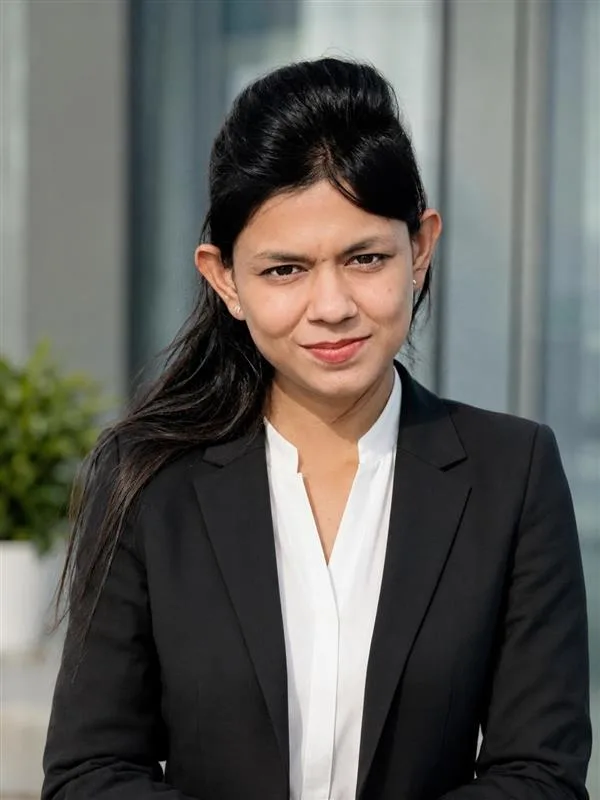
Principal Consultant
Payal Rabde is a Healthcare Market Research Analyst at Towards Healthcare Research & Consulting with 4+ years of experience in pharmaceuticals, biotechnology, medical devices, and life sciences.
Learn more about Payal Rabde

Reviewed By
Aditi Shivarkar is a seasoned professional with over 14 years of experience in healthcare market research. As a content reviewer, Aditi ensures the quality and accuracy of all market insights and data presented by the research team.
Learn more about Aditi Shivarkar









