Pipeline Programs

CGT Companies Tracked

Manufacturing Facilities


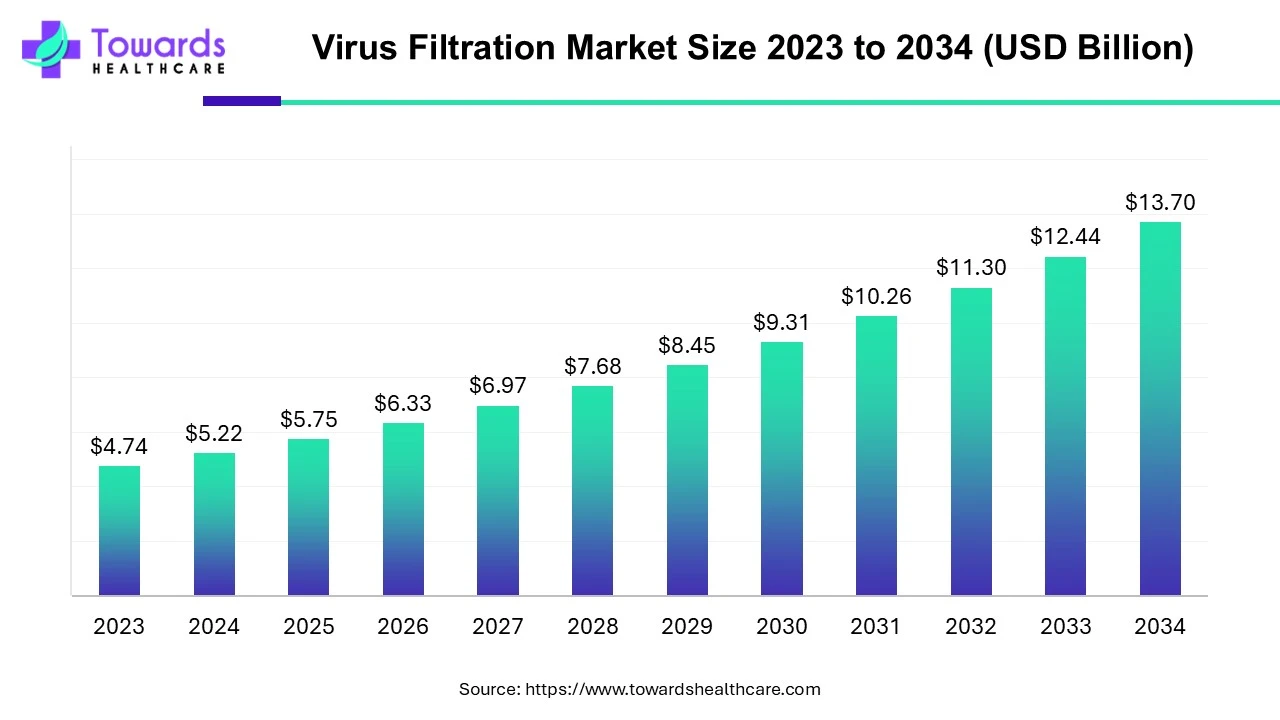
The global virus filtration market size is calculated at USD 5.75 billion in 2025, grew to USD 6.33 billion in 2026 and is projected to reach around USD 13.7 billion by 2034. The market is expanding at a CAGR of 10.5% between 2025 and 2034.
Virus filtration is a robust and effective virus-clearance technology and a common unit operation in manufacturing biologicals. Biological therapeutic products produced using mammalian cell lines or human plasma risk contamination with either known or unknown viruses. Hence, regulatory agencies have mandated the use of virus filters during manufacturing. Virus filters are one of the most important defenses against adventitious viruses entering this significant class of medications. These virus filters separate viruses based on size and are an important component of viral safety assurance in downstream processing. Hence, risk mitigation measures against the accidental introduction of viruses, as they affect healthy individuals, into biotech process streams are essential.
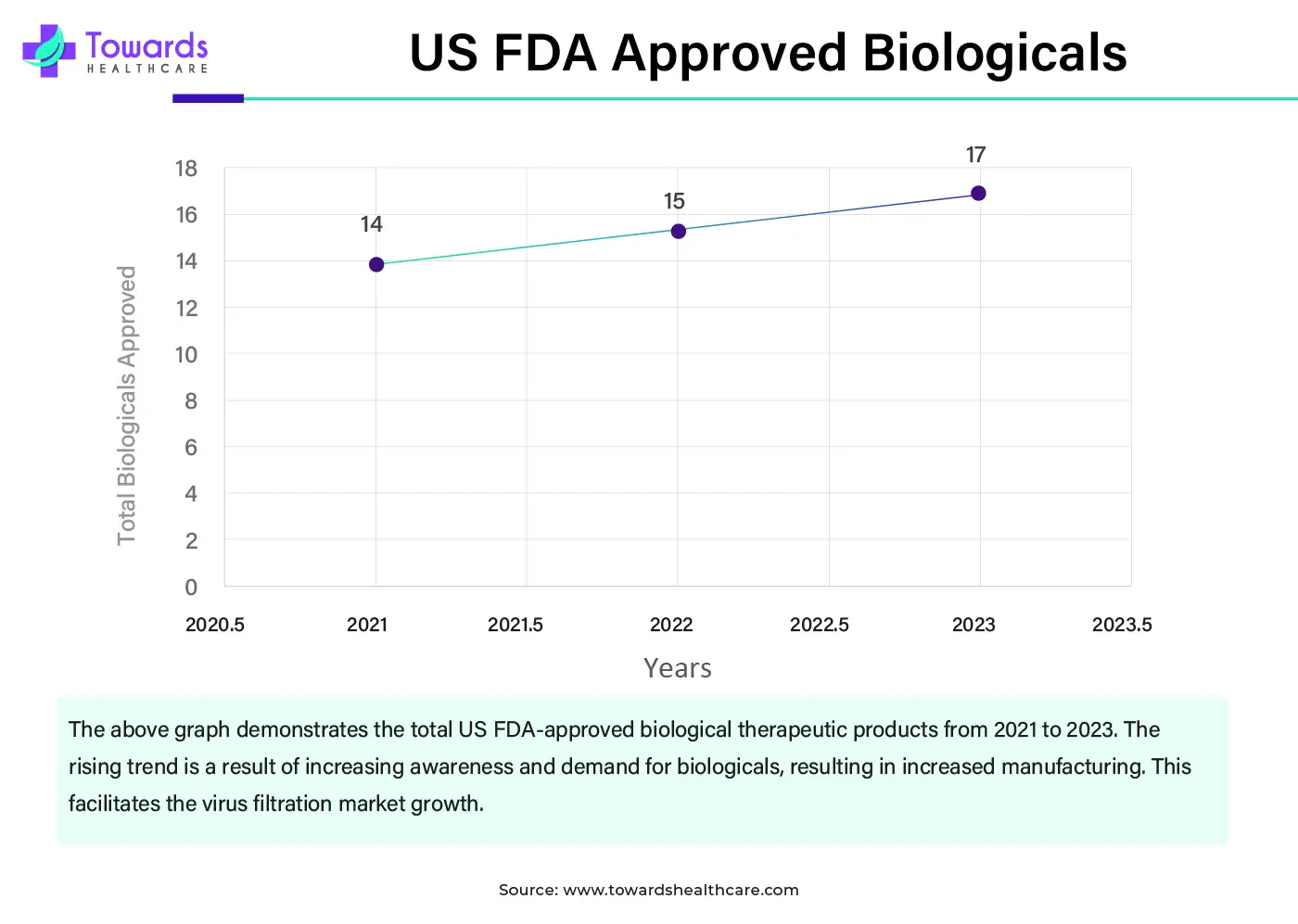
The burgeoning global biotechnology sector, with increasing investments & collaborations, boosts the market. The growing demand for biologicals as therapeutic products and their increasing manufacturing also potentiate market growth. Stringent regulatory guidelines to remove inadvertent viruses during the manufacturing process increase the demand for virus filtration.
Virus filtration is a bioprocessing technique that uses specialized membrane or filtration systems to remove viruses and other viral contaminants from biological products during manufacturing. It is an important step in ensuring the safety and quality of vaccines, plasma-derived products, monoclonal antibodies, and other biologics. The market is growing as biopharmaceutical manufacturers increase production while placing greater emphasis on product safety and viral clearance. Key drivers include the expanding biologics pipelines, stricter quality requirements, and rising adoption of advanced purification processes.
Current trends include single-use filtration systems, high-capacity membranes, and integration of filtration into continuous bioprocessing workflows. Technological advancements in membrane design, automated systems, process monitoring, and scalable filtration platforms are improving throughput and operational consistency. Future opportunities include filtration solutions for cell and gene therapies, next-generation biologics, personalized medicine, and emerging manufacturing platforms. Increasing outsourcing of biologic production is also creating additional demand for reliable virus filtration technologies.
Artificial intelligence (AI) and machine learning (ML) have become integral parts of the pharmaceutical and biotechnology manufacturing processes. AI can detect the presence of viruses during the manufacturing of biologicals, helping manufacturers to take preventive measures. AI introduces automation in processes that are essential to the product safety profile, such as virus filtration. Fully automated solutions improve batch compliance, streamline processing, and lower the possibility of operator error. AI can also optimize virus filtration by analyzing vast datasets from process runs. Additionally, AI can automate the design and manufacturing of virus filters depending on the requirements. Sensors can help to obtain real-time information about the presence and amount of viruses present in the product. Thus, AI can reduce overall manufacturing costs, increase efficiency, and improve safety and sustainability.
Driver
Burgeoning Biotech Sector
Biotechnology is a rapidly expanding sector that uses living organisms to make products to potentially improve health. The growing demand for enhanced health outcomes leads to an increasing number of biotech startups. The rising investments in biotech research and startups are a major driver in burgeoning the biotech sector. According to the McKinsey & Company report, the total biotech IPO funding raised in the first three quarters of 2023 was around $3.4 billion. Similarly, venture capitalists' investments in startups accounted for $12 billion. While the startups secured more than $22 billion in funding across early- and late-stage rounds. These investments and technological advancements lead to novel innovations in products. The government organizations also support biotech manufacturing through various initiatives and funding, especially in the developing countries. In addition, the growing demand for antibodies and other biological products promotes the virus filtration market.
Restraint
High Cost and Virus Filter Overloading
The major challenge of the virus filtration market is the high cost of virus filtration. The cost of virus filtration varies depending on the system’s size, flow rate, and materials used. The average cost ranges from $8,000 to $100,000, limiting the affordability of many companies in LMICs. Another major challenge is the virus filter overloading. Virus filter overloading can cause pressure peaks and impact flow rates, leading to small virus breakthroughs and harder to achieve the target throughput.
Opportunity
Novel Advancements
Technological advancements favor novel advancements and innovations in virus filtration. Virus filtration is an essential component of the downstream purification processing of antibodies and other biotherapeutics. The growing demand for high-concentration formulations, intensified unit operations, connected and continuous processing, and the implementation of single-use technologies increase the need for virus filters. Hence, manufacturers design and produce novel virus filters to fulfill these demands. New technologies are implemented in filter manufacturing to improve virus removal capability, process robustness, and integrity testing sensitivity. Several researchers are investigating novel filter membrane construction materials to improve efficiency. Specialty high-flow virus filters combat the introduction of viruses via media supplements into biotech production cell cultures. Thus, virus filtration is rapidly evolving to expand its scope and applicability in biotechnology.
By product, the consumables segment held a dominant presence in the virus filtration market in 2025. Virus filtration consumables include kits, filters, filter holders, reagents, and other solutions. They are the primary requirements of the system to enhance its usability. Consumables are required to ensure product safety, regulatory compliance, and process efficiency. The availability of consumables eliminates the need to buy the entire virus filtration system, thereby saving costs.
By product, the services segment is expected to grow at the fastest rate in the virus filtration market during the forecast period. Several companies offer virus filtration services for biopharmaceutical production, vaccine manufacturing, and plasma-derived products. Virus filtration services refer to specialized processes to remove viruses from biological products.
By technology, the filtration segment dominated the virus filtration market in 2025. Nanofiltration is the most common and robust membrane filtration method used to separate out viruses. It can be used for both enveloped and non-enveloped viruses. The recent innovations in filtration technology and the growing demand for virus filtration augment the segment’s growth. Innovations have been made to design the smallest mesh size of filters to trap small viruses. Novel membrane filters are developed based on direct flow filtration (DFF) instead of tangential flow filtration (TFF).
By technology, the chromatography segment is anticipated to grow with the highest CAGR in the virus filtration market during the studied years. Chromatography is a fundamental technique for viral vector purification in GMP processes, especially at large scales. This technique is used in advanced therapies, vaccines, and cell and gene therapy. Technological advancements facilitate novel innovations in chromatography.
By application, the biological segment led the global virus filtration market in 2025. There is a growing demand for biologicals such as monoclonal antibodies, vaccines, blood products, and cell and gene therapy products. The suitable regulatory frameworks for biological products boost the segment’s growth. The rising incidences of chronic disorders and growing research and development potentiate market growth. Biological products are used to treat several chronic disorders, such as inflammatory, autoimmune, and hematological disorders. Biologics stimulate or restore the ability of the body’s immune system.
By application, the medical device segment is estimated to show lucrative growth in the virus filtration market over the studied years. The removal of virus particles from medical devices is essential as most of the medical devices are designed to be incorporated into the human body. The presence of virus particles in medical devices can prove to be harmful to humans. Recent advancements in medical devices and new product launches drive the segment’s growth.
By end-use, the biopharmaceutical & biotechnology companies segment registered its dominance over the global virus filtration market in 2023. The increasing number of biopharmaceutical & biotechnology companies and increasing investments in research and development promote the segment’s growth. These companies have favorable infrastructure, suitable capital investment, and advanced technologies to adopt virus filtration technology. Additionally, several government policies support the manufacturing of biological products.
By end-use, the contract research organizations segment is projected to expand rapidly in the market in the coming years. Contract research organizations (CROs) have specialized equipment and infrastructure and suitable investments. The rising trend of providing research contracts to CROs due to the increasing manufacturing of biological products owing to growing demand augments the segment’s growth.
North America held the largest share of the virus filtration market share by 41% in 2025. The state-of-the-art research and development facilities, the presence of key players, and increasing investments drive the market. The US government invested a total of around $29 billion in public and private sector biomanufacturing for projects across the country from 2021 to 2024. In September 2022, the US government launched “Advancing Biotechnology and Biomanufacturing Innovation for a Sustainable, Safe, and Secure American Bioeconomy” initiative with an investment of $2 billion to expand domestic biomanufacturing, foster innovation, new product launches, and drive regulatory innovation. The Canadian government also invested more than $2.2 billion in 40 projects to foster the biomanufacturing, vaccine, and therapeutics ecosystem.
Why the U.S. is Significantly Growing in the Virus Filtration Market
The U.S. virus filtration market is significantly growing due to its strong biopharmaceutical manufacturing base and increasing production of complex biologics. Rising demand for safe, high-quality biological products is encouraging advanced viral clearance solutions. Strict manufacturing requirements, substantial investment in biotechnology, and widespread adoption of single-use processing technologies are supporting market expansion. Growth in contract manufacturing and development services is further driving demand for virus filtration systems.
Why Canada is Notably Expanding in the Virus Filtration Market
Canada’s virus filtration market is notably expanding due to growing biopharmaceutical manufacturing and increasing demand for safe biologic products. Expansion of vaccine and biologics production is encouraging the adoption of reliable viral clearance technologies. Investments in biotechnology infrastructure, improving manufacturing capabilities, and greater use of single-use processing systems are supporting market development. Growing research activities and increasing demand for high-quality purification solutions are further strengthening adoption.
Asia-Pacific is anticipated to grow at the fastest rate in the market during the forecast period. The rapidly evolving biotechnological sector, rising prevalence of chronic disorders, growing research and development, and suitable manufacturing facilities drive the market. The Chinese government has developed a comprehensive national strategy to enhance the innovation capabilities of its domestic biotech industry. The biotech sector in China is growing due to subsidies, financial incentives, start-up incubators, talent recruitment schemes, and public-private partnerships. India is among the top 12 countries for biotechnology and is the 3rd largest country in Asia-Pacific. India has the 2nd second highest number of US FDA-approved manufacturing plants outside the USA. The Indian Government also recently launched the BioE3 Policy to bolster biotechnology-based manufacturing in the country.
Why India is Significantly Growing in the Virus Filtration Market
India’s virus filtration market is growing due to expanding biopharmaceutical and vaccine manufacturing. Rising production of biosimilars, recombinant proteins, and other biologics is increasing demand for effective viral clearance solutions. Growing investments in manufacturing infrastructure, improving quality standards, and adoption of single-use technologies are driving development and manufacturing services is also creating additional opportunities for virus filtration systems across India.
Why China is Notably Growing in the Virus Filtration Market
China’s virus filtration market is notably growing due to expanding biologics and vaccine manufacturing and increasing demand for reliable viral clearance solutions. Rising investment in biopharmaceutical infrastructure is supporting advanced filtration adoption. Growth in monoclonal antibody, recombinant protein, and biosimilar production is creating additional demand. Increasing use of single-use systems, improved manufacturing capabilities, and stronger quality requirements are further encouraging the adoption of virus filtration technologies.
Europe is expected to grow significantly in the virus filtration market during the forecast period. With the growing research and developments for formulating various treatments or diagnostic approaches, the industries are using virus filtration. At the same time, the rising use of biologics and medical devices is also increasing their use. Furthermore, as following the regulations laid by the regulatory bodies, it makes them more reliable to use. Thus, all these factors promote the market growth.
Rachel Dorin, co-founder and CEO of TeraPore Technologies, commented on the development of novel nanofiltration products, stating that their novel filter was designed to overcome manufacturing challenges and give their users robust and consistent performance. She also added that it is difficult to filter out viruses from new drugs due to their macro-molecular interactions, which can lead to filterability. The nanofiltration products were developed based on the company’s Intelligent Membrane platform that uses tunable self-assembled block co-polymers to reduce the risk of virus contamination in biological drugs.
By Product
By Technology
By Application
By End-Use
By Region




Principal Consultant
Payal Rabde is a Healthcare Market Research Analyst at Towards Healthcare Research & Consulting with 4+ years of experience in pharmaceuticals, biotechnology, medical devices, and life sciences.
Learn more about Payal Rabde

Reviewed By
Aditi Shivarkar is a seasoned professional with over 14 years of experience in healthcare market research. As a content reviewer, Aditi ensures the quality and accuracy of all market insights and data presented by the research team.
Learn more about Aditi Shivarkar