


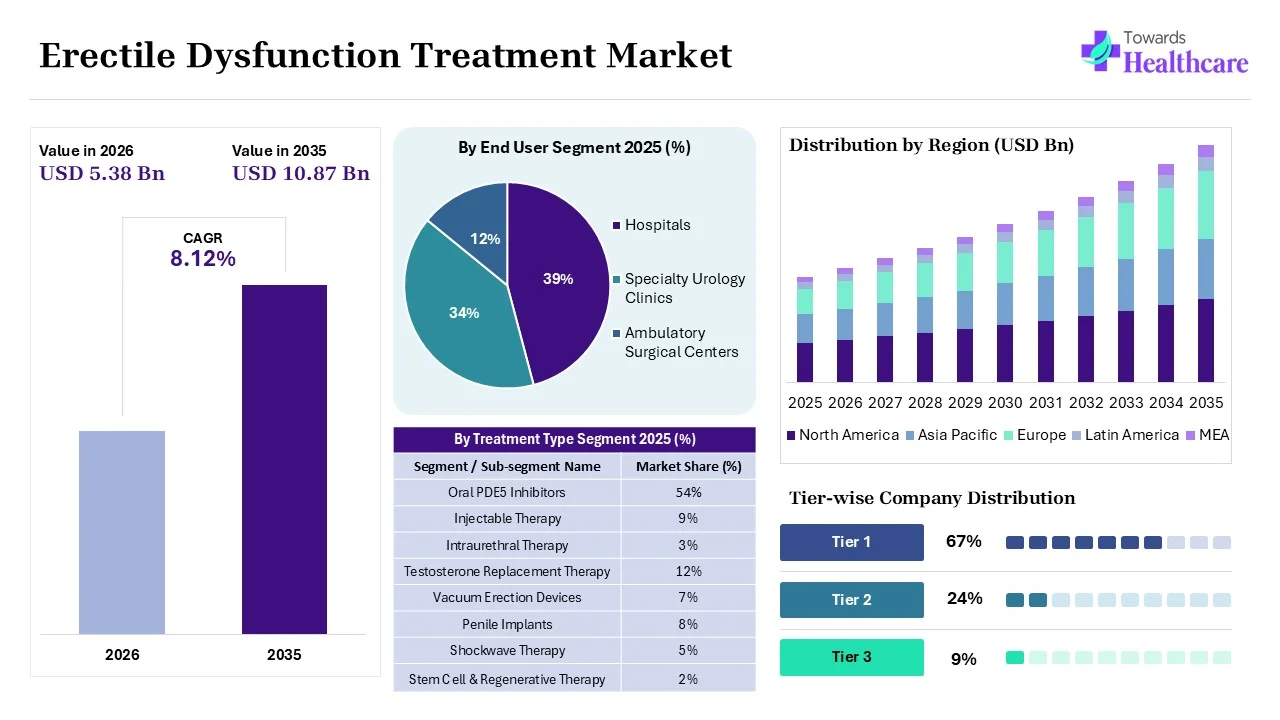
The erectile dysfunction treatment market size accounted for USD 4.98 billion in 2025 and is predicted to increase from USD 5.38 billion in 2026 to approximately USD 10.87 billion by 2035, expanding at a CAGR of 8.12% from 2026 to 2035. Increasing geriatric population, growing prevalence of vascular co-morbidities, rising advanced treatment adoption, increasing health awareness, and expanding telemedicine platforms are promoting the market growth.
Erectile dysfunction treatment refers to the medications, medical devices, and surgical procedures used to help men maintain and achieve an erection sufficient for sexual activity and address the underlying causes of erectile dysfunction. These treatments help in improving blood flow to the penis, restoring erectile function, and addressing the underlying causes of erectile dysfunction. They also help in improving sexual performance and enhancing the quality of life.
The graph represents a comparison between the U.S. men aged from 29 to 60 diagnosed with or received treatment for erectile dysfunction (ED). It indicates that there will be a rise in ED cases, which will drive the demand for effective treatment options. This, in turn, will increase the adoption of various erectile dysfunction treatments, which will ultimately promote market growth.
By treatment type, the oral PDE5 inhibitors segment led the erectile dysfunction treatment market with a 54% share in 2025, as it was considered the first-line treatment option. Its non-invasive approach and convenient oral administration also increased its use. Availability of generic versions also increased their adoption rates.
By etiology type, the vasculogenic erectile dysfunction segment accounted for the highest revenue share of 49% of the erectile dysfunction treatment market in 2025, as it is the most common underlying cause for erectile dysfunction. The growth in cardiovascular diseases, obesity, and diabetes has also increased their incidence. A rise in lifestyle changes has also increased their prevalence and the demand for effective treatment options.
By route of administration type, the oral segment held a major revenue share of 57% of the erectile dysfunction treatment market in 2025, due to its enhanced convenience and easy administration. Their non-invasive approach and quick onset of action also increased their use. The presence of multiple oral formulations also increased their adoption rates.
By distribution channel type, the retail pharmacies segment contributed the biggest revenue share of 42% of the erectile dysfunction treatment market in 2025, driven by their widespread availability. An established distribution network also increased its use. Enhanced access to prescription medication also increased their use.
By end user, the hospitals segment held the largest revenue share of 39% of the erectile dysfunction treatment market in 2025, due to the presence of men’s health services. The presence of advanced treatment options and skilled personnel also increased their use. Access to multidisciplinary care also increased their use.
North America held the major revenue share of 38% in the global erectile dysfunction treatment market in 2025. This leading regional position was primarily driven by high healthcare spending, advanced medical infrastructure, and widespread consumer awareness regarding available clinical therapies. Consequently, major pharmaceutical players continue to focus heavily on this mature territory to sustain their primary revenue streams.
Meanwhile, the developing Asia Pacific region successfully secured a highly notable 24% total market share during the same period. Fueled by expanding medical insurance coverage and rising personal disposable incomes, this regional sector is now projected to expand at the fastest compound annual growth rate of 10.20% through the forecast timeframe, representing the most dynamic commercial expansion acceleration seen globally.
Viatris Inc. dominated the market with its Tadalafil and Sildenafil Citrate products, where Pfizer Inc. was its closest contender, which provided Viagra. Eli Lilly and Company also sustained its position by offering Cialis, while Futura Medical plc also contributed to the market growth with its Eroxon.
By Treatment Type
By Etiology
By Route of Administration
By Distribution Channel
By End User
By Region


