


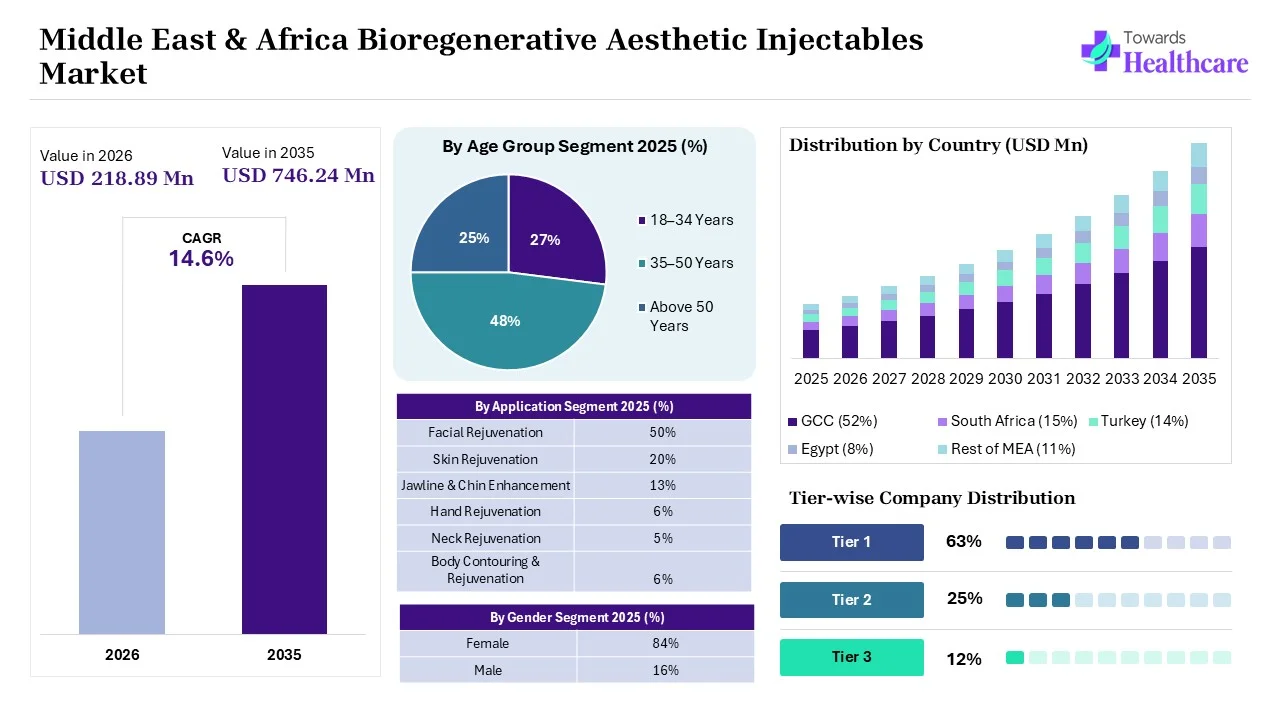
The Middle East & Africa bioregenerative aesthetic injectables market size was valued at US$ 191 million in 2025 and is projected to grow to 218.89 million in 2026. Forecasts suggest it will reach approximately US$ 746.24 million by 2035, registering a CAGR of 14.6% during the period. Growing demand for natural-looking skin, high disposable income, increasing beauty trends, expanding medical tourism, growing demand for personalized solutions, increasing collaborations, and expanding technological advancements are promoting the market growth.
The Middle East & Africa bioregenerative aesthetic injectables are minimally invasive injectables, promoting natural tissue regeneration by stimulating collagen and elastin production to improve skin quality. They are used for facial rejuvenation, volume restoration, neck rejuvenation, and hand rejuvenation. It also helps in scar management, skin tightening, facial contouring, and skin quality enhancement.
By product type, the PLLA injectables segment accounted for the highest revenue share of 37% of the Middle East & Africa bioregenerative aesthetic injectables market in 2025, due to its collagen stimulation properties. Their long-lasting and natural results also increase their use. Their enhanced safety and efficacy also increased their use for various aesthetic applications.
By application type, the facial rejuvenation segment held a major revenue share of 50% of the Middle East & Africa bioregenerative aesthetic injectables market in 2025, driven by growth in the demand for anti-aging treatments. A rise in skin health and beauty awareness has also increased the demand for bioregenerative aesthetic injectables. Their minimally invasive approach and enhanced collagen production also increased their use.
By end user, the dermatology clinics segment contributed the biggest revenue share of 38% of the Middle East & Africa bioregenerative aesthetic injectables market in 2025, due to the high volume of cosmetic procedures. The presence of specialized expertise and dermatologists also increased their preference. Personalized treatment solutions and shorter waiting times also attracted the patients.
By gender type, the female segment held the largest revenue share of 84% of the Middle East & Africa bioregenerative aesthetic injectables market in 2025, driven by high demand for skin rejuvenation treatments. Growth in cosmetic procedure awareness also increased the use of bioregenerative aesthetic injectables. Shift towards minimally invasive approaches also increased their adoption.
By age group type, the 35–50 years segment accounted for the highest revenue share of 48% of the Middle East & Africa bioregenerative aesthetic injectables market in 2025, due to high awareness and interest in maintaining a youthful appearance. This increased the use of bioregenerative aesthetic injectables, reducing minimal early ageing signs. Growth in the demand for long-lasting skin treatment has also increased its use.
By distribution channel type, the direct sales segment led the Middle East & Africa bioregenerative aesthetic injectables market with a 61% share in 2025, driven by product authenticity and quality control. Their compliance with the regulatory standards also increased their acceptance rates. Customized pricing and better inventory management also increased their preference.
The Middle East & Africa bioregenerative aesthetic injectables market held a notable share in 2025 and is expected to show significant growth during the forecast period, due to growth in the demand for anti-aging aesthetic treatments. Rising disposable income and social media influence also increase their use. Expanding dermatological clinics, medical tourism, and investments are increasing their innovations, enhancing the market growth.
The United Arab Emirates (UAE) consists of a well-established healthcare sector, which contributes to the increased use of bioregenerative aesthetic injectables. Expanding beauty trends, the geriatric population, and demand for minimally invasive processes are also increasing their use. Expanding medical tourism and government support are also increasing their adoption rates.
The high disposable income in Saudi Arabia is driving the adoption of bioregenerative aesthetic injectables. Expanding cosmetic centres and MedSpas are also increasing their use. Growing investments and awareness are also promoting their adoption rates.
Galderma S.A. registered dominance over the market, with its Sculptra, where Merz Pharma GmbH & Co. KGaA was its closest contender, which offered Radiesse. Allergan Aesthetics (AbbVie Inc.) also sustained its position by providing HArmonyCa, where Sinclair Pharma plc also contributed to the market growth with its Ellanse/Lanluma.
By Product Type
By Application
By End User
By Gender
By Age Group
By Distribution Channel
By Region


