

Pipeline Programs

CGT Companies Tracked

Manufacturing Facilities


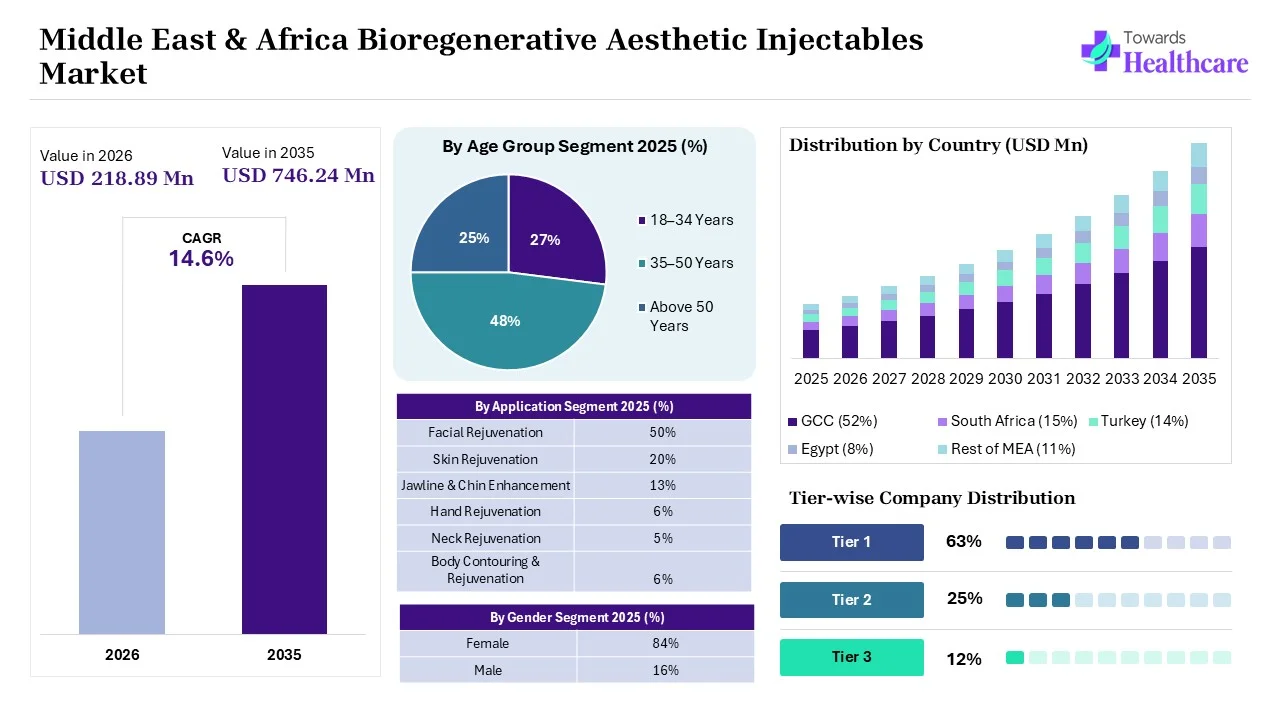
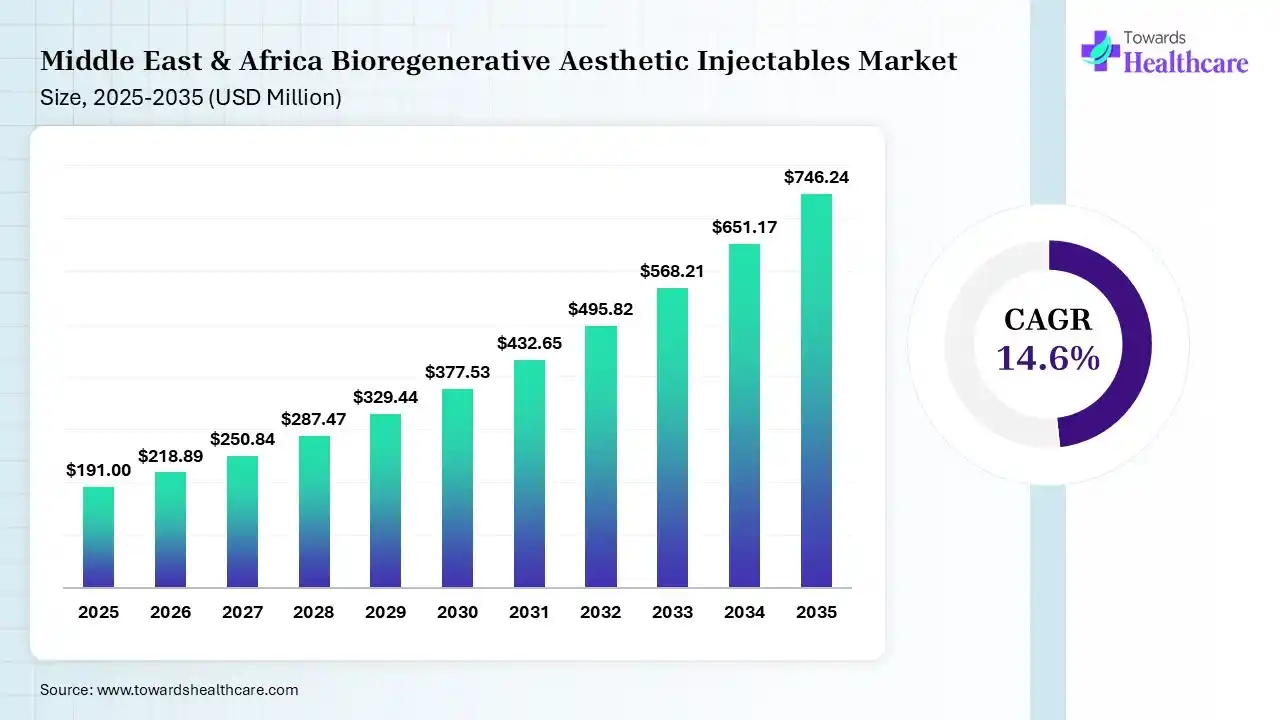
The Middle East & Africa bioregenerative aesthetic injectables market size was valued at US$ 191 million in 2025 and is projected to grow to 218.89 million in 2026. Forecasts suggest it will reach approximately US$ 746.24 million by 2035, registering a CAGR of 14.6% during the period.
The Middle East & Africa bioregenerative aesthetic injectables market comprises injectable treatments designed to stimulate the body’s natural regenerative processes while enhancing aesthetic appearance. These products include biostimulators, regenerative dermal fillers, collagen-inducing injectables, platelet-rich plasma-based therapies, and other advanced formulations used for facial rejuvenation, skin restoration, contour enhancement, and age-related volume correction. Unlike traditional aesthetic injectables that primarily provide temporary cosmetic improvements, bioregenerative solutions promote tissue regeneration, collagen synthesis, and long-term skin quality enhancement. Rising consumer awareness regarding minimally invasive cosmetic procedures, increasing disposable incomes, and growing demand for natural-looking aesthetic outcomes are driving market expansion across the region.
The market is further supported by the expanding medical aesthetics industry, increasing acceptance of cosmetic treatments among both men and women, and the growing presence of specialized dermatology and aesthetic clinics. Technological advancements in injectable formulations and regenerative medicine are also contributing to broader adoption and improved treatment outcomes.
The Middle East & Africa bioregenerative aesthetic injectables market growth is being shaped by increasing preference for preventive aesthetics, personalized treatment approaches, and combination therapies that integrate bioregenerative injectables with other non-surgical procedures. Demand is particularly strong among aging populations seeking long-lasting rejuvenation without extensive surgical intervention. Opportunities are emerging through expanding medical tourism, rising investments in aesthetic healthcare infrastructure, and growing availability of advanced regenerative products across key regional markets. Healthcare providers are increasingly utilizing innovative collagen-stimulating technologies to improve patient satisfaction and treatment durability.
Additionally, social media influence, evolving beauty standards, and greater consumer access to aesthetic information are encouraging procedure adoption. Strategic collaborations among manufacturers, distributors, aesthetic practitioners, and research institutions are accelerating product innovation and market penetration. As awareness of regenerative aesthetics continues to increase and minimally invasive procedures gain popularity, the Middle East & Africa bioregenerative aesthetic injectables market is expected to witness sustained growth, supported by innovation, expanding clinical expertise, and rising consumer demand for natural and long-lasting aesthetic enhancement solutions.
The use of AI in the Middle East & Africa bioregenerative aesthetic injectables market is increasing as it offers early aging sign detection and predicts treatment outcomes. It also helps in personalized treatment planning, treatment monitoring, and collagen regeneration tracking. AI is also used for virtual consultations, maintaining patient records, and accelerating R&D activities.
Expanding Collagen Stimulating Injectables
Growing beauty and wellness trends across the Middle East and Africa are significantly increasing demand for bioregenerative aesthetic injectables that deliver natural-looking and long-lasting results. Consumers are increasingly favoring collagen-stimulating treatments over traditional fillers due to their ability to enhance skin texture, firmness, and elasticity while promoting natural tissue regeneration. Continuous product innovations, rising awareness of preventive aesthetics, and growing preference for minimally invasive procedures are further accelerating the adoption of advanced collagen-inducing injectable solutions.
Blooming Medical Tourism
The rapid expansion of cosmetic surgery centers, dermatology clinics, aesthetic hospitals, and MedSpas across key MEA countries is strengthening the region’s position as a medical tourism destination. Competitive treatment costs, availability of advanced aesthetic technologies, and increasing investments in healthcare infrastructure are attracting international patients seeking high-quality cosmetic procedures. This growing influx of medical tourists is boosting demand for bioregenerative aesthetic injectables, encouraging clinics to expand regenerative treatment offerings and specialized aesthetic services.
| Table | Scope |
| Market Size in 2026 | USD 218.89 Million |
| Projected Market Size in 2035 | USD 746.24 Million |
| CAGR (2026 - 2035) | 14.6% |
| Historical Data | 2020 - 2023 |
| Base Year | 2025 |
| Forecast Period | 2026 - 2035 |
| Measurable Values | USD Millions/Units/Volume |
| Market Segmentation | By Product Type, By Application, By End User, By Gender, By Age Group, By Distribution Channel, By Region |
| Top Key Players | Galderma S.A., Croma-Pharma GmbH, Merz Pharma GmbH & Co. KGaA, Caregen Co., Ltd., Allergan Aesthetics (AbbVie Inc.), PharmaResearch Co., Ltd., Sinclair Pharma plc, Suneva Medical, Inc., IBSA Group, Mastelli s.r.l. |
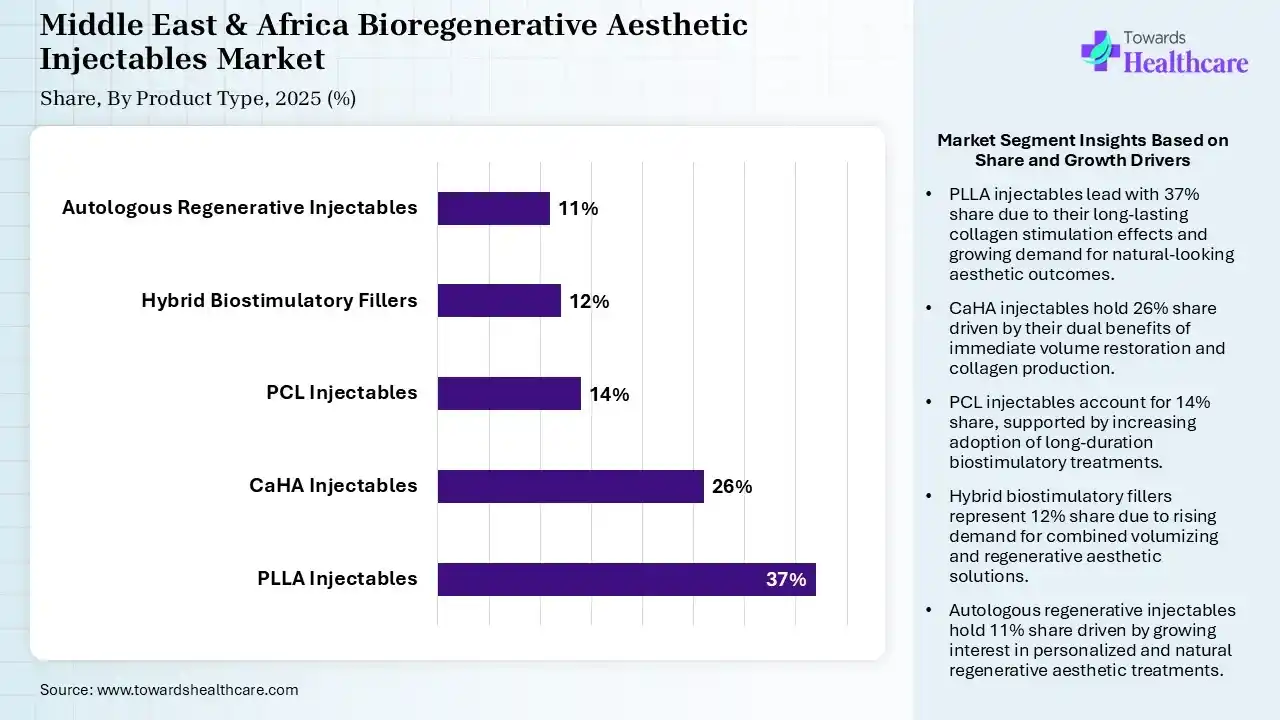
| Segment | Share 2025 (%) |
| PLLA Injectables | 37% |
| CaHA Injectables | 26% |
| PCL Injectables | 14% |
| Hybrid Biostimulatory Fillers | 12% |
| Autologous Regenerative Injectables | 11% |
The PLLA Injectables Segment Dominated the Market With 37% in 2025
The PLLA injectables segment led the Middle East & Africa bioregenerative aesthetic injectables market with a 37% share in 2025, due to strong physician preference for collagen stimulators. Long-lasting outcomes also supported their adoption. The growth in the premium aesthetics market has also increased its demand.
The CaHA injectables segment held the second-largest share of 26% of the market in 2025, driven by immediate correction benefits encouraging their utilization. Facial contouring trends also support their growth. Practitioner confidence continues improving, increasing their use.
The PCL injectables segment held 14% of the Middle East & Africa bioregenerative aesthetic injectables market share in 2025 and is expected to witness the fastest growth with a CAGR of 16.5% during the forecast period, due to long-duration results attracting affluent consumers. Increasing awareness also supports their uptake. Product availability continues expanding, attracting consumers.
The hybrid biostimulatory fillers segment held 12% of the market share in 2025, as the demand for customized outcomes rises. Clinics increasingly adopt advanced injectables, promoting their use. Combination therapies, gaining traction, also drive their demand.
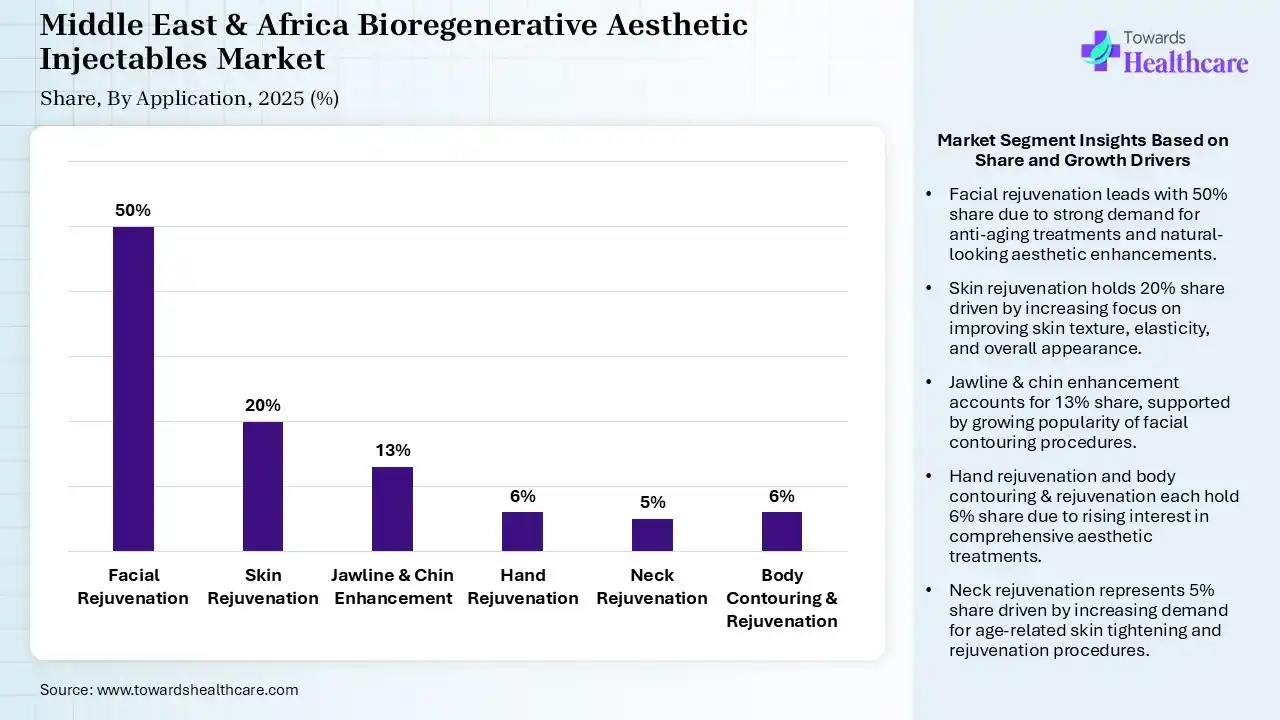
| Segment | Share 2025 (%) |
| Facial Rejuvenation | 50% |
| Skin Rejuvenation | 20% |
| Jawline & Chin Enhancement | 13% |
| Hand Rejuvenation | 6% |
| Neck Rejuvenation | 5% |
| Body Contouring & Rejuvenation | 6% |
The Facial Rejuvenation Segment Dominated the Market With 50% in 2025
The facial rejuvenation segment accounted for the highest revenue share of 50% of the Middle East & Africa bioregenerative aesthetic injectables market in 2025, driven by high demand for anti-aging procedures. Premium facial treatments also remained popular. Strong medical tourism also supported their growth.
The skin rejuvenation segment held the second-largest share of 20% of the market in 2025 and is expected to show the highest growth with a CAGR of 15.8% during the forecast period, due to the growing focus on skin quality improvement. Younger consumers also seek preventive treatments. Advanced regenerative techniques also expand their utilization.
The jawline & chin enhancement segment held 13% of the Middle East & Africa bioregenerative aesthetic injectables market share in 2025, due to facial sculpting trends accelerating their demand. Social media visibility also supports their adoption. Improved treatment outcomes also increase their acceptance.
The body contouring & rejuvenation segment held 6% of the market share in 2025, driven by the luxury aesthetic treatments gaining traction. Expanding body-focused regenerative procedures also attract consumers. Higher disposable income also supports their demand.
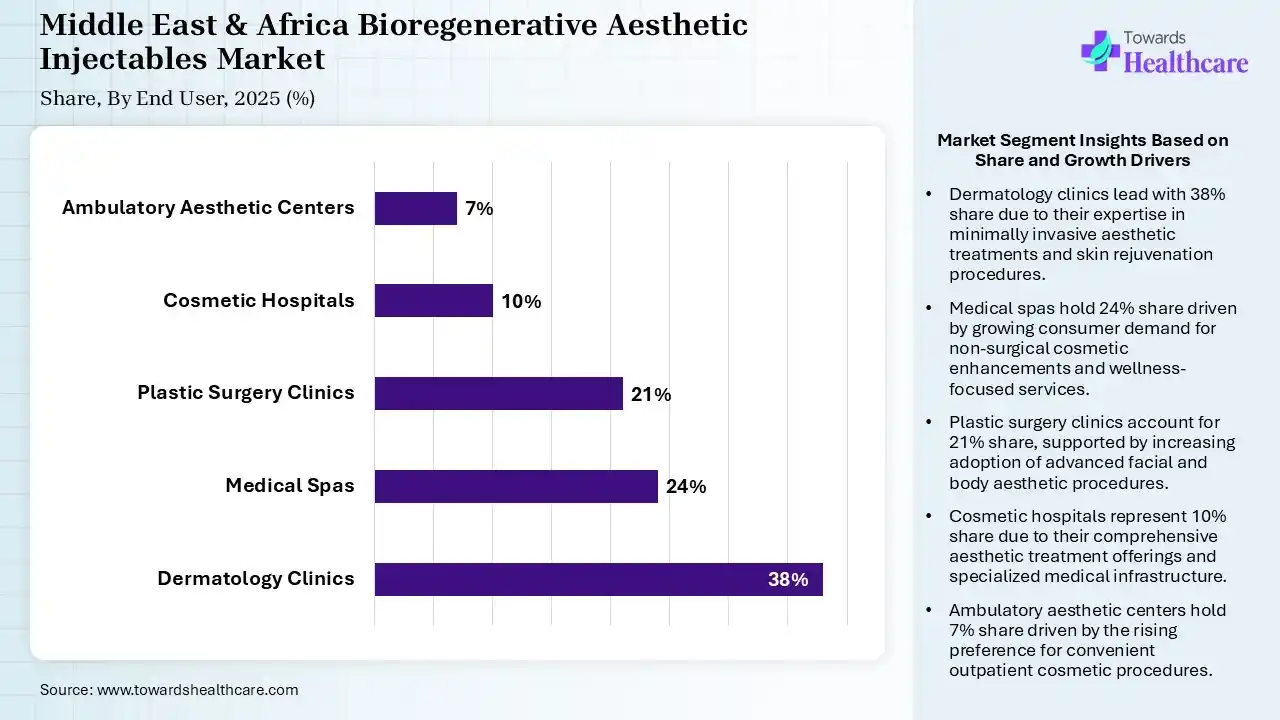
| Segment | Share 2025 (%) |
| Dermatology Clinics | 38% |
| Medical Spas | 24% |
| Plastic Surgery Clinics | 21% |
| Cosmetic Hospitals | 10% |
| Ambulatory Aesthetic Centers | 7% |
The Dermatology Clinics Segment Dominated the Market With 38% in 2025
The dermatology clinics segment held a major revenue share of 38% of the Middle East & Africa bioregenerative aesthetic injectables market in 2025, due to large aesthetic patient volumes. Specialist expertise also supported their adoption. Premium treatment offerings also attracted the consumers.
The medical spas segment held the second-largest share of 24% of the market in 2025 and is expected to expand rapidly with a CAGR of 16.1% during the forecast period, driven by increasing wellness and aesthetics convergence. Premium MedSpa expansion also supports their growth. Consumer preference for convenience also increases their use.
The plastic surgery clinics segment held 21% of the Middle East & Africa bioregenerative aesthetic injectables market share in 2025, as the combination procedure demand remains strong. Experienced practitioners also support their utilization. High-income consumers also support spending on these clinics.
The cosmetic hospitals segment held 10% of the market share in 2025, due to rising investment in aesthetic facilities. Comprehensive treatment options also attract patients. Medical tourism also supports their volumes.
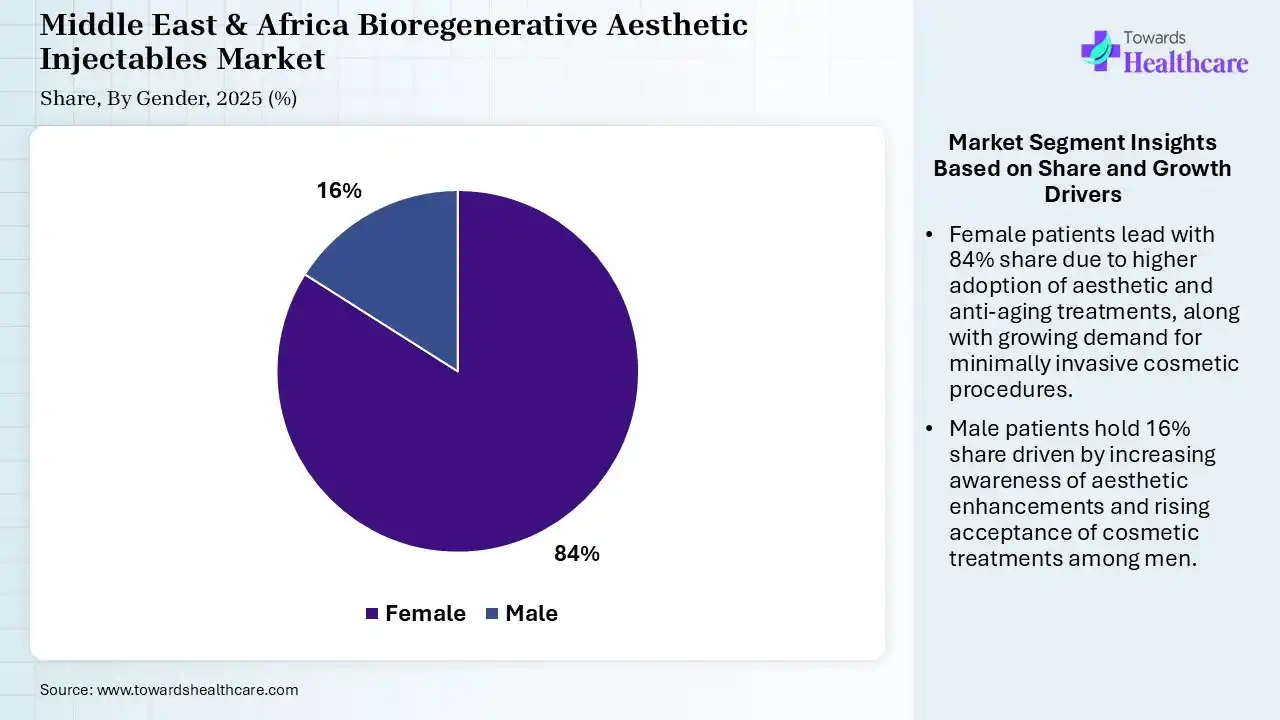
| Segment | Share 2025 (%) |
| Female | 84% |
| Male | 16% |
The Female Segment Dominated the Market With 84% in 2025
The female segment contributed the biggest revenue share of 84% of the Middle East & Africa bioregenerative aesthetic injectables market in 2025, as women accounted for the majority of aesthetic spending. Strong anti-aging demand also contributed to their growth. High treatment frequency also supported their expansion.
The male segment held the second-largest share of 16% of the market in 2025 and is expected to gain the highest share with a CAGR of 17.40% during the forecast period, driven by rising grooming awareness among men. Increasing acceptance of injectables. Expanding targeted marketing also drives their high adoption.
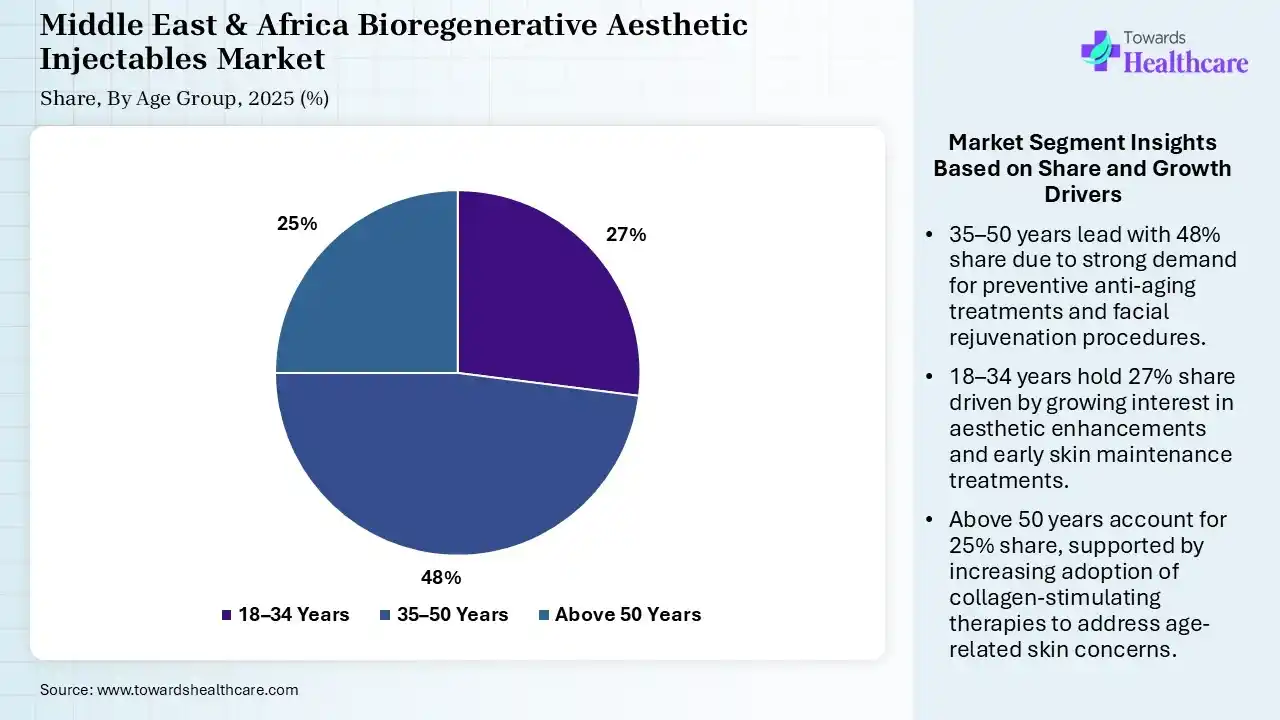
| Segment | Share 2025 (%) |
| 18–34 Years | 27% |
| 35–50 Years | 48% |
| Above 50 Years | 25% |
The 35–50 Years Segment Dominated the Market With 48% in 2025
The 35–50 years segment held the largest revenue share of 48% of the Middle East & Africa bioregenerative aesthetic injectables market in 2025, as they were the core consumer group for rejuvenation treatments. Strong purchasing power also supported their spending. The rise in preference for minimally invasive procedures also increased their expansion.
The 18–34 years segment held the second-largest share of 27% of the market in 2025 and is expected to grow with the fastest CAGR of 16.2% during the forecast period, due to preventive aesthetics gaining popularity. Social media also influences treatment demand. Growing disposable income also supports procedures.
The above-50-year segment held 25% of the Middle East & Africa bioregenerative aesthetic injectables market share in 2025, as the aging population expands the treatment pool. Long-lasting regenerative solutions also attract patients. Increasing awareness also supports their utilization.
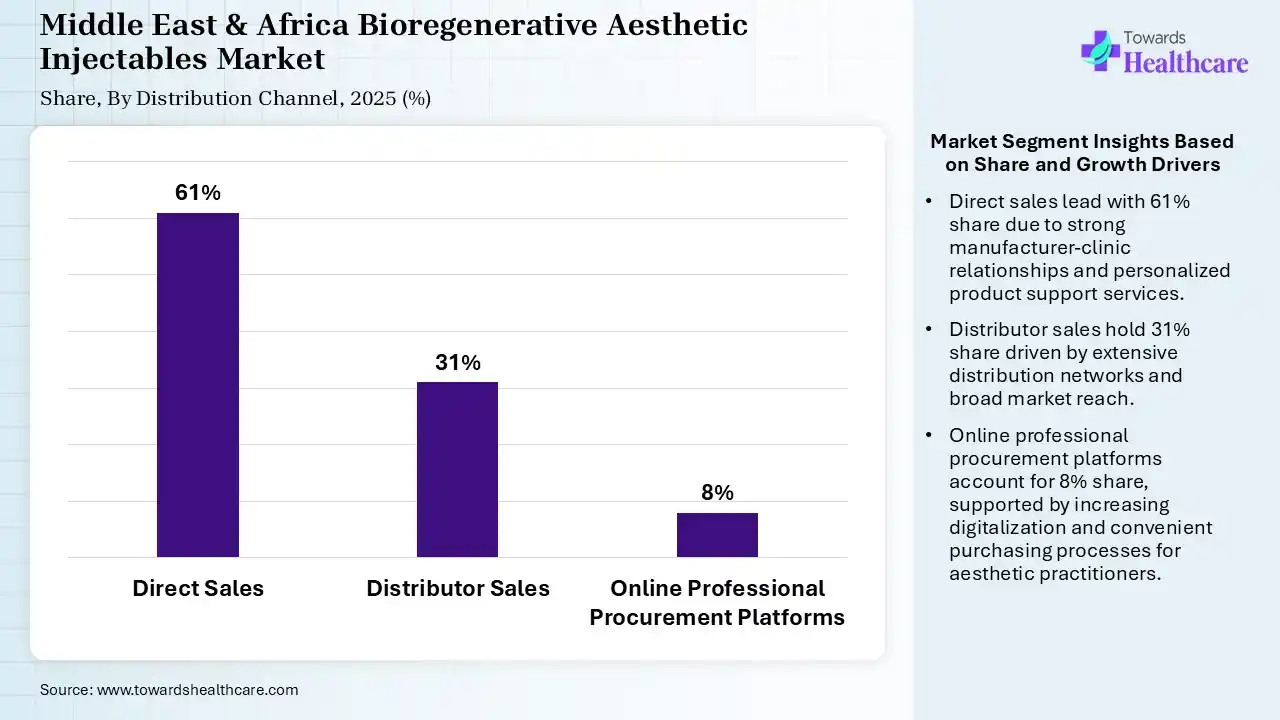
| Segment | Share 2025 (%) |
| Direct Sales | 61% |
| Distributor Sales | 31% |
| Online Professional Procurement Platforms | 8% |
The Direct Sales Segment Dominated the Market With 61% in 2025
The direct sales segment accounted for the highest revenue share of 61% of the Middle East & Africa bioregenerative aesthetic injectables market in 2025, due to strong manufacturer-clinic relationships. Product education programs also supported their adoption. Reliable supply chains also improved their utilization.
The distributor sales segment held the second-largest share of 31% of the market in 2025, driven by regional coverage, which supports accessibility. Distributor networks also improve market penetration. Local expertise also drives sales growth.
The online professional procurement platforms segment held 8% of the Middle East & Africa bioregenerative aesthetic injectables market share in 2025 and is expected to show the highest growth with a CAGR of 17.2% during the forecast period, due to increasing digital procurement adoption. Increasing clinics seeking operational efficiency also drive their use. Online platforms also improve purchasing convenience.
The Middle East & Africa bioregenerative aesthetic injectables market is expected to show lucrative growth during the forecast period, due to increasing beauty consciousness and rising demand for minimally invasive cosmetic procedures. The increasing geriatric population and cosmetic companies are also increasing their use. Expanding medical tourism is also contributing to the market growth.
GCC Market Trends
The GCC dominated the Middle East & Africa bioregenerative aesthetic injectables market with a 52% share in 2025, due to high disposable incomes, which supported aesthetic spending. Luxury treatment demand has also increased its adoption. Expansion in medical tourism also contributed to their significant growth.
Turkey Market Trends
Turkey held a 14% share of the Middle East & Africa bioregenerative aesthetic injectables market in 2025 and is expected to grow at the fastest CAGR of 15.8% during the forecast period, driven by a major medical tourism destination. Competitive treatment pricing is also attracting patients. Expanding cosmetic procedure volumes also support their growth.
R&D
Clinical Trials and Regulatory Approvals
The Digital Treatment Tracker
| Companies | Headquarters | Bioregenerative Aesthetic Injectables in MEA |
| Galderma S.A. | Zug, Switzerland | Sculptra |
| Croma-Pharma GmbH | Leobendorf, Austria | PhilArt |
| Merz Pharma GmbH & Co. KGaA | Frankfurt, Germany | Radiesse |
| Caregen Co., Ltd. | Anyang, South Korea | Prostrolane |
| Allergan Aesthetics (AbbVie Inc.) | North Chicago, U.S. | HArmonyCa |
| PharmaResearch Co., Ltd. | Seongnam, South Korea | Rejuran |
| Sinclair Pharma plc | London, UK | Ellanse/Lanluma |
| Suneva Medical, Inc. | San Diego, U.S. | Bellafill |
| IBSA Group | Lugano, Switzerland | Profhilo |
| Mastelli s.r.l. | Sanremo, Italy | Plinest/Newest |
In September 2025, “Our presence at AMWC Dubai reflects Galderma’s commitment to being a true partner to the medical aesthetics community with the broadest Injectable Aesthetics portfolio, globally scaled commercial presence and leading training activities and services. Through events like these, we can engage directly with practitioners to stay closely attuned to their evolving needs. These learnings, combined with our innovations rooted in science, can help empower practitioners to deliver aesthetic outcomes that truly align with their patients’ needs.” Said FLEMMING ØRNSKOV, M.D., MPH, Chief Executive Officer, Galderma.
By Product Type
By Application
By End User
By Gender
By Age Group
By Distribution Channel
By Region










Principal Consultant
Rohan Patil is a seasoned market research professional with over 5+ years of focused experience in the healthcare sector, bringing deep domain expertise, strategic foresight, and analytical precision to every project he undertakes.
Learn more about Rohan Patil

Reviewed By
Aditi Shivarkar is a seasoned professional with over 14 years of experience in healthcare market research. As a content reviewer, Aditi ensures the quality and accuracy of all market insights and data presented by the research team.
Learn more about Aditi Shivarkar









