


The U.S. acute care telemedicine market size was estimated at USD 13.17 billion in 2025 and is predicted to increase from USD 15.18 billion in 2026 to approximately USD 54.54 billion by 2035, expanding at a CAGR of 15.27% from 2026 to 2035. Growing critical healthcare clinician shortages, urgent need to reduce operational hospital costs, increasing adoption of advanced electronic health record (EHR) integrations, growing chronic disease burden, expanding healthcare digitalization, increasing AI integration, and growing funding are promoting the market growth.
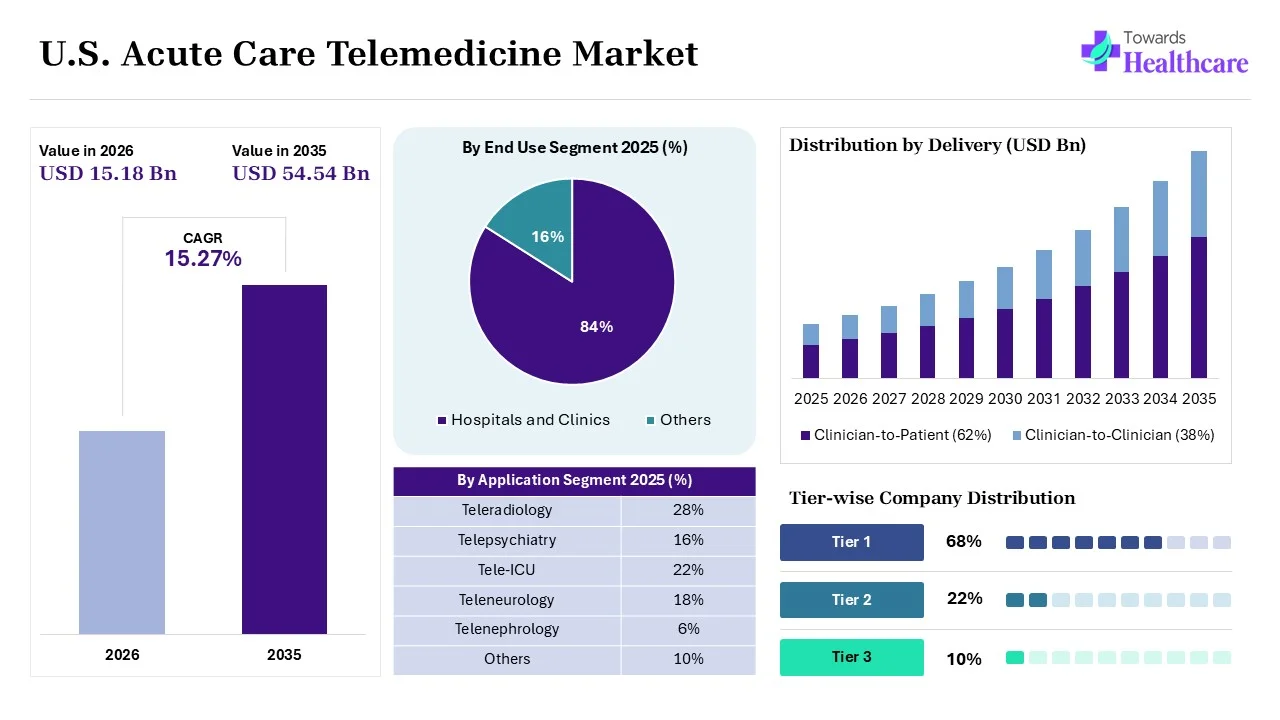
The U.S. acute care telemedicine refers to the digital health and telecommunication technologies used to offer urgent and serious healthcare services to patients across the U.S. These platforms help healthcare professionals to diagnose, monitor, and treat patients remotely. They offer remote services such as image interpretation, remote patient monitoring, remote disease management, and real-time consultation services.
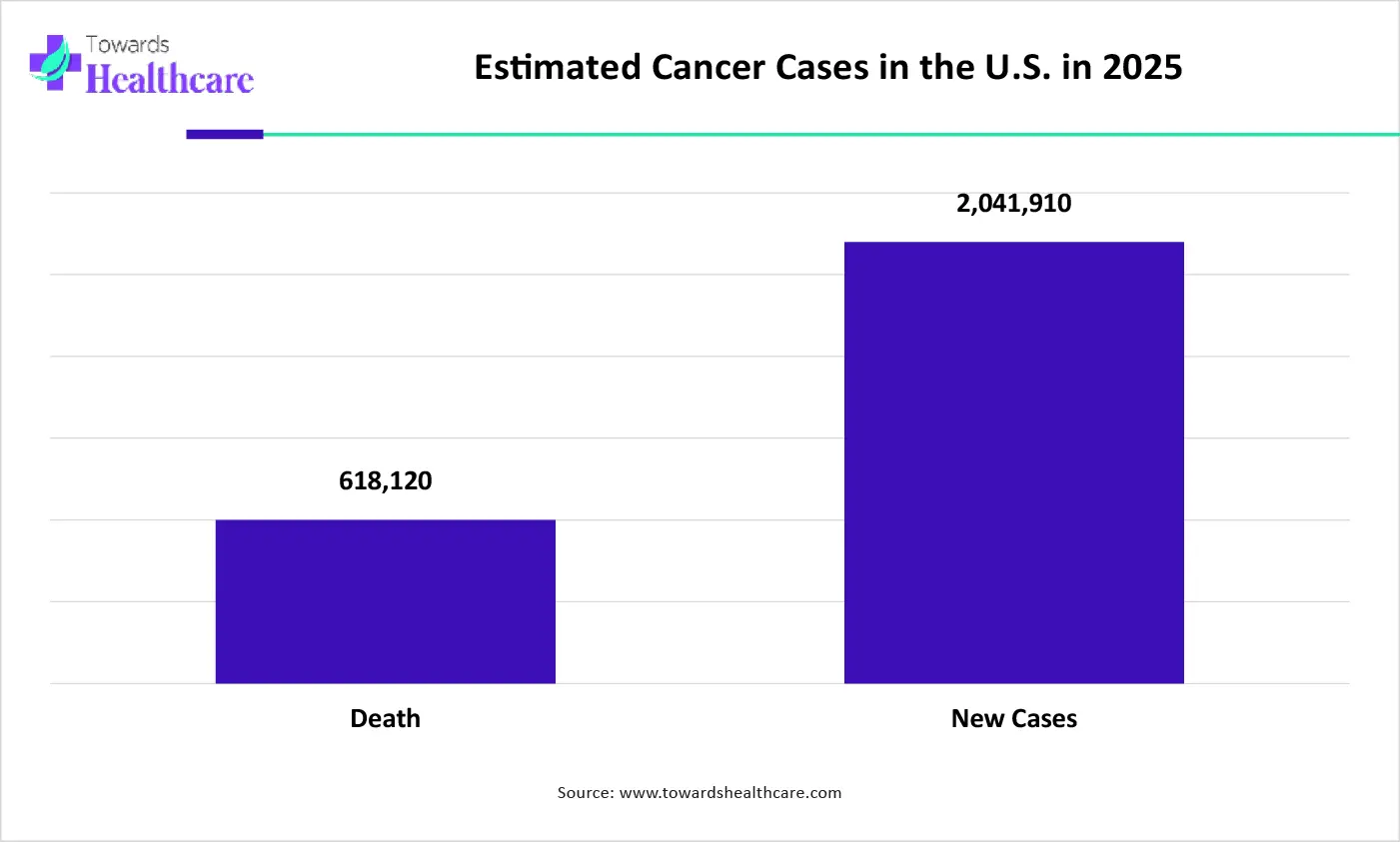
The graph represents the estimated number of U.S. cancer deaths and new cases in the year 2026. It indicates that there will be a growth in the cancer burden in the U.S., which will increase the demand for accurate diagnosis, monitoring, and effective treatment options. This, in turn, will drive the adoption of various acute care telemedicine platforms for the diagnosis, monitoring, and treatment of multiple cancer types, which will ultimately promote market growth.
By delivery type, the clinician-to-patient segment accounted for the highest revenue share of 62% of the U.S. acute care telemedicine market in 2025, driven by their immediate and direct access to healthcare professionals. Their faster diagnostics and continuous monitoring also increased their use for at-home consultations. Growth in smart and internet connectivity penetration also increased their adoption rates.
By application type, the teleradiology segment contributed the biggest revenue share of 28% of the U.S. acute care telemedicine market in 2025, due to its rapid interpretation and 24/7 availability. They also offered remote consultation, enhancing access to radiology specialists. Their secure image-sharing technologies also increased their demand.
By end use, the hospitals and clinics segment held a major revenue share of 84% of the U.S. acute care telemedicine market in 2025, driven by high patient volume. The growth in investment and offering 24/7 access to healthcare professionals has increased their adoption of acute care telemedicine platforms. Shift towards remote patient monitoring and specialist consultation also increased their use.
The U.S. acute care telemedicine market held a considerable share in 2025 and is expected to show notable growth during the predicted time, due to the presence of advanced healthcare infrastructure and healthcare IT companies. Growing chronic disease and a shortage of healthcare professionals are also increasing the adoption of acute care telemedicine platforms. Expanding reimbursement policies, healthcare investments, and demand for immediate access to acute and emergency services are also enhancing the market growth.
Teladoc Health registered dominance over the market with its Solo platform, where Amwell was its closest competitor, which offered the Amwell Converge platform. Access Telecare also maintained its position by providing Telemed IQ, where Eagle Telemedicine also contributed to the market growth with its Eagle Telemedicine Program.
By Delivery
By Application
By End Use


