


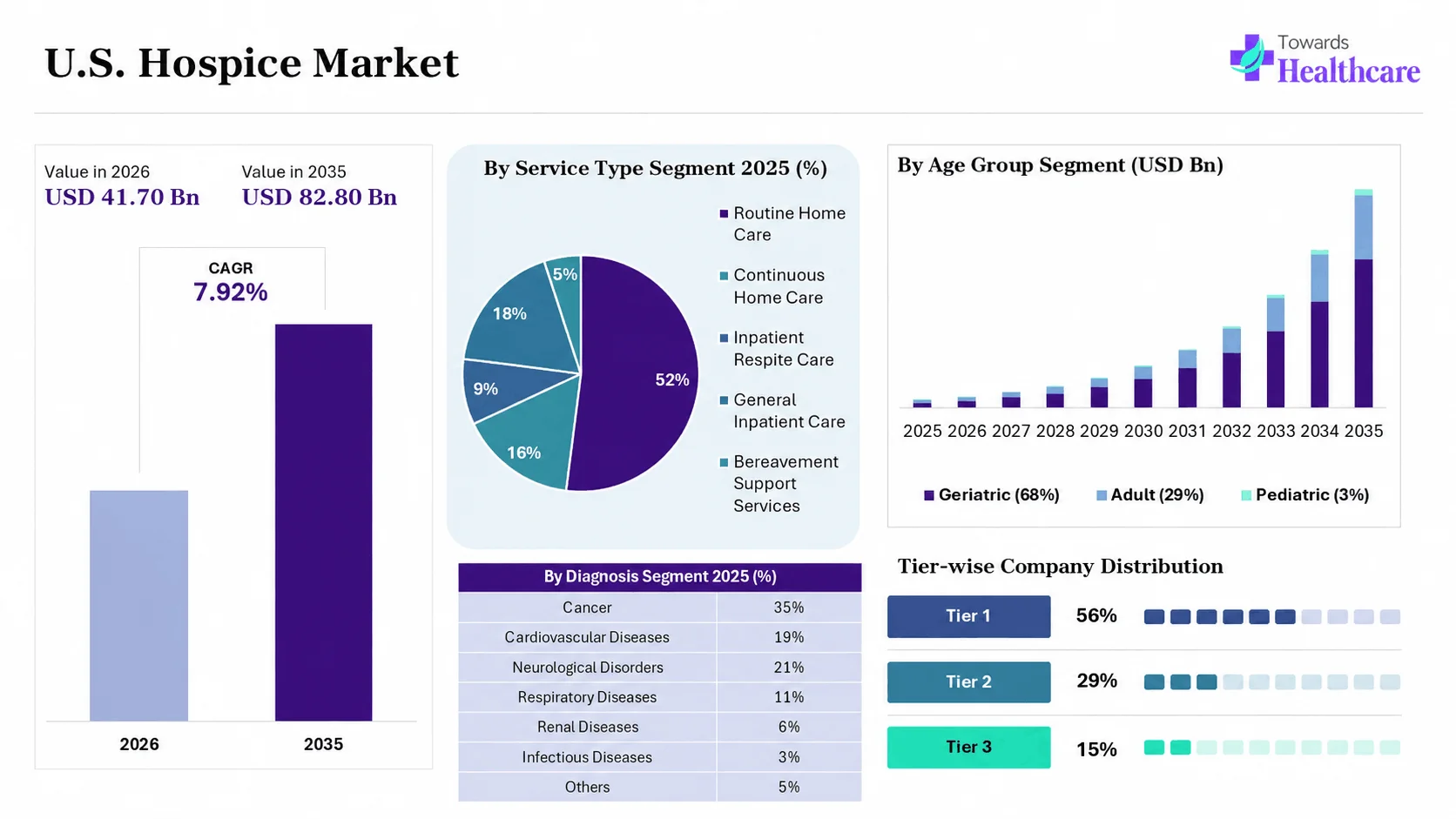
The U.S. hospice market size was estimated at USD 38.64 billion in 2025 and is predicted to increase from USD 41.7 billion in 2026 to approximately USD 82.8 billion by 2035, expanding at a CAGR of 7.92% from 2026 to 2035. The market is growing steadily due to the rising elderly population, increasing burden of chronic and terminal illness, and greater demand for compassionate end-of-life care. Growth is further supported by expanding the home-based hospice services, favorable reimbursement policies, and increasing awareness of hospice care benefits.
Hospice is a secularized end-of-life care that focuses on providing comfort and emotional support to patients with terminal illness, aiming to improve their quality of life rather than cure the disease. The U.S. hospice market is growing as healthcare systems increasingly prioritize comfort, dignity, and personalized support for individuals with life-limiting conditions. Advancements in palliative care, wider availability of hospice programs, and stronger care coordination are improving service accessibility. In addition, increasing caregivers’ support needs and the growing preference for receiving care in familiar settings are contributing to the continued growth of the market.
The U.S. hospice market is expected to grow due to rising demand for home-based care, integration of digital health tools like telehealth and AI, and increasing focus on personalized end-of-life services. Expanding chronic disease burden and an aging population are further creating strong long-term opportunities for hospice providers.
| Parameter | Value |
| Annual hospice users (Medicare beneficiaries) | 1.7-1.8 billion |
| Total hospice length in the U.S. | 5800 agencies |
| Average hospice length of stay | 90-100 days |
| Share of patients aged 65+ | 85-90% |
| Cost saving vs Hospital care | 30-40% |
| Kate hospice referrals (last 30 days of life) | 25-30% of patients |
| Home-based hospice care utilization | 65-70% |
The U.S. hospice market is strongly influenced by an aging population and high demand for home-based care services. Most patients are elderly and benefit from cost-effective hospice care compared to hospital treatment. However, a considerable number of late referrals highlight the need for earlier hospice adoption to improve quality of life and care outcomes.
The routine home care segment held a dominant share of 52% in 2025 due to strong patient preference for receiving end-of-life care in familier surrounding. It offers continuous comfort, emotional support, and cost-effective services compared to institutional care. Expanding home healthcare infrastructure, availability of skilled caregivers, and favorable reimbursement policies further strengthened adoption across hospice providers nationwide.
The cancer segment led the market with a share of 35% in 2025 due to its high prevalence and clearly defined disease progression, which often requires intensive pain management and end-of-life support. Advanced-stage cancer patients frequently need comprehensive symptom control, emotional care, and family support. Greater awareness of hospice benefits among oncology patients and early referrals from hospitals strengthened the segment’s dominant position.
The home-based hospice care segment led the U.S. hospice market with a share of 58% in 2025 and is expected to grow at the fastest CAGR of 8.40% in the market during the forecast period, due to strong patient preference for receiving end-of-life care in familiar and comfortable surroundings. It enable personalize care, family involvement, and better emotional support while reducing hospital visits and costs. Expansion of home healthcare services, availability of skilled caregivers, and supportive reimbursement systems further strengthened its dominant position in the market.
The for-profit hospice providers segment held a dominant share of 68% in 2025 and is expected to grow at the fastest CAGR of 8.40% in the market during the forecast period due to its strong financial resources, wide service networks, and ability to scale operations quickly. These providers focus on expanding home-based hospice services, improving operational efficiency, and adopting advanced care technologies. Strategic acquisitions, partnerships, and strong reimbursement-driven models further enhance their market reach and strengthen their leadership position in the industry.
The geriatric segment dominated the U.S. hospice market with a share of 68% in 2025 and is expected to grow at the fastest CAGR of 8.50% in the market during the forecast period due to the high prevalence of chronic, degenerative, and life-limiting diseases among elderly individuals. Aging patients often require continuous symptoms managements, palliative support, and end-of-life care services. Increasing life expectancy, growing awareness of hospice benefits, and a rapidly expanding senior population further contribute to the strong demand for hospice care within this age group.
The home healthcare agencies segment led the U.S. hospice market with a share of 31% in 2025 and is expected to grow at the fastest CAGR of 8.60% in the market during the forecast period due to strong patient preference for receiving end-of-life care in home settings. These agencies provide personalized medical support, pain management, and caregiver assistance while ensuring comfort and familiarity. Rising demand for cost-effective care, expanding home healthcare infrastructure, and favorable reimbursement policies further strengthened their dominant role in delivering hospice across the country.
The Medicare segment dominated the market with a share of 72% in 2025 due to its comprehensive coverage of end-of-life care services for eligible patients, especially the elderly population. It significantly reduces out-of-pocket expenses, making hospice care more accessible and affordable. Strong federal reimbursement policies, increasing enrollment in Medicare programs, and the rising aging population further strengthen its leading position as the primary payment source for hospice services.
Leading companies in the market include VITAS Healthcare, Amedisys, Gentiva, LHC Group, Inc., Brookdale Senior Living, Inc., Crossroads Hospice, and Seasons Hospice & Palliative Care. These players are strengthening market growth through expanded home-based hospice care services, integrated palliative care programs, and advanced patient support solutions. Continuous investments in telehealth, care coordination technologies, and strategic partnerships with hospitals and long-term care facilities are further enhancing their leadership in delivering high-quality end-of-life care across the United States.
By Service Type
By Diagnosis
By Care Setting
By Ownership
By Age Group
By End User
By Payment Source


