The growth in chronic diseases, increasing healthcare investments, rising demand for targeted and effective therapies, growing R&D activities, technological advancements, and expanding application of multispecific antibodies are promoting the market growth.
Market Overview: A Snapshot of the U.S. Multispecific Antibodies Market
The multispecific antibodies are advanced antibodies developed to target multiple antigens or epitopes simultaneously to offer enhanced therapeutic effect. They offer targeted drug delivery, transportation of drugs across the blood-brain barrier, disease pathway analysis, multiplex detection, and disease modelling. They also help in targeting tumor cells, multiple inflammatory pathways, pathogens, and viral strains, and enhance the immune system, promoting their use in the development of precision therapy and cell therapies.
Global Market Growth
The global multispecific antibodies market size was estimated at USD 7.56 billion in 2025 and is predicted to increase from USD 8.66 billion in 2026 to approximately USD 29.28 billion by 2035, expanding at a CAGR of 14.5% from 2026 to 2035.
Forecasting Innovation: Exploring Future Growth Opportunities
- Growing applications of the multispecific antibodies are increasing their adoption rates for the treatment of various diseases.
- Increasing demand for personalized therapies is also increasing their innovations.
- Expanding clinical pipeline and drug discoveries are also creating new opportunities for their innovations.
- Increasing advancements in next-generation antibody formats, combination therapies, and delivery systems are also increasing their advancements.
- Growing collaborations and technological advancements are also accelerating their innovations.
- Increasing government funding and investments are also promoting the development of new multispecific antibodies.
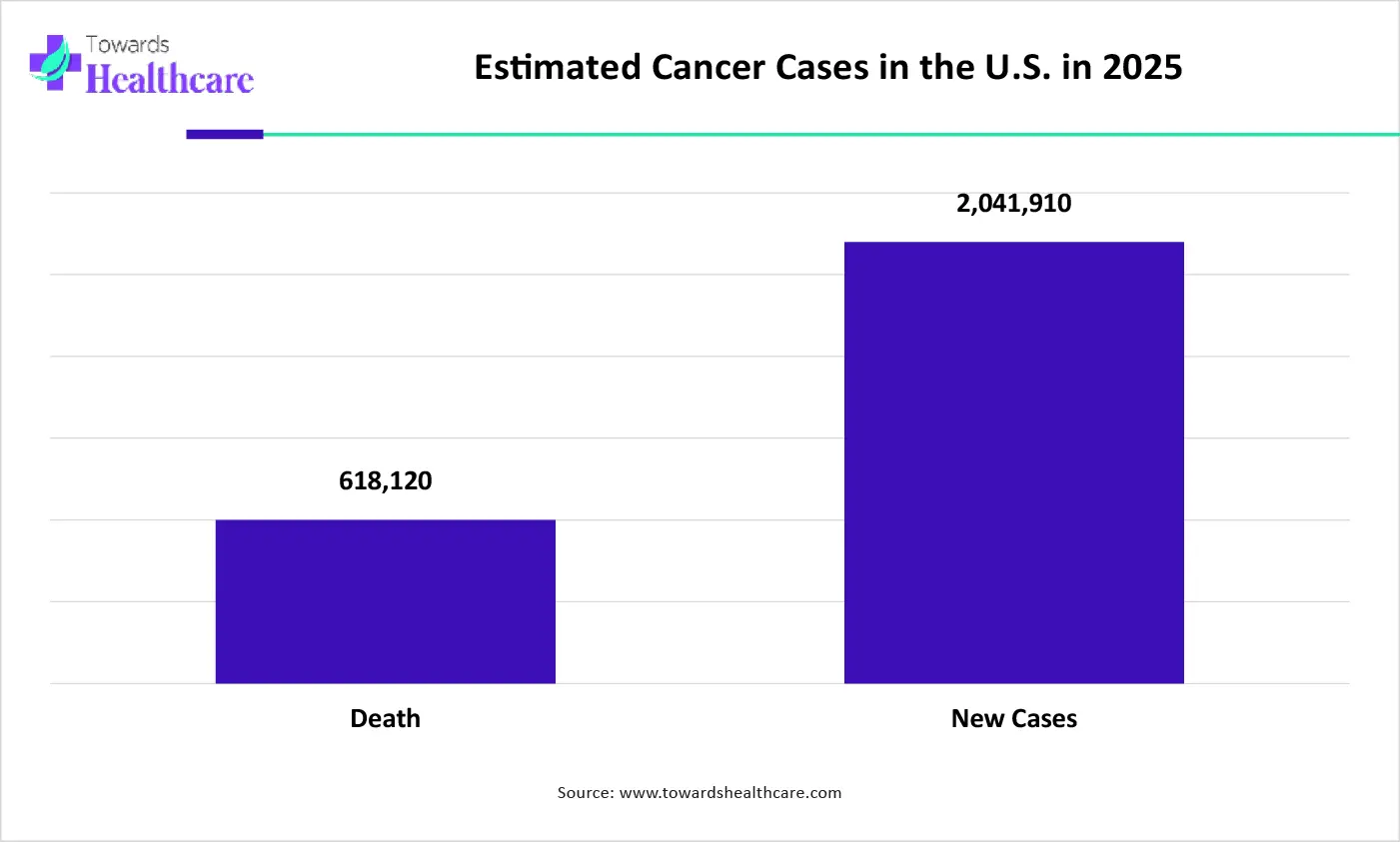
The graph represents the estimated number of cancer cases and deaths in the U.S. for the year 2026. It indicates that there will be a rise in cancer burden, which will drive the demand for effective diagnosis and treatment options. This, in turn, will increase the adoption of multispecific antibodies to reduce the growing cancer burden across the U.S., which will ultimately promote the market growth.
Market Segmentation Overview
- By therapy type, the bispecific antibodies segment accounted for the highest revenue share of 60% of the U.S. multispecific antibodies market in 2025, due to their proven efficacy and success rates. Their growth in clinical approvals and strong pipeline has also increased their advancements. Their early manufacturing and enhanced effectiveness in cancer treatment also increased their use.
- By application type, the oncology segment held a major revenue share of 50% of the U.S. multispecific antibodies market in 2025, due to the high cancer burden and unmet needs. This increased the use of multispecific antibodies due to their strong immunotherapy response. Their multiple pathways targeting and low risk of resistance also increased their use.
- By drug class type, the monoclonal antibodies segment contributed the biggest revenue share of 70% of the U.S. multispecific antibodies market in 2025, due to growth in their use for the development of multispecific antibodies, which is driven by their enhanced flexibility. Their enhanced efficiency and safety also encouraged their use. Additionally, their wide range of applications also increased their adoption.
- By delivery mode type, the injectable segment held the largest revenue share of 85% of the U.S. multispecific antibodies market in 2025, driven by their enhanced bioavailability. Their rapid onset of action, protein stability, and controlled dosing also increased their demand. They were also preferred for the administration of multispecific antibodies with large molecular size.
- By end-user, the pharmaceutical companies segment led the U.S. multispecific antibodies market with 50% share in 2025, due to growth in the R&D activities. The presence of drug development and regulatory expertise also accelerated the development of multispecific antibodies. Growth in investments and collaborations also increased their innovations.
Regional Analysis
The U.S. multispecific antibodies market held share in 2025 and is expected to show significant growth in the forecast period, due to the presence of advanced industries, institutes, and the R&D ecosystem. The growth in healthcare investments, funding, collaborations, and easy drug approvals also increased their innovations and adoption. Growing cancer cases, clinical trials, and technological advancements also promoted their adoption and approval rates, which enhanced the market growth.
Innovation Giants: Key Players Shaping the Market
The market was dominated by Johnson & Johnson with its Rybrevant, Talvey, and Tecvayli, where its closest competitor was Amgen, which provided Blincyto and Imdelltra. Pfizer sustained its position by offering Elrexfio, where Regeneron also contributed to the market growth with Ordspono and Linvoseltamab.
Segments Covered in the Report
By Therapy Type
- Bispecific Antibodies
- Monoclonal Bispecific
- Polyclonal Bispecific
- Trispecific Antibodies
- Monoclonal Trispecific
- Polyclonal Trispecific
- Other Multispecific Antibodies
By Application
- Oncology
- Breast Cancer
- Lung Cancer
- Leukemia
- Other Oncology Applications
- Autoimmune Diseases
- Rheumatoid Arthritis
- Multiple Sclerosis
- Lupus
- Infectious Diseases
- Other Therapeutic Areas
By Drug Class
- Monoclonal Antibodies
- Humanized Monoclonal
- Chimeric Monoclonal
- Non-Monoclonal Antibodies
- Polyclonal Antibodies
- Synthetic Multispecific Antibodies
By Delivery Mode
- Injectable
- Oral
- Others (Inhalable, etc.)
By End-User
- Pharmaceutical Companies
- Biotechnology Companies
- Research Institutes
- Hospitals & Clinics




