


Growing chronic neurological disorders, advancements in bioelectronic technology, rise in the demand for non-invasive approaches, increasing geriatric population, and expanding technological advancements are promoting the market growth.
The neuromodulation is a medical technique altering nerve activity with the use of targeted electrical, chemical, and magnetic stimulations. They are used in the treatment and management of neurological, pain-related, and psychiatric disorders. They are used for the treatment and management of chronic pain, neuropathic pain, migraine, Parkinson's disease, epilepsy, spinal cord injuries, OCD, depression, PTSD, gastrointestinal disorders, and Alzheimer's disease.
The global neuromodulation market size was estimated at USD 9.84 billion in 2025 and is predicted to increase from USD 10.91 billion in 2026 to approximately USD 27.69 billion by 2035, expanding at a CAGR of 10.9% from 2026 to 2035.
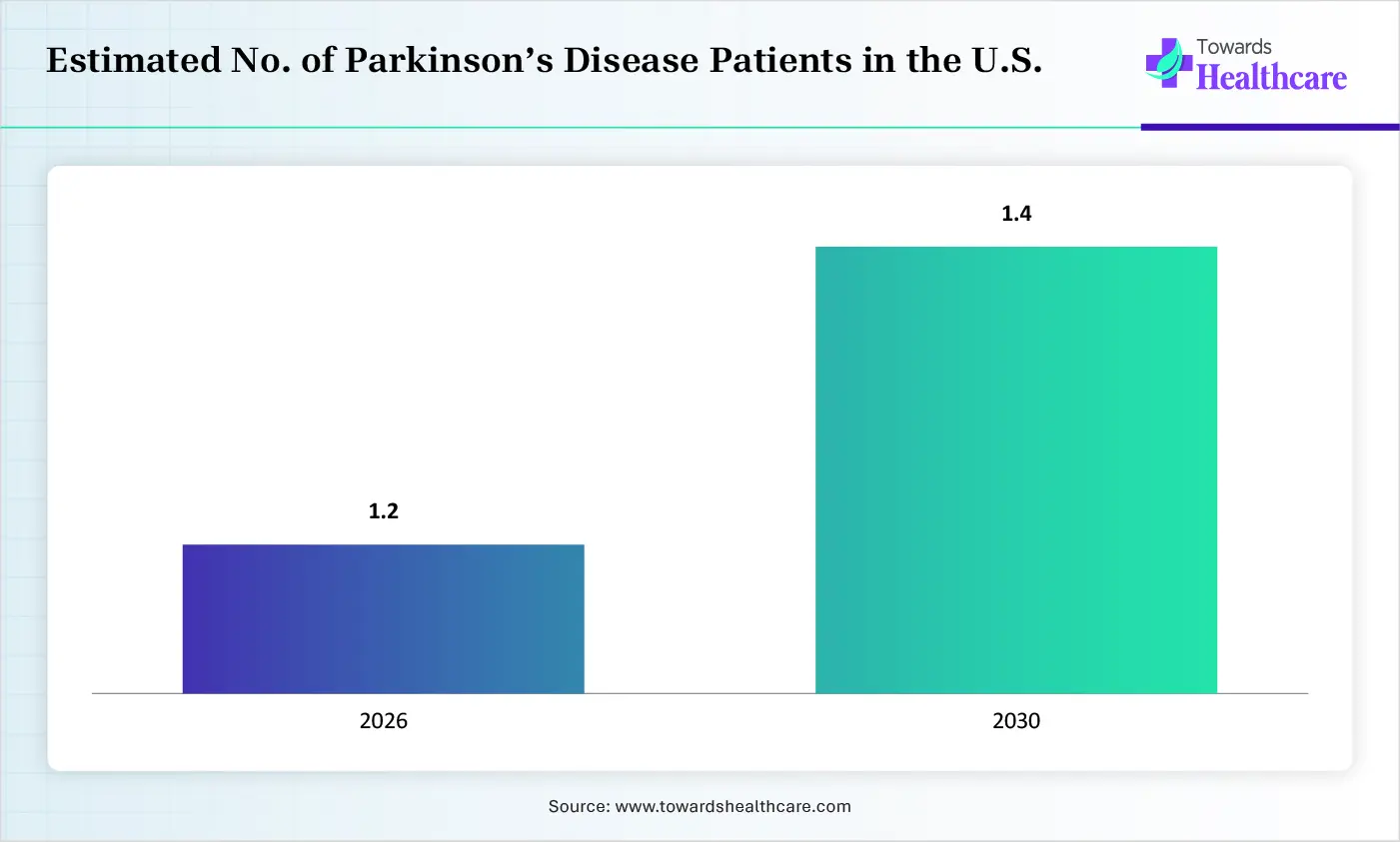
The graph represents a comparison between the Parkinson’s disease patients in the U.S. for the years 2026 and 2030. It indicates that there will be a rise in Parkinson’s disease cases, which will drive the demand for effective treatment and management devices. This, in turn, will increase the adoption of neuromodulation products, which will ultimately promote market growth.
By product type, the internal neuromodulation segment accounted for the highest revenue share of 71% of the U.S. neuromodulation market in 2025, due to its enhanced clinical efficacy. This increased their use for moderate to serve indication, which enhanced the patient outcomes. Their enhanced safety and effectiveness also increased their adoption rates.
By application type, the pain management segment held a major revenue share of 42% of the U.S. neuromodulation market in 2025, driven by the presence of a large patient base. Growth in opioid limitation and reduced response to other drugs also increased the use of neuromodulation solutions. Their strong clinical evidence also increased their use of long-term pain management.
By technology type, the electrical neuromodulation segment contributed the biggest revenue share of 78% of the U.S. neuromodulation market in 2025, due to its proven clinical efficacy and long-term safety. Their wide range of applications also increased their use. Their controllability also increased their adoption rates.
By biomaterial type, the metallic biomaterials segment held the largest revenue share of 56% of the U.S. neuromodulation market in 2025, driven by their enhanced electrical conductivity. Their high biocompatibility and mechanical strengths also increased their adoption rates. Their long-term durability and consistent neural stimulation also increased their use.
By end user, the hospitals segment led the U.S. neuromodulation market with 54% share in 2025, due to growth in the patient volume. The presence of advanced neuromodulation solutions and specialized expertise also increased their use. Reimbursement policies and patient safety monitoring also attracted the patients.
The U.S. neuromodulation market held 31% share and is expected to show lucrative growth during the forecast period, due to growth in Parkinson's disease and depression cases. The presence of advanced healthcare infrastructures, major companies, and a robust regulatory ecosystem also increased their adoption rates. growth in the healthcare sector, health awareness, and R&D activities also increased their innovations, which contributed to the market growth.
Medtronic plc dominated the market with its Percept DBS, Intellis, and Vanta Spinal Cord Stimulation solutions, where Boston Scientific Corporation was its closest competitor, which offered WaveWriter Alpha/WaveWrite Tortuga and Vercise Genus. Abbott Laboratories also maintained its position by providing Eterna, Infinity DBS, and Procliam Plus, where Nevro Corp. also contributed to the market with its HFX iQ and Senza spinal cord stimulators.
By Product Type
By Application
By Technology
By Biomaterial
By End User
By Distribution Channel


