The growing chronic disease burden, increasing demand for regenerative medicines, growing R&D activities, early disease diagnosis, increasing demand for personalized medicines, and technological innovations are promoting the market growth.
The Market Snapshot: Uncovering The U.S. Stem Cell Research Antibodies Growth
The stem cell research antibodies refer to the specialized antibodies developed for the detection, identification, and study of stem cells. These antibodies are used for specific stem cell marker identification, their separation, isolation, differentiation, and monitoring of stem cell development. This drives their use across regenerative medicine development, tissue engineering, drug discovery, disease research, and biomedical research.
Global Market Growth
The global stem cell research antibodies market size was estimated at USD 1.85 billion in 2025 and is predicted to increase from USD 2.03 billion in 2026 to approximately USD 4.71 billion by 2035, expanding at a CAGR of 9.8% from 2026 to 2035
The Next Big Wave: Emerging Market Opportunities
- The growing adoption of regenerative medicines and their expanding innovations are increasing the adoption of stem cell research antibodies.
- Expanding development of next-gen antibody therapies is also increasing their use.
- Growing approvals of the biologics and new cancer therapies are also increasing their use.
- A rise in the demand for personalized medicines is also increasing their adoption rates.
- Growing collaborations and funding are also increasing the adoption and innovations of the stem cell research antibodies.
- Increasing chronic disease burden and technological advancements are also increasing their use and advancements.
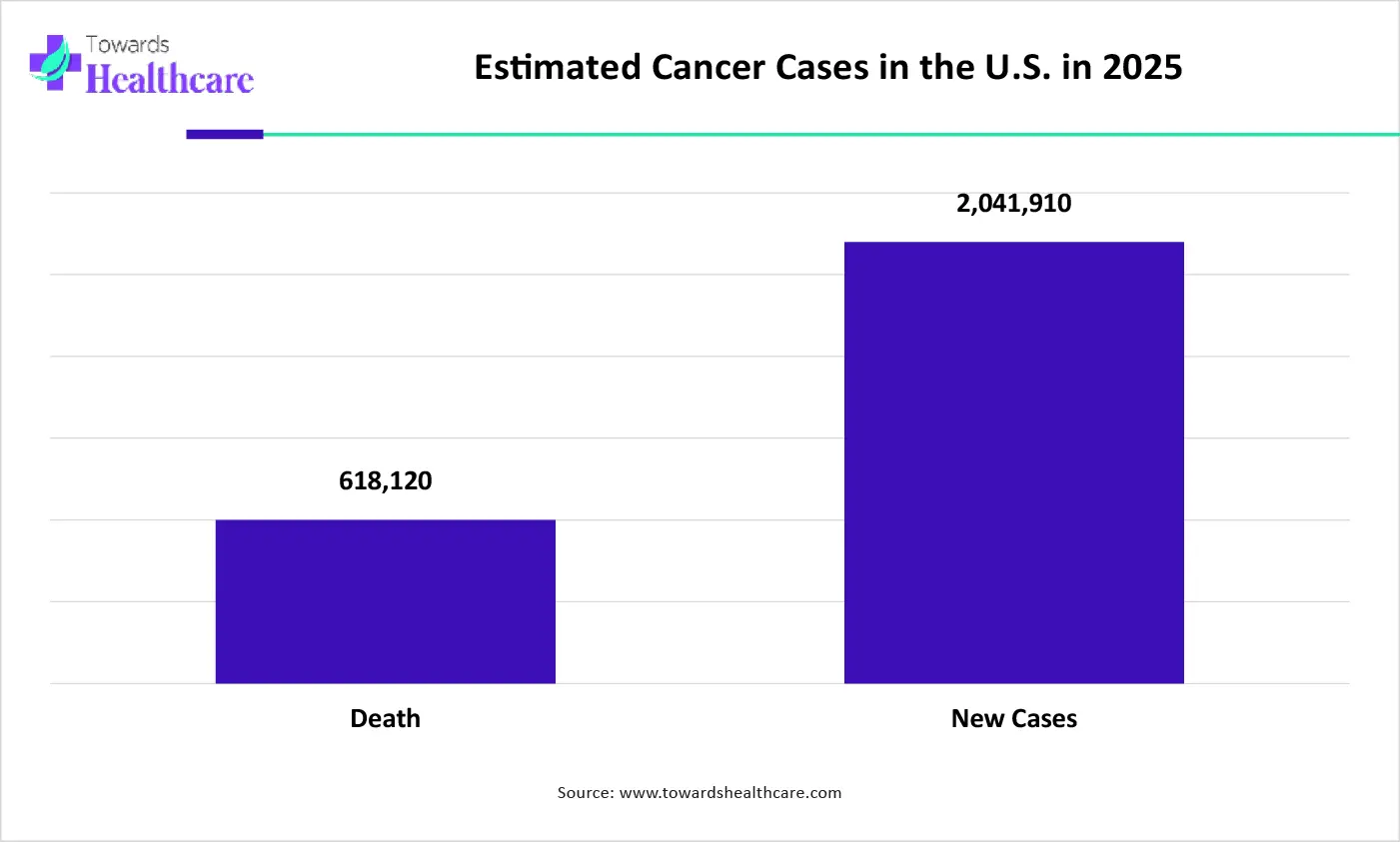
The graph represents the estimated number of U.S. cancer deaths and new cases in the year 2026. It indicates that there will be a growth in the cancer burden in the U.S., which will increase the demand for effective diagnostic and treatment options. This, in turn, will drive the adoption of stem cell research antibodies for the development of new cancer diagnostics and treatment options, which will ultimately promote the market growth.
Market Segmentation Overview
- By product type, the primary antibodies segment accounted for the highest revenue share of 52% of the U.S. stem cell research antibodies market in 2025, due to their high target binding ability. Their high specificity also increased their use for stem cell validation and customization. They were also used in various techniques such as immunofluorescence, immunostaining, flow cytometry, and western blotting.
- By source type, the mouse segment held a major revenue share of 38% of the U.S. stem cell research antibodies market in 2025, due to their high immunogenic response. Their high specificity and consistency also increased their adoption rates. Moreover, their affordability and compatibility with various research assays also increased their use.
- By application type, the stem cell identification segment held the largest revenue share of 30% of the U.S. stem cell research antibodies market in 2025, as antibodies were essential for stem cell identification. They were also used for the identification of the purity of the stem cells. Their precise confirmation also increased their use for regenerative medicine development.
- By technology type, the flow cytometry segment contributed the biggest revenue share of 34% of the U.S. stem cell research antibodies market in 2025, due to its high accuracy and enhanced sensitivity. They were also used for single-cell analysis, where their fast processing also increased their use. They were also used for the measurement of multiple biomarkers.
- By end user, the academic & research institutes segment led the U.S. stem cell research antibodies market with 40% share in 2025, due to growth in the R&D activities. This increased the continuous use of antibodies for flow cytometry, western blotting, etc. Growth in government grants and funding also promoted their adoption rates.
Regional Analysis
The U.S. stem cell research antibodies market held 30% share in 2025 and is expected to show significant growth during the forecast period, due to the presence of advanced biotech and pharmaceutical companies. Strong R&D ecosystem and advanced regulatory framework also increased the use of stem cell research antibodies for various R&D activities. The growth in investments, funding, collaboration, and clinical trials also created new opportunities for their innovations and applications, which enhanced the market growth.
The Market Titans: The U.S. Companies Dominating The Market
Thermo Fisher Scientific dominated the market with its Invitrogen antibodies, where Danaher was its closest competitor with its RabMAb. Merck KGaA maintained its position by offering Millipore-branded antibodies, where Bio-Techne also contributed to the market growth with its R&D Systems Antibodies.
Segments Covered in the Report
By Product Type
- Primary Antibodies
- Monoclonal Antibodies
- Polyclonal Antibodies
- Secondary Antibodies
- Anti-Mouse
- Anti-Rabbit
- Anti-Goat
- Conjugated Antibodies
- Fluorescent Labeled
- Enzyme Labeled
- Biotinylated
By Source
- Mouse
- Rabbit
- Goat
- Rat
- Others
By Application
- Stem Cell Identification
- Cell Signaling Pathway Analysis
- Cell Differentiation Studies
- Cell Proliferation Analysis
- Cell Sorting (Flow Cytometry)
By Technology
- Flow Cytometry
- Immunohistochemistry (IHC)
- Western Blotting
- Immunofluorescence
- ELISA
By End User
- Academic & Research Institutes
- Pharmaceutical & Biotechnology Companies
- Contract Research Organizations (CROs)
- Diagnostic Laboratories




