


The U.S. urgent care centers market size was estimated at USD 47.8 billion in 2025 and is predicted to increase from USD 51.1 billion in 2026 to approximately USD 93.15 billion by 2035, expanding at a CAGR of 6.9% from 2026 to 2035. The market is growing due to increasing demand for convenient, affordable, and fast treatment of non-emergency medical conditions. Rising outpatient care adoption, telehealth integration, and expansion of urgent care networks are further driving market growth.
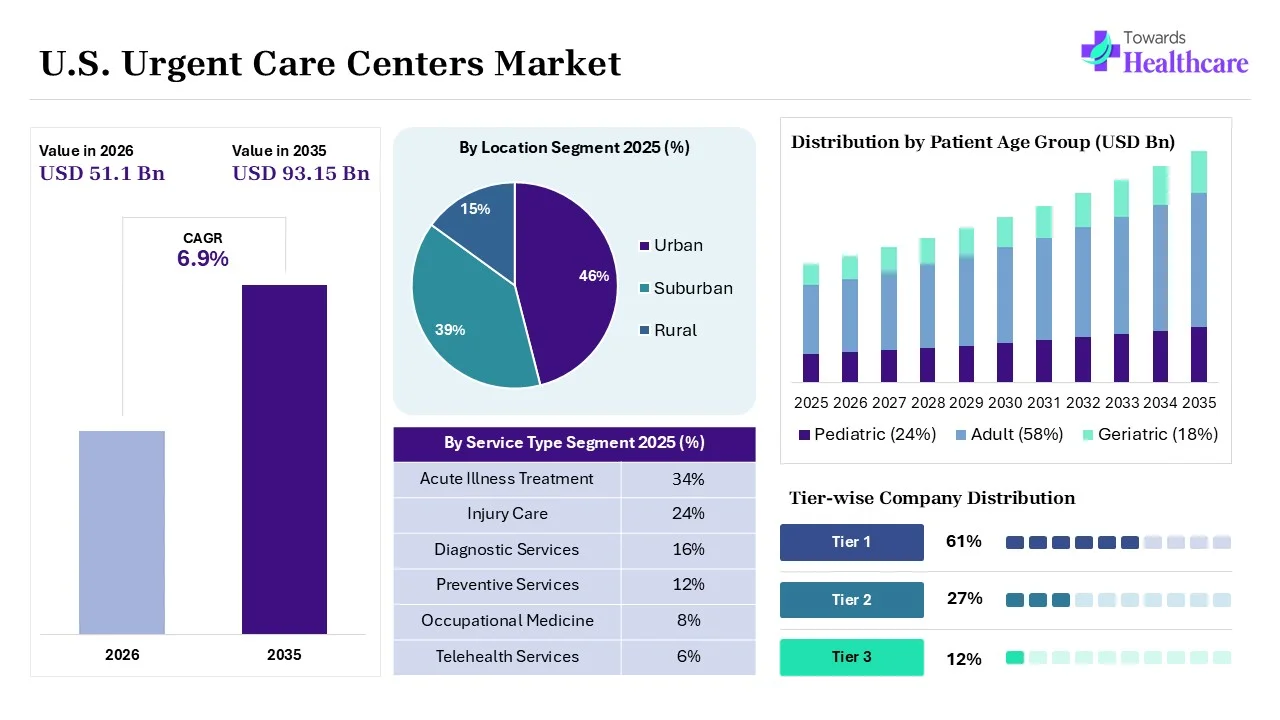
Urgent care centers are walk-in healthcare facilities that provide immediate treatment for non-life-threatening illnesses and injuries, offering a convenient and cost-effective alternative to emergency rooms. The U.S. urgent care centers market is growing due to rising demand for fast, affordable, and accessible healthcare services. Patient increasingly prefer urgent care centers over emergency departments for non-life threating coordinations because of shorter wait times and lower treatment conditions because of shorter wait times and lower treatment costs. Expanding insurance coverage, growing outpatient care utilization, and continuous adoption of telehealth and digital health technologies are further accelerating market growth across the country.
The U.S. urgent care centers market is expected to witness strong growth driven by telehealth integration, AI-powered diagnostics, expanding outpatient care networks, and increasing demand for convenient healthcare services. Continued investments in digital health technologies and hybrid care models will further enhance patient access, operational efficiency, and care quality across the country.
| Category | Percentage |
| Total U.S. population with at least one urgent care center visit | 27.6% |
| Children (0-17 years) using urgent care centers | 28.5% |
| Adults (18-64 years) using urgent care centers | 28.9% |
| Adults (65+ years) using urgent care centers | 21.9% |
| Population using retail health clinics | 19.0% |
The table demonstrates the increasing reliance on urgent care centers across the United States. Adults aged 18-64 years represented the highest utilization rate at 28.9%, closely followed by children at 28.5%, reflecting strong demand for convenient and timely outpatient care. While seniors showed comparatively lower utilization, urgent care services remained an important healthcare access point. Additionally, the usage of retail health clinics reached 19.0%, highlighting the growing preference for accessible, non-emergency healthcare services.
The hospital-owned urgent care centers segment held a dominant share of 38% in 2025 due to strong healthcare system affiliation, established patient trust, and seamless care coordination. These centers benefit from access to advanced medical resources, specialist referrals, and integrated electronic health records. Growing investments by hospitals in outpatient care expansion and the rising demand for convenient, high-quality healthcare services further strengthened the segment’s market leadership.
The acute illness treatment segment dominated the U.S. urgent care centers market with a share of 34% in 2025 due to the high volume of patients seeking care for common conditions such as influenza, respiratory infections, sore throat, and urinary tract infections. Urgent care centers offer quick diagnosis, same-day treatment, and lower costs compared to emergency departments. The rising prevalence of seasonal illness and growing preference for convenient outpatient care further supported segment dominance.
The private health insurance segment led the U.S. urgent care centers market with a share of 52% in 2025 due to broad coverage for outpatient services, lower out-of-pocket expenses, and widespread employer-sponsored health plans. Insured patients are more likely to utilize urgent care centers for timely treatment of non-emergency conditions. Strong reimbursement structure, growing healthcare utilization, and increasing preference for convenient care settings further contributed to the segment’s market leadership.
The standalone urgent care centers segment held a dominant share of 55% in 2025 due to its widespread geographic presence, convenient walk-in access, and ability to provide rapid treatment for non-emergency conditions. These facilities offer extended hours, shorter wait times, and lower costs compared to the emergency department. Their operational flexibility and strong community reach made them a preferred choice for patients seeking immediate outpatient care.
Leading companies in the market include Concentra, American Family Care, CityMD, FastMed Urgent Care, CareNow, GoHealth Urgent Care, and NextCare Urgent Care. These organizations are driving market growth through network expansion, telehealth integration, advanced diagnostic capabilities, and enhanced patient-centered care services. Continuous investments in digital health technologies, strategic partnerships with healthcare systems, and the development of hybrid care models are further strengthening their market presence across the United States.
By Ownership
By Service Type
By Patient Age Group
By Payer Type
By Facility Type
By Visit Type
By Location


